Victimhood has, in the 21st century, become almost an epidemic, and mental health professionals as well as politicians debate the situation. One side claims that those who embrace victimhood have a distorted view of the world and are, in fact, their own problem, with little sympathy for how they got there. They grow tired of the toxicity they see coming from victims, minimize their hurt, and simply tell them to “get over it and move on”. The other side offers sympathy and encourages the victim to “tell their truth boldly” and not be ashamed to demand justice from the world around them. As most who have suffered injustice know, sometimes you will never get admission from those who wronged you. Sometimes there will be no justice. That is when we need to consider if both sides are wrong and seek the answer, as Christians, with God instead. Many mental health professionals and politicians who claim that victimhood has become a trend have rejected the Biblical apocalypse. The Bible warns that in the end, sin becomes so severe and the many victims of sadistic acts so great that the earth «mourneth and fadeth away, the world languisheth and fadeth away» (Isa.24:4). Before the flood God said about the world: “And GOD saw that the wickedness of man was great in the earth, and that every imagination of the thoughts of his heart was only evil continually” (Gen 6:5) And “The earth also was corrupt before God, and the earth was filled with violence” (Gen 6:11). A state like this would create a lot of victims. Christ says the time before the flood will resemble the time before His second coming. This proves the victim statistics will be record high in the last years of the earth’s history (Luk.17:26). We cannot cancel the existence of victims and the psychological side effects of sin because there are too many wounded to count. Mental health issues are rapidly rising off the charts. It is a reality. The world is a battlefield, and many have fallen. It is easy to tell a victim “to get over it and move on,” but it is not advice easily practiced. For many victims, this “advice” is just being silenced all over again, as they were as children or in their suppressed relationships, and their anger bottles up and resurfaces later. Telling someone to “get over it” is therefore re-traumatizing and not very helpful. It certainly does not make the problem go away.
The Cry from Sodom
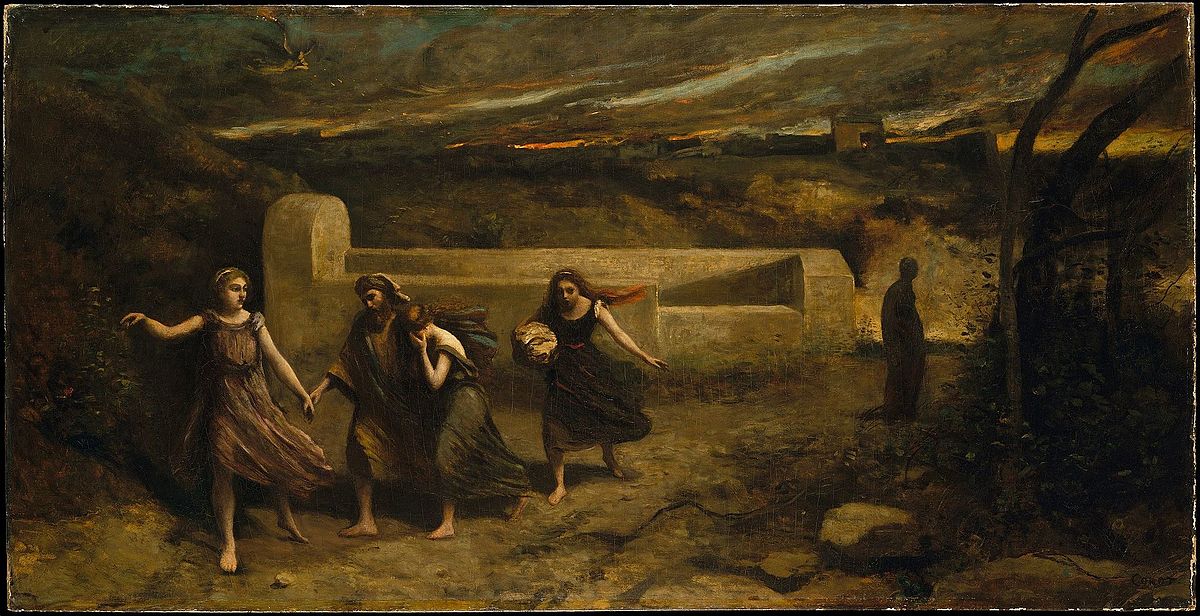
Regarding Sodom, the city God destroyed with fire and brimstone, it is said: «And the LORD said, Because the cry of Sodom and Gomorrah is great, and because their sin is very grievous; I will go down now, and see whether they have done altogether according to the cry of it, which is come unto me; and if not, I will know.» (Gen 18:20-21) The story of Sodom is especially worth noting because Christ also compared it with the end times: “But the same day that Lot went out of Sodom it rained fire and brimstone from heaven and destroyed them all. Even thus shall it be in the day when the Son of man is revealed” (Luk 17:29-30)
Escaping Sodom
We learn from Genesis that a great cry arose from Sodom. That means countless people were victims of hideous crimes, and they cried out about it, and God heard their cries. It seems, though, that part of the cry came from within Sodom itself, and those who cried were destroyed along with their abusers. Still, God chose to judge the city because of the great suffering inflicted there. And if some of the victims were killed side by side with their abuser, it means the victims themselves abused others and caused terror. We see this repeated with our own eyes today, a time Jesus compares with Sodom, understandably. How many of the child victims grow into adults who offend others? Even before they grow up. Children abuse each other all the time. A child from an abusive household goes to school and bullies those who are weaker than they are. Trauma is never an individual problem; it is always a social problem. The political left, which claims to be the great defender of victims and easily calls out and cancels those it believes are offenders, itself offends others. It is known to use force and silencing methods, to show double standards in its judgments, and to bully those who do not follow its political views. Many victims cannot handle being subdued, so they find others to subdue in order to relieve their pain and feel in control again. It is a terrible coping method. Victims can be awful people, but God recognized in the matter of Sodom that everything had gone so badly that everyone was born to be victims of crimes and then commit them themselves later. The cycle was so strong that it could not be broken, even by God. God still recognized the pain and hurt and took it very seriously. Sodom was also harming the surrounding nations, who undoubtedly were part of those who had sent a cry to God. Four cities had been affected, and more would have followed if God had not stopped it all. Thus, punishing Sodom was also to protect the surrounding nations and the rest of the world. To hinder mankind from self-destructing so early on.
Whenever God brings judgment on earth because things have gone too far, we see the same things happening. We see both victims and abusers behaving in the same way. Those crying the loudest, then and now, are not always the most innocent. The more people let their instincts and emotions control them, the more hurt they will feel. The number of victims today is on the rise. For an atheist or agnostic mental health worker who thinks the world is progressing to a higher state of being, this can be hard to admit or even see. And so, some of them want to silence the “cry from the world” by blaming the victims or accusing people of exaggerating their hurt.
Jesus said: “Every kingdom divided against itself will be ruined, and every city or household divided against itself will not stand” (Matt. 12:25-29). No happy person sabotages and destroys themselves without reason. Where there is smoke, there is fire. The Bible is clear that things will only get worse and worse until Christ’s second coming, and in the end, there will be a constant cry to the Lord. A cry similar to the one heard from Sodom. The louder the cry from earth, the closer Christ’s return is. (Luke 17:29-30) “But understand this, that in the last days there will come times of difficulty. For people will be lovers of self, lovers of money, proud, arrogant, abusive, disobedient to their parents, ungrateful, unholy, heartless, unappeasable, slanderous, without self-control, brutal, not loving good, treacherous, reckless, swollen with conceit…” (2.Tim. 3:1-5) There is no doubt that all these character traits mentioned here will cause significant harm. The worst part is that Paul is here describing Christians in the end times, saying they have the “appearance of godliness.” Peter said: “Knowing this first of all, that scoffers will come in the last days with scoffing, following their own sinful desires” (2 Peter 3:3). Jesus said another sign that the end is near was “men fainting for fear” (Luke 21:26). Anxiety disorders have become an epidemic in our day. Jesus said: “For then there will be great tribulation, such as has not been from the beginning of the world until now, no, and never will be. And if those days had not been cut short, no human being would be saved” (Matt. 24:21-22). Many assume God is speaking here only of war, but great tribulations also come from living in a self-destructive and sinful society. Mankind is at war with itself.
Sodom was not in the middle of a war; the tribulations Lot and his family experienced were tribulations from moral decline, pride, and anger. The people there did not tolerate being told “no” or others having morals that judged theirs. Lot’s words: “I pray you, brethren, do not so wickedly” sparked great anger, as they felt judged: “And they said, Stand back. And they said again, This one fellow came in to sojourn, and he will needs be a judge: now will we deal worse with thee, than with them” (Gen.19: 7 & 9) This little interaction alone says a lot about the condition in Sodom, where it is clear the innocent went on eggshells for the wicked and speaking up could get you killed by a mob out of control. The men in Sodom claimed to be victims of Lot’s judgmental morality and were blind to the fact that they were actually the ones who judged most harshly and were suppressive in their communications and actions. Most of these men coming to Lot’s house were victims themselves, growing up in a toxic environment and acting it out. They had learned to love the sin inflicted on them. Their actions were still evil. If anyone is tempted to think that God does not have compassion for people who are harmed, they are very wrong. The reason God judges sin in the first place is a recognition of the harm it causes. God’s war against sin is a war against what destroys mankind.
Jesus said bullying others was murder: «Ye have heard that it was said by them of old time, Thou shalt not kill, and whosoever shall kill shall be in danger of the judgment: But I say unto you, That whosoever is angry with his brother without a cause shall be in danger of the judgment: and whosoever shall say to his brother, Raca, shall be in danger of the council: but whosoever shall say, Thou fool, shall be in danger of hell fire.» (Mat 5:21-22). The word «raca» means worthless, a feeling most children growing up in an abusive home experience, and one that causes them great suffering. Jesus shows great empathy for those who have been bullied and harmed by others, recognizing how it destroys lives. Even if someone is not physically killed, their spirit is killed and their moral and physical strength crippled, so that they cannot live a normal, healthy life. Jesus indicated that this was simply another way of murdering someone. God hates sin because it damages people and leaves them ruined. He has a great understanding of the effects that even a single harmful act can have on a person’s life. Even a word. Just because God wants us to be free of victimhood does not mean He, like many others, fails to recognize our hurt or empathize with it. One thing does not take away the other. In Revelation, when all sin is dealt with, God says: «And God shall wipe away all tears from their eyes; and there shall be no more death, neither sorrow, nor crying, neither shall there be any more pain: for the former things are passed away» (Rev 21:4) He is not saying we will not get hurt in this world, nor is He telling us to “pull ourselves together and stop crying.” He wants to comfort us and wipe away our tears by giving us a better life. This is the healthiest way to help any victim: recognizing their hurt, comforting them, and changing the environment that caused it. The unhealthy way is to demand the wounded shut down their feelings, blame them, and then tell them to continue living in the abuse. This is the great difference between God’s solution and that of many professed Christians claiming to represent God.
Victimhood is damaging.
On the other side, the state of victimhood is damaging. It is important to know the difference between living in victimhood and having been a victim. When God wants to free us from victimhood, it is not because He does not recognize our hurt or that we have been a victim of someone else’s cruelty or selfishness. So, what is the difference between “victimhood” and being a victim?
When we have been victimized, something usually beyond our control has happened. Someone has harmed us. It is something that happened to us; it is not something we are. If we identify with the wrong deed done to us, we will continue to abuse ourselves and even others after the incident. Another popular way of living victimhood today is by choosing a different identity, ideology, religion, or even name as a response to the trauma. Assuming a different identity to combat past abuse is, for many, a way of selecting a different type of victimhood; however, it is still victimhood and manifests as such. Occasionally, it is not one incident; it can be a series of incidents or a ruined childhood. Still, God tells us that we are not what happened to us. The world tells us we are our sins; we were born that way and have to live that way. That sin is part of our personality, and therefore, we need to accept it to be at peace with ourselves. God’s approach is different. We are children of God with potential. He wants us to be happy and free. If we choose victimhood, whether knowingly or unknowingly, we remain trapped and will continue to be harmed by ourselves and others. We will become offenders. God recognizes and takes very seriously the crimes committed against us, but He desires that we not let them control us and our future. They should not define us or how we treat others, nor hold us on a leash like a master. If they do, God must constantly compete with their influence, and we will sabotage anything good He wants to do for us. God says: «For I know the thoughts that I think toward you, saith the LORD, thoughts of peace, and not of evil, to give you an expected end» (Jer. 29:11). No one in heaven will be a walking trauma response, and no one there will be a victim of our unresolved trauma. God needs us to understand cause and effect and choose His plan to free ourselves, to become who we are meant to be, beyond the trauma we have experienced.
The language of someone who grows up with trauma and meets someone who grew up in a well-functioning family can be compared to two people speaking a different language or coming from two different cultures. Two cultures might express the same emotions differently or with different traditions. While something is considered polite in one country, it might be an insult in another. The best way to combat cultural misunderstanding is to understand the meaning the other person has for what they are expressing or doing. By understanding, fear and insecurities are removed.
Some countries use the same words in their vocabularies, but they have different meanings. For instance, both Norway and Denmark have the word “rar” in their vocabularies. In Norway, it means “strange” or “odd”, but in Denmark, it means “sweet” or “cute”. So while a Danish man might intend to compliment someone, it might still be perceived as an insult. The only thing that can change how he communicates is if the other person understands the meaning he assigns to the word. The USA and England both have the word “pissed” in their vocabulary, but in England, it means to be drunk, and in the USA, it means to be angry. Again, the only way to avoid misunderstanding each other is to understand what the other person means when they use the same word. This can be compared to communication with victims. Both verbal and non-verbal language might look the same as that of someone who is not a victim, yet it might still mean something entirely different when it comes from the victim.
The ways victims communicate can also differ, depending on how they deal with what happened, whether they had someone to guide them, or whether they had to handle everything on their own. Plenty of people with troubled pasts seem to find each other because they understand each other better than they understand someone who had a well-functioning childhood. Unfortunately, it can also mean that trauma survivors bond and form relationships where they might bring each other additional pain. There is such a wide spectrum that it is not possible to cover them all here, but to raise awareness, I will give some examples. Whether we are trauma survivors or find ourselves communicating with someone who is, the best way to approach it is to understand what is happening and why.
Victims struggle with confrontation.
Bad communication is a source of conflict for the survivor because it creates misunderstandings and triggers fear. Many victims can’t handle confrontation healthily. Confronting a survivor of long-term trauma, even if justified, can lead to a response that appears to the mentally healthy individual as an overreaction. The victim’s response is a survival instinct. To simplify it, if every time you stepped out of your house, you slipped on the stairs and hurt yourself, you would either avoid the stairs if there was another way down or change how you walk down them. If someone sees you, at first glance, your slow walk down might appear overly cautious or unnecessary. But our body is learning and reacting accordingly. Had they known that you kept falling down those stairs, they would have understood your behavior. Without understanding, the act seems foolish or an overreaction, but with understanding, it seems sensible. This is just an illustration, but how we view someone depends heavily on the information we have. If we do not have access to it, empathy should be chosen over a judgment that degrades the other person. It is the same when we meet a trauma survivor. They can act differently; their body language might be different, even their usage of words, but a hasty judgment serves no one. For someone growing up in a difficult home or school situation and having suffered confrontations that were too harsh or overwhelming for the child, they learn to avoid or have a fearful response to confrontations. Without treatment, a comment such as “Clean up that chocolate paper that you just threw on the ground” can trigger them in a very negative way. They can say nothing and worry about that confrontation all day. Debating you in their heads. Or they can get angry, shout, and almost seem willing to hit you just for making that comment. Both are trauma responses. One is passive, and the other is aggressive. Therefore, know that a long-term trauma survivor usually always fears, dreads, or avoids confrontations. They have experienced that little issues can lead to large consequences, so they are alarmed and scared even at small confrontations because their bodies remember the danger. In abusive homes, even normal behavior can induce anger from the abuser. A look, a noise, or a wrong word could cause the abuser to become abusive, violate them, or mock them. A good number of childhood trauma survivors, therefore, might become defensive or fearful of all sorts of confrontations. Still, they must be confronted with unacceptable behavior, but a lot of work must be done to help them handle it healthily. They do not have an exaggerated response for no reason; their bodies are trained that way. Confronting them for being wrong might make the situation worse. “Brothers, if anyone is caught in any transgression, you who are spiritual should restore him in a spirit of gentleness” (Gal.6:1) “A gentle answer turns away wrath, but a harsh word stirs up anger.” Pro.15:1) “Therefore, as God’s chosen people, holy and dearly loved, clothe yourselves with compassion, kindness, humility, gentleness and patience” (Col.3:12).
Victims struggle with ambiguity.
Other trauma triggers can be “ambiguity”. A victim may want to have control, know, and not have to wait for a response. This often comes when a child in an abusive situation learns to be on alert and evaluate everything happening to best adjust to or defend themselves from the threatening situation. The need to be prepared at all times brings an impatient desire to know as much as possible as fast as possible. As an adult, if they feel they can’t read a situation or must wait for a response or an outcome, it can be very triggering. It can be something as innocent as a person taking their time to answer a message or “thinking a little too long” before providing feedback on a request. A moment of awkward silence can cause anxiety. As an adult, not knowing the outcome of a given situation can cause a lot of stress and frustration, and they might not even understand why. It can even manifest as ADHD symptoms. They can appear impatient or have a hyper personality when, in fact, they are emotional trauma wounds. Not knowing what is happening in a situation creates emotional stress. Some long-term trauma survivors struggle with small talk because it is disguised communication, where it is hard to understand the other person’s intentions and feelings, and it can, at worst, create an atmosphere of uncertainty. These types of issues are not standard for everyone, but for many. Small talk creates trust in inter-social interaction, but for a long-term trauma survivor, it can create the opposite. They need more to feel safe, and so the small talk can get in the way of a conversation that reveals more about the person they are speaking to, which helps the trauma victim feel more in control over the situation. So, what one person feels brings trust creates the opposite for the other, yet both seek the same thing: to feel comfortable and safe with the other person. Needless tension is created because the two search for the same thing in opposite ways. Instead of mutual trust, mutual distrust is created. Some long-term trauma survivors need to see openness and self-reflection from those they meet, so they know what you are made of. Talking about how much you love your dog and how it makes you feel safe might be better small talk than talking about something non-personal, like the weather or the neighbor’s Christmas decorations. Some long-term trauma victims don’t like talking about personal things at all, and so there is no one-size-fits-all solution. There are even victims who fear all deeper conversations and prefer small talk, afraid the conversation will go into a disagreement and become confrontational. So, it is not possible to say that everyone has the same experience or reaction. Ambiguity can manifest in many ways. The best approach is to understand the signals the other sends and respect them. If someone is uncomfortable with small talk, a more meaningful conversation could help. Unfortunately, when someone does not respond well to small talk or becomes uneasy in deeper conversations, many avoid them rather than trying a different communication approach. This leaves survivors even more isolated. It should not be hard for someone who is mentally healthy to quickly evaluate if small talk or deeper topics are what makes the victim uneasy, and then choose what makes them the most comfortable. Don’t give up on victims too easily. The most important thing is not to be fake but to be sincere. Someone who has grown up in a toxic family is trained to read faces, and if you are not real, they will know and feel uncomfortable. They do it automatically. “a man who flatters his neighbor spreads a net for his feet” (Proverbs 29:5) “They speak falsehood to one another; With flattering lips and with a double heart they speak” (Psalm 12:2-3) “A word fitly spoken is like apples of gold in pictures of silver,” (Proverbs 25:11)
Victims struggle with feedback.
Childhood trauma survivors also struggle with other types of feedback. In a healthy society, complimenting each other is used to communicate and show friendliness, whereas a survivor may feel triggered and fearful of compliments. Especially if they have experienced being mocked as part of the abuse. Often, it is caused by the child growing up in a place where good and bad feedback are mixed. In a toxic, traumatic relationship, a nice word can often be followed by abusive behavior. A compliment is used to manipulate, harm, or put people up against each other. Some have experienced being targeted when they succeed at something or show cleverness. They have learned that they are not allowed to thrive or do good, and are used to hiding it when they do. When growing up like this, a well-intentioned and innocent compliment or praise for a good job might trigger a trauma response, such as silence, heightened alertness, or distrust. In fact, most normal people will look happy when you compliment them. If someone looks down and seems uncomfortable, there is most likely a reason in their past. And so, what gains trust between two healthy individuals causes distrust and insecurity when done to a childhood trauma survivor. Instead of saying “thank you,” they are desperately trying to figure out your intentions behind the compliment, so they can protect themselves.
Again, this is not always the case for everyone, as people’s experiences differ. If someone mostly grew up with negativity but had a kind neighbor or grandmother who said kind things to them, they might learn to appreciate it and even long for it. They have a good association with kind words. However, most childhood trauma survivors struggle with any type of feedback. Children growing up with abuse can get terrified if someone gets mad at them as adults. Even if the people who get mad at them do not dream of harming them, they become abusive in the victim’s eyes, regardless. This can cause many problems because a victim can have trouble distinguishing between normal and abusive people. So, the person rightfully getting mad at them can be called out as abusive when they are not. It is the victim’s emotions and triggers that now accuse the individual of being something they are not. Many victims are deterred by it, as it can lead to many false accusations. A sexual abuse victim might misunderstand a friendly pat on the back from their boss, which can cause a false accusation. This is because a victim does not always understand that their perception is influenced by past events. In such cases, the victim causes great harm to those whose intentions are misunderstood.
When Judas betrayed Christ, Jesus said: “Judas, betrayest thou the Son of man with a kiss?” It is regarded as a terrible betrayal when someone who is hurting you is, at the same time, apparently flattering you and showing you kindness. A grownup might handle it, but a child is confused by this type of behavior. Giving with one hand and taking with another. Patting someone on the back with one hand and stabbing them with the other. Such abusive behavior can make a child grow up to be very wary of even kind feedback. A kiss can be perceived as a threat instead of an expression of love. If you compliment someone who looks very uncomfortable and struggles to say thank you, they might not be rude; they might just be triggered. Don’t take offense. Find another way to show them you appreciate them if they can’t handle your compliment. The first thing a Christian needs to be aware of and do is not to take everything personally or as a rejection. “Wounds from a friend can be trusted, but an enemy multiplies kisses” (Pro.27:6).
Victims can become passive-aggressive.
Another typical trait seen in victims of childhood trauma is that they often expect or hope people will read their thoughts or read between the lines. Fearing confrontation, they may struggle to voice their needs, a struggle that can persist into adulthood. As an example, a child hoping to get supper but too afraid to ask for it will wait in silence or try subtle hints instead. The less confrontational the child is, the less likely they are to be harmed. Continuing to communicate this way as an adult is not uncommon, but it leads to repeated disappointment and misunderstanding. People cannot read other people’s minds. Although a parent should know their child’s needs, a friend or stranger as an adult is unlikely to know what to do or even be obligated to meet another adult’s needs. So, the person with the childhood trauma might get offended and even angry with you without explaining why, as that would be too confrontational for them. Many long-term trauma survivors, therefore, become passive-aggressive in their communication. Even though a victim is responsible for changing their toxic behavior, it can help others understand that some victims might struggle to voice their needs. Showing them a little extra attention and noticing when they show some kind of distress can help meet them halfway and take the burden off their shoulders. “Carry each other’s burdens, and in this way you will fulfill the law of Christ.” (Gal. 6:2) For a victim, it can be good to know that God sees and notices what others do not and to put hope in Him instead.
Many victims struggle with authority figures.
Many struggle with adjusting to rules and authority, as it feels suffocating and can trigger panic attacks. Usually, this happens to those who grew up with unfair authority figures and felt the need to rebel inwardly to maintain a sense of control in a situation over which they had none. This continues into adulthood, where authority is seen as a threat alone, and any person in such a position is dreaded and even disliked. This causes conflict when the leader of a team or group is chosen, and the trauma survivor is childishly rebelling against any attempt to create order and organization. Some survivors express a need to be the leader, so they don’t have to be under someone else’s rule, yet it can be obvious they are unsuited for the role. Having had bad authority figures as children, they easily feel anxious and dislike anyone in authority over them, especially if they show any similar traits as their abuser. For someone in a leading position, this can become a problem, and they might have done nothing wrong yet still be targeted by the victim.
Many long-term trauma victims who are fighters find it easier to confront and challenge an authority figure elsewhere than at home. There are also children who grow up without an authority figure and without healthy boundaries, and are used to doing as they please. They, too, can struggle with authority figures, as it is strange to them to suddenly be following someone else’s lead. The third group that can struggle is those who have “raised themselves,” meaning they have only ever felt safe in their own company. As such, ending up under someone’s authority can cause anxiety.
The most important thing is to try to understand why someone struggles with something that a mentally healthy individual finds non-threatening. Everyone must be subject to some authority at some point in their life; finding a healthy way to find safety in such a situation is important. Unnecessary authority or rules should be avoided as much as possible, using only what is necessary. If you love telling people what to do and controlling situations, know that many victims will strongly dislike you. “Be shepherds of God’s flock that is under your care, watching over them–not because you must, but because you are willing, as God wants you to be; not pursuing dishonest gain, but eager to serve; not lording it over those entrusted to you, but being examples to the flock. … All of you, clothe yourselves with humility toward one another, because God opposes the proud but shows favor to the humble.” (1.Peter.5:2-5) By Christ’s ruling method, if followed, a trauma survivor will find safety. Christ does not support those who try to use needless authority to satisfy their ambitions. It only harms others. “Yet it shall not be so among you; but whoever desires to become great among you, let him be your servant. And whoever desires to be first among you, let him be your slave— just as the Son of Man did not come to be served, but to serve, and to give His life a ransom for many.” (Matt. 20:26-28) If Christ’s advice is followed, more victims will feel safe in the church.
The compliant victim and the different victim expressions
There are victims who are more compliant as well, not just with authority figures, but with people they meet in life. They have been taught not to fight or to fear fighting someone’s wishes, and so they comply easily and struggle to say no. It is important to understand that a victim does not behave in just one way. Often, many have doubted victims because they do not behave like typical victims. Several who survived a kidnapping by serial killers had chosen to be partly compliant and then wait for a chance to escape. One such example is a victim of kidnapping and rape who managed to get away, named Lisa McVey. The killer, Bobby Joe Long, had killed every single other victim but did not kill her. Lisa had been the victim of long-term sexual abuse before the kidnapping and behaved differently from the other victims. She knew how to survive a sadist. At the same time, she rebelled inside and gathered information against him, so that when she escaped, she helped the police find him and stop further killings. She managed to humanize him and herself, making it hard for him to kill her. Most victims would just fight and lose. There have been several kidnapping survivors who had a past of abuse that broke the role-play of the kidnapper, leaving them confused. Victims can confuse and change the game with a criminal, but they can, unfortunately, also confuse the police and the community. People expect victims to behave in a certain way, and when they don’t, they are not believed. This often happens when a long-term victim is compared to a short-term victim. In Lisa McVey’s story, when she came to the police, she was not initially believed. Because she did not show enough “emotions” and seemed, in their opinion, too overly focused on details for her story to be true. Luckily, she met another policeman who believed her, and this led to the serial killer being caught. McVey’s reaction to her attack was tied to her past abuse and therefore manifested a little differently than other victims.
Another true story was made into a miniseries in the USA. Marie Adler was raped by a stranger, and when she reported it, she was not believed and even pressured to sign a statement saying that what she had said was a lie. When another police force in a different state caught the same rapist, they found evidence on his computer that Adler had been one of his victims. Adler came from foster homes and had seen her share of trouble beforehand, so she did not act like the typical victim either. Deciding to escape further conflict and confrontation, she confessed to having lied when she had not. The two young girls mentioned both had trauma in their pasts and were both at first not believed, but one was eagerly trying to catch her perpetrator, while the other “gave up” and signed a false declaration that she had lied. These are extreme situations, but dysfunctional families can also create two different types of victims: the compliant and the rebellious. Often, a victim can go back and forth between compliance and rebellion, exhibiting both traits. Switching between the two can also be a survival skill.
Children who copy their traumatized parents
There are children who have the traits of victims but are not victims of abuse themselves. Rather, it is their parents who are the trauma survivors. Children mimic their parents, especially if they trust and love them. They think this is how the world of communication is, and so they continue the trauma communication, despite not having been through the trauma themselves. This can continue for generations. Unfortunately, many can mistake the children of trauma survivors for victims because of their expressions and then target the parent. It is critical to never make a hasty judgment. Our imagination is not reality. Our guesses are not the truth. The only way to know is to communicate with the people we wonder about. Some children of Holocaust survivors were indirectly impacted by what their parents had gone through; others were not. Science even shows us that the trauma response is genetic. “A person’s experience as a child or teenager can have a profound impact on their future children’s lives, new work is showing. Rachel Yehuda, a researcher in the growing field of epigenetics and the intergenerational effects of trauma, and her colleagues have long studied mass trauma survivors and their offspring. Their latest results reveal that descendants of people who survived the Holocaust have different stress hormone profiles than their peers, perhaps predisposing them to anxiety disorders” (https://www.scientificamerican.com/article/descendants-of-holocaust-survivors-have-altered-stresshormones/) Ultimately, this means that someone can be a good parent, yet their child might still struggle. It also shows how trauma continues to have an impact in many ways other than through social constructs.
Social Anxiety
Some survivors become antisocial, giving up trying to communicate because they keep getting misunderstood and disliked. Many also suffer from social anxiety, being afraid of saying and doing the wrong thing in a social gathering, being used to struggling, or feeling unsafe in social interactions. Many children from dysfunctional homes with abuse have experienced unrealistic demands and unreasonable punishment for not meeting them. As a teen and an adult, this can manifest as worry about not meeting people’s expectations. Many, therefore, avoid situations in which expectations are directed at them. They fear being a disappointment. They feel like a fraud even when they do meet someone’s expectations. Some will even avoid phone calls because there is more pressure to keep the conversation flowing, and silence can feel awkward. “Anxiety weighs down the heart, but a kind word cheers it up”. – Proverbs 12:25, NIV
Victims with identity dysphoria
What modern psychology calls gender dysphoria can have several reasons if we look at it from a spiritual, Christian perspective. A child normally grows up and identifies with a parent of the same gender. Boys look up to their father differently than girls do, as they naturally try to learn what it means to be a man from him. It is the same with the girls who copy their mothers. Today, gender roles are less clear than they once were, which makes it easier for children to become confused about what role they are supposed to have. If men and women fill the same roles in society, a child will determine whom they admire most and identify with. This could be in part why there is so much gender dysphoria in the West, where gender roles are more erased than in other places. When a home is dysfunctional, and the role model is bad or cruel, the child can start feeling strong dissociative feelings towards their gender. They would rather not look, resemble, or be like them in any way. They sympathize with the opposite gender. Despising the gender role model can lead to a feeling of dislike for anything similar in their body. A cruel, narcissistic mother can make the daughter feel a dissociation that leads her to wish to be a boy instead. It does not have to be a big trauma. It can be small manipulations that a child feels strongly pressured to perform, which create disgust. If one parent appears weak while suffering abuse, it can also create distance from the weak gender and a feeling of empowerment to portray the gender of the abuser. Humans react in many different ways to the same trauma. Even emotional neglect is abuse that can make a child want to dissociate from their gender. It is a way of rejecting the parent model. So, what modern psychology calls “body dysphoria,” describing it as not being happy in one’s own body, is, from a spiritual perspective, a “role model dysphoria”. They don’t respect their parents and don’t wish to follow in their footsteps. Many men become transgender after having children. It is very normal for teenagers to be seeking their identity, but once they have children and live within a family system, many start copying their parents in how they communicate with their children, whether they want to or not. An abused son who himself becomes a father might unconsciously despise the role of being a father, as it is so closely tied to the image of his own abusive father, and so he dissociates from that image. They start rejecting their “role” and would rather be “a mother”. For some, this means rejecting their gender and even adjusting their physical appearance with surgery. Some parents who change their gender feel and think that their child is safe and will be happier when the bad role model is gone. Because they don’t understand why they feel disgust toward their own gender, they think it is something unexplainable or something they are born with, and make it their identity. Many young adults don’t even remember why or when the disgust for their gender role models was created, as they could have been very young. There is not just one reason; this is just one of many. Plenty of transgender people have been sexually abused and dissociated from the gender the abuser found desirable. For an abused girl, becoming a boy will make her feel more secure against further abuse by the same man or other men. They change the dynamic and, by doing so, protect themselves, all on a subconscious level. They follow “the flesh,” or their impulses and feelings, without understanding where these feelings truly originate from. They are aggressive about being seen as their real selves because their whole trauma-mastering process needs acceptance and approval from others to make them feel safe. The law in the Bible forbids men to dress as women and women to dress like men; in other words, transgenderism is illegal in the Bible. This seems cruel to many who want their religion to embrace transgenderism. It is seen as a form of hate. However, God does not approve of any method to deal with trauma that causes more sin and stress for the individual and their surroundings. He wants the sin dealt with correctly, not dissociatively. Any victim who starts a path of self-indulgence will hurt others as well. Although God understands cause and effect, the Bible is clear that God wants to change how sin and abuse are dealt with. If you solve one problem by creating another, you still have problems. The biblical God wants to solve the problem with a healthy solution. God tells us that anyone who sees their father sinning and does not follow in his footsteps is especially blessed by God. (Ezek.18) God recognizes the difficulties someone faces when their parents are bad role models, but he also says it is possible to turn the page and do better.
Many who have been abused sexually try to make themselves unattractive. Some are not hygienic, dress in big clothes, and do what they can to be unattractive. We see that their personalities and lives are still controlled by their trauma. Many dread relationships. While other victims dress to attract sexual partners and find empowerment when they are the ones in control. Victims deal with their pain differently. In this example, both ways are wrong because both are self-destructive ways of dealing with trauma. God wants to free us and does not want our whole lives to be bound in chains by something bad that happened to us. Or for our decisions or life choices to be trauma responses.
The bad victims: the role players
Although some of these trauma-driven communication patterns are very self-sabotaging and sometimes difficult for people to deal with, there are other responses that are more sinister than even these. Some victims become abusers and behave as their role models. They feel empowered by switching roles, looking for someone to take their role as the victim, so they can play out the role of their abuser. This is more common among men who, by instinct, wish to assume a role of authority. To cope in the most toxic way with trauma, they become the person in authority who once hurt them, and by it, they feel empowered. They relive their trauma by being the strong one, despising the victim self that felt powerless. So many abusive men are well-functioning in society and have a good career and financial situation. They manage not to lose their control by refusing to feel powerless again, as they once did. Because they are not dealing with their issues the right way, even though they seem to manage outwardly, they become predators. Usually, such people have never dealt with their trauma, spoken of it, or held people responsible. It is a world of survival of the fittest, and they are playing the game by taking on the role of the fittest and crushing the weakest.
Women, too, can take part in this in various ways, becoming cold and unsympathetic. They would rather not be seen as weak and aim to always have the upper hand over everyone they meet. It is a form of self-hate. They hated being victims; they despised the weakness they once felt. It is a way of blaming themselves for anything bad that happened because they were weaker than the other person. This is yet another way of trying to find control over something they cannot control. If it happened because they were weak and they now see themselves as strong, then they feel protected by the likelihood that they won’t get hurt again. They feed off the contempt they feel for their weak selves. Distancing themselves from that part of themselves, they can become heartless toward anyone who is a victim or appears weak. Disliking them empowers them, just as disliking their weaknesses feels empowering.
There are children growing up in abusive families who are seemingly well-adjusted, but it is not as it seems. Many of them copy or mirror others to succeed. They understand they don’t speak the language and are different, yet they find a way to accomplish it by mimicking others and doing what they do, laughing at what they laugh at, liking what they like, and hating what they hate. They are like actors training for a part in a play. They, too, can cause great harm because, usually, they first mimic the person they want to be like, and then, to have their position, they have to eliminate or alienate them to take over, as you can’t have two with the same roles in a small group. So, when this person is done copying their study, they must change the other person or make others perceive them differently, and give them a different role so they can have theirs. Many will feel offended by these types of people, who try to make you out to be somebody you are not. It is a very toxic victim response. They are not themselves; depending on whom they admire, they try to become that person by staying close to them, only later pushing them away by forcing another role on them. Such a person might seem like your best friend and soul mate at first, until they decide you have become too much alike, and you must go. As part of their behavior, they might want to steal your husband, boyfriend, or girlfriend, as having what you have is part of taking on the role of being you. They would rather not stay imitating you; you are just a step away from them finding someone in an even better position or situation, and then they become their next victim. It is a good example of how hurt and confused people cause great pain to others. It is a way of desiring not only to have your neighbor’s possessions but also to be your neighbor and all that comes with it, because you cannot deal with being yourself.
Emo kids often have similar expressions of appearance so they easily are recognized as emo.
For many who grew up in dysfunctional homes without good role models, finding an identity becomes essential. They would rather not be anything like their parents, so someone must step in as a role model. Dissociating from being a victim and those who hurt them, they try to become someone else as far away from themselves or those who hurt them as possible. It is not possible to escape who you are or where you come from, and so, to succeed in this trauma response, a role-play begins. When you do a role-play, you need a costume and a script. Over the decades, we have seen how troubled youth often join groups identified by specific clothing and styles. For instance, heavy metal fans often dress similarly and share similar hair and clothing styles. Same in every other group, including religious groups. Looking, talking, and acting like a new group helps people find a sense of identity and belonging. It is like finding a new family because your own has let you down. Seeking acceptance as the «new you» and getting approval that the role you are playing is the real you becomes important. So, these types of survivors will seek acceptance. If you don’t affirm their role play, you will be seen as a threat. You will shake their entire coping mechanism, and they will treat you like an enemy they need to protect themselves from. Because their identity is tied to a group mentality, whether they understand it or not, they feel brave defending their group, as if they would defend their family if it had been functional.
Nuns are often made fun of for being “brainwashed” for dressing similarly. Yet all people dress to fit into their own chosen groups.Satanists dress similarly just like religious and nuns do.
Because this is a coping mechanism, education on healthy ways to cope with the past is needed to help them. If you remove someone’s coping mechanism without offering an alternative way for them to heal, it might just cause further damage. In abusive homes, gaslighting is common, where the abuser claims to “know you better than you know yourself” and then proceeds to destroy you to control you. For those growing up, taking control and becoming someone their abuser cannot predict or claim to understand helps them feel like they are reclaiming themselves again. Still, they have gone from one false identity forced upon them to another self-invented. A healthy individual who is loved and respected does not feel the need to be someone they are not, and they are less likely to join such groups.
Toxic victims must be dealt with even though they are acting out a trauma response. If someone is abusing others as a coping mechanism, they need to be stopped immediately, and their needs have to be sacrificed to save the new victim. It is not relevant how traumatic their childhood was; if they act out their hurt by damaging others, they must be stopped. In a court of law, no one is pardoned for an act done as an adult because something happened to them as a child. We are responsible, and how we deal with and cope with our trauma says something about us. We can choose to be evil. A victim of childhood trauma is not, by its nature, a good person who can be acquitted for whatever they end up doing later. Although they are more likely to have disruptive behavior and harm because of their trauma, they have to take responsibility for their actions as much as anyone else. No one who has been afflicted with pain is given an excuse to afflict someone else with pain. The train of destruction must end somewhere.
The one who identifies as their trauma.
Another toxic way of dealing with trauma I want to mention involves those who become so attached to what happened to them, and to who they are coming out of it, that the trauma response or coping mechanism becomes their identity. They do not seek a change or remedy. They think that without their coping mechanisms, they are nothing. Here, it is important for the individual to find themselves and who they are outside of what happened to them.
Childhood trauma and anger issues
Research presented to the European Congress of Psychiatry in Paris showed how those who had a traumatic childhood and later developed depression and anxiety became angry adults.“Our most important finding is that childhood trauma in general was associated with all aspects of anger, both feelings and expressions, including a dose-response relationship. This means that the more traumatic the childhood, the angrier the adult,” says lead author Nienke de Bles, a PhD student at Leiden University Medical Center in the Netherlands. It has been well known for a long time that children who are often in situations where their power is taken away, or they cannot voice their feelings when harmed, will later struggle with anger issues. Studies also indicate that those with anxiety and depression struggle more often than others with anger. All types of childhood trauma except sexual abuse led to more frequent anger outbursts as adults. The study further concluded: “We found that anxious or depressed people with a history of emotional neglect, or physical or psychological abuse, were between 1.3 and 2 times more likely to have anger problems. We also found that the more traumatic the childhood experience, the greater the tendency towards adult anger,” “Children who suffered emotional neglect had an increased tendency to grow into adults who were irritable or easily angered, whereas those who had been physically abused had a greater tendency towards anger attacks or antisocial personality traits.” The grumpy neighbor down the street might be a childhood trauma victim. Adults who struggle with anger issues push others away and even cause fear. The rejection they once felt is repeated because of how they behave, and they are stuck in this emotional circle. These might be the reasons Christ asks us to be patient with each other, sometimes tolerate bad behaviour, and pray for those who hurt us. If we are dealing with a trauma victim, we can save them by showing kindness instead of trying to get revenge. (Matt.5:43-46)
Some victims could not confront adults when they were children, but they try to take “the power back” as adults when meeting others. The problem is, of course, that others end up paying the price for what their parents or others in positions of power did to them when they were children. Losing one’s temper over what seems like trifles and causing new acquaintances and family to go on eggshells around the victim is not uncommon. They might have overreactions. It is like the last drop of water that makes the cup run over. Often, expressing anger seems misplaced, and it is. An innocent that comes in their way often takes the “yelling” that the victim never gave to their perpetrator. The teenager punched someone else instead of their abuser.
(Source to above quotes: https://www.eurekalert.org/news-releases/983655; https://pubmed.ncbi.nlm.nih.gov/18763692/; https://www.everydayhealth.com/emotional-health/childhood-trauma-may-lead-to-anger-in-adulthood/? utm_medium=pushly&utm_source=pushnotification&utm_campaign=2850177 )
This is what childhood trauma victims do, regardless of the issues. They unintentionally take it out on others as adults. Being angry is not good for them, and being short-tempered will also make them fearful, rejected, or disliked. Sin is always circular in its manifestation. The child who was rejected will act in ways that ensure they will continue to be rejected later. In that way, they are constantly trapped. To be more extreme, some of the worst abusers are childhood trauma survivors themselves. There is good anger, but most anger is misplaced, exaggerated, and dissociated.
Understanding the Victim
There are so many ways victims play out their trauma in communication, choices, and life. There are bad victims, but many victims are good people; they are just hurt and don’t know how to not be. For a Christian, it is important to first understand that people are damaged and hurting. Being kind and understanding when someone gets scared, is shy, antisocial, impatient, or responds differently than you expect is the best approach to begin with. Most trauma survivors just want to feel safe in your company. Expecting a trauma survivor who comes into church to be instantly cured of all trauma responses is unreasonable. Patience and education are needed. Although many who appear unstable are feared, many are as innocent as you are. Their instincts, understanding, and even their emotional language are different. Thinking you have the right understanding, and they have the wrong one, just makes you treat them condescendingly. Had you experienced what they have been through, you would have learned the same emotional language as them. They learned to survive, and now that the situation is over, they need to learn how to live. You might have learned how to live, but a traumatic experience might be in your future, and they can then teach you how to survive. Although their trauma response seems improper in a normal setting, it was a natural bodily reaction, intelligence, and social skill that once helped them survive or cope. Many, without their coping mechanisms, would have ended their lives or lost their lives. Coming out harmed but still alive is better than death. Viewing a trauma survivor as less intelligent is not right. They have intelligence like you; they have only learned different skills and a different language.
As a rough comparison, it is like someone who grew up in the desert on a camel farm moving to a snowy northern industrial city. A lot of what they know is no longer useful, but still, having lived it gives them character traits and strengths that can be translated into a positive force in their new life. In this example, hard work, patience, and endurance are useful in both places. In the same way, a trauma survivor should not be treated as a charity case. Rather, find their strengths and beauty and start focusing on common values and grounds. Learn as much as you teach. Be their equal. Do as you would for someone who speaks another language: practice what is common in both your languages, and work your way to understanding each other from there. If you stop communicating, you will never know them. Although there are many toxic survivors, God sees who is good among them, just as He distinguishes between a good and a bad person from a healthy household. There are many people with bad traits who do great harm because they have chosen to indulge in bad habits and harm others, even though they have never been harmed themselves. As the popular saying goes, it’s not what happens to us that defines us, but how we deal with it. If given good principles and the best opportunity, and someone chooses to seek harmful influence because they do not wish to control their obscene desires, they will not be saved by a good upbringing. Although the majority of victims contribute greatly to a toxic society, many victims are not toxic; they are just misunderstood. It is a language barrier, and the survivor is often despised or rejected for not speaking the socially accepted language fluently. God, who searches hearts, knows that if the roles were reversed and the one who looks down on the other had lived their life, they might have never come out of it as graciously as the one they rejected has. God judges with a far greater window of understanding than any of us.
Occasionally, God chooses victims for important work because He knows they have been tested and proven true to their values, and are therefore better qualified and trustworthy to help Him with an important task. Someone else whose life has seemingly been without great challenges might think they would stand in the storm, yet God knows the storm would change them or break them. Paul wrote: «Brothers, consider the time of your calling: Not many of you were wise by human standards; not many were powerful; not many were of noble birth. But God chose the foolish things of the world to shame the wise; God chose the weak things of the world to shame the strong. He chose the lowly and despised things of the world, and the things that are not, to nullify the things that are, so that no one may boast in His presence.” (1.Cor.1:26-29) Being a victim does not disqualify you from closeness with God, but where you go from that point in your life can. God never gives a requirement or demand without offering assistance and education on how to meet it. When God tells us we can be sane, responsible people despite our experiences or even our sins, He also offers guidance on how to become them. He does not want anyone to be stuck in a trauma response. He wants you to be free. He wants to see His own reflection in you, not the reflection of your trauma. It is possible if we follow God’s manual and solution.
Role-playing with God
Many long-term trauma survivors who are or have become Christians start role-playing with God, and in this way misrepresent who God is to themselves and others. Being a victim gives a sense of innocence, and so facing a judging God pushes many to take a victim role in which God is cast in the abusive role. It might seem strange to many, but for a trauma survivor, it can be pure instinct. Rather than being saved by grace, they are trying to save themselves by being the “good victim” and God the abuser. This is how they survived in the home, satisfying a husband, a parent, and other children by subduing themselves to a pathetic state and desiring mercy. They continue this role play with God, making Him an abusive God. This leads to a hurtful relationship with God, where they do not feel free or happy. And they are constantly investigating how to please Him by different means. Parents who do this to themselves usually urge their children to do the same, so they too can be saved. Often, in closed sects, there are many victims who have been attracted to and joined the cult because of the toxic relationship with God offered there. They seek it out because the roles are familiar and they know who to be in them.
There are many in the world who have a severely imaginary, toxic relationship with God. When such people pray to God in a way that requires Him to play the part they have given Him, God cannot and will not answer, because it would confirm their delusion. Many Christian individuals fail at their relationship with God because of their trauma response. He needs them to address Him as He is, so He can bless them. If they address Him as their abuser, God must withdraw because it goes against God’s very principles to be abusive. A Christian trauma survivor must understand that if God is to answer and help them, they should agree to get to know God for who He is and not make Him an actor in their trauma play. There are two big ways long-term victims choose and often bring into their faith: blind compliance or rebellion.
Those who do not make God their “abuser” but who struggle with authority figures because of their childhood can struggle with their faith and trust in God. Their relationship is halted and difficult because they are constantly expecting or fearing the worst from God, like they once did from their parents. It can be hard to believe in a loving God if someone did not have a loving parent.
To be free of trauma response and victimhood, having a good relationship with God is critical. Seeing Him as He is becomes necessary. Understanding who God is, what He wants, and what He expects correctly shows the importance of spiritual education to escape continuing victimhood in a Christian cloak. It is too easy for long-term trauma survivors to enter a toxic relationship with what they think is God and, by doing so, continue being trapped by what trapped them in the past. Just like a past abused person often marries an abuser, a past abused person entraps themselves in a religious understanding that suppresses them further. This is why we see so many Christians living by emotions and the flesh, not free from either sin or abusers. They use religion to replay all they know, to be the only person they know how to be; God is given a negative role in their mental health issues, and unfortunately, is represented wrongly. As the author of this book, having worked at a psychiatric hospital, I experienced that every single patient there had the combination of past trauma mingled with some kind of belief in God. This caused the institution to deny any conversation or mention of God to the patient, as they feared it would make them even sicker. Those who are not Christians often see people struggling with mental health mixing God into their issues in a bad way and wrongly blame their belief in God for their illness.
Being a victim does not make you a good person.
In no way are any of the examples of trauma responses and victim personality traits described here meant as an excuse for such behavior. It is easy to have a black-and-white understanding of victimhood. A victim is portrayed as innocent, but in reality, long-term victims cause great harm to others and society. Some harm can be prevented simply by knowing how to communicate effectively with someone who is hurt. The constant rejection a victim experiences because they are a little different is sometimes more harmful than even the trauma they once faced. Therefore, it is so important to stop the cycle of pain by showing someone a little love and compassion. Most people are victims of something and bring their own baggage into the world. It is this baggage that keeps sin doing its damage. Hurt people hurt people and uphold the cycle of pain. Long-term victims are innocent of the crime done to them, but they need to understand that if they remain in a state of victimhood or do not deal with what happened correctly, they will do harm to others.
Their innocence is not in their victimhood. The truth is that many of those who are suppressed would do great harm if they were not suppressed. Their apparent victimhood makes them look innocent and pure, but if the tables were turned, they would be like their oppressors and do equal harm. You cannot trust a victim to be a good person. Nor should you believe that you are a good person when you are victimized. There is no coalition between being a victim and being good. Bad things happen to good people, but bad things also happen to bad people. No one is guaranteed a ticket to heaven based on the trauma that afflicted them. It is not a card we can use to manipulate God.
It is therefore important to understand that victims are among the leading causes of the misery we see on this planet. All because they do not deal with their past and traumas as God advises them to. Instead, they follow their instincts and feelings to the wrong solutions, which only lead to more misery and victimization. It is a known fact that trauma survivors and long-term victims can be hard to like. In a world of sin, everyone has been imprinted with sin and takes it in some way or another upon others. Even those from seemingly well-functioning homes have been hurt and have passed the hurt on to others. That is the nature of sin; it affects everyone and everything in its path until the whole world, man, beast, and nature, is affected by it. What the Bible calls “sin” is actually “stress” that deprograms the body’s mental and physical state.
Sexual abuse is often the most media-addressed form of childhood trauma. In this book, the mental health issues addressed are not limited to victims of sexual abuse or incest. Even so, it is worth noting the large number of people who have suffered various sexually motivated assaults.
Childhood trauma and mental handicaps are caused by many situations: a violent household, poverty, stress, broken families, immature parents, overprotective parents, narcissistic parents, dividing children into roles, favoritism, emotionally unavailable parents, abandonment by a caregiver, bullying at school or at home, siblings harming other siblings, neglect, drugs, alcohol, war, and disease. It is usually the combination of several problems that builds up and breaks someone down. It can be one big event, or many minor issues that, together, become too much to handle. Often, we try to find the reason for the harm in a single event to have something specific to point to, but the overall stressful daily situation, which many cannot explain properly, can cause the same amount of damage. Therefore, the mental damage someone suffers is the evidence, even if there appears not to be a specific, great, visible event to point to. Often, shame causes people to focus on smaller issues and hide the bigger ones. Many test the waters, so to speak, to see if someone can be trusted with more serious matters. This testing is common with people who have suffered narcissistic abuse and have systematically experienced how sensitive information is either used against them or used to change the narrative. Many are scared to open up because of past abuse. Another reason is that often when the abused expresses need or hurt, they get the worst response from their abuser, and so this has taught them to fear expressing hurt, being open, or asking for help. In such cases, it takes time and a lot of work to tell the full story. If they are dismissed early because what they said they experienced did not seem like a big deal compared to others’, then the people who are afraid to open up will never get the help they need. This is why it is so important to show care to people, not based on what you know about them, but based on the need you see. The important thing is not to compare or measure one who struggles with another. If they struggle, they struggle. Help is needed even if we do not understand why they have issues, or if we do not understand our own. If the leaves are blowing, there is a wind, even if we cannot see it. If there is smoke, we know there has been or is a fire.
When Children Cannot Speak Up
If we are clearly struggling, there is a reason, even if it is not understood. No child or teenager has a degree in psychology or can fully understand damaging behavior. They adjust to their surroundings and come to believe that the toxic behavior they experience daily is how things are supposed to be. It can take many years before they understand they have been harmed for life. Children and teenagers will, without understanding, act out their anger, anxiety, and frustration when something is wrong. Asking them what the problem is can sometimes be like asking them to have deep psychological insight, which they do not have. You will not get them to open up. Asking them if they need help or if you can be of help can also fail, because they do not know what help they need and therefore cannot tell you. Thus, they will not receive help because the wrong questions were asked. Then they give up on them because “you tried,” but the child or teen made it impossible by not cooperating. Even many adults do not understand how you can help them or where the issue really lies.
Gaslighting and the Blame Shift
Most abusers do what is popularly called “gaslighting.” Their victims feel the effects of abuse, but they are also brainwashed into thinking nothing is wrong with their abuser or the situation. They are coached to believe that they are struggling because there is “something wrong with them personally,” and that the problem lies in their response to the abuse rather than in the abuse itself. Someone who gaslights will often harm and then say to their victim, “What is wrong with you?” and “You need help!” The waiting room at psychologists’ offices is full of people who have been told they are the problem and that they “need help,” while the real problem is sitting at home, feeling good about themselves. A victim first needs help understanding what is harming them, to be free of its harmful influence, and then assistance to heal and rebuild their lives. The point is that no matter how or why, we cannot ignore our own or others’ damage simply because it suits us. It must be addressed. If there is damage, a disturbance, or a mental health issue, there is a reason behind it. We do not need to know someone’s reason to help them or to have compassion. The damage we see should be enough to induce compassion. People are not self-destructive without a reason. In the biblical story of the merciful Samaritan, we see someone who did not stop to determine whether the man lying on the side of the road was guilty of his calamity before helping, or whether he perhaps deserved his assault. Rather, the Samaritan saw an immediate need and acted to fulfill it. (Luke 10:25-37)
Help Based on Behavior, Not History
Many victims take decades to understand what went wrong, or even to remember what they have suppressed, and because they were not taken seriously based on their early behavioral response to the harm, they lose years of their lives struggling with mental health problems that could have been addressed early on. If someone is hanging from a cliff, they need to be pulled up, regardless of whether they tried to jump, tripped and fell, or were pushed. Those who are self-destructive and struggling need help, regardless of how or why they are struggling. Many who have been victims of incest are not open about it until they have had children and are adults. But the damage would have been noticeable many years before that. This is why it is important to offer help based on behavior and not just publicly known history. In short, it is important not to ignore symptoms of harm. The symptoms are almost always self-destructive behaviors. Self-sabotage and self-harm are signs that there “is a fire somewhere,” even if the person does not speak up about it. Speaking up and opening up can be one of the hardest things for a victim to do because they are confused and scared. Many are coached or threatened into silence. Some have learned that speaking up only makes things worse. As mentioned, there can be trauma behind choosing silence. No one should demand that someone tell their secrets for you to be willing to help. If you see someone struggling, being there for them and earning their trust is essential to helping them. Do not expect someone to open up to you right away. Do what you can to make their world a better place without expecting anything in return. Be an example of goodness, so they can, from your kindness, learn to distinguish and understand what they have experienced as wrong. Other victims open up and talk over and over again about what has happened to them. This is also part of the healing process, allowing for repetition until they feel they are truly heard and seen. It can also be a symptom of constantly questioning their emotions and perceptions and, therefore, needing to talk and hear again that what happened was wrong. This is because some were manipulated to question their perception and even trained to question it by the abusive person. This confusion can last a lifetime. Whenever the memory comes up, a victim might still go back and forth between the abuser’s narrative about them and what happened and their own. So often, they need repetitive reassurance, almost like a training exercise, to stay healthy. Words like “You already said this; now you have to move on” can be retraumatizing for a victim. Make sure you are ready to hear the same story several times. If you are the victim, be prepared to go down the same road several times. If the abuse was repetitive over time, the healing from it might also require repetitive exercise over time.
The Complexity of Telling the Truth
There is also another aspect to the retelling of trauma. The first time someone tells their story, it might not be the full story because they fear how it will be received. Each time they tell their story, a new detail might be shared, and some details might even be removed, especially those added to seek affirmation or adjusted based on how they fear their story will be received. Many who have been abused and gaslighted have learned to lie to escape being emotionally or physically violated. Their lies might not be malicious; they are in self-defense. It was how they survived. Be aware of this. If they are scared, their stories might not be told accurately at first. It is not unusual for victims to lie; unfortunately and naturally, it causes them to be rejected when they do tell the truth. Sometimes, the truth is scarier than a lie. Having been coached to lie to protect their abuser, they might later be trapped by this web of lies when they finally open up. Another reason some victims lie at first is that abuse in their home is so normalized and difficult to express and explain that they feel they will not get help unless they say something concrete and accepted as wrong in their greater society. Toxic homes create toxic victims. Families that scapegoat can create victims that scapegoat. This does not make it right in any way, but if the goal is to help someone who is destructive heal, we have to consider that sometimes the victim is toxic or does not act as we wish them to. In such cases, when the victim lies and scapegoats, they need help to address the real issue. Attacking them for their lies first can make it hard to get them to open up about what is really going on. A good way to help is to ignore possible lies (unless they are criminal or directly harming others) and give them space to open up about deeper issues. As they now open up and receive help for the real problem, when they are heard and seen for the real issue, they will let go of the need for the lie. If you understand why they lie, it might be easier to forgive them and continue helping. So, allow and tolerate repetition if someone is ready to open up. Expect there to be both underplaying and exaggerations, scapegoating, and any toxic ways to get attention. No case or situation is the same. No one’s story or circumstance is the same.
How Trauma Affects the Developing Brain
The more troubles some have been through, the greater the stress, the greater the harm, and the greater the aftereffects. What most childhood trauma has in common is an unsafe environment for the child, and this results in the child having to deal with these issues and survive them rather than having a healthy, normal development. During childhood, the brain is constantly developing. Long-term stress disrupts this development, as the stress hormone cortisol is elevated; if sustained, it can physically harm the brain’s growth and hormonal balance. This creates a mental handicap and developmental delay; sometimes it is irreversible, yet it does not show on the child’s outer body. The child is damaged, but the damage is not visibly apparent. As a result, the child is often blamed rather than helped, which only adds to the stress and further damage.
Modern society demands that everyone receive the same education; they must take the same tests and undergo the same physical training. All students are treated equally, and their accomplishments are measured by comparing them to one another and to a predetermined standard.
This seems fair outwardly. While those with a medical diagnosis might receive extra help, those struggling with a toxic family situation do not. Initially, the harm from abuse is not seen or recognized, and so victims do not get any help or support. The majority of the time, a child will protect their abusers and keep quiet, and so they will rarely get help in time to develop healthily. An emotionally damaged child will often be given additional stress, as they do not have the same ability to meet the standards that were created for healthy children’s development. What is fun and challenging for one child becomes stressful for another. All this pressure on the brain from home and society forces an automatic bodily reaction that is not activated in other children. This bodily reaction is both a defense mechanism and a coping mechanism. These coping mechanisms lower the child’s elevated stress levels by releasing hormones that reduce stress. Among the body’s natural coping hormones to relieve stress are oxytocin, dopamine, serotonin, and adrenaline.
The Body Under Chronic Stress
The stressed child’s body will start to crave these hormones, and many will seek to behave in ways that produce them, often becoming addicted to doing so. If this is not obtained, the brain’s coping mechanism might result in dissociative states instead. We take it for granted that when we fall and hurt our knee, the body heals the wound and, before we know it, we are fine again. If we keep falling and hurting the same knee over and over, a weakness is created, and permanent scars are more easily obtained. We can only take so much before the body gives in. Just as the body heals physical wounds, it also has an inner defense mechanism that regulates and responds to emotional threats. However, our bodies were not created to handle chronic stress and threats, and thus, weaknesses arise from it.
Let us look at one example of how the body is confused by trauma. The “fight or flight” response helps us escape or handle an immediate threat without harming us. The body is designed smartly. When in a threatening situation, the cortisol released temporarily halts regular bodily functions and slows our metabolism, giving us extra strength to handle the threat. It is a brilliant design. When the body is constantly stuck in stress mode, it starts fighting itself at our expense. It identifies the biggest threat and fights it, and one of the body’s biggest perceived threats is chronic stress itself, which can cause various types of damage. This is why it is so common for children who suffer long-term emotional and physical threats to develop obesity problems either as teens or adults. Stress makes them crave dopamine, and food is an easily accessible way to get dopamine in the West. This means they do not just eat for nutrition; they eat to boost hormones and reduce their stress. At the same time, stress hormones sabotage metabolism and stimulate glucose production, further increasing blood sugar levels. Thus, the body refuses to burn the stored fat and demands new food for energy instead. Dopamine is obtained, and the immediate stress is reduced, but the fat is stored and layered.
A child who is constantly stressed might then struggle with being overweight in their teens or adulthood as a result. To diet, they must force the body to burn stored fat by cutting back on sugar, the very foods that give them a dopamine rush. While trying this, dopamine levels drop, stress rises, and the body demands you do something to reduce it again. If the habit has been to eat the stress down, the body will crave food as the solution. Thus, the remedy is the problem, and the problem is the remedy. Most people have no idea what is going on inside their bodies and simply do what the body urges them to do, getting stuck in a damaging spiral that leads to the diseases that follow. One of which, in this example, is diabetes and heart problems.
Let us explore this example further. Some will suggest training as a way to boost hormone levels and relieve stress. However, for some, training causes an elevation of stress hormones and makes them feel worse without being able to explain why. They go to the doctor, who tells them they are fine, but they do not feel fine. Endurance training, where you exercise for multiple hours consecutively, can raise someone’s cortisol for several days. If it is already high and the body desperately tries to lower it, it will shut down. The right training is therefore essential. The lack of understanding of how trauma affects people can lead some to give advice that can even harm or worsen someone’s situation. The same advice cannot always be given to the same people. Neither are people equally fit to do the same things.
Stress and the Physical Body
Stress has a powerful impact on our bodies. It can even reduce blood oxygen levels, which is why many people feel short of breath when stressed or anxious. When someone grieves hard, they can start coughing. Even someone guilty of lying in an interrogation room will feel dryness in their mouth and cough because of the stress. Let us say a child has just experienced a form of abuse in the home and goes to school and gym class. They might perform poorly. Many stressed children struggle in gym class for these reasons. Another example is an adult living under great stress who tries to exercise but gives up because they struggle with what appears to be a bad condition. It is easy to assume that the woman who comes to Zumba class breathing heavily has “let herself go.” Some people who are living under chronic stress are exhausted from the moment they get out of bed. It is so easy to blame the person who struggles and give them “good advice” for everyday life, but few understand the story behind how people appear. This is just one example of an issue a trauma survivor can have, along with the problems and prejudice they face from people giving seemingly constructive advice. Binge-eating food is not everyone’s coping mechanism, but other coping mechanisms can have their own related problems. Like anorexia, finding satisfaction in denying yourself food instead. Some male teens seek dopamine and adrenaline from hard metal music, porn, and violent games. It is bad for them, but if they do not get help for the stress that drives them to seek these stress-relievers, they cannot be helped to make better choices. Yelling at them about their stress relievers causes more guilt, shame, and stress, which pushes them further down the rabbit hole. What you try to steer them away from will only make them do it even more. That is why, when helping someone who is self-destructive, we need to have the ability to not just judge and scratch the surface, but to look behind it to find the real cause that is destroying this person Christ died for.
Christ dislikes it when we judge others without knowledge or understanding. He said, “Do not judge others, and you will not be judged” (Matt. 7:1). This may also refer to our tendency to judge others for handling things differently from how we do. We have a strong desire to believe that everything we succeed at makes us better than others, and so we blame those who do not achieve what we do. Unfortunately, those who struggle with mental health also struggle with physical health, and they are taught to blame themselves. In a way, we are all responsible for our health, but the right education and assistance are needed for someone to understand how they are handling their situation destructively.
Another known stress reaction is problems with memory, concentration, and focus. A child who comes to school to take a test after finding his mother lying drunk on the kitchen floor, and then being left to help his siblings get to school, can be just as intelligent as any other child. But once he starts the test, the stress disrupts his memory and concentration, and he does not do well. Over time, this kid will naturally struggle with his grades, which will lower his chances of attending a good school. Again, this is an example of how long-term stress reduces someone’s opportunity to do as well as others. Many who have suffered trauma have to fight harder than the next person to achieve the same results, even with a reduced mental and physical capacity. Some make it; others give up.
Trauma Responses in Everyday Life
We see trauma responses manifested in all parts of our daily lives all the time. A man becomes very emotional because someone cut in line at the grocery store. Others might get annoyed, but this man has a full tantrum. People get scared, and others mock his lack of self-control. Today, such people are filmed and mocked by millions online, and some have taken their own lives, as it was the last straw for them. Many adults have reduced emotional capacity and respond emotionally like a child. A myriad of different mental disorders follow trauma. These include anxiety, paranoia, and depression. Our bodies were not created for a world of sin. Just like a fall off a building may leave you paralyzed for the rest of your life, trauma does irreversible damage, too. The brain is affected. Research has shown that children suffering long-term trauma experience disturbances in their brain development that lead to emotional problems later on. It can affect cognitive abilities such as learning and processing new information. These include problems with memory, emotional regulation, and behavioral control, none of which can be solved by telling a child or adult to simply “snap out of it.” Those who easily “snap out of it” get narcissistic and psychopathic traits instead. Our bodies are not fooled; they will strike back at any unnatural way of dealing with sin and harm. The damage to the brain of someone who has suffered long-term trauma as a child can even be seen on brain scans, but people who walk past these same people on the street cannot see it. Everything we do, including our emotions, memory, and perception, depends on our brain functioning well. Some people who have suffered damage are more likely to have an emotional, childlike response to certain situations. They are not bad people, but they can be easily perceived as unstable. Most people can handle a child expressing their emotions, but they get scared when grown-ups do the same. We expect more, unaware that many lack the same inner tools to handle emotions. They have a handicap that does not show. Brain development damage is just one aspect of long-term trauma. “Looking within those areas, the researchers saw that in volunteers who had depression and also reported childhood trauma, the anterior hippocampus (part of the hippocampus that plays a role in making decisions during conflicts) and right amygdala (linked to fear and sadness) were smaller. There also seemed to be changes in an area called the basolateral amygdala, involved in responding to danger. Fewer brain cells may mean that those areas are less effective at processing conflict, fear, and sadness.” (Psychology Today, June 2021)
Another situation is someone who self-harms by cutting themselves. This is another way for the body to relieve excessive stress. The release of endorphins lowers stress and immediate anxiety. It gives a false sense of control. Just as overeating to relieve stress is addictive, self-harm is addictive for the same reason. You give your body an easy fix by giving it the hormones it wants to reduce stress. Those who deprive the body of food are basically doing the same as those who eat too much or very unhealthily; both create addictions to lower their inner stress. There are healthy ways to reduce stress, but society is structured in a way that exacerbates stress for those who are already stressed, at a time in their lives when they have neither the knowledge nor the ability to seek a healthy way to address their issues. And so they reach out to whatever is closest to them and easily available as a remedy. For someone in a sports community, that could mean sports that have a healthier impact. Depending on whether the stress is affecting their physical condition, many people in difficult life situations will have problems with sports. But there are those who are not affected as much physically, and they might find relief in adrenaline-pumping sports. For others, a quick remedy is drugs and self-abuse. Some become overly sexually active, which is another act that produces the stress-relieving hormone oxytocin. Pornography can also activate this hormone.
Addiction, Stress Relief, and the Cycle of Harm
Most addictions, when out of control, activate stress-relieving hormones but also harm and suppress us, which again causes stress and the need to reduce it, trapping someone in a never-ending cycle. Some people replace an unhealthy addiction with a healthy one, but they are still dependent on and slaves to it to cope. Ironically, this means that someone addicted to working out might be driven by the same desire for the same hormones and mental results that someone who binge eats is. They are both acting to relieve inner stress and chasing after hormones to achieve it. Yet, those addicted to training see themselves as in control, while the other is perceived as out of control. However, if you take the training from the one using it as stress relief, they are just as in turmoil and anxiety as the one trying to diet. The difference is that one addiction has a healthier effect, whereas the other does not. God sees how people judge each other while being guilty of the same things, only manifested differently.
The Physical Cost of a Sinful World
The world we live in addresses the symptoms of stress, but God wants to deal with the cause. When the constant elevation of stress and stress-related hormones is at work during long-term trauma and abuse, it damages the body in more ways than just mental. It leads to elevated blood pressure and elevated glucose levels, which can lead to type 2 diabetes. Stress disrupts the immune and inflammatory systems. Stress is known to cause obesity, depression, infection, multiple sclerosis, and lupus. As a child, it can affect the nervous system, brain function, and other organs, and can reduce important neural connections during brain development. “Stress affects all systems of the body, including the musculoskeletal, respiratory, cardiovascular, endocrine, gastrointestinal, nervous, and reproductive systems.” Trauma is also tied to atrophy of the spleen, lymph nodes, telomere shortening, and increased stress hormones, which impair immunity and increase inflammation. Impaired immunity and inflammation increase the risk of cancer, cardiovascular disease, diabetes, anxiety, depression, viral infections, autoimmune diseases, allergies, and asthma. (Salud América; APA) Often, the long-term effects of stress are seen later in life, and little importance is given to those struggling early on. Many trauma survivors come to their doctor’s office with complaints of shortness of breath, pain, or digestive problems, only to be told that they are fine and do not fit into any of the standard categories. They are not seen, heard, or believed; instead, they are humiliated. While the symptoms are real and not imaginary, they are also lethal in the long term. Any doctor worthy of their profession should be concerned for anyone living with chronic stress and presenting strong symptoms, just as they would with any other illness.
The Bible talks about sin destroying us and the world, and sin is why stress is constantly activated. Stress is destroying us; it is killing us. Sin and stress are related in the sense that sin is the action, and stress is the response to it. Sin is the choice; stress is the consequence. It does not have to be your sin that causes the stress, but all sin will cause stress somewhere and with someone. Even for those who do not admit their sin, their bodies will still have a stressful reaction to it. The body is confused and feels threatened, but it does not understand the threat. God did not design our bodies for sin, yet we are now living in a world of sin as sinners. Thus, the body is constantly fighting to survive. Often, we do not understand who is at fault, why we are stressed, where the anxiety comes from, or why those responsible tell us they have done nothing wrong. The world’s “experts” might even tell us that our sin is healthy, and that what God calls healthy is the very sin causing the stress. They call good evil, and evil good, as stated in Isaiah: “Woe unto them that call evil good, and good evil; that put darkness for light, and light for darkness; that put bitter for sweet, and sweet for bitter!” (Isa. 5:20) Sin is not natural in God’s world. This is confusing because our body was initially designed to meet God’s standard. The confusion makes addressing the cause of our stress sometimes almost impossible, and many must invent or imagine the threat to find some peace in addressing it. This is a form of dissociative victimhood in which blame is placed on the wrong people and situations. An example could be sexual abuse or emotional abuse in the home. Because victims have been taught by their abusers that the abuse is not wrong, the resulting powerlessness can cause them to create a scapegoat or villain to cope and vent their anger on the wrong person.
Scapegoating: Placing Blame on the Wrong Person
It can be compared to a recurring situation in which people are so desperate for justice that, when a crime is committed, the police feel rushed to arrest
someone to satisfy public wrath and calm the storm. It has led to countless innocents being wrongly convicted. In the USA, the organization called the Innocence Project works tirelessly to free the wrongly incarcerated. It has also made way for what is today called cancel culture. When there is distress, society looks for someone to blame to create temporary relief, and one person is chosen to take the blame for a larger societal issue.
The author Luke Burgis explained it well, saying: “A scapegoat is someone or some group that is used to achieve a very specific purpose. People make scapegoats when there is a fundamental truth they do not want to acknowledge, so they can transfer the blame to them, expel or eliminate them, and imagine that the cause of all their problems is gone. People do it because it produces a sense of catharsis, relief, or healing. Scapegoating feels good because it is a way of protecting ourselves from having to suffer. Somebody else has to pay the price of our sins and our weaknesses. Scapegoating also forms group identity. Throughout history, when there is absolute social disorder, it is the time when there is most likely to be a scapegoat. And the scapegoat brings a moment of peace and relief” (Luke Burgis, “The Ugly Psychology Behind Scapegoating,” YouTube https://www.youtube.com/watch?v=cLa0zqShCcw)
The Family Scapegoat
In every dysfunctional family, the tendency to single out and blame one family member arises. Even in a dysfunctional family, an order of dysfunction is created, creating an illusion of normality in the abnormality. The member of the family who addresses “the emperor has no clothes” and exposes the toxicity, usually because they are victims speaking out, disrupts the other family members’ facade and coping mechanisms. Thus, the one who speaks up and does not go along with the family group dynamic automatically becomes the “scapegoat,” is given the blame, and is told they are the disruptive and toxic ones.
As I will address in a later chapter, the term scapegoating is taken from the Bible and used in modern psychology in its own context. However, scapegoating can be used in good and bad ways. If the blame is put where the fault is, the peace created is good. In a sinful world, this is disrupted, and the scapegoat is often the innocent or the one who wants to change a toxic situation. This is because man loves sin and continues to sin; thus, the good guy is considered destructive, and an illusion is created that everything that goes wrong or feels wrong is not because of sinful actions and choices but because of the one pointing them out. Depending on a group’s or an individual’s motives and desires, the good guy or even the victim can be perceived as a dangerous threat. This might also lead the victim to scapegoat an innocent person, as the guilty refuse to take responsibility for their actions. Not understanding themselves, they are looking for someone to blame for how they feel, finding something or someone that stands out. This is how many deal with sin: they create an alternative suppressor or look or even provoke someone to suppress so that they can claim victimhood and get the sympathy they were denied for the real harm they experienced. A family that refuses to acknowledge their crimes towards their children and even portrays the child as a liar might induce the child to, as a teen and adult, seek victimhood somewhere else, where they can receive the justice and sympathy denied to them as children. And thus, a victim can easily claim to be a victim of something else. Many male serial killers have been found to punish other women for something another female has done to them in the past. This is another way to dissociate from the issue and divert blame. Even a cold-blooded murderer cannot sometimes face their transgressor out of fear and attack someone who resembles them instead. This is an extreme example, but the principle behind it happens in ordinary families as well. If trapped in a situation or dependent upon someone abusive, whom they are too scared to confront, it is easy to take it out on a stranger who said something that triggered them instead. For example, someone might suffer degrading treatment at home without retaliating, but when a stranger makes a comment that can be interpreted as degrading, the person overreacts and snaps at that stranger. Life is full of people walking around as undetonated bombs, and usually, innocent people are made to pay.
When the Victim Becomes Their Own Abuser
Many find satisfaction in making themselves the threat and then punishing themselves to feel relief. They become both abusers and victims, taking control of both roles to silence the need for justice. Some people’s stress causes apathy; the body becomes depressed and shuts down, stripping away meaning and purpose, so that they become less stressed and emotional about what happens. Usually, if you tell yourself the situation you are in is impossible and that there is no solution, you perhaps unintentionally cause your body to go into a depressed mode to help you cope. Our bodies do what we tell them to, even if we do not mean for them to respond in that way. The human hurt is so complex, with so many sides and pits. But although the consequence of sin manifests in thousands of ways, it all has the same beginning.
Science has not even begun to see or understand half of how sin causes harm. By refusing to acknowledge God’s definition of sin, they are unable to stop the consequences of sin and the suffering it causes. The more a society deviates from God’s standard, the more pain and suffering will ensue, because sin causes stress and dissociation, whether they believe in God and His standard or not. God’s science is real science, while those who choose to justify sin have the science of wishful thinking, and society remains the same or worsens.
God’s remedy All the problems we face in the world today are the result of mankind battling their hormones, their pain, deflecting blame, and feeding their addictions. God knows how our bodies work and how we got into our mess. He understands how we choose destructive ways to combat evil with evil, sometimes unknowingly and unwillingly. He has the solution and the way out of the cycle of pain and self-defense. We simply have to listen to Him and stop thinking we know what is best for ourselves. “There is a way that appears to be right, but in the end, it leads to death.” (Prov. 14:12) Because we are controlled by impulse and emotions when we make our decisions, God needs us to stop and listen to Him to find our freedom and to regulate and regain control over our overwhelmed emotions. God has good news; He has the remedy.
When Paul was scapegoating the followers of Christ, thinking it would solve the societal problems of the time, Jesus met him on the road and said: “Saul, Saul, why persecutest thou me? It is hard for thee to kick against the pricks.” (Acts 9:4-5) Paul thought he restored order and peace to Jewish society by eliminating the followers of Christ, but he was mistaken. It was true that Christ’s followers were disruptive to the Jewish state, to families, and even to their way of thinking. Still, Jesus claimed targeting them would be hard in the long term, because what they considered the problem was actually the solution, and the known order was problematic. Paul then joined the other side and was considered a disruption and a problem for the other Jews, who now wanted to kill him. Paul’s life did not become easier, far from it, but his soul was at peace. Christ let Paul know that persecuting or wrongly placing blame would not make the problems go away, and that he would eventually be hurt by diverting blame to the wrong group. The Jewish nation was a dysfunctional family that needed to be broken up before it harmed the truth and their people even more. Living in lies and diverting blame only brings temporary relief, but it rarely resolves the problem or brings the needed change.
Jesus tells everyone the same. He does not promise that life will be easy, only that our wounded souls will find emotional rest in the truth and in living it. It does not help if anyone becomes powerful and can eliminate all their enemies if their insides are full of anxiety and despair. Jesus said, “Come to Me, all who are weary and heavy-laden, and I will give you rest. Take My yoke upon you and learn from Me, for I am gentle and humble in heart, and you will find rest for your souls. For My yoke is easy and My burden is light.” (Matt. 11:28-30)
“Wherefore do ye spend money for that which is not bread? And your labour for that which satisfieth not? Hearken diligently unto me, and eat ye that which is good, and let your soul delight itself in fatness. Incline your ear, and come unto me: hear, and your soul shall live; and I will make an everlasting covenant with you, even the sure mercies of David.” (Isa. 55:2-3)
Abusers and victims can find each other in a church.
Why can it be hard for Christians to find healing and refuge in the church? Some churches are good and loving and can offer help and relief, but many people have a negative experience when they seek compassion in the church. It is not a certainty that the wounded will find relief by becoming Christians or coming to Christians. In some instances, damaged people come to Christian groups only to be further harmed and exploited. There are several reasons for this.
In the book of Revelation, chapter 18, we see a statement: «Babylon the great is fallen, is fallen, and is become the habitation of devils, and the hold of every foul spirit, and a cage of every unclean and hateful bird.» (v.2)
This biblical statement is about the end-time churches. In it, there are so many people with bad tendencies. Narcissistic people struggle for recognition and power. Others commit awful sins yet seem to feel comfortable going to church every week and smiling as if they do no wrong. People preach one thing and live differently. Pretended holiness, hiding harmful actions, or as Christ called it: «You are like whitewashed tombs, which look beautiful on the outside but on the inside are full of dead men’s bones and everything unclean.” (Matt. 23:27) Many are leaving churches because of a lack of love and warmth. Gossip, bullying, competition, and discrimination are not strange occurrences either. Many abusers are protected by church boards, and victims are encouraged not to report the offense. Not to mention the many mentally unstable people who seem so attracted to Christian social gatherings. From liberalism to fanaticism and ritualism, they all have the same problem. Why are there so many bad people in the churches?
A church can sometimes become an attractive place for people with bad tendencies because of how they are received there. It is commonly said that abusers seek people who are willing to be victims, and victims often seek new abusers, not knowing any other way of life. It is a repeating social behavior that many mental health students wish to understand and explain. Why do victims attract abusers? Why does the victim not break free from the patterns when they experience harm?
To many, Christianity is about being submissive, and that we are only good Christians if we tolerate evil done towards us. There is a sense of innocence in being a victim because the blame is directed elsewhere. So victims can easily weave their victimhood into their faith.
Another reason the church can easily become a feast for oppressors is that many within the church will not stand up against a strong personality. It is not seen as humble. And so, someone who is full of themselves can easily, more easily than in any other society, climb to an influential position without risking much backlash. Competition within the church is usually seen when two such people vie for the same position or place in the group. In many churches, you have all those desiring recognition and power who struggle with each other, and you have a large party of submissive Christians going under the banner of one of them or even all of them.
“Holy” Slander.
Many become addicted to finding faults in others to boost their own sense of spiritual superiority. They try to wash away their own sins in others’ greater or different sins, so to speak.
This is perhaps the main reason people slander and talk behind someone’s back, especially in the church. By seeking support and recognition through painting others in an unfavorable light, people trick themselves into feeling better about themselves. The worse the sins and crimes of another, the more they feel their own sins are unproblematic.Often, the other person’s faults are not actually greater, but are exaggerated so that the one accusing can feel better about themselves. In God’s eyes, however, their fault-finding and slander make them less of a good person. Their own sense of righteousness is measured not by recognizing their own sins and turning them over to Christ, but by finding others’ sins to accuse before Christ. Jesus addressed this false sense of sanctification in the story of the Pharisee and the Tax collector:
“Two men went up into the temple to pray; the one a Pharisee, and the other a publican. The Pharisee stood and prayed thus with himself, God, I thank thee, that I am not as other men are, extortioners, unjust, adulterers, or even as this publican. I fast twice in the week, I give tithes of all that I possess. And the publican, standing afar off, would not lift up so much as his eyes unto heaven, but smote upon his breast, saying, God be merciful to me a sinner. I tell you, this man went down to his house justified rather than the other: for every one that exalteth himself shall be abased; and he that humbleth himself shall be exalted” (Luk 18:10-14).
Slander is and has always been an attempt at self-exaltation.
This cruel and authoritative behaviour is seen in all walks of life, not just in the church. However, when it happens in the church, it can damage people’s relationship with God. A victim who comes into the church can easily become a target for this type of behaviour. They are different, and those who are different are often the easiest targets to group against.
It is not uncommon for a church group to speak ill of others and disclose their secrets and faults under the excuse of “praying for them,” as if that act legitimizes the slander. While a non-religious friend group behaving this way can do great damage, the victim can more easily walk away and find other friends. Doing it in God’s name in a church, however, can manipulate the victim into continuing to subject themselves to such treatment submissively, out of fear of eternal damnation, or out of the belief that the voice of the group is the voice of God. Slowly, they lose their remaining self-confidence and end up sicker than they were before they came to church.
Being a victim and being good are not the same thing.
Some victims unconsciously entangle themselves in abusive situations, chasing their own faulty sense of righteousness. For a Christian, «being good» is important, and it is easier to feel like the good guy when you are the victim. They find their righteousness not in Christ, but in their submission. By avoiding conflict, accepting ill-treatment, and choosing a lesser role for themselves, they feel «good».
An article in Psychology Today brought an interesting insight: “Victim” is a compelling identity because it makes us feel moral and as if we’re acting out of necessity, not a choice. Author Jim Ferrell states, “We complain about the suffering that we have, and yet what we’re blind to is that we value the innocence we find in that suffering.” (https://www.psychologytoday.com/gb/blog/are-we-done-fighting/202202/victimhood-is-tearing-us-apart) Although not written about Christians, this statement is extremely true among Christians.
Victimhood is sometimes seen as true Christianity and therefore selected as a way of living. After all, Christ was a victim and was killed, and as faithful Christians, we are asked to «take up our cross and follow Him» (Mat 10:38). Some who have grown up with trauma and victimhood, when coming to a church and the faith, find it easy to remain in that victimhood, and some therefore never regain health and freedom as Christians. The meaning behind “taking up the cross” can be misunderstood, and many think God will only accept them if they are as pathetic as possible. The misconception is that the more mistreatment and evil we bear, the better Christians we are. Or if we are long-suffering, somehow that suffering makes us good. No one would admit this, of course, but it is often how it is played out. But others being evil does not equal us being good. The misconception of «carrying our cross» creates a banquet for abusers who can find people they can victimize for their gratification and find a platform to be admired at the same time. It is all a narcissist’s desire, gift-wrapped and handed over. Some people cannot bear living this way, and over time, the churches are slowly emptied. In the end, the abusive people remain as kings, with their subjects accepting whatever is preached and decided in the church as the “will of God». They don’t believe they can or that they should rebel. Their salvation is assumed to be in their compliance. Speaking up is rebellious; rebellion is of Satan, and their perception of their virtue is lost while showing rebellious strength, so they remain silent.
God desires our freedom.
This dynamic, seen across many Christian denominations, can be used to further harm people who are already wounded. Many people suffering under victimhood don’t understand that they are suppressed, either by themselves or by others, needlessly. They do not know that God desires and can help them find their freedom. If they don’t see that this is a possibility, they will not seek it or receive it when offered. They hurt, but they don’t know how to make the hurt stop. Some don’t even understand how they are being hurt. All they feel is a constant sense of suppression and uneasiness. They feel captive in some way, and they don’t know how to free themselves. If their faith is entangled in the belief that God demands them to be submissive, it can be very hard to understand and act differently. No Christian who loves God wants to defy him. It is, therefore, only one thing that can truly free a Christian from such a situation. To be persuaded by God’s word that God desires their freedom. The phrase “carrying our cross” describes a toxic relationship that prevents someone from being a true follower of Christ (Matt. 10:34-39). A few verses before, in the same setting, Christ says: “Think not that I am come to send peace on earth: I came not to send peace, but a sword” (Matt.10:34) The statement of “carrying one’s cross” is therefore not an encouragement to submit to suppression, rather it is about choosing to do that which is right even if you have to stand alone.
God wants to impute His own righteousness as a gift to us, and will not save anyone through their self-harm or self-induced affliction. We are not purified by willingly living in hell on earth and allowing ourselves to be tormented by “Satan’s helpers.” This is not a written doctrine in any church, yet many Christians live as though it is, constantly suppressing themselves. Those who have grown up in problematic families usually either rebel against such constellations in the church on instinct or comply on instinct. This all depends on how they handled their situation growing up. Those who come out of childhood as «warriors» will easily fight any suppression and unfairness they see in the church. If they were a whistleblower in a dysfunctional family relationship, they are likely to become one in a dysfunctional congregation as well. Those who came out stuck in victimhood will easily comply and accept injustice in the church. Some do both back and forth, and they might struggle the most to find peace. For many wounded people, the church can either further harm them or help them to heal. If you are a Christian with mental health issues searching for healing, a church constellation might not be able to offer that because of human weakness and ignorance, but God and the Bible can.
Christ’s words: “The truth shall make you free” and «The truth shall make you free indeed” reveal that true Christianity is not about bondage or about becoming submissive under oppressive people. (Joh. 8:32 &36) Christ’s saying is about delivering us from the bondage of our sins, but many are also under bondage to other people’s sins. Either way, regardless of whose sin it is, if we submit to it, we become “servants of sin.” If we go from «sin» to another overlord forcing us, we are still not free. We go from one “slave owner” to another. Some treat Christ as a “slave owner”, but Christ denies that a relationship with Him is slavery: «For the Lord is the Spirit, and wherever the Spirit of the Lord is, there is freedom” (2 Cor. 3:17). True Christianity is not about feeling forced to accept bad treatment or to allow harm without speaking up. Rather, Christ says Satan is an oppressor, sin is an oppressor, but true freedom is with God. This is in part because God fights for men’s freedom to choose their destinies. It is not about going from one oppressor to another, but about becoming someone who is in charge and responsible. Following God, in the Bible, is a choice we make. Once we follow Satan and sin, the choice becomes forced, and Satan will not let us go. Sin is addictive and leads us into a destructive loop. When you invite Satan’s spirits in, they won’t leave even when you ask them to; they possess you, force your will, and have no respect for you. When we choose God, we must continue to choose God every day because following God does not possess us. Every choice we make comes from a place of freedom. God’s spirit helps and guides, but when uninvited, it goes silent. It does not possess. This is why true Christianity is freedom at every single step, every single day. God gives us responsibility for ourselves and our choices. He presents himself as a role model, a helper, and a protector. A shepherd goes before His sheep, calling for them, not behind, and then hitting them so they move forward. He says: “My sheep hear my voice…and they follow me” (John.10:27) Jesus also said: “If any man serves me, let him follow me” (Joh.12:26) When He called His disciples He said: “follow me” and “And they straightway left their nets, and followed him” (Matt.4:20) By going before and inviting us to follow, the principles of God make it clear that He inspires and leads. He does not force or drag us along. Following Him is only ever a choice. Even carrying our cross, He says: “If any man will come after me, let him deny himself, and take up his cross, and follow me” (Matt. 16:24). Christ does not place the cross on us or force us to carry it. If we wish to carry it, we “take it up” and “follow” by choice. Christ is a defender of free will, and no one can be a Christian if forced to be. The term “Christian” means “follower of Christ” and implies free will. Not one person will be in heaven who was forced to convert on earth. Because God sees us as free human beings, He holds us responsible for our choices and our actions. With every choice comes a consequence, or a sequence that follows it. If there are three doors in front of me, each with a different color, and I choose one and walk through it, I will end up in the room or space the door leads to. If God made me end up in the other room, then the door I selected was leading to, then my freedom of choice is only an illusion. It would not matter what door I picked, for I had no control over what that choice would lead to. So, when God gives us freedom of choice, He must permit us to experience what that choice leads to, so we can intellectually evaluate it and make new decisions based on that evaluation. We enter the room of the door we pick; however, God offers education about what each door leads to, so we do not pick the wrong one in ignorance. God educates, he does not take over.
The Bible itself is the greatest evidence of this fact. Why is God’s word a book? God could have programmed it into our heads by force, but because he respects man’s freedom, he has placed his word outside, in a book we ourselves have to choose to open and read. We must put His words into our minds. We can pray for the Holy Spirit to help us receive the word correctly and understand what we read. To help us receive it in our hearts. But God won’t do that unless we take the initiative to help ourselves and give Him that permission. The whole idea of the Bible, God’s word placed outside of ourselves, is an illustration that knowing God is an invitation. The responsibility of opening it and accessing the information is ours.
The consequence is the product of our decision. If we do not wish to get to know God, we will not understand Him. If we don’t understand Him, we might fear him. If we fear Him, we might reject Him. Accountability, therefore, plays an important part in our freedom. When God does not want to force our will, even for our own good, then who are we to do it to others? If we live suppressed, unable to evaluate and make our own decisions, another has taken control of our minds. We know this is not God’s method to save us. They are not acting on God’s behalf.
Loose the chains
When we demand that others take responsibility for themselves, we follow Christ’s principles. Judging sin in the church and helping victims become free is from God. At one time, the people of Jerusalem were fasting, seeking God’s approval through their idea of humility. They tormented themselves, believing it sanctified them and pleased God. Many Christians today have the same approach to God. God responded to them: «Is not this the kind of fasting I have chosen: to loose the chains of injustice and untie the cords of the yoke, to set the oppressed free and break every yoke?” (Isaiah 58:6)
If our church has become a feast for oppressors and unempathetic people, then we, the people, are to blame for allowing them to harm God’s congregation. Our false idea of humility and Christ-like character has given them permission and the platform to harm. While thinking we are good, we have become Satan’s servants. We fed the monsters, and they are now our leaders.
We are not, and will never become, good through others’ evil. It is important to know the difference between fighting evil with good and complying with evil. If we don’t know the difference, we harm, and we do not represent Christ. To find healing as a Christian in the church, therefore, we need to understand these principles.
The first step to healing is to let go of all our own methods for relieving ourselves of guilt and shame, and to find peace in Christ’s righteousness instead.
The world is a battlefield, with wounded people everywhere. Everyone handles it differently; some are more wounded than others. As the saying goes, hurt people hurt people. This is a chain reaction that won’t stop. Everyone is guilty of something, and everyone is also a victim in one way or another. Sometimes, bad behavior results from trauma or from carrying the burden of others’ sins. Issues do not arise from nothing. Anger does not come from nowhere. Victims can be unstable and a burden to those around them. Many victims are conditioned to harm others and don’t know any other way. Sin is contagious; like an airborne disease, it spreads easily. Sin is a chain reaction that affects the body, the soul, and society.
Some people are more harmed than others and struggle to find peace and hope. They want to be good and do good, but they can’t seem to break destructive behavior patterns. Others are trapped in abusive relationships or negative cycles, struggling to take care of themselves. They can’t stop hurting or move on. They are constantly triggered and re-wounded. Their scars affect every interaction and every aspect of their lives. They don’t know how to get better, and their behavior leads to new traumatic experiences. Even ordinary, day-to-day confrontations can have a devastating impact. Sadly, many victims are found unlikable for reasons that only further entrench their struggles. In a society where opportunities are equal, equality is often just an illusion. Not everyone can take advantage of the opportunities presented to them. Mental health issues are a real handicap that prevents people from moving forward. To illustrate the point, imagine placing a plate of food at an equal distance between two people and telling them both have the same right to eat it. If one person is paralyzed and the other has well-functioning legs, the paralyzed person will struggle to reach the meal, if they can reach it at all. If they do make it, the other person will likely have already eaten it. Similarly, many people simply do not have the right cognitive tools to handle tasks that are easy and logical for others. For many with traumatic experiences, even something that appears harmless can be perceived as a danger. The good things presented to them might be difficult to accept or receive. Some people don’t even know why they are depressed or feel worthless; they don’t understand how they have been wounded or by whom. Emotional damage is so complex that it can take years to understand what actually happened or how they were hurt. Sometimes, all they feel is an anxiety that seems random and misplaced. Our subconscious mind can pick up on things that our conscious mind does not.
No case is less important than another if the result and harm are the same. For too long, people have been evaluated more by what has happened to them than by the harm it has caused, and as a result, many do not receive the help they need. Any human who is broken is still broken, no matter how it happened or who caused it. If someone cannot cope with life, blaming them is hardly helpful and will rarely bring about change. Just like non-religious people, many religious people across different Christian denominations struggle with how to address those who hurt others or themselves. Too often, the victim is blamed or held responsible for their own hurt, while wrongful deeds are sometimes covered up.
In society, therapy has become a popular method to help people find understanding, and many Christians seek help there, hoping to gain the tools to heal. This can sometimes be problematic, as non-Christian mental health professionals do not always follow the principles of God and often even discourage faith and Christian virtue. This leaves believers in a place where their inner values and healing seem to conflict. Some therapists will even suggest that Christian faith is the root of their feelings of being trapped. As a result, those seeking help may feel forced to choose between faith and healing. Many who struggle have experienced abuse by professed Christians, so Christianity is often blamed instead of the abuser’s expression of their religion. Nobel Peace Prize winner, bishop, and human rights activist Desmond Tutu once said: “Religion is like a knife: you can either use it to cut bread or stick it in someone’s back.” His statement is still relevant. Blaming the knife or its existence will hardly change the world. We must hold the person using it accountable.
Although this is not true for everyone, many people seeking help from psychologists become self-absorbed while trying to find solutions to their problems. They are taught to put themselves first and to view anyone who asks for self-sacrifice as wrong. This attitude does not align with Christ’s teachings or with healthy social interactions. Solving past issues by making everything about ourselves, or believing everyone should adjust their speech and actions to fit our needs, would make us terrible Christians. When we have been hurt, our tolerance can become distorted, leading us to unreasonable expectations of others. While it is important to respect and love oneself in order to care for others, balance is needed in any society. If everyone puts their own needs first, conflict is sure to follow. Countless modern studies by non-religious researchers strongly suggest that people who help others are the happiest. Seeking to make others happy is what brings us happiness, contradicting much of the modern advice that urges us to seek happiness through selfish choices and indulgences. (https://www.forbes.com/sites/traversmark/2021/04/26/happiness-comes-from-making-others-feel-good-rather-thanourselves-according-to-a-new-study/?sh=55a6afeb2fd9 https://greatergood.berkeley.edu/article/item/wanting_to_help_others_could_make_you_happier_at_work https://www.scientificamerican.com/article/how-to-be-happy-by-giving-to-others/)
For someone who is depressed and unhappy, constantly putting themselves first might not make them happier or more content in the long run. On the other hand, always putting others’ needs first can also be exhausting, so finding the right balance is important. People interact—this is unavoidable—so no one can expect their surroundings to always be customized to themselves and their needs. It is a self-destructive social phenomenon: if others must always adjust to our needs, then logically and morally, we should see it as our duty to adjust to theirs, or else we will exhaust others in an effort to avoid exhausting ourselves. Most of the time, our rights cannot always come first, even if we are struggling mentally. Life is about giving and taking, blessings and sacrifices. When do we give too much of ourselves, and when do we give too little? Finding the right balance can be difficult. A Christian may be tempted to give too much, thinking it is a duty, and end up “burning the candle at both ends.”
Facts or feelings.
Are we allowed to feel hurt?
Living by the flesh, according to the Bible, refers to a life governed by sinful, self-centered human nature rather than the Holy Spirit. It signifies rebellion against God and results in spiritual death. “So I say, walk by the Spirit, and you will not gratify the desires of the flesh. For the flesh desires what is contrary to the Spirit, and the Spirit what is contrary to the flesh. They are in conflict with each other, so you are not to do whatever you want” (Galatians 5:16–17). Many people silence their needs, thinking it is their Christian duty, and believing their emotions are evil. They equate living by the flesh with acting on their emotions, but this is not always the case.
If you have experienced trauma, finding the Christian answer to healing and dealing with different types of trauma can be difficult because there are so many wrong practices within churches regarding these issues. Sometimes, feelings are viewed as sinful and therefore suppressed. Many people believe they are serving God by not demanding justice, not fighting for what is right, and pretending not to be affected by others’ bad behavior. The unspoken rule is that the less of an emotional reaction we have, the more tolerant and better Christians we are. This is self-deceptive because it is impossible not to be affected by cruelty. Those who do not react emotionally to their surroundings often lack empathy. If Christians are encouraged not to show feelings, they naturally become less empathetic. Christian virtue emphasizes empathy, so we see two conflicting ideas about how emotions are viewed. Yet, because these unspoken rules about emotions as sinful often manifest in churches, many find Christians unsympathetic or even patronizing. If you are perceived as less “holy” because you don’t control your emotions, you will feel patronized by others who seem to have more control over theirs. This creates an atmosphere of hypocrisy and pretense, where no one wants to address the real issues. If having emotional reactions is regarded as a sin, then no one will want to show their emotions, as it would label them as less spiritual Christians. In such a toxic environment, some Christians become enablers, needing others to remain needy or “pathetic” to reinforce their own sense of spiritual superiority. The victims of such people may feel loved until they realize the Christian showing charity needs them to remain in a state of need for the relationship to work.
In an unhealthy church, our emotions are condemned as sinful, while the actions or circumstances that stirred up those emotions are ignored. This is very common in sect-like environments. There, you are taught to ignore any emotional warning signs and show your obedience, detached from your common sense and your own thinking. Going to any church that handles problems in this way means watching people become wounded and traumatized. They may appear to do good, but they do not.
On the right side of the political spectrum, there is often little sympathy, and sometimes even bullying is used to argue against overweight people, those who are oversensitive, the uneducated, those struggling with poverty, and people of different races and cultures. The attitude of “If you have problems, you made them, and you have to fix them” may seem well-intentioned, but it is also partly ignorant. One right-wing commentator with a large following once said, “Facts don’t care about your feelings,” to which another responded, “Feelings don’t care about your facts.” Both statements hold some truth, but neither facts nor feelings alone can heal the broken; both must be combined. Although human emotions are not always perfectly calibrated, they help us process and evaluate information. Dismissing feelings is therefore deceptive, or at best, self-deceptive. When people shut down their intellect, they act on instinct like animals do. The same thing happens if we shut down our emotions because emotions are also part of our intellect. Without emotions, we act more selfishly and on instinct. This is evident in psychopaths and narcissists, who have little regard for others’ feelings and sometimes even reject their own. They are destructive and create a hostile environment everywhere they go. There would be no ideal world without feelings, and “facts” can never be detached from them. God created the human body so that intellect and feelings work together to form a being “in His image.” God is a God of facts, law, and order, yet it was His feelings for man that saved us and revealed God’s perfection as a leader. His choice to save mankind was an expression of His love. His throne consists of both mercy and law. Mercy and sympathy go together. “The Lord is gracious and compassionate, slow to anger and rich in love. The Lord is good to all; he has compassion on all he has made” (Psalm 116:5). God has compassion for mankind and praises those of us who have compassion for our fellow men: “Blessed are the merciful, for they will be shown mercy” (Matt. 5:7). Surprisingly, it is impossible to keep God’s law without engaging our feelings. The Bible says, “And thou shalt love the LORD thy God with all thine heart, and with all thy soul, and with all thy might” (Deut. 6:5; see also Mark 12:30). It is through love and admiration—our emotions—that we worship and connect with God. We are saved by our emotional response to His love. God says, “I will put my laws into their minds and write them in their hearts.” This illustrates perfectly that both the heart and the mind are needed for faithfulness (Heb. 8:12). When God judges the guilty who refuse to change their ways, He does so to protect the innocent. His anger can be aroused by injustice, which in turn prompts God to intervene when He sees suffering. God has a law, and although it is the foundation of His reign, emotions are the foundation of the law. Stealing is forbidden because it hurts and harms another person’s emotional well-being. To be happy and excel, we need emotions, and when we have emotions, we need protection from them being damaged. This is the foundation of God’s moral laws, ensuring that one person’s happiness cannot legally be built upon another’s misery. Our emotions are part of our intellect and our ability to tell right from wrong. There is no true intellect without emotions. If emotions are separated from facts and reason, they become uncontrolled and untamed. In contrast, if reason operates without emotions, it cannot properly distinguish right from wrong. Relying only on emotions or only on facts are both forms of living “by the flesh” and can result in sinful behavior (Rom. 8:1). If we assume that living by the “flesh” is the same as having emotions, we may begin to fear our emotions and treat them as sinful. Many Christians make this mistake. They believe that hell is waiting for them if they “feel too much.” If we understand that “living by the flesh” means detaching feelings from facts as much as detaching facts from feelings, it might help us see the term differently. As Paul said, “If I have the gift of prophecy and can fathom all mysteries and all knowledge, and if I have a faith that can move mountains, but do not have charity, I am nothing” (1 Cor. 13:2).
If you hit another person, it is the receiver’s pain and hurt expression that helps us understand the action is wrong. This is how we learn right from wrong from infancy. Before we understand words, we understand good and bad interactions by reading emotions and observing others’ reactions to our behavior. This is also where early trauma can create challenges later in life. If we receive toxic feedback, many of us learn the wrong emotional language. Inconsistency in responses can create uncertainty. For example, if a mother praises her child for doing something one day and then gets angry when the child repeats it another day, it confuses the child. We may not remember these early years, but the emotional language we learn can stay with us forever. Babies and toddlers can recognize fear, joy, hostility, and many other emotions by simply looking at someone, even before they can talk. For instance, a baby may comfort their mother. Emotions are an essential part of our growth and intelligence. Emotions work together with facts to help us be the best people we can be. However, the pain of others does not always give an accurate understanding of who is in the wrong. If you hit someone and harm them, it may indicate the action was wrong, but the feelings of the wounded must not be separated from the facts when trying to understand the situation. Hitting and afflicting someone in that way is not always wrong. A person who is wounded is not always in the right. If you get angry and hit someone who is trying to kidnap a child, the action is justified, even though the recipient feels pain and appears hurt. Therefore, you cannot always say that hitting someone is wrong simply because the recipient is harmed or upset. In one situation, the feelings of the other person may indicate the action was wrong, but in another, they do not. This principle applies to all kinds of “facts.” Sometimes anger is wrong, and in other cases, anger is justified. You cannot claim as a universal fact that anger or hitting is always wrong. In the example above, if one man’s anger had not been aroused and he had not punched the other, a child would have been kidnapped. So, the true victim is not always the one who suffered the most, but the one who acted with the right motives and intentions. The struggle people have with bureaucracy is its inability to independently evaluate each situation. One law may help one person but harm another, and many fall through the cracks. Sometimes, the very laws created to protect end up harming the innocent and defending the transgressors (Isa. 10:1-2). This happens because bureaucracies lack the ability to use emotions when interpreting and applying the law. We see the same kind of unfairness in large companies, where employees who interact with customers have no trust or authority to make decisions based on their perceptions. This is why the service offered by many small business owners is often better and more personal. God’s law is structured differently. God forbids the addition of interpretive laws to His own, since these prevent the principles of His law from being properly kept. Too many interpretations remove personal evaluation, responsibility, and growth. Jesus repeatedly confronted the Pharisees and scribes over their additional laws, which they believed complemented God’s law but actually complicated it. Because there was no longer room to evaluate the fulfillment of the law in each situation, God’s law often seemed unfair or misplaced. For example, was a man who carried his bed on the Sabbath after being healed the same as a man moving his bed from one house to another unnecessarily? According to the Pharisees and scribes, there was no difference. They did not consider the context or the man’s intentions. God’s law said not to carry a burden on the Sabbath, but their additional interpretive laws defined healing someone or carrying a bed in that situation as a burden. Jesus kept the law’s original intention. The man carrying his bed for the first time in nearly forty years, praising God for deliverance from his illness, was not disrespecting God’s law. Jesus had many such confrontations with the Pharisees because he fulfilled God’s law by interpreting it in a broader and more compassionate context than they did.
God even states that too many laws and regulations cause people to stumble and fall (Isa. 28:13). There must always be room for independent evaluation within a firm set of moral principles. If there are too many laws, it becomes almost impossible to achieve this.
Human emotions are not sinful. Emotions cannot be removed, and sometimes they reveal the truth when the apparent facts do not. God’s solution to harm and hurt is not to remove emotions, but to address what is causing them to be damaged or wrongly adjusted. Christians who think they give God glory by treating the existence of emotions as a sin may be fooling themselves and others. No one who is told to subdue their emotions feels free, not even as a Christian. This is why God wants us to worship, sing, and rejoice in Him. Our feelings bind us to Him and help us experience joy as Christians. Even in science, what we consider facts are not always God’s facts. When God wanted to save Israel from the Egyptian army, He overruled natural laws and divided the Red Sea so they could cross and be saved. When they were starving, He created a miraculous rain of food from heaven. When Joshua needed daylight to win a critical battle, God made the sun stand still. Christ silenced storms and turned water into wine. Many things may appear unchangeable or factual in nature, but God puts human salvation and well-being above these laws. By making people feel seen and loved, God is willing to perform miracles. Although His moral laws are unchangeable, God’s other laws can be temporarily altered when circumstances threaten the people they were meant to bless. When the disciples needed Jesus, He walked on water to reach them. Jesus said, “Do not judge according to appearance, but judge with righteous judgment” (John 7:24). The intent of the law determines how it should be upheld. Jesus addressed this when the Pharisees added many extra laws to God’s Sabbath commandment. They allowed circumcision and even permitted saving an ox on that day, but they claimed Jesus was not allowed to heal a man on the Sabbath. The purpose of the law was to bring people to a special weekly rest and to connect them with God. Their additional law forbidding healing undermined this intention. Christ’s healing brought the man rest from his troubles and was fully in line with the true purpose of the law. While the Pharisees tried to create the illusion that they kept the law and that Christ broke it, the truth was the opposite.
Christ uses God’s laws to save and protect, while those who abuse them use the laws to control and divide. People who are hurt and wounded should not be told that their feelings are a problem or that they need to be silenced.
Even out-of-control feelings send a message. When a person goes to the doctor and says their arm hurts, it helps the doctor determine what is wrong. In the same way, people’s expressions and feelings reveal where emotional harm exists. By allowing people to express their feelings, we can identify the problem, help solve it, and, if possible, bring healing. It is therefore Christian to consider people’s feelings, to allow the expression of feelings, and to have feelings ourselves. Every church should have people who understand and can interpret emotional language, since they will often encounter traumatized and wounded people seeking God’s help among them. Often, these individuals have tried to get help everywhere else first and are still hurting and desperate. People who are traumatized and wounded often have a different emotional language than those who have faced fewer challenges in life. Failing to understand this emotional language barrier can cause unnecessary friction and division.
Although we are responsible for ourselves, some people do not know how to take care of themselves. Healthy coping mechanisms are best learned and taught in the early years of life. What seems easy to some is very hard for others. What one person does instinctively, another may not have learned; instead, they may have developed a different set of instincts. While one child learns social and developmental skills, another, living in a constant state of fight-or-flight, acquires survival skills that may not translate well into a more stable society. To give a simple example, let us say we have two families, knocked back to the Stone Age, living in their caves, having to start from scratch. If one family is under constant threat from wild animals and competing tribes, their lives will revolve mostly around defense, making weapons, training for war, and living in fear. They will have less food and fewer opportunities for innovation, and they will experience health issues tied to constant stress and a poor diet. Constant alertness can even lead to paranoia. Another family, without these threats, can focus on building a good home, forming relationships, growing food, innovating, and enjoying life. If you bring the two families together, there will be a clear difference in how they interact, what they value, and their temperaments. The less threatened family may feel that the other family is too intense or out of touch with reality. Their behavior might not seem to fit the situation. The stressed family’s communication style might seem less friendly, more defensive, and less likable. The healthy family could appear less empathetic, more ignorant, and more judgmental. The family that has progressed might wonder why the others did not make the same innovations or progress. They, too, may be tempted to think the other family is less intelligent or lazy. The family living in peace will also feel that all their success is due to the work they put into building their house, their infrastructure, their water system, and their crops—and in many ways, it is. What they may not realize is that their success, compared to the other family, is also tied to their freedom from threats. If they, too, had lived under constant threat, their focus and time would have been spent differently. The friction between the family that believes they are better and the family that seems less approachable leads them to dislike each other and become divided.
Translating this “stone-age parable,” we often see a similar situation in the world today, where some people fail and others succeed. Opportunities in society may appear the same, but if someone grows up under constant threat or with significant mental challenges, they will not have had the chance to develop in a healthy, progressive way because they are focused on survival. We often see children from troubled homes struggle in school—not because they are less intelligent, but because they are accustomed to conflict as a way of interacting. Their alertness and defensiveness foster distrust toward others, making it hard for them to be accepted by those from harmonious homes. As a result, they often find friends among others who also struggle. Distrust breeds more distrust, and so the destructive cycle continues. When two teenagers turn sixteen, one from a troubled home and the other from a well-functioning home, they no longer have equal opportunities in an equal society because their development is at different stages, yet they are expected to handle the same decisions and opportunities. One has spent their life learning skills that are now seemingly useless and must learn in adulthood what others learned as children. Being set back and denied these opportunities, they fall behind and are labeled as failures by society. They lose self-confidence, believe something is wrong with them, and doubt their abilities. Providing extra time and free education is often seen as unfair by those who view equality only in terms of numbers and appearances. In this view, benefits and rewards are distributed regardless of background. Ultimately, this creates a “survival of the fittest” society in which those who struggle are left behind. The God of the Bible is a strong defender of those whose backgrounds give them fewer opportunities to succeed, and He repeatedly instructs those who are successful to help families that struggle. This is important for the overall success of society. “He that oppresseth the poor reproacheth his Maker: but he that honoureth him hath mercy on the poor” (Pro. 14:31). “He shall judge the poor of the people, he shall save the children of the needy, and shall break in pieces the oppressor” (Psa 72:4).
Many recognize that the prosperity gospel is questionable, but they may practice an unspoken mental prosperity gospel in their everyday lives. This mentality suggests that the fewer issues you have, the closer you are to God. However, God says, “The LORD is nigh unto them that are of a broken heart; and saveth such as be of a contrite spirit” (Psa. 34:18). When God explains the reasons behind the fall of Sodom and Jerusalem, He highlights how those who struggled were treated: “Behold, this was the iniquity of thy sister Sodom, pride, fulness of bread, and abundance of idleness was in her and in her daughters, neither did she strengthen the hand of the poor and needy” (Eze. 16:49). “Strengthen the hand” means to help others find the strength to cope in life, to give them respect and assistance. When people do not have equal backgrounds, their opportunities are unequal, and God expects the stronger to help those who struggle to succeed as well. These are God’s principles. It is not about race, but about each individual’s life experience and family background. Paul compared the church to the human body, illustrating how all its parts are important for the body to function. The same illustration applies to society as a whole. If a neglected or sick part is left untreated, it will affect everyone. “And those members of the body, which we think to be less honourable, upon these we bestow more abundant honour; and our uncomely parts have more abundant comeliness. For our comely parts have no need: but God hath tempered the body together, having given more abundant honour to that part which lacked: That there should be no schism in the body; but that the members should have the same care one for another” (1 Cor. 12:23-25).
Can socialism reduce mental health issues and help achieve equality?
Some might mistake these principles for the Bible favoring socialism or socialistic structures. It is not unusual for people who have suffered trauma or have mental health issues to dream of a socialist utopia where wealth is distributed to the less fortunate. At first glance, this can seem like a good way to address the social differences that arise because so many suffer from trauma and mental health challenges. The society God created in the Bible was not socialist in structure, with the government overseeing the distribution of the fruits of others’ labor to those less fortunate. While God is charitable and asks the same of His people, His charity is meant to be a developing experience for both the giver and the receiver. By giving those who are successful the opportunity to notice and respond to others in need, God helps them develop humanitarian skills that reflect His image. Being directly involved in how their means and hard work are used, they learn responsibility and experience a unique happiness that comes from interacting with and helping others. This process leads to growth and purpose for the giver, while the receiver also learns to take on more responsibility. Both giver and receiver gain a sense of value. When help comes from a person rather than a government institution, the recipient experiences love and appreciates the hard work and value behind the gift. Government programs, on the other hand, operate by rules that may end up aiding the wrong people, neglecting the truly needy, and distributing assistance evenly among families with very different circumstances. This can result in rewarding the dishonest and punishing the honest.
When people are directly involved in their acts of charity, it inspires self-worth and character development in the receiver. If done well, without placing a long-term burden on the giver and with an understanding of the sacrifice involved, the receiver will learn and try to become independent or even become a giver themselves. Those who are managing life well and those who struggle need to see and learn from each other to build a strong, developing society. Doing something for others is, in part, the meaning of life. Selfishness is a negative spiral where you can never have enough and never feel satisfied. In governmental socialism, the personal benefit described in the Bible is lost, as people become dependent on a faceless, emotionless government that takes money regardless of the situation of both the giver and the recipient. This approach halts character development for both parties and creates a selfish and exploitative society.
The wise biblical approach is disappearing in the West, where human connection is being replaced by antisocial institutions. Occasionally, when a major catastrophe occurs, people come together to help one another through difficult situations. They rescue each other from floodwaters, search for survivors in earthquake-stricken houses, feed and clothe those in need, and care for children displaced by disasters as if they were their own. We have this capacity for compassion, but we need this mentality in everyday life as well. We are all each other’s responsibility. We are all each other’s extended family. This should not be visible only during a crisis or disaster. For many Christians, it is easier to travel to the other side of the world to help someone in poverty than to assist their immediate neighbor. However, our God-given responsibility is to care for those God has placed in our midst, and we will be held accountable for how we treat them. God did not accuse Sodom of neglecting a faraway nation, but of failing to care for those living among them.
God’s system is not socialism. Instead, God gives the power and responsibility to love and care for each other to the people themselves. He wants to empower our charity and social skills, benefiting both the giver and the receiver, and creating an open, warm society where everyone gets a chance to restart if they have failed, while still feeling valued and respected. God wanted all His people to own property, to belong, and to have a place to provide for themselves and to work—a property that the government could not take away, even if they did not pay taxes. If a family lost their property, society was to restore it to them in the next generation. According to God’s laws, owning land that cannot be taken away, regardless of circumstance, is a human right. In the Bible, the year in which property was to be returned was called the Year of Jubilee. Those who were in economic debt and working in slave-like conditions, without property, were to be freed and given back their generational property so their family could have a second chance (Lev. 25:8-13). The government was never meant to own people’s land or their rights to it, nor to redistribute the fruit of others’ labor. In fact, God strongly opposed Israel’s request for a king because of the taxation required to form a larger governmental body. The more taxes there are, the stronger the government becomes, and the less freedom the people have. In such a system, the government ends up owning the people, forcing them to work for the government to keep the system running. This was never God’s intention for society (1 Samuel 8:10-18). We must not confuse governmental socialism with God’s humanitarian welfare system. Socialism focuses on economics, while God focuses on people’s mental development and character through social interactions. Even those who succeed need character development. Happiness and material wealth are not the same thing, even though many are fooled into believing they are. Human value, love, time, and charity are true wealth, and a socialist society cannot redistribute these, only the illusion of them. Socialism results in people feeling less responsible toward their fellow human beings. Even in the highly praised, wealthy Northern European social democracies, most people have lost the ability to care for others and are often considered unsociable, even toward neighbors and strangers. If someone is poor, it is viewed as the government’s responsibility to provide assistance, and individuals feel free from any personal obligation to help a fellow human being. When they see others struggling, they are more likely to report the situation to the government than to offer help themselves. This creates an informant society, where people have no idea whether the person they reported actually received help or was punished. Sometimes, what people need most in difficult times is grace, not government surveillance and evaluation.
Collective mental health
In many countries around the world that have endured dictatorships, corrupt governments, war, famine, and similar hardships, people have struggled for generations to become self-sufficient and prosper. Many of these areas remain impoverished for generations, paralyzed and unable to use the resources within their reach to rebuild their society and lift themselves out of poverty. Where war and corruption continue to threaten daily life, people may become apathetic. This is a threat response that occurs when “fight or flight” is not possible. When everything you live for is gone, motivation and meaning disappear, which makes it difficult to move forward. If people remain in a state of victimhood and do not unite to stand up for their rights, they become helpless prey. New leaders often take advantage of this, as people stuck in victimhood are easily subdued by various forms of dictatorship.
Starving children in Soviet.
Likewise, many households are war zones, and the children who grow up in them can be compared to “war veterans.” When they are cast out into society, they are expected to act, behave, and handle opportunities just like anyone else. When they fail, they are usually blamed. Despite all this, a well-functioning family should not be punished for being well-functioning. If the solution was to attack those who function well with jealousy, financial punishment, or adversity, it would not elevate those who struggle to success. Instead, it would drag everyone down. Those who are functioning well should be examples and sources of inspiration, not targets of hatred. However, because the well-functioning often look down on those who are not, tension and contempt are created, which helps no one. God rewards those who do good and succeed with even more blessings, making goodness desirable. At the same time, He demands that they use their position and advantage to help those who are left behind. In this way, God does not bring the successful down; rather, He blesses them and lets them know that with success and blessings comes the responsibility to help others. Keep in mind, success here does not necessarily mean financial wealth, but also peace, love, courage, talent, and knowledge. This approach is meant to lift everyone up, not bring everyone down. God teaches us that society will not prosper just because one family prospers. Society depends on the strong helping the weak, or the weak will eventually undermine society for the strong. Everyone depends on one another for greater peace and prosperity; everyone is connected, and everyone’s well-being is everyone’s business. You can be as good as you want and teach your children to be good, but if the troubled child from down the street harms your child, your prosperity will be affected, and you may even start to live in fear, which will drain you and change you. You may follow all the traffic rules and never drink and drive, but you might still die because another driver did. Ultimately, society’s prosperity depends on people helping each other. Otherwise, others’ despair and struggles will eventually come back and affect you through a chain reaction. Individuals in society come into conflict with one another all the time. For many, it is difficult to understand the stress, intensity, or apathy that can result from growing up under constant pressure and adversity.
Pull yourself together or indulge in every desire?
Many religious people believe that telling others to “pull themselves together” is the solution, while ignoring deeper issues. In most cases, this approach hurts and even further harms those they want to change. They call it a “truth pill,” but when truth is combined with cruelty, it does not have the desired effect. Truth is not only words; it is words combined with actions and emotions. On the other side, many liberals seem to support any form of self-indulgence, thinking that if people can follow every impulse and feeling, they will somehow be cured of all their problems. Some teach that following one’s feelings and sexual desires will create a utopia where all negative feelings disappear. In this view, criticism is seen as the only threat, so any criticism must be silenced. This rarely leads to utopia, and it never has in the past. Those who disagree are blamed. They do not want to examine whether following one’s desires really is the way to heal emotional damage. Seeking to satisfy every desire does not cure mental health issues and is extremely self-absorbed.
The Bible’s take
The majority of the Western world believes the Bible is outdated. For Christians, however, it contains life-saving lessons. Although “mental health” is a modern term not found in the Bible, Scripture does address mental health issues on an individual level and considers their broader impact on society. God does not ignore these concerns, and He provides answers—though even Christians often overlook them.
The Bible offers something no psychologist can: a Father who loves us, a source of hope, value, and a defender. God does not just listen; He acts on our behalf. His care is not just words, leaving us to handle everything ourselves.
• Does the Bible offer an answer or a cure to help us avoid being held back by our wounds and by the wounds others act out on us? • Does the Bible provide guidance for handling mental health issues, and if so, how? How can we break the chain reaction so that not only do we avoid falling when hurt, but also prevent our pain from harming the next person we encounter? • In what ways can God help us heal, without us becoming self-absorbed or selfish in the process? • Can a victim truly rise and become strong as a warrior for what is good?
The words of the prophet Micah can serve as an anthem for every Christian who has been wounded or has stumbled: “Rejoice not against me, O mine enemy: when I fall, I shall arise; when I sit in darkness, the LORD shall be a light unto me” (Micah 7:8).
The tower of Babel is a fascinating story of an attempt to unify people under a one-world government. Immediately that intention would appear as a good thing creating order and peace. Why then did God have a problem with what happened at the tower of Babel and why did He choose to interfere and scatter them? Few words are written about the people and their beliefs or their characters. Still, nothing is in the Bible by chance, it holds important details.
The Bible does not reveal how much time had passed since the flood when this story took place. It does reveal that Nimrod started his rule in Babel, and he was the great-grandson of Noah. (Gen 10:10) In those times the first generations lived several hundreds of years and so theoretically Nimrod could have been a couple of hundred years old when this took place. The bible is also silent on how large the population was.
The Bible also tells us they built a city around the tower. The first said to build a city was Cain when he moved away from his family (Gen.4:17). Fearing being scattered was a motive for both Cain and the builders of the tower of Babel. Cain revealed: “and I shall be a fugitive and a vagabond in the earth” while God promised him that he did not have to hide from others because He would protect him. Cain building a city might show that he was trying to save himself by finding safety in dwelling among a multitude that could side with him. The next time the Bible mention building a city is the descendants that moved away from Noah (Gen 11:4). And the people at the tower of Babel feared: “lest we be scattered abroad upon the face of the whole earth” (Gen.11:4) This reveals the same fear. Being surrounded by a multitude gave that safety they no longer felt they got from God. Although there were probably many cities built between the time of Cain and the tower of Babel, the Bible first mentions these two cities. It should be evident that the problem is not building a city, as even God has a city, but the motive in making it and how it is ruled.
The first interesting detail we learn in the story of Babel is that they left the mountains and as soon as they reached a plain, the lowland, they started building a tower to reach up to the sky. If their purpose was really to reach heaven, would they not have built it on a mountain top or one of the heights where they came from? The plain of Shinar starts north in Turkey and goes all the way down to Kuwait. The Greeks called this lowland Mesopotamia. Right before the north section, there were miles of mountains going all the way to the mountains of Ararat where they had just traveled. Therefore, technically, they left the mountains to build the tower on a plain in the lowland to “reach heaven”. And so this seeming contradiction reveals a deeper meaning.
There had recently been a worldwide flood which evidence of could still be seen. Moving to the lowlands might therefore feel like a risk. The mountains would seem safer if they feared a flood. But they wanted to settle elsewhere. By building a high tower on the lowland they could have both, security if there came another flood and be able to prosper at what then was the most fruitful plains they had seen. God had promised there would be no more floods covering the whole earth, but it is clear from the story that God is no longer trusted or believed in.
Babel and Climate crisis
What do you get when there is a seemingly natural threat and there is no God? Well, then it is up to man to defeat it and protect himself. These ideas have been common in our time for a while. The fear is that the world is in a climate crisis and if we do not somehow reverse it the earth is doomed. The world does not now fear a worldwide flood like in the time of Babel, but the similarity is that they too do not trust God’s promises.
The promise Babel did not believe was this: “And I will establish my covenant with you; neither shall all flesh be cut off any more by the waters of a flood; neither shall there any more be a flood to destroy the earth” (Gen 9:11).
The climate movement of today does not believe this promise given by God at the same time: “While the earth remaineth, seedtime and harvest, and cold and heat, and summer and winter, and day and night shall not cease” (Gen 8:22).
God makes it clear that He is the one who upholds everything and controls everything. The earth will not become unhabitable until Christ’s second coming.
But without the belief in God, we are left to chances and the forces of nature. Just like in the time of Babel, people today gather to “save the planet” and the “human race” by making the grand assumption that we can make a difference. We make ourselves our own saviors. But in the process, we also pose as gods. There is nothing wrong with being environmentally friendly or caring for the creatures and nature on this planet. We are all responsible for doing our share to respect all God’s creations. Biblical speaking though, it is God that preserves. And when He no longer preserves there is nothing man can do to change any of the development that might come. This is seen for instance in the seven plagues mentioned in Revelation. Humans can do very little on a larger scale, but they deceive themselves to think they can.
The climate advocates however do not believe in God and think that we are the earth’s only saviors. Part of the sin of Babel and our sin today is thinking we can take God’s place. With the idea that we have to be like a god to save others and ourselves comes the need to control and rule. Often you can see Christians rejecting the climate change movement, but the truth is they do because they believe in God, they believe in His promises. They believe in a higher force in control. While the irreligious movements believe in themselves and the fear of losing control.
The tower and Lucifer
When reaching the plain of Shinar “they said, Go to, let us build us a city and a tower, whose top may reach unto heaven; and let us make us a name, lest we be scattered abroad upon the face of the whole earth” (Gen 11:4).
The similarities of the Bible’s description of Lucifer are profound:
“For thou hast said in thine heart, I will ascend into heaven, I will exalt my throne above the stars of God: I will sit also upon the mount of the congregation, in the sides of the north: I will ascend above the heights of the clouds; I will be like the most High. Yet thou shalt be brought down to hell, to the sides of the pit” (Isa.14:13-15)
In the case of Lucifer, it did not mean He wanted to be physically higher situated than God, it means he wanted to be equal to God in power or as God. And what do you get by being like God? Control and praise. This was what he desired and becoming equal with God was what he tempted mankind with at first: The serpent, Lucifer, said to the woman: “For God doth know that in the day ye eat thereof, then your eyes shall be opened, and ye shall be as gods, knowing good and evil” (Gen 3:5)
To tempt Eve to want to become like God he first needed to create that need in her to be a god herself. This need was created by causing her to doubt her relationship with God. Lucifer insinuated that God’s leadership was questionable. Before tempting her to become like a god he suggested that God made laws for his own benefit and not hers. He indicated God was unreasonable and was withholding something important from her. Once doubt had arisen in her heart regarding God’s leadership came the need to be more powerful and more in control herself. The temptation to be like God.
This is usually how it always goes when men desire to take God’s place or make themselves equal with God. It is about feeling in control because you do not trust the one who is in control.
The governments and people that warn of the consequences of the climate crisis are placing themselves in such a position. By rejecting God and His leadership, they feel the need to become gods themselves. And they need you to choose them over God for it to succeed. You have to doubt God to trust them.
God comes down
The next very fascinating part in the story of Babel and perhaps my favorite one is to compare these two sentences: “And they said, Go to, let us build us a city and a tower, whose top may reach unto heaven” and then “And the LORD came down to see the city and the tower” (Gen.11:4-5)
They try to reach the heights of God yet God has to come down to them. This is how it always is. Man think they can reach God, they think they can be like God, they think they can save themselves, but it is all a self-deception. God is so far above, so powerful, that whatever man does to reach Him is fruitless. Our whole salvation and our contact with heaven are all dependent on God coming “down to us” to communicate. Only by His willingness and love for man do we have a hope of reaching Him. It is not anything we can build or produce. He comes on His own accord from the goodness in His own heart. We can never reach heaven figurately speaking. Even less physically speaking. Whether we are religious or not, we can not reach God’s level, have His power, or save ourselves. Now man has been in space and realized just how small we are in the universe. We know no matter how tall that tower would have ended up they would not reach “heaven”. Our salvation is always tied to Him coming down to us.
Is God against unity?
The power of God is also seen in the purpose of man versus the purpose of God. They wanted to build the tower because they feared disunity: “let us make us a name, lest we be scattered abroad upon the face of the whole earth”.
While the consequence of their action which was based on this very fear was that God did to them according to their fear: “So the LORD scattered them abroad from thence upon the face of all the earth” (Gen 11:8) What irony!
Here we see two conflicting desires from the people and God. Seemingly the people wanted unity, while God did not want them to succeed in this unity.
Paul writes: “For God is not the author of confusion, but of peace, as in all churches of the saints” (1Co 14:33).
God does want unity, but He does not wish unity under falsehood. He does not want unity under bad leaders. The book of revelation reveals the following about one of God’s end-time enemies: “And all that dwell upon the earth shall worship him, whose names are not written in the book of life of the Lamb slain from the foundation of the world” (Rev 13:8). Does this seem like a temporary unity? Yes.
About the first Christians, Jesus said: “Suppose ye that I am come to give peace on earth? I tell you, Nay; but rather division: For from henceforth there shall be five in one house divided, three against two, and two against three. The father shall be divided against the son, and the son against the father; the mother against the daughter, and the daughter against the mother; the mother in law against her daughter in law, and the daughter in law against her mother in law” (Luk 12:51-53).
God’s unity is the only real unity and that has to be connected to His leadership. God is not threatened by the unity of those who reject Him, but His people are and they are the ones He wishes to save. The unity of the world is a false unity that causes misery and suppression. The strongest take the highest position and are not always the best man for the job. God wants unity but not in a world of sin. Paul said: “A little leaven leaveneth the whole lump” (Gal.5:9) Leaven works a bit like yeast today. It was a fermented piece added to the bread dough to make it elevate and become fluffy. It worked the way that once you placed the little leavened dough in the big dough, the little leavened affected the rest of the dough. This was used as a parable in the bible on the nature of sin but also of that which is good (Matt.16:6; 1. Cor.5:5-7; Lukas 13, 21). The symbol applied to both good and bad.
It just means that what environment we are in will most likely shape us. We mirror and imitate each other both consciously and unconsciously. Science agree and has discovered that visible emotions such as sadness, laughter, and disgust are contagious. Media have used this as a way for you to feel enjoyment. By having a recording of others laughing the viewer are more likely to laugh too and thereby like their show. Watching sadness and aggression play out creates empathy and anger and tie a bond to the story that unfolds before our eyes. Watching intimate scenes also creates intimacy between us and the people we behold. The bond causes us to adopt in parts or fully their morals and their way of thinking. It has long been understood that real life imitates art. What shocks one generation is the norm in the next. Whether it is what we watch on TV or in the society we are in, it has the same effect. However, copying each other is not all bad and it cannot be fought.
When humans mirror each other it also brings understanding, and empathy and strengthens social bonds. When someone yawns you are likely to yawn. Extroverts are preferred because they are more likely to imitate the ones they talk to creating an illusion of trust in the other party. Often those with little education are perceived to be intimidating and sometimes even feared. This is because they are more likely to think differently, and this causes the mirror effect to be somewhat broken. It is the same that causes different cultures to collide as those on different economical or educational levels. They do not find their “likeness” in the other and so they are less likely to feel at home with them. The point is, to fit into society in a healthy good way you must mimic it as much as possible. You need to mirror its values, its concerns, and its idea of justice. If not, you are seen as an interruption of peace and unity.The most adjusted people in society are those that do not question the world they live in but rather adapt to it. This is the case in smaller communities as well. The majority can therefore walk in order even though they have rejected all the standards that existed 50 years before. Because it is not a matter of belief, but present social acceptance. You need to be reconciledwithpolitical correctness. If you mirror the 19th century you will not be accepted in the 21st century. Morals and ideas change, but to be accepted you must mirror the people of your own time, and your society. Even your church or social club. Even if you are part of the LGBTQ+ community there are cultural and political views you have to follow to be accepted. There exist no group that is fully accepting, every single one has ground rules for socially acceptable thinking and behavior.
Humans still fear not being protected by a multitude; they fear standing on their own. Perhaps this need is created within us, that we are designed to seek unity and companionship. We must not forget that the human body and mind were created and designed for a world without sin. In a world interrupted by sin and idols, the desire for togetherness can easily lead us astray. So, God created us for unity, but God’s enemy is using it to destroy us.
Why God scatters.
God does not scatter to destroy, He scatters to save and preserve. When he scattered people at the tower of Babel, he did it to save mankind. Before all were infected by the sins there, he had to pull people apart. Once they were scattered He prevented the “sourdough” effect. God called Abraham to leave his family in Mesopotamia and to create his own little society for the same purpose. If Abraham had stayed with his family the bad “leaven” existing there would infect the whole “dough”. And so, to preserve, God scatters. He has done this many times throughout history, always continuing with a remnant of people wanting to be faithful and represent Him. Knowing they would be forced to compromise their belief if they stayed, God wanted them to separate. God wanted to preserve a “sourdough” in the hope it would affect the rest of the “dough”, but every time it was the others that leavened His people instead. This happened because God’s people so desired unity and companionship with other nations and the only way to achieve this recognition was by mirroring them. They did not want to stand alone in the world, they wanted acceptance. So they chose to become more worldly and politically correct which meant in part turning their back on God’s culture.
Every time God divides within a family, society, or even a nation it is seen as a threat by the larger body, and persecution and violence is used to bring the scattered “back to the fold”.
God is not trying to bring unity in a world of sin. Jesus said: “My kingdom is not of this world: if my kingdom were of this world, then would my servants fight, that I should not be delivered to the Jews: but now is my kingdom not from hence” (Joh.18:36)
As long as the world stands in sin, God has to continue to scatter to preserve. While His enemies will continue to strive for unity and to assemble them “insomuch that, if it were possible, they shall deceive the very elect” (Matt.24:24).
The Bible reveals this is exactly what they are doing to destroy God’s truth in the end time, at the very time of Christ’s second coming: “For they are the spirits of devils, working miracles, which go forth unto the kings of the earth and of the whole world, to gather them to the battle of that great day of God Almighty. Behold, I come as a thief. Blessed is he that watcheth, and keepeth his garments, lest he walk naked, and they see his shame” (Rev 16:14-15)
They gather the world, but God instructs his people to “keepeth his garments”. This symbolizes the garment given to them by Christ (Rev.3:17-18). Staying undefiled in the world means not mirroring the world. The garment is Christ’s righteousness. We need to cover our nakedness with His standards. We are told to mirror Christ.
“Now the Lord is that Spirit; and where the Spirit of the Lord is, there is liberty. But we all, with uncovered face beholding as in a glass the glory of the Lord, are changed into the same image, from glory to glory, even as by the Spirit of the Lord” (2.Cor.3:17-18).
If we do what Christ tells us, it will as always create division. Society will not accept those who do not mirror them.
When you do not mirror the society you are in you will be disliked, suspected or persecuted. You will be perceived as a threat. You become a social disruption, an outcast. You might be perceived as hostile and dangerous. They fear you will persuade others and they fear the change this will result in. And thus they believe it is better to fight against you so “that the whole nation perish not” (John 11:50). They convince themselves they are the good guys, the heroes, when they in different ways try to silence you. Anyone who follows Christ and tries to mirror Him will be perceived as a disruption of peace by those who follow the leaders in sin. (Rev.18:4-6)
It cannot be escaped. Jesus said if you are loved and accepted in the world it is a bad sign. “If ye were of the world, the world would love his own: but because ye are not of the world, but I have chosen you out of the world, therefore the world hateth you” (Joh 15:19). If you mirror the world, they will love you. If you mirror the socially acceptable in whatever land or time you are in, you will be accepted. Whether you are a Muslim in Saudi Arabia, a Hindu in Varanasi, an agnostic in Scandinavia, an atheist in China, or a catholic in Rome. It always works the same way. If you do not mirror your society, you will be despised. They will fear you and withdraw from you. And any persecution will be seen as provoked by you. Jesus told us to be prepared for this. We need to understand it or we will follow in Solomon’s footsteps and abandon our faithfulness towards God for the sake of acceptance all while fooling ourselves we are serving Christ.
Jesus also said that if we are to be able to mirror Him, we need to be always connected to Him (John 15)
The beginning of racism?
God did not want the unity in Babel because it was based upon unity in rebellion. He scattered them to avoid too much control on a few hands. It can even seem God created “racism” by scattering them into smaller groups which caused many to develop in isolated places and thus create their own social standards and rules. When they later reconnected the differences aroused insecurity and fear and resulted in racism. In a way, them developing in different isolated places helped them stay separated almost up until our own time and it still slows down attempts at worldly unity.
If God did not interfere at Babel, the language would be universal, the culture might be the same and they would always marry within in a greater mixed pool and so the races would be very similar.
Today mankind wants to reverse what they see as damage done at Babel. They want to have a universal language and they want a united body of power to rule over the earth. They claim to celebrate differences and have tolerance but in reality they are trying to create a new religious and cultural middle ground and remove distinct culture. Their “tolerance” is a smoke screen.
Their motive is the same as at the tower of Babel. Fear of losing control over life on earth. Fear someone stronger will take control if they do not. Distrust that there is a God that is in control. Fearing those who look and act differently. The need to be gods to “save mankind” from a feared problematic future. A fear that people’s different opinions and understanding will be “all over the place” and by it, their power scattered.
When man wants to control the destiny of the world leaving God out they do not create true peace. The past colonization’s and the many later wars in the Middle East and Africa, Asia, and other places are the results of man trying to control and unify unwilling participants. While God wanted smaller groups of control to prevent bad governments and bad cultures to become too powerful, in the end time there is no escape because of the unity they have managed to create. Either you cooperate with a one united world power (like UN, WHO etc) or you will suffer. (Rev.13:11-18)
While power was scattered there would always be hope when one government turned corrupt. There was a way of escape or a way for that nation to be held accountable. But if a body of governments acting in unity becomes corrupt, we have a problem only God can solve.
While the people at Babel feared being scattered, God made their fears come true and scattered them. Their tower reaching “heaven” was sabotaged, and their unity sabotaged. Not because they threatened God, but because their unity threatened man’s right to live freely and to seek the one true God. God scattered their power to give mankind the freedom they needed to be happy and prosper. The leaders of Babel did not understand what their plans would have led to if God had not stopped them.
PEACE AND SECURITY
The peace offered to mankind through different human towers of Babel is a false peace. Yet by claiming it to be peace they make sure they
are obeyed and followed. Leaders that play god want to be seen as the “saviors” of the people. They want people to fear that if they do not lead everything will transpire out of control. In that way, they can have a following desperate to secure their leader’s position and to help the leader fight any opposition. Fear is the biggest weapon to unify people, but it also secures the leader’s position. When people are afraid, they dread changes. When people fear, and the leader is seen as their salvation, they cooperate.
In the time not long after Babel, many reliefs discovered in Mesopotamia we can see the leaders depicted as heroes who fight the wild beasts and by it creating security for the people.
God had said after the flood: “And the fear of you and the dread of you shall be upon every beast of the earth, and upon every fowl of the air, upon all that moveth upon the earth, and upon all the fishes of the sea; into your hand are they delivered” (Gen 9:2).
What God said would not be a threat if people trusted Him, the people claimed was a huge threat that could only be conquered by the heroic work of the leaders of that time.
Again, they took God’s place by playing on people’s fears.
It is happening the same way today. With the rejection of God, the weight on man’s salvation is placed on human leadership. Fearing the world will spin out of control, fearing food shortage, diseases, and wars, people desperately look to man for salvation and they in return become their gods. Not understanding that it is this very fear and the making of human gods that causes all the problems to begin with. Man destroys, man creates problems, man blames God, man becomes god, and man offers man peace and security in return for loyalty.
In this aspect, it is perhaps easier to understand why when the people seemingly in unity stood together building a city and a center of control in the time of Babel it was considered bad in heaven’s eyes.
It should also explain why Paul said the following: “For yourselves know perfectly that the day of the Lord so cometh as a thief in the night. For when they shall say, Peace and safety; then sudden destruction cometh upon them, as travail upon a woman with child; and they shall not escape” (1Th 5:2-3).
If we compare the “coming as a thief” in Thessalonians and Revelation, we can see that both suggest partly unity in the world when Christ return, a unity claimed to be for the sake of “peace and security”.
The verse in Thessalonians reveals something important that reminds of the tower of Babel. Why would they say “peace and safety” to man right at the time Christ comes? Because governments have united together and shown themselves as the solution to all world problems. Training man to think that salvation comes from them. Whether it be salvation from viruses, wars, or climate change. They are the ones who save us and therefore they are the ones we must obey and trust. Them saying “’peace and safety” are not bad if there really is safety and peace. But their statement means they have risen their throne to heaven and made themselves appear as gods to save you. But it is a lie that takes your heart from your real God. Like Eve in the Garden, the doubt and fear that God is not good and in control will cause you to seek salvation from mankind instead.
Jesus said: “Peace I leave with you, my peace I give unto you: not as the world giveth, give I unto you. Let not your heart be troubled, neither let it be afraid” (Joh 14:27)
Jesus also said: “The kings of the Gentiles exercise lordship over them; and they that exercise authority upon them are called benefactors” (Luk 22:25).
God does not favor anarchy and the bible does tell us to respect our governments. But when they do the sins of Babel and put themselves in gods place, there is a controversy. God speaks against the seeming unity in the end time.
When they unify the authority that God intended to be scattered, they work against God. Governments should fight crime and defend people’s rights and nothing more. The moment the body of the government changes into a religious type of power it has gone astray.
Nebuchadnezzar’s attempt at unity.
Too much power in a few hands results often in mankind falling deep. One of the great kingdoms on earth showed just what such powers can do:
“Then the princes, the governors, and captains, the judges, the treasurers, the counsellors, the sheriffs, and all the rulers of the provinces, were gathered together unto the dedication of the image that Nebuchadnezzar the king had set up; and they stood before the image that Nebuchadnezzar had set up. Then an herald cried aloud, To you it is commanded, O people, nations, and languages, That at what time ye hear the sound of the cornet, flute, harp, sackbut, psaltery, dulcimer, and all kinds of musick, ye fall down and worship the golden image that Nebuchadnezzar the king hath set up: And whoso falleth not down and worshippeth shall the same hour be cast into the midst of a burning fiery furnace” (Dan 3:3-5).
And when Nebuchadnezzar said: “Is not this great Babylon, that I have built for the house of the kingdom by the might of my power, and for the honour of my majesty?”, God brought him down as He had the tower of Babel and “While the word was in the king’s mouth, there fell a voice from heaven, saying, O king Nebuchadnezzar, to thee it is spoken; The kingdom is departed from thee. And they shall drive thee from men, and thy dwelling shall be with the beasts of the field: they shall make thee to eat grass as oxen, and seven times shall pass over thee, until thou know that the most High ruleth in the kingdom of men, and giveth it to whomsoever he will” (Dan.4:30, 31-32)
Man might have the illusion of control, they might present themselves as saviors and benefactors, but in the end, they are as helpless while building a tower now as they were in the time of Babel. God rules over all. And when the governments say “peace and safety” after presenting themselves as gods and saviors in the world, it will be their own ruin. What they have built of unity and control, God will destroy now as surely as He did then.
The ones who present themselves as our saviors are the ones creating much of the problems. Right now the leaders of the world are building another “tower of Babel” figuratively speaking. And as surely as the first Babel came down so will this as the destruction of modern Babel is recorded in Revelation 18. Verse 3 shows us how they all cooperate seemingly creating unity and friendship between nations. It reveals trade agreements are one of the major factors behind their unity. “And the kings of the earth have committed fornication with her, and the merchants of the earth are waxed rich through the abundance of her delicacies” (Rev.18:3) But God declares that their position is gained by idolatry and sins and speaks the following judgment. “How much she hath glorified herself, and lived deliciously, so much torment and sorrow give her: for she saith in her heart, I sit a queen, and am no widow, and shall see no sorrow. Therefore shall her plagues come in one day, death, and mourning, and famine; and she shall be utterly burned with fire: for strong is the Lord God who judgeth her. And the kings of the earth, who have committed fornication and lived deliciously with her, shall bewail her, and lament for her, when they shall see the smoke of her burning, Standing afar off for the fear of her torment, saying, Alas, alas, that great city Babylon, that mighty city! for in one hour is thy judgment come. ” (Rev 18:7-10) .
By trade agreements, by chasing lusts, by common idolatry and infidelity towards God they have created some illusion of unity and control. God will then tear down their tower of Babel.
Once again we see His motive. He says about the power: “in her was found the blood of prophets, and of saints, and of all that were slain upon the earth” And He says: “Rejoice over her, thou heaven, and ye holy apostles and prophets; for God hath avenged you on her”(Rev.18:20 & 24). Here God makes it very clear. Three times in the judgment against end-time Babel God speaks of the cruelty towards His people. He also pleads with His people to not mirror her sins: “And I heard another voice from heaven, saying, Come out of her, my people, that ye be not partakers of her sins, and that ye receive not of her plagues” (Rev.18:4)
About the woman in Revelation 17 and 18 it says “she hath glorified herself” and that she sits as “a queen” (Rev.18:7) A queen means the woman is acting as a ruler or is in a relationship with the ruler. She has also created a seeming unity with other rulers. The wording “glorified herself” refers to her showing herself as someone playing god as “glory” can only be given to God. Again, we see the three combined. Unity, acting like a god in the leading position and either deceiving or forcing people to commit her sins with her.
For any Bible-trained eye, all this behavior is at work as we speak. The comfort is that Christ second coming is near. He will come like a thief, as a surprise upon His enemies. Just as He did at the tower of Babel. He will end their plans. Gods faithful people are described in the following way: “These are they which were not defiled with women; for they are virgins. These are they which follow the Lamb whithersoever he goeth” (Rev.14,4-5)
Psalm 2
1 Why do the nations conspire and the peoples plot in vain? 2 The kings of the earth rise up and the rulers band together against the Lord and against his anointed, saying, 3 “Let us break their chains and throw off their shackles.”
4 The One enthroned in heaven laughs; the Lord scoffs at them. 5 He rebukes them in his anger and terrifies them in his wrath, saying, 6 “I have installed my king on Zion, my holy mountain.”
7 I will proclaim the Lord’s decree:
He said to me, “You are my son; today I have become your father. 8 Ask me, and I will make the nations your inheritance, the ends of the earth your possession. 9 You will break them with a rod of iron[b]; you will dash them to pieces like pottery.”
10 Therefore, you kings, be wise; be warned, you rulers of the earth. 11 Serve the Lord with fear and celebrate his rule with trembling. 12 Kiss his son, or he will be angry and your way will lead to your destruction, for his wrath can flare up in a moment. Blessed are all who take refuge in him.