

– Genealogy after The Flood and the Judging of the Nations –
See all the parts to find out who Gog and Magog are:
Part 1: Why is God targeting the sons of Japhet?
Part 2:Human development after the flood – and its relevance today.
Part 3: When The World Was Divided – Identifying Magog!
Part 4: Magog – The provoker in the end times
Evolutionary theory has created many false premises for understanding nature, populations, and our origins. With every new discovery, proponents force new findings into their pre-established framework. This creates a form of pseudo-science: taking evidence and drawing conclusions that the evidence simply does not support. One such example is the discovery of genealogy in our DNA. It quickly became evident that all humans alive today, everywhere on Earth, are connected by a small group of common ancestors, a fact that cannot be disputed. Then, to make it fit into evolutionary theories, they produce estimates of the timeline of genetic mutations that are not based on science but are designed to support an already existing theory of human origin.
Evolutionists interpret evidence pointing to all humans descending from a small group of ancestors who emerged from Africa, claiming that each of the many genealogical mutations took thousands of years. It has become a trend among scientists to reject any historical records of human origin on the grounds that ancient people were “religious.” When something confirms the Biblical records, they dismiss it as fiction. In this way, they freely reconstruct human history contrary to what people of the past said about their own origins. Today, we claim to know them better than they knew themselves. Finding Noah and his sons in the genealogy is not impossible, and the Bible, along with other early manuscripts, explains at least in part how they spread. We are going to honor the history in the Bible and the ancient legends to discover the truth about Magog.
Some Bible researchers confuse the tribes in an eager attempt to counter evolutionary population theory. This need not be a major issue unless we wish to better understand why God is displeased with the tribes of Japhet.
Why is God targeting the sons of Japhet in the Gog and Magog war?
It is not just evolutionists versus creationists who confuse this topic. It is also a spiritual battle between true prophets and false prophets. Among Christians are Satan’s workers, deceivers, and those who have been deceived, all trying to point to the wrong group and the wrong time for the Gog and Magog war. (2 Cor. 11:13) They too, like evolutionists, use the DNA genealogy tree to make it fit their beliefs. That is why, when studying this matter, we need not only knowledge of mitochondrial and paternal DNA, but also historical records and the Bible. The three together will reveal the truth.
Once false prophecies regarding a new Israel were established, a need arose to redefine who Gog and Magog were. This was true not just for Christians but also for Zionist Jews. It is therefore important to address this deception.
God names the forefathers of the groups in the Gog and Magog battle, so we must examine genealogy more closely to expose false prophecy.
The battle of Gog and Magog is God judging the nations that have come up against His people and His land. There are three things we need to do to get this right:
1. Understand the time of this battle
2. Understand who Gog and Magog are
3. Understand who and what they are attacking.
Investigating the beginnings of Gog and Magog
God points to the descendants of Japhet as the main culprits in this conflict:
“Son of man, set thy face against Gog, the land of Magog, the chief prince of Meshech and Tubal, and prophesy against him, And say, Thus saith the Lord GOD; Behold, I am against thee, O Gog, the chief prince of Meshech and Tubal” (Eze 38:2-4)
First, we need to note that Gog is the land of Magog, an interpretation also confirmed by the Book of Jubilees: “to the whole region of Gog” (Jubilees 8). This reveals several important things. Magog is still in the land of Gog, and if we find one, we find the other. Gog is the leader in the Magog war, representing both the land and its leaders.
Genesis 10 tells us who these three men are, and they are the very sons of Japhet, the son of Noah:
“The sons of Japheth; Gomer, and Magog, and Madai, and Javan, and Tubal, and Meshech, and Tiras” (Gen 10:2 -3).
The book of Ezekiel continues prophesying about the Gog and Magog battle:
“And I will turn thee back, and put hooks into thy jaws, and I will bring thee forth, and all thine army, horses and horsemen, all of them clothed with all sorts of armour, even a great company with bucklers and shields, all of them handling swords: Persia, Ethiopia, and Libya with them; all of them with shield and helmet: Gomer, and all his bands; the house of Togarmah of the north quarters, and all his bands: and many people with thee” (Eze 38:4-6)
Here we see that Persia, Ethiopia, and Libya will be judged at the same time. The Bible explains to us why. It is important to note that they are not wearing the same armor or military garments, and so they are not different provinces of one empire. We will also see in those verses that God puts the spotlight on Japheth’s son Gomer and his son Togarmah.
The Bible reveals the ancestry of Persia, Ethiopia, and Libya:
Let’s start with the obvious nations.
Ethiopia/Kush: The Bible does not actually say Ethiopia; it is simply the English translation of the word Kush, not to be confused with the modern country of Ethiopia. They first settled in what we know today as Sudan, then spread southward and to the southwest. The original manuscripts of the Old Testament use only the name “Kush.” Kush is the son of Ham, Noah’s third son, and was also the father of Nimrod. Although Nimrod established his empire in northern Mesopotamia, after the people scattered, his father’s tribe moved south.
The Bible tells us that Kush lived in what we today call Africa, south of Egypt.
Libya is also descended from Ham and originally settled in North Africa. The Libyans are thought to be the descendants of Ham’s son Phut or Mizraim, according to the Jewish historian Josephus:
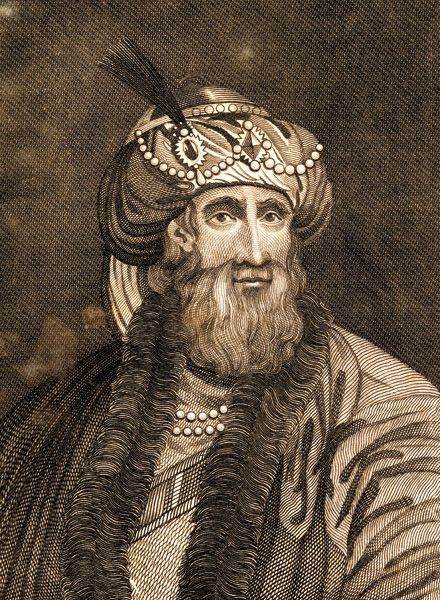
“Phut also was the founder of Libya, and called the inhabitants Phutites (Phoutes), from himself: there is also a river in the country of Moors which bears that name; whence it is that we may see the greatest part of the Grecian historiographers mention that river and the adjoining country by the appellation of Phut (Phoute): but the name it has now has been by change given it from one of the sons of Mezraim [Mizraim], who was called Lybyos.” —Josephus, Antiquities of the Jews, book 1:6/2
Bear in mind that North Africa, including Egypt and Libya, has been conquered several times, and a large part of the population is now Arab, with many indigenous people having converted to Islam or moved southward. Genetically, we find both Arabs and the original descendants of Phut/Mizraim.
Mizraim is known to be Egypt; it is still called Misr in Arabic. The original Biblical text calls it Mitsrayim, and it was translators who rendered it as “Egypt” after the Greeks named it Aegyptos. That is not what the Bible originally calls it; it is simply how translators have chosen to render it. The Bible calls it Mitsrayim, revealing that this was Ham’s son’s territory.
So when the translation writes “Abraham went to Egypt,” it means Abraham went to Mitsrayim. The Bible therefore places most of Ham’s sons in Africa. Regarding Persia, the Bible tells us its capital is Susa, which was named after one of Shem’s sons, Elam. The Bible also tells us that Shem’s great-grandchildren by another son went eastward as well: “And their dwelling was from Mesha, as thou goest unto Sephar a mount of the east.” (Gen. 10:30)
As we will investigate further, the Bible reveals that the descendants of Japhet went west and north. This shows that each of Noah’s sons was assigned a wind direction, with Japhet’s children receiving two. Japhet is the king of the West and North, Shem is the king of the East, and Ham is the king of the South. Some things did change over time.
Media, located in what is now northern Iran, is descended from Japhet’s son Madai. Later in this article, we will find out why he stayed with the tribes of Shem and why this is relevant to Gog and Magog.
Israel, the Six-Day War.
Many believe that the wars in modern Israel directed at Israeli Jews are somehow related to the Gog and Magog war, or will eventually lead to it. However, according to evangelical views, no “Magog” has been present in these conflicts so far.
In the Six-Day War, it was Egypt, Jordan, Lebanon, and Syria that attacked modern Israel. Genealogy confirms that these nations are closely related to Jews and are most likely Arabs, with some even being descendants of ancient converted Israelites and Samaritans. The main powers in the wars in the Middle East are mostly from the tribe of Shem mixed with the tribe of Ham. It is modern Israeli Jews fighting the ancient tribes of Israel who converted to Islam, as well as other descendants of Abraham. At its core, it is a Semitic conflict.
- In Egypt, the descendants of Ham have also mixed with Semites following early Arab invasions. Still, the country retains its original Egyptian roots.
- In Jordan, we find descendants of Ammon and Semites, including those from the lines of Israel and Ishmael.
- In Lebanon, we find descendants of the ancient Canaanites and Semites, including those from ancient Israel and some of Shem’s other sons.
- In Syria, we find descendants of the Assyrians and other Semitic peoples.
As we can see, these are not the main provocateurs God describes in the Gog and Magog war.

Palestinians
What about the Palestinians? Many modern Israelis and Jews have long portrayed them as Arab invaders who do not belong in the area and have no right to it, claiming that Palestinians first “stole” Palestine and that Jews are now taking it back.
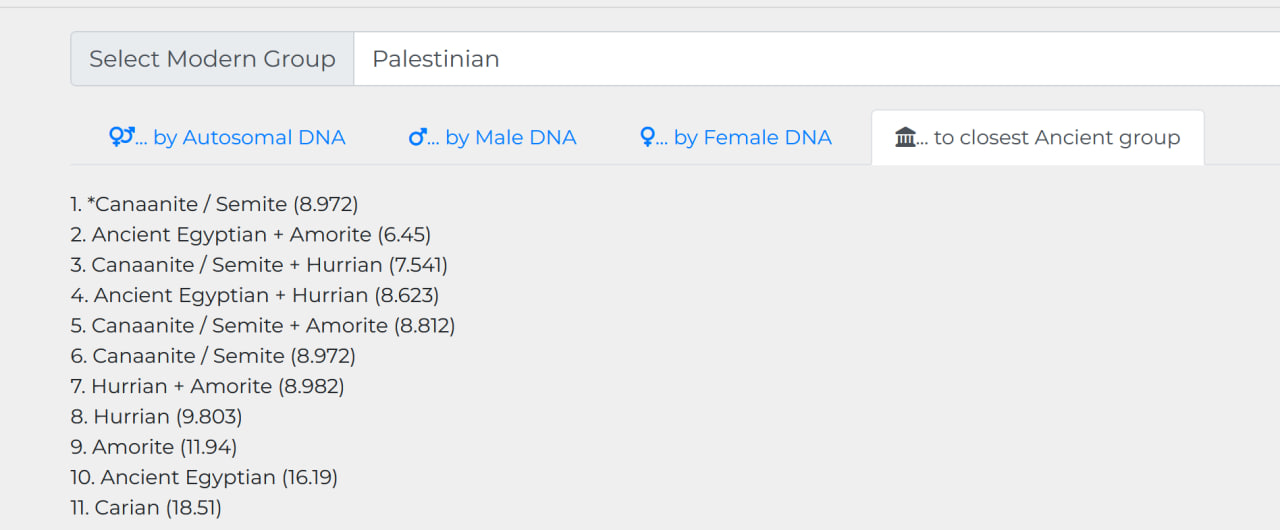
Genealogy researchers have long been testing hundreds of ancient burials around the world and have developed a good understanding of who is closely related to which ancient group. One such genealogy source shows that modern Palestinians are most closely related to the following ancient groups: Canaanite/Semite, Hurrian, Amorite, ancient Egyptian, and Carian. What they call Canaanite/Semite is ancient Israel. The reason ancient Israel is now labeled Canaanite/Semite is that evolutionists reject the Exodus and claim Israel were Canaanites who had always lived there. “Semite” relates to the Israelite family tree and the broader Semitic people. Palestinians are therefore made up of a mixed group drawn from several populations that have lived in the land throughout history: descendants of Ham, ancient Israel, and Arabs. This means Palestinians have always lived in the surrounding region and the Middle East, while most Ashkenazi Jewish Israelis today (including settlers taking land from Palestinians in the occupied territories) are interbred with European and other Middle Eastern genes. Those who call themselves Palestinians today have therefore always lived in the Middle East, and they are mostly not descendants of Japhet or Magog, but of Shem, Abraham, and Ham.
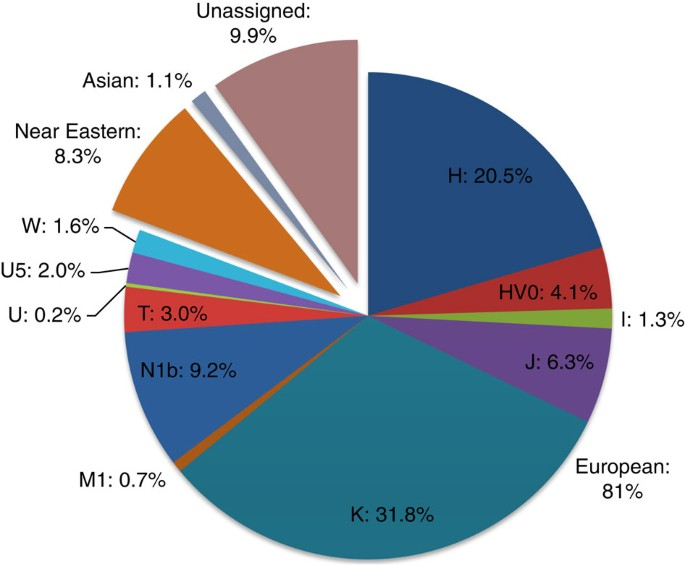
Mitochondrial DNA shows that modern Ashkenazi Jews, who were behind the great 20th-century Jewish immigration to Israel, are of mixed heritage and by no means a “pure” Jewish race. Jews claim that if your mother is Jewish, then you are Jewish, showing this is tied to religion more than genetics.
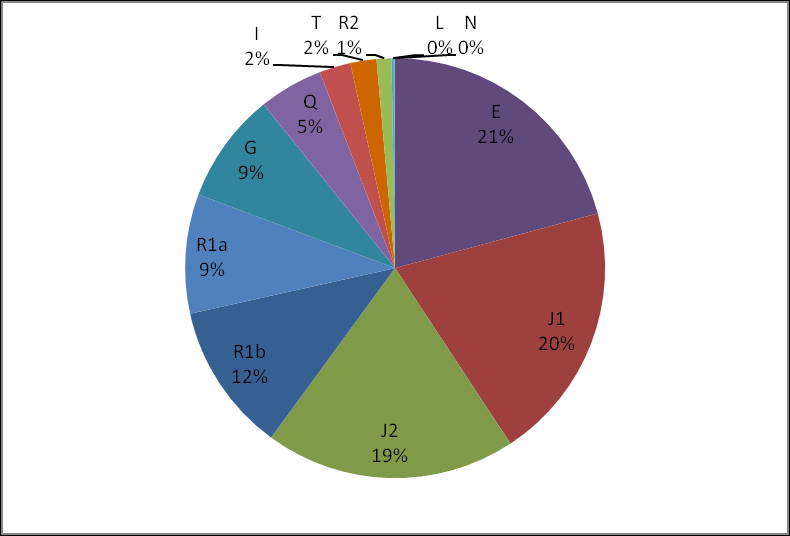
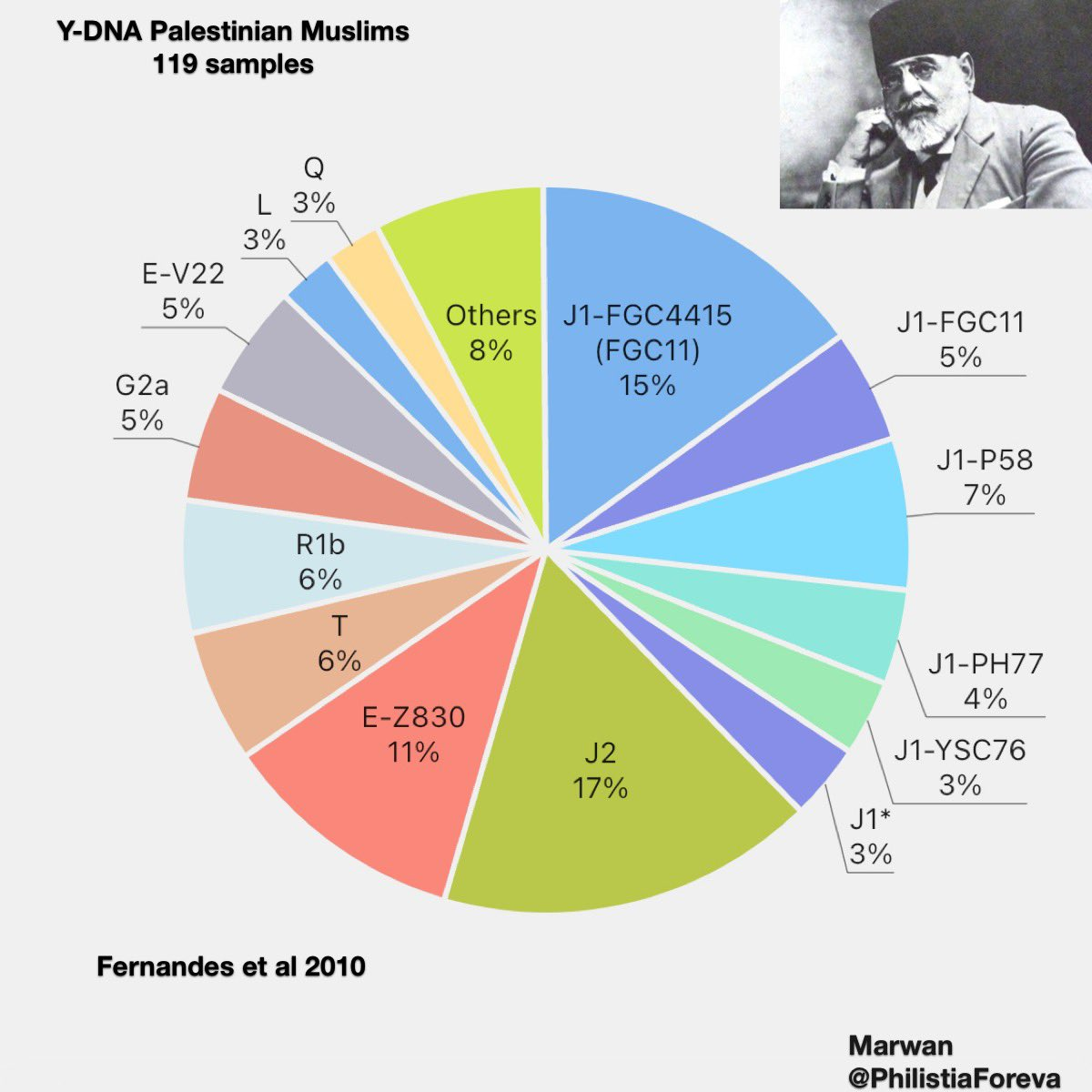
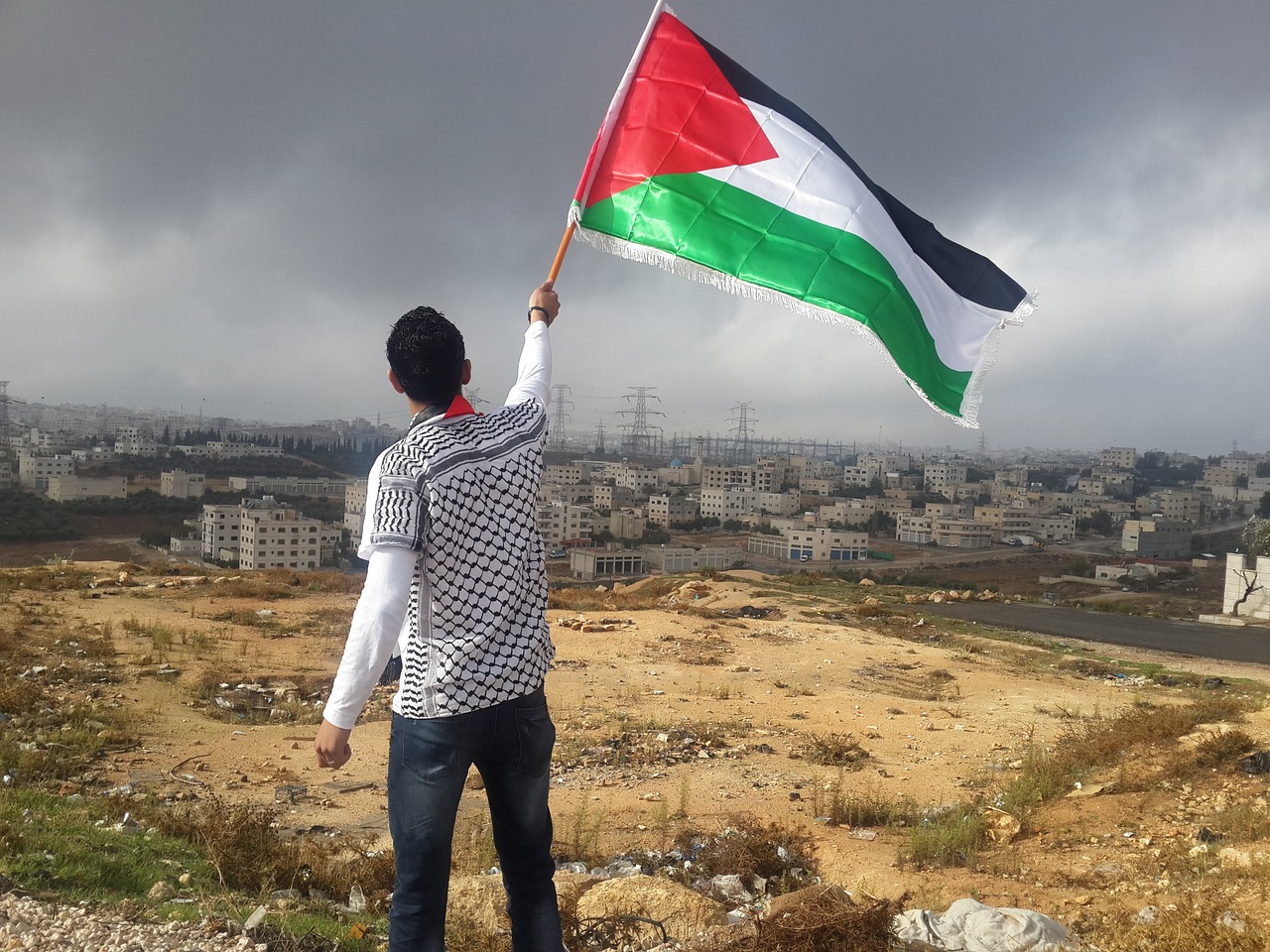
Photo: Who are the Palestinians? During the first diaspora, God left the poor among the Israelites behind in the land, along with some farmers, while the rest were scattered. God did not scatter everyone the first time. (Jer. 40:6) God also left a remnant behind in the land the second time. Palestinians appear to be a mixed group that includes descendants of Israelites and Judahites, as well as a remnant of those left behind. They were likely poor farmers, as was the case the first time. Neither Rome nor Babylon took the trouble of dispersing groups that showed no opposition and mostly complied with their rulers. This is evident in their choice to let Jeremiah remain in Jerusalem in peace with the others. During the Islamic invasions of the land between the 6th and 9th centuries, the remnant groups who survived the Roman conquest converted to Islam, while still claiming to be descendants of ancient Israel. They appear to be telling the truth.
Over the last 2,000 years, Palestinians have mixed with other groups in the Levant, while Jews have mixed with other religious Jews and local populations wherever they lived, creating a genetic gap between the two groups.
God’s promise to Abraham appears to have been fulfilled in those left behind: “In the same day the LORD made a covenant with Abram, saying, Unto thy seed have I given this land, from the river of Egypt unto the great river, the river Euphrates” (Gen. 15:18). It shows a God in control.
The Bible prophesied that God would give the land to a remnant of Israel.
In Zephaniah, God tells us why Israel’s genetics are found among Palestinians and Jordanians, and that it is His design.
He explains: “Woe unto the inhabitants of the sea coast, the nation of the Cherethites! the word of the LORD is against you; O Canaan, the land of the Philistines, I will even destroy thee, that there shall be no inhabitant” (Zep. 2:5). Then He says who will live there instead: “And the sea coast shall be dwellings and cottages for shepherds, and folds for flocks. And the coast shall be for the remnant of the house of Judah; they shall feed thereupon” (Zep. 2:6-7). The world, and even Jews, have been led to believe this is about the future, but genetics show that it was already fulfilled long ago, and that those today called Palestinians are a remnant whom God placed there in place of the Philistines.
A similar judgment happened in the country we now know as Jordan: “I have heard the reproach of Moab, and the revilings of the children of Ammon, whereby they have reproached my people and magnified themselves against their border. Therefore, as I live, saith the LORD of hosts, the God of Israel, Surely Moab shall be as Sodom, and the children of Ammon as Gomorrah, even the breeding of nettles, and saltpits, and a perpetual desolation: the residue of my people shall spoil them, and the remnant of my people shall possess them” (Zep. 2:8-9).
History tells us that the Greeks dispersed the Philistines from the land long before the Jews were expelled by the Romans. Alexander the Great rearranged the region and created a Greek metropolis. The early inhabitants of Gaza who had opposed the Greeks were sold as slaves. This created a new era with a new population. So those who believe Zephaniah speaks of Jews destroying Palestine today should learn that this prophecy was already fulfilled during Alexander the Great’s era, and those living there today are not the ones the prophecy is speaking against. Rather, it is the remnant that the prophecy says took over, which is now targeted by the State of Israel.
Again, this is not about the modern state of Israel taking Jordan today. This has already happened in the past, and genetics show that the word of God was fulfilled. The remnant of Israel does, in large part, possess these lands.
ANCIENT ISRAEL IN IRAQ?
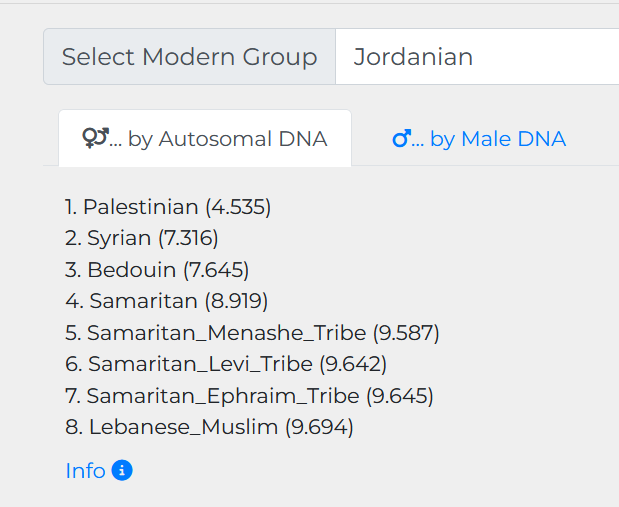
Jordanians, who are related to Palestinians, are also closely related to Samaritans from the Israelite tribes of Manasseh, Ephraim, and Levi.
Between Jordan and the River Euphrates lies part of Iraq. Do the descendants of Abraham cover the area to the river, even in Iraq? Genetics show they do:
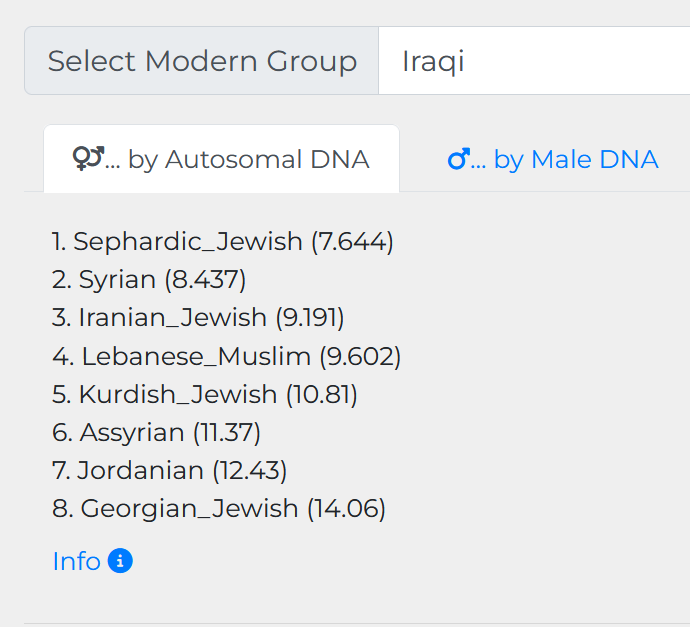
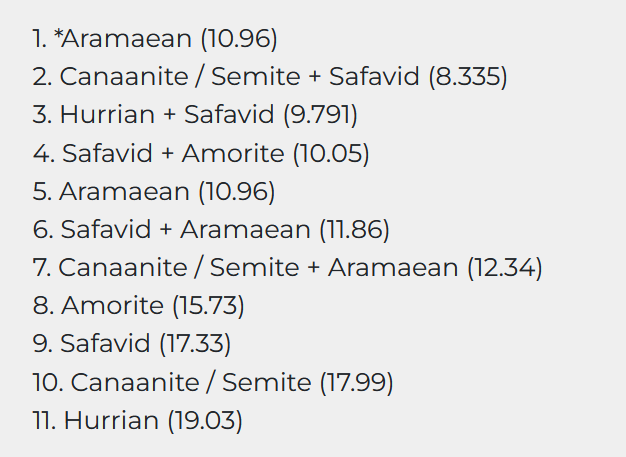
The war in the Middle East today is therefore not what it seems at first glance. It is mostly a religious war, with remnants of ancient Israel on both sides holding different religions. One side has the nations of the West as their support, and the other has Islamic nations as their support. We will explain this war in a later part of the Gog and Magog series, to make it all make sense from Scripture.
Where are Japhet’s sons today?
The Bible gives us clues about the direction some of Noah’s tribes went after Babel, but from there they continued to spread out across those territories, mostly in the same wind direction as populations grew, except in Asia, where they also spread northeast. Sometimes the descendants of Noah’s sons intermarried, as DNA evidence shows. That is why we need to let the Bible fill in the gaps. Noah’s sons did not remain only in the first place they went. This was God’s design. It says:
“So the LORD scattered them abroad from thence upon the face of all the earth: and they left off to build the city. Therefore, is the name of it called Babel; because the LORD did there confound the language of all the earth: and from thence did the LORD scatter them abroad upon the face of all the earth.” (Gen. 11:8-9)
Did someone take Magog’s land, and can there be a new Magog?
We also see in several places in the Bible that God acts to protect tribes’ rights to the areas He has designated for them. The Book of Jubilees claims the descendants of Noah made an oath to travel only to the places assigned to them: “in the presence of the kodesh judge, and in the presence of Noah our father” (Jubilees 10). It further explains that Canaan violated this and settled in the land of Shem. There appears to have been a rift between Noah and Ham’s son Canaan, where Canaan is in part blamed and cursed for his father Ham’s disrespectful behavior (Gen. 9:25). The conflict between them is further seen when Canaan refused to settle in the area Noah had appointed to him. As Shem’s descendants were too few to immediately inhabit it themselves, Canaan took advantage of this. The book claims that both his father Ham and his brother Kush warned Canaan against it, saying: “And Ham, his father, and Cush and Mizraim his brothers said to him: ‘You have settled in a land which is not yours, and which did not fall to us by lot: do not do so; for if you do, you and your sons will fall in the land and (be) accursed through sedition; for by sedition you have settled, and by sedition will your children fall, and you shall be rooted out forever.’”
Both the Bible and the Book of Jubilees therefore tell us that God took part in dividing the land. The Lord was the one who scattered them. In other places where God scattered people, we also see Him having clear intentions in how and where they were scattered. The Bible tells us God is the King of all borders (Job 38:10). Job said: “He increaseth the nations, and destroyeth them: he enlargeth the nations, and straiteneth them again” (Job 12:23). The Bible also shows us how God preserves other peoples’ lands, not just Israel’s (Deut. 2:5, 9, 19; Gen. 15:18). Japhet and Magog receive their judgment at the Gog and Magog war at the very end of the 7,000 years, showing that their areas still belong to them until the very last. They did not die out; they remained in control of their areas. However, as we will see, they did have internal conflicts and wars, and they also committed another grievous sin regarding the holy land, a land not appointed to them.
God has control over who went where, and we need to keep that in mind as we continue. This will also help us identify Magog and expose his sin against Jerusalem and God’s people.
CONTINUE TO PART TWO —————-> Human development after the flood