


Article series: INTRODUCTION – WHO IS JEHOVAH? – WHO IS THE REAL ISRAEL – THE SCATTERING – THE GATHERING: ONE-FOLD – ONE ISRAEL : THE MODERN STATE OF ISRAEL NOT CHOSEN – DANIEL 9 AND THE PRE-TRIBULATION DECEPTION – JUDAISM ACE IS NOT A GODLY REPRESENTATION OF OT – THE BIRTH OF THE MODERN STATE OF ISRAEL – THE DIFFERENCE (between Biblical Israel taking of Canaan and modern Israel taking of Palestine) – What side should we take in the Palestinian and Israeli conflict?
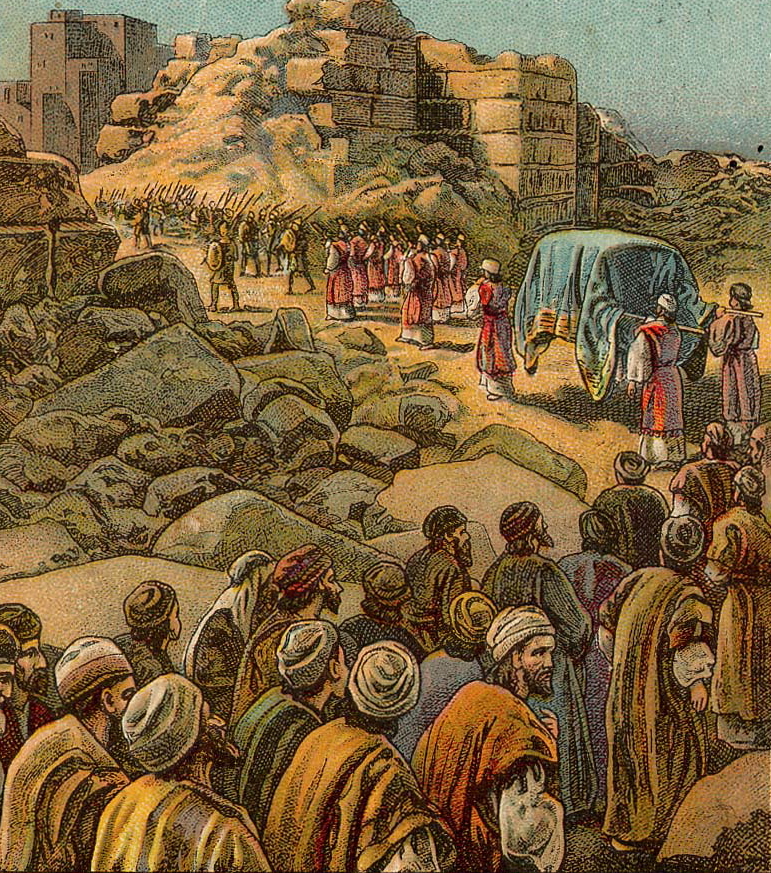
God allowed Biblical Israel to conquer the land through wars, under the leadership of men such as Joshua and David. What is the difference between that earlier taking of the land and that of the modern state of Israel?
The history of God leading them to the promised land through Joshua is used as an excuse or as evidence that it is God’s will for them to do the same today.
The difference between the past taking of the land and the modern taking of it is great, as are the principles behind each.
In Israel’s history, there are two exoduses: one from Egypt and another from Babylon. The first time, they were to take the land of Canaan, which was promised to them by force. The second time, it was to be given back to them by a decree. This means that when they returned after the Babylonian captivity, the land would not be reconquered but would be returned to them after it had been mostly deserted for 70 years. God had asked those Jews remaining in the land to stay, but they fled to Egypt instead. Still, God made sure the land was ready for their return. No armed conquest was necessary.
“And this whole land shall be a desolation, and an astonishment; and these nations shall serve the king of Babylon seventy years” (Jer. 25:11)
According to His law, God had declared what would happen to the land if they were unfaithful and were taken from it: “Then the land will enjoy its sabbath years all the time that it lies desolate and you are in the country of your enemies; then the land will rest and enjoy its sabbaths” (Lev..26:34).
As prophesied, it came to pass: the land lay mostly desolate before being given back to them. Moreover, the prophecy of 70 years of desolation was followed by the prophecy of their probation in the land for 70 prophetic weeks, ending some three years after Christ’s death.
After Christ, the Jews were scattered, and the land was taken over by other nations one after the other: Rome, Byzantium, the Arabs, the Crusaders, and the Ottomans, to name the main groups. Through DNA analysis, we can see that Palestinians have Levantine ancestry and have lived in the Middle East for many generations. Some Jews continued to live there as well; some were converted to Christianity, some to Islam, and some remained Jewish. The genetic pool is very mixed.
The land of Israel was already inhabited when the Jews began their large-scale immigration in the 20th century, and because it was populated, a conflict arose between the Arabs and the Jews that continues to this day.
This time, the state was not given to the Jews peacefully, but through war and terrorism. The land had not been left barren for them. There was no prophecy about their return after the land had enjoyed its sabbaths. For nearly 2,000 years, the land had been controlled by different groups and inhabited by populations of several religious backgrounds.
The question is, can this establishment of modern Israel be compared to the establishment of Israel when it first took the land from the Canaanites? Is it a similar situation?
The conditions for taking the land the first time
Although God had given the land to Abraham and his grandson Jacob, Abraham had not been permitted to conquer it in his day. The Canaanites had settled in a land promised to Abraham’s lineage, yet he could not simply drive them out. This would result in bloodshed, and God values human life. He told Abraham that it was not enough to be chosen or to have a right to the land; God would not take it by force before the appointed time: “But in the fourth generation they shall come hither again: for the iniquity of the Amorites is not yet full” (Gen 15:16).
This means that settling in land that did not belong to them, when it was largely barren, was not a sufficient crime for God to punish them. God operates as a governing justice system watching over all people. He did not only stand for the rights of Israel; He also told Israel not to take specific areas of land on their way to the promised land: “Do not provoke them, for I will not give you any of their land, not even a footprint, because I have given Mount Seir to Esau as his possession” (Deut. 2:5). He said the same about land given to another nation. Neither of those two nations was faithful to God at the time, yet He still cared for their rights.
As Jesus said: “That ye may be the children of your Father who is in Heaven. For He maketh His sun to rise on the evil and on the good, and sendeth rain on the just and on the unjust” (Matt. 5:45). God does see to the rights of other nations as well, whether they give Him glory or not.
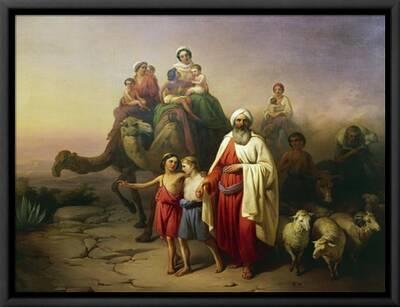
He also judges. The land given to Abraham was inhabited by other nations, yet as long as God could try to reach them, He would not permit Abraham to shed any blood. The dividing of the territories most likely occurred as recorded in the Bible: “And unto Eber were born two sons: the name of one was Peleg; for in his days was the earth divided; and his brother’s name was Joktan” (Gen 10:25). There was a division according to God’s order, and Canaan had not continued southwestward as instructed but had chosen to dwell in Canaan, as it was a strategic trade route between Egypt and Mesopotamia, the region of the descendants of Ham and Shem. Even so, God would not drive them out of the land; He loved them and wanted to reach them first.
Before Israel took the land, God’s judgment fell upon only a few cities in Canaan, the two most well-known being Sodom and Gomorrah. God rescued them through Abraham when the kings of Mesopotamia took them captive. Rather than rejoicing that the people dwelling in the land promised to him had been removed, Abraham defended them and helped free them so they could continue living there. He did not exploit the situation for his own benefit. Later, the cry from the city grew great; their evil behavior was affecting many and caused people to bring their complaints before God. God judged them and destroyed them after an investigation through His justice system. But for the rest of the land, there was still hope. God gave them another 400 years, not only to relocate but to receive the truth and be saved.
By the time Israel was led to take the land, the country was under universal judgment, and Israel had been called to execute God’s judgment over them.
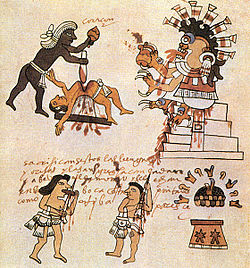
In no way were they to think God gave them the land because they were some superior people with greater rights than others. They were chosen because they had agreed to uphold God’s laws and because the heavenly court had decided that Canaan must be judged to save the rest of mankind. The Canaanites were, in a sense, the Aztecs of the Levant.
God said: “Not for thy righteousness, or for the uprightness of thine heart, dost thou go to possess their land: but for the wickedness of these nations the LORD thy God doth drive them out from before thee, and that he may perform the word which the LORD sware unto thy fathers, Abraham, Isaac, and Jacob. Understand therefore, that the LORD thy God giveth thee not this good land to possess it for thy righteousness; for thou art a stiffnecked people” (Deu 9:5-6).
Taking the land was not just something they could do because they were descendants of Abraham, but it was tied to the great ungodliness of the nations possessing it and their special calling. This meant and was written, that if they do what they did, they will lose the right to it as well. The takeover of Canaan began after God miraculously took down the walls of Jericho. But when Israel went to take the city of Ai God did not want to help them because someone had stolen goods from Jericho and hid it in the camp. This shows us the strict policy God had when taking the land, that Israel had to be faithful while performing God’s judgment upon the nations.
Taking the land was not something they could do simply because they were descendants of Abraham; it was tied to the great ungodliness of the nations possessing it and to Israel’s special calling. This was written clearly: if they did as those nations had done, they would lose the right to the land as well. The takeover of Canaan began after God miraculously brought down the walls of Jericho. But when Israel went to take the city of Ai, God refused to help them because someone had stolen goods from Jericho and hidden them in the camp. This reveals the strict standard God held during the taking of the land: Israel had to remain faithful while carrying out God’s judgment upon the nations.
These principles appear throughout the Bible. When they went to war with the Philistines while still being unconverted themselves, God would not go with them (1 Sam. 4:11).
When they sought to execute judgment upon the tribe of Benjamin for its sins, they first had to humble themselves and receive atonement (Judg. 20).
In no way did having the right genetics secure God’s support in the wars. Every time God’s people were backslidden, God allowed the enemy to conquer part of their land until they finally lost everything.
God explained His decision like this: “Then take of them again, and cast them into the midst of the fire, and burn them in the fire; for thereof shall a fire come forth into all the house of Israel. Thus saith the Lord GOD; This is Jerusalem: I have set it in the midst of the nations and countries that are round about her. And she hath changed my judgments into wickedness more than the nations, and my statutes more than the countries that are round about her: for they have refused my judgments and my statutes, they have not walked in them. Therefore thus saith the Lord GOD; Because ye multiplied more than the nations that are round about you, and have not walked in my statutes, neither have kept my judgments, neither have done according to the judgments of the nations that are round about you; Therefore thus saith the Lord GOD; Behold, I, even I, am against thee, and will execute judgments in the midst of thee in the sight of the nations.”
When Israel was worse than the surrounding nations, God would in no way defend them against those nations (Eze. 5:4-8).
This principle appears throughout the Bible: genetics and being a descendant of Jacob mean nothing if the covenant with God is not kept. God tolerates much wickedness without abandoning a people entirely, but He cannot tolerate His name being used to defend cruelty. God’s principles always come before genetic heritage. Moreover, even through the Arab population, the descendants of both Abraham and Jacob are represented in the land. Many Muslims are descendants of ancient Judah and Israel who converted to Islam. If religion does not matter and only genetics do, then they have just as much right to live there as the Jews. If religion does matter, then neither group has the right over the other. If judged by political morality, the greatest right belongs to those who have lived there the longest and are native to the land, and not the invaders.
In one sense, Abraham was like the first Christians. Though he had the right to the land, he was not told to take it by force; instead, he had faith that it would be his inheritance after death, when the world would be made new. He was not to go into battle for it.
To be allowed to possess God’s land, the Jewish people have to:
– Be in a covenant with God
– Have received atonement
– Follow God’s principles and laws
– Not be like the ungodly nations.
From a Christian standpoint, the Jews of modern Israel do not match these criteria.
The Sins of the Canaanites versus the Sins of the Palestinians.
The sins of the people of Canaan, which subjected them to God’s judgment, were so vile that the full extent of them is not written down. We know they practiced human sacrifice and severe sexual immorality. Most of what we learn about them comes from God’s warnings to Israel not to follow their practices.
“The land was defiled; so I punished it for its sin, and the land vomited out its inhabitants” (Leviticus 18:25).
God said to them: “You must not do as they do in Egypt, where you used to live, and you must not do as they do in the land of Canaan, where I am bringing you. Do not follow their practices” (Lev. 18:3). Among the practices God described were all forms of incest, sex with animals, homosexuality, adultery, and human sacrifice, including child sacrifice. The fear and trauma a society experiences from these behaviors lead to mental illness, violence, and aggression, putting everyone on edge.
He says: “Defile not ye yourselves in any of these things: for in all these the nations are defiled which I cast out before you… (For all these abominations have the men of the land done, which were before you, and the land is defiled)” (Lev. 18:24, 27).
Sexual immorality is the downfall of a nation in more ways than one. Either children are abused directly, or broken families leave them without a parent, usually a father. Many children then lose their sense of direction and worth and seek validation in all the wrong places.
In addition, God mentions witchcraft, trafficking, transgenderism, idol worship, and the worship of nature.
When it comes to the modern Palestinians who were displaced to make way for Jewish immigrants, they are not particularly known for practicing any of these things. In Islam, most sexual immorality is forbidden, as is idol worship; human sacrifice is not practiced, homosexuality is prohibited, and witchcraft is not permitted. Palestinians are not accused of trafficking either, and where cases do exist, they are far fewer than in Western countries such as the United States, North Africa, and South Asia. All of Canaan’s sins are now normalized in the West following the decline of Christianity, and even among the secular Jews who now live where Palestinians were driven from.
Israel has not upheld God’s laws against incest. Although incest among minors is outlawed, it is not forbidden if the individuals involved are over 21. When it comes to the rights of same-sex and transgender individuals, Israel is a leading voice in the Middle East and Asia, being the first in Asia to recognize same-sex unions. “Tel Aviv was referred to by the Calgary Herald as one of the most gay-friendly cities in the world,” and “According to users of the website GayCities, it was ranked as the best gay city in 2011” (https://en.wikipedia.org/wiki/LGBT_rights_in_Israel).

The killing of babies for convenience, or abortion as it is called, has been permitted in Israel since 1977, and the rate is high relative to its population. When the United States moved to restrict abortion, Israel called the decision “sad” and responded by loosening its own abortion regulations even further. (https://www.johnstonsarchive.net/policy/abortion/ab-israel.html, https://worldpopulationreview.com/country-rankings/abortion-rates-by-country
https://apnews.com/article/abortion-us-supreme-court-politics-health-israel-68e6acadda5b62ff400a7846d0bae147)
“An Israeli Central Bureau of Statistics survey published in 2021 found that among Israeli Jews over the age of 20, about 45 percent identified as secular or not religious, while 33% said they practiced “traditional” religious worship” (https://www.timesofisrael.com/religion-has-outsized-role-in-israel-yet-most-of-its-jews-arent-really-observant/)
What about infidelity? There may not be a direct statistic on this, but marrying a divorced person is also considered infidelity in the Bible. A report from October 9, 2023, revealed a striking divorce rate of 47.3% in Israel (https://www.wjtv.com/business/press-releases/ein-presswire/660674663/divorce-rate-in-israel-as-high-as-47-3/).
Modern Israel simply mirrors other Western nations that have rejected God, reflecting the moral practices of paganism. Israeli universities and the state also uphold the theory of evolution, rejecting God and attributing creation to nature. Observing the Sabbath as a holy day while rejecting the Creator means one is not truly honoring the Sabbath.
Israel is just one of many nations that bear the sins of Canaan, but the key question here is: are modern Israelis more aligned with God’s laws and more deserving of the land than the Arabs or Palestinians who held it before them, and who also carry genetics tracing back to Jacob? Is this a situation of an ungodly people in the land who must be judged? Had the sins of the Palestinians reached their fullness, requiring them to make way for God-fearing Jews? Clearly not. In many ways, the Palestinians are more respectful of Biblical morals than modern Israel is.
It is therefore clear that the scenario of ungodly Palestinians being killed or displaced to make room for faithful Jews who do not practice the same evils is simply not present in the modern conquest of the land, and was certainly not the case in 1948.
The conditions and the situation are not the same. God did not leave the land desolate for them to return to; He is likely not fulfilling a judgment upon a morally depraved Palestinian community, nor is He using modern Israel to uphold His name and rule. Furthermore, the terror attacks that Palestinians have carried out to defend their position in the land are mirrored by what Israel itself did when it first sought to take the land. Blood is spilled on both ends.
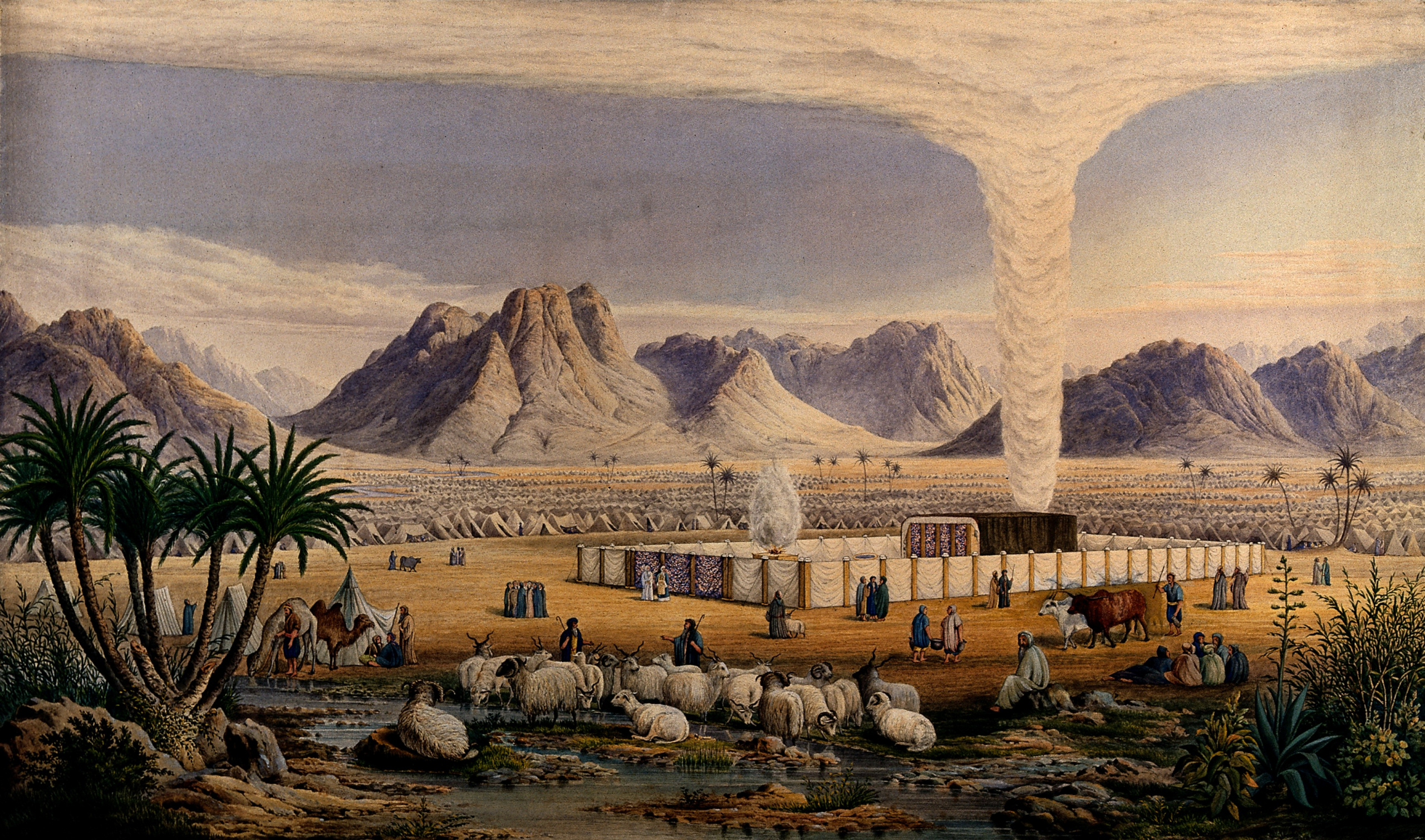
The first time they conquered Canaan, God walked before them into the Jordan River and then dwelt among them. This time, there was no temple, no Shekhinah, no sacrifice, no ark, and no atonement. God did not lead them into the land. And although these things were also absent when they returned after the Babylonian captivity, there was no conquest then either. They received the land through a decree, not through warfare.
The two situations, therefore, cannot be compared.
Even righteous Abraham could not take the land while the wickedness of the people there had not yet run its full course, even though the land was promised to him. Likewise, the children of Jacob could not take the land when they were in opposition to God, and when people were already living there. They were sent to die in the wilderness.
The damage to God’s name
Israel’s war is fought with severe cruelty, leading people all over the world to draw parallels between the situation today and the conquest described in the Old Testament. By this association, God is made to appear bloodthirsty, unreasonable, and unrighteous. This is precisely Satan’s aim: to make us doubt that God is good.
By mirroring modern Israel with ancient Israel’s conquest of the land, an ungodly image of that original conquest is created. Satan can easily manipulate how people view what happened thousands of years ago. When the West went to fight ISIS, few showed sympathy for ISIS because of its cruelty and depravity. Its fighters cut innocent people’s heads off and taught their children to do the same. Most people wanted to see them defeated. They feared them. This was partly the case in ancient Canaan as well: many nations were relieved when judgment fell upon it. Some had even sought to judge it themselves, as when the Mesopotamian kings took Sodom and Gomorrah. The modern State of Israel’s attempt to portray all Palestinians as being like ISIS, even the children, is not accepted by the watching world. These military campaigns are viewed as genocide rather than liberation. There will always be wars in a world under human rule. We accept that war is sometimes necessary in cases of extreme cruelty. That is why international human rights courts were established, and why the world chose to judge German leaders after World War II. Sometimes things are so severe that war is needed to protect mankind. When the United States entered Europe, it saved it from Nazi Germany. People understand the need to fight a greater evil so that it does not consume the lesser. People have a sense of justice. When the State of Israel implies that all Palestinians are dangerous and must be suppressed, the world does not believe or agree. When the Biblical conquest of Canaan is compared to the modern Jewish taking of Palestine, God is made to appear unjust.
The ungodliness of the Canaanites was terrible. They placed very little value on human life, suppressed and abused one another daily, and harmed children and the weak in society. We know this because God explained His reasons for destroying Sodom, a Canaanite city: “This was the iniquity of thy sister Sodom, pride, fulness of bread, and abundance of idleness was in her and in her daughters, neither did she strengthen the hand of the poor and needy. And they were haughty, and committed abomination before me: therefore I took them away as I saw good” (Ezek.16:49-50)
The laws against evangelizing Jews about Christ, and the barriers placed against Jewish Christians returning to the land, reveal a people still opposing God. They believe they can take the land on their own terms, make the rejection of Christ their cornerstone, and use God’s name to their advantage. All of this puts God in a difficult position, where He must defend His honor and expose the lies.
Can Jews take the land by force?
When biblical Israel was unfaithful to God’s commands, God would not help them take possession of the land, even though He had promised it to them. We see this in the account of Moses and the people gathered at Kadesh, where they first rebelled against God. When God told those who had rebelled that they would not be given the land and would die in the wilderness, they decided to defy Him and take it by force. God did not prevent them from trying, but He did not go with them either. The result was that they were defeated by the inhabitants and driven away.
When the next generation was finally permitted to conquer the land, they first had to receive God’s atonement to be cleansed of their past sins so that He could go with them.
Jews may attempt to possess the land by force without meeting God’s criteria or being obedient to Him, but in the end, without God’s support, they will not prevail.
God has not permitted the Jews to take the Temple Mount. Old Jerusalem remains a melting pot of different Abrahamic faiths, not exclusively Jewish. Each group has its designated area, as do Christians and Muslims. Regardless of what modern Israel does, God will likely not allow them to rebuild the temple.
“Who kept the sea inside its boundaries as it burst from the womb, and as I clothed it with clouds and wrapped it in thick darkness? For I locked it behind barred gates, limiting its shores. I said, ‘This far and no farther will you come. Here, your proud waves must stop!” (Job.38:8-11)
The power of victimhood.
Jews had long been disliked in the Christian world, partly because of their disdain for Christ and their labeling of Him as the antichrist, and partly because of their behavior. Gaining sympathy for the Jews was no easy task. The gruesome persecution carried out against them by Hitler’s National Socialist party gave Jews the political favor they needed to be granted a land and to displace those already living there, with few politicians daring to speak out for fear of being compared to Hitler.
Many Christians felt compassion and believed that Jews deserved safety in their own land. For those who believed this had to happen before Christ could return, this was the beginning of the end times.
Victimhood is a powerful tool, so powerful that many fabricate it to achieve their goals. Even though Jews genuinely were victims during the war, victimhood loses its moral standing when it is used to manipulate. Many nations have staged attacks against themselves to generate sympathy and justify action against their enemies. In warfare, this is known as a false flag operation.
This is the power of victimhood. The assumption is that if someone is a victim, they must also be good and in the right. But being a victim does not make one either good or right, and the wickedness of an oppressor does not automatically make the victim virtuous. Yet the power of this misconception gives people an advantage by claiming victimhood to gain public favor, and through it, power and influence.
Although Israel had once been slaves in Egypt, the only God-commanded use of that experience was to treat strangers in their land better than they themselves had been treated in Egypt. They were to use it to cultivate sympathy for those in need and to avoid abusing power or repeating the behavior of the Egyptians. God asked them to let their experience as victims guide them away from suppressing others. “Thou shalt neither vex a stranger, nor oppress him: for ye were strangers in the land of Egypt” (Exo. 22:21).
Israel has done the opposite, using what happened to them as justification to suppress and dominate. Around the world, they were discriminated against, oppressed, and subjected to massacres. Now they do the same to the Palestinians, discriminating, suppressing, and carrying out massacres of their own. They have become what was done to them.
Biblical Israel was to trust in God for protection, as long as they remained loyal to Him. The modern State of Israel shows no concern for loyalty to God; it does not seek to follow His rule, but instead places its pride and trust in itself, its military, and its military alliances. In the Bible, this behavior was likened to that of a prostitute (Ezek. 16:28; Isa. 31:3).
So why did God permit the State of Israel, and how will it all end?