

When the World Was Divided: Identifying Magog
See all the parts to find out who Gog and Magog are:
Part 1: Why is God targeting the sons of Japhet?
Part 2: Human Development After the Flood and Its Relevance Today
Part 3: When the World Was Divided: Identifying Magog
Part 4: Magog, the Provoker in the End Times
To understand human migrations from a Biblical perspective, we must set aside the flawed approach of evolutionists, who rely on inaccurate dates and events as their framework. They also place the origin of human migration in the Asian steppes and Africa. Furthermore, they divide human development into distinct phases, whereas in reality, people have always lived in different stages simultaneously.
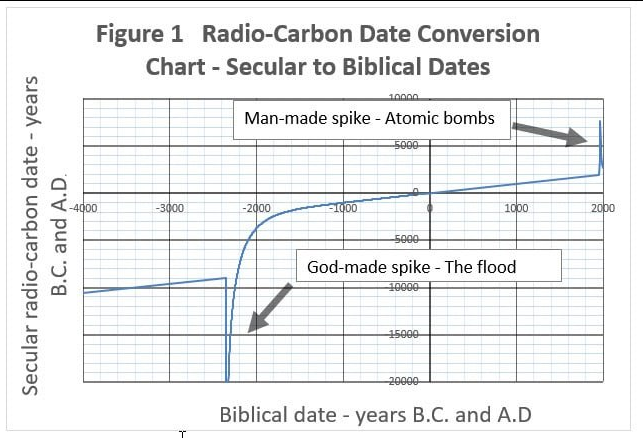
According to the Biblical account, a great flood occurred. After this event, the north experienced a particularly cold climate, which evolutionists call the Ice Age, although it did not last for thousands of years as they suggest. This Ice Age was relatively recent, occurring after the flood when the climate was much colder in the north. Once the ice settled, it remained for some time. When temperatures rose, sea levels rose slightly, and coastal cities built along the shoreline ended up underwater, as seen in several places around the world. Some creationists theorize that numerous volcanoes in the north, which erupted after the flood, caused the colder climate, and that once activity calmed and eruptions became fewer, the temperature rose again.
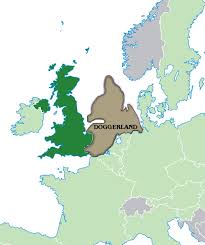
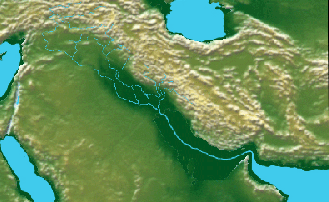
One of the largest areas in the north to be submerged is the recently discovered Doggerland, a landmass that once connected England with Northern Europe. A human-built wall has also been found ten kilometers off the northern German coast in the Baltic Sea. Around the Mediterranean, ancient cities have been discovered underwater close to shore. The Persian Gulf, for instance, was once a river valley, and sea levels rose during the melting of glaciers. The existence of these sunken cities shows that water levels rose sometime after Babel, when people had already spread.
The point is that for many years, the tribes of Japhet did not venture as far north as the areas inhabited today, while the glaciers were still intact. At first, after the flood, the northernmost inhabited regions were what we today call Armenia, Georgia, Crimea, Ukraine, and so on.
In addition to telling us that Japhet’s children settled in the north, the record also tells us that his sons traveled along the coast and to the islands. Japhet’s son Javan is strongly associated with what we now call Western Turkey, Northern Greece, and its islands.
The Book of Jubilee claims that Noah divided the world into three parts, one for each of his sons. Japhet went north and west, Shem went east, and Ham went south.
“10 And for Javan came forth the fourth portion every island, and the islands which are towards the border of Lud. 11 And for Tubal there came forth the fifth portion in the midst of the tongue which approaches towards the border of the portion of Lud to the second tongue, to the region beyond the second tongue unto the third tongue. 12 And for Meshech came forth the sixth portion, all the region beyond the third tongue till it approaches the east of Gadir. 13 And for Tiras there came forth the seventh portion, four great islands in the midst of the sea, which reach to the portion of Ham [and the islands of Kamaturi came out by lot for the sons of Arpachshad as his inheritance]. 14 And thus the sons of Noah divided unto their sons in the presence of Noah their father, and he bound them all by an oath, imprecating a curse on every one that sought to seize the portion which had not fallen to him by his lot. 15 And they all said, ‘So be it; so be it ‘ for themselves and their sons forever throughout their generations till the day of judgment, on which YAHWEH ALMIGHTY shall judge them with a sword and with fire for all the unclean wickedness of their errors, wherewith they have filled the earth with transgression and uncleanness and fornication and sin.”
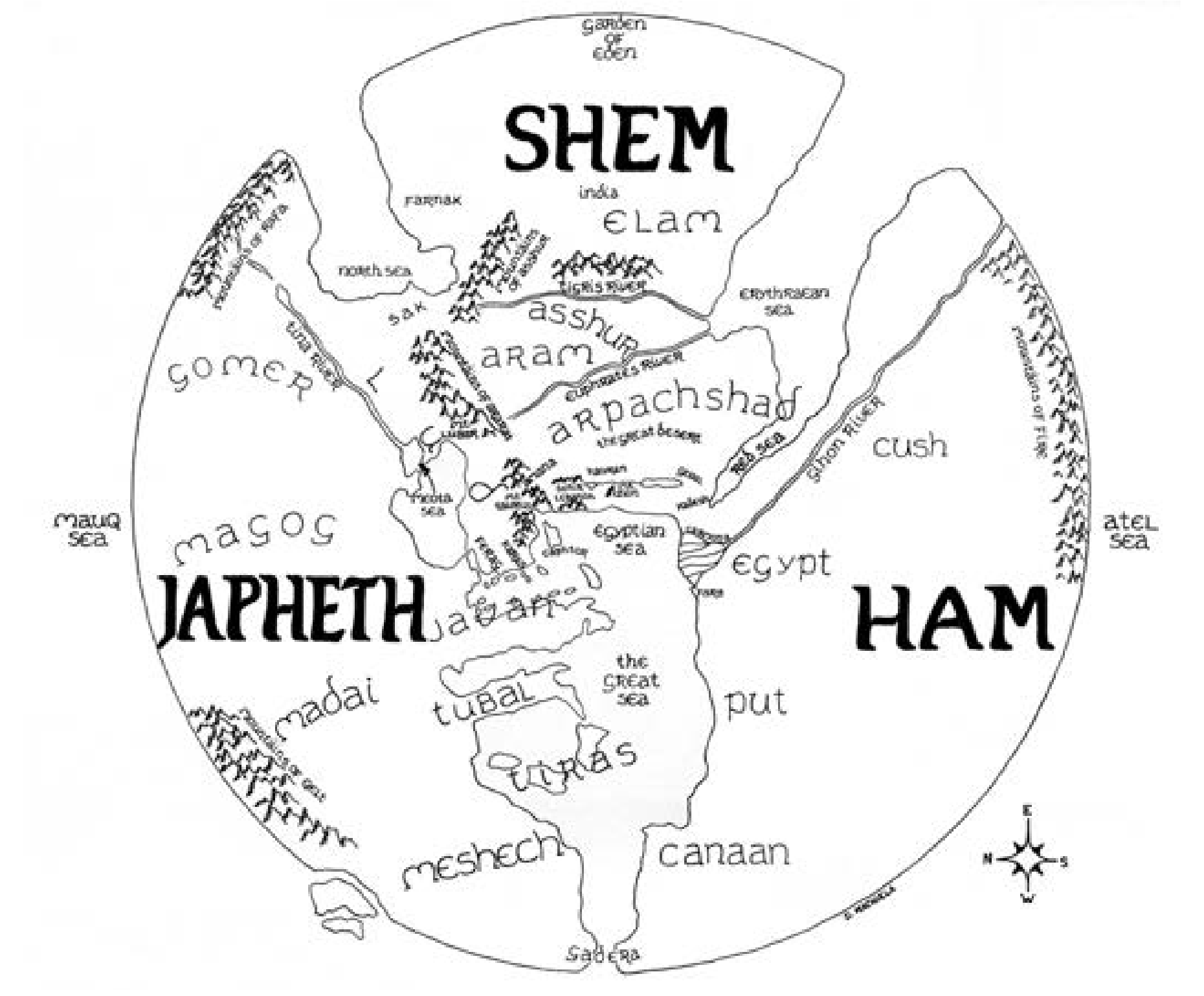
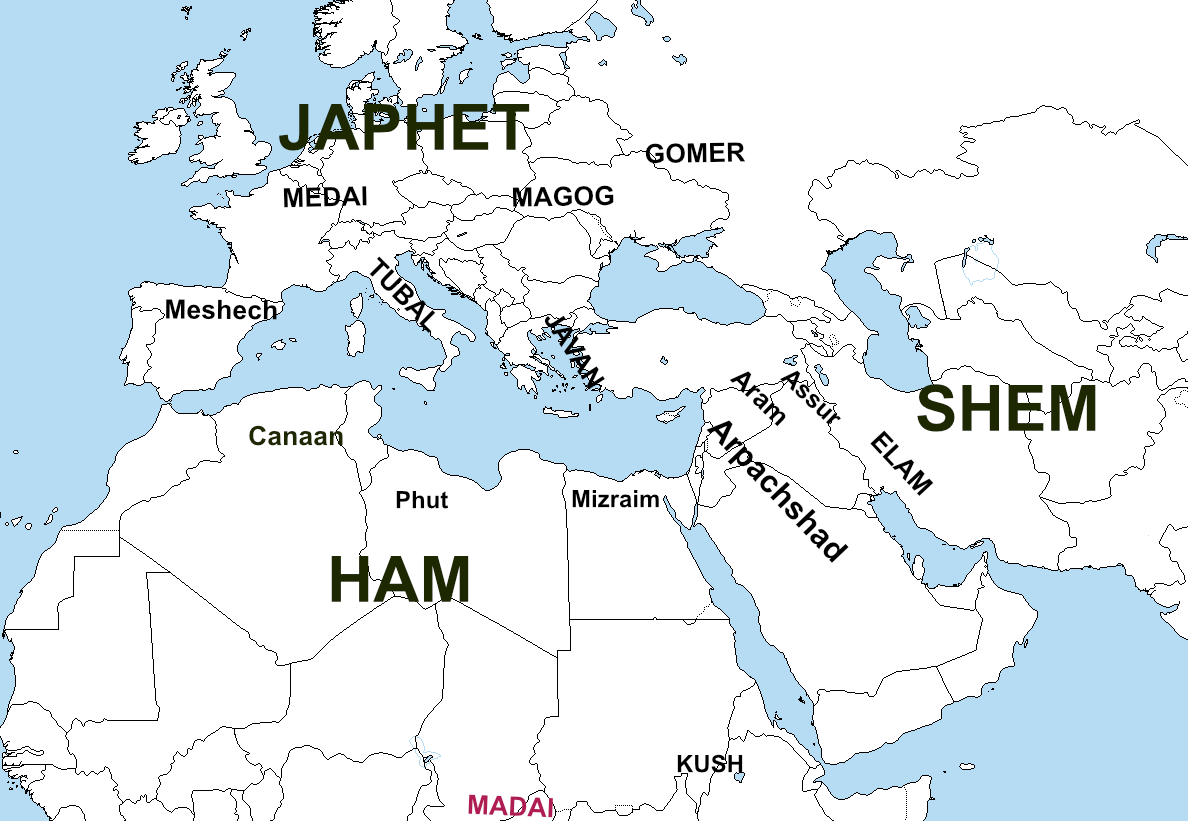
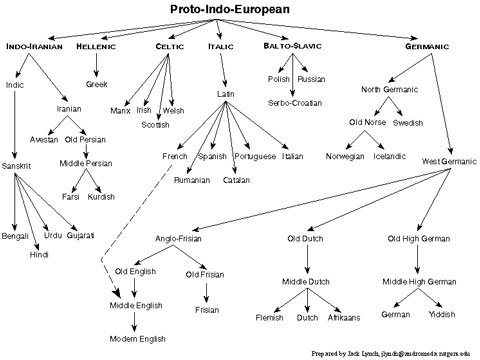
According to the Book of Jubilee, Japhet’s sons ended up covering most of what we today know as Europe, Russia, and the Caucasus. From there, they spread further north, east, and west. It should therefore come as no surprise that all European languages derive from the same Proto-Indo-European language family (except Turkish). These include Latin, Armenian, Slavic, Russian, Germanic, Greek, and even Iranian. Among the first peoples to settle in southern and western Europe were the Greeks, the Gauls, the Celts, and the Italic peoples, all of whose languages come from Proto-Indo-European. Much later, Germanic tribes came to dominate central Europe. The peopling of Europe occurred through several waves of immigration, driven mostly by war, displacement, and competition for resources, pushing populations further into new lands.
Medai and Canaan did not want their lands.
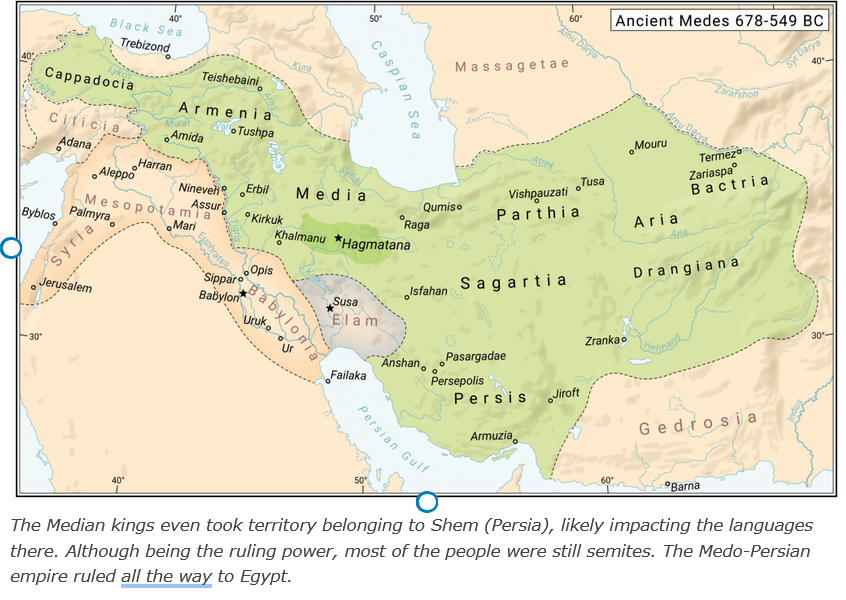
The Book of Jubilee also claims that Medai traveled to his allotted land but then returned east. He did not like it and begged to be given a portion from Shem and a portion from Ham. At that time, Medai was married to Arpachshad’s sister. It says: “And Japheth and his sons went towards the sea and dwelt in the land of their portion, and Madai saw the land of the sea and it did not please him, and he begged a (portion) from Ham and Asshur and Arpachshad, his wife’s brother, and he dwelt in the land of Media, near to his wife’s brother until this day. 36 And he called his dwelling-place, and the dwelling-place of his sons, Media, after the name of their father Madai” (Jubilees 10)
The Book of Jubilee tells us that Medai, along with followers, explored the land shortly after Babel, being among the first to arrive there. How long he stayed and whether some were left behind is not known. It does seem plausible, however, that Medai came to the area while it was still very cold and the glaciers of Northern Europe were still intact. Irish traditions about a flood may offer another clue as to why he begged to remain in the east with his cousins.
Thus, the land along the North Sea and Atlantic Ocean was rejected by Medai and left largely to his siblings’ tribes. We will investigate who went there, as it is of great importance for understanding the Gog and Magog War. Traditions may confirm that it was not Medai who settled there.

The book of Jasher and the book of Jubilee – who tells the truth, if any?
The two books discuss which son of Noah went where. However, they suspiciously disagree on where Magog went. As previously mentioned, Satan has a motive for causing confusion on this topic. We must therefore ask: which of these books tells the truth about Magog? And do ancient historical records confirm one placement over the other?
One book, the Book of Jasher, points toward Russia as Magog. The other, the Book of Jubilee, points to the Western Christian nations as descendants of Magog.
The Book of Jasher is referenced in scripture. Both the Book of Joshua and the Book of Samuel cite the Book of Jasher, which might seem to prove its authenticity. However, the Book of Jasher was lost and was not quoted by anyone in the Bible thereafter. It did not resurface until the 16th and 17th centuries. The book had been lost for approximately 2,500 years, and no one can say for certain how it was found or why it suddenly reappeared. Was it the authentic book that was recovered, or did someone take advantage of the Bible’s mention of such a book and present a false version to push an agenda?
In contrast, the Book of Jubilees was found among the Dead Sea Scrolls and is confirmed to be an authentic ancient document. While its divine inspiration can be debated, a historical record does not require divine authorship to be considered truthful. The Jewish historian Josephus, for example, rejected Christ but still recorded history as accurately as he could, even mentioning Jesus. The Book of Jasher, on the other hand, was never found among the Dead Sea Scrolls. The pre-first-century Jews who carefully preserved Jewish texts did not possess it, nor is it referenced by early Christians or found in ancient Jewish collections. Its reappearance during the Reformation and Jesuit Counter-Reformation is mysterious, and there is currently no way to verify the authenticity of the Book of Jasher now in circulation.
The case of the Book of Jubilee is quite different. It was found among the Dead Sea Scrolls and among pre-first-century Jewish writings. It was continuously quoted after the time of Samuel, during the apostolic age, and was preserved among manuscripts of early Christian groups.
When deciding which account to trust, the Book of Jubilee prevails on all counts. The Book of Jasher presents a similar account of Magog and Gomer, but reverses their locations, placing Gomer in Western Europe and Magog in present-day Russia, whereas the Book of Jubilees places Gomer in modern Russia and Magog in Europe.
This distinction is crucial when studying the Gog and Magog War, as it alters both the interpretation of the conflict and the understanding of Magog’s transgressions.
This shift also fueled “false prophecies” identifying Russia as the main enemy in the end times. These prophecies are promoted by those whom the Book of Jubilee identifies as the real Magog.
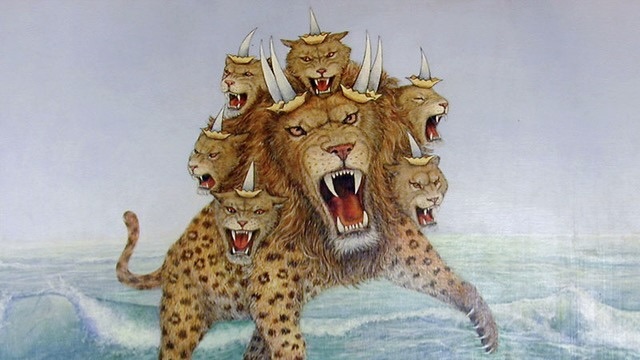
The Book of Jubilee not only places Magog in Europe, but also situates Meshech and Tubal, the other two “bad guys,” in what is now the Latin-speaking part of Europe. The three descendants of Japhet that God is most displeased with correspond to the Roman beast and its northern divisions, or horns. Since these horns reign in the end times, Magog is found among them, not just in Europe, but also in the USA, where these tribes later migrated. This means the Biblical Magog includes both the USA and Europe. However, we must first determine whether Magog truly took over Medai’s territory in Europe.
Immigration and displacement – is Magog still Magog?
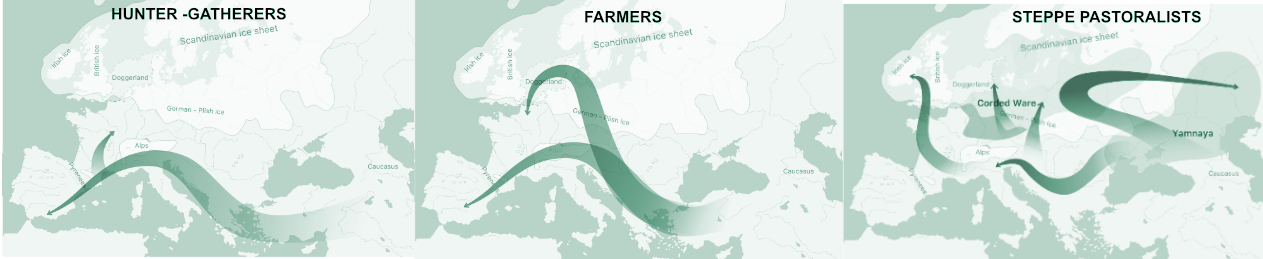
Evolutionists claim that Europe was inhabited by many different groups at various times. However, according to the Bible, this process happened over a short period. People first settled the area in small, isolated numbers, and then the population grew through several waves of immigration. Genealogy and language both show that the many European tribes are all related; they are different branches of the same family. Initially, there was some intermingling at Babel, after which groups became isolated, and later interbred again with neighboring tribes. All speak Indo-European languages (except Hungarian and Finnish), and similar haplogroups indicate a common ancestor. It seems that Magog took the land intended for Medai and then spread northward and westward into Europe. Historical evidence shows that those who immigrated to Western Europe came from Magog’s territory.
Where do historical traditions say they come from?
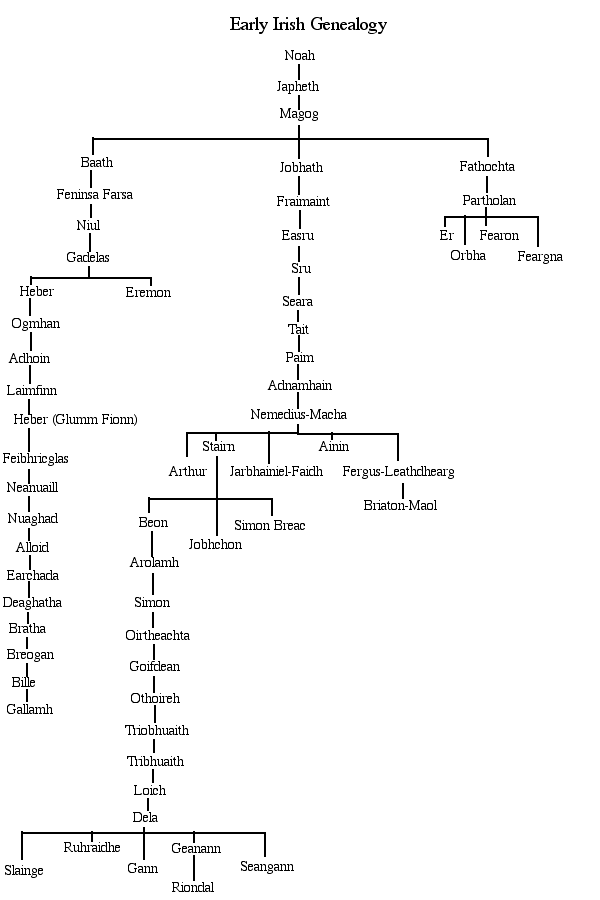
A Celtic historical record called the Lebor Gabála Érenn, a book of the invasions of Ireland, is considered a collection of legends and a written record of traditional oral history from prehistoric times. It tells us the following regarding some of the first people to come to Ireland: “Cesair (Cessair), a granddaughter of Noah, together with her father, Bíth, and her followers, are the first to reach Ireland but perish in the flood* shortly after. The next invasion was led by Partholon (possibly Greek), a descendant of the biblical Magog, son of Japhet. After overcoming the Fomor (Fomorii), a race of supernatural beings, Partholon’s tribe assumed control of the country for three centuries, until consumed by plague. Thirty years later, Nemed, another descendant of Magog, arrived in Ireland. Allegedly from Scythia, a tribe to the north of Greece, he and his Nemedian tribe deforested many plains in Ireland and (like Partholon) defeated the Fomor in battle.”
The flood referenced here likely refers to when water levels rose, covering Doggerland and other parts of coastal Northern Europe, rather than the flood in Noah’s days. The two events may have been conflated.
The settlement is claimed to have been first inhabited by Noah’s granddaughter, who went there with her father, “Bith.” In these ancient languages, B was pronounced as V, making it “Vith,” which is tied to Noah’s son (J)aphet. If true, Japhet came to inspect the land appointed to his descendants. His daughter died in the flood, but some must have survived, as descendants of Magog later fought with them. “Supernatural beings” may indicate they were larger and stronger. Who Japhet’s daughter’s husband was, we do not know, nor even whether she was truly his daughter. As long as she was a female descendant, she could be referred to as a daughter of Japheth. Either she was widowed, or she had a husband from another tribe.
Japhet need not have died in the flood, having only escorted his family there. This woman appears to have been a sister of Magog and Medai, or “daughter” is used to describe a prominent descendant (Women in the early period also lived several hundred years)
We might want to revisit the story from Jubilee, where Medai traveled to Western Europe and then returned “begging” for a land in the East. This might indicate something scared him off his own land. The flood there could have been the one that scared; according to the Lebor Gabala Erenn, a flood killed at least one tribe, and then Magog was the next tribe to arrive.
Magog’s journeys to Ireland on two occasions suggest they either passed through land assigned to Medai but rejected, or through their own territory north by the Baltic Sea before reaching Ireland (the Book of Jubilee states that Magog received land extending to the Baltic Sea). This demonstrates that Magog’s descendants arrived in northwestern Europe early. It also shows that Magog’s descendants reached and settled in Ireland through several waves.
Another detail from the legends recorded in this book states that other descendants of Magog lived among the Scythians or were themselves part of the Scythians. Historical records show that the Scythians also later spread inward toward Western Europe. The Jewish historian Flavius Josephus states that the Scythians were descendants of Magog and therefore a tribe of Magog. The history of the Scythians shows they moved from the north of the Black Sea (modern-day Ukraine) into Europe, both west and east, and even reached Britain.
When genealogists research Europe, we see three major haplogroups in which most descendants are linked (R1a, R1b, and I).
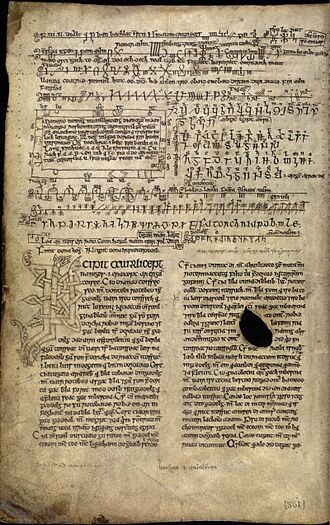
Other Irish sources, such as Auraicept na n-Éces, claimed to be as old as the 7th century, also state that Ireland was settled by the sons of Magog. Baath mac Magog (Boath), Jobhath, and Fathochta are said to be three sons of Magog who came to Ireland. Some dispute this, claiming he is from Gomer or even Javan, but there are more legends and stories that confirm Magog’s presence in Western Europe. The Irish legends also count among Magog’s descendants: Fenius Farsaid, Partholón, Nemed, the Fir Bolg, the Tuatha de Danann, and the Milesians. Of those who survived the disasters after Nemed, they split up and are said to have scattered: one group fled “into the north of the world,” another to Britain, and another to Greece.
Scotland is also, according to several historians, claimed to be a descendant of the Scythians:
“Scot (is) the same as Scythian in etymology; the root of both is Sct. The Greeks had no c, and would change t into th, making the root skth, and by adding a phonetic vowel, we get Skuthai (Scythians), and Skodiai (Skoths)” (Brewer E.C., enl. ed., 1894. Dictionary of Phrase and Fable, p. 1112). Brewer further explains that both the Welsh and the Saxons each changed letters, leaving us with the word “Scots” (ibid).
Keep in mind that many modern historians follow the evolutionary timeline. We know the Scythians arrived in Europe later, but the Bible says the first scattering of Magog into their lands occurred after the Tower of Babel. We will examine why.
God may give a hint that Magog doesn’t just stay in the inland territory of Europe, but rather takes over also the coastal areas: “And I will send a fire on Magog, and among them that dwell carelessly in the isles: and they shall know that I am the LORD” (Eze 39:6)
The most likely reason God is angry with those “in the isles” is their relation to trade. Even Revelation 18 is largely a judgment on the men behind global trade. The coast has always been a desirable place to settle.
Baath mac Magog is described as being from Scythia and the Goths, or the Gaedil, suggesting a link between the Germanic-Slavic Goths and Britain. Other historical records show that the Goths spread to both Western and Eastern Europe, even reaching Rome and Spain. Genetically speaking, Magog appears to have mingled with Meshech, Tubal, and Javan while dominating the European continent at various periods.
The Visigoths, Vandals, Angles, Saxons, Franks, Ostrogoths, and Lombards all visited, immigrated to, or conquered Roman territory, and they appear to also be descendants of different tribes of Magog. Some, using the evolutionist model, argue that many of these groups had a greater variety of ancestry, but the Bible tells us that many groups descended from very few people. Tribes grew larger and split into new groups. One such example is the twelve tribes of Jacob and the twelve tribes of Ishmael, each descended from a single son. The same would have been true of the sons of Japhet; they were not just one tribe. Legends also hold that Magog had a grandson called Heber, whose offspring spread throughout the Mediterranean.
Scandinavia, France, and Britain
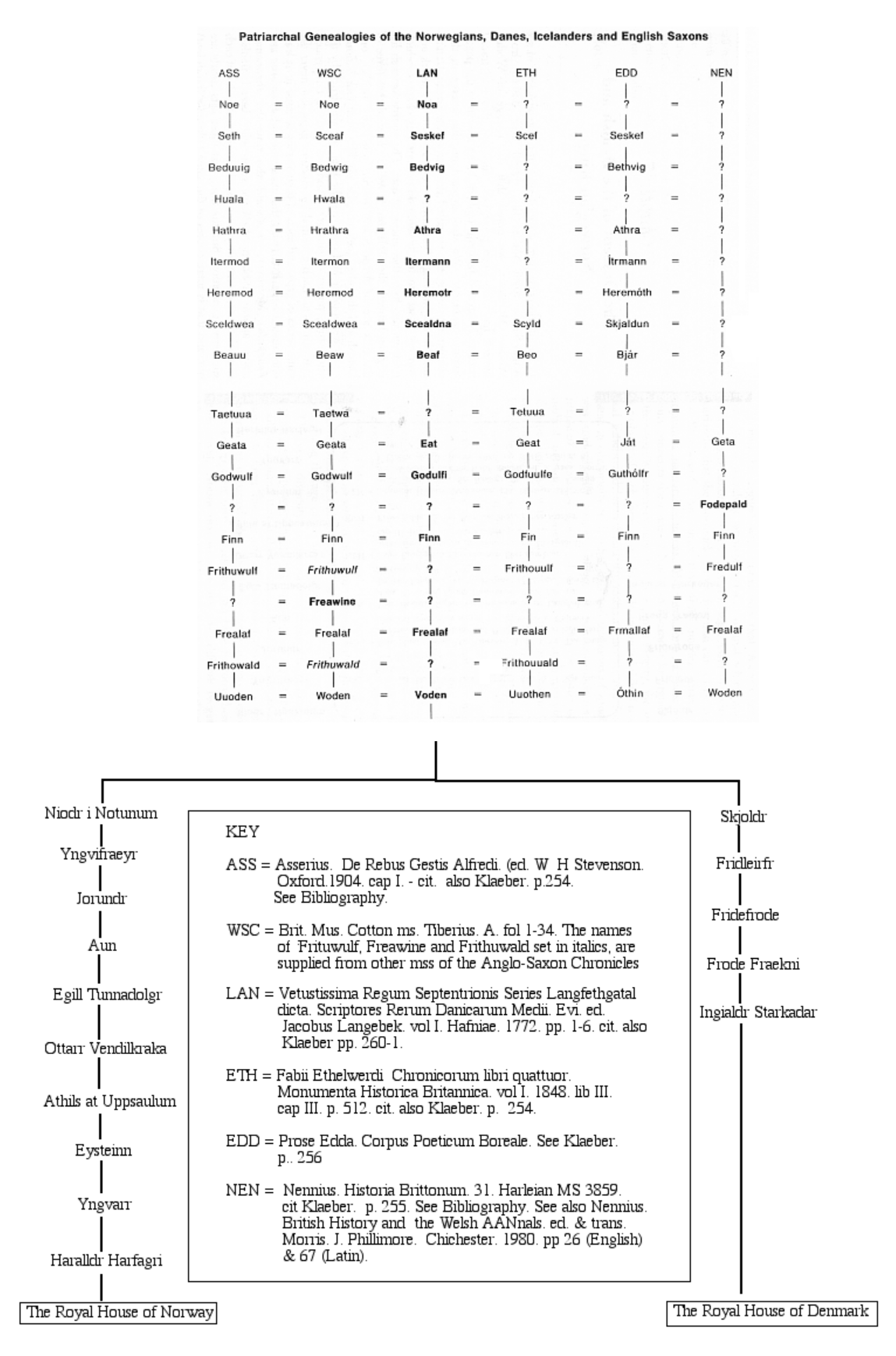
Linguistically and genetically, Northern Europe is closely connected. The Britons and Scandinavian royal houses all share the same origin names on their king lists, demonstrating their ancient relations. They all share a connection to the Celts and are among the first peoples to have settled throughout Northern Europe. The Irish legends, however, open the possibility that they came from different tribes or the sons of Magog. At one point, these early groups spoke the same language.
Later, another group of Magog’s descendants came to Scandinavia. “The Swedish historian Johannes Magnus (1488–1544) stated that Magog migrated to Scandinavia (via Finland) 88 years after the flood and that his five sons were Suenno (ancestor of the Swedes), Gethar (or Gog, ancestor of the Goths), Ubbo (who later ruled the Swedes and built Old Uppsala), Thor, and German. Queen Christina of Sweden reckoned herself as number 249 in a list of kings going back to Magog.” (Wikipedia) It is difficult today to verify his sources, yet the account fits with other legends, even if the names differ. Magog most likely had many sons born over several hundred years. Because all sources are relatively recent, it is difficult to prove their authenticity.
The Icelandic historian Snorri Sturluson (1179–1241) wrote about immigration to Scandinavia, drawing on the writings of earlier historians such as the priest Ari inn fróði (the Learned), son of Þorgils, son of Gellir. Like many others, he is disbelieved by evolutionists because of how the leader Odin is portrayed as having godlike powers. But this was a common way for leaders to portray themselves in ancient times. Many people in Sweden and Norway are his descendants, and the stories and places he describes are all real. He divides the land in the same way the Book of Jubilee does, with the river Tanais, which flows from the Black Sea, dividing Europe from Asia. The European side was where Magog is said to have gone.
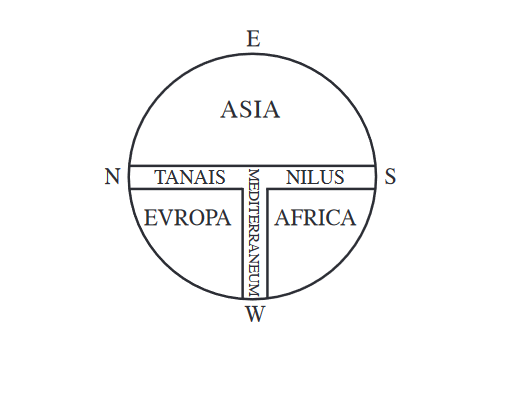
He He does not mention Magog specifically, but describes a group settling in Sweden (not the earliest arrivals) who traveled from the Black Sea through modern Germany and Denmark before reaching Sweden. Along the way, they established settlements and named many places still in use today. He notes they ultimately left the Black Sea region and Turkland (modern Turkey) due to threats from the Romans. Since the Romans entered Scythian territory north of the Black Sea around 40 BCE, this group’s migration to Sweden happened relatively late. Most identify them as the Goths. In his work EDDA, Sturluson explains how their arrival changed the local language: they intermarried with the population, and their descendants became so numerous that a new language spread throughout Saxland and Northern Europe. The Germanic language, while related to earlier tongues, was not the region’s original language. Germanic shares features with ancient Norse, Celtic, and proto-Iranian, all of which descend from Proto-Indo-European. The arrivals from the Black Sea likely spoke a proto-Iranian dialect, and the blend with ancient European languages may have produced early Germanic. As Snorri described, the Gauls and then Germanic-speaking peoples settled what is now France, Germany, Britain, Belgium, the Netherlands, and Switzerland. Genetic analysis shows that all these populations are related, despite minor differences among groups.
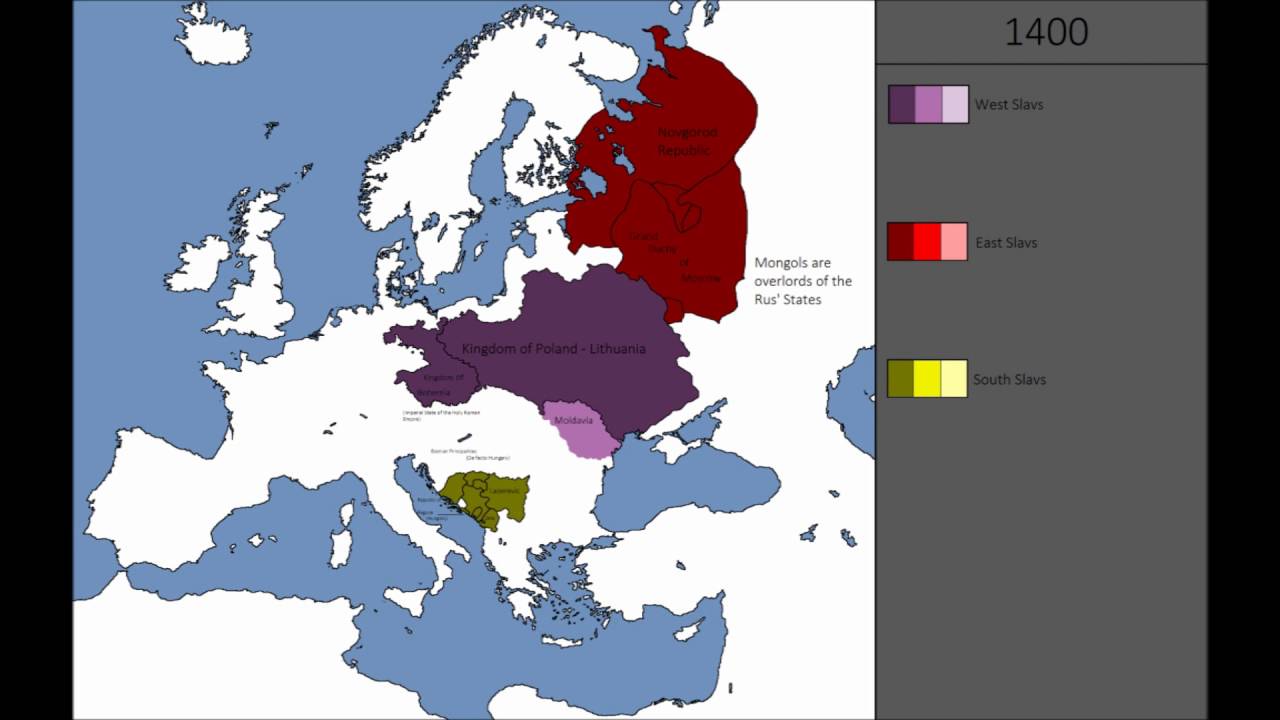
MAP OF THE EXPANSION OF THE POSSIBLE EUROPEAN TRIBES OF MAGOG:
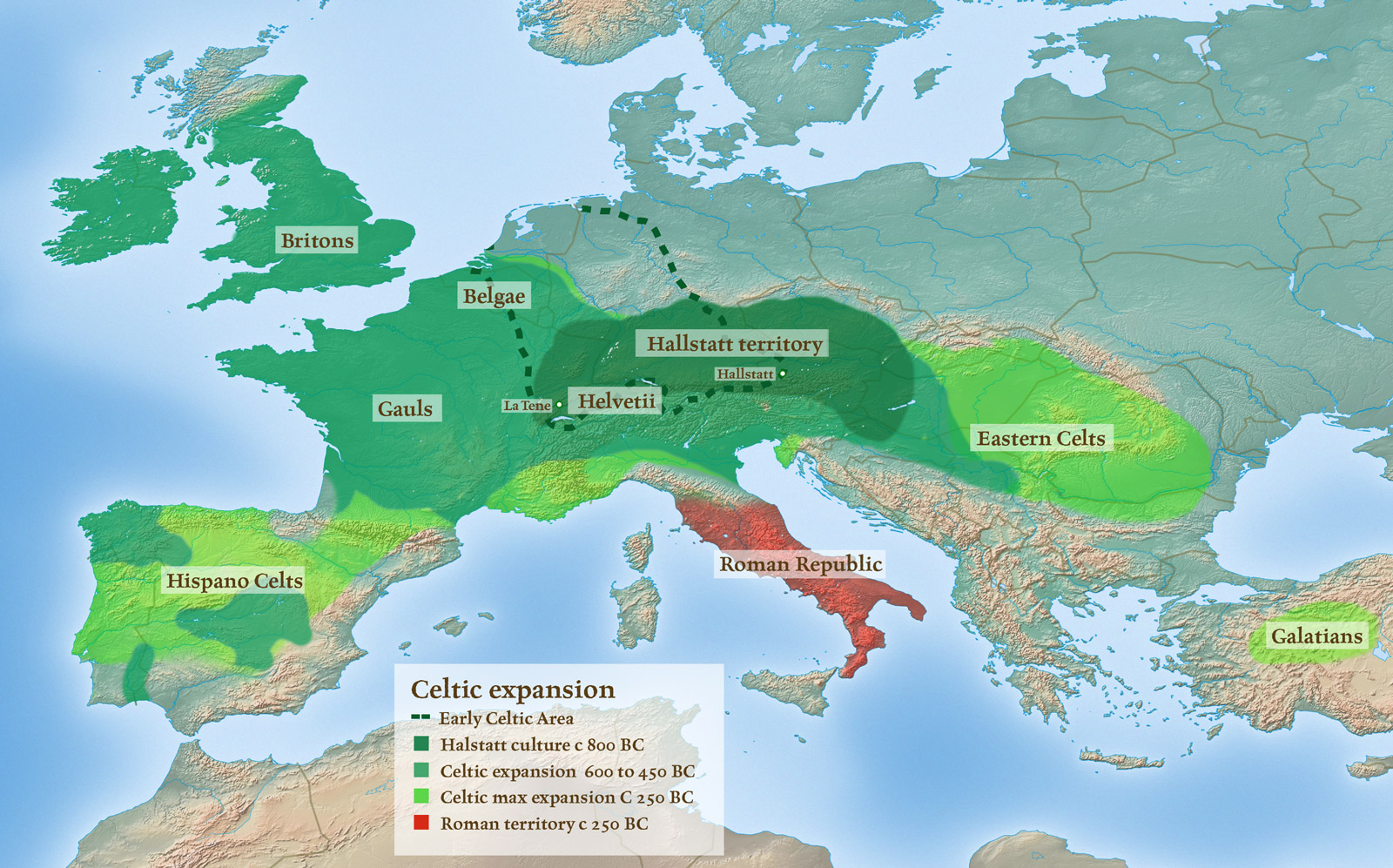
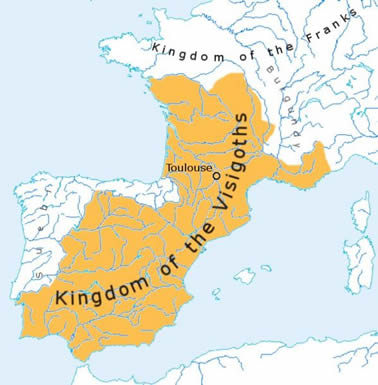
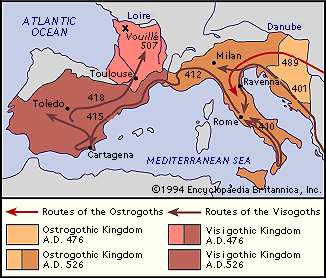
Another (of many) settlement groups of Europe: The Longobards
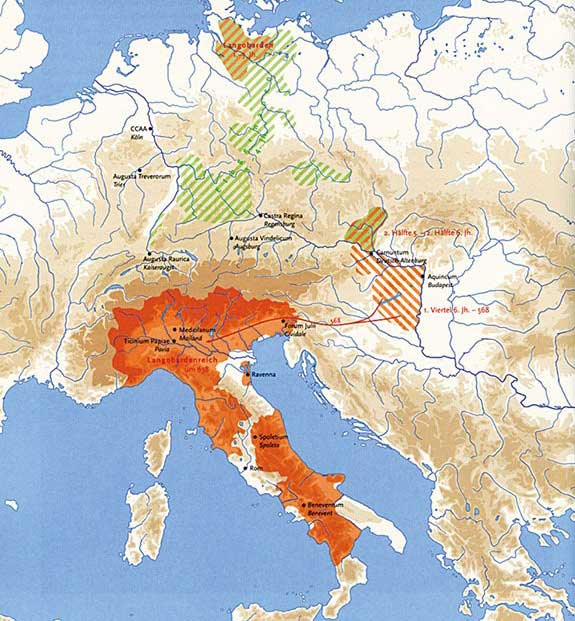
The tribes of Europe, especially the northern tribes, often moved their settlements southward. It is not known whether they, too, are descendants of Magog or of another of Japhet’s sons.
They did, however, genetically mix with what are most likely the tribes of Magog, as they have two distinctly different genetic forefathers, like many other tribes in Europe.
Scythians
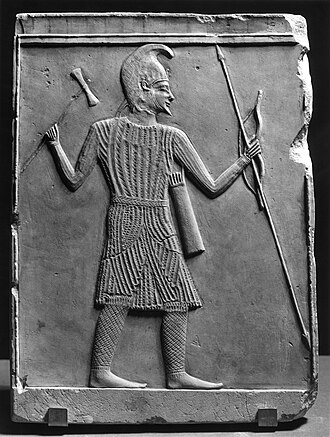
Not only did old Irish chronicles connect the Scythians with Magog, but so did the famous Jewish historian Flavius Josephus, who lived in the first century. He said that the Scythians were a tribe of Magog. The Scythians were infamous for their behavior, and their history goes back a long way. The Greek historian Herodotus (484 BC) wrote half a millennium earlier: “None who attacks them can escape, and none can catch them if they desire not to be found.” He also revealed something very important about this group: they were nomads who came to the Black Sea during winter and lived elsewhere during the summer. Herodotus famously admitted he knew nothing of Northern Europe at the time, though he did visit the Scythians, whom he did not like.
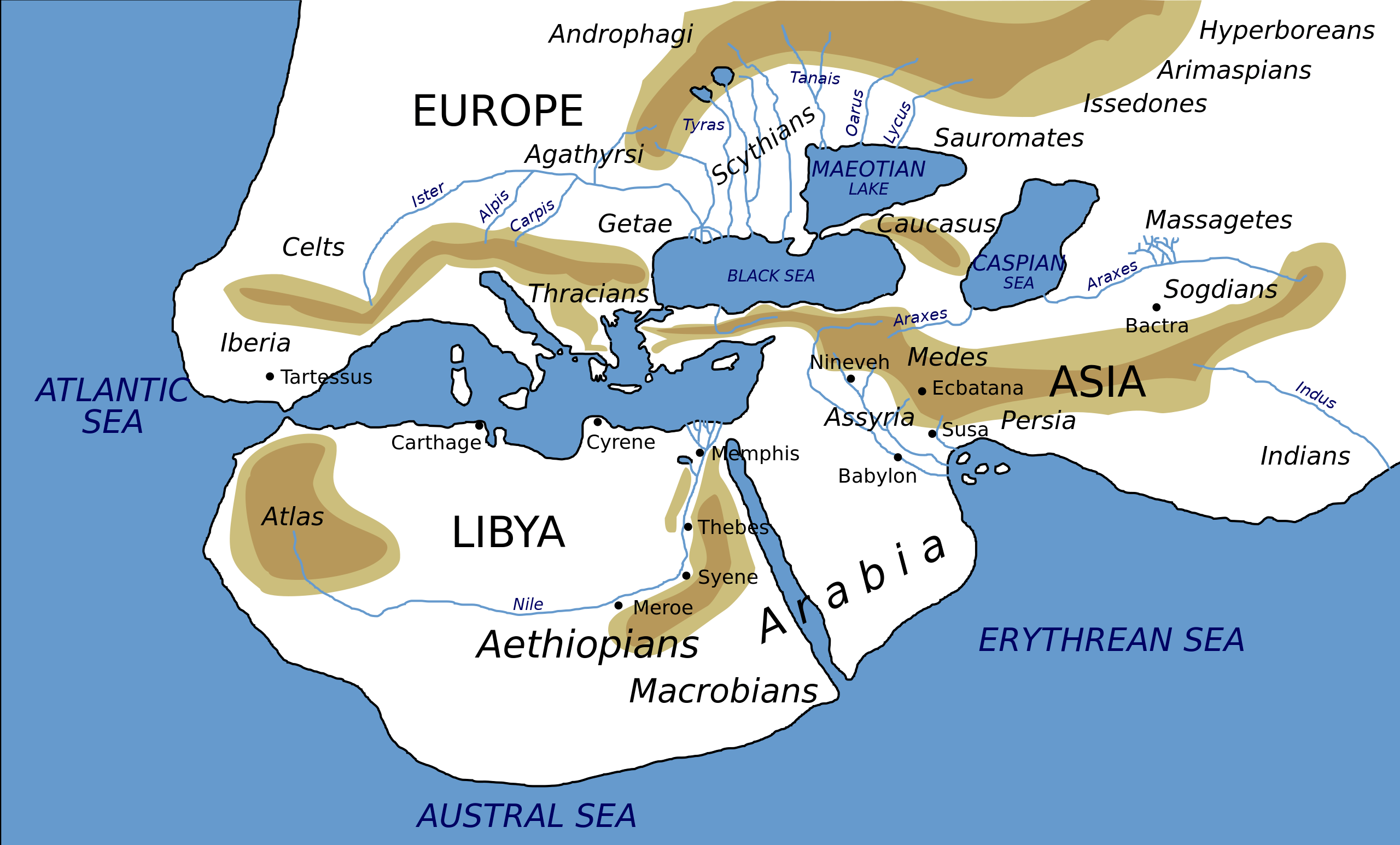
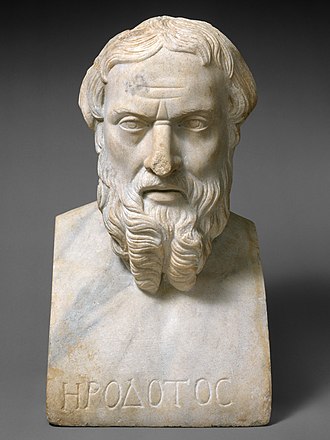
Herodotus may not be the most celebrated historian, and his report suggests that the “box mentality” of evolutionists today regarding human migration may have distorted their understanding of European history. He wrote: “For when men have no established cities or fortresses, but all are house-bearers and mounted archers, living not by tilling the soil but by cattle-rearing and carrying their dwellings on wagons, how should these not be invincible and unapproachable?”
Hippocrates wrote: “‘The Scyths… have no houses but live in wagons. These are very small with four wheels. Others with six wheels are covered with felt; such wagons are employed like houses, in twos or threes, and provide shelter from rain and wind … The women and children live in these wagons, but the men always remain on horseback.’
There were several different tribes called Scythians, each living separately in what is today Ukraine.
The Irish and other sources describing early Scythians coming to the Black Sea suggest that they arrived there during winter because of the harsh climate of Northern Europe. They were not just nomads; they traveled with the seasons and only lived in the north during summer. Those living in the Near East and the Mediterranean did not have these kinds of needs. Another researcher notes: “The Scandinavian peoples, the Celtic peoples, and the Scythian peoples actually had a common origin, as evidenced by the presence of Kurgan.” (Nicolini Giuseppe, Independent Researcher
Rev.3 February 2022 Acadenia.edu)
The groups emerging in Northern Europe, such as the Ostrogoths, Lombards, Vandals, Heruli, and many others, all share a common trait: they moved between the south and the north. The Lombards (Norwegians) even settled in Northern Italy for an extended period. The Visigoths settled in Spain and established their own empire there between 418 and 711 AD. The Ostrogoths spread through the Balkans and even into Rome, all moving southward and northward. The explanation for this behavior is most likely climate and trade. Observing Magog’s behavior in the common era may also reveal the situation after Babel, which was even more extreme, with glaciers and a much colder climate. They were therefore nomads, traveling with animals and tents, sometimes taking residence in the south before returning north.
The Scythians represented several of these tribes, to the annoyance of many nations, including Greece and Medo-Persia. The steppe people and the farmers were related, as were the hunter-gatherers. The first to leave for Northern Europe did so around 2,500 years before the group mentioned by Sturluson, illustrating how easily the genes of those who mostly stayed south and those who remained in the north could mutate slightly in each direction, while still being descendants of Magog. The Bible’s reference to the coasts and history’s record of Magog moving southward with their bands to Spain, France, and Italy show that Magog spread throughout Europe. And the last great group of Scythians to leave the Black Sea has, as DNA shows, spread throughout Eastern and Central Europe to the Baltic Sea, the area initially given to Magog according to the Book of Jubilee.
So far we see Magog’s sons divided and spread among the following groups: the Celts, the Scandinavians, the Germans, the Franks, the Slavs, the White Croats, the Western Scythians, the Eastern Scythians, the Kievan Rus, the Ostrogoths, the Visigoths, the Vikings, the Vandals, the Lombards, the Svea, and various other Scythian groups, also intermixing with the populations of Spain, Greece, and Italy. All are connected through genetic haplogroups and history. Part of these groups could also be from the tribe of Gomer. Some of Magog’s descendants have remained fairly isolated over time, while others have constantly been on the move between north and south, east and west. Some have permanently settled in the south, and some have remained in the north.
Is the Scythians Ashkenaz?
Some Jewish writings from the Middle Ages began the trend of identifying the descendants of Germany as Gomer’s son, Ashkenaz, and European Jews still call themselves Ashkenazi after this son. It might sound better than Magog Jews, but is it correct? They thought the Assyrian name Aškuzai/Iškuzai for the Scythians fitted better with Ashkenaz. The Scythians never called themselves the Scythians; the name is thought to refer to their weaponry and was used by ancient historians. They called themselves Skudat, which probably means “archers”. The Persians called them Sakâ, and the Greeks Skythes or Skythai. The Bible, together with history, might contradict the idea that the Scythians are Ashkenaz. The Bible never mentions the Scythians, but it does mention Magog and Ashkenaz on separate occasions. Ashkenaz was part of the “northern alliance” destroying Babylon: “For, lo, I will raise and cause to come up against Babylon an assembly of great nations from the north country: and they shall set themselves in array against her; from thence she shall be taken: their arrows shall be as of a mighty expert man; none shall return in vain” “Set ye up a standard in the land, blow the trumpet among the nations, prepare the nations against her, call together against her the kingdoms of Ararat, Minni, and Ashchenaz; appoint a captain against her; cause the horses to come up as the rough caterpillers. Prepare against her the nations with the kings of the Medes, the captains thereof, and all the rulers thereof, and all the land of his dominion. And the land shall tremble and sorrow: for every purpose of the LORD shall be performed against Babylon, to make the land of Babylon a desolation without an inhabitant (Jer 50:9 & Jer 51:27-29).
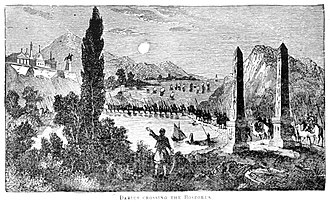
This alliance was part of the Medo-Persian conquest of Babylon and its territory. They lived in the north, in what is today Iran, and in Urartu. The reason we know this is likely not the Scythians is that Persian and Greek history tells us the Medes were often in conflict with the Scythians, even at war with them. The Scythians had previously assisted Babylon. Darius the First led a military expedition into parts of European Scythia in 513 BC. Only a few years before Medo-Persia had attacked Babylon with its alliance, defeating the Scythians was part of their military campaigns. The Scythians had
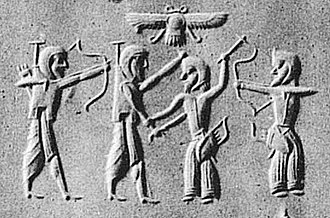
invaded Media, revolted against Darius, and sabotaged trade routes in the area. The war against them took place, among other locations, in the territory now called Ukraine and the surrounding areas where they had spread. Herodotus writes about this in his book The Histories. The account tells that Darius went into Eastern Europe specifically to drive the Scythians away. Because they lived as nomads, he said, there were “no cities or fields to burn,” which made the campaign difficult to win.
What we learn from this is that the Scythians are likely not Ashkenaz, as some claim today. Germans are not Ashkenaz; their genetics are the same as the rest of Europe.
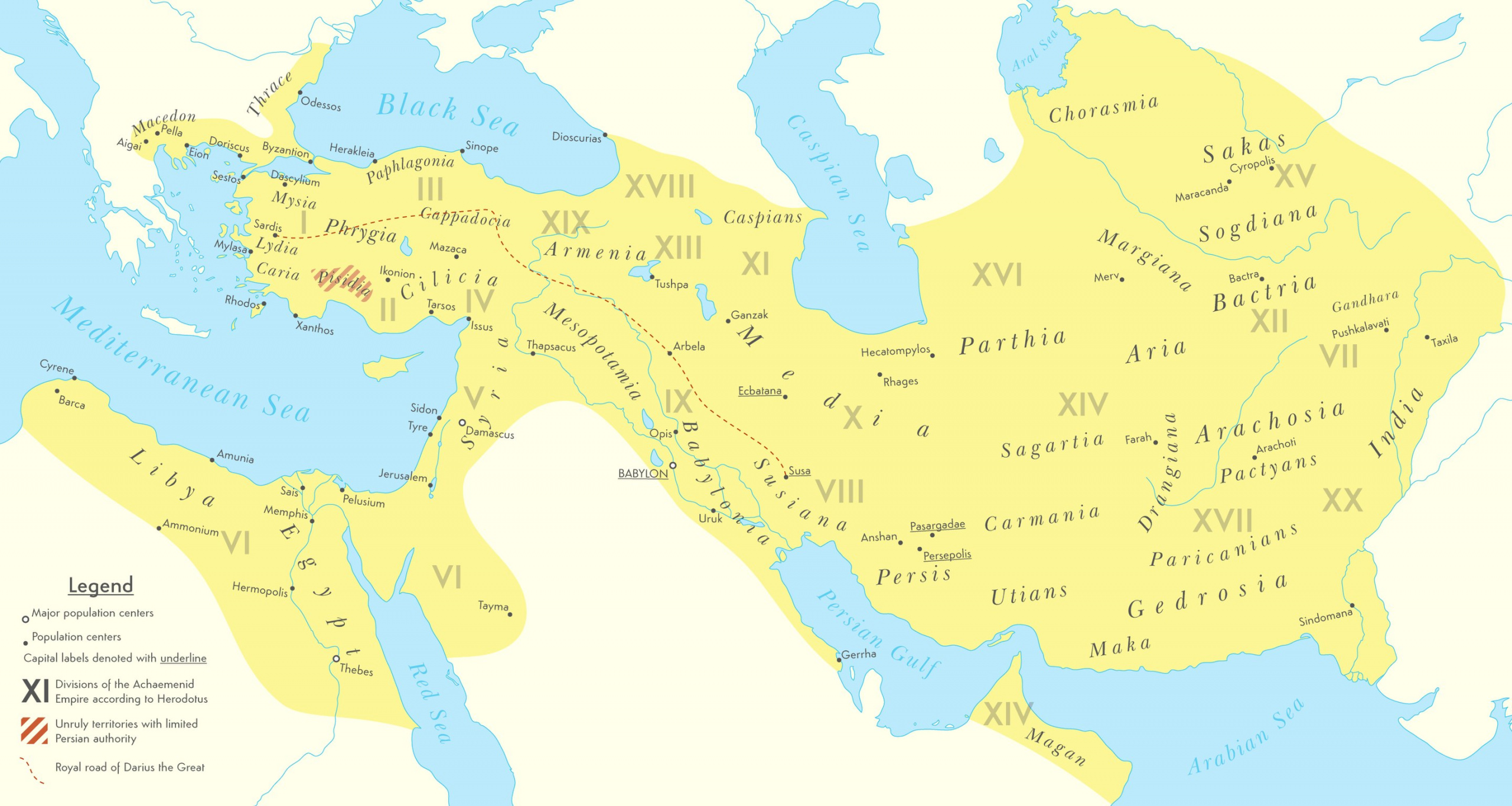
The territory of the Kurds, Armenians, and Azeris still has a large group of descendants of Israel. This fits the Biblical description of where the first Israel was displaced.
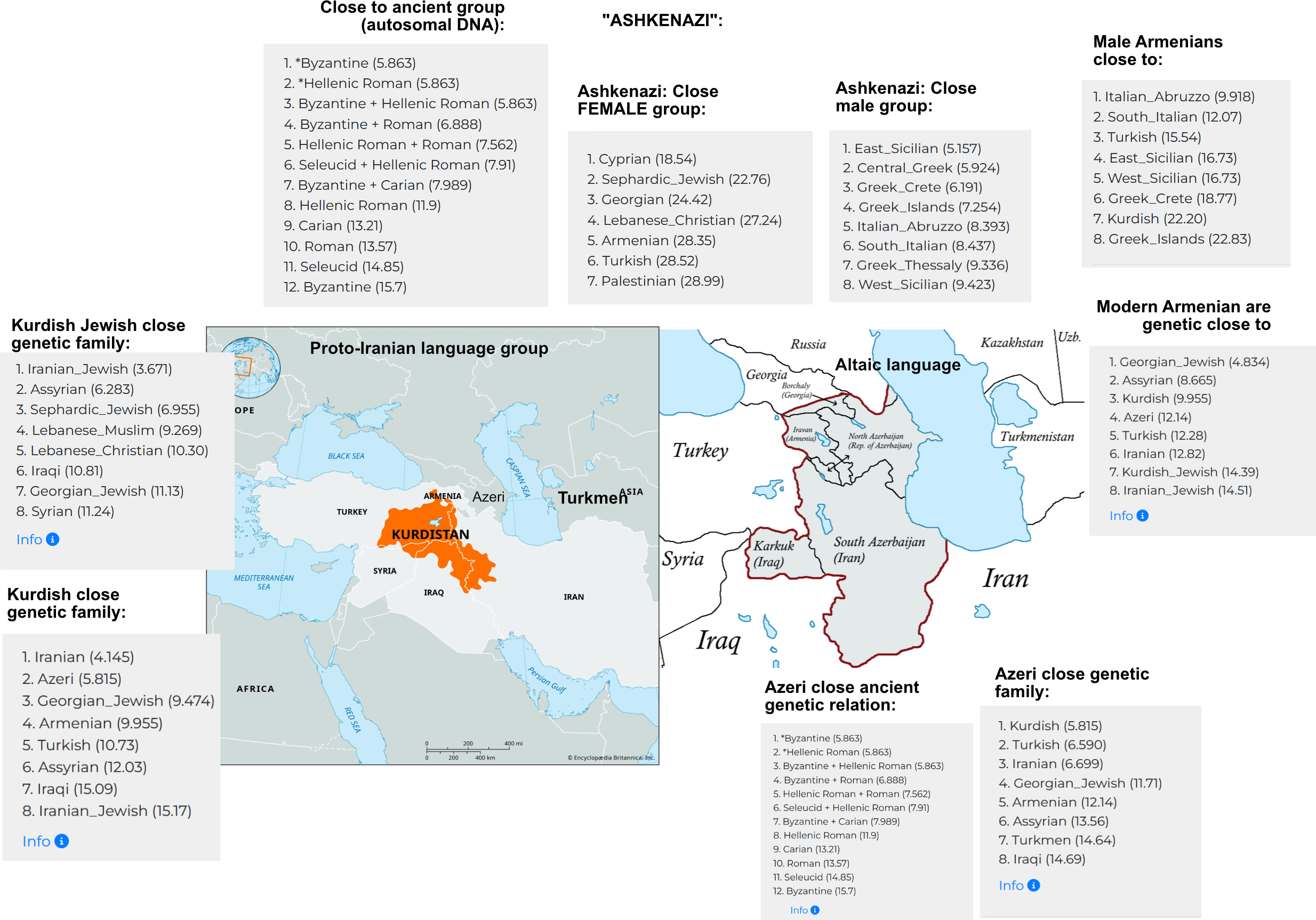
The tribes of Gomer and Magog are being switched, and the idea that Germany is Ashkenaz is promoted by both Zionists and evangelicals. The Caucasus territory, including modern Armenia and Georgia, has traditions claiming descent from Gomer’s sons Ashkenaz and Togarmah. They are too few to represent all of Gomer’s descendants, but their ancient traditions are worth respecting, just as Magog’s traditions are in Northern Europe. The claims of the Armenians and Georgians also match the Bible verse we just examined, as well as the verse saying Togarmah is in the north. There is no evidence from the Bible that Gomer spread west. According to the Book of Jubilee, he received the land north of the Caucasus. The Armenian historian Yovhannes Drasxanakertc’i (1.15) in his book History of Armenia writes that Ashkenaz was a forefather in the Armenian land. (Gmirkin, Russell (2006). Berossus and Genesis, Manetho and Exodus: Hellenistic Histories and the Date of the Pentateuch.) A Jewish philosopher and rabbi named Saadia Gaon suggests it is the Slavic nations.
So, where does the Ashkenazi term come from, which seems to have inspired the entire Jewish and evangelical movement?
Genetics suggests that those who identify as Ashkenazi Jews originated in Italy, Greece, and southern Europe more broadly.
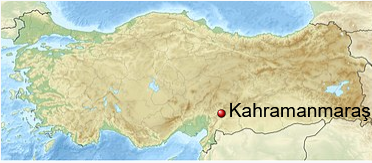
In the Babylonian Talmud, written between 200 CE and 500 CE, the name Gomer is rendered as Germania, which is identified as Germanikia in other rabbinical literature. Germanikia was a land in northwestern Syria (Turkish: Maraş; Armenian: Մարաշ) and Germanicea (Greek: Γερμανίκεια).
The place was once settled by Aram, son of Shem, and never by a Germanic tribe. In the 6th century, the Catholic historian Eusebius thought Ashkenaz was in Scandinavia because the name looked similar.
Make yourself feel at home?
Early Jewish communities arose in Greece and Italy as early as the BCE era. They were further displaced after Rome took Jerusalem in 63 BCE, when thousands of Jews were taken as war prisoners. There was also unrest that displaced them in 37 BCE and after the Jewish revolt in 53 BCE. Then, Christian Jews fled during the Jewish-Christian persecution. Finally, the larger group was displaced around the time Rome destroyed Jerusalem. For over two millennia, Jews have intermarried with local populations in the places where they settled, as reflected in their genetic makeup.
Conclusion: There is currently no evidence that Europe, and especially Germany, is Ashkenaz. There is evidence that Ashkenazi Jews do not seem to have any relation to the tribe of Ashkenaz, unless it is through their Armenian/Azeri connection rather than their Roman or German connection. Calling themselves Ashkenazi Jews is mostly an idea from the Middle Ages.
According to the Icelandic historian Snorre, a group from the Caucasus region came to Scandinavia during the Roman conquest of the Near East; however, he does not say they were Scythians or Ashkenazi. When they arrived, Scandinavia was said to already be populated. At best, Ashkenazi people could have immigrated to another territory, thereby giving rise to the rumors. Genetic research shows a close connection among the Northern European tribes, so more research from a Biblical perspective would be needed to determine whether Ashkenaz went to Scandinavia.
‘Answer in Genesis‘ theory
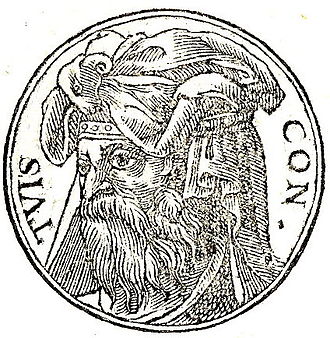
He was said to have ruled in Germany for 176 years.
He, in turn, drew his history from Johannes Aventinus (1477–1534), who, despite living through the German Reformation and befriending reformers, remained Catholic his whole life. He was asked to write the history of Bavaria and is said to have gathered several sources for his work, yet no trace of these sources remains today, aside from his own book. He claims to have a record of the first ruler of Germany, called Tuitsch (son of the sky), who is the same figure James Anderson D.D. claims is Ashkenaz. So, although these are historical sources, there is no evidence beyond Anderson’s speculation. His ideas are repeated to this day by evangelicals and Jews.
Anderson’s writings came not long after the Book of Jasher also surfaced, and most followed the same understanding of Gomer taking Western Europe. However, among all ancient writings, most that tie Gomer to Western Europe are from the Middle Ages. The oldest book found, the Book of Jubilees, says that Magog came to northern Europe, while Gomer lived east of him. In the end, both tribes could have been mixed in that part of the land. As long as the Bible speaks not just of Magog but of the land of Gog, it references Europe either way. And when the Bible says “Gog, the land of Magog,” it means the tribe of Magog is the dominant or leading presence in that land.
Why this switching of places was done by Catholics and early Scottish Freemasons is better left to those interested in conspiracies.
Ezekiel and Magog
We are first introduced to bands of Magog in Ezekiel, around the same time as God’s prophetic judgment upon many nations. Most of them are known and identifiable. The mention of Israel’s enemies as Magog appears new in the context of Judah’s situation at the time. For a long time, Israel had fought against the Assyrians, the Midianites, and the Moabites, among others. They were all known enemies. Now it speaks of Magog coming up against Jerusalem.
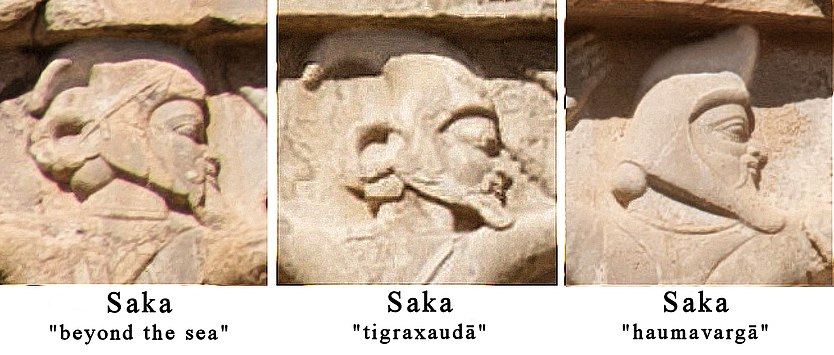
The many tribes and fighters attacking Israel in Ezekiel’s day are known. One power we know was involved appears at first glance not to be mentioned. What do other historical sources tell us that can identify a possible aggression from Magog in the time of Ezekiel, one that would make a future judgment announced to Ezekiel relevant? Ezekiel had been taken captive by Babylon, had witnessed gruesome war, and did not need to be told of another unrelated war in the distant future. This is why we need to see the connection between the future war of Magog and how the judgment over them will comfort God’s people in their day. Babylon is not Magog, because it is mentioned by name in Ezekiel (it was mostly a Semitic Chaldean people).
To better understand, we need to go back in time. Between about 626 and 607 BCE, Assyria was conquered. The Scythians were, for a while, allied with the Assyrians. However, the Scythians switched sides, supporting Cyaxares and the Medes in the war against Assyria, and later helped Babylon. In 610, the battle of Harran; in 612, the battle of Nineveh; and in 614, the battle against Assur. In all these battles, the Scythian kingdom of the Black Sea supported the Medo-Babylonian army. (Loehr, Max (1955). “The Stag Image in Scythia and the Far East”, Sulimirski, T. (1954). “Scythian Antiquities in Western Asia”, Jacobson, Esther (1995). The Art of the Scythians: The Interpenetration of Cultures at the Edge of the Hellenic World.) They were also in for the Battle of Carchemish in 605 BC. They then favored the Neo-Babylonian empire. They helped Babylon annex Judah in 557 BC (Dugaw, Lipschits & Stiebel 2020, p. 81). Jerusalem fell in 587 BC. If they helped with this, it is unknown, but it is likely the Scythians were in the Babylonian army then as well. They supported many of the other battles in Babylonia. But could the Scythians, aiding Babylon and famous for their barbaric fighting, be classified as one of the nations rising up against God’s people in Ezekiel’s days? Absolutely. Then why were they not mentioned if they were part of the Babylonian alliance? Likely, they were; only God used the name of their forefather, Magog, rather than some name they had given themselves. God’s eyes look to their origins and to what they will do in the future; hence, the prophecy of God judging them. In Ezekiel, we see God almost exclusively using the names of the forefathers of all the nations and bands, rather than what they called themselves. It is also plausible that Judah called them Magog at the time. Remember, all others have already received some judgment, but Magog’s judgment is yet to come. Why was he not judged instantly? In a way, they were, as they were later attacked by the Medes, but it could also be because their crimes had only just begun. Magog is prophesied to return to God’s land before their final judgment.
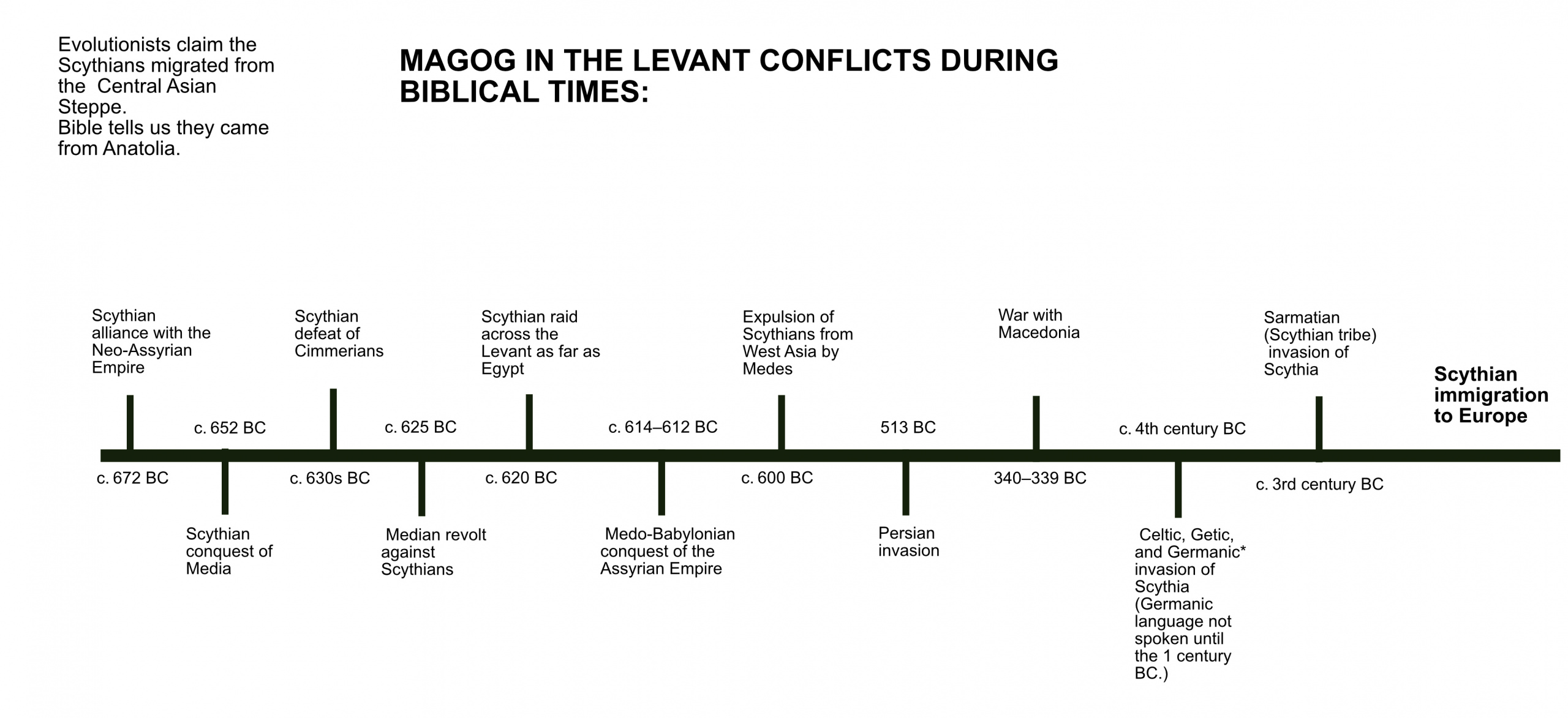
Conclusion: The Scythians (the Magogs) were in alliances with the Medo-Babylonian and Neo-Babylonian conquests, but were later in conflict with the Medes and not part of their northern alliance when this alliance conquered Babylon around 539 BCE. The Scythians had been seen as a problem and the Urartu and Azkenazi became part of the “Northern Alliance” with the Medes and Persians against Babylon.
So Who Is Magog Today?
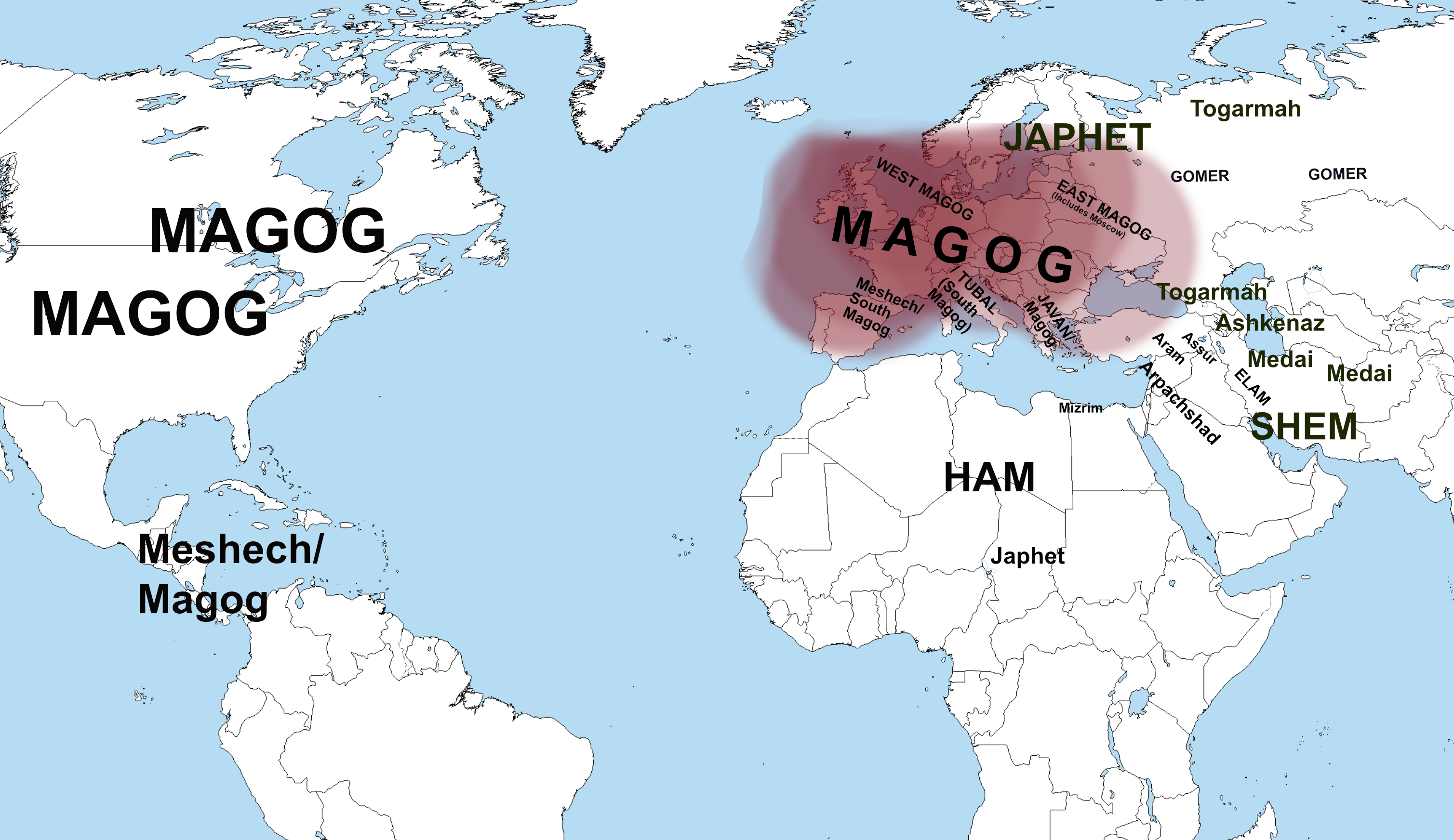
Based on everything we have looked at, the tribes of Magog appear to be mostly in Europe, especially western and northern Europe, with France, Germany, and England as the largest nations. And spread to Italy, Spain, Portugal, and smaller countries in Europe as well.
The Paternal I gene (ydna) and Paternal R gene (ydna)
According to studies so far, it is assumed that the paternal I gene, which was present among early Europeans, and the R gene came from two different brothers of Noah. Because of this, some creationist genealogists think the I gene belongs to the first Europeans (Japhet) and the R gene belongs to Shem’s tribe, which came from the East.
Here, the Bible prophecy regarding the sons of Noah becomes extremely relevant. “And he said, Blessed be the LORD God of Shem, and Canaan shall be his servant. God shall enlarge Japheth, and he shall dwell in the tents of Shem, and Canaan shall be his servant” (Gen 9:26-27). It is Japhet who would be “enlarged” and even dwell in the area given to Shem, not Shem in Japhet’s “tents.” Noah’s prophecy was fulfilled, and a large part of Japhet dwelled in Shem’s “tent” or land from the beginning until this day, just as the Book of Jubilee also claimed. Thus, we should find genetic traces of them among Elam, Asshur, Aram, and Arphaxad, which we do and which confuses some genealogists. We also find proto-European among the eastern languages of Iran and India.
The most important thing is not to draw a conclusion that goes against the Bible or other historical sources. The idea presented by some creationist genealogists is that war, famine, and immigration wiped out most of Japhet in Europe. However, the Bible tells us of a large Magog in the end days who will provoke God. Noah speaks of Japhet being “enlarged,” and nowhere does it say anything about Shem taking over Japhet’s land. We will examine why switching genes is contrary to scripture and history.
MAGOG – WORLD BULLIES OR PEACEMAKERS?
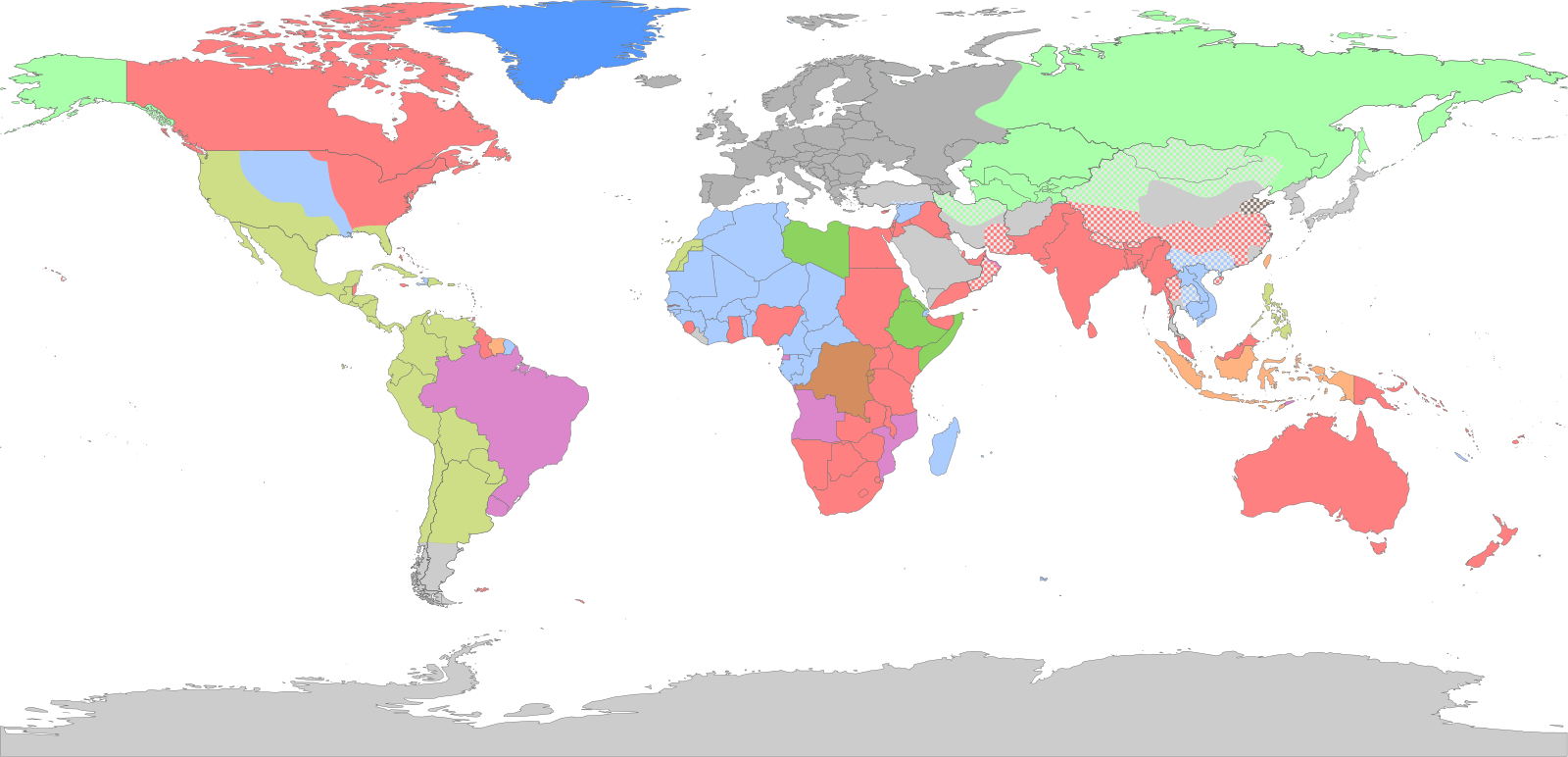
God speaks little more of Magog in the Old Testament. Since Babylon took Judah, Magog has remained present. Japhet’s sons continued their struggle against God and His land. The Medes were descendants of Japheth’s son Medai and were part of the Medo-Persian empire that conquered Judah. The Greek empire, according to the Bible, is Japhet’s son Javan (the name Javan is used in the Bible for this empire). Bible prophecy then shows a horn coming from the West, which is also Japhet, this time from Rome and Western Europe. The alliance of Mesech, Tubal, and Magog came from the West. Then the ten horns or toes again represent tribes of Magog. They are also the United States of America, which is in large part a British, Irish, French, Scandinavian, and Spanish colony. The power of these European horns will continue until Christ’s second coming, when He will put an end to the “time of the heathens.” Will Magog conquer the land of Israel, or has it already been conquered?
What we can say for sure is that both Magog and Gomer are present in Europe, and that Europe itself is the land of Gog.

1.Ostrogoths, 2. Franks, 3.Suevi, 4.Angelo-Saxson, 5.Lombards, 6.Visigoths, 7.Vandals, 8.Alamanni (or the Huns, some would argue), 9.Heruli, 10.Burgundians
CONTINUE READING THE NEXT CHAPTER: GOG AND MAGOG PART FOUR