


Article series: INTRODUCTION – WHO IS JEHOVAH? – WHO IS THE REAL ISRAEL – THE SCATTERING – THE GATHERING: ONE-FOLD – ONE ISRAEL : THE MODERN STATE OF ISRAEL NOT CHOSEN – DANIEL 9 AND THE PRE-TRIBULATION DECEPTION – JUDAISM ACE IS NOT A GODLY REPRESENTATION OF OT – THE BIRTH OF THE MODERN STATE OF ISRAEL – THE DIFFERENCE (between Biblical Israel taking of Canaan and modern Israel taking of Palestine) – What side should we take in the Palestinian and Israeli conflict?
It is essential to understand who the real Israel is because God says we are blessed if we bless them and cursed if we curse them. Israel is God’s true congregation. If the name is placed upon the wrong group, it can lead to misunderstandings, deceptions, and curses. This is naturally why Satan does it: to confuse and to cause the real Israel to be persecuted as impostors.
Who is the God of Israel, Abraham, Isaac, Jacob, and Moses? As shown in the previous chapter, Jesus is Jehovah Elohim. Where does the name Israel come from?
Jacob was named Israel after wrestling all night with a Man who turned out to be the Lord. It was Jesus he wrestled with, and to whom he said: “I will not let thee go, except thou bless me”.
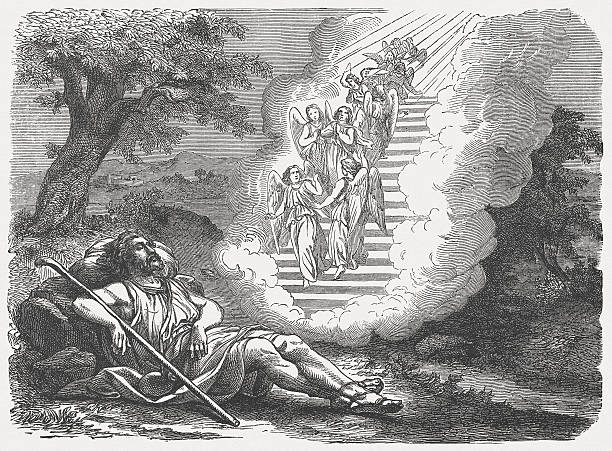
So Jacob asked for Jehovah Yeshua’s blessing. It was Christ he clung to and would not let go without a blessing.
“And he said unto him, What is thy name? And he said, Jacob. And he said, Thy name shall be called no more Jacob, but Israel: for as a prince hast thou power with God and with men, and hast prevailed” (Gen 32:27-28)
Thus, the name Israel was given to Jacob because he had refused to let go of Christ.
If he had let go, he would not have been called Israel. The name Israel is therefore given to a nation that holds on to Jehovah and will not let go until He blesses them. The real Israel is not those who rejected Christ and let Him go, but those who held on. The Jews who rejected Christ did the very opposite of Jacob. As we will see, when God gives a name, it reflects a person’s character trait, and if that trait changes or they do the opposite, their name changes too.
The name Israel is an experience with God, a relationship with God rather than genetics.
The reason Jacob ended up in this situation in the first place was that his brother Esau was coming against him. Esau was Isaac’s firstborn, the one who would normally receive the blessing of being a priest in the family. He had the birthright, but because he was not faithful, God took it away and gave it to the second born. It was given to Jacob because he held on to God in the right way.
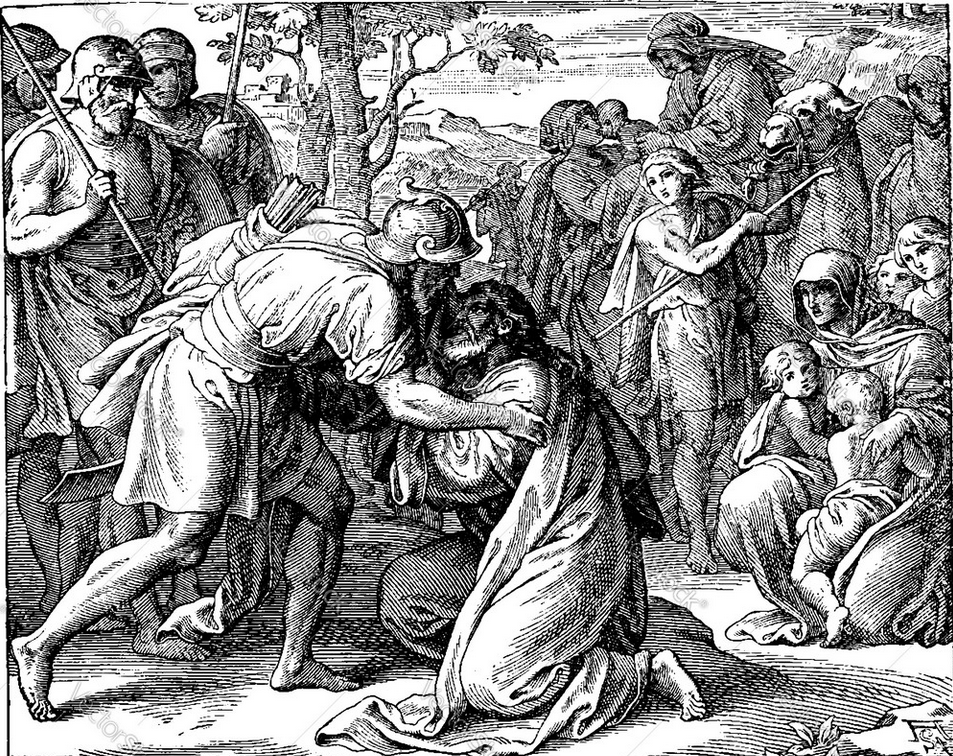
Esau had married heathen wives and followed a religion that was part truth and part error. Although he, too, was a child of Abraham, the priestly right to be called God’s people followed the faithful brother, not the one with the rights of the flesh.
Jacob feared his brother would harm his people because he had obtained God’s blessings in the wrong way, which is why he found himself in the prayer battle that he did. In the end, he allowed Esau to keep the material inheritance of the firstborn, and Jacob relied instead on God’s promise of a future blessing. He gave up what he could see for the promise of what could not be seen.
This fits very well with what happened among the Jewish brethren in the time of Christ. They split into two groups; one remained the stronger and had the power to persecute the minority. Yet the persecuted brethren were content with inheriting the promise through Christ and let go of trying to rule over the physical Jewish inheritance, which included the land, the mountain of God, and the temple. The land was promised to the faithful, yet the unfaithful drove the faithful from it. They were forced to live among pagans and endure the trials that came with that. The same happened at the beginning with Jacob and Esau. At first, Jacob, fearing for his life, was forced to flee the land of promise, even though it would one day rightfully be his, and live abroad. Esau continued to live on the land with his family until he moved east of Canaan.
When Jacob feared Esau, he clung to God, as the first church did.
Because the first Christian-Jewish church remained faithful, and those who rejected Christ did not, they inherited the name Israel, which had always followed the faithful within the family.
But although they inherited the name, they were also given a new and more exalted name:
“For Zion’s sake will I not hold my peace, and for Jerusalem’s sake I will not rest, until the righteousness thereof go forth as brightness, and the salvation thereof as a lamp that burneth. And the Gentiles shall see thy righteousness, and all kings thy glory: and thou shalt be called by a new name, which the mouth of the LORD shall name. Thou shalt also be a crown of glory in the hand of the LORD, and a royal diadem in the hand of thy God” (Isa 62:1-3)
Zion is likewise a name that followed the faithful and was also used for Jerusalem.
God said the land would no longer be called “desolate” but Hephzibah, which means “my delight is in her”. This naturally requires that they remain faithful. Jesus may be the fulfillment of the new name prophesied in Isaiah, showing that His followers would be called by His name, Yeshua, meaning “Yehovah saves”. In Latin, this name was translated to Iesus, from which we get the name Jesus. The designation ‘Christians’ comes from the word Christ and implies following Christ, a title that means the anointed one. Christ and messiah are the same word for anointed, drawn from two different languages. A Christian, then, simply means a follower of the Messiah. We see this term used already in the New Testament: “Then Agrippa said unto Paul, Almost thou persuadest me to be a Christian” (Acts 26:28)
Christ expressed it differently: He said they would be called by His name, gather in His name, and receive people in His name. This is consistent with the Old Testament: “If my people, who are called by my name, will humble themselves and…turn from their wicked ways…I will forgive their sin and will heal their land.” (2 Chronicles 7:14) The name Israel also contains parts of God’s name. It literally means “God perseveres” or “God rules.” If God is denied the right to do both, the name no longer represents the group and becomes a lie unless placed upon the faithful.
First, the Christians called themselves in Hebrew Talmidim of Yeshua, which in the Bible is translated into Greek as mathētai of Jesus. It means students/learners of Jesus and is used between 200 and 300 times in the New Testament. While calling themselves students of Jesus, they also considered themselves as Israel. The name Christian is used only three times and is associated with a later period when the gospel was spread in Greek and Latin, and heathens had joined the assembly.
First-century Christians began using this term instead of Israel for two reasons. When it was first used in Antioch, the Christians were considered a sect called “the sect of the Nazarenes” (Acts 24:5). In this way, the Jewish leaders tried to separate the sect from their own religion by calling it not a Jewish sect, but a Nazarean sect. Jews still today call Christians Notzrim, referring to someone following a man from the city of Nazareth, as a protest against Jesus being the Messiah.
The Jewish leadership refused to have anything to do with their messianic brethren and did what they could to ensure that Christianity would no longer be associated with Israel. The followers of Jesus rejected this term but accepted that they had to call themselves something else for the sake of peace. The first Christians would suffer harsh persecution and be misunderstood if they continued to call themselves the children of Israel.
If the majority of the Jews had remained faithful, none of this would have been a problem or source of confusion. Because of their unfaithfulness and resistance, rather than learning the gospel from their Hebrew scholars, they had to be taught the truth through a different language, spoken by a scattered people: “For with stammering lips and another tongue will he speak to this people” (Isa. 28:11)
The unfaithful Jews tried to portray themselves as the faithful Israel and the followers of Christ as the apostates who had no right to the name.
Christians, therefore, accepted being ostracized and felt that a greater thing than being called Israel was to be called a follower of that same God.
This change of name had been prophesied. Someone greater than Abraham, Isaac, and Jacob had come, bringing a greater revelation of God’s salvation and preservation. What the name Israel had prophesied, Jesus fulfilled, and so His followers were known by His title, Christ, as the gospel was, after some time, shared in Greek rather than in Hebrew. God’s people remained the same and are always called by many names, each tied to their experiences.
The Jews who refused to believe and accept Jehovah’s salvation became like Esau. They had the flesh, the firstborn right to the promises, but they threw it away. Like Esau and Jacob, they had come from the same womb and dwelled together for a time. As their differences came to light, they parted ways, and God chose the faithful younger over the unfaithful older, who, by birth, had the firstborn right. The leadership and priesthood were taken from the Jewish nation and given to the “younger” Jewish brethren, the fishermen and ordinary Jews, who were made priests and leaders of God’s people in the place of the others. Jesus made a parable about this.
“The kingdom of heaven is like unto a certain king, which made a marriage for his son, And sent forth his servants to call them that were bidden to the wedding: and they would not come. …But when the king heard thereof, he was wroth: and he sent forth his armies, and destroyed those murderers, and burned up their city. Then saith he to his servants, The wedding is ready, but they which were bidden were not worthy. Go ye therefore into the highways, and as many as ye shall find, bid to the marriage” (Matt.22:2-3; 8-9)
The “elder brother” had once again been rejected; the promises and the priesthood were no longer theirs, yet they claimed their birthright nonetheless and held on to the empty shell of a name, rituals, and a piece of land that was no longer rightfully theirs.
Rather than going into combat with them, the followers of Christ, the true Israel, did as Jacob had done. They did not fight or war with their apostate brother, but allowed them to hold on to their “empty house”.
Unfortunately, because the unfaithful kept the name and upheld the history and promise associated with it, many are now confused into thinking they are the real Israel of God.
But God now sees them as Esau, Jacob’s twin. There is a certain poetry in this as well, because the last kings of Judah, who reigned when Jesus was born and crucified, were partly descendants of Esau. King Herod and his descendants were raised Jewish but were in part Edomites. Literally, a descendant of Esau tried to kill Jesus so that Jesus would not take his throne from him. His son also killed John the Baptist, mocked Christ, and persecuted His followers. Of him and his meeting with Jesus, it is recorded: “And Herod with his men of war set him at nought, and mocked him, and arrayed him in a gorgeous robe, and sent him again to Pilate. And the same day Pilate and Herod were made friends together: for before they were at enmity between themselves” (Luk. 23:11-12)
Had Jacob let go of Jehovah during their wrestling match, he would not have been named Israel. If Israel let go of Yeshua, they no longer had the right to the name Israel. Only those who cling to Him have the right to use the name, just as many who call themselves Christians are not truly entitled to that name if they do not follow the way of Christ.
The Jews who rejected Christ clung to a name and their genetics as their salvation, deceiving themselves that they were God’s people regardless of their conduct. In reality, they were persecuting and even killing those who had continued in God’s path. Their delusion is reflected in the second temptation of Christ. Satan quoted the Bible and Psalm 91, telling Jesus to throw Himself off the elevated temple and trust that God would still protect Him. Jesus said this was the sin of “testing God”. You cannot go against God’s counsel and claim His promises at the same time. This is a deception of the devil.
Another parallel is found in the actual lives of Saul and David. Saul was elected king by God; he was chosen and given the Holy Spirit for his mission.
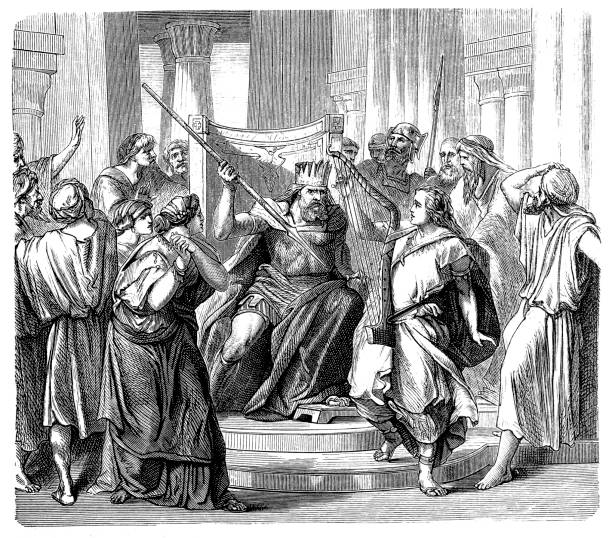
Yet when he was unfaithful to God, God rejected him as king, took from him the position he had been given, and decreed that his descendants would not inherit the throne. David, who is a symbol of Christ, was elected king instead. Saul then began persecuting David and tried to kill him, just as the Jews who would not receive Christ persecuted and killed those who did. As in the parable, David and Jesus gathered all those considered outcasts of society who were treated badly by their king. It did not appear that God would give David the kingdom, and Saul continued his reign even after being rejected by God. To many, this seemed a sign and confirmation that Saul was still chosen and favored by God. How could the rejected David be chosen when he was an outlaw living in the woods, in caves, and in pagan lands? Was it not natural to think God was with the one who had been publicly anointed and still held the throne? If Saul was prevailing over David, was this not a sign that God favored him? In the same way, the first followers of Christ appeared to be rejected, while God seemed to remain with the Jewish leaders. This continued for a time, until they met their demise as Saul did. Against God’s counsel, they went to war with Rome believing God would go with them, just as Saul went to war hoping God would go with him. He was wounded in battle and died by his own hand. Many Jews defeated by Rome also chose to end their own lives in the midst of their conflict with Rome.
Masada is a mountain by the Dead Sea where nearly one thousand Jews committed suicide while the Romans camped below. They had persecuted Christ and His followers, holding on to the land and their rule, until they went to war with Rome and lost, repeating the story of Saul and David.
It does not matter who rules the land today; the Bible tells us that the land will be given to His faithful followers on the day of judgment. Similarly, although outcast for a while, David did take the throne and the land at God’s appointed time.
So the Jews who reject Christ can claim what they want, but their end, if they do not convert to Christ, is the same as Saul’s. The land belongs to Christ and His followers and will one day be given to them. That Jews today are temporarily in the promised land does not change this fact. They are trespassers.
Great confusion, therefore, arises when people today assume that the descendants of those who rejected God, and whom God rejected in return, are the ones to whom the future promises of Israel are directed. They look at the name and not the meaning behind it. They reject the true Israel that is now “called by a new name”, and they think God is speaking through and blessing those who rejected Him.
Lucifer
God does not allow anyone to legally keep a name tied to their position after they have lost it.
This is why the name Lucifer, meaning “light bearer”, was taken from him when he misrepresented God, and he was given the name “opponent” instead. The first name describes what he used to do, and the last describes what he now does. We see names change several times in the Bible to reflect a person’s new position. Examples include Abram becoming Abraham, Oshea becoming Jehoshua, and Simon being given the name Peter (which means Rock).
Satan is the first to go from an exalted position with a name reflecting that, to receiving a name that describes his conflict with God instead. However, Satan refuses the name change; he still considers himself to be the light bearer, the one in the right, and so he has kept the name Lucifer. Those who follow him still call him by this name. He does not call himself Satan, for that is a name change made by God. Just because Lucifer kept the name given to him when he was faithful does not mean he is right or that he is still a light bearer. Calling himself Lucifer does not automatically make him one. The name cannot sanctify him or confirm his position. The name he gives himself does not change who God says he is or what he has become.
Fleshly Israel did the same thing as Satan. They kept the name given in recognition of their faithfulness, but God had now given them a new name tied to their rebellion. The faithful remnant among them was the only one lawfully (by heaven’s standard) entitled to keep the place and name. Although the land now belonged to Christ’s followers, they understood that it would be seized by whoever took it by force until God one day restored the earth to them. They knew it was not something they were to fight for, as it is given to Christ to take what is His in His own time (Rev.20:7-10).
The destiny of the unfaithful part of Israel was prophesied beforehand. In the Messiah prophecy in Psalm 69, it says: “They gave me also gall for my meat; and in my thirst they gave me vinegar to drink.
Let their table become a snare before them: and that which should have been for their welfare, let it become a trap.
Let their eyes be darkened, that they see not; and make their loins continually to shake.
Pour out thine indignation upon them, and let thy wrathful anger take hold of them.
Let their habitation be desolate; and let none dwell in their tents.
For they persecute him whom thou hast smitten; and they talk to the grief of those whom thou hast wounded.
Add iniquity unto their iniquity: and let them not come into thy righteousness. Let them be blotted out of the book of the living, and not be written with the righteous.” (Psalm 69:20-28)
“And they have rewarded me evil for good, and hatred for my love.
Set thou a wicked man over him: and let Satan stand at his right hand.
When he shall be judged, let him be condemned: and let his prayer become sin.
Let his days be few; and let another take his office”
(Psa 109:5-9).
When someone takes “your office,” they also take your title and job description. This is precisely what Christ says happened, in multiple ways and on multiple occasions. It is also what happened to Saul: another took his office and thereby his title as king.
This was the office of Israel: “And ye shall be unto me a kingdom of priests, and an holy nation. These are the words which thou shalt speak unto the children of Israel…” (Exo 19:6)
They rejected their High Priest, Christ, the heavenly sanctuary, and His teachings of the law, and so their “office” was taken from them. Who, then, was given it instead?
To the Jewish followers and those converting to the Judeo-Christian faith, it is now said: “And from Jesus Christ, who is the faithful witness, and the first begotten of the dead, and the prince of the kings of the earth. Unto him that loved us, and washed us from our sins in his own blood,
And hath made us kings and priests unto God and his Father; to him be glory and dominion for ever and ever. Amen.” (Rev 1:5-6)
As you can see, the “office” of Israel has followed the faithful and even those who were grafted in.
Now, because the office of royalty and priesthood is given to the followers of Christ, the title Israel follows them. However, it is not used as often as the name of Christ, which is a superior title to Israel, as Christ is greater than Jacob.
It is unfortunate that many are now fooled into thinking the Jewish congregation is still the priests and teachers of God, and so they go to Israel and to rabbis to learn how to interpret the word of God. The Bible is clear that they are no longer to mediate God’s law or word, and can only teach the true follower of Christ an apostate version of keeping the law. It is like a sheriff losing his job but continuing to impersonate one. He acts without authority and provokes the rightful leaders of the land. If we go to the one impersonating the sheriff, we betray the leadership that removed him for a reason, and we rebel against the newly appointed sheriff. Likewise, it is rebellion against Christ and the true Israel when we go to Jewish rabbis to be our priests and teachers, instead of the ones God has now chosen.
If these titles and tasks have been taken from those who originally held this office and name, it means that although they call themselves Israel, the promised seed and priests, God now calls them something else. God always replaces a title with a new one that describes the current state of its bearer.
It is a name tied to their opposition and betrayal.
Even I struggle to repeat the new names they have been given instead of Israel. It is sad and overwhelming.
Jesus gives them a new name: “the synagogue of Satan”, which means, translated, “an assembly of the accuser” (Rev 3:9; Rev.2:9). God says they are blasphemers, which means to “defame God”: to represent Him falsely or to use His name together with a lie. This new name is also seen in the prophecy in Psalm 109: “Let Satan stand at his right hand”. As we will explore further in this study, we will see how they have become Satan’s helpers to deceive and scatter.