The way to peace and recovery requires a willingness to leave victimhood behind. It can be tempting for those dealing with people who are stuck in victimhood after long-term or childhood trauma to tell them to “move on.” This is not helpful. They cannot just move on. No one’s body is designed or works that way. Not even God can order a person to “move on.” This book is not meant to encourage anyone to treat a victim that way, nor for a victim to say such things harshly to themselves. The point of this book is to inspire and help begin the recovery process by making some important decisions. Recovery is not done in one day, and some scars will never go away.
You can’t command someone to heal.
Even for those who have chosen to leave victimhood behind, triggers will still arise throughout life. Some will come unexpectedly, and it may be too late to deal with them in a healthy way in that moment. You cannot command anyone “to move on” or “cheer up.” These words are fruitless in themselves. No victim deserves this kind of disrespect. Emotional scars must go through a process of healing, even for Christians. Pretending to be fine when we are not will not make it so. It is simply denial. God’s solution appears to be not to repress memories, but to face them honestly and deal with them accordingly. To place blame where it belongs, we must first acknowledge that sin was committed. It is tempting for the family and friends of a victim to ask them to simply forget what happened and move on. At worst, the victim pretends to have forgotten, and they are left stuck in a private mental prison as a result. God has created us in such a way that sin does not go away until it has been dealt with according to His laws. Silencing a victim will only cause further damage. If a family wishes for a problem to go away, the problem must be properly dealt with. Too often, dysfunctional families blame the victim, or at least they divide the blame between the victim and the family member who committed the act. This will never create peace or healing. It can create the illusion of it, but not the God-given healing. Blame must be placed correctly for sin to be forgiven, even by God. A victim will continue to be hurt unless they are heard and understood. The guidance suggested in this book is not intended as an accusation against a victim for remaining in victimhood, nor to blame a victim for still struggling. Trauma healing cannot be forced upon anyone or used to guilt-trip them into thinking they are the cause of their own problems. Healing is different for everyone, and many things must come together for the journey to start. Unmerciful approaches from family, friends, and church members can, at worst, prevent healing rather than help it. The right way to approach a long-term trauma survivor is to show compassion and inspire them. Allow them to speak if they need to. Invite them to activities that will help them. Small things matter. Instead of advising them to exercise, ask if they want to go for a walk with you. Instead of telling them to eat healthier, invite them over for a healthy dinner or to cook with you. The point is to replace words with practical help. Too often, people think they “help” by offering a lot of advice to someone who is struggling, then leave feeling better about themselves for having given it. This rarely helps anyone feel better, except the person giving the advice. If you feel helpless, do something practical or helpful instead. Inspire the change rather than pushing it upon them. Do not be condescending or impatient. The victim is not less intelligent than you. They simply speak a slightly different emotional language. Only when a long-term victim feels safe can they start their journey. Guilt-tripping, demanding, threats, and similar approaches will not help them reach the starting point. Demanding they forgive before the sins are properly understood or addressed is also wrong. Everyone needs different things and will struggle to forgive until they understand what has happened in the right light. This can take time, because victims are often confused and struggle with displaced blame. If you want to help a long-term trauma victim, simply be their friend, without letting them exploit you or feel that your friendship is charity. If you make it a charity, it can cause a long-term victim to feel the need to remain in their pain in order to be noticed and cared about. This can lead them into a harmful cycle.
Ask more than once. A trauma victim struggles in many more ways than what is visible and may need time or multiple chances to say yes. Many victims are cautious and uncertain about themselves and others, and they need time to respond. Do not be afraid to invite again, even if you receive a “no” or a rejection the first time.
Skip harassing someone with good advice, take them out on a little adventure instead. Let them feel you are enjoying their company. This can practically help their healing.
Know that some are so deeply wounded by what has happened to them that they may never fully recover. Each case and situation is different. Some are more severely affected than others. Some do not show it and may appear normal, while with others it is obvious. This does not mean the one who is visibly struggling is worse off than the one whose pain does not show.
Many people who end their lives are those who keep all their feelings to themselves. They learned not to be a bother and think no one cares, which is why they pretend everything is fine. They think the world is better off without them. Numerous people who end their lives leave people shocked. The people around them say they seemed to be smiling and happy most of the time, and they did not see it coming. Others often hint at their plans, which is why if someone mentions suicidal thoughts, they must be taken seriously.
Making people suppress or stay silent about their hurt may give the perpetrator and their family a sense of peace, but it will slowly destroy the victim from within. Sin cannot be covered up. It can only be moved to the right person. Then that person must move it or give it to Christ. Sin cannot be hidden or destroyed by silence, violence, or manipulation. Thus, “helping” victims by telling them to “get over it” and “move on” can damage them deeply and even destroy them over time.
We should not compare the suffering of one person with that of another. People have different strengths and upbringings. Some can handle many difficulties, while others seem to handle very little. Behind that lie cognitive abilities, additional trauma you may not know about, genetics, or physical limitations. We must not judge two people who seem to have suffered the same thing for handling it differently. No two situations are the same.
The Bible is clear that the stronger is to care for the weaker. There is so much we do not know or understand about others. Because we have learned one secret, that does not mean we know them all. We do not need to understand others completely to be kind and helpful to them.
Helping long-term victims is not about judging, demanding, or advising. It is about being present and standing by their side, and giving them your time. This will help them feel wanted and valued, and these same feelings will inspire them to value themselves and find the courage to grow.
Using Christ and the Bible to silence a victim is another form of abuse. Christ wants to set people free, not destroy them. “A bruised reed shall he not break, and the smoking flax shall he not quench: he shall bring forth judgment unto truth” (Isa 42:3). The Bible is clear when it comes to sin: it must be atoned for in one way or another. The law requires compensation for damage. It is up to the victim alone to forgive. If a Christian family has managed to silence their victim and pretend things have not happened, they have only put themselves in a situation where God must one day judge them without being able to offer them atonement. If He does not, heaven will not be a paradise for the victims, as the treatment by their families will continue there. The lies would continue there. Christ’s mercy would be used to prove the victim wrong. Calling a victim a liar to save face will only cause you to lose face on judgment day, as you will stand clothed in nothing but your own filthy righteousness.
Any victim who follows Christ and has taken refuge in Him should know that Christ is on their side against all sin. He will accept no excuse for any sin. If your transgressor is unapologetic, He will judge them in your place. It is not your job to be the courthouse, the judge, and the victim at the same time. “And it shall be said in that day, Lo, this is our God; we have waited for him, and he will save us: this is the LORD; we have waited for him, we will be glad and rejoice in his salvation.” (Isa 25:9)
“When the Son of Man comes in His glory, and all the angels with Him, He will sit on His glorious throne. Then the King will say to those on His right, ‘Come, you who are blessed by My Father, inherit the kingdom prepared for you from the foundation of the world. For I was hungry and you gave Me something to eat, I was thirsty and you gave Me something to drink, I was a stranger and you took Me in, I was naked and you clothed Me, I was sick and you looked after Me, I was in prison and you visited Me. Then the righteous will answer Him, ‘Lord, when did we see You hungry and feed You, or thirsty and give You something to drink? When did we see You a stranger and take You in, or naked and clothe You? When did we see You sick or in prison and visit You?’ And the King will reply, ‘Truly I tell you, whatever you did for one of the least of these brothers of Mine, you did for Me.’ (Matt. 25:31, 34-40)
“When I was a child, I spake as a child, I understood as a child, I thought as a child: but when I became a man, I put away childish things. For now we see through a glass, darkly; but then face to face: now I know in part; but then shall I know even as also I am known. And now abideth faith, hope, charity, these three; but the greatest of these is charity” (1Co 13:11-13)
Finding freedom from victimhood is to take control of your own healing. No one should be dependent upon others’ choices to find healing. Untangle yourself, trust God, and find peace in owning your future.
In the end times, God will turn the tables. Victimhood will benefit no one, impress no one, and purify no one. Even bad people claim victimhood and use it to advance themselves. Some of these bad people have been real victims, but they are still bad. It is a known fact that people with narcissistic tendencies claim victimhood and make it appear that their victim is the bad guy. Only time can expose the truth, but what happens when mankind runs out of time? Allowing persecution will have no purpose in the end.
The only way God can protect His people is if they allow Him to cleanse them of their sins and agree to stop rebelling against His law. If they do not, He will have no argument to favor them over others. For those who follow His laws, He has promised to enclose them like a wall, protect them, and give them refuge from their enemies (Isa. 49:16; Zec. 2:5; Ps. 41:1-2; Deut. 7:15; Ps. 61:3).
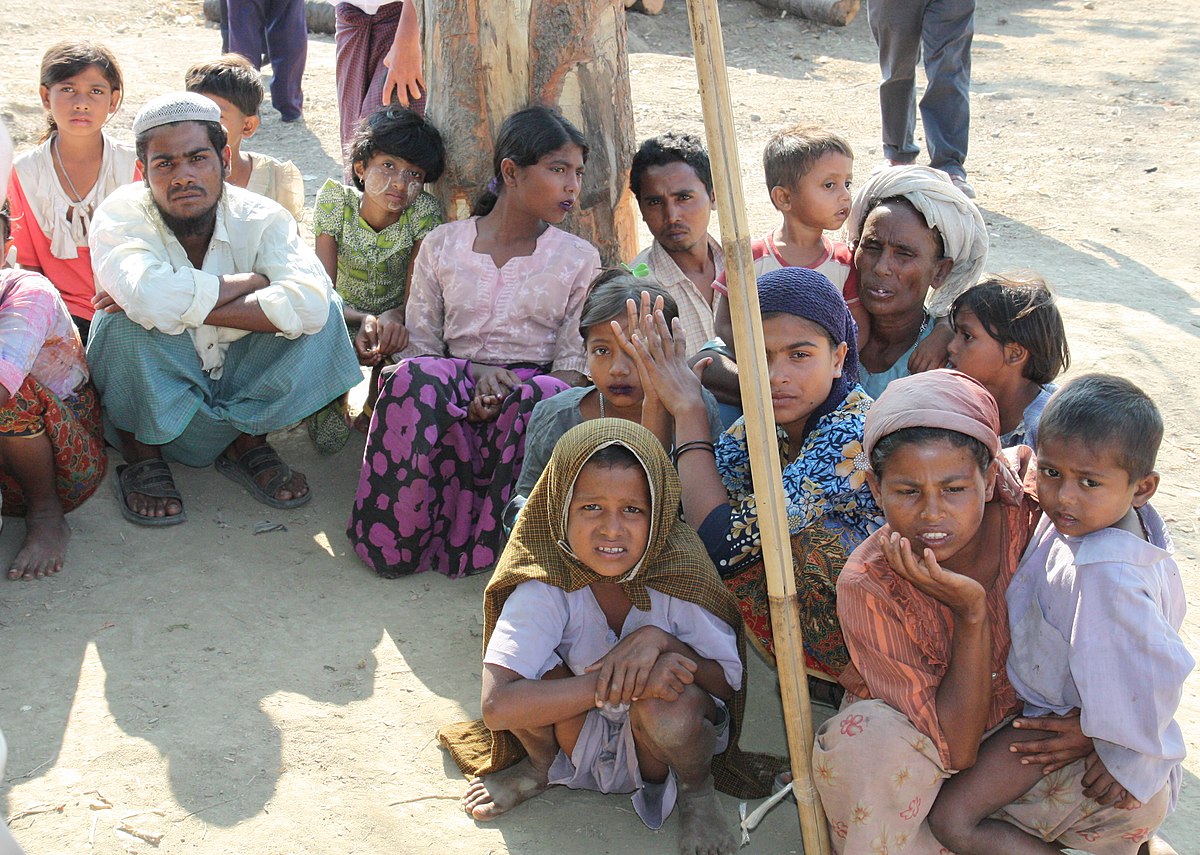
Persecuted Muslims in Myanmar.
There comes a time when nothing positive will come out of God’s people being victimized. Because of the many tribulations and uprisings all over the world and the many claiming victimhood as a people, Christians being victimized would impress no one to become a Christian. Muslims are targeted for hate, Indigenous people are discriminated against, prideful sinners are claiming victimhood for being called out, and the list goes on. There are many religious and non-religious groups claiming victimhood today. Even Christians hate other Christian groups.
Persecuted Buddhists and Hindus.
Persecution would not reveal Christianity as good; its values would drown along with the values of everyone else claiming victimhood. Does the fact that Muslims are persecuted in some places prove that Muslims are telling the truth and are good? No, because we know you have good and bad Muslims. We have Muslims who persecute and Muslims who are being persecuted. The truth is not revealed in their persecution. The same is true for other cultural minorities and majorities. The same is true for Christians. People claiming the name of Christ have, in their time, persecuted almost all religions. Christians have also been persecuted by all religions.
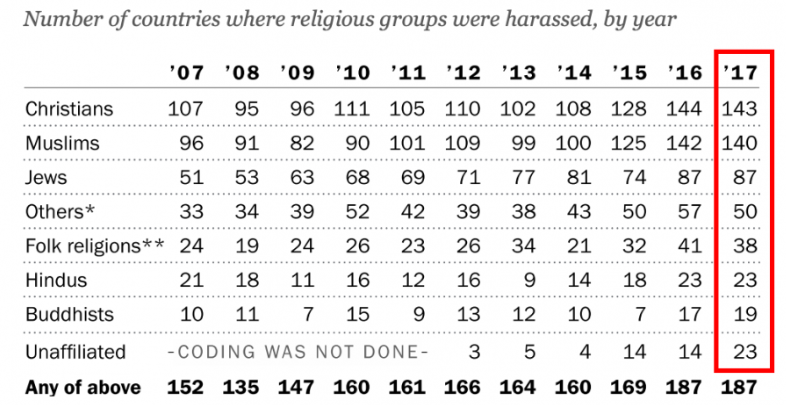
Statistics show persecutions in 187 countries (out of 195), between the years 2007 and 2017. Christians are the most persecuted group in the world. Other countries considered to have religious freedom like Canada and the Northern Nordic countries do not have discrimination in their laws, but in their society and practice of their laws and so mostly all countries discriminate. Scandinavia normally seen as a religious-free country has societal bullying and ostracizing of Christians. If you want to get a job you better keep your faith a secret.
Sometimes they have been in the right, sometimes in the wrong. The truth is no longer revealed by someone being targeted. Many religions and anti-religions have many martyrs, but the truth is not revealed. When Christ’s true followers are persecuted in the end times, it will just draw in the world’s noise and help no one. So in the end, the greater testimony that God wants to give through His people is His ability to provide for and protect those who choose to be citizens of the kingdom of heaven. That is why we see Christ turning the tables in the end times, stopping the persecutors, and punishing them. Truth and God’s people are uplifted when He saves and protects them. This will serve as an example. In the heavenly books, every wrongful act and every persecution are written down and will be punished. Because harming God’s people, His true believers, is not of God and is a crime. For those who have been martyred in the past, God reassures them and says judgment will come to those who did it: “And when he had opened the fifth seal, I saw under the altar the souls of them that were slain for the word of God, and for the testimony which they held: And they cried with a loud voice, saying, How long, O Lord, holy and true, dost thou not judge and avenge our blood on them that dwell on the earth? And white robes were given unto every one of them; and it was said unto them, that they should rest yet for a little season, until their fellow servants also and their brethren, that should be killed as they were, should be fulfilled” (Rev 6:9-11).
In the end times, God will punish the world for its suppression and persecution of His people. God’s people are mocked and not heeded. As Gabriel told Daniel: “When he shall have accomplished to scatter the power of the holy people, all these things shall be finished” (Dan.12:7).
When no one cares about God’s people’s rights, no one cares about their tears or their warnings, and there is nothing more they can do, God will not permit them to suffer needlessly, even if it has been done willingly for the salvation of others. Further suffering would break them and save no one. So, God turns the tables and punishes the world himself: “And I heard another voice from heaven, saying, Come out of her, my people, that ye be not partakers of her sins, and that ye receive not of her plagues. For her sins have reached unto heaven, and God hath remembered her iniquities. Reward her even as she rewarded you, and double unto her double according to her works: in the cup which she hath filled fill to her double” (Rev 18:4-6) Here God makes it clear again that if you do what they do and live as they do, if you partake in their sins, God cannot protect you. But if you do not, God will avenge you. He says He will overthrow the entire infrastructure and trade system. He will bring down the deceivers and their allied leadership. For God never condoned the mistreatment of His people. He just waited in mercy, hoping that people would understand their wrong and turn. When they do not, justice comes. “Rejoice over her, thou heaven, and ye holy apostles and prophets; for God hath avenged you on her” (Rev.18:20) Here comes another important principle. Keeping God’s laws and being faithful to heaven require us to leave judgment to the heavenly court and to allow them to execute it. It says, “God hath avenged you on her”. It is not for Christians to take up their swords, but to make their plea to the heavenly courts and leave them to handle the situation. This requires faith and trust in God’s willingness not only to seek mercy for the sinner but also to seek justice for those harmed by those who do not repent.
True Christians will be victorious. They will judge the world. (Rev.20:4). Just like Christ was harmed and killed when He came to earth the first time, He will come as a conquering king the second time. With a crown and a scepter. Those who harmed Him and did not repent shall rise, see Him, and weep. Justice will come. Death will not prevent justice. There will be a time when those who have harmed others will be held accountable. And here is our patience and trust in God: No unmerciful man or woman who unapologetically finds strength in harming others will go unpunished.
We should be sad for them, for the loss they will suffer, for their stupidity in clinging to wrongs. And those victimized will go free, and God promises: “They shall hunger no more, neither thirst anymore; neither shall the sun light on them, nor any heat. For the Lamb which is in the midst of the throne shall feed them, and shall lead them unto living fountains of waters: and God shall wipe away all tears from their eyes” (Rev.7:16-17)
God does not side with cruelty; He has allowed it to exist for a brief moment in the history of the universe to try to help mankind be saved and to have witnesses against ever allowing such a society to arise again.
Christ’s second coming is the Christian hope and the day they will be truly free.
For those who think God asks of us patience and long-suffering that He Himself does not carry, they should know that God asks of us only what He Himself has gone through. It would have been easy for God to eliminate His enemy, Satan, in the beginning. But He could not, because no one would have understood why. Satan seemed like a concerned, loving creature speaking on everyone’s behalf. Satan appeared to be working for the good of everyone. God knew that a quick solution would not end the problem. It would just add more problems. God had to be patient and endure the lies and attacks Satan carried out. It took a long time before heaven realized who Satan really was, before they understood they had been lied to and manipulated, and that he was doing it for himself and not for them (Rev. 12:9 & 12). Likewise, Christ came to earth to tell everyone the truth, but Satan took advantage of his power and caused Him to be constantly persecuted throughout His life. There were attempts to kill Him from the moment He was born, and several more as an adult. In the end, He was tortured and killed. Christ endured it to expose to everyone who Satan was and what his agenda was. He had to allow Satan to play out his evil upon someone who had done him no wrong, upon the one who had given him life. Satan, who claimed to be a defender of freedom, would not allow Christ free speech. He would not allow Christ’s followers to practice their belief in freedom. Satan proved by all his actions that all his good words were just for show; he himself was a cruel dictator with all the characteristics he had claimed God had. God had not killed him when he first rebelled and even went to war in heaven, but Satan was quick to eliminate Christ, who only spoke the truth and did good. Christ was what Satan would like to claim to be, but isn’t. Because God endured all this, He could judge the guilty with the blessing of the universe. Satan exposed himself and his true ideology slowly over time, but even more during his attack on Christ. Satan could not win over Christ in heaven, as Christ was too powerful. But when Christ came as a man to save mankind, Satan used his power to try to destroy Him here. In heaven, Satan could claim to be suppressed, as he was outnumbered and weaker. He could claim victimhood and gain sympathy that way. But when Christ came as a human in human flesh here on earth, Satan was physically stronger. He controlled the kingdoms of the world, according to himself (Matt.4:8-9). Yet now that the tables had seemingly been turned, Satan turned out to be no victim. He took advantage straight away and went to destroy, even Christ as a baby. Before Christ had grown to speak His first words and do His first deeds, Satan wanted him dead. Satan became a contrast to what God had done for him. Evil men and angels can say all the right words and claim to be what they desire to be viewed as, but their actions will expose them every time. “Wherefore by their fruits ye shall know them” (Matt.7:20)
God allows it not out of weakness, but because it is the only way to expose the truth and people’s character so that they can be judged or receive mercy accordingly. If one man has one victim, it might be questioned if the victim caused it in some way. If someone has a repeated pattern of harming others in the same way, it is evident who is at fault and why. The first victim is no longer doubted. Time is a great tool for exposing lies.
God asks His people to endure difficulties, even persecution and mistreatment, but not to accept them or bring them upon themselves. He said clearly, “If you are persecuted in one city, go to the next”. Do not stay suppressed if you can obtain freedom elsewhere. And Christians must not claim victimhood. We can endure oppression if we are strong enough to tolerate it by choice, as an attempt to save others, even our transgressors. If it is not received well, we need to move on, or their evil will destroy us as well. The Bible is clear that some are spiritually, mentally, and physically weaker than others and that it is the stronger Christians’ responsibility to care for the weaker and to take on the brave tasks (Romans 15:1-2; 1 Thessalonians 5:14; Isaiah 35:3; Psalm 41:1) God does not call everyone to stand on the front lines in the spiritual war. He is not unreasonable, and it is a choice. However, regardless of what task we have, whether small or big, we are to be spiritual warriors, not victims. We know the stakes; we make decisions based on them. Christianity is not victimhood; it is freedom. Freedom in God’s image. When God looks for His image in us, He wants to see that same determination to bring justice that He Himself carries. To help those who are helpless, care for the sick, release those who are suppressed, and show mercy and tolerance if there is hope of regret and conversion. We are to handle evil without becoming a reflection of it. We are not to take revenge on them nor let them subdue us; rather, the third option is to show goodness and strength. To inspire people to break the chain, not pay sins forward, and not let others’ bad behavior, although it harms us, change us. Rather, keep an eye on Christ.
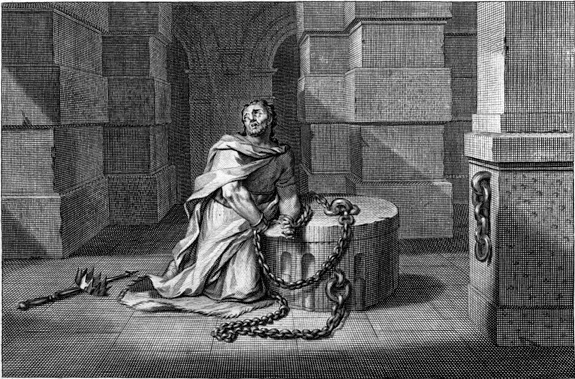
If we do this, we are truly free. “For he that wavereth is like a wave of the sea driven with the wind and tossed” (Jas.1:6) We will be triggered and tempted. But we give Christ our revenge. We cannot do this while claiming victimhood, for then we spend our lives holding every person we meet accountable for a sin they did not commit. Someone who clings to victimhood is under the control of another. If we are down for a moment, we must rise again. If we don’t, we cannot give the world an alternative to paying sin forward. We can’t be the solution if we are part of the problem. If you have scars, consider them evidence against sin. If you have mental scars, again, they are evidence against sin. The pain you feel in your heart when you have been wronged or targeted is God’s evidence against sin. God will do you right in His own time. So, Paul advises us to think of ourselves as warriors, not as victims. He wrote these words while in prison for preaching the gospel and being hindered from speaking openly: “Finally, my brethren, be strong in the Lord, and in the power of his might. Put on the whole armour of God, that ye may be able to stand against the wiles of the devil. For we wrestle not against flesh and blood, but against principalities, against powers, against the rulers of the darkness of this world, against spiritual wickedness in high places. Wherefore take unto you the whole armour of God, that ye may be able to withstand in the evil day, and having done all, to stand. Stand therefore, having your loins girt about with truth, and having on the breastplate of righteousness; And your feet shod with the preparation of the gospel of peace; Above all, taking the shield of faith, wherewith ye shall be able to quench all the fiery darts of the wicked. And take the helmet of salvation, and the sword of the Spirit, which is the word of God” (Eph 6:10-17). Paul further said: “And for me, that utterance may be given unto me, that I may open my mouth boldly, to make known the mystery of the gospel. For which I am an ambassador in bonds: that therein I may speak boldly, as I ought to speak” (Eph 6:19-20).
An ambassador in bonds! Paul was a free man even in prison, for his heart and mind were free. He had inner peace. He still loved. No matter what has happened in the past or is happening right now, letting it control us and who we are and what kind of Christian we are is only giving our freedom to our transgressors. We will harm ourselves and others and never be free. God knows what you have been through. He has seen it and has recorded it. Every scar, every word, is noted. He says, “Revenge is mine” ( Romans 12:19-21). He tells us to be bold and strong in Him. He tells us to be free in Him.
In the Bible, we see God fight for His nation, Israel, against their enemies. Yet during the Christian era, God allowed them to suffer tribulation and even lose the battle against their adversaries. It might seem like a contradiction at first glance. Does God want His people to suffer, or does He want to help them win their battles? Christian persecution has led many Christians to think God desires His people to remain subdued so that they can be good Christians. Martyrs are admired, so churches make many of them saints to be prayed to, and their images are hung up like icons. The reason God has permitted Christian persecution is not that He sanctifies victimhood or because being a victim automatically makes you good. Again, the reason is tied to the testimony against sin. When Israel was a state following God’s law, God could fight on their behalf because they were under His authority. When Israel left God and followed pagan laws, God allowed them to be conquered and scattered.
If both Israel and its pagan enemies followed the same idol practices and injustices, the same unfair laws, how could God side with one against the other? Therefore, God urged them to turn from their ways so that He could defend and save them. Some kings understood this and sought reform for the country while under threat. King Hezekiah saw how town after town in Israel was captured by the king of Assyria, and they had no chance. Hezekiah threw away the idols, reinstated God’s laws, and urged the people to be faithful to the laws of heaven. When he did, and the Assyrian army came and laid siege around Jerusalem like they had all the other Judean and Israeli cities they had conquered, God finally saved them. In one night, God sent his angels to defeat the great Assyrian army. By making God their king and following His laws and standards, God could defend them as a king defends his kingdom. Later, the town fell into transgression again, and Jerusalem’s future was sealed. They followed pagan morals and laws. God could not and would not save them; instead, he allowed the kingdom whose customs they followed to take control of the city. Some forty years before that, King Josiah cried before the Lord, tried to turn the people around, and reinstated God’s laws and even the sanctuary system. As a response, God said He would not let Jerusalem be destroyed while Josiah was king. His sons did not follow their father’s path. We see here what makes the difference. Jerusalem had become an idolatrous city. How could God favor and save them without being unfair? God said about Jerusalem: “And she hath changed my judgments into wickedness more than the nations, and my statutes more than the countries that are round about her” (Eze 5:6)
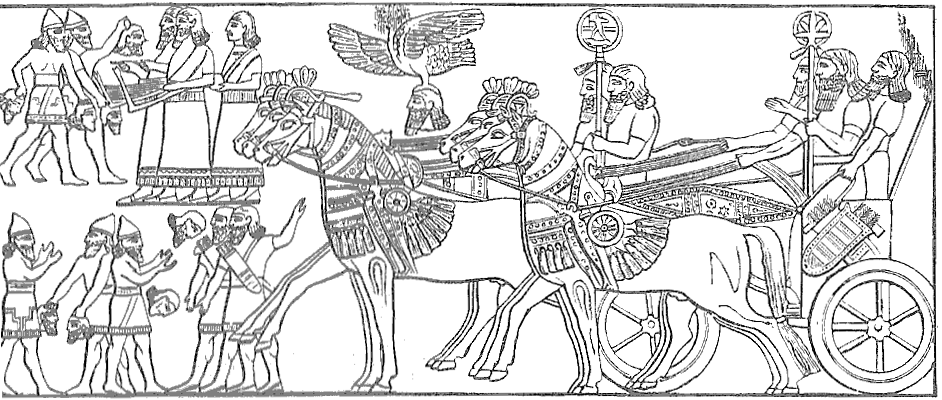
The Assyrian army was known for its severe cruelty. Yet God said the Israeli people were worse than the Assyrians.
They were more evil than the other pagan nations. “Moreover Manasseh shed innocent blood very much, till he had filled Jerusalem from one end to another; beside his sin wherewith he made Judah to sin, in doing that which was evil in the sight of the LORD” (2 Kings 21:16) Even the prophet Isaiah had been sawn in two during the reign of King Manasseh. Their hands were full of blood when they demanded that God save them from their enemies. They refused to change their ways. God allowed the temple built in His honor to be destroyed. He did not want His temple to stand in the middle of cruelty. However, when they turned from their ways and asked for mercy, God let them rebuild His temple among them once more. When Christ came during the Second Temple period, everything had once again become bad. Only this time they had become extreme in other ways, but the result was the same: cruelty and the shedding of innocent blood. No matter how sin manifests itself, it results in the same thing. Jesus said to them: “O Jerusalem, Jerusalem, thou that killest the prophets, and stonest them which are sent unto thee, how often would I have gathered thy children together, even as a hen gathereth her chickens under her wings, and ye would not!” (Matt.23:37-38) As Christ said, it happened, and the second temple was destroyed as well and was never rebuilt. When they repented and asked God for mercy after the destruction of the First Temple, God granted them 490 years to turn from their ways and do better. This was around the same length of time as the mercy God had offered those in the land before them, the Canaanites, when they were wicked (Gen 15:30). God was being fair. It is also part of God’s long suffering. However, they did not change their ways. They still treated each other badly, suppressed others, misrepresented God while claiming to represent Him, killed God’s servants, and even killed God’s son, who was without sin. God would not continue to pardon them, for they would become worse, and it would cause even more suffering than that which they already had. Throughout the Old Testament, we see how God protects them when they are faithful, or at least trying to be, and allows their enemies to harm them when they refuse to be educated in that which is good and are rebellious. God even told them, ahead of time, the conditions for His protection through Moses (Deut. 28). This is not about making mistakes or errors, either as a people or as a leader. God had already provided atonement for cases of disobedience through the sanctuary. It is not about God leaving them because they made mistakes. It is about the people and leaders rejecting God’s standard and being judged by it. When they reject God as their authority, they place themselves outside of His protection. Israel and Judah provoked their enemies’ anger through their own actions. God cannot favor one bad person over another, unless one is much worse than the other, of course. God’s enemies, seeing God’s people without full protection, target them first and foremost as a strategy, because those who have had the truth are closer to rediscovering it. Through their history, they have gained knowledge that can help them convert again. It follows, then, that if left partly unprotected, Satan will try to destroy them to erase the truth of God if possible. Thus, God’s people who turn their backs on God are more vulnerable than those who have rejected God all along. Satan’s anger towards God’s backslidden people will manifest in a greater way. This fact is lamented over in the Bible when God’s people felt especially targeted compared to the ungodly.
It is not uncommon, when suffering, to question why one’s own punishment seems so much more severe than that of others who are just as bad or even worse. What it can mean is that Satan sees you still have a seed in you and that you are likely to listen to the Spirit and turn, and so he targets you harder. As a Christian, it can almost be considered a compliment. If Satan is against you even when you have backslidden, it means he thinks you still have the potential to return to God. Solomon wrote: “All things have I seen in the days of my vanity: there is a just man that perisheth in his righteousness, and there is a wicked man that prolongeth his life in his wickedness”. (Ecc.7:15) Or, like Job said, “Why does the wicked prosper?” Earth is a spiritual battle. Satan does not always attack his workers; instead, he gives them money and peace, while focusing more on targeting those “sheep” that run out of Christ’s fold. Thus, a backsliding Christian is under great attack, while someone who has been on Satan’s side the whole time can live in luxury and selfishness unharmed. When Satan was tempting Christ in the wilderness, he offered Him what was valuable in the world. Christ declined, choosing instead to suffer for His people’s salvation (Luke 4:5-7).
On the other side, we can also see in the Bible that good people are attacked and suffer persecution even though they have been faithful. The prophet Isaiah was not sawn in two because he was unfaithful to God, but rather because he was faithful. Even the first Christian movements suffered harsh persecution. Several of the good apostles were martyred. God warned the Christians of what was coming: “I know thy works, and tribulation, and poverty, (but thou art rich), and I know the blasphemy of them which say they are Jews, and are not, but are the synagogue of Satan. Fear none of those things which thou shalt suffer: behold, the devil shall cast some of you into prison, that ye may be tried; and ye shall have tribulation ten days: be thou faithful unto death, and I will give thee a crown of life” (Rev.2:9-10) Here, the wording can make a great difference. Did God allow it to test them, or was God trying to tell them that what was going to happen would be hard on their faith, and urging them to stay strong despite the circumstances? Most likely the latter, as God did not inspire the sinner to sin against them. God is not behind their trials; evil men are. God is encouraging them to keep their faith through their difficulties, because that is when it is easiest to give up in bitterness.
Christians were severely persecuted by the Roman government.
Being victimized was so common for Christians in the first centuries that the mentality of victimhood is still part of Christianity to this day. The idea that God is glorified by our suffering is not one that feels sane to a trauma victim. Many survivors feel unsafe in an environment where it is claimed God holds the hand of the one harming them to “test our allegiance” to Him. God cannot trust someone who has been threatened and tortured to prove themselves faithful any more than anyone else can. Anyone declaring devotion while pressed up against a wall, or between a rock and a hard place, might be deceiving both themselves and others. Nor is God such a fool. The Bible is clear that it is His love for us that converts us. The apostle John stated: “We love him, because he first loved us” (1. John 4:19). Only love can inspire love. Christians are not saved by allowing themselves to be victimized; they are saved by Christ’s death for our sake alone. What happened to the first Christians was a consequence of their bravery, as we will investigate. Another thing that can make many feel unsafe is the idea that if you make a mistake, God withdraws from you. It might be tempting to compare Israel’s history and faults to your own relationship with God. After all, it is written as a warning and example to us (Heb.4:11). This can become an irrational fear for a long-term trauma survivor. God did not leave His people when they strayed; He stayed and tried everything He possibly could to save them. And even when He would not protect them as a governmental institution, He still had mercy on the individuals within it. The first temple was destroyed, but people like Jeremiah, Baruch, Ebedmelech, Daniel, Ezekiel, Hananiah, Mishael, and Azariah are men God protected, saved, and helped. All because, in the middle of the chaos, they turned to God. God does not need you to be perfect for Him to help or care for you; He just needs you to be willing. Using the stories in the Bible where God had to remove His protection as a way to scare yourself or others into thinking that God has abandoned you or them is not a good way to be a Christian. It will strain you and cause you to create a relationship where you need to protect yourself from God’s punishments rather than finding shelter under His wings (Psa.36:7). This is a temptation that those with childhood trauma can fall into, and it leaves a lasting strain on their relationship with heaven. In these instances, it is helpful to better understand why God allowed them to be punished and to place it in the context of what was actually happening.
One of the reasons for the downfall of Israel was not just their great crimes against each other and God, but that when God tried to reason with them, they would not listen. God sent them messengers to talk sense to them, to persuade them to change their conduct, and to nearly beg them to let God save them. Instead of listening, they killed the ones God sent. (Heb 11:36-37) Jesus was upset about how those who came to plead with them were treated: “Therefore also said the wisdom of God, I will send them prophets and apostles, and some of them they shall slay and persecute: That the blood of all the prophets, which was shed from the foundation of the world, may be required of this generation; From the blood of Abel unto the blood of Zacharias, which perished between the altar and the temple: verily I say unto you, It shall be required of this generation. Woe unto you, lawyers! for ye have taken away the key of knowledge: ye entered not in yourselves, and them that were entering in ye hindered” (Luk 11:49-52). On judgment day, those who rejected God’s plea might try to make their case that they were ignorant and “meant well” when they rebelled against God’s rule. How those sent to them were treated will serve as evidence against their claims and ensure they are judged and not permitted within the gates of the New Jerusalem. Had they not shown the extent of their violent rejection, there might have been doubt on judgment day. Now there is none. Even among the violent, there will be men saved because they finally saw reason. One of them is Paul.
When we compare our own personal pilgrimage to the story of the nations of Israel and Judah, we should remember that they were not rejected because of their sin, but because they refused to accept the remedy. They would not let God save them. In this way, they lost His help and everything that help would have brought them: protection and deliverance.
At one point, the remnant of Judah and Israel sought to listen to God and to receive His help. A sinful priest was all they had to plead their case at the time. But this priest was willing. This was all God needed: “Now Joshua was clothed with filthy garments, and stood before the angel. And he answered and spake unto those that stood before him, saying, Take away the filthy garments from him. And unto him he said, Behold, I have caused thine iniquity to pass from thee, and I will clothe thee with change of raiment. And I said, Let them set a fair mitre upon his head. So they set a fair mitre upon his head, and clothed him with garments. And the angel of the LORD stood by. And the angel of the LORD protested unto Joshua, saying, Thus saith the LORD of hosts; If thou wilt walk in my ways, and if thou wilt keep my charge, then thou shalt also judge my house, and shalt also keep my courts, and I will give thee places to walk among these that stand by” (Zec.3:3-7) When Isaiah was called to be a prophet, he did not feel he got the job because he was without sin. Rather, he said after getting the commission: “Then said I, Woe is me! for I am undone; because I am a man of unclean lips, and I dwell in the midst of a people of unclean lips: for mine eyes have seen the King, the LORD of hosts. Then flew one of the seraphims unto me, having a live coal in his hand, which he had taken with the tongs from off the altar: And he laid it upon my mouth, and said, Lo, this hath touched thy lips; and thine iniquity is taken away, and thy sin purged” (Isa 6:5-7). We see this repeatedly. Few have committed a crime as King David did. But he repented greatly and begged God to restore his heart. “Purge me with hyssop, and I shall be clean: wash me, and I shall be whiter than snow” (Psa 51:7) Later, when his son rebelled against him, partly because of David’s sins, God still saved and restored him. Not from all the consequences of his actions, but He still helped him through the injustice he was experiencing. God could not save the former King Saul because he did not trust God or want God to help him change his ways. The Bible shows us that God is not dependent on our past being without blemish, but that we are willing to receive His help. Even an earthly governmental prison system is built upon similar principles. A convict can be released on trial if they show an understanding of their crime, regret, and a willingness to accept help in changing. If they do not show these three characteristics, they are not given an early release. God’s mercy is even greater than this. God offers to not even remember our past mistakes: “I, even I, am he that blotteth out thy transgressions for mine own sake, and will not remember thy sins” (Isa.43:25) In Revelation, in a message to the last church, we see that God is upset about their sins and coldness. Yet He says if they are willing to seek His help, they will be granted the privilege of sitting on Christ’s holy throne next to Him. What incredible mercy for people who have opposed the principles of His kingdom to be allowed to sit there with Him! God does not hold grudges. God’s mercy is extreme and ridiculous and is not deserving of the accusations and suspicion Satan plants in the minds of people, especially childhood trauma victims. The story of Israel losing its protection does not reflect God’s attitude toward His children, who made a few errors. His love is not that weak and short-lived. If we refuse to receive His help, if we refuse to apologize for our wrongdoings to others, if we refuse His mercy, then we will be judged by the heavenly laws. God has no other choice because those we have hurt, and the spectators, have made a complaint against us. We are all on trial for the chain reactions we took part in, for the chain reactions we created, and for every selfish and damaging act we have done towards others. Sins that God has offered to remove. If we do not want His salvation or help, He cannot give us His protection. The two go together.
Christian persecution
It was God’s original plan for the kingdom of God to be established here on earth among mankind. This is what He tried to accomplish through the nation of Israel. A haven for all who wish to follow the moral principles of His rule. A place where God could protect them. When Israel did not cooperate, this kingdom was lost to man. “Jesus answered, My kingdom is not of this world: if my kingdom were of this world, then would my servants fight, that I should not be delivered to the Jews: but now is my kingdom not from hence” (John 18:36) The disciples were ready to fight, as seen when Peter drew his sword to try to save Jesus (Matt. 26:51). This is clearly not what Christ meant, for He asked Peter not to fight. If the disciples alone had started a physical fight with the Jewish authorities, they would have started a rebellion within the nation. Jesus wanted His people, as a whole nation, to defend Him and stand by Him. When the Jewish authorities did not do so, it became apparent that He could not create a temporal kingdom on earth as He had first intended, as seen in Israel’s history. This resulted in God’s people being scattered and even persecuted by both the Jewish and Roman authorities. This was not God’s design; He did not want His people to be hunted prey. He had created the states of Israel and Judah to protect His people. But no government would represent Him and let Him lead. This ultimately meant there would be no country or nation that would act as a shield from the pagan and ungodly. God’s people would be forced to live under pagan governmental rule and face the conflict of interests that naturally would arise when one ideology clashed with another. Whenever a pagan governmental law clashed with God’s laws, the believer was and is forced to choose and suffer persecution. It was because the Jews rejected God’s leadership and Christ as their king that the Christians ended up being persecuted for decades. God’s first plan was for His people to be faithful, for the kingdom of Judah to remain, to receive the teachings of Christ, and to protect His people. When they did not, it happened, as is common in this world: the innocent must suffer because of the majority’s unfaithfulness. Such was the case even when Babylon took Jerusalem. The Bible speaks of Daniel, Hananiah, Mishael, and Azariah, who were faithful to God, yet they lost their homeland as well. They were forced to leave their homes and be taken to Babylon, and they were even forced to help Babylon flourish instead of their own country. Judah’s unfaithfulness harmed not only them but also Christ’s believers. The sanctuary of God’s people on earth was destroyed, and everyone had to find a way to survive as believers among hostile nonbelievers. The Christian persecution is a cause-and-effect witness against Israel’s unfaithfulness.
You can compare it to a child suffering because of their parents’ sins. They have still not sinned themselves, yet they are still punished for their parents’ decisions. The only way for God to save them from their parents’ mistakes is if He takes the children away from them at birth and gives them to someone else. It goes back to whether God should punish people before they commit a crime or after. If He punishes before, then people will feel scared and suppressed and doubt that God is fair. If He punishes after, people will understand, but damage has already happened. God can foretell the future, but the thousands upon thousands of witnesses in the courts of heaven and on earth cannot. (Isa.46:10; Dan.7:10) Should God have let Judah keep their kingdom, despite their infidelity, to protect those faithful among them? They hunted down their own people who received Christ and had them killed. Judah also set the Roman leaders up against the Christians. Israel was not a sanctuary for God’s people, nor did they represent God right, so God allowed them to show their true face, and their punishment was that God withdrew His protection from them, which allowed the stronger Roman army to defeat and scatter them. Jesus’ words that His “kingdom is not of this world” reveal that He wanted to establish a safe country for His people, but was constantly opposed.
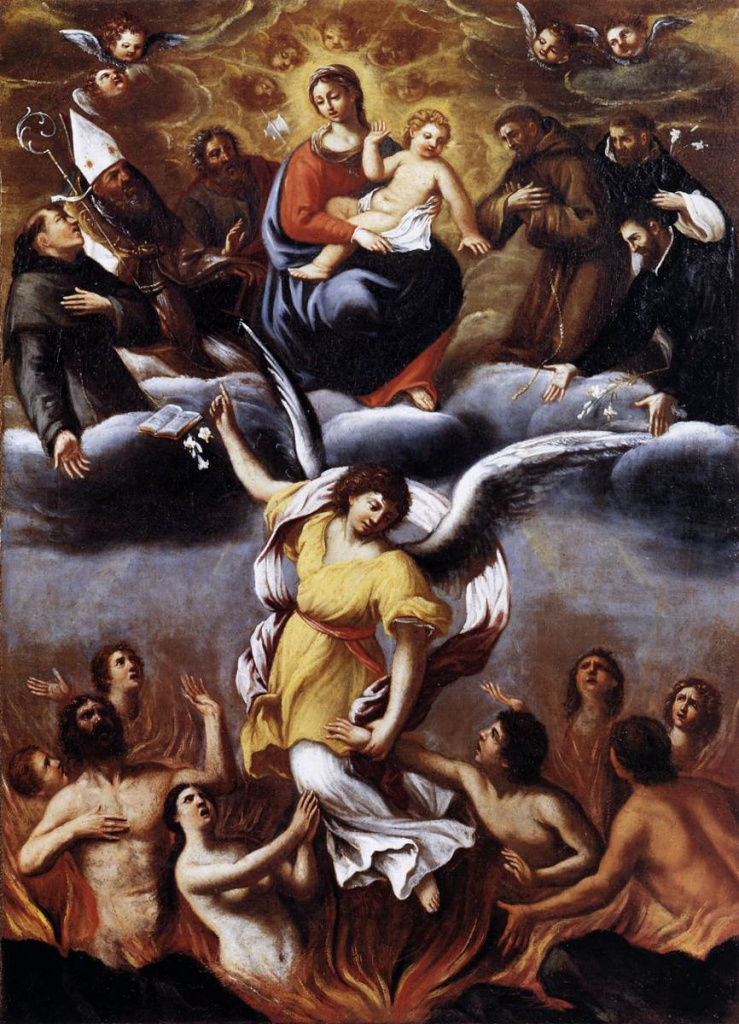
God did not desire that His people be persecuted or harshly treated. It is not God’s will for His people to be harmed. Given the damage that being victimized causes to someone’s character, and that victimhood itself does not purify or sanctify anyone, God did not need it to happen. Nor is He asking His people to play victims today. Christians being victimized because of their faith is not God’s doing; rather, it is the wrath of God’s enemies manifesting, and God is not happy about it. Revelation 12:17 says: “And the dragon was wroth with the woman, and went to make war with the remnant of her seed, which keep the commandments of God, and have the testimony of Jesus Christ.” Many believe God desires His people to be persecuted and to suffer so He can purify them through it. If that were so, demons and evil people would be doing the Lord’s work. The damaging purgatory theology presented by the Catholic Church has kept this idea alive and caused many Christians to think they are more right with God when they suffer than when they are happy and thriving. This is especially damaging to long-term victims, as they will find these ideas consistent with their self-abuse and will easily slip into that role.
The Catholic Church followed ancient Roman traditions regarding the underworld. They make it seem like Satan works for God in punishing people. The picture shows relief from Notre Dame in Paris, where Satan is bringing a group of people to the underworld.
God has not hired Satan or demons to abuse His people. They work against God and not for God. God is not a sadist. The purifying fire God speaks of is to allow His people’s love, sincerity, and patience to be tested and tried. He wants His people to battle the sin in their lives and to make the hard decisions that will develop their character. To say no to something wrong when others say yes. Jesus said that impurity comes from our hearts. “There is nothing from without a man, that entering into him can defile him: but the things which come out of him, those are they that defile the man”. (Mark 7:15) If the only thing that defiles a man and needs cleansing is in the heart, then everything God says about purification is about purifying our hearts. Our hearts represent our will to do either good or evil. You cannot force the heart to be good; it has to be inspired to be good. God repeatedly says that it is the heart He wants to purify. (Ezek.11:19, Heb.8:10) Sometimes tribulation can influence the heart, since humans tend to learn compassion the hard way. Mankind has an instinct to blame others, and some do not learn to be compassionate until they have personally experienced unfair hardships. God allows it because of the hardness of our hearts, not because He wishes ill on anyone. Christ declared, “Blessed are the merciful: for they shall obtain mercy. Blessed are the pure in heart: for they shall see God. Blessed are the peacemakers: for they shall be called the children of God” (Mat 5:7-9). God has compassion for those who show compassion to others. We learn to correct ourselves and our hearts through what we experience, and so God sometimes allows us to have those experiences. Not evil or cruelty; that is never God’s will.
God does not purify His people by having others harm them. The following is said in the Bible to purify:
Blood “the blood of Jesus Christ his Son cleanseth us from all sin” (1.John 1:7)
Water is used as a symbol of purification. However, physical water cannot remove anyone’s uncleanness, only what the water symbolizes, which is Christ’s righteousness imputed to the believer after He has removed their sins. (Exo.29:4; Num.8:6-7; Heb.10:11; Ezek.36:25, John 3, John 13:8)
Hyssop/Herbs “Purge me with hyssop, and I shall be clean: wash me, and I shall be whiter than snow” (Psalm 51:7). Again, this is a symbol of Christ’s righteousness given to the repentant sinner.
Fire, Gold, and silver (Mal. 3:3, Psalm 12:6). God compares his people to gold and silver that need purification. Just as we are gold and silver, the fire is symbolic as well. Fire is even a symbol of the work of the Holy Spirit, who came to convince us of our sin (Mat.3:11-12; Acts 2:3). Being confronted with a wrong can be a hard process, and dealing with it rightly goes against our natural inclination to defend ourselves and our perception of being the good guy. With the realization and confrontation comes shame and pride that need to be dealt with. God is compared to a fire several times, suggesting that the purifying fire is also in His presence. About Christ, it is said three times in Revelation: “His eyes were as a flame of fire” (Rev.19:12)
Faith is said to have a transforming ability that cleanses: “And God, which knoweth the hearts, bare them witness, giving them the Holy Ghost, even as he did unto us; And put no difference between us and them, purifying their hearts by faith” (Acts.15:8-9)
Obedience to the truth. James writes: “Submit yourselves therefore to God. Resist the devil, and he will flee from you. Draw nigh to God, and he will draw nigh to you. Cleanse your hands, ye sinners; and purify your hearts, ye double-minded” (James 4:7-8)
Hope in Christ: “And every man that hath this hope in him purified himself, even as he is pure” (1.John 3:3).
The angel Gabriel says to the prophet Daniel about the end times: “Many shall be purified, and made white, and tried; but the wicked shall do wickedly: and none of the wicked shall understand; but the wise shall understand” (Dan.12:10) Notice again that being purified and doing wickedly are opposites. Showing that purification is talking about changing a man’s heart to do good. Contrary to popular Christian belief, nowhere in the Bible does it say that God will have evil men torture His people to make them good. Nor should we think it will happen and permit it to be done to others or ourselves. There will be many people in heaven who died young and inexperienced. Ultimately, we are saved through Christ’s merits, not our own. Tribulations cannot save anyone; they even make some people worse. That is why there is so much violence and crime in poor neighborhoods. Struggle inspires violence and crime, not holiness. However, sometimes God will allow circumstances to be like a cleansing fire if He says it will help wake that person up to their current condition and seek a change. God would rather punish us than give up on us, and so few will be lost whom God did not first try to warn in different ways. Even parents are forced to punish their children when their behavior goes too far, in the hope that the correction will change the path they’re on. Parents raise their voices when needed. Children who never receive any consequences or guidance often get out of control and become a menace to society. “For whom the LORD loveth he correcteth; even as a father the son in whom he delighteth” (Pro 3:12) “My son, despise not thou the chastening of the Lord, nor faint when thou art rebuked of him: For whom the Lord loveth he chasteneth, and scourgeth every son whom he receiveth. If ye endure chastening, God dealeth with you as with sons; for what son is he whom the father chasteneth not? But if ye be without chastisement, whereof all are partakers, then are ye bastards, and not sons. Furthermore we have had fathers of our flesh which corrected us, and we gave them reverence: shall we not much rather be in subjection unto the Father of spirits, and live?” (Heb.12:5-9) This is not about sadistic suppression. It is about God holding us accountable, telling us to make up for a wrong and to do better next time, just like an earthly parent would. What an earthly parent would not do is hand their child over to someone who does not love them, to torture and abuse them under some strange notion that this will make the child healthy, strong, and devoted to them. Neither does God. So God correcting His people is not to be confused with the persecution of Christians.
Purification through fire.
Christ has an issue with His last church, mentioned in the book of Revelation. They think they are right with God, but they are not. He says to them: “Because thou sayest, I am rich, and increased with goods, and have need of nothing; and knowest not that thou art wretched, and miserable, and poor, and blind, and naked:I counsel thee to buy of me gold tried in the fire, that thou mayest be rich; and white raiment, that thou mayest be clothed, and that the shame of thy nakedness do not appear; and anoint thine eyes with eyesalve, that thou mayest see” (Rev 3:17-18).
Several times in the Bible, God’s purifying process is compared to the purification of fine metal. The first thing we notice is how God compares His children to costly, valuable metal even before it is purified. He calls us valuable. Purifying gold and silver is meant only to enhance the value and beauty that are already there. A silversmith knows his job is done when he sees his reflection in the metal. In the same way, Christ desires to see His image, His values, and His principles in us. They will make us happy and do good for others. When purifying gold in Biblical times, they used fire to make it easier to remove impurities, which would rise to the surface, leaving them with only the gold. It is the same with us: by using this metaphor, God is telling us that we are valuable to Him, but there are aspects of us that are not good and are destroying us and others. And He wishes to remove it from us so we can be our best.
How does this practically work? Not with real fire, but by God confronting us with the things we need to change. The Holy Spirit has been given such a job: “And when he is come, he will reprove the world of sin, and of righteousness, and of judgment” (Joh.16:8) We can’t be Christians and go around destroying others. God wants us to let Him help us remove these character traits that cause so much misery. Putting gold in fire is actually a safe procedure because gold is not destroyed by fire. Gold can take the heat just fine; only the impurities stuck to it cannot withstand the fire in the purification process. God does not want to destroy us while purifying us. Gold handles fire. He wants us to let go of the things that harm us and others. If we do not, we put God in a situation where He is forced to judge us to secure peace. “There hath no temptation taken you but such as is common to man: but God is faithful, who will not suffer you to be tempted above that ye are able; but will with the temptation also make a way to escape, that ye may be able to bear it” (1. Cor. 10:13)
The fire does not destroy the gold, only purifies it.
In a world of sin, God is left with only two choices. Either He forcefully stops everyone from sinning and gets a fearful, rebellious response, and perhaps loses everyone, or He has to allow us to learn from experience that sin is bad, so He can at least save a part of the world. God allows us to suffer consequences so we can learn, adjust, and reason. God wants man to be free, and so He tells us right from wrong and the consequences, then lets us make the decision. If He then removes the consequence, He makes Himself a liar, and the next time He warns, we will not heed it.
God speaks to our hearts. If we have no compassion, is it right for God to show us compassion and spare us from all situations while we judge others? So, our actions often force God to take a step back and allow us to experience things that will teach us and shape us into better people. It was not God’s initial intent for man to learn this way. There was no symbolic furnace for Adam and Eve before they sinned, so that they could learn to be good. There was no need; sin had not formed inside their hearts. There was nothing to purify, no hard lessons to learn. God allows hardships to awaken us to our faults and bad personality traits so that, when they come to the surface like impurities stuck to the gold, we can choose to do something about them. We cannot get our remedy if we do not understand that we are sick. In Revelation 3, in His message to His church, Christ has the medicine ready. He is ready to heal and protect us. But He cannot give us this help before we ask for it. He says the problem is that we do not see our needs: “Because thou sayest, I am rich, and increased with goods, and have need of nothing; and knowest not that thou art wretched, and miserable, and poor, and blind, and naked” (Rev.3:17) He also says: “As many as I love, I rebuke and chasten: be zealous therefore, and repent. Behold, I stand at the door, and knock: if any man hear my voice, and open the door, I will come in to him, and will sup with him, and he with me” (Rev.3:19-20). Christ does not force Himself on anyone. That is not how anyone is purified. Because it is a matter of the heart, He speaks to our hearts. Despite how crucial the warning is, Christ is placing Himself “outside the door knocking,” and we have to choose to open up. The only way is to see our needs and realize we are not right with Him. Then, as we “open the door” and grant Him permission to work with us, He says He will help us make the changes we need, but we need to ask Him. (Rev.3:18) Christ has the white raiment ready to clothe us with His righteousness, meaning we give up our righteousness for His. He has eye salve, so we can see things clearly and healthily. Although tribulations can result from our own actions, and God cannot always intervene without harming us further or others, He does not desire our harm.
Christian persecution
Some trials Christians go through are undeserved and come from pure hate from those who hate Christ and the Bible. At first glance, there seems to be no reason for God to allow this. But as we addressed, cause and effect have a bigger picture than just us in a certain situation. If you are laid off from your job because of your faith, the issue is far greater than just you not being in the wrong and the employer being mean. It is a societal problem. It is a heavenly human rights court issue.
Christ was persecuted by His people’s leadership and the government.
As a witness against sin, God allowed societies to be affected by their choices, and He has allowed persecution because it witnessed the rotten structure of other religions and even corrupt Christianity. Can you create a peaceful society based on pagan morals and ideals? Stopping the persecution immediately would be like covering up the sins in other people’s hearts. It would also cover how a society that rejects God behaves and why God must one day end it. We see how tribulation exposes a society in several examples. In the Bosnian War, Christians and Muslims who had previously lived in harmony started turning on each other. In Rwanda, the same happened when the Hutus got control and started targeting the Tutsis. All over the world, we have seen groups being targeted by others. Marxist-inspired countries are against all religions. In Myanmar, Buddhists targeted Muslims. In India, Hindus have been burning Christian churches. Another place we see Muslims targeting Jews and Christians. In Christ’s time, Jews persecuted Christians, and later, during the Middle Ages, Christians persecuted the Jews. So how can you tell who the good guys are and who is not? If overturning a government causes the new group to behave in the same way, do you even know who someone truly is if the tables are never turned? It is clear throughout history that everyone thinks they are “the good guys” fighting “the bad guys”. It is often thought that the minority or victims in such a cultural war are the good ones. It is normal to sympathize with those who are suffering at the hands of others. In the courts of heaven, they do not just go through the cause and effect of an individual but also of society. In Revelation and the Book of Daniel, we see God judging “beasts,” which are governments. Christ was persecuted by His own people, and He warned His followers that they too would be persecuted by their own. Good and bad are not always seen in what religion or anti-religion someone professes. There are good and bad in all societies. Usually, the strongest and the majority decide the direction a society takes. And God has allowed this cause-and-effect to be seen by everyone. Every nation’s and people’s decisions are reflected in everything from their economy to their behavior with each other and in their conflicts. Some countries have been rife with conflict and internal turmoil, a result of leaders’ and people’s immoral behavior. And in all these different cultures, some wish to do good, to be good, and live in peace, but are targeted and unfairly persecuted. Some minorities are rightly persecuted. Like ISIS and terror groups within countries trying to take over territories against the people’s will. Look at Italy and Mexico, where the mafia and cartels are controlling several areas. They may be fewer, but they are not victims of the government. They are rightfully targeted. Sometimes minorities are unfairly targeted. Laws often reflect people’s morals. The different laws in different countries reflect that. For many in the West, it is inconceivable that incest is not forbidden in some other countries but is legal. Some places allow drugs, in other places, there are big prison sentences for having them. Leadership in a country often reflects the group mentality of its people, though not always. But no leader can have power without support.
In Mexico drug cartels have power in large regions.
Everything that is happening in the world, all the different ways to rule a land, all the different laws, is evidence against sin in the courts of heaven. God commanded in His law that there be only one God and one worship. The myriad of beliefs in the world is the main reason for all the world’s conflicts. Everyone thinks they can do a better job at ruling, and so the world goes in circles. The West has praised democracy as the ultimate and best form of leadership. Yet, what happens when the majority is wrong? Or when the people are split evenly, and the leaders therefore only represent half? Even in Western democracies, the need to create other institutions like NATO, the EU, the WHO, and the UN exists, where none of the people in power making laws have been elected democratically. Even democratic countries are cheating and creating only an illusion of democracy. Because it is difficult to move forward if the majority does not understand or want what the rulers want. So, they created institutions that could make laws and decisions outside people’s control. Democracy can just as easily become a suppressor as a monarchy or another system of rule.
It is human to have compassion and view people targeted by a majority or by a nation as innocent victims, even when they are not. Victimhood manipulates. Thus, God does not judge by who is victimized but by their hearts. Countless experiments on human nature have shown that when roles are reversed, those who consider themselves fair and good end up suppressing others. If the minority is in the majority, would they treat the minority as they were treated? If Islam took over Myanmar and had the Buddhists and Marxists outnumbered, would they treat them well? Let us hope they would, but there is no certainty that if the roles were reversed, it would be different. This is because people will always feel threatened by those who think and act differently, and with feeling threatened comes fear and violence. In the Western world, those who had morals that went against the Bible felt suppressed when the West was mostly Christian. Now that the West is overturned and the agnostics, atheists, and differently sexually oriented are celebrated, the same demand for freedom and equality is taking away the rights of Christians. Many gays have felt suppressed by Christians, forced to “live in a closet,” and denied speaking openly. Yet in Northern Europe, Christians are now placed in “closets” and hated if they speak openly about their faith. Most people would like to think they are different when in a better position, but that is not always the case. Thus, the idea that God purifies His people only by allowing them hardships should consider that God knows many people reveal their true selves only when in power, while appearing pious when humiliated. God, therefore, cannot produce “saints” just by having His people suppressed.
The persecution of Christians is the result of generational sins. The Jews’ sins prevented God from protecting Christians in the land of Israel. The sins of the pagans, who wanted to force Christians to partake in Roman traditions thinking it was best for society, and of Roman Catholicism, which, when in power in Europe, persecuted Christians who wanted to follow the Bible over church speculation and tradition, are further examples. They, too, thought they were doing God a service by ruling with an iron hand. All of it is written down in the books of heaven to judge man and expose the nature of sin.
In a world of sin, there will always be uprisings. There will always be someone wanting more, or wanting things differently, with new ideas. There will always be discontent where there is jealousy. Where there is no belief in God, there will always be a need to create godlike authority. There will always be a need to rule and to have laws to punish those who do not adjust to the order. Using authority is not bad; it is how it is used. If God had reset every generation regarding the causes and effects of each ideology, it would not be exposed as destructive. To expose sin, God must let it manifest over time. Sin often goes by immediate need and relief, and can appear good at first. It can even appear to bring harmony and peace at first. Only by letting it continue can one see the long-term effects. Thus, God cannot remove the long-term effects if He wants to prove that the ideology of sinning is bad. People will not understand they are suppressed before they try to change how they live their lives from the social norm. They feel they live in a good and free country because they do not see the discrimination until they are discriminated against. Many are kind until they are taken advantage of. Bad people force good people to change or add laws and rules. If society is too chaotic, the majority will long for structure and limitations. If there is too much order and limitation, they long for freedom. When you remove an identity, the need for a new one will follow. You can change what you call things, but you cannot change what they are or how they affect others and yourself. The nature of sin is not fooled by calling it in different terms. In society, good and bad cannot be interpreted by those who feel suppressed. Good does not follow the apparent victim any more than it follows whoever is in control.
Summary: – God does not need His people to be persecuted to make them good or appear good. A Christian becomes good when he does good, not through suppression.
– God allows persecution to expose people and nations and the results of their ideology.
– He allows it to show both man and the universe how sinful authorities do not work either one way or another. All they do is walk in circles, back and forth.
How persecution kept the first church clean.
The reason the first Christian church remained, for the most part, pure in its practice was not that others’ evil purified them; rather, it was two other reasons. The first is that when we face hardships, the need to be close to God and communicate with Him becomes greater. They spent more time with God when they were facing hatred and when they were in need. When the persecution stopped, and they no longer felt the great need for God, many started spending less time with God and became occupied with pleasure and the pursuit of wealth. The temptation then came to try to change who God is and stands for so they could feel good about ungodly choices, and as a result, the purity of the church was lost. The other reason persecution kept the church innocent for a while was that it made it less attractive to be a part of the church. Those who were only partly converted or had alternative motives would avoid the hated group and seek recognition in the world instead. When being Christian was not as lucrative, fewer narcissists and people with double standards could be found there. This does not mean God condones persecution; in everything that happens, God seeks to bring out the best in the situation. In the case of Christian persecution, the unpopularity of the church kept many bad people away from it. When Christians started getting influence and power in the Roman Empire, the church was full of power-hungry men and women using the name of Christ for their own benefit. Naturally, doctrines changed or were tampered with. Christianity became something very different from what it had been. Now, a new group of Christians who wanted to keep the gospel undefiled ended up as a minority and were persecuted by the Christian majority. As a natural consequence, they remained purer and more biblically authentic during their trials. God did not use evil men to educate and purify His people. He allowed tribulation to serve as a witness against the wicked and to reveal people’s true intentions. At first, this helped bystanders distinguish the truth. They could have seemingly God-fearing and humble bishops parading, claiming to have the truth, but those they tortured and killed practiced Christ’s lessons to a greater degree. Persecution will not only serve as a witness in the trials in heaven. But it helped people living in those times wake up and see what was going on. Most people have a built-in hunger for justice and disdain for injustice. Paul told the Christians to be patient during persecution because this is how they could win the battle (Rom.12:12). The attacks against them were showing the world they were not the rebels they were accused of being, and that the accusations against them were built upon lies and hate. It is like exposing a narcissist. They are lovely to most people, outgoing, and nice. Then they are extremely cruel to a few. If you were to step up and accuse the narcissist, many with a positive experience would just think you were the problem. The only way to expose the narcissist is to let him play out his bad behavior and expose himself. If not, he will continue harming in the dark. Likewise, it was for Christians. Those persecuting them seemed noble and appeared to be fighting a good cause. The Roman leaders did charity work and helped the poor and the weak. Who was really at fault? Who was causing the dissension? To begin with, it did seem like the Christians were the troublemakers and their accusers the victims. Only by allowing it to play out would people understand and see that the claimed victims and accusers of the Christians had other motives than ensuring security for the public. Only by seeing it played out would the people demand a change and make different decisions for their community. God wants people to think, make decisions, learn, and grow. Christians weren’t supposed to be pathetically suppressed; they were asked to speak up for the truth. To be warriors. And in any war, there are those who will die. The Christians who were often martyred were those who spoke up and were not afraid to show their beliefs. They were trying to change the world for the better, but were harmed in the process. The true Christians were victims, but they were not stuck in victimhood. They stood firm for their beliefs. They did not fight with swords, as they were neither a nation nor landowners. Rather, they fought with their mouths and how they lived their lives, trying to help people all over the world make a change. Later, Christians thought that succumbing to their enemies was humble and pure. They silenced themselves and thought it wrong to speak freely, considering it unchristian to provoke others. Christians who are silenced do not resemble those who stood bravely for the truth and were martyred in the past.
The church faced persecution when it was bold and brave. Christians who speak the truth today are still persecuted while those who keep quiet are not.
In the Bible, we see that the reason for Christian persecution was Christian bravery. The religious leaders said to them: “Saying, Did not we straitly command you that ye should not teach in this name? And, behold, ye have filled Jerusalem with your doctrine, and intend to bring this man’s blood upon us. Then Peter and the other apostles answered and said, We ought to obey God rather than men. … …And to him they agreed: and when they had called the apostles, and beaten them, they commanded that they should not speak in the name of Jesus, and let them go. And they departed from the presence of the council, rejoicing that they were counted worthy to suffer shame for his name” (Act 5:28-29 : 40-41). All they had to do was be quiet about their faith. Christ asked for volunteers to speak up, share the gospel, and offer salvation, and they wanted to do it, knowing the risks that followed. Christ even told them about the risks and the consequences, so they could make an informed decision. (John 15:20-21) Again, they were not stuck in victimhood but were warriors for the faith. They knew what they were doing and chose to do it.
Ancient Roman writings also show clearly that severe Christian persecution happened to those who were brave and open about their faith. The following letter is between two Roman authority figures, Pliny the Younger, who asks Trajan how to solve the problems with the Christians, and writes: “It is my custom, Sir, to refer to you in all cases where I do not feel sure, for who can better direct my doubts or inform my ignorance? I have never been present at any legal examination of the Christians, and I do not know, therefore, what are the usual penalties passed upon them, or the limits of those penalties, or how searching an inquiry should be made. I have hesitated a great deal in considering whether any distinctions should be drawn according to the ages of the accused; whether the weak should be punished as severely as the more robust; whether if they renounce their faith they should be pardoned, or whether the man who has once been a Christian should gain nothing by recanting; whether the name itself, even though otherwise innocent of crime, should be punished, or only the crimes that gather round it. In the meantime, this is the plan which I have adopted in the case of those Christians who have been brought before me. I ask them whether they are Christians; if they say yes, then I repeat the question a second and a third time, warning them of the penalties it entails, and if they still persist, I order them to be taken away to prison”.
Pliny the Younger
Trajan answers him: “You have adopted the proper course, my dear Pliny, in examining into the cases of those who have been denounced to you as Christians, for no hard and fast rule can be laid down to meet a question of such wide extent. The Christians are not to be hunted out ; if they are brought before you and the offence is proved, they are to be punished, but with this reservation – that if anyone denies that he is a Christian and makes it clear that he is not, by offering prayers to our deities, then he is to be pardoned because of his recantation, however suspicious his past conduct may have been. * But pamphlets published anonymously must not carry any weight whatever, no matter what the charge may be, for they are not only a precedent of the very worst type, but they are not in consonance with the spirit of our age” (https://www.attalus.org/old/pliny10b.html)
Christ did not free the Jews from Roman oppressors; He did not physically change the current situation. The world began to slowly change after Christ set His foot on this planet, because He gave mankind hope, love, and a future. And this hope and meaning alone changed a large part of the world to become Christian and change their morals. Even the Roman leaders converted in their time. The strength and nobility, kindness, and bravery of the Christians were admired, which brought them the sympathy they needed to change people’s perceptions of both them and Christ.
Just as the American soldiers who arrived at the beaches of Normandy, France, to rescue Europe from Hitler during World War II took that risk to accomplish their mission, and many died, so did the first Christians willingly take the risk of sharing the gospel and changing people’s hearts at the cost of their own lives. Christians today who are silenced and dare not share their beliefs are the ones who are subdued and oppressed. They dare not be themselves or defend their beliefs. Such people live in chosen victimhood. They do not resemble the brave members of the first Christian churches.
A trauma survivor dreads the unexpected. The fear of being in a situation over which we have no control can lead us to avoid many confrontations, but it can also lead us to doubt that God is in complete control. This causes us to live in fear in order to feel in control, even though living like this gives us little control and much misery. Many survivors of trauma cling to their fears, feeling that their alertness somehow protects them from danger. This happens at the cost of peace and happiness. In faith, the apostle Paul says: “God is faithful, and He will not let you be tested beyond your strength, but with the testing, He will also provide the way out so that you may be able to endure it” (1.Cor.10:12-14).
What happens to us and how we handle it are not always the same for everyone. Some experience minor traumas but are saved from what they feared. Even if they pray and God helps them, they still remain afraid. They are constantly tortured by the thought of “what if it happens again,” and they lose the next time. They experienced something difficult, but God made a way out, yet they did not endure it. This is because some fear what could have happened and what can happen, as if that is what happened. And the trauma is built around that, and they do not find peace in their deliverance. In this way, God can seem untrustworthy rather than trustworthy, and they are determined to save themselves from a similar encounter, limiting their life and freedom in the process.
Besides those who escaped what they feared, there are many who did not escape the bad situation without getting severely wounded. Many have experienced events that have led them to lose trust in God’s control. For many survivors of trauma, bad things did happen, and although they are now out of it, they cannot break free from the fear of something bad happening again.
With our freedom in life comes the chance of encountering people who sin, just as we ourselves have sinned and others have suffered consequences for it. With all choices comes risk, and taking risks is part of our freedom. With risk comes the chance of getting hurt.
God lets people choose to sin for multiple reasons. The first is that to be able to destroy sin and sinners, we must understand why God must destroy sin itself. He cannot eradicate it without our willingness to let it go; otherwise, a future society will be forced-based, and we will be subdued while living in it. Creating a paradise for mankind requires man to willingly give up sin. If we are not willing to do that, we will not be free even in His paradise. He can destroy all humans, but God wants to save humans and give us a future. Thus, he needs us to understand why sin is wrong. If no one suffers any negative consequences for others’ selfishness and evil, there is nothing to condemn or expose. The consequences themselves even chastise the transgressor. Sin is forbidden in God’s paradise because it does so much damage that everyone will be afflicted by it. All you need is one sinner to create misery and stress that afflict an entire family and neighborhood. If God made it impossible for people to be afflicted by sin in a world of sin, there would be no argument against sin. If someone could hit another repeatedly every day without leaving them physically and mentally harmed, the world would still not be a good place. Because the man who hits is still a rotten person without good character development. Even if it does not hurt the other, the man who hits is still selfish and unkind at heart. Even without physical harm, there will be mental harm. If God removes both harms, man is no longer a thinking, processing, free individual who can evaluate right from wrong himself. Rather, he will be a puppet, not understanding anything that is happening. Logic is gone, reason is gone, and all we will be is a product of instinct and desire. It is not an intellectual society, nor is it freedom. No one can lead or be led. God loves intelligence. He created man to be intelligent. He is not threatened by intelligence, as the serpent told Eve in the Garden of Eden; rather, God encourages it. If a man harms and sees the harm he causes, if he is a conscious man, he will regret and rethink his behavior and his emotions and try to change.
God did not want mankind to learn to be good this way, which is why He forbade Eve from eating of “the tree of the knowledge of good and evil”. Notice, the forbidden knowledge was not just evil, but also “good”. There is a good knowledge God did not want man to experience, which likely seemed strange to Eve at the time. This good knowledge involves understanding how goodness is when beholding evil. This means that when you become acquainted with awful behavior, you understand and appreciate good behavior differently. The second is the good knowledge that follows bad knowledge. We might try to save someone from experiencing something harmful that we have experienced. It is a good deed, but the knowledge behind it came from something bad. When people look at the world and say there is still a lot of good in it, that good usually follows something destructive or something bad first. Yes, a group may gather money to help the poor. But this good deed would not have been needed if poverty had not happened first. Poverty is usually the result of bad leadership in a country. Corruption, war, and collective trauma are why people starve in the first place. So, when we admire the goodness of those handing out food rations, it is the type of goodness that is born because of acts of sin.
So, we become seemingly good, and we appreciate the good more because of the existence of bad things. This is not God’s paradise. God’s paradise is the existence of goodness without evil.
Now that sin has entered the world, God cannot remove its consequences, because those consequences are the only thing holding people back from doing even more harm, and they can inspire people to act differently. Consider the Cold War between Russia and the USA as a bold example. No country wants to use nuclear weapons against another, not necessarily because they are morally good, but because they know they might receive one in return. Fear of retaliation holds men partly in check. A woman might wish to kill her neighbor for hitting her cat with his car, but knowing she will spend a lifetime in jail, she keeps her rage in check. It would be better if she loved her neighbor as God wanted, and that kept her from wanting to harm him; that is the ultimate best. But if the love is not there, fear of consequences can prevent her from harming him instead. Some people choose not to bully others solely because they fear being bullied in return, not because they empathize with those who are bullied. In a world full of bad people who do not listen to their conscience, the fear of punishment can pacify their evil rampage. Thus, even God has in Bible history made evil people without a conscience fear Him to prevent them from doing more harm, just like governmental authorities do. It is not the ultimate or best way to control people, but it is occasionally necessary when people do not reason.
Many thieves do not steal because they fear punishment, not because they have changed their ways. The fear of consequences and retaliation forces you to reconsider doing something wrong. Shame has long been considered a negative in popular culture. What popular culture fails to understand is the strong influence shame has on keeping people from harming others and themselves. Shame can be a powerful force for keeping the sinner in check. There is, of course, misplaced shame, but shame placed correctly on the one who harms rather than on the victim can prevent them from continuing to harm others. A grown person desiring to watch the molestation of a child on their computer should feel shame, even if they are not caught. It will keep him from acting out his fantasy. A man who cheats on his wife should feel shame. If people do not feel any form of shame when doing something wrong, they will usually escalate and do even worse. Shameless people are dangerous.
If God removes all consequences and marks left on our body and soul from sinful acts, then He is taking away the little humanity has left to chastise themselves into becoming more compassionate human beings. If we see the suffering caused by someone’s actions, we are less inclined to find it funny or worth doing the same. Our scars train us to think differently, but they are also a living, organic record God will use on judgment day against everyone who did not repent from their harmful ways. Every scar inflicted upon us because of someone else’s sin is evidence in the court of heaven of why sin is bad and cannot be continuously permitted on the earth. Every damage down to the cellular level, every damage to the brain, the heart, the nervous system, and the DNA, is God’s testimony against sin and its existence. He will use the recorded evidence in our bodies as His argument to destroy sin and end the suffering here on earth. We are living recorders; our bodies are witnesses. He is going to use it to save us. Just like we would in a court of law here on earth, but here we only recognize some damage. God sees all the damage, all the chain reactions caused by one sin. A rapist does not afflict just their victim and their family. But the whole neighborhood, the whole town, all the relatives. They are all scared by the fear and harmed by the stress the perpetrator has created in their society. God judges with a far greater perspective than earthly courts do. God does it for the future of mankind and our home, the earth.
For those living a happy, successful life, God also grants them the fruits of their good labor. If God takes from them the benefit of doing good and working hard, they will lose motivation to do good, innovate, and advance society. If their hard work will not benefit their children and grandchildren, why should they try at all? Just as bad consequences keep someone from doing something wrong, the hope of reward can help someone choose to do something right. It focuses on opportunities rather than limitations. Being inspired to do good by good results, rather than focusing on not doing wrong out of fear of punishment. The first will be happier and feel freer, while the other will feel oppressed. So being free is not so much tied to one’s situation as it is to where one’s focus is. And so, God will not take the blessings from honest, hard-working people and give them to those who have lived selfishly in self-pleasure and sin. This is why God allows consequences to continue down through generations, because this, too, is a witness to good and bad. Stopping generational consequences would mean hiding the long-term effects of people’s choices (Exo. 20:5-6). A good example is communist and socialist countries, which try to eradicate this cause-and-effect, and the result is less innovation and economic growth, which is why most socialist-structured countries eventually succumb over time. The Bible, both the Old and New Testaments, is clear that God expects those who are successful to help their fellow men who are not. Usually, those who struggle have experienced family and community trauma, and victim-blaming is not going to help them. They need a helping hand to get back on their feet. God expects those with fortunes to help those who don’t have ways to help themselves and to have compassion on them, but He won’t stop people who are working hard from succeeding and eradicating the long-term changes life choices have. This would be hiding and covering the consequences of sin and crime, and taking the courage away from those who try to do the right thing. So, God wants us to have compassion and help those who have fallen, but He does not remove cause and effect, so that the difference between good and bad choices can still be distinguished.
Good people who work hard and love their children will reap the blessings of their good choices. Their children and grandchildren will be healthier and happier, just as bad parents afflict their problems on their children and grandchildren. Sin is generational because children often repeat their parents’ mistakes. Over time, the effects of sin and good choices can be seen for hundreds, even thousands, of years. People today usually only care about today, but God considers even these generational effects when judging the existence of sin. The universe must see the long-term effects of sin to understand sin rightly and trust God’s solution. Therefore, God does not remove cause and effect. God has a greater mission: to bring peace and harmony back to Earth and the universe. It cannot be done by hiding the truth about the damage sin creates. If God had hidden the long-term effects by removing all consequences, He would be deceiving both humans and angels. God has no other choice if He wants to eradicate sin; He must expose it and let its harm come to light. To expose it, both mankind, heaven, and any other planets must be allowed to see cause and effect, and God cannot tamper with the evidence. Our planet is a “spectacle unto the world, and to angels, and to men” (1 Cor. 4:9).
God has promised that, although our decisions and choices might get us into trouble, He will not allow any of His children who come to Him for help to be abandoned by evil or trapped in a generational cycle if we wish to be free. He will find a way out. He will help. If we step out of a generational cycle and do good, we become witnesses to the effect of turning to God and how easily a curse can be broken.
If we expect God to clear every path we walk of difficulties, we harm only ourselves. We lose trust in God that way. God helps us through life’s struggles and difficulties, making a way for us, but He cannot, at this point, create paradise on earth. Not because He does not wish us well, but because it would not be a paradise if we continued as before. He can remove all illness, death, and poverty, and it would still not be paradise because man would use his luxury and spare time to do even more harm. God would have to run after man, constantly cleaning up his mess like a foolish servant, and mankind would never improve.
The Bible teaches that wealth does not equal goodness. In the cities that were so ungodly that God had to destroy them, it was said: “Behold, this was the iniquity of thy sister Sodom, pride, fulness of bread, and abundance of idleness was in her and in her daughters…” (Ezek. 16:49) The place where the city lay was compared to the Garden of Eden: “And Lot lifted up his eyes, and beheld all the plain of Jordan, that it was well watered every where, before the LORD destroyed Sodom and Gomorrah, even as the garden of the LORD…” (Gen. 13:10) You can have plenty, be healthy, and still have an evil disposition. Where there is no gratitude, there is no satisfaction. That is why Satan rebelled in heaven. The moment he stopped being grateful for all he had, he became dissatisfied and began lying, stealing, and killing to achieve his goals. Happiness is not and can never be achieved through selfish gratification. It is impossible. For a long time, we have seen celebrities who seem to have it all: fame, money, properties, and influence, yet they succumb to mental illness, drugs, and suicide. At the end of the day, it is what is in the heart that matters, not what is in your hand.
Many Bible critics claim that God is the cause of all misery if He does not remove all the consequences of sin. Yet they fail to see that if God were to remove the consequences of sin, He would have to remove all mankind with it. Because we are the ones doing it. Therefore, it is physically impossible for God to create paradise on earth if man is unwilling to change his ways. Either he has to remove sin by removing man, or he has to remove sin from inside the heart of mankind. These are God’s only two options. To create a paradise, all mankind must agree not to sin, and they will not do it. They are busy creating laws that justify sin and refuse to see the cause-and-effect in the bigger picture. They hate God and love sin. The law in society is focused on self-gratification and short-term solutions. Thus, the only way to judge us is for the universe to see why sin is bad and how it harms us.
God did not want the universe to have to gain this knowledge, but because He was not trusted because of Satan’s false accusations and His moral law was doubted, He had to allow sin to manifest itself so that we could choose it away willingly. In the end, He will separate those who want Him to remove sin from those who wish to legalize it, saving only those who have repented.
When God creates thinking beings, He is bound to give them space to think. If not, God creates a thinking being inside a bodily and social prison. What is the point of allowing someone the ability to reason only to forbid it? To give people free will for the purpose of then forcing it? It is a contradiction. Our ability to reason is itself evidence of who God is, and that intelligence is not a threat to Him. You cannot create intelligent beings and then stop them from thinking and evaluating. Either God does not create intelligent beings, or He creates them and must give them the freedom of choice and reason.
Paradise can never be obtained by force. Paradise is not a paradise for anyone forced to live by its principles. Thus, paradise can only be obtained through choice and understanding. For us to understand, we need to see cause and effect. We are in the middle of a moral war zone. Unfortunately, this means people will experience bad things in life; they will be scared and hurt by their own, their family’s, and others’ actions.
God is against all sin. He tells people not to sin, or there will be consequences. But He does not allow people to sin and then remove the evidence—the consequence of selfish choices. There is no way to create peace when people’s gratification is at others’ expense. It does not have to be an individual problem; it can be a greater societal problem. The Western world has plenty because it exploits workers in foreign lands. Stealing even the resources from that land. The unspoken policy behind this is that plenty should be gained without personal effort. One does the hard work, and the other enjoys the fruit of that work. This is part of the world’s unfairness. God’s principles do not work with unfairness. He could let it rain “manna” upon the badly treated workers, so they would not have to starve, but how would that solve the sin behind their condition? Would God not just legitimize the exploitation by compensating their pay? Rather, God wants us to take responsibility for our actions and stop greedy exploitation. The exploiter’s heart is the problem, not just its result. Thus, it is with all kinds of sins. God does not want us to constantly fix what we break; rather, He wants us to stop breaking things.
Jesus said: “But go ye and learn what that meaneth, I will have mercy, and not sacrifice: for I am not come to call the righteous, but sinners to repentance” (Mat 9:13). Sacrifice represented coming and asking for forgiveness. Mercy means doing the right thing. Jesus is saying here that it is better to repent and show mercy than to do wrong and then ask God for forgiveness. Jesus tells them to go learn the meaning of this, indicating that they found piety in pleading with God for mercy more than actually doing good.
The point was made in the Old Testament as well. God said: “Ah sinful nation, a people laden with iniquity, a seed of evildoers, children that are corrupters: they have forsaken the LORD, they have provoked the Holy One of Israel unto anger, they are gone away backward. To what purpose is the multitude of your sacrifices unto me? saith the LORD: I am full of the burnt offerings of rams, and the fat of fed beasts; and I delight not in the blood of bullocks, or of lambs, or of he goats. Learn to do well; seek judgment, relieve the oppressed, judge the fatherless, plead for the widow” (Isa 1:4.11.17)
God places the problem in our hearts, not in the consequences. The consequences of our actions reveal what is in the heart; thus, the problem of eradicating sin is to start where sin is born. Jesus said, “For out of the heart come evil thoughts, murder, adultery, sexual immorality, theft, false testimony, slander. These are what make a man `unclean’” (Matt.15:11). Sin almost always comes from a selfish disposition. James wrote: “But each one is tempted when he is drawn away by his own desires and enticed. Then when desire has conceived, it gives birth to sin; and sin, when it is full-grown, brings forth death.” (James 1:14-15)
God’s repeated plea is to allow Him to move and change our hearts: “And the LORD thy God will circumcise thine heart, and the heart of thy seed, to love the LORD thy God with all thine heart, and with all thy soul, that thou mayest live.” (Deut.30:6) Loving God means loving who He is and what He stands for and being inspired by that. When you worship God and behold Him with admiration and love, your eyes are drawn away from yourself toward something greater, and it changes you. If your admiration is for worldly influencers, pop stars, movie stars, sports heroes, or fictional characters who act with a selfish disposition, you will be inspired to do the same. We will often find ourselves loving those who do not love us back. To be more like those we admire, we end up doing what they do: being selfish and desiring others’ admiration. The rapid increase in narcissistic expression in the world is due to people admiring narcissists and copying their behavior in the pursuit of happiness.
When we behold God and admire Him, we are inspired by someone with greater moral and character traits, and his self-sacrificing love for us inspires us to want to be more like Him. It will make us better people. Those whom we admire and worship are the ones who influence our hearts and who we are. No one is completely free from the influence of others. Even atheists who reject God are not free from the influence of others. No man is completely original in his expressions and choices; everyone is inspired, influenced, or admires someone who becomes their example. Usually, there are multiple people we take inspiration from when we form our path in life. Not wanting to believe in God, atheists are forced to choose someone or something to admire in His place. Whatever they choose, they will gradually become more like it. Although people would like to think they are independent, we are not. Therefore, who we are and who we become are tied to who inspires us. God asks us to be inspired by Him to become more like Him, so we can be good people. Beholding, worshiping, and trusting God therefore change our hearts. Those Christians who fear God and hell and use that as their motivation as Christians are not going to have their hearts changed. We need to admire and love, be able to, and be inspired to reflect the one we behold. Thus, in God’s law, if kept, it represents paradise. God forbids the idolization of man, animals, and fictional characters so that man’s hearts are not scattered and inspired by faulty images, bringing them into a morally degrading state. (Rom.1:22-32) The ones we look up to are the ones whose moral laws we live by. If it is a man or a fictional character created by a person, it will have a selfish disposition behind the moral, and thus, we end up following a faulty standard. So, in God’s law, He asked us to love Him as our only God and moral influencer. When we worship God, it is for our own good. We are lifted by it; we are lifted to a higher moral intellect and standard. By elevating God in our hearts, we elevate our hearts with Him. Jesus said: “And thou shalt love the Lord thy God with all thy heart, and with all thy soul, and with all thy mind, and with all thy strength: this is the first commandment” (Mark 12:30) Thus, even God asking for our worship is for our growth and benefit. When we love God, we become more like Him.
When there is sin in the world, the fruit of sin will manifest, and we will be afflicted. Some are harmed less than others. The amount of affliction someone suffers is not always tied to their sin. Some have little tribulations in their lives, and they have not done something specific to deserve an easy life; they are just in a good place. In some countries, the land was built by good, morally strong Christian men and women, and the rebellious, immoral descendants are still reaping the benefits of their work. It will not last, as shifting behavior will also shift circumstances for the next generation. The results of good or bad politics and societal changes do not manifest as well in the generation that brought about the change, but in their children’s and grandchildren’s generations. Cause and effect are not always immediate. We harvest what our ancestors sowed, even if it’s not our sin. If they made countless poor decisions, we are likely to repeat them and even suffer the consequences. This is part of what God allows: for people to understand cause and effect and change their ways willingly. No matter how or why we are in a difficult or good situation, God has promised and wants us to trust Him that if we come to Him in our troubles, He will help us. He is always present. Despite God having to allow the consequences of sin to manifest themselves to judge the guilty and eradicate sin, He will not abandon someone who cries for His help. When someone loses hope, their progress is over. No matter what has happened or what our ancestors or we have done, giving mankind “hope” is the only way to inspire us to change. This is why God says in the Bible that, regardless of the past, He can still give us a future.
“For I know the thoughts that I think toward you, saith the LORD, thoughts of peace, and not of evil, to give you an expected end. Then shall ye call upon me, and ye shall go and pray unto me, and I will hearken unto you. And ye shall seek me, and find me, when ye shall search for me with all your heart. And I will be found of you, saith the LORD: and I will turn away your captivity.” (Jer 29:11-14) There is a chance to “turn around,” and God will forgive us and help us aspire to a new and more successful life. He can turn our weaknesses into strengths. He can take victims and make them warriors for good.
This is our trust and safety: “Call upon Me in the day of trouble; I shall rescue you, and you will honor Me.” (Psalm 50:15) “I call upon the Lord, who is worthy to be praised, And I am saved from my enemies” (2.Sam.22:4).“In my distress I called upon the Lord, And cried to my God for help; He heard my voice out of His temple, And my cry for help before Him came into His ears” (Psalm 18:6) “He will call upon Me, and I will answer him; I will be with him in trouble; I will rescue him and honor him” (Psalm 91:15)
Despite everything that happens, despite cause and effect, despite sin in the world, God is willing to put all of that behind you and save you anyway. This is the hope and power we need to cling to when we are stuck, even when it seems undeserved. In the end, God is our Father and life-giver. And just like a father is willing to give his sons and daughters new chances when they mess up, so is God. Without love and hope, there is no driving force to bring us forward. “Can a mother forget the baby at her breast and have no compassion on the child she has borne? Though she may forget, I will not forget you! See, I have engraved you on the palms of my hands; your walls are ever before me” (Isaiah 49:15-17) He also comes to the aid of those who do not call upon him: “I permitted Myself to be sought by those who did not ask for Me; I permitted Myself to be found by those who did not seek Me. I said, ‘Here am I, here am I,’ (Isa.65:1) God has promised to help those who come to Him, and although we might not see the deliverance straight away, we can know that, since we have given Him our difficulties, God is already working for our good. Jesus said: “Are not two sparrows sold for a farthing? and one of them shall not fall on the ground without your Father. But the very hairs of your head are all numbered. Fear ye not therefore, ye are of more value than many sparrows” (Mat 10:29-31).
Do not put God in a difficult position when asking Him to save you.
There is one situation that can be a difficult place for God to help you in. We must not be in that place when we cry for His intervention. If we have blood on our hands and yet pray for Him to punish our enemies, we place God in an impossible position. If we have committed great injustice yet wish God to judge our neighbor, we put God in an impossible situation. How can He save us “from the hands of the wicked” if we commit wickedness? We therefore need to convert and stand against our wickedness, or God will be deemed unfair if He helps us. Some may pray for Him to punish us or give us the consequences of our actions as well. To give a rough example, if someone just robbed and harmed someone, and the police are about to find them, should God intervene and save them from being caught? If you just spread lies about someone and harm their chances, can you pray not to be exposed? God needs to be fair to the victim and their family before the perpetrator. God must follow His own justice system in everything. When Joshua was about to fight the battle of Jericho, he did so at God’s command, not out of personal desire. When the captain of the Lord’s angel army came to assist Joshua’s army, Joshua asked: “Art thou for us, or for our adversaries?” (Jos. 5:13) The Captain of the Lord’s army answered, “Nay; but as captain of the host of the LORD am I now come” (Jos. 5:13-14). God does not work according to our personal or even our country’s justice system, but according to His own. He represents the courts in heaven and is true to them. That is partly why He is trustworthy. He does not accept bribes and is not moved by flattery. He evaluates everyone against a set standard.
Even if you are wronged according to God’s justice system, God might say you ought to forgive that person as you yourselves have been forgiven a similar transgression, and so He might not help you punish them if God just showed you mercy for the same thing. Jesus explained this situation in the parable of the unforgiving servant. It is a story about a man who was in financial debt and faced prison, but his employer had compassion and paid off his debts. Then the man goes out and ruthlessly demands that the other, who owed him money, must pay, and when the other pleads with him, he has no compassion for him and has him put in prison. Christ said we cannot expect God to help when we are behaving this way. (Matt.18:21-35) That should make sense. If you steal from your neighbor and are forgiven by him and God, and another neighbor steals from you, and you tell God to punish him and show no mercy to him, God might not want to side with you.
God does not want us to give up on people to quickly.
Jesus helped many who were oppressed, yet when a man came to Him and asked Him to take sides in an inheritance dispute, He declined. “And one of the company said unto him, Master, speak to my brother, that he divide the inheritance with me. And he said unto him, Man, who made me a judge or a divider over you?” (Luke 12:13-21) We cannot expect God to intervene in all situations to our benefit. He has many children. He must consider not just us. We look at things from our perspective; God looks from everyone’s perspective.
Many of the disciples might have thought that God destroying Paul would be a good thing, as Paul had persecuted, tortured, and made their lives impossible. God knew Paul’s heart and knew He could save him and have him help them instead. Jesus had taught them to pray for their enemies, and many of the disciples probably did pray for Paul’s conversion rather than his destruction. So, instead of destroying Paul, Christ converted him, giving him a new name and a new life. Paul then became a spiritual soldier on the frontier, helping Christ’s followers and encouraging them in dark times. To this day, long after his passing, his letters comfort Christians on the verge of giving up. To persecuted Christians, crushing Paul might seem like the best option, but God, seeing a greater picture, chose a different approach to the problem.
God does not want us to give up on people too quickly, even if they wrong us. If there is still a chance to save them, God will choose that first. He wants us to value people’s lives more and not judge too quickly, easily, or harshly. God has said He is “slow to wrath” and “longsuffering,” and so we cannot pray for God to be impulsively vengeful instead. Our prayers do not change His character traits. A confrontation arose between Christ and his disciples, who were offended at a wrong done towards God and themselves: “And when his disciples James and John saw this, they said, Lord, wilt thou that we command fire to come down from heaven, and consume them, even as Elias did? But he turned, and rebuked them, and said, Ye know not what manner of spirit ye are of. or the Son of man is not come to destroy men’s lives, but to save them. And they went to another village” (Luk.9:54-56)
God is not acquitting anyone of their evil without atonement, but He will try all He can to save them if it is possible. This might seem difficult to accept for the one who is wronged, but in this knowledge lies the understanding and hope that God does the same for us when someone accuses us. He does not give up on us lightly. Countless trauma survivors harm others and need grace for themselves. God asks us to try to bless those who hurt us before cursing them. Especially in the little things in life. Being worked up to anger against each other over little thoughtless offenses and wanting great recompense is not something we can expect God to help us do. God’s mercy is part of His greatness. If we are to reflect His image to others, we need to have room to offer people some grace. Sometimes, if we pray to God to fight our enemies, He will use time. He will try to speak to their conscience, persuade them, and warn them before acting too harshly. This demands our patience and trust in God, even when things seem to take time. On the other hand, if we are condemned for our own sins or punished for our own crimes, God cannot always intervene on our behalf, as He must be fair to those we have harmed as well. Make sure your hands are clean or that you have tried to make amends for your own faults before praying for deliverance from your enemies. “When your dread comes like a storm and your calamity comes like a whirlwind, when distress and anguish come upon you. Then they will call on me, but I will not answer; they will seek me diligently but they will not find me, because they hated knowledge and did not choose the fear of the Lord” (Pro. 1:28-29) “And when ye spread forth your hands, I will hide mine eyes from you: yea, when ye make many prayers, I will not hear: your hands are full of blood” (Isa 1:15). Remember, God is long-suffering; He gives many chances. At times He is forced to let us suffer the consequences of our actions because of those who are afflicted and demand justice. But still, God will intervene to help us when we cry to Him in honest regret. He might forgive us despite our transgressions, even when others want God to destroy us. This is why Christ said: “For if ye forgive men their trespasses, your heavenly Father will also forgive you” (Mat 6:14) Demanding justice and God’s intervention, while not wishing to give others justice or help, places God in a difficult situation in which we might not receive the help we desire. Notice that when the Samaritan village did not receive Christ and the apostles, they went to another place. They did not try to force themselves on people who rejected them. Christ advised His people not to stay in abusive situations but rather to move. “But when they persecute you in this city, flee ye into another” (Matt. 10:23) God sometimes waits to punish our transgressors, but that does not mean we should stay in harm’s way. Let God deal with them, whether to save or judge. Go find peace somewhere else. Trust God to handle justice, unless it is a crime that should be reported to the authorities. If it is not something the authorities can address, then be patient and place yourself out of harm’s way while waiting for justice.
Too much tolerance.
With victims of long-term abuse, it can go both ways. Either they want God to judge people too quickly because they fear anything that reminds them of their abuse, or their tolerance for evil is too high. With God’s mercy and law, there is a perfect balance, but within our hearts, that is not always the case. We can judge too harshly, like in the parable of the unforgiving servant, but we can also have an exaggerated mercy. Paul normally preached mercy, as he had received such great mercy himself. However, in his letter to the church in Corinth, he said their mercy was misplaced and told them to judge the injustice that had happened there. Likewise, trauma victims’ “mercy compass” might be wrongly adjusted. They may expect God to demand more of them than He actually does, thinking they honor God by enduring severe abuse at the cost of their own well-being. Using scripture in the wrong situation continually happens. Those who expect God to support them against everyone in everything, and those who think God takes pleasure in their suffering and dare not ask for even minimal help, are both wrong. If you, as a victim, have been taught that you do not deserve basic human rights, then “do not judge” and “show mercy” are not to be used against your release from oppression. If Scripture is not placed in the right setting, it becomes a lie. Satan is an expert on this, and when trying to tempt Christ in the wilderness, he used scripture to try to distress and provoke Christ into harming Himself. Satan can use scripture to take away the freedom and courage of a victim, making them think God wants them to accept repeated abuse and mistreatment, and that God’s love for their abuser is greater than God’s love for them. This is not hard for a childhood trauma victim to believe, as they have learned throughout childhood that their needs are not relevant and that their health and happiness are sacrificed for the selfishness of their parents or peers. Be alert, therefore, that none of Christ’s words should be used to favor an abuser over or at the expense of the victim. The parable of the unforgiving servant tells of a man in need of forgiveness who becomes abusive. He is punished for his behavior. This cannot be used to force a victim to stay in an abusive relationship; it is an entirely different situation. Everything must be seen in context. If your neighbor borrowed your toolbox and some tools are missing, perhaps a little forgiveness is the right response rather than making it into a great conflict. Here, Christ’s words of not judging and being merciful are very rightly placed.
For victims who are being destroyed more every day they suffer, telling the victim to show “mercy” and “not to judge” the abuser is misplaced and wrong. According to scripture, such a victim should be helped to be free. Mercy must go to the victim first, and then, if possible and constructive, if repentant, it must be offered to the transgressor as well. Like God said: “Is not this the kind of fasting I have chosen: to loose the chains of injustice and untie the cords of the yoke, to set the oppressed free and break every yoke?” (Isa.58:6) Mercy is not to be used to help the transgressor continue his transgressions. It is for the one who repents and wants to recompense and change his ways. In this lies the key to knowing when to show mercy and when not to. Where there is no admission of guilt or fault, there will most likely be no change or growth without them getting a consequence for their actions. If someone has heartfelt regret and takes responsibility for their wrongdoing, additional punishment is not always necessary. Mercy can help them grow into a better person more than punishment can. It is all about discernment.
The origin of sin is thought to be Eve’s disobedience when eating the fruit, the bite that caused Paradise to be lost and a world of sin to begin. But what caused Paradise to be lost started not with the bite, but with Eve’s distrust of God. If she had not lost trust in God, she would not have eaten the fruit. Paradise lost and Paradise gained are tied to the same thing: trusting God. Sin entered the world when mankind, for a moment, was deceived to lose trust in God, and we will conquer the sin in our lives when that trust is restored. Most of the sin we Christians commit is done at moments when we distrust God. Living in fear is also a way of distrusting God. A Christian will therefore never experience healing or victory while distrusting God. It is not physically or mentally possible. We can do all the good things for our bodies and do all the mental training we wish, but if there is no trust in God, there is no victory.
Satan, disguised as the serpent, broke Eve’s trust in God by hinting to her the following: • God’s standard is demanding (exaggerating to make God look unreasonable). Although Eve corrected the serpent, he had already sown a seed of doubt. (ch.3 v.1) • The reason for God’s laws is selfish gratification. (Serpent insinuated God made the law because He was worried about competition) (ch.3 v.5) • The serpent claimed God lied to protect himself (ch.3 v.3-4) (You cannot trust a liar. If He lied about that, what else had God lied about?) • God did not have Eve’s best interest at heart (withholding important knowledge from her to protect Himself). (ch.3 v.5)
These attacks are performed on many Christians even today, and they do not recognize them. Satan exaggerates God’s laws, and although we know the wording, the doubt that God expects even more is constantly suggested. Many religious people have struggled with this for a long time, exaggerating and making many extra laws to make sure they kept the law properly. If we transported them to Eden, they might even abolish all the trees in the middle of the garden, just to be on the safe side, depriving themselves and others of the fruit God intended as a blessing. Making God appear demanding and requiring things we feel are impossible to follow will breach the trust relationship. If we think God sets us up for failure just so He can justify His need to judge us, He becomes our enemy. Instead of God being our protector and loving Father, He can become someone we fear making mistakes around, as if He is constantly watching for us to fail. God let mankind have children of their own so they could better understand who He is. We do not expect a newborn to work to provide for itself, and neither does God expect us to do what we cannot do. We do not judge or mock our children while they are trying to learn basic physical and mental skills; rather, we are proud of every success they have and are willing to forgive any mistakes if we see them trying their best. We accept that children learn differently, and some take longer to learn the basics. Don’t earthly parents brag about their 3-year-old’s drawings, even if the drawing is just a stick man with all the proportions wrong? Would we show the 3-year-old a Van Gogh painting and tell them how bad their drawing is in comparison? Of course not. Rather, we value the effort the child puts in and see their potential. We try to guide them as best we can, so they can be their best. We encourage growth and are excited to be by their side, even though they stumble and fail on their way there. God mirrors our relationship with our children in His relationship with us. He does not expect us to know and understand everything at once or to never make any mistakes. He is happy with every step we take towards becoming a good, productive person. He never expects more of us than is possible for us to be or do. His advice along the way is to direct our path as a parent does a child, not to destroy us with condemnation and critique. Christ tried to fight the lies about God by proving that this is not how God is at all. Giving parable after parable showing God as a kind, forgiving God who loves mankind as His own children was meant to break the image Satan had created of God through religious influencers. Even to Moses, God addressed these lies by declaring Himself to be: “merciful and gracious, longsuffering, and abundant in goodness and truth, Keeping mercy for thousands, forgiving iniquity and transgression and sin…” But a God who only forgives and never punishes is not a good God, because that would mean He would allow abusers to abuse and perpetrators to cause harm without consequence, making Him a bad God to victims. And so God added: “and that will by no means clear the guilty; visiting the iniquity of the fathers upon the children, and upon the children’s children, unto the third and to the fourth generation.” (Exo.34:6- 7) Let’s compare it to an earthly father with two sons. If one repeatedly harms the other and the father does nothing, the father is not good towards the afflicted son. A good father would not allow his love for the bad son to make him forget his love and duty towards the afflicted son. Thus, it is with God as well. He is a good God because He does judge and because He holds others and us accountable. This is in part why we can trust Him to be fair and good. If he only forgave and never punished, God would not be perfect. We can exaggerate His judgments and harm ourselves in the process, breaking the bond between God and us. However, God has said that if we do sin and want rehabilitation, He is forgiving and ready to receive us without judgment. He gave His Son as our ransom, taking our punishment so that we could have His reward. “For God sent not his Son into the world to condemn the world; but that the world through him might be saved” (John 3:17)
If we want to use God’s mercy as permission to do harm and evil, to continue to destroy, He will punish us not to gratify His “hate for us” but because it is right that He does. Whenever someone harms someone, there is a victim that God has to consider. God is not unreasonable, but He asks us to turn from our ways with His help. Jesus said, “Verily, verily, I say unto thee, Except a man be born of water and of the Spirit, he cannot enter into the kingdom of God” (John 3:5). We need to stop the harm, or paradise will not be paradise. Many of the leading Jews in Christ’s day had made God into a dictator, and Christ had to really work on people’s attitudes. You cannot trust someone you feel is against you or out to get you. And so, Satan would like Christians to think God is out to get them, for then our love for Him is choked by our fear. We will avoid Him rather than come to Him for help. We will cover up our crimes, blaming others rather than confessing. Even blaming God. We are playing defense against those who want to help us rehabilitate. We are fighting our ally instead of the true enemy that caused us to fall in the first place.
Tragically, the ones who struggle with trust issues with God are those who are damaged and need Him the most. Long-term trauma survivors have learned to distrust authority figures, and God is an authority figure. Children with absent parents or who have been neglected might feel God will abandon them, too. Those who have had severe unfair punishments as children, made to take blame that is not theirs, might fear God is doing it too. Their whole religious service is about trying to avoid hell. A child who is picked on a lot and constantly criticized will easily think God is picking on every little aspect of their lives, judging them, and criticizing them. A sexually abused person might be inclined to believe that God’s love is harmful and selfish. A child who is told they’re worthless will feel God thinks they are worthless, too. We project our trauma into our relationship with God. Those with good and loving parents might understand God’s love perfectly and yet not understand trauma survivors’ toxic God image or know how to meet them with the right words. Because trauma survivors struggle with authority figures, trusting God is work, and it does not come naturally. Satan is kicking the weak while they are down, using God’s name. We are not to condemn those who struggle, but: “Accept the one whose faith is weak, without quarreling over disputable matters” “We then that are strong ought to bear the infirmities of the weak, and not to please ourselves.” (Rom.14:1; Rom.15:1-2)
Statistics show that children from broken homes, especially without a father, will usually struggle later in life.
Among Satan’s biggest attacks on God and us is to create dysfunctional families. By destroying families, he succeeds in teaching children that God is bad and selfish. The impressions given to children in their earliest years will follow them throughout life, and even if they become Christians, in times of triggers, their faith in God might often falter when they need Him the most. Nothing harms a child’s future relationship with God more than toxic, absent, or abusive parents or a father who leaves them.
If you are a trauma victim or trying to help one, trusting God is a key challenge. Education about God’s love for mankind, for those who are failing and struggling, is important. A trauma survivor fears punishment because, in the past, it often came randomly, unprovoked, and was severe. It is important to understand that those who come to God will not be met with condemnation but with the offer of salvation. If you come to Him wishing for support to continue harming others, however, you might have a reason to fear. But even then, God will first try to convince you to choose another path.
God says He is “long-suffering,” meaning He does not have a short temper. He does not make decisions based on temporary anger, as many abusers do with their victims. He will always offer grace because He wants people to turn from their ways and not die. “For I have no pleasure in the death of him that dieth, saith the Lord GOD: wherefore turn yourselves, and live ye” (Eze 18:32) God will always offer the chance of salvation before any punishment. Usually several times. God sometimes knows it takes time for us to understand ourselves and others correctly, so He often offers salvation repeatedly throughout someone’s life. Christ said on the cross: “Father, forgive them; for they know not what they do” (Luk.23:34) “For God so loved the world, that he gave his only begotten Son, that whosoever believeth in him should not perish, but have everlasting life. For God sent not his Son into the world to condemn the world; but that the world through him might be saved” (Joh 3:16-17). This might be the ABCs of Christianity for a mentally healthy person, but not always for a childhood trauma survivor. Comprehending these words without worry can be hard, as the body may be alarmed even when the mind understands.
God heard Manasseh’s prayer.
The worst king in Judah’s history, Manasseh, was so bad that God could not save Jerusalem because of his influence. The city had become so overrun by sin and misery that God saw it best to allow other nations to judge it. The city was conquered, and the people spread. Yet, after causing much of the disharmony and falling away, when Manasseh was in prison in Babylon, he suddenly understood how wrong he had been. “And when he was in affliction, he besought the LORD his God, and humbled himself greatly before the God of his fathers, and prayed unto him: and he was entreated of him, and heard his supplication, and brought him again to Jerusalem into his kingdom. Then Manasseh knew that the LORD he was God” (2.Chr.33:12-13) God could not save the city, for they did not turn from their ways, but He did meet Manasseh with compassion, despite everything. God’s love is extreme; it is so extreme that people call Him unfair for not judging harder and sooner. When He judges, they still call Him unfair because they do not wish to be judged themselves. God is fair because all He asks for is accountability and a desire to change. “My little children, these things write I unto you, that ye sin not. And if any man sin, we have an advocate with the Father, Jesus Christ the righteous: And he is the propitiation for our sins: and not for ours only, but also for the sins of the whole world” (1Jn 2:1-2).
A Christian trauma survivor will struggle to find healing if they have given God a role in their trauma narrative. Know that God is not out to get you because He finds pleasure in punishing and humiliating you as your perpetrator did; instead, God will always meet you with the offer of help, assistance, and salvation. God does not want to punish; He wants to save. If He cannot save, He is forced to punish. But He is long-suffering and will try to reach you repeatedly. Therefore, run to God as if He is your ally, as if He is your safe place, and not as someone you need protection from. Do not listen to your doubts or Satan’s suggestion that God does not wish you well, or that God somehow makes your life hard for His own pleasure. He does not. People will fail us; they will make mistakes. If we rely on them to be strong for us, we will fall when they fall. God is perfect; everything He does is perfect. We rely on Him because He does not change. “For I am the LORD, I change not” (Mal.3:6). There is safety in knowing this. His standard does not change, His righteousness does not change. We know for certain where we stand with Him. Society changes, the world’s morals change, and definitions change, but with God, you know what you get. His character does not change. “Jesus Christ is the same yesterday and today and forever.” Hebrews 13: 8.
Liberal Christians want to change God with the ever-changing society, not understanding how harmful it is to those who are damaged by the world’s standards. The world’s morality is corrupt, selfish, and unrighteous. Comparing God with the morals of the world creates an unsafe place for a survivor. God becomes yet again the defender of the evildoers and not the hero of the subdued. For a good number of childhood trauma survivors, the ever-changing moods of authority figures or other children caused a lot of fear and harm. Even at good times, when their bullies or perpetrators acted friendly and kind, they could not relax or enjoy themselves because they worried that the mood would change. Their fears might not even be relieved, as the anticipation can be just as painful as the acts they are dreading.
This is why many victims don’t leave their perpetrators. The anticipation of evil from an unknown person seems scarier than suffering abuse from a known person. Translated into a relationship with God, even the good times can cause worry and fear for the survivor. Understand that God does not change who He is; He is not good one day and evil the next. He is not Yin and Yang. This can be healing knowledge for a victim.
“God is not man, that he should lie, or a son of man, that he should change his mind. Has he said, and will he not do it? Or has he spoken, and will he not fulfill it? (Numbers 23:19) “The grass withers, the flower fades, but the word of our God will stand forever. (Isaiah 40:8) “Have you not known? Have you not heard? The Lord is the everlasting God, the Creator of the ends of the earth. He does not faint or grow weary; his understanding is unsearchable. (Isaiah 40:28)
It can be wearying to do good when everyone else is self-serving, but how terrifying would it be if God grew weary of doing good? But He does not. He knows our lives depend on His longsuffering, and He values our lives. “The Lord is not slow about His promise, as some count slowness, but is patient toward you, not wishing for any to perish but for all to come to repentance. (2 Peter 3:9)
All sin is built upon distrust of God. Notice it yourself in your own spiritual life. When do you fail? When your trust in God’s care and love for you is questioned. When you question whether what God asks of you is going to cost you something better, whether He is unreasonable, or whether the reward in the Bible is a lie?
The word “faith” is used a lot in the gospel. The word “faith” is the same word that means trust. The faith chapter in Hebrews 11 is not about the patriarchs merely holding a belief in their heads; rather, it is about their trusting God. Because Abraham trusted God, he went to Canaan. Because Noah trusted God, he built the ark that saved him and his family. They trusted God’s word to be true and acted upon that trust, knowing whatever God asked of them was for their benefit. That God wanted the best for them. If Eve had this trust standing before the tree of knowledge of good and evil, she would have replied to the serpent: “I trust God wishes me well; if He forbids me eating from this tree, it is because He loves me, and so I won’t”. Everything could have stopped right there, with her trust in God.
We stand and fall on the trust issue as well. If we trust that God loves us and wishes us well, we will follow His lead. We will find safety. We can replace the fear response with a love-based response. “He that dwelleth in the secret place of the most High shall abide under the shadow of the Almighty. I will say of the LORD, He is my refuge and my fortress: my God; in him will I trust. Surely he shall deliver thee from the snare of the fowler, and from the noisome pestilence. He shall cover thee with his feathers, and under his wings shalt thou trust: his truth shall be thy shield and buckler” (Psa 91:1-4).
Survivors make many of their decisions based on “what ifs,” more so than those who had a calmer, easier life growing up. Trusting God can pull them and us out of the “trying to save ourselves” mode and help us find mental peace.
Victims who do not get justice in the world experience that it destroys them from the inside. Knowing that there is a God who sees and knows the truth can provide the acknowledgment of value and comfort needed to carry on. Knowing that justice will come, even if not immediately, and calmly putting this burden in God’s hands can help us let go. Knowing someone who knows and cares can be life-changing for any survivor. “For You, Lord, are good, and ready to forgive, And abundant in lovingkindness to all who call upon You” (Psalm 86:5)
Trusting God will help release a victim from victimhood, as they no longer feel threatened or in danger. The realization that God cares about them and will watch over them and protect them can help against constant stress and worry. God knows the many illnesses and mental challenges that come from constant inner stress, and his solution to sin, as well as our bodily stress, is trusting in Him. This is God’s cure for all our problems. When we trust someone, we act on that trust, and those acts are our medicine. It has a healing effect, bringing the mind back to sanity and health. We don’t have to struggle to be seen or heard to get justice anymore; we can get it from God and the certainty that He cares and has the power to help if we need it. “For whatsoever is born of God overcometh the world: and this is the victory that overcometh the world, even our faith” (1.John 5:4) Although finding peace in trusting God can be hard for trauma victims, it makes all the difference to get there, to find the strength not to pass trauma on to others, and to conquer personal destructive sin. No sin can be conquered without trusting in God. Distrust is the origin of sin; trust is the victory over sin. It is the most powerful relationship we can enter into, and it leads anyone back into freedom in the Lord. “Blessed is the man that trusteth in the LORD, and whose hope the LORD is. For he shall be as a tree planted by the waters, and that spreadeth out her roots by the river, and shall not see when heat cometh, but her leaf shall be green; and shall not be careful in the year of drought, neither shall cease from yielding fruit” (Jer 17:7-8). “All that the Father giveth me shall come to me; and him that cometh to me I will in no wise cast out”. (Joh 6:37)
Satan leads many to believe they are not good enough for God. The idea that because of something they have done or something that has happened to them, they are unfit for God. God does not create such limitations. Jesus said: “They that are whole have no need of the physician, but they that are sick: I came not to call the righteous, but sinners to repentance” (Mar.2:17)
God is the great physician, and He does not expect us to be perfect before coming to Him. He knows we need help to change, and so we desperately need to come to Him as we are, with all our faults and blemishes. Satan has hindered many from coming to God with the lie that they must wait until they have their lives together and have conquered their sin first. It can seem as though it comes from God and the Holy Spirit, because Satan can use God’s own standards and laws to tell us we must follow them before coming to God. It does not matter what standard Satan uses, even God’s, because he knows if we try to perfect ourselves before going to God, we will fail and never go. If we think we must have conquered all our sins before God receives us, we will never come to God because it cannot be done. Thus, many Christians go on Satan’s errand while seemingly preaching the truth. “But God commendeth his love toward us, in that, while we were yet sinners, Christ died for us. And not only so, but we also joy in God through our Lord Jesus Christ, by whom we have now received the atonement” (Rom.5:8-11) We come to God while still sinning and struggling with our faults because we cannot grow and become free without His help. God knows this, so He tells us to come as we are and not try to fix things on our own. You would not wait until you are well again before going to the hospital, but you go there when you are sick to get healing. It is the same with God. We are supposed to come to Him with our issues, so He can help us heal. Jesus illustrated this perfectly by choosing a woman perceived as a sinner, a former demon-possessed woman, as the first person to share the gospel of His resurrection. She came to Him; she was healed and given trust. She was a scorned woman. Just like Tamar and Rahab, whom God defended and protected. Even for many of the male antiheroes in the Bible, God could lead them to do great good. When Jacob saw in his dream a ladder reaching all the way to heaven, he had just wronged his brother and father. He had lied, stolen, and deceived. He did it because his father had favored his brother. Jacob’s journey to recover from his sin started with connecting with heaven. In the story of Jacob, it says about his father: “And Isaac loved Esau, because he did eat of his venison” (Gen.25:28). But God said: “Was not Esau Jacob’s brother? saith the LORD: yet I loved Jacob” (Mal.1:2). God evaluates every person Himself, and those who reject or even hurt us do not necessarily represent Christ in that action. The same was true of many hated and despised people whom God loved. Like Zacchaeus, Matthew, and many others. Trust that God is on your side, regardless of what has happened, and wishes to help you heal and start over. He is not those people who hurt you; they did not represent Him or His expression of authority. God looks to your heart and is not persuaded by anyone else’s opinion of you. He does not measure a man or a woman by gossip and slander. God does not despise us because we are weak and wounded. He knows the wounded are even more likely to ask for help, while those who consider themselves strong choose to walk in their own strength. “He gives strength to the weary and increases the power of the weak” (Isaiah 40:29). “Cast all your anxiety on him because he cares for you” (1 Peter 5:7) Jesus did not lie when He said, “Come to me, all you who are weary and burdened, and I will give you rest” (Matt.11:28)
“In the same way, the Spirit helps us in our weakness. We do not know what we ought to pray for, but the Spirit himself intercedes for us through wordless groans. (Rom.8:26) Trust in God is the true rest; it is the only real rest that exists and can possibly be obtained by man. Trusting God and acting on that trust is the kingdom of Christ within us. Trust in God is paradise restored.
Freedom from victimhood and long-term trauma does not just lie in the head, as more parts of our bodies are affected. The whole body stores negative memories. All humans have cellular memory, and it can even change our DNA. Countless instincts and reactions occur bodily before even our thoughts have registered what has happened.
Recovering from sin and trauma is not just a mental exercise. It must involve the whole body. Recent discoveries have found that our gut has a type of brain of its own. “Scientists call this little brain the enteric nervous system,” with “more than 100 million nerve cells” (https://www.hopkinsmedicine.org/health/wellness-and-prevention/the-brain-gut-connection) Although we cannot change what has happened to us and to others, we can work with our bodies to achieve more harmony and strength. That is why what we eat can also be tied to our healing. If we are constantly triggering the nervous system through an unhealthy lifestyle, it will also make it harder to overcome mental challenges.
In the Bible, life and death are symbolized by two fruit trees. Eating one fruit symbolizes restoration, eating the other death. Likewise, a lot of mental trauma caused by sin is cured or worsened by what we eat.
The heart is also similar to our brains and sends signals to them. It has its own “little brain or intrinsic cardiac nervous system” (https://pubmed.ncbi.nlm.nih.gov/31728781/). These are just examples of how our whole bodies are involved, not only in our traumas but also in our healing.
Although many would like to think that recovery from trauma just involves “talking with a therapist,” it cannot. A man can endure countless traumas without succumbing to their aftereffects if his or her nervous system is strong. We cannot change the past, but we can improve our health somewhat, and the health connected to the mind is such that, for some, it is about whether they can manage their lives.
Speaking about your trauma is not enough to regain mental health. The physical aspect needs to be dealth with as well.
Finding mental freedom from victimhood, therefore, involves both practical and mental exercises. In the world, we have doctors who heal the body and mental health workers who aim to heal the mind, but doctors rarely understand the physical harm mental trauma has left on a patient and cannot offer much help until the body fully develops the diseases from all the stress. This can take time, yet the body is sick long before. Likewise, a mental health worker can help you work on your mind, but unless the body is included, you will not really recover. The body will work against your mind. Most patients continue to struggle and focus on their issues after therapy. You cannot entirely understand what has happened to you without understanding how it is affecting your entire body. To gain the strength to move on with life, it is important to work on the body, mind, and spirit. Everything is connected; every little part of our body has experienced those traumas, not just our mind. Your body is one, and therefore one part will not suffer without every other part taking part in the suffering. The reason alternative health workers are so popular, even when shunned by doctors and psychiatrists, is that most people who struggle with trauma understand the importance of connecting the mind and body. When there is no proper help that involves both, they desperately seek help from alternatives. This leads many into the hands of exploiters, quacks, occultists, and people in it for money. Many empty their pockets in vain, but some do find help with alternatives. If the medical world had not been so determined to keep doctors and mental health workers separate to uphold traditional roles and status, the need for alternative practices would not have been so pressing. When sin began spreading worldwide, it distorted human nature, making it imbalanced. Our minds are now trained to think and act destructively, and our bodies are trained to fear and act on that fear. Growing up with childhood trauma leads to real handicaps stemming from long-term stress on the brain and body. Although you might not heal completely, it is possible to gain enough strength to live a good life and not continue the destructiveness inflicted upon you.
When Christ returns, He has promised to restore our bodies to their original and intended perfect state: “But our citizenship is in heaven, and from it we await a Savior, the Lord Jesus Christ, who will transform our lowly body to be like his glorious body, by the power that enables him even to subject all things to himself” (Phil 3:20-21). Although our bodies are weak, that does not mean we cannot reflect Christ. “For we have not an high priest which cannot be touched with the feeling of our infirmities; but was in all points tempted like as we are, yet without sin. Let us therefore come boldly unto the throne of grace, that we may obtain mercy, and find grace to help in time of need” (Heb 4:15-16). Christ was under extreme circumstances for many years, but did not sin. To many, His victory seems judgmental toward those who do sin, but Christ wanted to pave the way for us and give us hope through His victory, not to boast. Christ came as a human like us, but did not let the evil that came over Him change Him or cause Him to harm others, and this is what He wants for us. “For the law of the Spirit of life in Christ Jesus hath made me free from the law of sin and death. For what the law could not do, in that it was weak through the flesh, God sending his own Son in the likeness of sinful flesh, and for sin, condemned sin in the flesh” (Rom 8:2-3) Christ has paved the way for us to do as He did through the help of the Spirit. What is broken and causes us to lose control can be replaced by the Spirit, so we can still do what is right, even if our instincts want us to do what is wrong. Reaching out to God for help is, therefore, the first step in our recovery. Understanding how our bodies work is the next step. If the body is stressed, we will get sick, and so finding strength in reacting to what happens in the right way not only prevents a trauma survivor from causing more hurt and damage, but it will also give them peace and better health. Just like someone who has lost a leg has to adjust to their handicap, so does a trauma survivor. It is more work to not have a leg, get up, and find accessibility. It requires coming to terms with the fact that more must be done than simply putting on shoes and running out of the house. Someone who has lost a leg cannot say one day, “I am so sick of not having a leg; today I will deny I lost a leg and live as if I have two.” Their delusions will not change their handicap. So it is with a trauma survivor. Pretending they do not have weaknesses will not make those weaknesses go away. Although they should not constantly focus on their weaknesses, they must respect that they have them. If they do not, it will lead to unwanted confrontations and a buildup of anger or anxiety that will be aimed at the wrong people. A trauma survivor who is still afflicted by their experiences should consider taking conscious precautions to manage their everyday life.
Many victims want to change their surroundings and other people, even politics, in the confused notion that if the world’s “outside” changes, their “inside will heal”. However, as long as a sin is in the world, we cannot remove things that will trigger us completely. And if we are triggered easily, it is a sign that we have not healed. To make a silly example to illustrate the point. A person struggling with obesity cannot find healing in banning cakes and stopping others from enjoying them. Many people with long-term trauma have similar demands that are unreasonable to others. If healthy, productive people must adjust their lives as if they were sick people too, then progress ends there. Progressing means learning from mistakes and continuing to move forward, and society must do that. It cannot adjust to mental illness and act on trauma when creating legislation and opportunities. Then the sick are not really cured; they only have a delusion of a cure, and all the healthy individuals are prevented from excelling and progressing. As Christians, we are to make the world a better place by acting out Christ’s principles and by being an example and an inspiration. To promote health, healing, and even forgiveness.
Trauma can be a real handicap. Just like anyone with a visible handicap has to learn to live with it and make adjustments to thrive in their situation, so must a trauma victim.
Self-care to regain control over your body:
Too many harsh rules can lead to desperation. Before presenting some dietary changes that can help, it is important to note that even this advice should be approached with caution. A trauma victim can feel desperate if life becomes too strict, hard, or full of rules. It can even trigger their trauma of feeling captive and subdued. Some will therefore struggle with rules that lack an “escape route.” For many who have been trapped in long-term trauma situations, that escape has been food. Food is one of the most commonly used tools for self-soothing and self-comfort. The body will therefore naturally fight any rules that deprive you of the food you use for comfort. If you take away the “escape” and stress reliever that food can be, many feel unsafe and suppressed all over again. It is important to consider all these things and to understand oneself. If the cure feels traumatic, there will be a problem. Healthy rules can feel abusive, especially when breaking them has brought stress relief before. Know yourself; therefore, consider this and allow yourself to feel in control over the healthy advice you follow. If you are too strict, you will fail. If you are not strict at all, you will fail too. Find the area or space where you feel in control while doing what is right for your body. Again, it is crucial not to just remove everything that gives you stress relief without replacing it with other sources of relief. If you do not take these considerations into account, you might feel desperate or end up with nagging anxiety while making life changes. Consider that you need stress-relieving hormones if you have a lot of inner stress, and look for a healthy way to get them. Do not make your body choose between illness from food and illness from stress. Give it a third option: healthy stress relief and healthy food. Find motivation in gaining freedom over your emotional stress, thoughts, and reactions. Finding motivation is your turning point; without it, you can do little and will not succeed. For those who struggle to love themselves, taking care of themselves might not be enough motivation. You cannot succeed with a healthy change without wishing yourself well. Understanding God’s love for you, the value you have in His eyes, and dwelling on His compassion and desire to save you can help with motivation. If you struggle to love yourself, rest in His love. If someone feels worthless, or makes others feel worthless, Christ compared it to murder, because in a way it is (Mat. 5:22). If we allow ourselves to feel worthless, we will not care for our needs and will not be motivated to do ourselves right. The road to recovery begins with valuing ourselves as God does and not as those who mistreated us did. “For the LORD comforts his people and will have compassion on his afflicted ones” (Isa.49:13) “Is anyone among you suffering? Let him pray” (James 5:13). If you stumble on your way to recovery, remember that God is not condemning you but cheering you on to make it. “Casting all your anxieties on him, because he cares for you” (1 Pet. 5:7).
The physical part: Ways to help the healing of the nervous system:
There is no one-size-fits-all solution for every case, but there are things that help improve everyone’s mental health. Although changing habits and denying yourself the food and drink you crave might seem troublesome, remember that freeing your mind means taking control and regulating your body. You need to teach your body to do the right thing and not let it override your intellect. The body has memory, and if it normally gets its nutrition from unhealthy foods, it will crave them and make you feel like you cannot live without them. If you start feeding your body healthy, nutritious food, after only a few weeks (for some, even days), your body will actually “change its memory” and start craving healthy food. Your body simply wants nutrition and will urge you to keep eating to get it. That is why you must be the master of your body and teach it what to crave by what you give it. Every so often, the body asks for food when it is actually thirsty, especially if it is used to getting most of its fluid from food rather than water. You cannot completely trust your body. Consider your body like a pet dog. It will act on instinct and misbehave if you do not train it to obey you. You must instill the right instincts so that you can trust your dog.
You tell your body what is good, and after a while, you will regain control, and it will work with you instead of against you. For some, it might be a bigger battle than for others, especially if food has been used to regulate emotions and hormones. It can still be done, but prepare yourself to replace unhealthy food with healthy food by making sure you have other ways to regulate emotions and hormones, or your body will get stressed during the transition. The gut is sometimes called the “second brain” because it contains many nerve cells that produce many neurotransmitters and signaling molecules, including dopamine. If you have damage that makes it hard to regulate emotions, it is important to avoid things that irritate the nervous system. This will give you more strength to handle minor daily conflicts. You do not have to “lose control” and snap at the postman. Eating “nerve-friendly” food can make a great difference.
Caffeine can also negatively affect the nervous system, so it is best to avoid it altogether if you struggle with nerves. Just remember that in the first few days, or even weeks, off caffeine, you might feel the nervous system is even more on edge. Typically, things can get worse before they get better, so do not give up too fast. During a transition period, make sure your everyday life is not filled with stress and challenges, as it can be hard to adjust at such times. Pick a time when you can afford the extra rest needed to avoid feeling overwhelmed or worse off by the habit changes. Remember, even a small victory over the things that irritate your nerves will help the mental training go more smoothly. Do not engage in mental training during a transition, as this will increase physical stress.
Eating late in the evening can keep the stomach digesting food while you sleep, leaving your body with less rest than it needs. Rest is critical for a trauma survivor, so make sure you do not eat in the last few hours before bed if you want an optimal night’s rest.
Constantly snacking and eating too many meals also irritate the nervous system. Pick one to three meals per day that are neither too large nor too hard on your digestion. If you do physical labor, you might need more food than if you work sitting still. Your food intake should reflect how active you are. If you want to eat big meals, do so early in the day, not late in the afternoon. The earlier you have your last meal, the better. Try to avoid eating after 18:00, so the body can finish digesting most of the meal before you go to bed. It is hard to change in the first few days, but the body learns, and you will stop feeling hungry in the evening if you teach your body not to. If you have an eating disorder following your trauma that makes you eat too little (anorexia), it is important not to let this advice be used to further your illness. Many people with anorexia can easily adapt to changes like these in an unhealthy way and make food their religion. So, for an anorectic, it is important to eat more often if needed. If you must eat late, choose the easiest-to-digest food, like fruit. A long-term trauma survivor needs their body to rest when it is supposed to; they cannot gamble as much as a healthy individual without suffering for it. So, letting the stomach rest, especially at night and between meals, is crucial for the nervous system to be under control. Many trauma survivors struggle with irritable bowel disorders. If you feel you are struggling to digest food or have pain after eating, consult a doctor for a diagnosis or follow your “gut.” There are special diets for people with irritable bowel disorders, and if they are not followed, the nervous system will struggle. Some vegetables are only beneficial if you are otherwise well. If you have an irritable bowel disorder, you cannot eat certain food groups and maintain a calm nervous system at the same time. Many trauma survivors prefer gluten-free products, not because they have a gluten allergy, but because they have undiagnosed irritable bowel syndrome or insulin intolerance. If you struggle with stomach issues, consult a doctor to find out which foods irritate your system, so you can avoid them daily. If your doctor does not take you seriously, find another who does. Plenty of doctors do not understand how to consider all symptoms as related, and some can easily dismiss the bodily struggles of a trauma survivor. Do not take it personally; it is just ignorance. A Christian doctor might be more helpful in understanding how a wounded soul struggles with normal bodily functions, as the Bible has always connected the two.
Water: Drinking enough water is also important for gut health. Make sure you drink regularly and do not let yourself become dehydrated. Your body needs pure, clean water to function at its best. Your digestion is closely tied to your nerves and your ability to cope with challenges, so take it seriously if you want to gain more control.
Alcohol also affects the nervous system and does no one any favors. In the old days, alcohol was often given to distressed women to calm them down. However, the brief relief you experience from using alcohol to calm your nerves will only be followed by even more struggles afterward. A hangover is not good for the nerves. Consider avoiding alcohol as part of your health plan. It is not a secret that a good deal of domestic violence is caused by alcohol. It will also tip over someone with unresolved trauma, as many abusers have.
photo from Axis Hope, LLC
Long-term stress and weight gain
Junk food and sweets might be the most used self soother.
If you have had long-term stress, your body might struggle with insulin intolerance. If this is your situation, eat a low-carb diet if possible. You will notice this issue if you eat the same as others but still gain weight, or struggle to lose weight even on a low-calorie diet. In this case, a low-carbohydrate diet might be the only thing that can help you regain control over your weight and related health issues.
Eating unhealthy foods often gives you a dopamine rush, so remember to get your dopamine in other ways so you do not feel more stressed while cutting out the wrong foods. Ways to get dopamine healthily include exercise, eating protein, getting enough sleep, listening to the right music, exposure to direct sunlight, massage, relaxation exercises, and more.
If you can, avoid saturated fats, as they are disruptive and can trick your body into thinking you are not full when you actually are, which causes overeating. “As we consume food, the brain releases the neurotransmitter dopamine as a messenger to the central nervous system. The dopamine activates specific neural circuits to tell us we are full and feel content. During his postdoc, Fordahl measured dopamine neurotransmission in response to diets high in saturated fat and found significant reductions in regular dopamine message delivery” (https://www.uncg.edu/research/nutrition-professor-high-saturated-fat-diets/)
If you eat meat, skip the fat, as God commanded in the Torah (Lev. 7:25). Many meat products are high in fat, such as sausages and burger patties. If you feel panicked about avoiding some of these foods, remind yourself that this panic is instinctive and will fade as you eat healthier. It is about repetition and patience, and your body will learn to crave the food that helps you heal.
Sugar: Sugar triggers addiction. If you struggle with being addicted to certain foods or even drugs, consider cutting out sugar completely from your diet. It, too, irritates your nervous system and triggers negative behavior. Sugar feels good at first; it gives you a high, the body briefly rewards you, and then it brings you down again. Sugar releases opioids and dopamine, making you feel rewarded and happy when you first eat it. It works on your body just like drugs do, and when you try to quit, many people experience withdrawal symptoms. These can include headaches, muscle pain, and even depression. However, if you pull through and do not give in, these symptoms will go away. Sugar works on us similarly to heroin. It is an addiction, and the body is constantly irritated by this addiction. (https://www.ncbi.nlm.nih.gov/pmc/articles/PMC2235907/ ) Being a long-term trauma survivor with a sugar addiction means you will struggle with behavioral issues tied to that addiction. An irritated body can make you an irritated person if you do not get your “fix.” The more our moods are controlled by what we eat, the less the Holy Spirit can reach us. If you want control over your physical and mental health, stay away from sugar or only eat it in controlled settings. If you have had a sugar addiction, even a taste can make you lose control again, just as with an alcoholic. Be cautious, but if you fail, do not give up. The body learns through repetition, and if you keep resisting its unhealthy urges, even if you fail now and then, it will still have a positive effect in the long run. If you absolutely want sugar, try to plan to have it when you are going on a hike instead of in front of the TV, if you are forced to skip a meal because of a busy schedule, or a similar situation where you are active when you eat it.
Rest enough.
Go to bed early and get up early. Make sure you get melatonin naturally by rising early and going outside. This will help you sleep in the evening, as melatonin production is what makes us sleepy. Supplements can disrupt your natural production, but they can be used for a couple of days to help you establish the right habit if you cannot manage it naturally. They can have side effects, though, so avoid them if you can.
People in the old days experienced a lot of trauma and hardship, but they had an advantage we do not have today. They did not have a TV, a phone, or any other screens to keep them up past their bedtime. Turn off your screens a couple of hours before bed to help you fall asleep. For a long-term trauma survivor, getting enough sleep is vital. Our modern age is harming the vulnerable by robbing them of sleep. Many who suffer from depression sit up late at night in front of screens and sleep through the first hours of the day. Losing melatonin production also weakens the immune system, making it a lose-lose situation on all counts. Simply regaining those lost hours of sleep before midnight can strengthen you more than you might imagine.
Remember, following these guidelines helps you avoid snapping at your family and neighbors over little things. A calm, rested body allows you to think clearly before you speak and act. This will make you happier because you will have less to regret, it will make others happier, and you will have more inner peace. A Christian trauma survivor should want this more than anything. Work with God, not against Him. In addition to nightly rest, God has also commanded a weekly rest, the Sabbath. If the Creator deems it necessary to take time away from struggles and everyday life once a week, He knows what He is talking about. God’s Sabbath is part of the rest humanity needs to conquer stress. “In peace I will lie down and sleep, for you alone, LORD, make me dwell in safety.” (Psa. 4:8)
If you have a lot of inner stress and struggle to find your calm before bed, try reading a real book instead of an e-book, social media, or other forms of entertainment. The real book will also help silence the racing thoughts and put your head in a calmer state. Calm classical music might also help.
Lastly, if there are important events or additional stressful situations, make sure to add more time for rest to handle them. In the Bible, we see Christ choosing solitude in prayer after hard work (Mark 6:30-32), when grieving a loss (Matt. 14:1-13), before making an important decision (Luke 6:12-13), and in times of distress (Luke 22:39-44). Even Jesus made time for rest and healing in His schedule to gain the strength He needed to remain faithful (Luke 5:16).
Calm exercise.
Exercise is important, but make sure you do not overdo it. Choose an activity that feels manageable and enjoyable, such as walking or cycling in nature, as these are gentle yet highly beneficial options. Do not rush or push yourself too hard if you are a long-term trauma survivor. Use breathing techniques. Get fresh air, practice, and train your breathing. Stress reduces oxygen intake, so compensate by paying close attention to your breathing. Although a Christian should not do yoga because of the religious aspect and its connection to idol worship, we should not be afraid to do a similar slow-paced workout with breathing techniques. Yoga is good for stress because it harmonizes with the body’s needs that God has created. Take back what belongs to God and cut out the religious and sexually loaded poses. Meditation is in the Bible, but it is about meditation on God’s goodness and love: “And Isaac went out to meditate in the field at the eventide” (Gen. 24:23) “Thou wilt keep him in perfect peace, whose mind is stayed on thee” (Isa. 26:3) If you do not have stress damage, you can easily do more heavy and fast-paced exercise.
Everyone is out of shape when they start exercising, so do not do too much too fast. Start slowly. Going for a three-hour walk on your first day will leave your body stressed and exhausted, and you will be less likely to go for another walk the next day. Be smart and start slow. Train the body gradually, and it will be able to handle more and more. However, if you struggle with constant emotional stress, be careful not to exercise too intensely, or it will have the opposite effect and increase anxiety. Exercise releases stress-relieving hormones and helps you feel less need to gain them through eating and other unhealthy, destructive habits. (https://medlineplus.gov/ency/patientinstructions/000807.htm ; https://www.everydayhealth.com/fitness/are-you-exercising-too-much-heres-how-to-tell-and-why-itcan-be-risky/ )
Remove yourself from destructive people.
If you are with an abusive spouse, friend, boss, co-worker, or family member, and there is no hope of them changing, you should leave. Staying under constant long-term stress is only ever harmful. If you are trapped in a harmful situation, ask someone for help. There are resources everywhere that help victims. Do not be afraid of change. No one should live in an abusive relationship. It is not your fault if they do not wish to see reason or change. Choose freedom if it is possible. Only the strongest person can survive suppression without being affected by it, and most cannot. Christ quoted Isaiah regarding His mission: “The Spirit of the Lord God is upon me, because the Lord has anointed me to bring good news to the poor; he has sent me to bind up the brokenhearted, to proclaim liberty to the captives, and the opening of the prison to those who are bound” (Isa. 61:1, Luke 4:18). When Jesus quoted this verse, it came out differently in the New Testament transcript. It says Christ said “to preach deliverance to the captives” instead of “prison to those who are bound.” The meaning is the same, though. The good news here is the Greek word “εὐαγγελίζω,” meaning the gospel, to evangelize. Christ knows suppression is sin afflicting the body, and He wants to set us free from both sin and stress. It is part of the gospel. Many do not want to leave because the person who abuses them keeps crying and asking for forgiveness. It seems unchristian to deny them that forgiveness, and so many Christians stay. Consider this: you might be a temptation for them, tempting them to lose control, and you might actually help them by leaving and forcing them to solve their issues outside the abusive relationship. You do not help or rescue anyone by engaging in their repetitive patterns or role-playing. If an abuser is stuck in a repetitive pattern with you, removing yourself from the situation might actually help them. We do not always know what is good for us, and abusers are no exception. Every so often, it is best for both of you that you leave. It does not have to be an act of hate; it can be an act of love. People get stuck in unhealthy role-plays all the time, some worse than others. Notice if you have taken on a repetitive role in your abuser’s cycle, and find a way to step out of it. If you are strong enough to break your part in the “role play” and wish to stay, you might help the other person that way.
Jesus said: “Wherefore if thy hand or thy foot offend thee, cut them off, and cast them from thee” (Matt.18:8). This seems to be meant metaphorically, which makes the statement fit also inter-human relations. To detach yourself from who and what is causing the problem if you are not strong enough to handle or help them. Staying in a repetitive, abusive situation is not going to save that person, and it will not save you. You are not good simply because someone else is bad. You will only truly know yourself outside of an abusive relationship. A person who easily claims victimhood might even trigger an abuser to abuse them in order to maintain their “role-play.” A victim can also abuse and inspire an abuser to abuse, especially in relationships between men and women. It is not uncommon for a male trauma survivor to act out trauma behavior violently and a woman to act out hers in a manipulative way. Trauma victims find each other, and the cycle continues as the woman manipulates and the man physically retaliates, with both triggering each other toward destruction. A victim can be a bad person. All in all, God will judge in the end. But if two people are in a destructive role-play pattern, both are served by separation, whether it is child and parent, husband and wife, boss and employee, mother and daughter, father and son, or other relations. Whether you have no fault or if you do trigger the other with your trauma response, it might be best to leave for both parties. If there is no hope or willingness (as shown in actions and communication) to change, separation is the only healthy solution. Too often, women who have been sexually abused by their father bring their daughters to be babysat by those same parents, apparently unaware that their daughters will be abused as well. The willingness to forgive and forget too easily can, at worst, be directly harmful to others. In such a situation, the only right thing to do is to separate the children from the abusive father. Christianity is not about harming or allowing harm to come to others; it is about saving people from harm and destruction. In such a case when truth and sin collide, Jesus allows even family bonds to be destroyed: “Think not that I am come to send peace on earth: I came not to send peace, but a sword. For I am come to set a man at variance against his father, and the daughter against her mother, and the daughter-in-law against her mother-in-law. And a man’s foes shall be they of his own household. He that loveth father or mother more than me is not worthy of me: and he that loveth son or daughter more than me is not worthy of me” (Mat 10:34-37).
Don’t use all your energy on small encounters.
Do not pay trauma forward.
Choose your battles. If you experience constant unfairness growing up in a toxic situation, you may fall into the trap of getting offended by every person that comes your way. For instance, the person who took your parking space, a cake divided unequally, or someone assigning you more work than your fair share. It can be a look someone gives you, or something as trivial as someone walking in your lane on the pavement and forcing you to step aside. Every little thing triggers the adult who was once a child who could not speak up against unfairness. So many people start making little things in their everyday lives an emotional battle. They fight for justice in every little aspect of life. Although it is typical trauma language, it is also, unfortunately, what can make you an awful human being. We cannot shout at someone who thoughtlessly cut in line at a fast-food restaurant because of the unfairness we suffered in the past. A Christian should have tolerance, but as a trauma survivor, tolerance can be hard. If you are the person shouting at children in the street for being a little loud, you are projecting a large injustice done to you in the past onto a small one that happened that day. It is also self-destructive. If you get emotionally involved in every little injustice throughout the day or week, you will lose your strength and ability to handle the larger, more difficult problems. It is therefore important for a long-term trauma survivor to be conscious of this. Fighting unnecessary battles makes you an unloving person, and you lose the strength to take care of the people in your life over a situation that really does not matter. So, if a car is parked close to your trunk that you need to open, it is not critical. It is a minor inconvenience. The man or woman who did this is not your perpetrator, not someone who is after you or wants to take your rights from you. They are just thoughtless. It does not matter why they did it. We are all thoughtless. Do not attack people who make little mistakes or are unfair about little things. Love them and empathize with them. Be kind in return. They are not part of your trauma, and they should not pay the price for it. It solves nothing to pick every battle we run into and make it our fight for world justice. It will drain you completely and make you feel as though you are under constant threat. Some who choose this path can even develop paranoia, because there is so much to be triggered by that it might begin to look like a targeted conspiracy. Remember, people who are afraid are also often selfish, and you are no exception. When you are afraid, you act on instinct and selfishly, for your own survival. You do not see things as you should, to the benefit of all, and you do not see things clearly. Many act this way because they could not protect themselves in the past, they could not fight the injustice done to them, and they compensate by fighting it now in all the wrong places with all the wrong people. This makes the world a more unsafe place if everyone does this. As a Christian trauma survivor, it is not the way to be. Neither is it healthy for you or those in your life. Save your strength for the greater battles, the necessary ones. When triggered in public, try to step back and see things from other perspectives. Show grace, patience, and tolerance instead. Gain strength from these little events rather than lose it. Choose Christ’s method: turn the other cheek. Be conscious of your issue and have a mental response ready for these small injustices that will come your way. Whether it is prayer, counting to ten, using a sense of humor, or repaying thoughtlessness with kindness, whatever calms you down. Choose your battles.
The mental part:
Strengthening the mind When we work to restore our bodies’ strength, we cannot forget the mind. As previously mentioned, challenge yourself gradually with tasks that boost your confidence and help you feel as though you are regaining control. Consider taking up a new hobby, learning a new skill, or practicing conquering smaller fears first. It could be as simple as approaching a spider instead of running from it, or learning a new craft. Pick something that is less typical of what you normally do. Trauma survivors tend to have many phobias and fears because they struggle with self-confidence and the feeling of not having control over what happens to them. This means there is a lot to start working on. If you have irrational fears and you know they are irrational, that is a good place to begin. Teach your mind by doing the thing you fear, and show it that you are in charge. Let the body experience that what you irrationally feared did not happen, and if it did, that you came out of it fine. Whether it is jumping from the diving board at the swimming pool, which you thought looked a bit scary, or something more challenging like climbing, you can use many small obstacles in life that you normally avoid as training. All of this helps build up your self-esteem and confidence. This is how you train the brain. Always set a new goal ahead of you. Do not set a goal that is too hard, as it might backfire and leave you feeling useless. Be reasonable. If your goal is not achievable, you are self-sabotaging by setting it, and it will only confirm the self-destructive thought that you cannot accomplish anything right. Start with goals you can achieve with some effort and mental training. Do not give up. If you give up too easily, you train your mind to think you were right all along, that you cannot do anything right. Continue, or put it aside and set another goal. The point is that if you have no self-confidence, it has to be trained.
Learn new skills, met people in different social settings.
Social Anxiety
Many trauma survivors also struggle with social anxiety. Training in social settings is better than simply hiding away. A social setting where everyone is doing an activity together might be a good place to start, as the focus will be on the task rather than on you. If you are trying a new hobby, you will meet others who are also trying it, and you will be on the same level, working toward the same goal. These are good situations for managing social anxiety, as there is less aimless, unpredictable small talk and more focused, topic-driven conversation. Adjust this advice to what triggers your social anxiety most, and create a plan that best fits your situation. Always do the easy challenges before the hard ones. There are so many ways to meet fears, and usually, you can face them with a little cleverness by approaching them from an angle instead of head-on. Finding and acting on a solution to solve your specific challenges will help you regain some self-confidence.
Make a list Make sure you are always moving forward. Every little or big goal you set for yourself and actively pursue will help you heal and regain your mental freedom. Celebrate every victory. Write lists of challenges you can and wish to tackle; make sure the list is always full, and work through as many as you can. The more you challenge your fears or “feelings of doom,” the faster your mind will adjust.
Learn to understand yourself.
Trauma victims have learned through their abuse that making even small errors can have terrible consequences, and this can trigger a fear of failing later in life. You cannot change the past, only the present and future. Fight the temptation to feel bad every time you fail at something. Consider the process that led up to the failure as a teaching moment. View failure not as a defeat but as a learning tool. A mistake is something you do, not something you are. Understand that you are in a body stressed by sin, and it does not work optimally, so you will fail at some point. Everyone does. It does not have to take your courage away. When you fall, get back up and keep moving.
Do not sit in the hole you fell into and attack yourself for falling into it. This is something many trauma survivors do. They can easily advise others to “get back up” and not be overwhelmed by failure, yet they are far too hard on themselves. Follow your own advice. Give yourself the compassion you offer others. Say as the prophet Micah: “Rejoice not against me, O mine enemy: when I fall, I shall arise; when I sit in darkness, the LORD shall be a light unto me” (Mic. 7:8).
Understand triggers
Understand hormones and how they work, and learn to work with your body rather than simply be led by it. If it has a need, find healthy ways to meet that need rather than reaching for quick solutions. You can have trauma triggers without knowing it, and the only thing you experience is a sudden need for relief. This is when many reach for food, drugs, pornography, or other easy solutions. Once you feel this sudden urge, ask yourself where it came from. Be aware that something might have triggered you, and be prepared to give your body the stress relief it truly needs. Your body remembers things about your trauma that you have forgotten. It can be triggered by a smell, a color, an expression on a stranger’s face, a word, or many other things that are entirely harmless. You are not in danger, but your body still responds to the trigger. A long-term trauma survivor should be aware that the body has more triggers than we realize, and every so often, the body does not tell us what triggered it, only that it is stressed. Understanding the body’s language and taking control of what it asks of us can help us feel less stressed and rely on fewer quick fixes. Have a plan ready for when you feel triggered on how to relieve the stress healthily.
Put the blame where it belongs.
This is perhaps the most crucial point for recovery, and there is no complete recovery without it. A Christian victim might fool themselves into thinking that taking the blame for harm done to them is an act of humility and charity. God’s plan of salvation and sanctuary service is clear: we are not to be the bearers of others’ sin, for that will not save them or us. We might think that because Christ took our sins upon Himself, we are good Christians if we take others’ sins upon us. What we really do, however, is excuse sin and even justify it. Taking the blame for something that is not our fault is not charity to the abuser; it is preventing the abuser from giving their sin to Jesus. True Christendom therefore means allowing the transgressor to see their fault and pointing to Christ as the one who can relieve that guilt. The world has rejected God, and many struggle to carry their sin burdens, so they put the blame on others. Some are willing to carry this burden. Family members who have been scapegoats in their dysfunctional families might continue to feel guilt that is not theirs, even in adulthood. Gaslighting stems from the practice of refusing to acknowledge one’s own fault and instead placing the blame on another. The apology “I am sorry about how you feel about what I did,” rather than “I am sorry I did that to you,” is another way of diverting blame. Those who apologize in this way claim that it is how their actions are perceived, not the actions themselves, that is the “sin.” In doing so, they shift the blame onto the other person. It is very tempting to find innocence in blaming others’ sensitivity rather than your own insensitivity. We humans want to perceive ourselves as the good guys, especially Christians, which can lead to the temptation to see problems in others rather than in ourselves. On the other side of the spectrum are survivors who are trained to take the blame and feel safe just blaming themselves to avoid confrontations. Both do wrong, and both hinder the right person from taking responsibility. Mankind has many ways to divert sin, but only one brings salvation. That is, confessing it, taking responsibility for it, and then giving it to Jesus. Many play a game with Christ as well. Instead of confessing that we have sinned against God, we try to make it God’s fault in some way. God reacts as any healthy person would when given the blame for something we choose to do: “If we say that we have no sin, we deceive ourselves, and the truth is not in us. If we confess our sins, he is faithful and just to forgive us our sins, and to cleanse us from all unrighteousness. If we say that we have not sinned, we make him a liar, and his word is not in us” (1Jn 1:8-10)
Place blame correctly.
For many who grew up in unloving homes, the punishment did not fit the crime. For these children, hiding and explaining away sin were survival methods, and these habits carry into every aspect of their adult lives, including diverting blame, excusing wrongs, and blaming others. From a biblical standpoint, this will not remove our sin. Only by acknowledging and taking responsibility for our sins can we be free from them. Diverting blame and taking others’ blame are both trauma responses that we should deal with to have a good spiritual life and a good relationship with others. If someone wrongs you, they carry full responsibility for that act. You carry full responsibility for yourself. In the Bible, we are judged by a standard God has set for all mankind. From this standard, we are to evaluate right from wrong and confess our wrongs. By having a firm standard for right and wrong that is not obscure and uncertain, we can know who is in the wrong.
If someone has hurt us and we are struggling to recover, make sure you place the blame for those actions on that person. You can forgive them, give them new chances, and even try to understand the underlying reasons that caused them to act in such a way. All of this is good for empathy and love. But what you must not do is call the “wrong” a “right” to acquit or justify them, or convince yourself that it “was not that bad.” Once you start down that path, you will slowly begin to blur the lines between right and wrong, and those blurred lines will harm you and others. If a harmful act is called less harmful, then your reaction to it becomes part of the problem, and blame has been wrongly diverted.
If you own a store and a thief steals all the valuables, it does not matter where he comes from, what brought him to that point, or if you owned the store through privilege. The act of stealing is still an act of stealing, no matter why, how, or when it happens. It is the same with acts that cause other forms of trauma. An act of cruelty is an act of cruelty, and kindness is kindness. We must call it what it is to find peace. If we do not, we suffer confusion and anxiety as a result. Blaming ourselves for things beyond our control will not bring us healing. Make sure you do not lessen others’ guilt by carrying part of it for the sake of peace. You cannot take another person’s blame and then ask God for forgiveness for it as if it were your own crime. You will have to continue carrying the sense of guilt and blame you took upon yourself until you return it to where it belongs. Give the responsibility to the perpetrator, ask for forgiveness only for your own sin, and leave the perpetrator to ask God for forgiveness for theirs. You can, of course, pray to God to help them see their sin, and for God to be merciful and patient with them, even to give them more chances. That is an entirely different matter from taking blame that is not yours. It is not true Christianity to make evil appear good, for when we do that, we will at the same time make good appear evil. The two go hand in hand and cannot be separated. Justifying evil means questioning what is good. If we make excuses for sin, we defend its existence. Therefore, in the Bible, we see a God who gives no excuses for sin, a God who does not budge from His principles. The moment He does, He will have defended the existence of sin and then also legitimized it. By refusing to do this, He upholds each human being’s worth and the right to be loved and to be free. On our road to recovery, we too must not confuse right and wrong, take blame that is not ours, or assign blame to others that does not belong to them. By taking responsibility and making others do the same, we can regain some of the sanity lost to the confusion caused by harmful acts. Many people in mental institutions would have regained sanity only by being acquitted of wrongful blame and seeing the perpetrator held responsible. Placing blame in the wrong places creates anxiety, fear, apathy, self-destructiveness, and even madness. Freedom is following the plan shown in God’s sanctuary. You can experience temporary freedom by diverting blame, but your body remembers, and the peace will not last.
To summarize:
Your body: – Take care of your gut – Avoid things that irritate the nervous system – Get enough rest – Exercise – Breathe – Hydrate. – Find stress relievers that are not destructive. Do not pay trauma forward.
Your mind: – Physically train your mind by challenging small and large fears to regain mental control and self-esteem – Make goals – See your worth – Remove yourself from bad relationships – Put blame where the blame belongs. If it is yours, give it to Christ.
The last and most important training is a chapter unto itself. It is crucial for healing and regaining a healthy mental balance.
When someone gets stuck in victimhood, they become dependent in one of several ways. There is the subdued victimhood, where the victim has a constant trauma response to their surroundings, and then there is the claimed victimhood, which seeks to manipulate, suppress, and control those surroundings. Beyond these, even real victims can become perpetrators, using their past to achieve their desires. All three of these responses to victimhood strip away someone’s true self, forcing them to walk in circles. They are not emotionally independent and rely on others’ responses to feel good. Christian freedom is to live by the Spirit rather than serve “the flesh”. This concept of flesh versus spirit is mostly used to explain how to find freedom from our sins. However, there is more to it than just sin. If we are trapped in a cycle of repeating acts we know are wrong but do not have the power to stop, the Bible tells us we can live a new life in the Spirit. We are gifted the power to not listen to our feelings and needs if they are mistaken or wrong. A Christian is not to be controlled by emotions and lust alone but by intellect and love. Not the love of the world, but God’s love. God’s love is not selfish or self-indulgent; it always considers the greater good. Jesus said: «Take my yoke upon you, and learn of me; for I am meek and lowly in heart: and ye shall find rest unto your souls. For my yoke is easy, and my burden is light» (Matt. 11:29). This statement has puzzled many, as the Christian life is full of difficulties. Even Christ’s life was full of them. So how can His yoke be easy? Every act committed against Christ, whether it was disbelief from His family, rejection by society, accusations of being something He was not, or other attacks, left His personality and character unchanged. This is where a victim’s downfall begins, and it is also the major reason Christians should not take upon themselves the identity of victimhood. When our character and values are shaped by our surroundings, we become trapped and lose our freedom. God said, “O thou afflicted, tossed with tempest, and not comforted” (Isa.54:11). Jesus stood firm in the middle of abuse. Someone else’s anger afflicted Him, but it did not provoke His anger. Rather, Christ was always in complete control of who He was. When He was bullied and abused, He refused to let it change Him. Instead, He held the bully accountable. That does not mean He was not hurt. It simply means He did not let the hurt change His values. When we, as Christians, can be easily controlled by our emotions triggered by others, then the bullies partly control our path in life. Who would want their enemies or haters to decide who they are and will be? Yet, victims may give their perpetrator this power, often unknowingly. If we get angry at others when others are angry with us, distrustful when others are distrustful of us, jealous if others are jealous of us, and so on, we reflect the sin committed rather than conquering it. We mirror sin. The idea that our anger is justified by someone else traps us in a state where we think we are free when we really are not. An emotional outburst can feel liberating, but it is not necessarily so. Think of a mirror: a reflection copies the other, but it remains only a reflection.
Christ’s advice to meet evil with good, pray for those who curse us, and be generous to the thief does not suggest we become subdued or conquered. It is quite the opposite. Christ tells us not to let others’ bad behavior change who we are or who we want to be. If someone spreads falsehoods about us, we can show that person they do not get to inspire us to become like them. The greatest power move is to ensure they hear you speaking kindly about them. When you do not choose revenge, the shame they try to place on you goes right back to them. If you speak well of the one who speaks badly of you, they will end up carrying the shame they tried to put upon you.
We don’t have to become a “slave” to our impulses and feelings.
Christ’s advice is not meant to make a Christian pitiful and pathetic; it is meant to make them strong. God’s desire to impute His character into the Christian’s heart is constantly prevented because Christians focus on their surroundings instead. He tells us to be changed by beholding Him rather than our abusers and mockers. Every wrongful act has consequences or a chain reaction. When a Christian refuses to change in the face of others’ bad behavior, they break the chain of sin. They become pillars of light for good. When one piece of the domino toppling is removed, it stops the rest of the pieces from falling. «An eye for an eye» law in the Bible is important for justice and is still in force to combat crime, but it does not always give men the peace they desire. A victim of a wrongful act can see their perpetrator go behind bars and still, for years to come, not have peace. Every day, they act out some response to the evil they suffered. While the God of the Bible constantly shows sympathy and love to those afflicted and weak, He does not want them to stay subdued because of their affliction. Christ’s advice to not let others’ evil control you is not Him closing His eyes to the hurt others cause, as if it had never happened. Rather, His words are part of setting the victim free.
I have met and spoken to so many Christians who are obsessed with some wrong done to them, and they hunger for justice. It consumes them and changes them, yet through it, they measure their goodness by others’ evil. This is an easy way to fool ourselves. We do not become good because someone does something bad to us. We cannot evaluate our position with God based on someone else’s rebellion. Some, by beholding the injustice they have suffered, become almost possessed by it. It takes up their hearts and minds, and before they know it, it has changed them.
Christ acknowledges that we will get hurt in this world, but He shows us how not to let that hurt change us to reflect the same spirit. His gift of His Spirit, a Spirit harmonizing with God’s standards, is to be listened to before “our flesh”. “Our flesh” brings us into captivity. It acts on instinct, and it never sees the whole picture. If we become irritable around someone who is irritable, only charitable around someone charitable, only open-minded around an open-minded person, or closed-minded around a closed-minded person, and so on, we are still living by “the flesh”. Living by “the flesh” is not just about private sin; it is also about how we respond to our surroundings. Most people are controlled by their surroundings in what they think, eat, feel, and do. It is natural to seek confirmation and approval to gain confidence. The world around us approves of us when we become like it. People tend to approve of one another when they reflect each other. Despite this, a Christian is called to a higher standard: to reflect Christ rather than the world, and to seek God’s approval rather than mankind’s. This makes Christians who live this way a natural threat to their surroundings. People find security and peace in mirroring one another. When someone suddenly stops responding as expected or is unwilling to reflect others back to them, it creates insecurity and breaks that peace. The Christian is then blamed for this disruption and treated accordingly. This is why Christians who reflect the world are accepted, while those who try to reflect Christ are mostly rejected. Worldly hearts find those who reflect Christ suspicious, uncontrollable, and strange, and so they despise or dislike them. Jesus said: “If the world hate you, ye know that it hated me before it hated you. If ye were of the world, the world would love his own: but because ye are not of the world, but I have chosen you out of the world, therefore the world hateth you. Remember the word that I said unto you, The servant is not greater than his lord. If they have persecuted me, they will also persecute you; if they have kept my saying, they will keep yours also. But all these things will they do unto you for my name’s sake, because they know not him that sent me.” (Joh 15:18-21) Jesus said His yoke was easy, but He did not have an easy life. The same way it will be for a Christian who reflects Him. Peace and freedom lie in who you choose to be, uncontrolled by the world and its sins. Jesus says their rejection comes from «not knowing God». Man’s insecurity and need for control make him fight against someone he does not understand, perceiving that person as a threat. When a Christian chooses a response other than “the flesh” to others, it is not always understood or appreciated.
What would have happened if Jesus, instead of doing His calling, had spent His time arguing with His brothers and trying to win their approval before finding His peace? What would have happened if Christ had decided to spend His life seeking the approval of the Pharisees and Scribes, using all His energy to force them to accept Him? Or if He had been moved by revenge when they mocked Him on the cross, saying that if He freed Himself, they would believe Him? How different the story of Jesus would have been if He had been obsessed with everyone who wronged Him and wanted to set them straight. When the Pharisees and Scribes tried to provoke Him into a fight, Jesus often changed the subject. Not because He could not win the argument, but because He would not engage in their role-play.
Jesus did not let others’ bad behavior change Him.
All sins in the world, all sinners, are acting out a response to sin with their sin. Everything is caused by a chain reaction. Even the worst killer sitting in prison is there because of a chain reaction, and he leaves behind another. Christ offers us the chance to break the chain with His help. He wishes for us to be the people who stop the flow of all the little evils in society. The more Christians there are to stop it, the more society will benefit. This blessing is not given when Christians, instead of reflecting Christ, reflect their surroundings instead. Then they become part of the chain and part of the problem. Then we would respond to everything happening around us «with the flesh» rather than «with the spirit».
Trauma response: living “by the flesh”?
To sin is to indulge in destructive behavior, whether it is self-destructive or destructive to others. It is bodily lust over love and care for others. Many do not realize that some trauma responses are also a form of living by the flesh. They represent a selfish and self-destructive way of responding to our surroundings and to what has happened to us. Fear is always self-defensive. It puts self-interest first. We give innocent people a sense of distrust because someone else has failed us. We direct our anger and hurt toward innocent people because someone else has hurt us. A man disrespected by his boss should not take it out on his kids at home. This is how sin tends to grow until all of society is wounded and stressed. Although God wants us to care for the weak and the wounded, He does not wish for the wounded to stay in a passive state. It is like aiding a society struggling with famine the wrong way. You can bring them food and end their immediate hunger, but eventually their food supply will depend on you unless they are taught and given the opportunity to help themselves. Kindness ends when you create codependency. The recipient of this type of kindness will be wounded in the long term. Any person who is not believed in, who has not learned to take responsibility, or who has not learned to master a skill will feel low self-worth and lose their self-esteem. So, in this example, if you keep feeding them with bread, you have silenced their hunger but ruined their strength, talents, and self-esteem. The best way to help the less fortunate is to address their immediate needs and then use the means to help them gain independence. Once they believe in themselves and master life, they will feed themselves. You will no longer be needed and can help someone else. As Christians, we are not to create codependency but to lift people up to be achievers. Any Christian who creates co-dependency is helping themselves, even when doing charity. This must also be how God helps mankind. He cannot do everything for us, make all our decisions, or protect us from all consequences. If He does, we do not grow or develop in a healthy way. The same is true for people who have suffered injustice and trauma. The Bible is clear that we are responsible for helping those in need and showing compassion and kindness. Yet the Bible also encourages us to help them become independent, confident, and strong. After showing kindness, we need to find the right tools to rebuild them and free them from what holds them down. Not just kind words, but practical help. If one woman is very depressed and another, instead of saying “be positive» or «pull yourself together», takes off her means and uses it to pay for an activity that will help her learn a new skill, so she can learn that she can do more than she thinks she can, it would be better help. A mentally stuck person needs to experience that the world is bigger and that their abilities are wider than they think. With this, she could view everything, including the things holding her or him down, in a less impossible way. Helping someone discover how to overcome a minor challenge can give them the tools to deal with seemingly impossible ones. You help them believe in themselves.
Depending on the underlying cause of a person’s issues, repeated help or finding new alternatives is important. Every so often, a diversion is needed to help someone out of a bad cycle. But telling someone to simply think differently, without offering any practical help to do so, only adds to the harm. The body acts on instincts, often independent of thoughts, which is why good thoughts cannot always break negative patterns. We understand this when a village is starving, or someone is sick and needs a doctor, but we seem not to understand it when it comes to mental health. We burden the wounded with words that do not help them out of the darkness they are in. For a Christian, it hardly helps to tell someone “Jesus loves you” if that person does not feel worthy of that love. How will they receive the truth if it is not emotionally understood? I know someone who believed in God for years but never became a Christian, for the very reason that she did not know how to receive love. She had not been loved growing up by her parents; she had been denied compassion, her needs had always been ignored, and she had been taught not to ask for anything and not to expect anything. With what was supposed to be love came something bad. When she heard about God’s love, it neither impressed nor changed her. It was just words. When she later had experiences of God saving and helping her directly, through the practical example of good Christians, she began to understand love and her own value. In the end, she received Christ. Others with good parental role models, who have been treated as valued members of their family, when hearing «Jesus loves you,» have a good reference to what that means. Understanding love is often tied to experience. Where there is no experience, there is no understanding. In some trauma cases, “Jesus loves you” must be accompanied by practical illustrations and new experiences. In both instances, the one who is loved and the one who is not, practical experience is needed to give meaning to the words. Some get this education growing up, and others do not. A Christian must never think that words without additional practical experience are enough. Christ is the “truth,” and He is the Word that came to life. The truth, the way, and the life are therefore words that come to life and are practiced. This is in part why God needs a Christian to be a good example, a good ambassador for Him, and to reflect God’s love to others. This is why “the word” became “flesh” and lived among us (John 1:1). For mankind to comprehend God’s love and truth correctly, words were not enough, so Christ came to us as a practical living fulfillment of the word. We cannot share God’s word with others without practicing it. Without God’s practical manifestation of His word, people are lost. God’s love, in the Bible, is always reflected through actions. (Jas 2:14-26; Heb.11) In the Old Testament, God repeatedly told His people to care for and help others. To be kind to strangers and the fatherless. To help the poor and to free those who are suppressed. Through these practical actions, they were to heal society and bring people to God, so He could restore them «in His image» and free them from the oppression of sin. Yet God’s people repeatedly failed, focusing on God’s demands and laws without practical examples to put them in context, which became their downfall. It is impossible to keep God’s law correctly without the manifestation of love. Words cannot do anything alone. The living spirit of them brings life. Even Christ, whose words were perfect, did not attempt to teach people about God’s love without putting it into practice. He cared for the poor, the weak, the rejected, the hated, and the sick. In the story of Zacchaeus, a rich man who had taken financial advantage of others but secretly regretted his behavior, Jesus did not stop to ask him to change. Rather, Jesus, in front of everyone who hated Zacchaeus, asked him for an invitation. Most would be ashamed to be seen with Zacchaeus, but Christ showed him love in the open. By his action, Christ showed others, including Zacchaeus, the worth each man has in His eyes. While Jesus was at Zacchaeus’ home, Zacchaeus, without any prompting, promised to return what he had taken and to help the poor. Zacchaeus did not just change because of what Jesus said, but because of what Jesus did. He also understood that he needed to show people, through his actions, that he regretted what he had done to make an impact. First, Jesus was discriminated against for entering Zacchaeus’ house, but later they would see that Jesus going home with Zacchaeus did not make Jesus reflect Zacchaeus. Rather, it made Zacchaeus change to be more like Christ. This is the power of any Christian who lives by the Spirit and not by the flesh. To follow the principles of Christ rather than mirroring sinful behavior or letting it control us. Christ chose closeness to a sinner, but it changed the sinner; it did not change Him. This strength is offered to all Christians, regardless of their background, whether we are victims or not. When we let others’ sins change us and how we treat others, we are still living in the flesh. While we do this, we cannot properly preach Christ or reflect Him.
Since victimhood is also living by the flesh, and if we are letting fear, anger, and trauma control us and how we treat others, how do we practically escape it?
The following are some important things to consider on your way to recovery:
1. Look for recognition from God rather than from people. The desperate need for recognition and acceptance from others ruins us and our self-esteem. It causes our morals and principles to shift in order to align with those around us. Because we often chase recognition from those who ignore us or will not give it to us, those who do not truly care for us, we end up mirroring the wrong people. By finding peace in God’s acceptance, we can avoid letting our need for approval control our interactions with others.
2. Trust in God’s justice and that God will avenge or chasten those who harmed us if they do not confess, repent, and compensate. Often, we do not see justice. We do not get recognition as victims or as someone who is worth more than what happened to us. This can consume and overwhelm anyone. Some victims have to endure seeing those who treated them badly accepted in society while they are rejected. By knowing and believing there is a higher power that sees everything and whose angels carefully observe any injustice, we know they will have to pay at some point. We can leave the vengeance to God because carrying it ourselves will only consume and destroy us. Leave the judgment to God. We do not have to take the law into our own hands and waste our whole lives and energy seeking justice. There is a heavenly court that will handle those who do not repent or stop harming others. We can even choose to feel sorry for those who do not repent, knowing they will one day stand guilty before God without atonement to offer, then die their final death and be no more. Pray for them and consider the danger they are in because of their decisions. (Mat 5:44) Following Christ’s advice does not make you weak; it makes you strong. By praying for your enemy, you get help to focus blame where it should be, so you can find freedom. Even when we forgive, we find freedom for ourselves. People who do not condemn others easily are less likely to condemn themselves. Leave it to God and walk free.
3. Trust God to protect you. The peace this trust gives helps against the unbalanced fear response. Trust that you are safe with Him. Fear is a defense mechanism that protects us from immediate danger. When fear becomes a chronic response to everything, it suppresses us. It is hard to be selfless in the middle of a fear response, and it creates a great deal of misery. Fear and love rarely go together. Fear is self-absorbed, biased, and violent. It drives people apart and leads them to treat one another with suspicion. Fear is closed-minded. Trusting that you have a higher power there to protect you and help you through your challenges can help combat that fear. Knowing God is ready to help you when you call on Him can help you live more openly and meet people as they deserve, even if they do not deserve it. Many Christians live by fear, and when they do, they do not represent Christ as trustworthy to others. They may say He is trustworthy, but their actions speak against their words. A Christian needs to trust God themselves to reflect God’s love to others and to themselves. Living by fear is also living “by the flesh”.
4. Receive God’s spirit. A person broken down by the chains of sin, both within themselves and passed down through generations, cannot on their own develop the ability to defy their bodily reactions to what happens around them. The Bible is clear that because sin has such dominance in the world, a Christian needs power, or a strength imputed, that can help us live as we want rather than as our bodily instincts tell us to. If we ask God to help us, we do not have to lose our temper when someone insults us. The love the spirit imparts in our hearts, even for an enemy, will change our immediate reaction and will restrain us from harming the other or losing patience. Love is powerful. It keeps a good parent’s behavior in check, even when their toddler is acting out and punching them. They do not retaliate or desire revenge on their child. When this kind of love is imputed to us by the Spirit for others, both known and unknown, it changes our responses and gives us natural patience and kindness, even in distressing situations. Our love will stretch beyond the boundaries of our home. (Mat 5:46-48) When Jesus said his burden was easy, in part, this is what He meant. It is easier for our mental and physical health to love than to hate. Many religious people seek spiritual power to overcome negative or harmful emotional reactions. Buddhist monks show great restraint and deny themselves. Many people across different religions understand that denying oneself constant emotional needs gives the mind power. But in almost all cases, they isolate themselves or harm themselves in the process. Many Christians who choose to combat “self” in this way also isolate and harm themselves. The need to control the surroundings to control the “inside” shows that although people can deny their needs and feelings and control their actions, their lives become a constant struggle. The mind and the body are in conflict, as Paul describes in his letter to the Romans (Rom. 7 & 8). Our desire for justice can awaken the negative reactions within us. Contrary to the normal religious notion, God’s solution is not to change the “outside,” but to impute something strong on the inside. With it, you can be who you are and do the right thing without isolating yourself. When the Spirit of God is invited to give us inner strength, it will win over “the flesh” every time. Our out-of-control emotions lose their strength and are replaced by good instincts. Some with a non-Biblical view find this ideology suppressive. Suppressing “natural” instincts is bad for people. The truth is that most of the time, when men and women act on instinct, whether it is anger, sexual desires, hurtful words, or other impulses, they regret it. Regret is a strong, stressful, negative emotion that wears us down. Getting help to do the right thing, so we do not have to live with the consequences of an impulsive decision, is a healthier way to live. It reduces stress in our lives and helps us build self-love and confidence. Many people who have converted to Christianity and received the spirit experience a change in their desires. Their hearts are attracted to and more in line with the Spirit and Christ. This inside change cannot be scientifically explained. Jesus compared it to “the wind”. (John 3) You cannot see it, but it is there, and you know because of the work it does. You see it changing the person who receives it. It changes our instincts. Non-Christians often think that most Christians are constantly fighting temptations they themselves give in to, and they cannot imagine having to become a Christian and constantly denying themselves. Many Christians have experienced only a superficial conversion. But in a genuine one, where the Spirit has truly been imparted, temptations are weakened, and desires do change. The converted will not feel the same way about the same temptations as they did before they were converted. The unbeliever, therefore, does not understand the believer and what the driving force behind them is. To add to that, the power of conversion lies in the great hope, love, and inspiration of the Christian experience, which empowers them and makes them feel less helpless. If you are happy and at peace, it is easier to be good and do good. The Christian faith, therefore, gives many renewed strengths. Perhaps it can be compared to a man and a woman falling in love. When love is at its strongest between them, they become more alike and change without realizing it, becoming more at one with each other. All they want is to be together as much as possible. Everything they experience is better with the other person there, or they feel hollow. It is a similar love that pulls a Christian towards Christ and change.
5. Do Not Fear Change Christ is not a stationary destination. He is a destination that is always on the move. Everything in the universe is constantly moving. The Earth spins around itself and around the sun, the solar system moves through the galaxy, and the galaxy moves within the universe. In God’s universe, things move and connect. A Christian who thinks their journey ends at the cross will eventually end up “living by the flesh”. If you wish to find clean water, you must look for running water. Water must be in motion in some way to be fit for consumption. Everything good is in motion. God’s people need to be in motion. An individual who does not progress will self-destruct.
To be free from whatever holds us down or captivates us, we need to see change as the door to our freedom and not a door to destruction. A Christian should always want to progress, learn more, and continue the journey they started. Someone who is stuck in a trauma response, or is controlled in some way and needs freedom, must view change differently than they have. Many people fear change. Those who have suffered long-term affliction will often resist change because they are afraid that what comes next will be worse than what they are currently coping with. It happens that abused people do not leave their abuser for fear that the world out there will harm them more. Although they have it bad, they still manage to fear the unknown more. Those who break free from abuse usually end up saying death is better than their current situation, and at that moment, they take control because the worst thing they have feared is now looking like a better option. It is sad when it must come to that. The fear of the unknown holds us in abusive relationships. Some Christians are stuck inside sects, having been taught that God will leave them if they leave it. Usually, they have to accept the idea of possible eternal damnation to set themselves free. The amount of desperation involved in making such a decision is not to be underestimated. Others know they will lose their job, their family, and their position in life if they want to free themselves from the suppression they are in. Change can be hard, but it is the only way to be liberated from a suppressive relationship or situation. For trauma survivors, daring to seek change will slowly get them out of their trauma response. Many long-term trauma survivors fear change because they have no confidence that they can handle what will come their way, and they have lost trust in God to help them. If you are such a person or know one, practically helping them regain self-confidence and trust in themselves and in God must be considered the best way to help them. Starting with simple challenges and building up to bigger ones might be the best approach. Conquering one small fear is training to conquer a bigger one. For instance, if someone is afraid to choose a path of change to save themselves from trauma-response behavior or abuse, find something smaller they fear they can conquer first. As an example, if they fear heights, this can be used as a tool to help them. First, climb a small rock. Find heights that are safe and secure. Teach them that their feelings cannot always be trusted after trauma and abuse. Do it repeatedly until they feel in control at that height. Then choose a slightly higher spot and continue until they feel in control and less scared in those situations. This brief practical training will help the individual learn to trust their ability to discern and make decisions, rather than being a slave to fear. When what they feared does not happen in the small things, it gives them hope that can be applied to other fears. This can be done with many things and in many ways. It is reprogramming the brain and giving the victim power back. If someone is too scared to seek the change that is in their own best interest, do not just give up on them. A baby does not go from lying on its back to running. It goes through stages. First, it learns to turn around, then to lift its upper body, then to crawl, and finally to stand. And once it feels confident in leading its body, it dares to take the first steps. And once they feel confident in their walking and their steps are stable, they start running and jumping. Some kids are brave and skip steps, but still, it is a step-by-step process. If we tried to force a baby that had never stood on its own two feet to run, it would get damaged emotionally and physically. They might also fear the very thing we wanted to teach them, and rightly so, as it hurts them. This is how it is when we are trying to help ourselves, and others make a change. The goal cannot be demanded or expected immediately; if it is, it might cause even more fear and phobias. We think we helped them achieve their goal, but in reality, we pushed the goal further away. If we fear the change we need, and if others fear the change they need, we must help ourselves and them by pointing out the first step and encouraging them to overcome the first challenge on the path forward. For many who are stuck, self-esteem is the first challenge that needs to be trained; without it, the goal can never be obtained. Many think self-esteem is not Christian because it is confused with pride. Pride and self-esteem are not the same thing. Self-esteem is a good force when practiced in love. This principle is apparent when we see that those with the highest self-esteem are not those who bully and control others. Bullies are usually the ones with the lowest self-esteem. When you have good self-esteem, you become self-efficient; you do not need to control others to feel safe. You do not need to put others down, compete with others, or use others to feel valuable. A person with true self-esteem is a problem-solver and can push their body to the extreme. A person with self-esteem will not be so easily pushed from side to side by their surroundings. They do not change with every “wind” (Jam. 1:6). Their faith in God is not easily destroyed. The moment a broken human being learns to trust themselves and God, they can get the tools needed to break free from whatever is holding them down. And if they do not wish to break free for the sake of others, they can remain true to themselves and God in the situation they are in.
Pride is selfish and patronizing. A proud person looks down on others. Pride treats others badly. Pride is threatened by any interference with their thought pattern. It feeds on being superior to others. Pride demands acceptance instead of asking for it. Therefore, pride and self-esteem are not the same. A person with self-esteem wishes for others to have it too because they are not threatened by others’ strength and success. True self-esteem is not competitive; self-esteem can also be the opposite of jealousy. Any form of self-esteem built on others’ failures is not true self-esteem. God wants us to have self-esteem and thrive. Worldly self-esteem is short-lived and depends not on our worth in God’s eyes but on our position in society. Godly self-esteem is not achieved by suppressing others or controlling others; it is trained by challenging and controlling ourselves. If we fall, we take God’s hand and pull ourselves up. It is believing we have worth and that we can improve anything we work on. Many who were subjected to abuse as children have been taught co-dependency. They have been brainwashed and traumatized into thinking they are too weak, too helpless, and too stupid to do anything right. Let alone free themselves and be independent without their abuser. In such cases, the self-esteem they need to have as adults is ruined. This is why they need to learn how to develop this inner tool. It cannot be handed to them with pretty words or a pat on the back. You do not help them by practicing self-esteem on their behalf, for then you just continue a cycle of co-dependency. Instead, you must give them the opportunity for practical, hands-on training. Any child growing up with healthy self-esteem develops it subconsciously over many years and through many experiences. A teenager or an adult will need just as much time to develop after it has been systematically broken down. A healthy child does not even have the disadvantage of trauma when learning. A grown person has the disadvantage of being broken down or learning the wrong things, and then having to build themselves up from that unfortunate starting point. Naturally, it might take time, patience, and more than one opportunity to train. Repetition is the key to making any change. If we want to memorize something, we need to read it repeatedly. We have to train our brains to memorize, or we will forget it easily. Likewise, if we want to change a negative pattern, we too have to repeat the new pattern over and over again until the brain learns to think and react differently. For example, if you fear heights, choose one specific place that triggers that fear. Keep going there often. Sit there for a longer and longer period of time. Sit closer and closer. Slowly, you will notice the body being less alert and less stressed, and the brain will have a different reaction to the view. If you go there only once or twice, too close to the edge, and then run in fear, you have only strengthened your phobia and will likely fear heights even more afterward. Repetition and gradations of challenge are the only ways to change a mental pattern. See the healthy change and start facing it slowly and repeatedly until the brain begins to change its reactions and instincts.
Why can’t God create that change in our minds when we come to Him? He can, and occasionally He will, if there is no other way. But there is a reason He wants us to take part in our healing. God wants to help anyone who comes to Him, but He does not wish to “take over” their or our lives. God wants His children to succeed, grow, and prosper. He cannot help anyone do this by doing everything for them, removing every challenge and obstacle, and only saying what they want to hear. So, God allows mankind to face challenges so they can become stronger and be a force for good in the world. Physical and mental strength work similarly. To make a muscle stronger, you need to use it repeatedly. The more you add challenges to the muscle and repeat, the stronger it gets. Then you can use that muscle strength for a wide range of activities beyond the training. It is the same way with mental strength if done properly. Practicing helps build healthy self-esteem, which helps someone manage their life well. We seek change to grow. We challenge ourselves to become stronger. Fearing change only harms us. If we desire a change in our lives and it seems impossible to achieve, start with the little things first. Let the goal hang out there in the distance first. Train your self-esteem, learn to trust that God is wishing you well, and then start walking forward. The worst self-esteem a Christian can have, and that is bad for their spiritual life, is the self-confidence that we do not need God in our lives and that we can atone for our sins ourselves. This is a different situation. God wants to guide and help us, but if He does not let us help train our mind and body ourselves, He creates codependency, and we will become unhappy. The whole point of training is to help us be happy and feel needed and wanted. If God does everything for us, this will not be the result. We will fear God, not love Him. Being idle and helpless has never brought anyone happiness. When Moses lost his confidence, God still found a way to use him and help him regain it for the greater good. At first, Moses had Aron speak on his behalf. He let Aron throw the staff that turned into a serpent, even though God had taught him how to do it. For a while, Aaron kept speaking on Moses’ behalf, but eventually Moses became brave and confident enough to speak directly to both the people and the pharaoh. You could say Moses showed a little lack of faith to begin with, but God was patient with him and gave him the time and help he needed to reach his full potential. From being scared and letting his brother speak on his behalf to becoming one of the greatest biblical leaders and speakers in history, it has been quite the journey. Everyone has a journey. We just need to keep moving forward.
6. Practice your faith It is nothing but self-deception to think that we can believe in something without acting on that belief. If we do not think we can succeed at something, we will not try. If we think we can do something, we will. Our actions tell us what we believe about ourselves, others, and God. In society and in our day, people often say what they wish were true or what they would like to be true, thinking it will somehow become true. If we want to move forward, we have to take physical steps. Like James said: “Yea, a man may say, Thou hast faith, and I have works: shew me thy faith without thy works, and I will shew thee my faith by my works” (James 2:18) What you do with “your hand” strengthens “your mind”. If you choose to do what is wrong, it will, over time, change how you think and reason. The “hand” (our actions) and “the mind” (our thoughts and decisions) are connected. It is the same way with that which is good. If you choose to do what is right, it will strengthen your mind. Paul describes in the Book of Hebrews many God-fearing heroes who act on their faith. (Heb.11) For a long time, deceitful preachers have taught their congregation that God only asks of us a conversion of the mind. But in the Bible, what we do will affect our minds either negatively or positively. Acting out our faith establishes our faith in our hearts and minds. Those who only believe with “their mind” will fall away from the faith at some point. These are the laws of God’s creation. To offer a simple illustration: if you tell yourself you want healthy vegetables but then eat candy, your mind and body know you did not get what you needed. You can tell your body that the candy was healthy, but it will still treat it as unhealthy. We cannot fool ourselves with words. For someone who needs to get out of victimhood or a trauma response, understanding this is critical. You cannot wish and long for freedom while at the same time doing the things that imprison you. Do not be stuck in your head. You have power in “the hand,” and every so often, “the hand” needs to teach the brain, while other times the brain needs to teach “the hand”. Make sure to act toward your goal rather than just think about it. Take one step at a time. Ask for help if you need it. Take a big step if that is the right step. Just take a step forward. Say it, then work towards it or do it, and then the word will be established.
7. Do Not Give the Responsibility for Your Healing to Others. It can be important for many to get help in the healing process, but do not give up your responsibility. It is understandable that many dread responsibilities, especially if they lack self-esteem, but taking responsibility also means taking control of the solution. If we practice “learned helplessness” in our healing, we will never find it. When someone has been hurt, neglected, or wounded, they often desperately want to see a change in the person who harmed them before they can find peace. If we make our peace dependent on that, then we are placing our healing in the hands of those who wronged us, people who may never repent. It is not a good approach to make our freedom dependent on those who hurt us. We may wishfully hope to change ourselves by changing others’ responses to us, but instead of finding healing, we end up beating our heads against a wall, trying to change others in order to feel better ourselves. What self-destructive deception it is to believe that changing others will somehow change us. It has never worked, yet people keep trying, only to fail. To find true peace, we should seek the change we need in ourselves, no matter the surroundings. As Christians, we can find communion with Christ, and let that inspire us instead. On this earth, our surroundings and the people we will meet will never be perfect. If you are dependent on people having the perfect response to you and on them making the perfect decision to do the right things yourself, you set yourself up for failure. Accept that life is unfair: some people are heartless, some will not repent, some will not understand you, and some people will not care, no matter how much you want them to. If you think you must convince those around you to change in order to find your own change or relief, let that go right now. You can do the right thing even if others do not. Do not let your healing and health depend on people who hurt you. Take responsibility for your healing. Be who you want to be without waiting for your surroundings to change. If you want others to change, inspire them with your change, but you have to change first. As bad as it sounds, do not give God sole responsibility for your healing either. He wants to help you, but He cannot act on your behalf, any more than pushing weights will give another person bigger muscle mass. You need to participate and take responsibility for your healing. God will be right there by your side to help you, but you are responsible for making the decision.
8. Do Not Punish Yourself. A house in conflict with itself cannot stand. “Every kingdom divided against itself is brought to desolation; and every city or house divided against itself shall not stand” (Matt. 12:25) Someone who is abused often punishes themselves. If we are at war with ourselves, our house cannot stand. The worst enemy we ever face is ourselves. People who have been abused and harmed have not been taught to love themselves, and so they find temporary relief in turning against themselves. This might seem strange to someone with a healthy upbringing, but those who have not had that privilege understand it very well. Those who grow up in unloving homes and have suffered neglect, bullying, and abuse can, as teenagers and adults, self-harm by cutting themselves, punishing themselves, and verbally mocking and speaking down upon themselves. Within that group of victims, many start abusing drugs, as it partially relieves them of their need to harm themselves. It is still another form of self-abuse, even if the drug user considers it to be self-medication. Self-aggression is a way to take control over one’s own pain. It is the reason many victims become abusers as well. By switching roles and becoming the abuser, they manage, in a heartless way, to detach themselves from the fear and vulnerability of being a victim. The person who self-abuses finds relief similarly, but instead of finding a victim, they become both the abuser and the victim. They take on both roles; this, too, gives a sense of control and identity. Self-abuse often happens when a person feels they have embarrassed themselves or done something stupid. It could also be that they feel rejected or ignored by someone. Wanting to feel good again and helpless so they do not have to feel responsible for their behavior, they bring out the abuser role to create the victim role and thereby find balance and temporary relief. The problem is that if, when you grow up, you do not have good lessons on how to deal with problems in a healthy way, you are inclined to deal with them unhealthily. Our bodies cannot be tricked. We were not created for a world of sin, but our bodies have adjusted. It demands relief when hurt. So, adults, children, and teenagers find many ways to relieve the pressure on themselves. If we do not receive the right guidance early on, we will use the wrong methods. Not only do people with multiple personality disorders divide themselves into different roles. It is very normal for a self-abuser to do the same when they become both the abuser and the victim and role-play it repeatedly. Self-harm and self-hate are ways to dissociate from the real issue. It can give momentary relief because the person who does it feels in control and gets a rush of adrenaline, which helps them get back up and continue their daily lives. But they will never truly be happy because they live in an abusive relationship with themselves. The problem is momentarily relieved, but not solved. The person who self-harms continues doing so repeatedly because it is not a solution in itself. Rather, they are stuck in a cycle that is very hard to break free from. It becomes an addiction because it gives off hormones and a false sense of calm afterward. Unfortunately, some thrive in the abuser role even though the only person they are abusing is themselves. It makes them feel strong enough to handle life’s challenges. For a mentally healthy individual, this might not make sense, but it is very common. To get out of this self-destructive cycle, we need to find self-love and self-care. To forgive ourselves when we have done something wrong. For those who have never experienced parental love, this is very hard. For a Christian, however, this love can be experienced through God as a father. If we are willing to see the great value we hold in His eyes, His willingness to forgive and heal our wounds can inspire us to deal with ourselves better, too. Rather than finding relief in reenacting the abuser-abused role to deal with momentary pain, we can find relief with God. He can be the strong one who protects us, shows compassion, and loves us despite our mistakes. Many who become Christians and have a conversion will experience a natural desire not to self-abuse. If faith in God falters, however, a Christian might go back to their old ways. A strong belief in God’s love can, therefore, help us out of the cycle of self-abuse. Love is a powerful tool for healing. Accepting God’s love for us also means accepting our worth. If we need to be punished for something, we should leave that in God’s hands. He most often chooses mercy, which can be hard to accept for someone who self-abuses, because it goes against what their body and instincts are used to. Again, we see “the flesh” working against the spirit to our downfall. Here too, a believer should reject “the flesh” and choose to be led by God’s spirit instead. You might not feel worthy of mercy. You might not feel deserving of it. You might want punishment to feel at ease, or feel that being the bad guy is your identity. Yet you must reject these feelings and accept God’s love. For a wounded person, this can be hard, but once they do, they will find freedom.
The Christians who have done self-abuse before becoming Christians are at risk. When their faith falters, by instinct, God is placed in the position of an abuser. This way, they can re-enact the role-playing they feel gives them relief. They might also preach God as an abuser to others, thinking it will save them. God often deals with damaged people who misrepresent Him. It is part of life. Some who lose sight of God’s love may develop a fearful relationship with God, in which God becomes a watcher, waiting to see if they fail. Fearing that He is noticing every little imperfection so that He can use it to harm and punish you. This is how they grew up with an authority figure, so it comes naturally to expect this behavior from God. Then they hurry and punish themselves, thinking this will please God. This is just another way of reacting to the abuse-abuser situation. God, being strong and in authority, becomes the natural choice for an abuser. There are many Christians who have an abusive relationship with God that is self-created, and that God is not really a part of. It is an imaginary relationship where they have given it to God to play out the role-play they are used to. Unfortunately, sometimes when God answers their prayer, they take it as confirmation that God is who they imagine Him to be. In these cases, it is essential to understand who God is so that we do not impose on Him a character or personality that is not His. Understanding this is part of the path to healing for a Christian trauma survivor. A self-harming Christian happens, and usually, it is because they have given God an abusive role in their life so that they can maintain their identity as a victim. It is a complicated matter, as a self-abuser is both a victim and abuser, and their victimhood can lie in identifying themselves as the bad guy while desiring mercy as the victim. It is destructive to try to place a God inside this game. Some do to God what they do to themselves, and God is considered not only their abuser but also their victim, perfectly continuing the circle of punishing themselves for being a “bad Christian” and then becoming “God’s victim” after completing self-punishment and hurting. This is a mental health problem; it is not Christianity. All of this is damaging; any type of self-abuse is damaging. Witnessing falsehoods about God to ourselves is also damaging and does not lead us to salvation. Instead, we push away the one who can help us. By taking responsibility for our mistakes and faults, we can apologize, seek pardon, and move on. Following the sanctuary pattern God has set up. A Christian has little right to take revenge on themselves outside of God’s court system. A Christian needs to understand that we have no right to punish ourselves or others on God’s behalf. God says we are precious to Him, our lives and our existence. We are not allowed to abuse ourselves. God does not desire for us to abuse ourselves, and it becomes clear when we read the following verse: “Know ye not that ye are the temple of God, and that the Spirit of God dwelleth in you? If any man defile the temple of God, him shall God destroy; for the temple of God is holy, which temple ye are” (1Co 3:16-17). We cannot gain credit in the courts of heaven for having put ourselves on trial and judged ourselves. That is not how God’s court works. Yet for someone who self-abuses, this idea can seem terrifying, because self-punishment gives a sense of control, and they often fear authority figures more than they fear themselves. If you experience this or know someone who does, help them understand that God is not like their abuser and that He is a merciful judge ready to forgive and move forward. In many instances, God is more merciful toward us than we are toward ourselves. Trust in God’s mercy can help stop self-harm. Remember, when you are hard on yourself, you will tend to be hard on others too. It is not a private matter.
Earthly courts work the same way; we cannot pick our punishment and execute it ourselves. Imagine if someone did something wrong toward you and they cut themselves in front of you and said, “Are you happy now?” You would rather see proper justice or forgive them. To take an extreme example: If someone abused your child, you would wish that person to be held accountable. Watching them punch themselves in the face would hardly give you or your child that closure. Nor does it reflect true repentance. Christians who punish themselves may be trying to avoid the punishment they fear. When you are punished by others, you are not in control. When you punish yourself, you feel in control because you become your own victim and can decide when to stop. It is just another fear reaction. This response to our sin is neither holy nor acceptable to God. He wants us to break free of self-abuse and self-punishment and trust that we can leave it to Him to be fair and compassionate. God is not our abuser, nor does He wish to be. When God punishes, it is not abuse; it is justice. If you are judged, it is because you did harm someone, not for God to satisfy some self-needed aggression like a narcissistic abuser does. An abuser is usually out of control, does not follow rules, is unfair, takes their issues out on others, and needs to push someone down to feel better themselves. God is none of these things. He uses order and systems; He will only be fair; He does not have issues; rather, He is dealing with our issues with each other, and He has no need to push others down to feel better about Himself. He wants humans to succeed, excel, and be strong and healthy. God does not punish as an abuser does, and so a damaged person does not have to fear God as they would their abuser. God punishes only fairly and by order. A victim feels powerless in an abusive relationship in part because they cannot predict when, why, or how the abuser will strike. So, they “walk on eggshells” for the abuser, never knowing when they might have done something to anger them. God is apparent, and it is the reason He does not need people to “walk on eggshells» for Him. He has written law. He says we are judged by this law, and we are given the right to know its words, how it works, and even when a punishment is given. In addition to making a law clearly expressing His definition of «fair,» we are given a chance at pardon if we wish to change. Nothing is unexpected or a surprise, unless we have deceived ourselves or decided to be bad. A thief might go “on eggshells,” scared to be caught, but he knows he is doing something wrong and that he will be judged; he has willingly decided to take the risks. A narcissist might “walk on eggshells,” worried his lies will be exposed, but he continues anyway. This is not the type of “eggshell” a victim walks on around an abuser. Those who harm others should fear the Lord’s judgment as much as they do the earthly government. It must not be confused with an abuser-victim relationship.
A court system on earth is not an abuser either. Because it has a law, we know it is not trying to abuse anyone when it judges according to it. They are just preserving peace in society and preventing a person from further damaging their surroundings. It is the same way with God. God’s law is evidence that God’s reign is a justice system, not “an abusive father and his children”. No one can stand before an earthly court and tell the judge that the whole trial is unnecessary because they will punish themselves instead. This is lawlessness at its best. No court with respect for itself will accept this, and neither does God.
A court does not judge because it hates, despises, or wants to humiliate the defendant. It just wants to obtain justice and order. Neither does God judge because He hates someone. The difference is that a court is unbiased in its judgment. It focuses on the crime, not on the perpetrator’s personal feelings. God’s love for mankind, knowing each person’s story, is biased toward saving them and giving them the chance of a pardon. An earthly court lacks love, but it can see potential and wish for the accused’s well-being and his rehabilitation. Self-harm is not a reenactment of a court system or of God’s court; it is just a reenactment of abuse. It is driven by self-loathing, and it is blind. Thus, God does not desire or want His children to self-punish or self-harm. Rather, if we do feel sorry about something we said or experienced, we can reflect and seek His guidance. Self-harm is not humility; it is aggression and the desire for control. It does not go well in a relationship with God, for we play God when doing it. The word translated as “God” in the Bible is Elohim, which simply means judge. If we judge ourselves, we are gods to ourselves. “For if our heart condemns us, God is greater than our heart, and knows all things. Beloved, if our heart does not condemn us, we have confidence toward God” (1.John 3:20).
Self-harm is a rejection of God’s court system and sanctuary. We are sitting in His temple, playing gods. This is a great shame, for in God’s sanctuary, the sin was transferred to the animal, and the animal was sacrificed in our place. Christ took our punishment so that we could go free. These sacrifices represented Christ’s sacrifice for us. At its worst, self-harm is rejecting Christ’s sacrifice for us. He took our punishment to save us. A Christian needs to consider this before self-harming: that they take their sins out of Christ’s hands when He is about to pay for them and put them back on themselves. A victim of abuse is used to having to be the sin-bearer and take the guilt of others’ sins. It can therefore be a great inner battle to go against «the flesh» and trained instincts to let Christ take their sin and be punished in their place. In a strange way, Christ «steals» what had been their role. And so they refuse Christ and make Him the abuser instead, so that they can uphold the role-play of their abuse. Then they are lost. For God, this must be devastating, wanting to especially save the damaged and weak, only to see them refuse His gift and portray Him as an offender. A Christian who has these issues needs to deny themselves and give their sins to Christ. They must accept the role God has given them, to be loved. They are no longer to be sin-bearers for their abusers. Understand that Christ taking on a role you have carried does not make you the abuser. Understand that God and others, even ourselves, are not meant to follow patterns created by sick and sinful people. Let God give you freedom from self-abuse, from splitting your personality into either victim or abuser, or both at once. Leave all of this behind. Learn to know God as He truly is. Let Christ take your sin and the punishment for it. You are not an abuser for making Christ your sin-bearer, for Christ took it willingly because He loves you and is your Father. It is a self-sacrifice for His children, something an abused child has never experienced before. Understanding and learning these concepts properly for the first time is important to get out of the abusive, self-abusive situation and find freedom. If you are helping such a person, telling them God is a «father» and «loves you» is not enough. More knowledge about what this means is needed. They do not have the instincts or knowledge of what this truly means. Knowledge and experience are therefore key. It is sad that sometimes those most hurt by sin are also those who struggle the most to receive Christ’s sacrifice. God knows this and is willing to work extra hard for these people. He knows it is not evil or hatred towards Him that keeps them away, but a learned behavior. The solution is to unlearn this behavior. It does not take just words, but practice and repetition as well. Many victims of abuse will not be in heaven because they could never free themselves from their roles. For the Christian who is damaged like this and wishes to be with God, there is only one way to do it. There is no salvation outside of Christ. In the end, we decide and choose between our role-play and the real Christ. Christ offers freedom. Our role-playing will destroy us. A house «in conflict with itself will not remain standing.” “But if the Son makes you free, you will be free indeed». (Matt.12:25; Joh. 8:32)
Satan’s best tactic for causing hurt and confusion is to turn the roles around. He did it with God, portraying God with his character traits and himself with God’s character. Satan claimed to be the defender of individual freedom, but suppressed all those who opposed him. God allowed Satan to speak, and Satan silences those who preach Christ. Satan claims God is a dictator, but it is he who acts like a dictator. God has a justice system with thousands upon thousands of witnesses going through all his judgments. Satan works, and judges, and strikes in the dark.
Satan claimed to be God’s victim unjustly. Just because God would not change His law and rule to suit Satan’s ambitions, Satan claimed to be treated badly. In the end, all the misery and confusion he created, he blamed God for. Many people follow Satan’s lead in claiming victimhood wrongly. They deprive the real victims of their right to compensation. Our built-in desire for justice is so great that when someone says they are a victim and switches roles with the true victim, many will believe them. A real long-term victim will be insecure and struggle to ask for their rights; a false victim is often loud and demanding. It is therefore important to understand the difference between being a victim and unjustly claiming victimhood. Currently, the world is flooded with people claiming victimhood, whether because of race, gender, sexual preference, or religion. People are easily offended, and tensions are rising worldwide, especially in the West.
Although both men and women use victimhood as a weapon, women are masters of it. (Isa.3:12) There is perhaps a logic behind it. A study shows that commonly, the «body strength of women has been reported as being a substantially lower percentage than that of men.”(https://scholar.princeton.edu/sites/default/files/brzycki/files/mb-2002-01.pdf) Throughout the earth’s history, a woman has not stood a chance against a grown man physically. A man would pick up the woman like a woman would a child. This has caused women to seek shelter and protection from other men, which is reflected in the effect written about in Genesis. Part of the curse of bringing sin into the world would be her having to choose protection: “And thy desire shall be to thy husband, and he shall rule over thee” (Gen.3:16) It being a curse shows there was equality before. If the woman had no enemies, she would not desire a man’s protection. The love would be purely love-based. The word “desire” is a word that also means ”longing”. The woman will long for the protection she gets from a man. Six thousand years later, amid female empowerment and independence, women still desire romantic stories in which the man is strong and protective. Feminists can’t seem to beat their instincts and desire for safety from men. Today’s technology and world order, in part, provide them with this safety, which is why it took our age in world history for women to seek independence on a larger scale.
Women are more likely to manipulate by playing on emotions then men are.
A survival show on television led by the famous Bear Grylls placed a group of normal women on one island and a group of normal men on another. They wanted to see how each group would survive in a primitive setting. The women had to be rescued several times by the TV producers; they chose poor solutions and were less resourceful. The men on the other island were thriving, happy, and building structures that helped their survival. It was clear to most of the viewers that men and women possess different strengths and skills tied to their gender. Although modern feminism refutes this observation, it is refuting the obvious. Denying a fact does not make it any less true. Generally speaking, living as the weaker gender has caused some women to find their strength in manipulation, knowing they cannot compete with men physically. If they can control a man, they have his physical strength at their disposal. As the physically stronger gender, men have always carried the responsibility that comes with that strength, being considerate and protective toward those who are weaker. The same situation plays out between a woman and a child. If a child gets physical, a woman cannot retaliate in kind without it being unfair. A man faces the same dilemma with women. If a woman hits him, he cannot hit back because the difference in strength makes it an unequal fight. So, although there are many men who claim victimhood to get ahead, it is more women who do it. Many women have learned to use manipulation to control their surroundings and bend others to their will. A female manipulator raises her voice to attract attention. A woman who screams is usually considered a victim by default. A female manipulator will pretend to be weak if she wants a man or a system to protect and defend her. Many female psychopaths are known for their tears, and many men still think female tears are evidence of her needing protection. They act on male protective instincts. Unfortunately, people still assume that if a woman cries, she must be the victim. Women also do this to other women. Although this is not the case with all women, women who claim victimhood wrongly are a huge societal problem. Whoever they hurt or harm, they quickly take on the role of a defenseless victim to gain protection. The roles are switched, and the victim is considered the perpetrator. A man is often defenseless in such a situation because, being the weaker gender, any doubt usually benefits the woman. Many men have been wrongfully judged because of it.
The whole world paid close attention to a trial between two Hollywood actors. Both claimed to be victims of the other. The trial received a lot of attention because most people have seen how many women win the credibility contest against men, just because they are the weaker gender. Because they cry and are emotional. The hatred the female, in this case, received was part of a male uprising, men who had been silenced. Thousands of men all over the world told their stories of how they did not stand a chance against a woman’s lies because the woman was always believed. Countless stories come from abused men who cannot fight back and must live with a woman being considered their victim. For the first time in the public eye, the female manipulator and all her traits became obvious to the viewer. And many men, who knew they could never win in their situation, felt a sense of justice when the man in the trial won. This was because this type of situation rarely goes in the man’s favor, and if there had not been tape recordings exposing her, it would probably not have gone in his favor either. The weight of evidence usually rests on a man when there is an accusation between a couple. In a relationship, a man is often guilty until proven innocent, while a woman is innocent until proven guilty. This is the reality of many men’s struggles, and male victims rarely receive kindness.
This is a problem more commonly addressed in the West, but of course, in many cases and nations, it is the man who is believed and sympathized with. This causes equal distress, whether it is the woman who is not believed or the man.
Narcissists use victimhood
Although many women tend to manipulate rather than use physical dominance, this behavior is seen among both genders. Many people, once they have inflicted harm, quickly claim victimhood, leaving others confused as to who the real victim is. This confusion leads people to be reluctant to take sides, and the real victim is left with the abuser. The victim is also often denied help and sympathy. Narcissistic people typically inflict harm, and when confronted, they quickly take on a victim role until they have received support. Once people withdraw from the situation, they are free to continue the abuse. The true victim has learned that speaking up or seeking help will only empower the narcissist and further harm them, and so they remain in their grip in a «learned helplessness» condition. It is therefore important for Christians who are told to free the oppressed to understand and learn the difference between a real victim and someone using victimhood to control their surroundings.
Victimhood for power
A real victim can use fear to try to control their surroundings, such as the fear of abandonment or the fear of not being cared for or heard. However, even if someone is a victim, this is not a healthy way to live or receive attention.
Someone who claims victimhood to get advantages is growing in society. In the US, we see examples of women claiming to have black ancestry when they do not. Women who claim to have Native American ancestry when they do not. Alicia Esteve Head was infamously known for being a 911 survivor, but later it was proven she was not even there when the terror happened. She managed to become president of a large survivor group before everything was exposed. So, those claiming false heritage gained position and power from their claims. In most cases, it has been women making these false victimhood claims to gain something. They desire the rights and sympathy afforded to minorities, and fighting against a claim of oppression that does not exist in their own lives gives them a sense of power. If they are victims, they feel they can control what others say and do. To explain it simply: victimhood gives power to the manipulator, but victimhood is disempowering for the real victim. It has two different manifestations and results.
Victimhood – when and how to help
Another group constantly claiming victimhood is the LGBTQIA+ community. They have indeed suffered discrimination in society. But many groups have. Being misgendered is considered a great offense, yet they label other people against their will with no problem. The double standard of this community is visible to anyone with a sense of justice and logic. Their rights are usually to deprive others of their rights. Their identity wants recognition at the cost of others’ identities. Many in this community are real victims of abuse. But they have taken their unresolved issues, made public false imagery of their traumas, and demanded the world revolve around their needs. The issue with this community’s claimed victimhood is that it is suppressive towards others. This is the typical trait of those who use victimhood to control their surroundings. Therefore, we can see who the weak and broken are that we are to help by how they express their victimhood and their demands. The fruit exposes the tree. If we side with someone who claims victimhood and uses it to suppress other people’s rights, we are not doing God’s bidding, even if that person is a victim. We are to help victims heal, not to help them pay their trauma forward or continue the abuse they have suffered by making new victims. We need to know the difference.
If a victim is driven by contempt for others’ worth to achieve goals and to control others to go against their conscience, you can be sure it is not your Christian duty to help them.
A real victim can be confused and on the wrong mission. Many victims are genuinely confused. A victim, whether it is real or not, should not control others. A real victim is motivated by fear, and a false victim or a victim becoming an abuser is motivated by the desire to control. And both fear and the desire for control can manifest in the same way. Because victimhood is toxic for both the victim and their surroundings, fighting for people’s right to remain in victimhood is damaging. This is not kindness, and it is not Christianity. Empowering people in a healthy way helps them out of victimhood. We are not to take sides with whoever cries the loudest; not every victim’s quest is justified by their being a victim. We are to be fair and fight for what is good. Everyone knows that many victims become abusers. Being a victim does not make someone holy. A victim should not automatically be sided with. Many victims are bad people, whether intentionally or not. When a victim does something wrong, it has to be called wrong. When a perpetrator does something right, it is still right. We must never confuse right and wrong. If someone dislikes another, they can usually do nothing right in their eyes. Likewise, when someone loves another, they can do no wrong. This should not be a Christian way of viewing life and people. A good deed is good, and a bad deed is bad, regardless of who does it. It is the act itself that is either good or bad. The bad person may have bad intentions when doing a good act. But if he feeds someone who is starving, it does not really matter if he is good or bad. The starving being fed is still a good act. If a good Christian spreads false rumors and ruins someone’s reputation, it is not relevant whether he has done many good deeds or held many good sermons. The wrongful act is not made holy because the person is genuinely a nice person. By judging this way, justice is blinded and distorted, and people feel they can weigh their bad deeds against their good deeds. This is a path that will leave us doomed in the courts of heaven.
Manipulation is usually a way to make others do what you want them to.
Satan uses our faulty understanding to his advantage by having bad people do good things and tempting good people to do bad things. In this way, he can confuse good and bad. He would even assist and make sure that a bad person has money to do good charity, if it could cause confusion. Satan blesses pastors and priests who lie and harm, just to cause confusion. Is God blessing evil? Is he siding with those who hurt us? Never, but it can seem that way for many years until real justice comes. When we do not deal with our sins the right way, it will not work in the long run. We can call good evil and evil good for a while, but in the end, time will expose the truth. God warned: “Woe unto them that call evil good, and good evil; that put darkness for light, and light for darkness; that put bitter for sweet, and sweet for bitter!” (Isa. 5:20.) There is no blessing in choosing what appears to be the «easy way out». The only way to atone for sin is through the merits of Christ, through the heavenly priestly sanctuary system. Sin must be admitted, addressed, and called by its right name. There is no «jumping the fence» to get a free pass. We need to humble ourselves to be lifted.
Parents Taking the Victim Role. In society today, many parents are failing their children through the constant pursuit of careers, money, and new relationships. When a natural abandonment response appears in the child, these parents seek a behavioral diagnosis rather than addressing their own selfishness. A selfish parent would rather have a diagnosis that stigmatizes their child than admit their fault or allow abuse to become known. It has become almost an epidemic in the West for neglected and abused children to be labeled as mentally ill. Even in nuclear families, victim roles are switched. In all parts of society, we see people not taking accountability and instead blaming the victim or switching roles. Satan is ruining families, and he is ruining children.
True and False victimhood – The difference People cannot seem to handle guilt in a healthy way anymore, which is why assuming victimhood has become so popular. A real victim is suppressed by victimhood and desires freedom for themselves; a manufactured victim uses victimhood to suppress and control others. Learning the difference is essential to helping the real victims, and there are a growing number of them. A good understanding of these things can liberate the truly oppressed, helping them differentiate, recognize their worth, and understand that God is not behind any of the wrongful acts committed against them.
In the book of Ezekiel, we learn how God wants to care for His church. It is a setting where chaos has taken over His congregation. The leaders no longer reflect God’s love for mankind. «Son of man, prophesy against the shepherds of Israel, prophesy, and say unto them, Thus saith the Lord GOD unto the shepherds; Woe be to the shepherds of Israel that do feed themselves! Should not the shepherds feed the flocks?»
A church and its leadership should be like a hospital for those afflicted by sin. God’s accusation against the unfaithful shepherds is: «The diseased have ye not strengthened, neither have ye healed that which was sick, neither have ye bound up that which was broken, neither have ye brought again that which was driven away, neither have ye sought that which was lost; but with force and with cruelty have ye ruled them.»
A church should be a hospital for the soul, not make people sick.
He blames them for only caring about their own needs. He says they live off their congregation and «clothe you with the wool». Because they did not protect their members, God says: «And they were scattered, because there is no shepherd: and they became meat to all the beasts of the field, when they were scattered.» The scattering of Christians is painfully true in our day and age. People are running from church to church, from teacher to teacher, from leader to leader, seeking God’s word. Everyone is in disagreement with everyone. And while scattered, the devil has had the opportunity to destroy them. They became «meat to all the beasts». He also accuses them of not «searching for» the afflicted, not caring what happens to those who live in distress. They are not concerned about people’s fate. They do not seek them or inquire about them. «Therefore, O ye shepherds, hear the word of the LORD; Thus saith the Lord GOD; Behold, I am against the shepherds; and I will require my flock at their hand, and cause them to cease from feeding the flock …For thus saith the Lord GOD; Behold, I, even I, will both search my sheep, and seek them out. As a shepherd seeketh out his flock in the day that he is among his sheep that are scattered; so will I seek out my sheep …I will seek that which was lost, and bring again that which was driven away, and will bind up that which was broken, and will strengthen that which was sick: but I will destroy the fat and the strong; I will feed them with judgment» (Ezekiel 34:1-16) Nowhere do we see God accusing His sheep for being «driven away», for being «broken», or for being «sick». Rather, He says He wants to heal them and care for them.
God is the perfect shepherd and is portrayed as such in both the Old and New Testaments. Christ told a parable similar to the one in the book of Ezekiel. «For the Son of man is come to save that which was lost. How think ye? if a man have an hundred sheep, and one of them be gone astray, doth he not leave the ninety and nine, and goeth into the mountains, and seeketh that which is gone astray? And if so be that he find it, verily I say unto you, he rejoiceth more of that sheep, than of the ninety and nine which went not astray. Even so it is not the will of your Father which is in heaven, that one of these little ones should perish» (Matt.18:11-14)
In the world, our value is tied to our accomplishments and success. With God, our value is that we are His creation, His children that He loves. He understands pain and wounds, and He does not blame us for being hurt, but He wants us to find peace and healing. The Bible does not teach us to despise weakness but to care for the weak. «And through thy knowledge shall the weak brother perish, for whom Christ died? But when ye sin so against the brethren, and wound their weak conscience, ye sin against Christ» (1Co 8:11-12)
The heathen world teaches survival of the fittest in every aspect of life. The Bible values the weak and the unsuccessful equally, and asks us to do the same. “Defend the weak and the fatherless; uphold the cause of the poor and oppressed.” (Psalm 82:3)
It is our carnal hearts that blame the victim and despise and fear weakness in others. It is the carnal heart that seeks the popular and the celebrated. Furthermore, it is the carnal heart that seeks to elevate our own worth by mingling with the admired. When our hearts are filled with the Spirit, we will see all people as equally worthy. Our time and care should not be given only to those from whom we wish to gain something. (Luke 14:12) Uplifting the broken, opening our homes to the forgotten, and sharing our success with those less fortunate: this is Christianity. Every “sheep counts”. In Christianity, it should not be survival of the fittest, but rather the strong helping the weak move forward, and the weak blessing the strong. Everyone has something to contribute, even the despised and rejected. It is our mission as Christians to seek the potential and worth in all people. There is no person we cannot learn something from, and no interaction we cannot grow from. It is often through those most different from us, those in different circumstances or with different experiences, that we grow the most. Those who only reflect us and our own lives offer us less personal growth. To grow, we need to constantly add information and knowledge, not just preserve what we have. Approaching people outside our comfort zone can even help us become more confident. When we see each person’s worth despite their circumstances and struggles, we help Christ in His work. Every individual has value, regardless of what they have been through. If we do not wish to care for the hurting among us, we resemble the unfaithful shepherds, the unfaithful goats, and the unfaithful servants found throughout Christ’s stories.
There are real victims and real hurt. To a greater or lesser degree, everyone is a victim of someone. It would be hard to go through life without, at some point, being the victim of another’s sin. At the same time, most of us have wronged others as well. In no way does this justify or excuse their or our behavior. Many Christians fall into the trap of lacking empathy because they wrongly apply Christ’s words about forgiving others as He forgives us, and His instruction «not to judge or we will be judged», to every situation. Knowing we have sinned ourselves, we feel compelled to look away when others sin, hoping for forgiveness for our own failings.
Such was the case with David. He had slept with another man’s wife and indirectly caused his death, followed by deep agony and repentance. When his son later violated his half-sister Tamar, David must have felt the weight of hypocrisy at the thought of judging and sentencing him for his crime, given that he himself had been forgiven by God. So, he did not judge him, and by failing to act, he further violated his daughter, who was left feeling worthless. Her life and future as wife and mother were ruined. It says: «So Tamar remained desolate in her brother Absalom’s house» (2. Sam.13:20). Tamar’s spirit was killed. The one word, “desolate,” describing her situation says a lot. Nothing more is said about her, and this is the last we hear of her. One word is all we get: that she «remained desolate». David’s other son, Tamar’s brother, was filled with anger over the lack of justice. He watched her «desolate» in his house. He hungered for justice, but it never came. For two years, he waited, and then he decided to take matters into his own hands and kill his brother. David’s hesitation to act because of his sin brought him even more misery than he could have imagined. His sin eventually cost him four children: his baby, his daughter’s mental breakdown, his firstborn son’s death, and his other son’s rebellion that ultimately got him killed. As it was with David, so it is with us. If we are conscious of our sin, we are less likely to demand justice when others sin. This happens at the cost of new victims. Satan knows all about this loophole and uses it to bring sin into the churches. If no one dares to judge or interfere when injustice is done, the church can easily become a paradise for perpetrators. What is supposed to be a haven on Earth becomes a house full of predators. Satan keeps everyone’s private sins alive by repeatedly reminding them of those sins, even though they have been atoned for. Once we are broken by it, he can introduce others who sin similarly, and we will not feel right judging them. Although we seek to change ourselves, the one we permit to sin might not.
When Christ said “not to judge, lest you be judged”, He was not speaking against the punishment of crimes. Naturally, crimes must be paid for. A willingness to take responsibility for our sins is therefore the best way to demand that others take responsibility for theirs. In a way, this is what David did. He was open about his sin; he humiliated himself before everyone with his transparency and repentance. This led some to view him as pathetic and to dislike his leadership. But by humiliating himself, he at the same time took away other people’s excuse to commit his crimes. He did not make his sin seem lucrative or tempting. Had he hidden his sin, he would have justified others’ sins. If he was not punished, it would be justified that no one else was. God punished David, along with forgiveness, as a warning against David’s sin. Still, while he dealt with his sin correctly and tried to do the right thing, his sin prevented him from seeking justice for Tamar. In David’s story, we do not see perfection, but we learn a lot about cause and effect. To be in a position to judge injustice, we also need to be willing to be judged ourselves. Here, we can regain the power to act when injustice is done. It is hypocrisy that destroys. If we do not allow others to hold us accountable, we cannot hold others accountable.
To strain at a gnat, and swallow a camel.
Christ used a camel and a gnat to call out hypocrisy.
Many of the damaging sins are not the most obvious. On the other hand, larger issues are often neglected, and instead a culture of judging minor things emerges to compensate, giving churchgoers a false sense of righteousness. In everyday life, people are quick to judge others over small things in order to feel superior, often because they feel diminished by larger issues they cannot face. It is truly destructive for relationships, churches, and society when a group feels “holier» than others and criticizes others’ small mistakes at every opportunity. They are like parasites, living off «sucking the life out» of someone else. They feed off finding fault in others. Their whole self-esteem is built on pushing others down. They cannot find their own worth unless they demean the worth of others. This way of viewing others resembles the work of caricature illustrators, who exaggerate people’s characteristics to create a comical version of them. This is how very critical people view others: they think they are seeing the truth about them, but they are just exaggerating and overly focused on small things, letting it cloud their understanding. Although the caricature drawer’s exaggeration of people’s physical characteristics has a base of truth, the image is still a lie. Jesus said, «Why do you notice the splinter in your brother’s eye, but do not perceive the wooden beam in your own? How can you say to your brother, ‘Brother, let me remove that splinter in your eye,’ when you do not even notice the wooden beam in your own eye? You hypocrite! Remove the wooden beam from your eye first; then you will see clearly to remove the splinter in your brother’s eye» (Luke 6:41-43) Christ is not speaking here of letting rapists, abusers, bullies, thieves, and murderers go free (Rev. 22:15; Gal. 5:21). He is talking about the smaller things that need to be addressed the right way. Many use this example from the Bible, but then forget the last sentence: «Remove the wooden beam from your eye first; then you will see clearly to remove the splinter in your brother’s eye». Christ was not against the «splinter» being pointed out and removed; He was against those who judge others in a far worse situation. «Splinters» don’t destroy the church; «beams» do. At the time Christ spoke these words, the Jewish nation had become obsessed with smaller issues while rejecting their Messiah and the greater issues. There was poverty, discrimination, adultery, and basically overall ill human treatment. They let it slide, but when it came to small ritualistic things, they became judges and executors without mercy. Jesus said: «Woe unto you, scribes and Pharisees, hypocrites! for ye pay tithe of mint and anise and cummin, and have omitted the weightier matters of the law, judgment, mercy, and faith: these ought ye to have done, and not to leave the other undone» (Matt. 23:23)
Christ doesn’t allow us to judge others in small matters. We are to meet all people with grace and understanding if possible. In crimes committed against others, we should give the matter to the ruling authorities.
I knew a woman who was a multimillionaire Christian. When she saw suffering and fellow Christians in need, she had no problem looking away. She even managed to get an unemployed man who was dying of cancer to pay half the cost of one of her projects. However, she was superb at eating healthily. Whenever she joined a study and prayer group and the topic of sin came up, it was always the same sin she wanted to address. «The sin» of eating chocolate. If conquered, it would bring you closer to her level of holiness. The sin of chocolate came up often. It is true that chocolate is not particularly healthy, but it is hardly the measure by which to deem someone holy. Many refuse to address their own bigger sins while dwelling on the smaller mistakes of others. Or they will focus on a sin that is not a temptation to them to feel superior to others. When Christ spoke of not judging others, He was likely addressing hypocrisy, not calling for the guilty to be let off the hook.
Forgiveness = no consequence?
If the things Christ said are taken out of their greater context, a Christian will feel compelled to let the «bad guy» go free, thinking Christ wants that. Many times, a victim in the church is persuaded by leaders or the church board not to report the incident to authorities, and told that they are only a good Christian if they let the perpetrator go unpunished. Then the perpetrator goes free and can continue harming others. This is a misuse of Christ’s words, a violation of God’s law and the gospel. The victim becomes «the problem» that must be solved. The accusation is viewed as a disturbance of peace, while the perpetrator or their acts are the real culprits. The whistleblower is guilt-tripped into remaining silent. It is important for those in leadership positions in the church to live uprightly and without hypocrisy, so that they can address injustice within the congregation. About a church leader, Paul wrote: «A bishop then must be blameless, the husband of one wife, vigilant, sober, of good behavior, given to hospitality, apt to teach; Not given to wine, no striker, not greedy of filthy lucre; but patient, not a brawler, not covetous; One that ruleth well his own house, having his children in subjection with all gravity;(For if a man knows not how to rule his own house, how shall he take care of the church of God?) Not a novice, lest being lifted up with pride he fall into the condemnation of the devil. Moreover, he must have a good report of them who are without; lest he fall into reproach and the snare of the devil» (1.Tim.3:2-7) The whole congregation’s healthy progress depends on good men and women who can lead well. Not a man trapped in a cycle of sinful behavior, unwilling or afraid to address the evil in his church. Paul says here that the «bishop» should not have a beam in his eye. Still, he must be able to empathize with those who have failed to help them do what is right. It is this balance that sometimes becomes hard. The principle of not judging before repenting and changing ourselves is seen in the Old Testament as well. When someone in Israel stole gold and fancy clothing, God would not let them punish the Canaanites in the battle against Ai. Only when they had dealt with the «sin in the camp», the sin among themselves, could they help God execute judgment over that city. The same situation happened later when the tribe of Benjamin gang raped and killed a woman and threatened a stranger, among other crimes. The rest of the tribes of Israel demanded that the tribe of Benjamin hand over the criminals for judgment, but Benjamin refused and protected them. The tribe showed no remorse or willingness to change, and so the other tribes declared war on them. Twice they went out to war, and both times they lost more men than the tribe of Benjamin did. Both times they sought God’s counsel, and He agreed they should punish them, yet He did not help them gain victory, which greatly perplexed them. Why would God tell them to judge but not help them execute that judgment? The third time, they came crying before God and asked again. This time, they were no longer self-righteous. They humbled themselves and confessed their sins: «and wept, and sat there before the LORD, and fasted that day until even, and offered burnt offerings and peace offerings before the LORD» (Jdg.20:26). Through the sacrifices, they made atonement for the sins that they confessed. When they asked God again if they should go against the tribe of Benjamin, God finally told them He would help them and cause them to win. (Judges chap.20) Again, we see the same principles. God let mankind take part in the judgment of their fellow men, but they must make amends for their crimes first. If not, God is partial, and He will condone one sin and punish another. God is always fair. So when pleading for justice, we need to make sure we do not have unresolved sins of our own. In a way, this helps God ensure we show compassion in our judgment, just as we ourselves need compassion. Christ’s words must be put in the context of the whole Bible and of God’s dealings with sin and sinners throughout history. This helps us understand that Christ’s words were not meant to let the sinner off the hook without accountability. «For if we would judge ourselves, we should not be judged» (1Co 11:31)
Satan has taken Christ’s words out of context and made many churches his playground, leaving many too afraid to change anything or hold others accountable. Paul states that a church must deal with those who ruin the congregation: «But now I have written unto you not to keep company, if any man that is called a brother be a fornicator, or covetous, or an idolater, or a railer, or a drunkard, or an extortioner; with such an one no not to eat. For what have I to do to judge them also that are without? do not ye judge them that are within? But them that are without God judgeth. Therefore, put away from among yourselves that wicked person» (1Co 5:11-13).
To keep a congregation healthy, those in leadership positions need to know when they have done wrong, step down, and take responsibility for their actions, so that everyone is held to the same standard. Unfortunately, there is often hypocrisy, and no one wishes to take responsibility for their own sins or those of others. James’s advice is: «Submit yourselves therefore to God. Resist the devil, and he will flee from you. Draw near to God, and he will draw near to you. Cleanse your hands, you sinners, and purify your hearts, you double-minded. Be wretched and mourn and weep. Let your laughter be turned to mourning and your joy to gloom. Humble yourselves before the Lord, and he will exalt you» (James 4:7-10) James also wrote: «Therefore confess your sins to each other and pray for each other so that you may be healed. The prayer of a righteous person is powerful and effective» (James 5:16)
Forgiveness as a threat
Another verse Satan often uses to get his way in the churches is from the Lord’s Prayer. «And forgive us our sins; for we also forgive everyone that is indebted to us» (Luke 11:4). We must be willing to forgive others, especially when seeking forgiveness ourselves. Christ does not like it when we wish good treatment for ourselves and bad treatment for others.
Some people are threatening others with eternal damnation if they do not immediately forgive and forget.
Satan often twists this verse to suit his agenda of cursing the congregations. The verse can be used to force victims into a state where they are further traumatized. Their trauma and emotional and physical scars are treated as evidence that they have not forgiven their transgressor, and therefore God will not forgive them. Not only are they hurt, but now they are told that God will use their «scars» as an excuse to lock them out of heaven. So, the bad guy is given entrance, and the victim is told they will be shut out. Many victims within churches feel forced to meet their abusers and bullies and not speak up or say a word. If they do, God is said to be dissatisfied with them. They make God a narcissist. Christian narcissists love quoting this verse to escape accountability and divert the blame back onto the victim. Satan has, with the false gospel, removed forgiveness for sin from responsibility and repentance, so abusers enjoy a freedom not offered to their victims. The blame for any tension is put on the victim. It is easy to understand why many victims leave the churches and even end up hating «God». To them, God is the defender of the one who hurt them, which makes the victim feel of no value. Countless victims growing up in churches become Satanists and eager atheists. It is their way of combating the God who loved their oppressor and took part in the abuse against them. They are unaware that it was Satan who tricked them and embodied the very values they hated, and whose cause they are now unwittingly advancing. They hate God’s judgment because they feel it is unfair to them. In an abuser-victim situation where trauma has been inflicted upon someone, «forgiving» that person will not take away the consequences. We know that many of the conditions afflicting long-term trauma survivors are permanent. This is especially true for those who are silenced. Science shows how important a support team is for recovery. It is important for the victim to communicate their hurt and experience in order to find healing. When victims are given the opportunity to speak about what has happened, they can receive the help they need to understand that what was done to them was wrong and that any manipulation they experienced is exactly that. Often, they need help just distinguishing right from wrong. Any church or congregation that respects the principles found in God’s law and the gospel will remove the perpetrator and first help the victim. The victim must not be silenced for the sake of their transgressor. Neither should the victim be forced nor pressured to forgive or tolerate their abuser unless they are well enough and wish to do so. If forgiveness is happening under the threat that God will send them to hell if they don’t, it is not authentic forgiveness that can heal. Healing takes time. The scars must not be considered hate; rather, they are a consequence of sin. Consider this metaphor: it is like when someone hits another person’s car and leaves a large dent in it. He may apologize and even be forgiven, but the dent in the side will not magically disappear. Sin has a harmful effect on the human body; it leaves a «dent» and “scratches”. No matter how much the person who hit the car apologizes, the dent must be fixed. This means that in addition to apologizing, the person who hit the car should pay to have it repaired. The fix takes time, depending on the extent of the outer damage and how much of the car’s interior was affected. Now imagine how absurd it would be if people pointed to the dent as evidence that you had not forgiven the one who caused it. That you were flashing the dent for attention, or keeping it there to demonstrate you would rather not forgive. Was the dent to be considered a threat or accusation against the other driver? If the other driver took offense at the damage, blamed you, refused to pay for it, and still demanded that you show him mercy and not report him? The ridiculous claim that the dent was created because your car was too soft or sensitive in the crash? Or the car’s damage was caused by it being a “cheap car,” and so it is your fault for driving a “cheap car”. None of these excuses would work in the real world if you hit someone’s car. So, if they don’t pay and you can’t either, you will have to drive around with that dent or damage, and it will be a visible, ongoing reminder that this person crashed into your car. Many victims are expected to magically not have any trauma response or damage from trauma. Some think that forgiving someone should magically remove the mental damage. It is either considered their weakness or a stubborn inability to forgive. Any signs of anxiety and depression are considered self-inflicted because they do not forgive. They put more blame and shame on someone already struggling, while «Christian love» and grace are given to their transgressor. Even if a victim forgives, they should still be able to choose to distance themselves from their transgressor and recover from the hurt. The body does not forget. Instincts and reflexes do not forget. Many victims can and will have a bodily stress reaction around a transgressor, even if they choose to forgive. It is our built-in defense mechanism. It is why we are extra careful near a hot plate after accidentally touching it. It has nothing to do with bitterness toward the hot plate. Our bodies are designed to learn from mistakes and to protect us if the threat recurs. A victim can choose to ignore these bodily warning signs and choose to have contact with an offender, yet eventually, they might find themselves running on empty. The body is constantly stressed because it perceives danger, even if we push that inner voice away. If we ignore this stress, it will destroy us. If a perpetrator is sorry and has changed their behavior, the victim can learn to regain trust and relax around them. Anything is possible. The body can learn and be adjusted, but it won’t be easily fooled. Where there is no admission of guilt, the victim cannot outrun their warning system. A perpetrator may become a better person quickly, but the pace of their transition might not align with the victim’s healing. So, they are still best separated in many cases.
Christ’s words were surely not meant to acquit the transgressor and put the victim on trial instead. This is hardly consistent with the rest of the Bible, the principles in «the law and the testimony», or the writings of the apostles (Isa. 8:20). It is a twisting and misuse of scripture. Christ wanted us to forgive each other more easily for our small trespasses. The little things that happen too often can become big issues. People constantly make small mistakes. Jealousy, thoughtlessness, or a selfish decision. If we are constantly demanding perfection from people, we will hurt them and ourselves. God asks us to show grace, be quick to forgive, and move on for our own good and the good of others. When it comes to serious crimes, however, a different approach is needed to prevent a bad person from continuing to cause harm. «Therefore, the law is slacked, and judgment doth never go forth: for the wicked doth compass about the righteous; therefore wrong judgment proceedeth» (Hab.1:4)
God shows great frustration when His people do not protect the victims.
«The Lord works righteousness and justice for all who are oppressed» (Psalm 103:6)
«The Lord tests the righteous, but his soul hates the wicked and the one who loves violence» (Psalm 11:5)
«The Lord is a stronghold for the oppressed, a stronghold in times of trouble» (Psalm 9:9)
Jesus did not tell us to let the transgressors who have hurt us go free. Jesus gave this example: «If your brother sins against you, go and tell him his fault, between you and him alone. If he listens to you, you have gained your brother. But if he does not listen, take one or two others along with you, that every charge may be established by the evidence of two or three witnesses. If he refuses to listen to them, tell it to the church. And if he refuses to listen even to the church, let him be to you as a Gentile and a tax collector» (Matt.18:15-17) Jesus’ words against judging were not meant to be applied in cases like these. If someone refuses to take responsibility, they should be exposed and treated accordingly.
I had the unfortunate experience of encountering a church that did not follow the proper procedures. As a child, I participated a few times in a Bible study class at a church while visiting a family member who attended that church. I really liked the Bible teacher; he was charismatic and friendly. He seemed genuinely interested in what he was talking about and in the children for whom he was giving the lesson. Many years later, I would learn of the tragedy surrounding this man. He had taken advantage of at least three girls, unrelated to each other, and stolen their innocence. The three girls were sexually assaulted several years apart, but the church failed to act on the information they had. The first time they learned of these accusations, they found that he explained himself well and seemed popular and kind, so they decided to keep it a secret. Being open about this man’s possible sin would ruin his life, and so they kept quiet and protected him. Because they kept it a secret, the next family in the church was unaware of his history and went on vacation with him and his wife. When they went home, they felt safe leaving their young daughter in their care. The young girl was then groomed and sexually assaulted. This would never have happened if the church board had understood the importance of dealing with sin correctly, holding the sinner accountable, and protecting their congregation rather than the transgressor. They should also have involved law enforcement, placed there by God to judge in such matters, to ensure he was punished, the victim vindicated, and both given a chance to heal. Punishment is not evil; it is a blessing for victims and potential victims. Someone who does not receive a hard punishment for a terrible crime is more likely to repeat it. The easier it is to get away, the easier it is to repeat the crime. Even for minor offenses, punishment helps us develop a bodily warning response to prevent the offense from being repeated. If you steal a little chocolate from the store as a kid, get caught, and face unpleasant consequences, the child learns that the crime was not worth the pleasure and is less likely to repeat it. If the punishment is too hard and severe for the crime, the opposite effect is created, and the child is more likely to rebel against authority and commit worse crimes. Therefore, the hell-preaching many do, saying God will torture a man forever for a short-lived life in sin here on earth, awakens rebellion against God’s authority. The punishment does not fit the crime. A pagan understanding of hell is preached in many churches, and it has helped Satan paint God as an unrighteous, crazy, and revengeful sadist. Because too severe a punishment for a certain crime causes harm, Satan can use this to push to the other extreme and promote anarchy against law and order. So, on the one hand, Satan tries to stir up trouble by claiming God’s judgments are unfair, and on the other, he promotes anarchy, essentially giving people the freedom to commit harmful acts and say harmful things without being held accountable. Punishment is a blessing if used correctly. If there is no consequence for wrongdoing, it will be repeated. Punishment is meant to protect both victims and the perpetrator. God is merciful and wants to save the perpetrator if he can, but the likelihood of him realizing his mistake without facing consequences is low. Punishment therefore protects others but also moves the perpetrator toward reflection and a desire for change. If evil acts have harmful consequences, the act itself is less tempting. If punishment doesn’t rehabilitate them, they ought to be punished solely for the safety of the victims.
God punishes the sinner to some degree, even when offering them forgiveness. Usually, this punishment from God lets them face the consequences of their actions, so they can learn from their mistakes. To see and experience the harm they created, to better understand why it is wrong. “For whom the Lord loveth he chasteneth, and scourgeth every son whom he receiveth. If ye endure chastening, God dealeth with you as with sons; for what son is he whom the father chasteneth not? But if ye be without chastisement, whereof all are partakers, then are ye bastards, and not sons. Furthermore we have had fathers of our flesh which corrected us, and we gave them reverence: shall we not much rather be in subjection unto the Father of spirits, and live? For they verily for a few days chastened us after their own pleasure; but he for our profit, that we might be partakers of his holiness. Now no chastening for the present seemeth to be joyous, but grievous: nevertheless afterward it yieldeth the peaceable fruit of righteousness unto them which are exercised thereby» (Heb.12:6-11)
God punishes for the sake of our victims and for our own sake, so we can reflect and become better people. Just like parents do when they punish their children. Any parent hates to see their child be an unkind bully or a mean person. They will wish to correct them, so they can help them become better people for their own sake and for others. This is precisely why God corrects us as well. Satan loves quoting scripture and using the Bible to fool Christians into either being too soft or too hard. Both can argue from scripture and cause a congregation to think they are just following the Bible and doing God’s service when they are serving the devil’s agenda. Being fair is essential for a healthy church. To place the blame in the right place, to protect people from being victimized, and to show a righteous consequence for those who harm. The devil uses the Bible to turn black into white and white into black. He will use “forgive, or you won’t be forgiven” against a severely wounded person, and use scriptures of judgment against those committing small offenses, discouraging both and leaving them feeling that God is unfair. When Satan tempted Christ in the wilderness, he quoted scripture and came as an angel of light. When he tries to fool God’s people, he is a “wolf in sheep’s clothing”, and his angels present themselves as “servants of righteousness” (2Co.11:14-15; Matt.7:15). Satan does not enter a church by quoting himself. He enters the church, quoting God. He twists God’s words and uses them in the wrong situations. He causes man to sin, so he is less likely to act when others sin, or he exaggerates the punishment, creating rebellion. He carefully studies the situation and deploys the best way to ruin someone using an out-of-context Bible verse. The understanding that a punishment should fit the crime to bring about change is evident in the US and Norwegian prison systems. These represent two very different cultures. In the US, prison is often treated as a form of revenge. It is not meant to rehabilitate the criminal but to satisfy the victims’ need to «get even» and physically prevent them from doing it to others. Little care is taken with criminals, and the result is that they are more likely to reoffend or commit even more serious offenses. Small offenders are placed alongside greater offenders, and the strongest subdue the weak. In numerous instances, there is abuse and torture within the prisons. Thus, the punishment the small offender suffers is so disproportionate to the crime that he becomes more rebellious or hopeless. Even the biggest offenders have hope of redemption in Norwegian prisons. Although they can end up sitting there their whole lives, even someone with a life sentence is given the hope of release someday if they change their ways and show an understanding of themselves and their crime. In Norway, rehabilitation is an important focus in prisons. Because believing in them gives them hope, and hope can bring about a change. It also produces less violence in prison. They get to practice working and providing for themselves, even cooking their meals. Does this work? «In Norway, it has been reported that less than half of people released from prison are rearrested after three years. In Pennsylvania, that figure is closer to 70%.» (https://www.freethink.com/society/norway-helped-remake-a-us-prison-heres-what-happened) If someone robs a house, and they rightly go to prison, if their experience is too traumatic and harsh, they might go out and do worse harm the next time. It is therefore in everyone’s best interest that offenders are given a chance to rehabilitate when they are punished. This is exactly God’s design, as we can see in both the law and in the stories in the Bible. No society is served by having minor offenders leave prison only to become more serious or repeat offenders. We can learn from God’s way of dealing with offenders. He punishes, but not so much that all hope is lost. It is seen in His dealings with Israel, who sinned over and over again. He encourages change and rehabilitation, giving people hope that they still have a chance of redemption. Satan wants to take away a sinner’s hope. He knows that when hope is gone, it changes men for the worse. The despair and the depression cause the sinner to think there is no point in trying to be good anymore, and they are more likely to engage in worse activities or even destroy themselves. He taunts humans with the thought that they are beyond salvation, that God despises them and cannot forgive them, and that they cannot change, no matter how hard they try. The moment they believe these lies, Satan has them in his hands. They will destroy themselves and others, and they will leave God. «For God hath not given us the spirit of fear; but of power, and of love, and of a sound mind» (2 Tim. 1:7) When that still voice comes and tells you that your sin is too great for God to forgive and that there is no hope for you, you can be sure it is God’s enemy talking. God would not taunt the lost, especially someone who is grieved by their action. If they see their sin and are ashamed of it, there is hope. Those who cannot admit or acknowledge their sin are without hope. If you see your sin and realize it is a sin, it is proof that you are responding to the Holy Spirit, and there is still hope. Jesus saved the criminal who was crucified next to Him, and at the very last moment. It is a powerful message to mankind to never give up hope and to reach out to Him for help.
We can compare God’s system with our own justice system. What rehabilitates a criminal and what does not? By experience, we see that God’s system is the only way to rehabilitate someone.
Paul leaves no doubt that if someone in the church has committed something illegal, a grievous sin against another person, the church should submit to the higher authority of the government and allow them to judge and sentence the offender. Paul even calls the earthly authority «the minister of God» when judging the guilty: «For he is the minister of God to thee for good» (Rom.13:4-5).
It is God’s will that there are authorities who can put criminals on trial. We are therefore not God’s servants if we prevent this and protect the perpetrator who has harmed another human being. Let him receive the punishment for his action, and if repentant, get mercy from God for the life to come. We are not to let offenders go free to offend. Punishment and refusing to forgive are not the same thing. Many times throughout the Bible, we see God punishing and forgiving simultaneously. You can love and forgive your son for kicking you in the leg, but at the same time, tell him to go to his room and think about what he has done. It is not revenge; it is giving the child an opportunity to understand himself and his actions. It is not refusing to forgive. In this example, the mother most likely forgives her son for the kick before he is even sent to his room. If a teenage daughter comes home later than agreed upon and apologizes, the punishment is not hate or a lack of forgiveness; it is meant to teach her to do better.
In churches, it is important that members not demand a victim forgive their offender without first ensuring the offender is held accountable. This need not be limited to larger sins. It can apply to the seemingly small things that destroy a church: gossip, bullying, petty judgments, favoritism, and exclusion driven by selfishness or jealousy. Satan often feasts on the confusion in the churches. Taking Christ’s words out of context has caused many victims additional hurt and fear. It is hypocrisy and pettiness, letting serious sinners go free while judging others for small, trivial things that do not truly concern anyone. Many churches have ended up accepting sins in the church, while at the same time showing no mercy and throwing people out for minor theological disagreements. You can have a rock concert in a church, the pastor cheats on his wife, the worship leader has a gambling problem, the pianist molests his daughter, the lady in the front row is a notorious gossiper and liar, another person practices racism in his neighborhood, and the deacon steals money from his old aunt, and no one does anything about any of it. The poor family lacking food is looked down upon by everyone there, but if you dare to have a different understanding of a sentence in the Bible, you are out! Nowhere does Jesus tell us to kick people out of the church for minor interpretation conflicts. A church needs to address adultery, sexual immorality, greed, theft, the neglect of the poor, and mental and physical abuse within its congregation. At no point should people’s clothing or food choices, minor issues, or differing interpretations of a biblical text be treated as greater offenses. There were many theological disagreements at the time of the destruction of the First Temple. They had their liberals and their conservatives, like everyone else. Judaism was divided into different groups just like Christians are today, yet despite all of this, we are told repeatedly that the reason God could not protect them and bear with them anymore was offenses that are no longer considered a big deal by many Christians today: «Run up and down every street in Jerusalem,” says the LORD. “Look high and low; search throughout the city! If you can find even one just and honest person, I will not destroy the city. But even when they are under oath, saying, ‘As surely as the LORD lives,’ they are still telling lies!” LORD, you are searching for honesty.» (Jer.5:1-3) «This is what the LORD says: “For three sins of Israel, even for four, I will not turn back [my wrath]. They sell the righteous for silver, and the needy for a pair of sandals. They trample on the heads of the poor as upon the dust of the ground and deny justice to the oppressed» (Amos 2:6-7).
«The sin of the people of Israel and Judah is exceedingly great; the land is full of bloodshed and the city is full of injustice. They say, ‘The LORD has forsaken the land; the LORD does not see.»(Ezek.9:9)
It is clear from the Bible that we are not to look away and allow evil men to do evil under the misunderstood notion that we are good. Nowhere in Bible history is God found rewarding anyone for injustice or for failing to intervene when someone is being hurt, oppressed, or harmed. It is a Christian’s duty to be brave and to act.
“Shout with the voice of a trumpet blast. Tell my people Israel of their sins! Yet they act so pious! They come to the Temple every day and seem delighted to hear my laws. You would almost think this was a righteous nation that would never abandon its God. They love to make a show of coming to me and asking me to take action on their behalf” (Isaiah 58:1-2). To leave no room for doubt about who God defends, whether the victim or the offender, this verse should clear it up: «The LORD hates these two things: punishing the innocent and letting the guilty go free» (Pro.17:15). The way out of victimhood is not to pretend there are no victims or to convince someone they are not a victim when they are. It is to deal with sin the right way, the way God designed and commanded. Then the victim is empowered and set free. We cannot preach or force people out of their victimhood, but we can help them through the steps. Nor should victims force this upon themselves. Do not be afraid to ask for justice.
The sacrificial system in the Old Testament is often a dreaded topic for many Christians. It seems brutal and difficult. Yet within it lies the key to freedom from oppression. The sanctuary service bears witness to what Christ meant when He said He could set us free.
Part of God’s solution to sin is to place the blame where it belongs. Everyone is asked to take responsibility for their sins. Part of this responsibility is to confess, understand the harm, regret it, and turn away from it, meaning to stop harming others and ourselves. Then the most discussed part takes place: the sacrifice itself. When God, through the Day of Atonement, offered forgiveness to the sinners, He asked them to “afflict your souls» (Lev. 16:1). If we want to stop the hurt, we need to search our hearts and be willing to do things differently.
Pagan religions sacrificed to appease angry gods or goddesses. Unfortunately, the more the Israelites associated with pagan cultures, the more they misunderstood their own sacrificial system. They were not to sacrifice to an angry God to please Him. Sacrifices do not please God; the meaning behind them does.
God reveals that if sin is not punished or atoned for, it makes people sick and spreads like a disease, just as a victim becomes sick after trauma is inflicted upon them. Sin traumatizes the human species. It kills us from the inside and out. If sin is not atoned for, it will drive us even crazier. The point of the sacrificial system was to teach His people a healthy way to deal with the sin in their society and, at the same time, create the opportunity of a “new birth”, a chance to start over, by having a substitute take the punishment. This substitute pointed to Christ. The perfect way to deal with sin is to confront it, but also to offer hope. Without hope, the perpetrator has no motive to change or do better. That is why, every time we see God confront the sin of His people in the Bible, He always offers hope, an alternative, or a solution. In hope lies the power to make a change.
In return for Christ taking our punishment, we are to take responsibility for our actions. If we don’t, the sacrifice is pointless. God said at a time when Jewish society was almost destroyed by sin: “Why should ye be stricken anymore? ye will revolt more and more: the whole head is sick, and the whole heart faint. From the sole of the foot even unto the head there is no soundness in it; but wounds, and bruises, and putrifying sores: they have not been closed, neither bound up, neither mollified with ointment” (Isa 1:5-6).
He further says: “To what purpose is the multitude of your sacrifices unto me? saith the LORD: I am full of the burnt offerings of rams, and the fat of fed beasts; and I delight not in the blood of bullocks, or of lambs, or of he goats. When ye come to appear before me, who hath required this at your hand, to tread my courts?” (Isa.1:11-12). He then tells them why their sacrifices are pointless: “And when ye spread forth your hands, I will hide mine eyes from you: yea, when ye make many prayers, I will not hear: your hands are full of blood. Wash you, make you clean; put away the evil of your doings from before mine eyes; cease to do evil; Learn to do well; seek judgment, relieve the oppressed, judge the fatherless, plead for the widow. Come now, and let us reason together, saith the LORD: though your sins be as scarlet, they shall be as white as snow; though they be red like crimson, they shall be as wool” (Isa 1:15-18). Their sacrifices were in vain when they did not understand their point. They thought they could sin and then just please God by bringing a sacrifice, and then everything would be fine. It was not, for the sanctuary service was to bring resolution and closure. God knows that if He kept forgiving violators who did not take responsibility for their actions and did not make recompense to their victims, it would harm society and the victims, making everything worse. People would cry for justice. “Tooth for a tooth and life for a life” was part of the law. “And if any mischief follows, then thou shalt give life for life, Eye for eye, tooth for tooth, hand for hand, foot for foot, Burning for burning, wound for wound, stripe for stripe” (Exo.21:23-25). If someone stole, they had to give it back with interest or make it up in some way. If someone destroyed someone else’s life, they needed to compensate. Loss of income and life were to be addressed, not ignored. Many think these principles were changed when Jesus said: «Ye have heard that it hath been said, An eye for an eye, and a tooth for a tooth: But I say unto you, That ye resist not evil: but whosoever shall smite thee on thy right cheek, turn to him the other also» (Matt.5:38-39) Christ did not abolish compensation or decide that people no longer had to take responsibility. Nor did He abolish God’s law (Matt. 5:17). He added a deeper reflection and urged people not to mistake God’s intention and abuse it to be cruel without mercy. The same principles God revealed in the Old Testament, Christ too said: «Therefore if thou bring thy gift to the altar, and there remembers that thy brother hath ought against thee; Leave there thy gift before the altar, and go thy way; first be reconciled to thy brother, and then come and offer thy gift. Agree with thine adversary quickly, whiles thou art in the way with him; lest at any time the adversary deliver thee to the judge, and the judge deliver thee to the officer, and thou be cast into prison. Verily I say unto thee, Thou shalt by no means come out thence, till thou hast paid the uttermost farthing» (Matt.5:23-26)
Although Christ said we should reconcile with those we have hurt before asking for His pardon through His sacrifice, He also said that an eye for an eye is not always the solution. In a society without forgiveness or mercy for those who commit offenses, love will soon grow cold. The absence of hope will keep them from changing and will inspire acts of desperation. Sometimes, battling «evil» and seeking justice for ourselves can drain us and only harm us. God wanted us to be confident enough as His followers to dare to show mercy rather than get even. Many who harm us are ignorant of their behavior. That does not excuse their actions, but by being the person who shows mercy, we can show them another way and perhaps even help them regret their actions. We can give them hope. Christ did not abolish the former law; He just showed that justice is important, but forgiveness is greater. One destroys, and the other brings life. Despite the eye for an eye principle in God’s law, God Himself practiced long-suffering mercy toward those who rebelled against Him, as seen throughout the entire Old Testament. God did not get even when someone violated His law and even blasphemed Him; He tried to reason with them, work with them, educate them, and love them before being forced to punish them. Thus, the Old Testament God and Christ reveal the same principles of justice: if mercy is possible, it is superior to getting even.
In cases where it is not about revenge but about protecting and helping the victim, the latter statement of Christ would be more fitting than the “turn the other cheek” statement. Leaving our gift at the altar and then trying to make amends to the person we have hurt is part of the process of reconciliation with God. Not even Jesus would want us to free an unapologetic killer from prison, as that person would just kill again. If a man shoots one child, we should not hand him our next child to shoot. Everything Christ says has to be evaluated from a bigger perspective, harmonizing with the law and His other words. By establishing a law of justice and the option to choose mercy when possible, God is telling us not to judge blindly, but to exercise discernment. We should consider mercy if it is the better long-term solution, or punishment if that serves justice best. Christ is the law in the flesh and the word in the flesh. We know His principles have not changed, for Christ, in the book of Revelation, says to His people: “Reward her even as she rewarded you, and double unto her double according to her works: in the cup which she hath filled fill to her double” (Rev.18:6). The principle of the law still stands, but it cannot be practiced flawlessly. Christ’s words do not abolish the past or the future. Rather, they bring another side of the issue to light.
It is important for our well-being that when applying an eye for an eye, it is not to feed our hatred but to protect victims. If we use Christ’s saying of turning the other cheek wrongly, then it would also mean we should let all prisoners be released from prison. This is hardly what Christ meant by it. In fact, the apostle Paul tells us to be obedient to our government, as it acts as God’s hand to punish transgressors: «Everyone must submit himself to the governing authorities, for there is no authority except that which God has established. The authorities that exist have been established by God. Consequently, he who rebels against the authority is rebelling against what God has instituted, and those who do so will bring judgment on themselves. For rulers hold no terror for those who do right, but for those who do wrong. Do you want to be free from fear of the one in authority? Then do what is right and he will commend you. For he is God’s servant to do you good. But if you do wrong, be afraid, for he does not bear the sword for nothing. He is God’s servant, an agent of wrath to bring punishment on the wrongdoer» (Rom.13;1- 5) Paul claims that God has encouraged and supported the government’s practice of putting people on trial and in prison for crimes against others. Only when the law conflicted with God’s law or God’s commands did Paul transgress, which is why he ended up in prison. The sanctuary service reveals God’s justice. His law was meant to define right and wrong, and it is the law that defines sin. God created mankind, and His moral laws are designed to keep people healthy. When those laws are broken, they create stress and disease in the mind and body. Although scientists have not yet fully understood this, humanity was created by God’s intelligent design to function in harmony with His moral laws. They cannot be separated from each other without causing disease and death. Moral laws are not just about feelings and the mind; they affect every cell, organ, and genetic makeup of our body. Even sound and smell affect our bodies. Without a standard to define right from wrong, there would be no way to bring peace to the afflicted. For those who have been subjected over time to the idea of good being bad and bad being good, there is great mental confusion, especially because it is disruptive to bodily health. If there were no moral law designed for mankind from creation, there would be nothing to judge by. Everyone would have their own perception of right and wrong, and would punish each other in different ways when their perception of right is violated. This is the definition of the biblical term “lawlessness”. When the laws that God has created to harmonize with the human body are replaced by laws that do not work with it, the result is disorder. To illustrate this with an extreme example: There are many people who think sexual activity with children isn’t wrong. If the child consents, it need not be wrong, they claim. While others are very determined that a child cannot make that decision and that it is wrong no matter what, here are two different opinions of what is right, and from them, you can, in theory, create two different laws. The same is true with abortion. To one, it is murder; to the other, it is health treatment. Or clashes between men and women in the Western world. A man might think it is morally fine to seduce and sleep with a woman, only to dump her when he is satisfied. While for others, this is morally wrong. Some eat dogs; others consider this a horrible thing. People’s morals and ways of viewing life are extremely diverse.
Anyone who has taken the time to study narcissism knows how a strong person can destroy another by constantly changing the rules as they see fit. This is exactly what would happen if there were no rules. We have a society where the strong and least conscious people make laws that suit their egos, and if you do the same and it does not suit them, they will make one rule for them and one for you. It will confuse, suppress, and create constant ambiguity. The strongest will always win. Children who grow up without rules and a safe set of boundaries often become anxious and struggle with making decisions. Laws and organizations create safety and secure fairness. If the same moral laws apply to everyone, rich or poor alike, powerful or ordinary alike, it secures a fair judgment. God’s laws are not made to suppress; they are made to secure safety and freedom. To hinder and minimize suppression. If people are allowed to make God’s laws on His behalf, we can see a glimpse of the consequences in the religious chaos of the world today. Every congregation and every religion has made up its own rules and traditions. Some are bad, many are suppressive, and others are good. Overall, differences in moral views and worship lead to clashes and disharmony. When man makes rules, he does not see the full picture and, feeling a need for control to combat chaos, creates suppressive laws to control people. He tries to control what he fears and what he cannot see or predict, which in reality produces biased laws born of blindness. Whenever a new situation arises, another law is created. Then someone does something unusual, and yet another law is made, until they end up with hundreds, even thousands, of laws. Once laws are applied to every little aspect of life, it becomes nearly impossible to see them from a wider perspective. The laws become blind and can end up harming those they were originally meant to protect. Every country has its own set of laws, as does every society, even small communities living in isolated areas. Because a society cannot function healthily without laws. Societal laws create a community of cooperation, helping people work together to grow and feel safe. It also serves as a safeguard against a single strong person taking over the direction a society takes on a whim and on a personal basis. So is the intention with God’s law; only His is perfect, as it is designed especially for creation. (Psalm 19:7, Isaiah 8:20, Romans 7:16, Romans 7:12) While the world still struggles with chaos and ever-changing government structures and laws, had God’s law been followed, there would be peace. God’s law addresses the causes of all issues, while the laws of the world often stumble in the dark, blindly targeting potential enemies and failing to see that a disruptive society is tied to its sins. Human laws are ever-changing, shifting according to who cries the loudest, who complains, or who was the last victim. They shift like a child’s emotions (Isaiah 3:1-7). Laws are made through the manipulation of emotions. One law protects one person but harms another. Man is willing to adjust laws for family but not for strangers, and is easily swayed by a need for recognition. Trying to satisfy sinful desires while also protecting people does not work. It is like trying to press a square shape into a round hole. It is an impossible task. A sinner cannot produce a perfect law. They can only produce a flawed one because they are flawed. Their vision and sense of justice are constantly biased. No matter how the governmental structure is made or how many laws are made, we can see that there is no peace on earth. Not even a single neighborhood is safe. Though there had been no laws, there would be even more problems than those we are already seeing. Because of man’s imperfections and fickleness, God has not placed into the hands of man the power to define sin. That would be unfair to mankind. God’s definition of what constitutes sin is tied to His knowledge and science of His own creation. What feels right and good to one man might not do him or others any good. “There is a way which seemeth right unto a man, but the end thereof are the ways of death” (Pro. 14:12). God knows how every cell in our body is constructed. He knows our DNA perfectly. He knows the secrets of the “brain” in our hearts and gut. God’s laws are based on understanding completely what destroys man from the inside and what destroys a society.
God declares that He must be the creator of the law for the world, and that He alone decides what is right and wrong. This is for our protection against sinful lawgivers. Sin is the breaking of God’s law, not man’s (1Jn. 3:4). God has created a law to protect people from traumatic experiences that damage the soul, mind, and body, yet He knew the law would be broken. So He created the sanctuary service, showing that when sin is committed, the road to recovery must include full repentance and regret, an acknowledgment of wrongdoing, and a sincere desire to change and not repeat those transgressions. In addition, the perpetrator had to pay compensation to their victim. If their crime was horrible, God ordered the death penalty. And this was at a time when it was not possible to imprison people for life. Either they walked free, were tortured under inhumane circumstances in a dungeon where they would slowly die of natural causes, or they were put to death immediately. Even the death penalty was meant to protect the victim and future victims, not to satisfy an angry God. God is not in danger from a violent man; He is safe. The harsh punishment was meant to protect people here. Dealing with sin was to provide a conclusion for the victims.
For many victims, the road to recovery starts and ends with their transgressor taking full responsibility for what they did, without blaming the victim. Mankind has a deep hunger for justice when injustice occurs. God created us that way so that we would live in harmony and not sin against each other. Unfortunately, we have become biased, and our hunger for justice often fades when we are the ones doing the harm. If a perpetrator does not take responsibility and admit their wrongdoings, they further harm their victim. The need for justice drives many insane; they don’t find peace unless they get it. There is no closure.
The sanctuary system is not just the individual taking responsibility; it shows the whole plan of salvation, from Christ’s death on the cross to the final judgment. Those who do not repent will not receive pardon through the blood of Christ.
This is why repentance is emphasized so often in the Bible. There is no justice without it. Christ died to atone for our sins, but He cannot repent on our behalf. Where there is no repentance, the hunger for justice remains. If someone has hurt you and shows no regret, it becomes very hard to let go of that painful experience.
It was John the Baptist’s message: “Repent ye: for the kingdom of heaven is at hand” (Matt.3:2). It was Christ’s message: “From that time Jesus began to preach, and to say, Repent: for the kingdom of heaven is at hand” (Matt. 4:17). It was the disciples’ message: “And they went out, and preached that men should repent” (Mark 6:12). Christ said: “I tell you, Nay: but, except ye repent, ye shall all likewise perish” (Luke 13:3). Peter said: “Repent, and be baptized every one of you in the name of Jesus Christ for the remission of sins, and ye shall receive the gift of the Holy Ghost” (Acts 2:38).
In Revelation, Christ tells five of His churches to repent of their wrongdoing. He says, “As many as I love, I rebuke and chasten: be zealous therefore, and repent” (Rev.3:19). The importance of repentance is that it is the only way for us to change and take responsibility. Christ’s blood can cover our punishment, but it cannot stop us from continuing to harm others and ourselves.
Everyone wants justice, and everyone cries out to God to deal with their oppressors. If we treat others badly, they too will bring their complaints before God. God will judge mankind for all the harm they cause. However, if we are willing to take accountability for our actions, He sees the potential to work with us. «For all have sinned and come short of the glory of God» (Rom. 3:23). That is why He asks us to repent, not only for our own sake but also so that those we have hurt can get closure and healing. When we repent of a wrongful action done towards another, we elevate their worth and give them some peace to move on. We set them free from the harm we had caused. God’s law’s place in this is to ensure everyone is judged and measured according to the same standard. A fair standard. «So, the law is holy, and the commandment is holy and righteous and good» (Rom. 7:12). Although the law is righteous, it cannot make any of us righteous. It is just something to be measured by. It is understanding its principles; to understand our sin when beholding it, we must go to God with repentance and seek pardon through Christ’s blood.
The law does not transform us; it exposes us. Normally, when we are exposed, we either fight back or protect ourselves. Neither response can bring about a true change within us. This is why the law exposes, but Christ’s mercy changes. When we are offered mercy, we are given hope, and hope and love inspire change. The law does not offer a remedy or solution. Its accusation feels threatening and makes us defensive. Christ’s love and His compassion in taking our punishment and removing that threat from us can help us change in ways the law cannot. Seeing someone take our punishment should give us a safe place to confess and reflect on what we did wrong. If we do not reflect, we make Christ’s sacrifice of no effect. Without the law condemning us, we do not look for the mercy that inspires change. In addition, the law protects our human worth and will judge those who harm us and do not regret it. God’s throne is therefore a combination of truth and mercy: «Mercy and truth are met together; righteousness and peace have kissed each other» (Psalm 85:10). Both are important for our salvation.
The abuse of God’s system in the Old Testament and in the Christian era is the same. In both instances, God’s offer of forgiveness through the sacrifice is used to excuse sin rather than to repent of it. This is sacrificing without taking responsibility. The sanctuary system that pointed to Christ reveals that such a gospel is a false one, and this false gospel causes great harm to Christian churches (Heb. 10:26).
If we refuse to repent, God will seek justice: “For we know him that hath said, Vengeance belongeth unto me, I will recompense, saith the Lord. And again, The Lord shall judge his people” (Heb 10:30). To many, this seems brutal, but God is seeking justice on behalf of those who have been wronged.
If someone does us great harm and we are willing to forgive them at even a glimpse of regret and self-reflection, but instead are met with more abuse in return for our kindness, we would and should want to see that person held accountable. God will hold accountable those who refuse to acknowledge the harm they cause. They will not be invited to heaven or the new earth to continue their havoc there. It is a fair judgment. “The one who overcomes will inherit all things, and I will be his God, and he will be My son. But to the cowardly and unbelieving and abominable and murderers and sexually immoral and sorcerers and idolaters and all liars, their place will be in the lake that burns with fire and sulfur.” (Rev.21:8) Most people understand these principles when harm has been done to them. They are less inclined to understand this principle when they harm others. We want God to punish those who cause offenses against us, but we do not wish to be punished when we do the same. God is fair and treats us all the same. He judges by the same standard, He offers the same recovery program for everyone, and the same atonement. It is up to us, and it is our responsibility to take part in His solution. God gave us this exchange. He says that if we accept His offer of a new chance and forgiveness, we should also allow Him to give a new chance and forgiveness to someone who repents of the evil done to us, if he is truly sorry (Matt.18:21-35). In this way, Christ also pleads with those we have hurt, reasoning with them to accept His forgiveness of us. God has no choice; He cannot favor one person over another or have one law for one person and a different one for another. We are all in the same situation. If this leads us to think that God does not demand that people take responsibility for their actions and that transgressors can transgress, we have listened to the false gospel. All who wish to receive God’s pardon must repent. For most victims, this is all they want to see: that the abuser or perpetrator understands the hurt they have caused, regrets it, and desires a chance to make it right. In that alone lies the closure a good Christian needs. When there is no repentance, there is no closure for the victim, and the only alternative is punishment to bring peace. Either we get closure through repentance and change, or through the wrongdoer being punished. This is exactly God’s way of seeking justice for mankind, demanding repentance and change, or bringing consequences for the evil done. This is how He brings closure to all sins in the world.
Another point we should briefly address is that God, too, has been wronged. When we oppose God, we sin against Him. We sin against life and our life-giver. We sin against our redemption and our healing. We sin against ourselves. Although God is all-powerful, a wrong deed toward Him is still wrong and violates nature. We have His breath of life in our lungs, and we are connected to Him on both a genetic and emotional level. Just as destroying parts of our body would physically harm us, fighting God harms us equally. If He accepts sin done to Him, He will encourage rebellion against all laws and the standards He has set.
Jesus said, “All manner of sin and blasphemy shall be forgiven unto men; but the blasphemy against the Holy Spirit shall not be forgiven unto men” (Matthew 12:31). Here, He says that even blasphemy against Him can receive pardon. Why then can sin against the Holy Spirit not be pardoned? Jesus said: “And when He [the Holy Spirit] is come, He will reprove the world of sin, and of righteousness, and of judgment” (John 16:8). It is the Holy Spirit that guides us to repent and convinces us we have done something wrong. If we reject that voice and reject our guilt, there is no pardon. If we sin against God and receive the reproof of the Spirit, we can still find redemption and be united with our life-giver and sustainer. When someone does not repent after hurting you, even in a minor conflict, we feel worthless around that person. When sin is excused indirectly, it is said that what harmed us was justified in some way. When God says there is no excuse for our sins, He is telling us how much we are worth as human beings. He is saying to you that you are worth something and that no sin committed against you is justified, no matter the circumstance. He says the same to the ones we hurt. That person is worth more than how we treat them. We have no excuse to harm others. No noble cause can be used to defend ourselves. A human is worth more than that. God is very misunderstood. He is fighting for humans’ worth and rights more than humans do themselves. He elevates man in His judgments, while we downgrade and stupefy ourselves rather than admitting wrong. Many are content with their lives, as Job observed, leaving a trail of wounded and hurt people in their wake. Just because someone is happy despite sinning does not mean their sin is not a sin. The damage exposes the sin. Those who refuse to repent of wrongs done to others are treated like pawns in the chess of life. A necessary sacrifice to achieve a goal. God’s strictness against this way of thinking is tied to His great love for every human life. Our bodies were not created to be afflicted. We are designed to live in a world without sin. The trauma scars we all carry were not God’s intention for mankind. He wants to bring us into harmony with a world where we are no longer constantly harmed and can live with the physical and mental strength we are meant to have.
False gospels
.In Egypt a man’s good deeds were measured up against his bad deeds. The result let the gods know where he was to be placed in the after-life
Everyone has experienced the hurt that follows a terrible apology. When you confront someone and receive an “I am sorry you feel that way,” “Sorry you took it that way,” or “Sorry you responded that way,” it confuses and wounds. They apologize on your behalf, not their own. They blame you for responding negatively to their behavior rather than simply apologizing for it. This type of apology brings closure to the transgressor but not to their victim. It is an attempt to close an infected wound. The hurt will continue to resurface. Our souls do not respond to this type of apology with rest. We are not built for it. God does not accept this type of «repentance” either, as it is not really regret. Another example of someone not repenting is when they claim the good they did makes up for the wrong. When confronted with the harm they caused, they say: «You only remember the bad things, what about all the good things? » Many childhood trauma victims suffer from this exact thing. Their parents or guardians bought them clothes and food, yet at the same time, they mentally or physically harmed them. Being told that the good they did should outweigh the bad leaves the wounded feeling guilty or unreasonable for wanting recompense or an apology. Not getting closure, they continue feeling hurt. God does not accept that we use the good things we have done to defend our bad actions. Pagan religions often had this concept, especially in Egypt, where, when a person died, their good and bad deeds were weighed on a scale, and whatever weighed the most determined their judgment. So, if the evil deed weighed the most, you would be punished by the gods of the underworld as a bad person.
In Catholism introduced purgatory, a place you could weigh up your bad deeds with a little suffering.
Catholicism is a Christian tradition that also holds that good deeds can make up for bad ones. One could pay their way out of punishment through pilgrimage or other acts, even by paying money. If your good deeds outweigh the bad, you are in God’s favor again. This way of atoning for sin only causes more damage. We legalize sin through good deeds. We cannot harm others and then bribe God to forgive us. This does not bring closure or recompense to those harmed by the wrong actions. It only causes bitterness toward God, as it did during the Middle Ages when this was widely practiced. The large amount of abuse in the Catholic Church is in part the result of this mentality, as priests commit the unthinkable while still believing they are in God’s favor when they are not.
Another extreme example is the Austrian man named Josef Fritzl, who held his daughter «in prison» in the basement, depriving her of healthcare, sunlight, and proper oxygen and subjecting her to horrible torture for twenty-four years. When confronted with his crime, he claimed not to be a monster because he could have killed her. He fed her through all those years and helped her sick daughter get medical care. He claimed the media was “unfair and entirely one-dimensional”. He also claimed the nice things he did should be addressed as well to bring balance to how people view him. It shows the extreme delusion behind this way of reasoning. Normally, the situation is not as extreme as this one, but in everyday life, when someone is harmed and confronted, many choose this approach to the accusation. Rather than apologizing, they focus on the good they have done for them and try to make them feel guilty for seeking an apology for the bad. This is another way of dealing with wrongs that does not give the victim closure or self-worth. (https://www.belfasttelegraph.co.uk/news/world-news/josef-fritzl-i-am-a-victim-not-a-monster/ 28436413.html / https://www.spiegel.de/international/europe/fritzl-speaks-i-knew-what-i-was-doingwas-wrong-a-552224.html )
The “monster” Joseph Frizl .
When we hurt others, we cannot point to something good we did to make our case with God. No one would listen to Josef Fritzl, yet everyone found his statements shocking without reflecting on their own behavior. Nor will God listen to us if we use the same logic, even for lesser offenses than Fritzl. It is a wrong idea to think we can defend a wrong by doing something right. Worse still, some want credit for the evil they could have done but chose not to. And so, in God’s sanctuary, where sin is dealt with, only repentance without excuse is accepted. If someone hurts us, we are not allowed to hurt others in return. We have no excuse. By this, we understand that God demands we ask for forgiveness with genuine self-reflection, acknowledging that there is no excuse to harm another person. Perhaps there was a reason, but there is never an excuse.
God understands cause and reaction, but regarding sin, He does not allow it to go unaddressed. Everyone is asked to take responsibility for their actions. No good deed can hide a bad deed, no blame can be shifted to free us, and no trauma done to us gives us permission to inflict trauma on others. Every sin, in the sanctuary system and in Christ, must be confessed and dealt with to bring closure to individuals, for the good of society, and for the sake of the peace of the universe. In this understanding, we can see that God does not tolerate any crime committed against us. He is not condoning or excusing any wrongdoing against us. He did not condone it because of the aggressor’s past. He frees us from the responsibility of someone else’s sin toward us. He only asks us to take responsibility for our own. If the one person who hurt us does not repent, God tells us not to be afraid to run into that person in heaven. He says: «To me belongeth vengeance, and recompense; their foot shall slide in due time: for the day of their calamity is at hand, and the things that shall come upon them make haste» (Deu. 32:35) Paul writes: «Dearly beloved, avenge not yourselves, but rather give place unto wrath: for it is written, Vengeance is mine; I will repay, saith the Lord” (Rom. 12:19-21)
We are not told here to accept cruelty. The principle most nations follow is that the offended and the victim should not take the law into their own hands, but rather let the courts mete out punishment. God is a God of order, and He has a court and a sentence ready for those who refuse to repent. When the courts here on earth fail us, He asks us not to take the law into our own hands but to let Him judge and sentence our offender. Be assured: if those who have hurt you do not regret and atone for what they did, God will hold them accountable in His time.
God could work with David because he did not excuse his sins.
King David is an example in the Bible of how to address one’s own sin. He said, after sleeping with another man’s wife and indirectly causing his death: «Wash me thoroughly from mine iniquity, and cleanse me from my sin. For I acknowledge my transgressions: and my sin is ever before me …Create in me a clean heart, O God; and renew a right spirit within me. ..For thou desirest not sacrifice; else would I give it: thou delightest not in burnt offering. The sacrifices of God are a broken spirit: a broken and a contrite heart, O God, thou wilt not despise.» (Psa 51:2-3.10.17)
Despite forgiving David, God did not take away the consequences of his actions. God allowed him to be punished by them. God confronted him, punished him, and showed him mercy, so David could seek a change in his life and do better. God allowed David to remain king despite his sins. When his predecessor, Saul, sinned, however, God took the kingdom from him, not because of the sin itself, but because there was no repentance. Saul, unlike David, would not take responsibility for his sins and continued to make excuses for them (1Sa 13:11-12, 1Sa 15:21). The difference between the king God rejected and the king God protected was not that one was without fault. They both sinned in serious ways. The difference was how they responded to God’s call for repentance and to the Holy Spirit’s conviction of their sin. God could not work with Saul when he refused to take accountability, learn, and acknowledge what he had done wrong.
God knows that any victim who does not receive compassion, resolution, and closure will struggle with mental health. Because He wants to free us from being bound by our scars, He wants us to believe in Him and trust that He sees the injustice and has a plan to address it. God will bring us closure. In the belief that someone cares about our worth, our pain, and our suffering, even if no one else does, we can find sanity, strength, and freedom. Justice will come.
Countless studies have examined the phenomenon of “learned helplessness,” observed in both animals and humans. When subjected, over time, to obstacles they cannot escape or overcome, they reach a point where the situation seems hopeless, and they accept and succumb to it. Countless kidnapping cases show that victims who have a chance at escape often do not take it, because they are so broken down that they cannot see it as possible, even when the opportunity presents itself. Similarly, children are powerless in a grown-up world and can do little to save themselves from neglect or verbal and physical abuse. Once grown and capable of defending themselves, many still do not, because of “learned helplessness.” This carries into their adult lives, and they struggle to complete even simple tasks. They do not choose victimhood; they have been conditioned into this state. It does not mean there is no way of escape; it only means they need help to see it. Their self-confidence is broken, and they are controlled by fear and hopelessness.
Learned helplessness has been experimented with in many ways, especially among students. Even those with no specific trauma are easily manipulated into this state. In some tests, one part of the class was given impossible questions while the other received solvable ones. Simply watching the other group finish easily while they struggled was enough to trigger this phenomenon, causing them to score worse on problems they could otherwise solve. Other studies gave students very difficult assignments before easy ones, rather than the other way around. Overall, those who received the hard assignments first scored lower on the easy ones than those who started with the easier work. Learned helplessness is not something that happens only to less intelligent people; given the right manipulation, virtually anyone can be affected by it. These are just a few examples of how healthy individuals can be led to lose courage and self-esteem. Now consider someone who, throughout their entire childhood, has been repeatedly taught that they are trapped and cannot solve their own problems. It is no wonder that many will struggle in all aspects of life.
Although learned helplessness as a trauma response has always existed as a consequence of sin, it was psychologists Martin Seligman and Steven F. Maier who coined the term “learned helplessness” following several studies and experiments. Dogs repeatedly received an electric shock after hearing a tone, with no way to escape. When they were later placed in a shuttle box with two chambers separated by a low barrier, giving them a means of escape, they did not even try. Their prior experience of being unable to escape had conditioned them to stop looking for solutions, even when one existed. The dogs had lost confidence in their own ability to affect their situation. They expanded the study by dividing the dogs into three groups. The first two groups were given a sense of control through the way the experiment was structured. The third group was rendered completely helpless, receiving shocks that appeared random and beyond their control. The first two groups learned to escape; the third did not even try. This demonstrated that the dogs in the third group had developed a cognitive expectation that nothing they did could prevent the shocks. Unlike the other two groups, they were entirely overpowered by their circumstances. (Seligman ME. Learned helplessness. Annu Rev Med. 1972;23:407-12. doi:10.1146/annurev.me.23.020172.002203 )
It is the same with people. They cannot simply “snap out of it.” They need to retrain their thinking or be helped to understand their situation and find the courage to change. Above all, they need to believe that change is possible. Some require cognitive therapy.
Our own intellect can work against us. After enduring a long-term abusive or toxic situation with no way of escaping, the brain begins to convince us that we must depend on others for rescue. When that help never comes, many become trapped with no self-esteem or sense of self-efficacy, unable to manage even basic obstacles, let alone their own lives. A particularly damaging situation arises when the abuser is also the caregiver, and the victim depends on that person for basic necessities, safety, and nutrition. The very source of their survival becomes their destroyer. Such a situation can break even the strongest person and is a powerful breeding ground for “learned helplessness.” God knows how one person’s sin can entirely ruin another’s life. Because the lines of right and wrong become so blurred, understanding the situation can take years. Often, someone in that position will continue to suffer abuse from others, and many lose their mental stability as a result. Most dissociative disorders, which are growing rapidly in society, are ways in which victims learn to escape mentally what they cannot escape physically. For others, learned helplessness sets in, and dissociation becomes their primary coping mechanism. Humans are created to be free, and freedom is often the last thing our nature surrenders. When the body cannot escape, the mind will try to. A wide range of mental disorders can follow in the wake of trauma. Our bodies were simply not made for a world of sin. As sin increases in the world, we will see more and more young people and adults struggling with various psychological issues, including dissociation, with low self-esteem playing a significant role. These struggles create more tension, more strife, and more pain. This compounds the physical diseases caused by long-term stress, discussed earlier. Sin destroys mankind’s mind, heart, and soul, which is why God hates it. He has seen the full picture all along: every cause and effect, every repeated pattern. He desires to remove what is damaging His creation, to “reset” our genetics, and to restore mankind to a state free from these cycles. This is part of the purpose of heaven and the new earth. When sin is removed, suffering ends. It is also why God calls people to repent and “turn from their ways” in order to receive access. Moving from earth to heaven will not resolve any problems unless people are willing to surrender their sins. If not, suffering has simply moved to a new place. (Ezek.18; Matt.5:20; Joh.3; Isaiah 26:10) For a long time, only physical damage was considered, because science had not yet discovered the full extent of illness that trauma causes. Now we know better. Sin is destructive; it destroys life inside a human. It destroys our society, our children, and ourselves. The price of self-gratification and self-protection is very high. There is no doubt that the world is full of hurting victims. Pretending otherwise does not make the damage go away; rather, it further complicates things. No one would command a newborn to get up and walk, knowing its body is not ready. Though it has a spine, two legs, and all the necessary body parts, it simply is not yet strong enough. Demanding that someone snap out of victimhood will most likely only push them further into it. Compassion and understanding, along with helping them see that moving beyond victimhood does not erase or invalidate the fact that they were a victim, would be far more effective. For some, getting trapped in victimhood is not a choice. Yet their recovery depends on breaking free from it. God desires us to have the freedom of choice, but those who are mentally unwell often do not know how to exercise that freedom; they fear it, and they fear having to make decisions. This is a central part of being stuck in learned helplessness. No case is lost to God, and no case is hopeless. There is no single cure for all. Some are more deeply affected than others, and the outcome does not necessarily depend on what happened to them, but on how they were able to cope with it and what support system they had. A person who claims victimhood to control others and gain attention is in an entirely different category from someone who has been brainwashed into submission and knows no other way to communicate a need for help. No two cases are the same, and no two cases should be treated the same. Everyone’s story is unique, even when similar symptoms appear. What is most important is to understand that God desires our freedom. He can and will help if we ask Him. No one who is truly a victim should wish to remain one. The only ones who benefit from claiming victimhood are abusers, or victims who have become abusers, who use it to manipulate those around them. For a genuine victim, the state of real victimhood leaves them vulnerable to further abuse and is therefore not a desirable place to remain.
The Example of Joseph
The biblical Joseph is a compelling example of someone who, by all accounts, should have been far more mentally broken. He had a loving upbringing but lost his mother at a young age, was regularly bullied by his brothers, was eventually attacked and nearly killed by them, and was then sold into slavery, all by the age of 17. This deeply traumatic situation continued for years, without any loving family members to help him cope. He had no closure, no justice, and he knew his brothers likely lived peacefully with their father while he continued to suffer. Yet even as a slave, stripped of his freedom, he did not give up. Instead, he made the best of every situation he found himself in, standing up for himself even when it came at a cost. When Potiphar’s wife attempted to seduce him, he could have felt compelled to comply, yet he took ownership of his own decisions and refused. He did not use his status as a slave as an excuse. Even in prison, still captive, he focused on the choices available to him and sought personal growth wherever he could find it. He did not allow his circumstances to rob him of his beliefs, his identity, or his sense of self-efficacy. In the end, he proved himself fit to lead Egypt and did so with great distinction. Though traumatized and forced into submission as a slave, he emerged from it. God placed a long-term trauma victim in a position of enormous responsibility. Although he had been a victim, he refused to remain one. He did not choose victimhood. When his brothers came to Egypt to buy grain during a famine, he did not simply grant them a fresh start on the spot, as many Christians tend to do with their abusers. Instead, he took charge of the situation to test whether they had truly changed. Rather than allowing them to dominate him again, he demonstrated that he was in control. Joseph’s story is the antithesis of learned helplessness, a triumph over trauma. Joseph navigated his hardships by seeking emotional and spiritual support from God. As a result, he was never entirely helpless; he always sensed that someone stronger was with him. Rather than turning to dissociation to survive, he drew emotional strength from his relationship with God. He believed that God would, in time, deliver him from his situation, and that belief gave him the hope he needed to persevere. It is the loss of hope that most often gives rise to learned helplessness. By maintaining his relationship with God and continually witnessing answers to his prayers, both small and great, Joseph remained grounded. Rather than remaining a victim, he became a leader. When naming his first son as a free man, the Bible says: “And Joseph called the name of the firstborn Manasseh: For God, said he, hath made me forget all my toil, and all my father’s house” (Gen 41:51). Joseph recognized his affliction but refused to let it define him. Despite his declaration that he had forgotten his suffering, we see that when his brothers arrived, the pain resurfaced, as it does for many trauma victims. Not out of a desire to harm them, but to protect himself and others, he proceeded with caution. When he saw that they had genuinely changed and felt remorse, he chose to forgive them and grant them another chance. However, he did not forgive them and then return to tending sheep alongside them in the fields of Canaan as though nothing had happened. Joseph remained in a position of strength and security. He was safe.
For many, forgiveness means repeatedly placing themselves back into the same harmful situation, particularly among Christians. Yet we can forgive others while still protecting ourselves. Forgiveness should not be synonymous with submission to one’s abusers. When circumstances remain unchanged, offenses tend to repeat. Forgiving someone does not remove the need to leave a destructive situation; for some, that exit is essential if they are ever to be free from further abuse and have the opportunity to heal. The story of Joseph shows the power of faith in God to help a victim remain in control in a hopeless situation. Biblically speaking, it shows how, when all other support systems fail, having God as a support system is enough. If faith is strong, hope is strong, and we will never be completely overpowered. This is the blessing a Christian has. “And God is faithful; he will not let you be tempted beyond what you can bear. But when you are tempted, he will also provide a way out so that you can endure it” (1 Cor. 10:13). When King David faced some of the darkest moments of his life while fleeing from King Saul, he found shelter in God. Although his situation seemed impossible to resolve, the hope of a righteous God in charge kept him strong even in his weakest moments. David was forced to seek refuge even among his enemies, and he had little peace during that season of his life, always living under the threat of being caught. Yet because of God, David did not give up. When Elijah felt utterly alone, God spoke to him directly at Mount Horeb. When Hananiah, Mishael, and Azariah were cast into the furnace for standing alone in their faithfulness to God among a large crowd, Christ Himself came and stood with them in the fire. Those who take refuge in God have a genuine support system, unless their relationship with Him is a self-constructed, distorted one. For a Christian, what is meant to be part of the solution can, if corrupted, also deepen the problem. This is why some victims reject God as a source of help and abandon their faith, while others find deep healing through their relationship with Him.
A Christian is never helpless or hopeless. “For while we were still helpless, at the right time Christ died for the ungodly” (Rom. 5:6). “In my distress I called upon the Lord, and cried to my God for help; He heard my voice out of His temple, and my cry for help before Him came into His ears” (Psalm 18:6).