

Dan 7:7 After this I saw in the night visions, and behold a fourth beast.

When Daniel saw the three first beasts, he could easily identify them with animals in the animal kingdom—a lion with wings, a bear, a leopard with wings and four heads.
But when he saw the fourth beast he did not have something to compare it with and it was said to be “- dreadful and terrible, and strong exceedingly; and it had great iron teeth: it devoured and brake in pieces, and stamped the residue with the feet of it: and it was diverse from all the beasts that were before it; and it had ten horns. – Dan 7:7
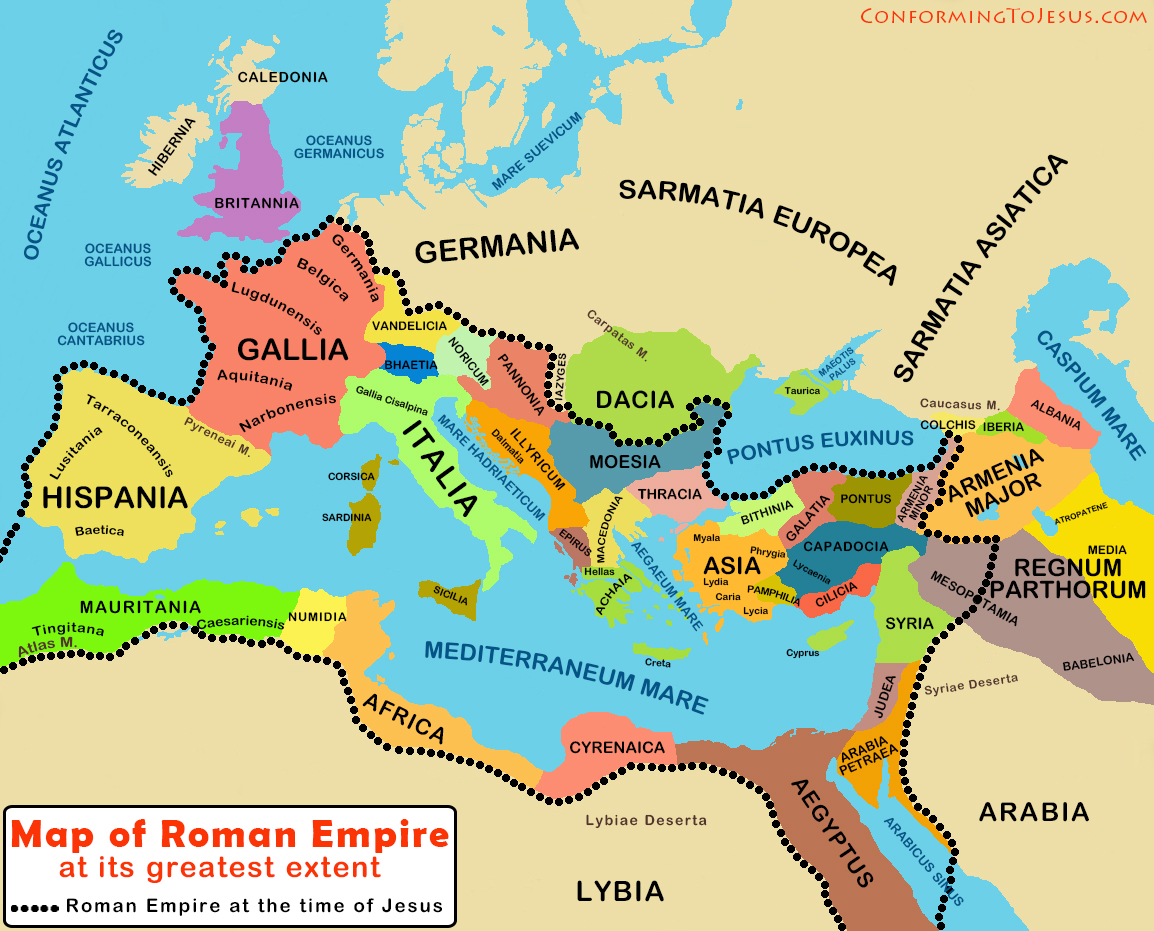
Daniel was so horrified by the ugliness of what he saw that he could not compare it to anything. The fourth beast was some kind of hybrid, hard to identify even in its parts. The fourth beast was the Roman Empire, but not just the Roman Empire; it was Western Europe represented by the ten horns. To understand how the vision can go from Babylon to Europe, we have to understand its expansion and its relation to God’s people.
Rome’s first interaction with Jerusalem
God’s people first became connected with Rome during the time of the Assyrian and Babylonian conquests. In these years, many from Judah were sold into slavery to the Greeks, who were colonizing the coastlands, including southern Italy. Many enslaved people ended up in the growing Roman kingdom through slave markets, while others escaped from Assyria and Greece to Rome as fugitives. Although there was a tradition that fugitives from Troy founded Rome, historical evidence places its founding much later, aligning with the period of Assyria’s and Babylon’s conquests and the reshaping of kingdoms. Medo-Persia also attacked Lydia and Scythia, causing many to flee those areas. Some Israelites fled Assyria; others fled Babylon, all around the time Rome was being established. For many at that time, Rome appeared to be outside the major conflicts of the era, making it seem like one of the safer and more promising places in Western Europe.
Rome’s existence is one of the curses that would rise against God’s people because of their unfaithfulness. This means that God would have hindered Rome’s spread to the Near East if God’s people had been faithful. They were the empire that never ought to have been.
As recorded in Deuteronomy: “The LORD shall bring a nation against thee from far, from the end of the earth, as swift as the eagle flieth; a nation whose tongue thou shalt not understand;
A nation of fierce countenance, which shall not regard the person of the old, nor shew favor to the young” (Deu 28:49-50)
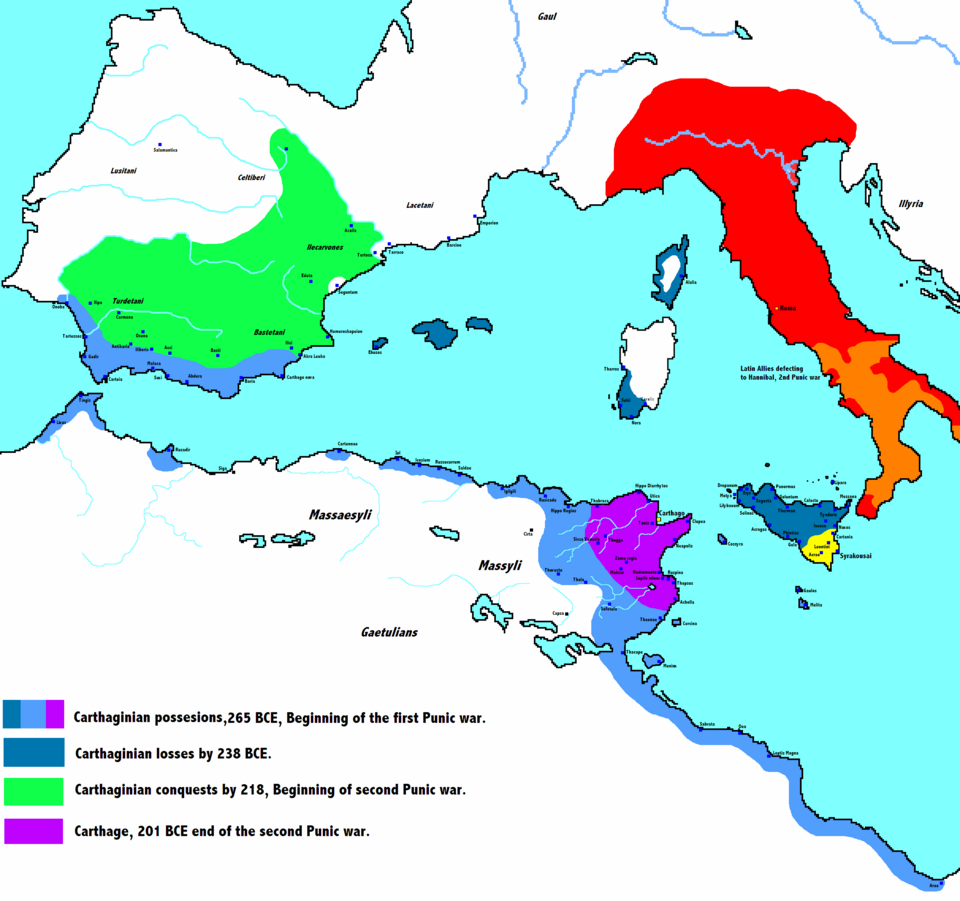
Rome emerged from the western edge of the known world, conquering Carthage, which was the main trading hub in North Africa. By defeating its greatest rival and enslaving its people, Rome gained both power and influence. This conquest also tied Rome to God’s people, since Carthage was a Phoenician city where Tyre and Sidon often traded and exchanged slaves. Judean and Israelite captives likely ended up in Rome as a result.
Then Rome took Greece in 146 BC and made it subject to Rome. From 192–188 BC, Rome fought against the Seleucid Empire and defeated it, forcing the Seleucids to cede most of their territory in Asia Minor.
Because Jerusalem’s then-greatest enemy was weakened, Rome was seen almost as a God-sent deliverer, inspiring their alliance with Rome in 161 BC. The agreement is found in Daniel 11, which goes through the timeline of the beasts from the last Persian kings to Christ’s second coming:
“And after the league made with him he shall work deceitfully: for he shall come up, and shall become strong…” (Dan 11:23)
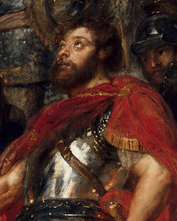
Historians quote the wording of the agreement between Judah and Rome:
‘The decree of the senate concerning a league of assistance and friendship with the nation of the Jews. It shall not be lawful for any that are subject to the Romans to make war with the nation of the Jews, nor to assist those that do so, either by sending them corn, or ships, or money; and if any attack be made upon the Jews, the Romans shall assist them, as far as they are able; and again, if any attack be made upon the Romans, the Jews shall assist them. And if the Jews have a mind to add to, or to take away anything from, this league of assistance, that shall be done with the common consent of the Romans. And whatsoever addition shall thus be made, it shall be of force.’ This decree was “written by Eupolemus, the son of John, and by Jason, the son of Eleazer, when Judas was high priest of the nation, and Simon, his brother, was general of the army. And this was the first league that the Romans made with the Jews, and was managed after this manner.” [Flavius Josephus, “Antiquities of the Jews,” book 12, chap. 10, sec. 6, The Works of Flavius Josephus, p. 374.]
For a time, during the weakening of the Seleucid Empire and with Rome’s support, Judah established its independence, known as the Hasmonean Kingdom of Jerusalem.
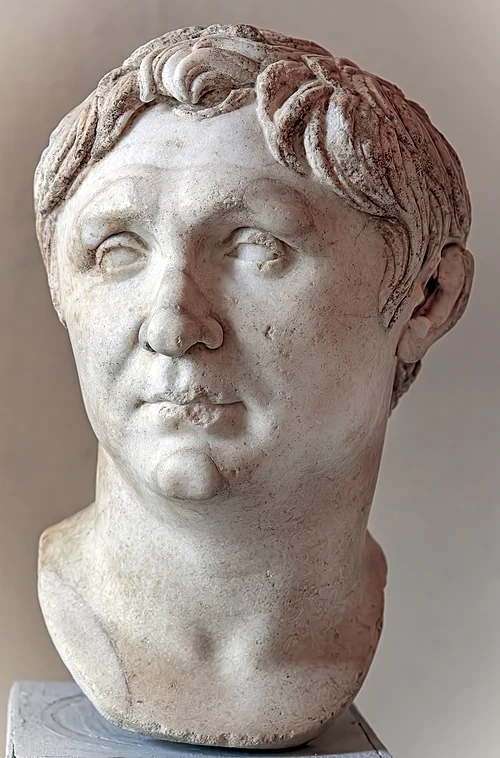
Later, the great Roman general Pompey attacked the Seleucids and took over the territory after the empire had collapsed into civil war and was too weak to govern. Rome then annexed Syria and made it a Roman province in 64 BC, thereby taking over as the “King of the North”.
Internal conflict has always weakened nations, and Jerusalem was no exception. Both times Rome conquered Jerusalem, it was partly due to strife within. During the first Roman siege of Jerusalem, Queen Salome Alexandra’s sons, Hyrcanus II and Aristobulus II, fought over the throne after her death. Each appealed to Rome for support. General Pompeius favored Hyrcanus. In response, Aristobulus refused to surrender, fortified the city, and prepared to resist the Romans. Previously, Jerusalem had enjoyed freedom, but only because it complied with Roman interests. When Aristobulus defied Rome, Pompeius besieged the city and, after three months, captured Aristobulus in 63 BC. The internal feud gave Rome the pretext it needed to intervene and restructure the region. Jerusalem then became a Roman client kingdom: Rome chose the king, who had to remain loyal to Rome, pay taxes, and follow its foreign policy. The Jews retained control over their religion and some internal matters.
The last Hellenistic empire after Alexander the Great was the Egyptian Ptolemaic kingdom. Rome only gained full control over former Greek territories after conquering Egypt. The dramatic conflict involving Cleopatra VII, Mark Antony, and Augustus at the Battle of Actium has inspired many Hollywood movies. When Augustus won, he invaded Egypt in 30–31 BC, and Egypt became a Roman province.
Augustus was then made the first emperor of Rome, as Rome had previously been a republic and was now shifting to a new form of government.
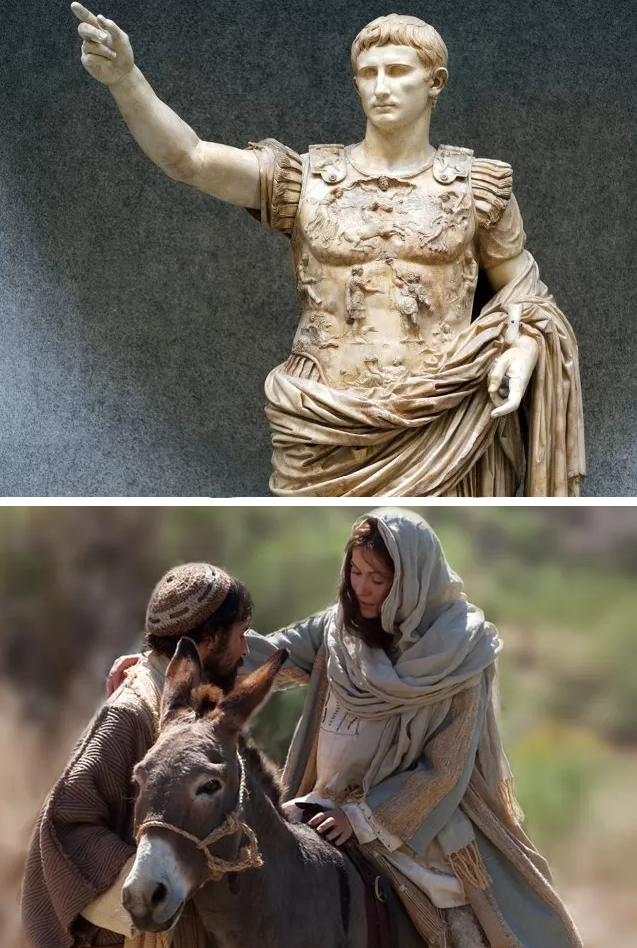
Emperor Augustus required the people of Judea and Jerusalem to pay taxes and ordered everyone to return to their ancestral hometown for registration. This decree led to Joseph and Mary, who was heavily pregnant, traveling to Bethlehem, which fulfilled the prophecy about where Christ would be born. As the Bible records:
“And it came to pass in those days, that there went out a decree from Caesar Augustus, that all the world should be taxed.
(And this taxing was first made when Cyrenius was governor of Syria.) And all went to be taxed by the new taxing system, every one into his own city. And Joseph also went up from Galilee, out of the city of Nazareth, into Judaea, unto the city of David, which is called Bethlehem; (because he was of the house and lineage of David:)
To be taxed with Mary his espoused wife, being great with child” (Luk 2:1).
In Daniel 11 this occasion is also recorded about the new king of the north:
“Then shall stand up in his estate a raiser of taxes in the glory of the kingdom: but within few days he shall be destroyed, neither in anger, nor in battle” (Dan 11:20)
Augustus became the first emperor of Rome during its imperial period, at the height of Roman glory, as the verse says. He established a period of peace known as the Pax Romana, which lasted for several decades and marked a time of great stability in the Roman imperial age. Although many rulers imposed taxes, Augustus was not the first; he introduced “fresh taxation” and new taxation laws. Only about 8 years later, he died, but as the verse says, not in battle.
He died in 14 AD at age 75 in his homeland.
During the time of his taxation period, it was Herod the Great who was the Roman-elected Jewish-Edomite king who tried to kill baby Jesus after being told about his birth through the wise men of the East. This caused Mary and Joseph, Jesus’ birth mum and foster father, to run to Egypt, but upon returning, the bible tells us an angel warned them against Herod’s son, who was then ruling.
Herod’s son Herod Archelaus was very unpopular among both Jews and Samaritan leaders, who complained about him to Rome only to be met with even less freedom as a people. Emperor Augustus removed Herod Archelaus, and placed Jerusalem under direct Roman administration instead. Other lines of Herod continued to rule in Galilee as Roman client princes. It’s the later royal house of Herod in Galilee that executes John the Baptist and to whom the governor, Pontius Pilate, asks for advice at the trial of Jesus. But Jerusalem remained under Roman administration.
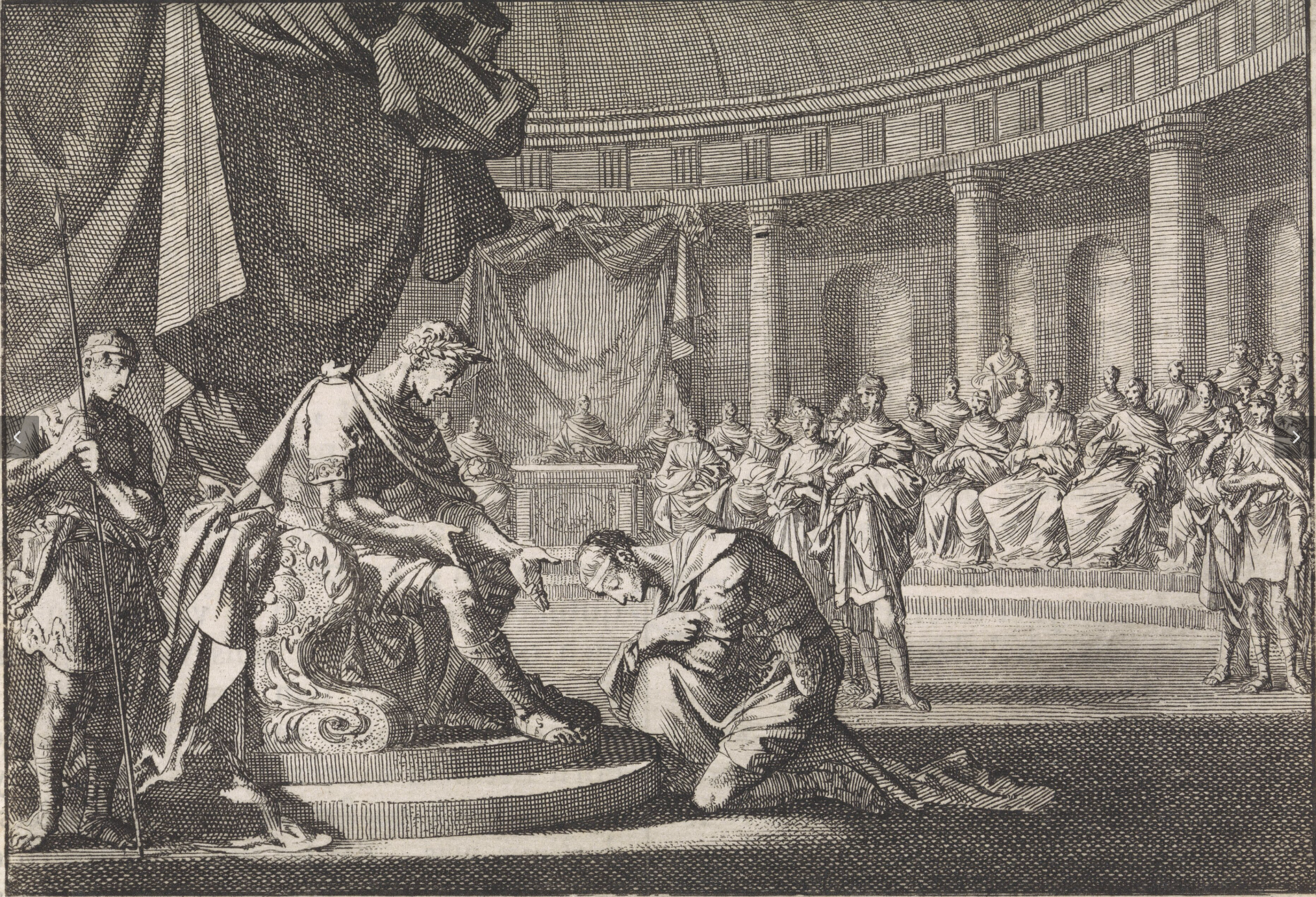
Jesus grew up in this climate, where Jews longed for freedom and independence, hoping for a political messiah to deliver them from Rome and restore the kingdom of God. However, Jesus made it clear that he came to save them from their sins—not from Roman rule. He taught that even Roman oppression was a consequence of Israel’s own disobedience, and that the real issue was spiritual, not political. Had they correctly understood prophecy, they would have realized it was not yet time for the restoration of God’s kingdom on earth. Impatient and frustrated, they struggled to accept that God was calling them to personal change, especially when the Romans and pagans seemed even more wicked. This misunderstanding led them to miss the deeper meaning behind their suffering and the requirements for God’s coming kingdom. When Israel had enjoyed independence and freedom, they became more corrupt than the surrounding nations, which is one reason God allowed them to lose their independence. Unlike the other nations, who sinned in the name of their gods, Israel committed bloodshed in the name of God Himself, making their sins even greater.
God had told them it was the reason they lost their independence in the first place:
“And she hath changed my judgments into wickedness more than the nations… and my statutes more than the countries that are round about her… Ye multiplied more than the nations that are round about you.” (Ezekiel 5:6–7)
When the nation that was to represent His name to the world dragged it through the mud and caused everyone to turn away from God instead, God had to act for everyone’s salvation. How could his throne remain raised in a nation twisting his law and judgments? The mingling of truth with error brought out the worst in them. And so God could not give them their freedom back until they gave up their sins, repented, and returned to Him right. God chose the alternative to allow pagan nations to rule instead, for at least they did not claim to represent Him in what they did. That is, until Rome would follow in Israel’s footsteps later on.
When Christ would not save them from Rome, they delivered Him to be executed by Rome, pledging allegiance to Ceacar, the emperor of Rome, in rebellion against God.
Israel’s first connections with Rome:
- A prophesied curse came because of their unfaithfulness to God.
- As enslaved people and refugees
- Prophesied as a great enemy of God to come in the prophecies of Daniel.
- An alliance Judah made against another enemy
- A nation they asked to interfere in their governmental affairs.
- A client kingdom under Rome
- Jerusalem administered directly by Rome.
“Dreadful and terrible”
These two words describe its powerful and ruthless nature. Daniel saw a terrifying creature, but the vision may also reflect how heaven views this empire. Rome was not just militarily strong—it was cunning and manipulative. It even became the executioner of the Creator, nailing to the cross the very hands that had shaped Adam from the dust.
Both Babylon and Rome destroyed the temple in Jerusalem, but only Rome destroyed both the physical temple and, through the crucifixion of Christ, the spiritual temple—His body. Rome did more than just conquer; it first scattered God’s people and tried to erase them, then later claimed to be their divinely chosen leaders. They made their own laws in Christ’s name, often contradicting God’s law. This power not only committed terrible acts, but continued them while claiming to represent Christ, blaspheming and abusing His name. Rome executed Christ, divided His clothing, and then claimed to be the only mediator of His blood, even selling it as a commodity.
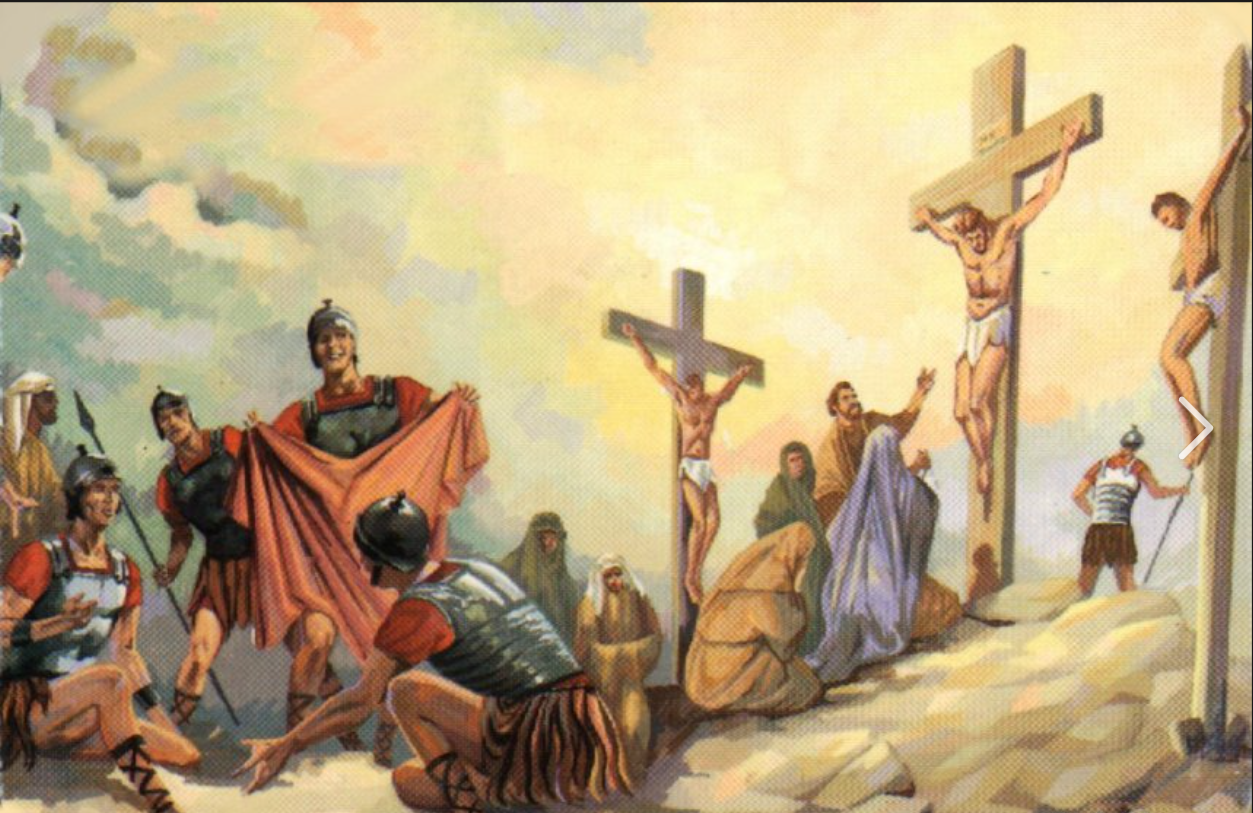
Destroying the old temple and desecrating the temple in heaven and sitting in a temple as God, and showing himself as a god and judge to God’s people. For anyone who resisted was fought or destroyed.
But apart from how they treated Christ and His people, or even the Jews who rejected Christ, Rome was ruthless to many other nations as well.
“and strong exceedingly”
Rome went from a significant and fairly young nation to a dominant power unlike ever seen before. It appeared unstoppable at its peak. Some nations withdrew instantly as the Roman expanded their territory, knowing they could not fight them and win. Unlike others that advanced with armed forces, Rome gained territory through a variety of approaches, all of which served its interests. Mostly it expanded through diplomacy.
Rome expanded through military conquest but also through strategic alliances that created dependence. They annexed client kingdoms (such as Jerusalem), acquired territories by inheritance (when a king left his kingdom to Rome), established colonies, gradually extended Roman citizenship, and suppressed revolts by reorganizing regions into provinces.
Much like the United States later expanded through opportunism, Rome began as a small group and grew powerful through shrewd strategy and adaptability.
In Rome’s early days, the Italian peninsula was divided among many smaller peoples. As Rome expanded, it offered citizenship as a reward to neighboring Latin communities, encouraging them to join Rome as partners rather than remain subjugated. After the Social War (91–88 BC), nearly all free inhabitants of Italy received Roman citizenship, helping to unify the region under Roman control.
It then began granting citizenship to local elites in other parts of Western Europe, as well as to people in the colonies and in Gaul. In Spain, loyal leaders were equally rewarded with citizenship. In the Greek and Asia Minor territories, citizenship was rewarded for loyalty or service, and non-citizen soldiers from the provinces who joined the Roman armies could be awarded citizenship after several years of service.
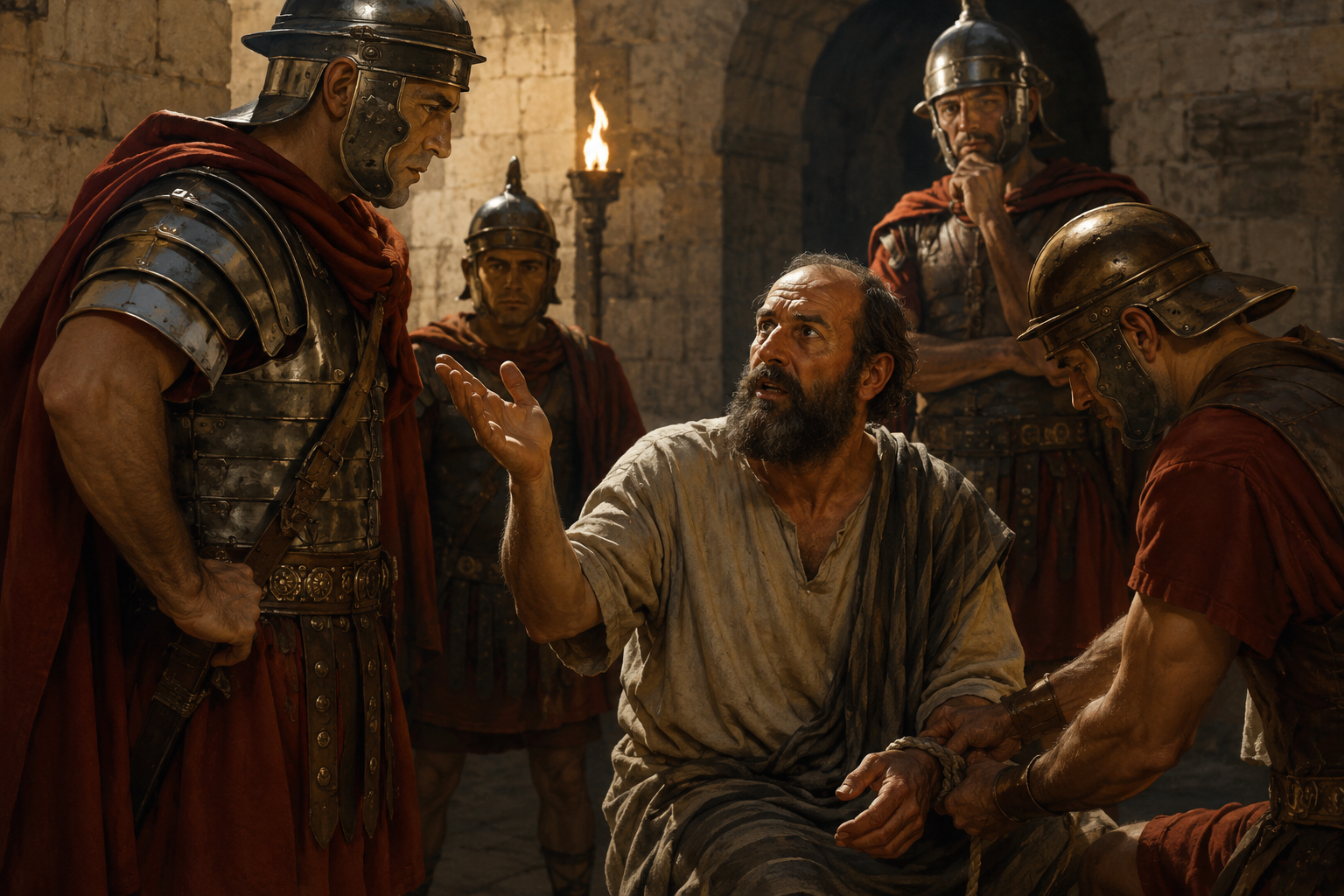
The Bible alludes to the advantages of Roman citizenship. Paul, born in the Roman colony of Tarsus, possessed citizenship from birth—a status that protected him on several occasions.
In the town of Philippi, Paul and Silas were beaten and imprisoned. But upon hearing they were Roman citizens, the leaders got frightened:
“But Paul said unto them, They have beaten us openly uncondemned, being Romans, and have cast us into prison; and now do they thrust us out privily? nay verily; but let them come themselves and fetch us out.
And the serjeants told these words unto the magistrates: and they feared, when they heard that they were Romans.
And they came and besought them, and brought them out, and desired them to depart out of the city” (Act 16:37-39).
Another time Paul was imprisoned after coming to Jerusalem:
“And as they bound him with thongs, Paul said unto the centurion that stood by, Is it lawful for you to scourge a man that is a Roman, and uncondemned?
When the centurion heard that, he went and told the chief captain, saying, Take heed what thou doest: for this man is a Roman.
Then the chief captain came, and said unto him, Tell me, art thou a Roman? He said, Yea.
And the chief captain answered, With a great sum obtained I this freedom. And Paul said, But I was free born.
Then straightway they departed from him which should have examined him: and the chief captain also was afraid, after he knew that he was a Roman, and because he had bound him (Acts 22:25-29)
Lastly, Paul exercises a key right of a Roman citizen by appealing to Caesar before Governor Festus (Acts 25:10–12).
This gives us a biblical understanding of why Roman citizenship was so valuable. It protected a person’s rights and often ensured more humane treatment. Rome’s early power did not come from sheer numbers or military force, but from alliances, shrewdness, and strategy. They persuaded many that joining Rome would bring prosperity. Rome often adopted local gods and customs, making it less threatening to new subjects, and many people gave up their cultural independence for opportunity. Where other empires sparked uprisings by clashing with local religions and traditions, Rome mostly avoided these mistakes.
Strength takes many forms, but Rome’s greatness depended on a long series of victories: the Latin War, Samnite Wars, Pyrrhic War, Macedonian Wars, Seleucid Wars, Achaean War, Celtiberian Wars, Jugurthine War, Cimbrian War, Gallic Wars, Mithridatic Wars, and its own civil wars. Most importantly, Rome’s success in the Social War came from rewarding allies and making alliances attractive.
“It was diverse from all the beasts that were before it”
Here lies the core of understanding the problem with Rome. The word translated as “diverse” literally means “change,” and in most instances throughout the book of Daniel, it is rendered as “change.” About the horn rising from the same beast, the angels explain that it would “think to change times and laws” using the same word.
The best translation in harmony with who this beast is and what it would do is: “…and it was changed from all the beasts that were before it.” or “…and it was altered from all the beasts that came before it”.
The importance of this one sentence lies in the fact that all the other beasts had been pagan state governments, and so was Rome, but then it changed its religion and became different from the other beasts. Even its leader, who was supposed to be the high priest of the Roman religion, became the protector and propagandist of the competing religion.
We find a parallel in Babylon. King Nebukadnezzar goes from honoring and praising his own pagan gods to praising the God of Israel, the God of the defeated people instead. A peculiar thing at the time, where victory always ensured loyalty to one’s own gods and viewing others’ gods as inferior. Despite Nebukadnezzar’s acknowledgment of the true God, Babylon remained pagan, as did the kings who followed. The empire itself did not change its religion. The prophet Daniel even brought it up to Nebukadnezzar’s grandson that he knew about God because of Nebukadnezzar’s conversion, yet chose not to respect Him: “And thou his son, O Belshazzar, hast not humbled thine heart, though thou knewest all this; But hast lifted up thyself against the Lord of heaven” (Dan.5:22-23)
What made Rome stand out as “changed” or “diverse” from the other beasts was most certainly the change of religion. But it also experimented with several forms of government throughout its relation to God’s people. This beast was never just one thing. It would become the first nation to be a Christian empire, something never seen before in human history.
The angel explaining the vision to Daniel says: “Thus he said, The fourth beast shall be the fourth kingdom upon earth, which shall be diverse from all kingdoms, and shall devour the whole earth, and shall tread it down, and break it in pieces” (Dan 7:23).
“and it had ten horns”
Medo-Persia and Greek “horns”
In Daniel 8, we learn that horns serve as a metaphor for kingdoms rising from an empire, just as heads do (Dan. 8:6-8). In Daniel chapter 8, we see Daniel receive yet more information about the empires of the image in Daniel 2, now described with different symbols. First, they are presented as carnivores, but now they are presented as typical animals of prey, a ram and a goat. Playing on how both these nations would go from strong and dominant to become prey themselves. But also to give additional information on their characteristics. It describes a fight between a ram and a goat of unusual character. Where a ram would naturally defeat a goat, the goat is here seen defeating the ram. Even by an unusual fighting style for a goat, and with a horn in its forehead rather than on the top of its head. Through all this imagery, God is telling a story of the speedy surprise of the conquest of Alexander the Great upon Persia.
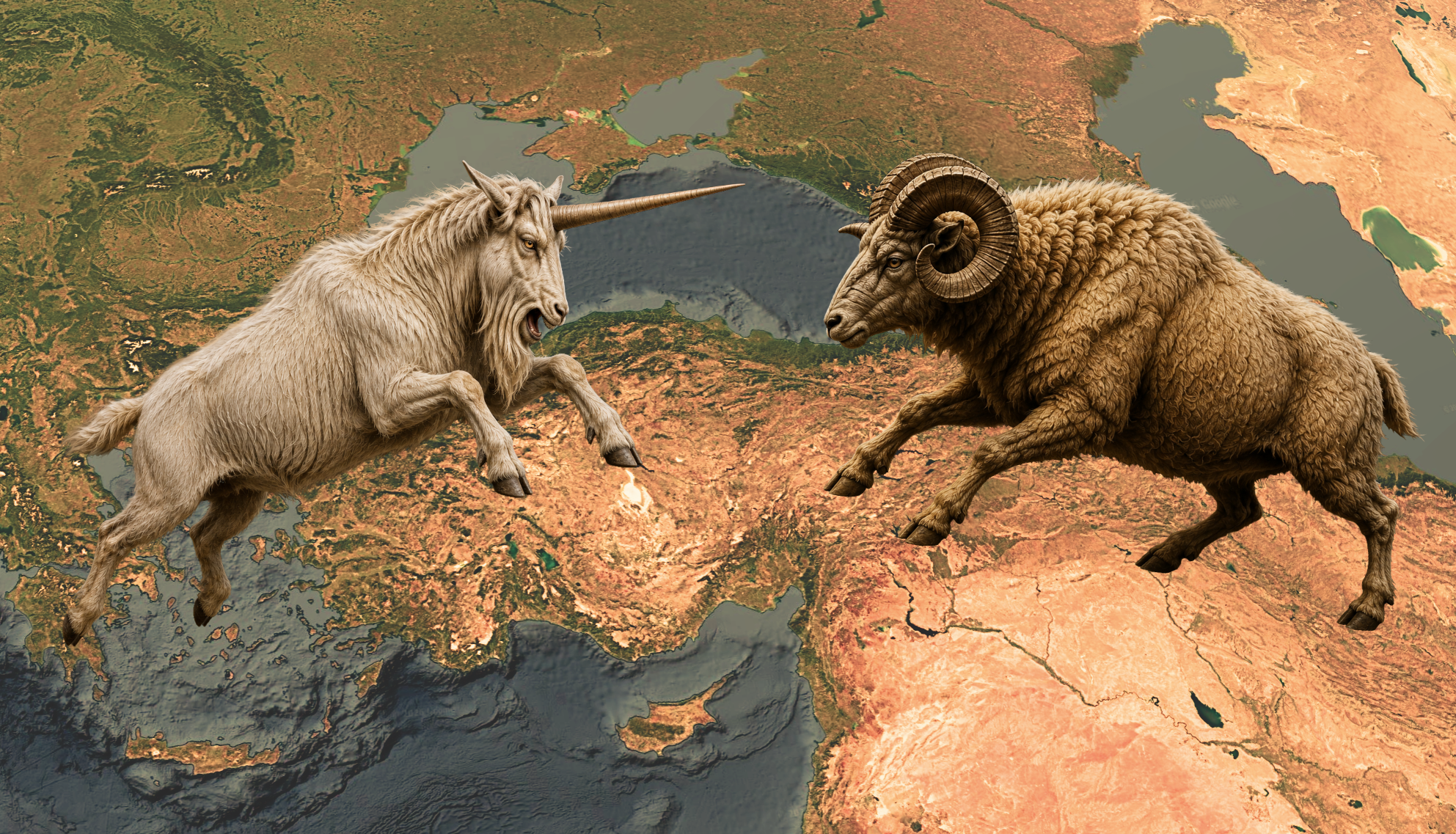
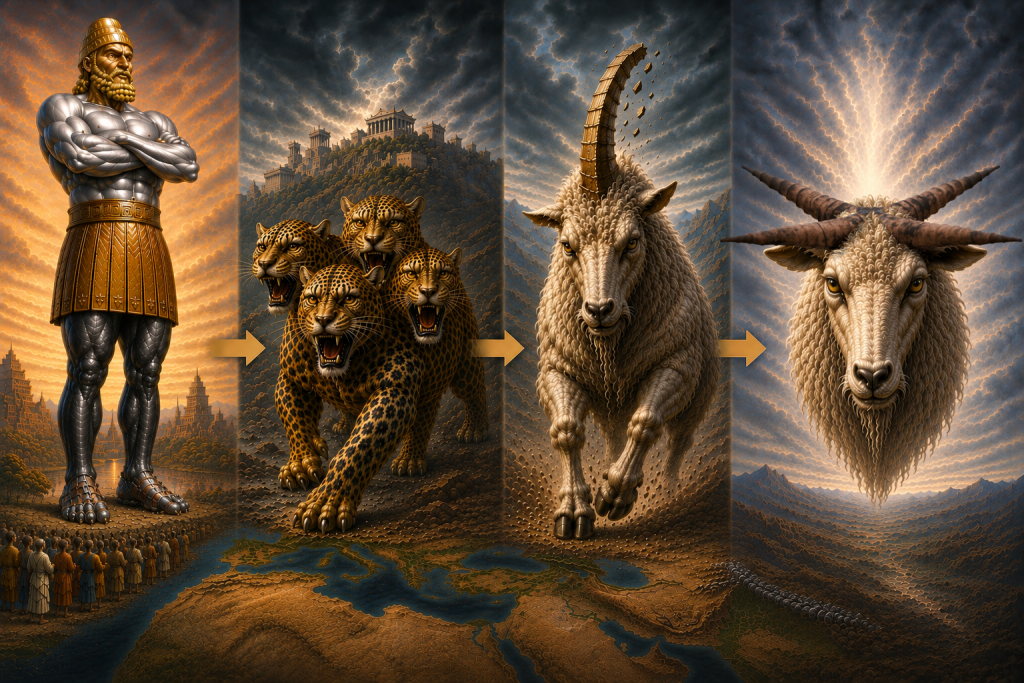

So, with this additional vision, Medo-Persia goes from being depicted as the arms and chest of silver in an image of a man, to a bear leaning on one side, to a ram with two horns. One horn represents Media and the other Persia: “one was higher than the other, and the higher came up last,” just like the bear raised itself on one side.
The Greek Empire goes from being the image’s belly and thighs of brass to a four-headed leopard to a goat with one broken horn, and four horns that come out of the goat after.
The four heads of the leopard therefore become four horns in the next vision, showing the four Greek generals’ kingdoms as both. The same is true of the horns on the ram; they both illustrate kingdoms. Establishing what the angel also explains: that horns are kingdoms.
The Roman beast: eleven horns
“a fourth beast…and it was diverse from all the beasts that were before it; and it had ten horns.. there came up among them another little horn, before whom there were three of the first horns plucked up by the roots”.
“And out of one of them came forth a little horn, which waxed exceeding great, toward the south, and toward the east, and toward the pleasant land” (Dan 8:9).
While in Daniel 8, Rome itself is not shown as another beast, rather as a horn coming “out of one” of “the four winds of heaven” “which waxed exceeding great” (Dan. 8 & 9), Rome is therefore here shown as a horn coming into the picture from outside the picture, so to speak. This was the case with Rome, as it came from outside the known conflicts of the Near East at that point. Often said to come from one of the ends of the world, which is also typified by a cardinal direction, as in Daniel 8. It was considered irrelevant and not a threat because it was on the other side of the sea, yet its power stretched all the way to Egypt and Jerusalem. Rome was a surprise from the west. In Daniel 7, we see the beast having ten horns, but three are broken off to make room for another eleventh. In Daniel 8, God says this eleventh “little horn growing big” is the continuation of the Roman beast, cleverly exposing the little horn in Daniel 7 as a kingdom situated in Rome itself. And so from being a beast with ten horns, in Daniel 8, the eleventh horn is revealed to be Rome itself.
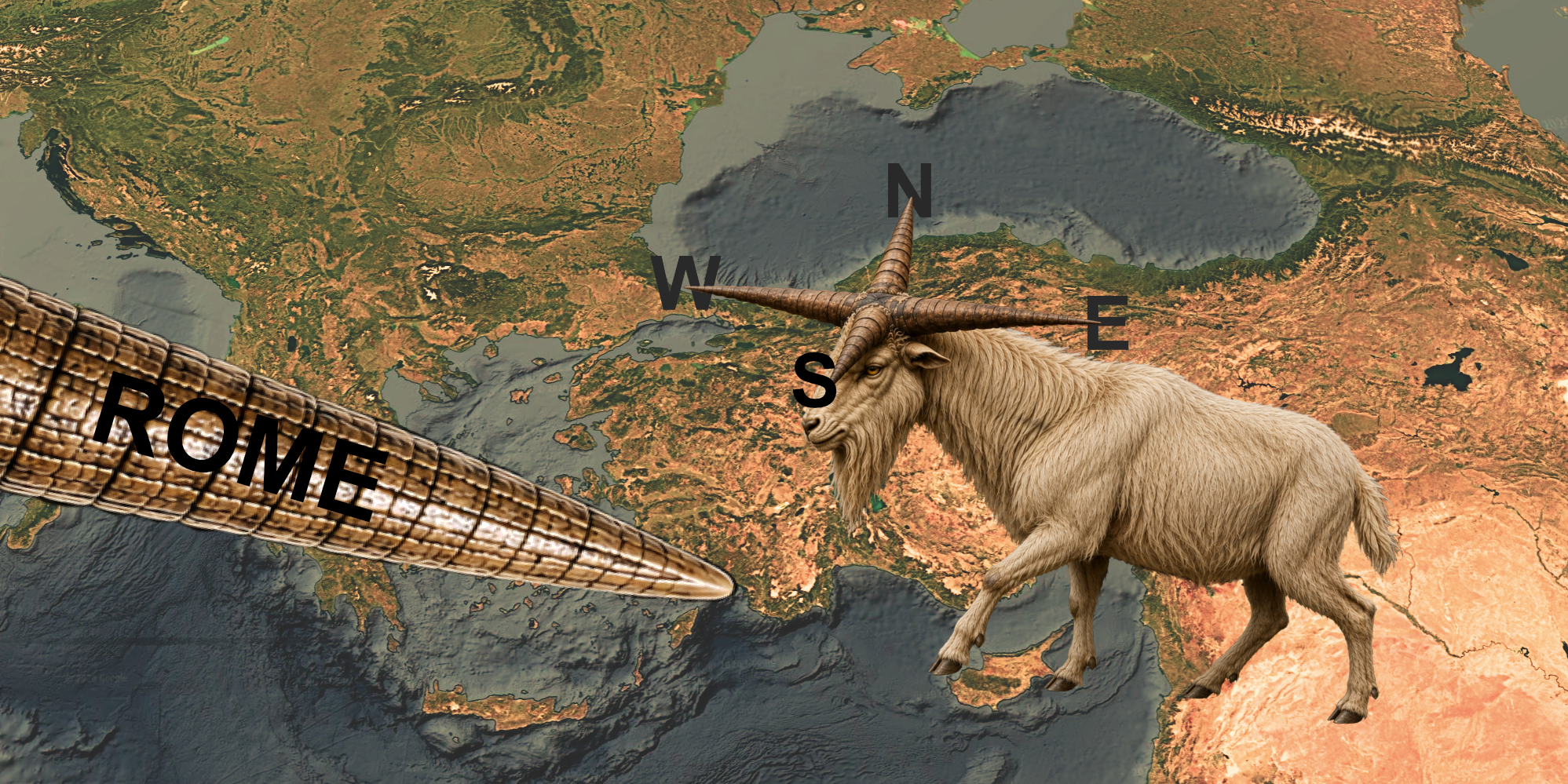
By interpreting this one text in Daniel 8 wrong, people have been led to misunderstand who the horn is and believe it is the leader of the Hellenistic Seleucid empire rather than Rome.
In Daniel 7, the focus on the fourth beast turns to the ten horns and the coming eleventh. Because this eleventh horn, which is Rome itself only Rome in a divided Rome, is the great enemy God wants to warn his people against. It even says how God will judge it especially.
So from Daniel 7 & 8 we learn what the horns symbolize. It illustrates a timeline for the beast, in which power shifts to its horns. In the case of Rome, ten horns outside Rome and one inside. Meaning the Roman power and land would be divided.
In the original image, the ten horns are described as feet on the statue, part iron and part clay. The iron represents Rome, and the iron in the clay shows how a part of Rome’s strength continues through these other kingdoms.
And so Rome goes from the legs of iron, in part continuing in the feet, to a beast with ten horns, to a horn coming from the west towards the east, south, and God’s land.
The division of Rome goes from the feet part iron and clay, to eleven horns on the Roman beast, to one of the horns as Rome and a continuation of Rome.
Identifying the ten horns

The Bible describes the ten horns on the Roman beast as ten groups or tribes whose kingdoms emerged from Rome. A lot of their territory was once part of the Roman Empire. Genetic research shows that Western European populations are closely related. Roman culture, the Latin language, and Roman customs continued with these nations and still shape our world today. For example, our calendar, month and week names, the Latin alphabet, and thousands of Latin words in science, medicine, and law all come from Rome. Republican government, architecture, roads, engineering, military science, and many teaching and measurement systems also have Roman origins. Unlike most ancient cultures, Rome’s legacy did not fade. It still shapes the world today, especially through these ten horns.
The angel Gabriel explains to Daniel: “And the ten horns out of this kingdom are ten kings that shall arise: and another shall rise after them; and he shall be diverse from the first, and he shall subdue three kings” (Dan 7:24).
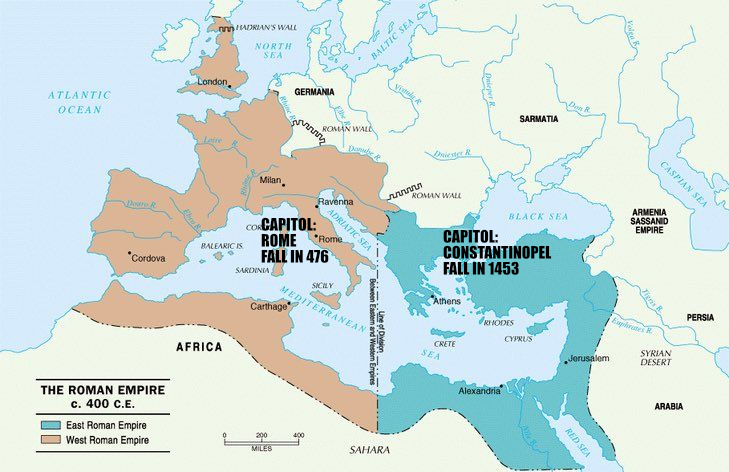
The Bible sets some guidelines in identifying the ten horns. One is that the tribes have to be in western and central Europe, as the East Roman Empire did not fall until 1483 and was not ruled from Rome. This excludes, for instance, Greece. Nor does it fit the timeline of the little horn. The tribes have to begin establishing themselves on what had been Roman territory some time before or between the fall of Rome in 476 AD and the recapturing of Rome in 538 AD from the Ostrogoths, which would make way for the new Roman Pontiff. Lastly, although borders would change, at least seven tribal-kingdoms of the horns had to stay in power till Christ’s second coming: “ And in the days of these kings shall the God of heaven set up a kingdom”. From the interpretation rules set by the kingdoms before them, we can see that capitals can change; an example is in the fourth head of the leopard, where the Seleucid empire, upon widening its territory, moved its capital but remained the same kingdom and head. So we need the same leading people in about the same territory.
After Rome left its northernmost lands in Britain, Germanic Anglo-Saxons invaded, mingled with locals, and became dominant. Their influence is still strong in Britain today. This invasion of northern Roman territory occurred between 400 and 600 AD. The Anglo-Saxons are likely one of the ten horns. In Roman Gaul, after 400 AD, the Germanic Franks expanded and took over much of what is now France by 486. This is another clear example of a horn. The Suebi, another Germanic group, settled in Portugal and northern Spain, while the Visigoths became dominant in Spain. Other important tribes in the western Roman lands included the Burgundians, Alemanni, and Lombards—all Germanic. Identifying the horns can be tricky because names, borders, and countries changed, but the people remained in the old Roman territories. These groups mostly came from three backgrounds: Gallic/Celtic, Germanic, and Latin. After Rome’s fall, Germanic rulers dominated. For example, Spain and France had Gallic roots, then Latin expansion, and later Germanic takeover, so populations contain all three elements. Several of the ten tribes from the old Roman territory became powerful nations as they formed modern identities and borders: England, Spain, Portugal, the Netherlands, Germany, France, Belgium, and Italy. All were once part of the Western Roman Empire and later gained even more global influence. Each successive empire or nation took more land. Babylon was great, but Medo-Persia took more, then Greece took more than Medo-Persia, Rome more than Greece, and finally the Western European nations spread even further across the world.
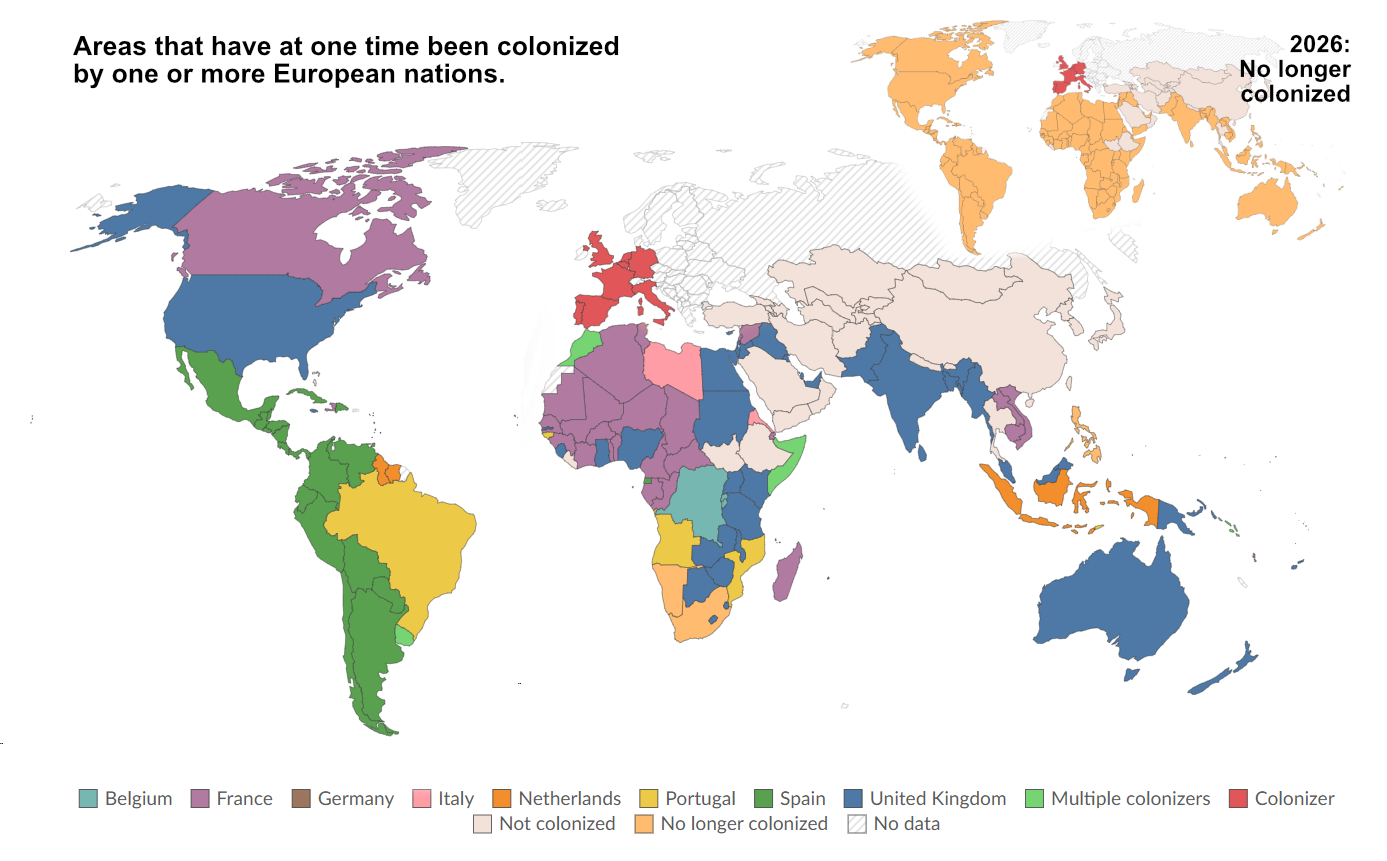
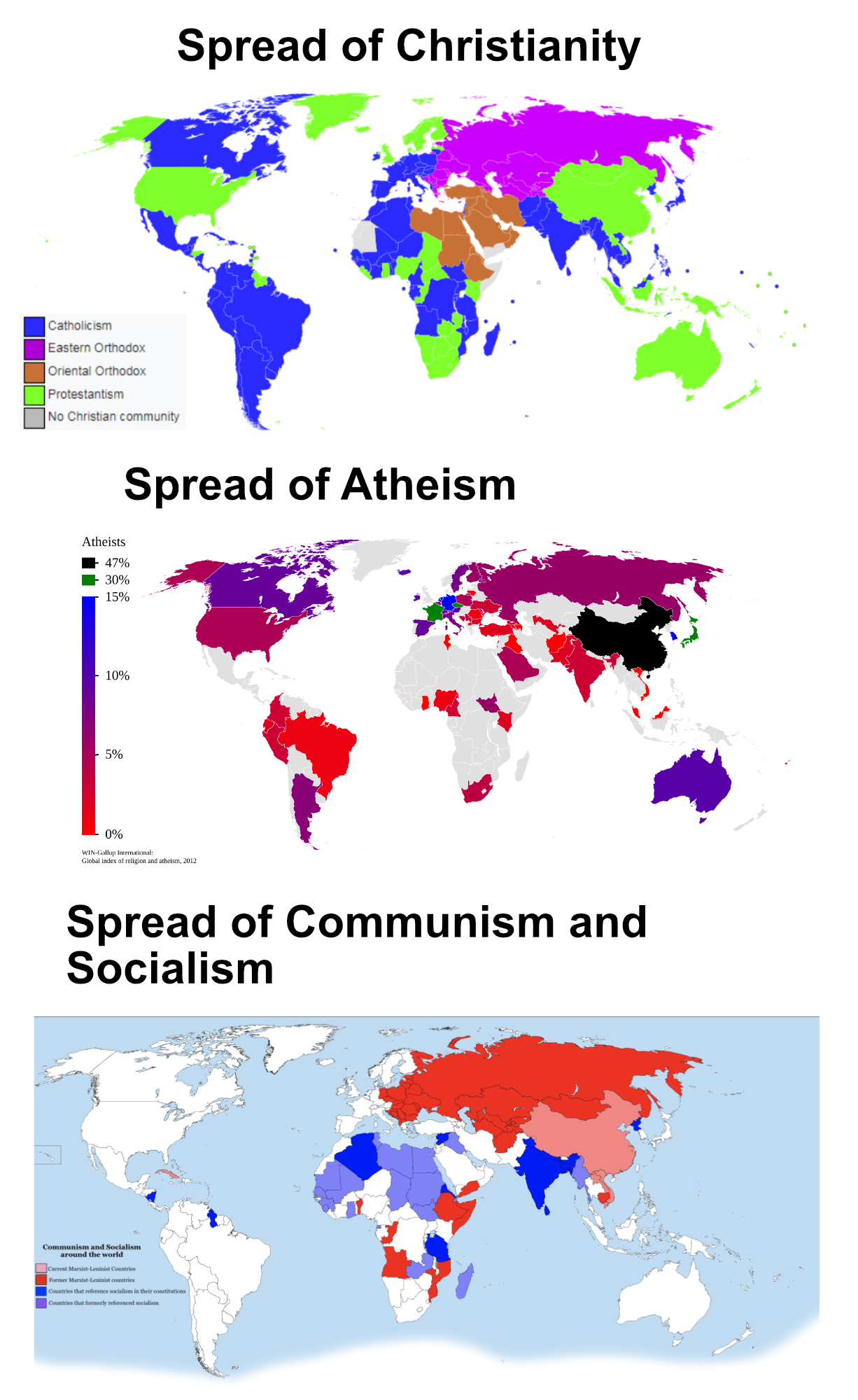
These nations became colonizers, taking all of America, a large part of Asia, and Africa before withdrawing from most places, yet remaining among the most powerful nations on earth to this day. Among the three world languages spoken for international communication are either Latin or heavily influenced by Latin vocabulary, English, French, and Spanish. It’s from where Catholicism and Protestantism emerged and spread worldwide. It is also from where atheism and communism came, affecting many nations in the world. There is no question of these tribes’ influence on the world stage. It’s both where the Bible’s first were printed, and printed Bibles first were burnt. And that is part of God’s issue with the European nations. In one hand they do good, in another they do bad. In many aspects they were preferred over their competitors when they provided religious freedom for God’s people; in another aspect they seduced them to leave God too.
The borders between European nations have been redrawn countless times, yet it is the same tribes circulating and establishing nations.
According to the Bible, it is during the days of these ‘kings’ that Christ’s second coming will occur. His return will destroy these powerful nations, not build them up. This means that these tribes will remain in control of their lands until the end. Western Europe, therefore, will not become a colony of Russia, Islam, or China, if the prophecy is correct. The horns will retain power over their territories until the end.
Not only would they become powerful and have part of Rome within them, but they would never be able to become a single empire, although God tells us they would try.
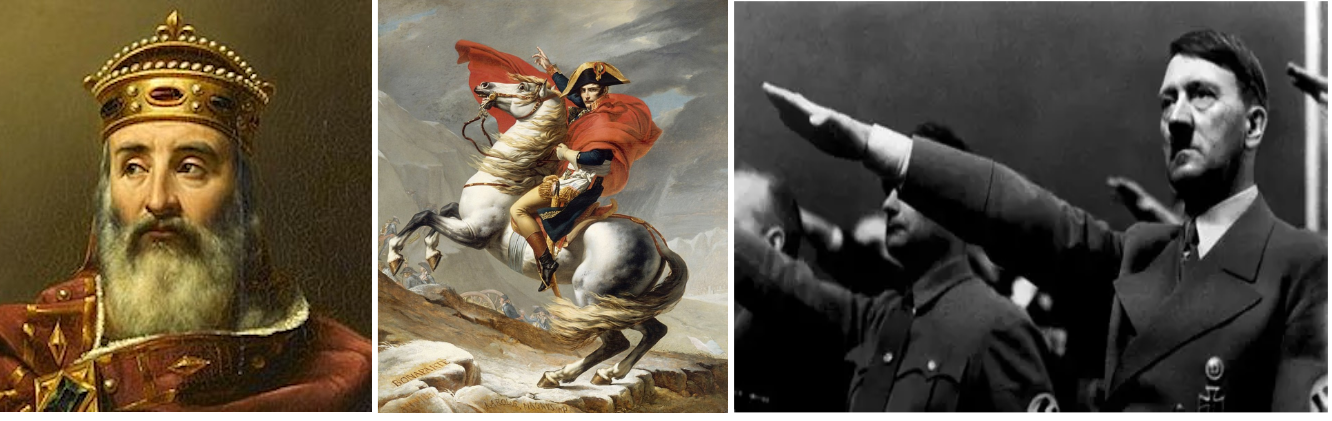
“And whereas thou sawest iron mixed with miry clay, they shall mingle themselves with the seed of men: but they shall not cleave one to another, even as iron is not mixed with clay” (Dan.2:43). Western European nations have consistently tried to unify Europe in various ways but have constantly failed in the long haul. Papal Rome, in their prime, tried to control them but has been unable to prevent them from conflicting with one another and even with themselves. Methods of marrying European royals to each other to create unity also failed in the long run. Charlemagne (768-814) managed, for a time, to unite much of western and central Europe, but it would not last. Otto I (936–973) tried to unite large parts, but his empire did not remain one nation. Charles V (1519-1556) wanted to unite Europe and brought some countries together, but his dream would never come true.
French king Louis XIV (1643–1715) sought French dominance in Europe but never achieved it. Napoleon Bonaparte (1804–1815) conquered most of continental Europe before being defeated. Adolf Hitler (1933–1945) attempted to create a German-controlled “New Order” across Europe through conquest and occupied or controlled most of continental Europe before being defeated.
In fact, most of those who knew Daniel’s prophecies at the time were less worried about Hitler succeeding than others, as they expected him to fail at some point.
The last attempt has been the European Union. European leaders promoted voluntary economic and political integration. And although a common national song, army, and culture have been suggested, constant resistance has remained. And conflict as “iron and clay” do not mix even in a diplomatic union. God has declared that He will not allow Europe to be one nation again.
“Dan 7:11 I beheld then because of the voice of the great words which the horn spake: I beheld even till the beast was slain, and his body destroyed, and given to the burning flame”
Through the prophecy, we learn that Christ’s second coming will occur while Europe still stands divided, for it is He who will destroy it and “shall break in pieces and consume all these kingdoms,” and its fall will be the hand of God: “Forasmuch as thou sawest that the stone was cut out of the mountain without hands”. (Dan.2:44&45) This ultimately means that if the stone crushing “the feet” or the horns of the beast is not cut out by human hands, then Western Europe will not be completely destroyed and taken over by another earthly nation. Saying “not completely” because the Bible will tell us several ways these kingdoms will be plagued to exhaustion.
What God’s conflict with the European tribes is, we will investigate as it is revealed in the prophecies of Daniel and Revelation.
Another horn
“I considered the horns, and, behold, there came up among them another little horn, before whom there were three of the first horns plucked up by the roots: and, behold, in this horn were eyes like the eyes of man, and a mouth speaking great things” (Dan 7:8)
The angel is now explaining the coming of a great enemy of God who will arise from the Roman Empire and even exist till Christ’s second coming. We are quickly shown that God is not so much targeting the ten kingdoms as he is targeting this one power rising among them, to whom God directs Daniel’s attention. This power coming out of Rome is said to become a real threat to God’s people even till the very end of time. And here, God provides a timeline that explains part of the last part of the great image in Daniel 2. Here we learn more about events that will affect the Roman Empire, as well as those taking place during its division that will have a great impact on God’s people.
Three horns of the beast have to be broken off to make room for this new horn that grows bigger than the others.
The horn growing up amongst them is Papal Rome, which would not only have its throne in Rome’s heartland but become a great influencer over all the other Western European tribes for many centuries. Three tribes would, however, stand in its way from its beginning.
This is illustrated by the horn breaking off three horns as it presses itself up, rather than merely subducing them when grown.
The Roman emperor had helped Christianize Rome and given the pope the task of being both a political and religious ruler. While the Roman emperor had his capital in Constantinople, the Pope was to have his in Rome. He had appointed him with the power to punish those Christians who would not submit orderly under his leadership. This did not sit well with other Christians, who looked upon the pope as a charlatan and a deceiver and even saw themselves as his target. The Pope had resistance from several larger tribes as well. But the three tribes that directly hindered his growth and position in Rome were the Heruli, the Vandals, and the Ostrogoths. And although Catholic historians later would assign them as evil, they were in large part converted to Christianity, just not papal Christianity. And although they politically battled for the same territories around Rome, it was also a religious quarrel. The Pope, as a religious leader, also had to defeat these competitors to survive and grow his own empire. The Ostrogoths had taken Rome, and with the help of the Roman emperor, they were driven out, and only then could the Pope take his seat as a religious-political authority based in Rome. The Ostrogoths were the last of the three to be plucked out, and were driven out of Rome in 538 AD. The Heruli’s power was broken in 493 AD, and the Vandals were defeated in 534 AD. From then on, “the little horn,” the papal Rome, would grow larger and larger until it became the leading influence and voice of Europe, even crowning kings and using alliances to establish its religious and political position. It was only at the rebellion of Napoleon, who in the presence of the Holy See decided to put his crown upon his own head, that the Pope’s long-standing grip was coming to an end.
“In this horn were eyes like the eyes of man, and a mouth speaking great things”.
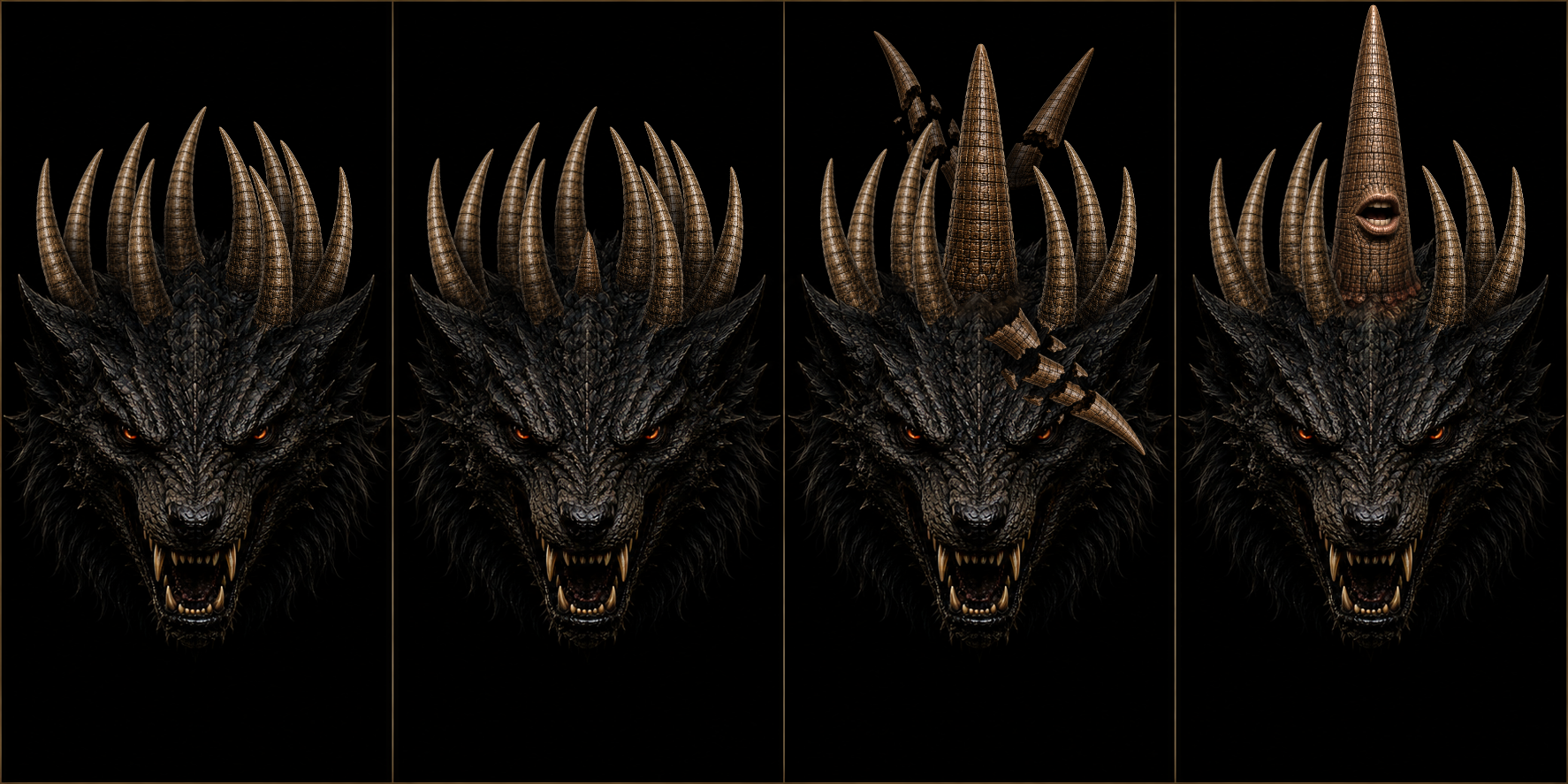
The Papal leader claimed to have been the vicar of Christ on earth, even a kingdom of Christ. But He did not live as Christ, have the culture of Christ, or follow the laws of God. The Pope made big claims and took titles that rightfully belonged to Christ. He reorganized the church away from Christ’s own set rules. He called himself Father, high priest, and teacher. He even called himself holy. And he changed God’s times and laws. He replaced God’s Sabbath with a new day and God’s feasts with his own pagan-inspired ones, changing Christianity into something very different from what it had been originally. He encouraged prayers to saints and made Mary a goddess figure to be worshipped. And even permitted images of God to be created to be used in worship. But to all of that he added the great sin of persecuting and killing Christians who tried to be faithful to God’s law and culture, claiming Christ had sent him to do these horrible acts. That the faithful were of the devil, and he himself was God’s hand.
And the pope also did the abomination of Israel that led to their captivity, and God leaving His earthly kingdom, by mixing pagan doctrines and practices with the truth.
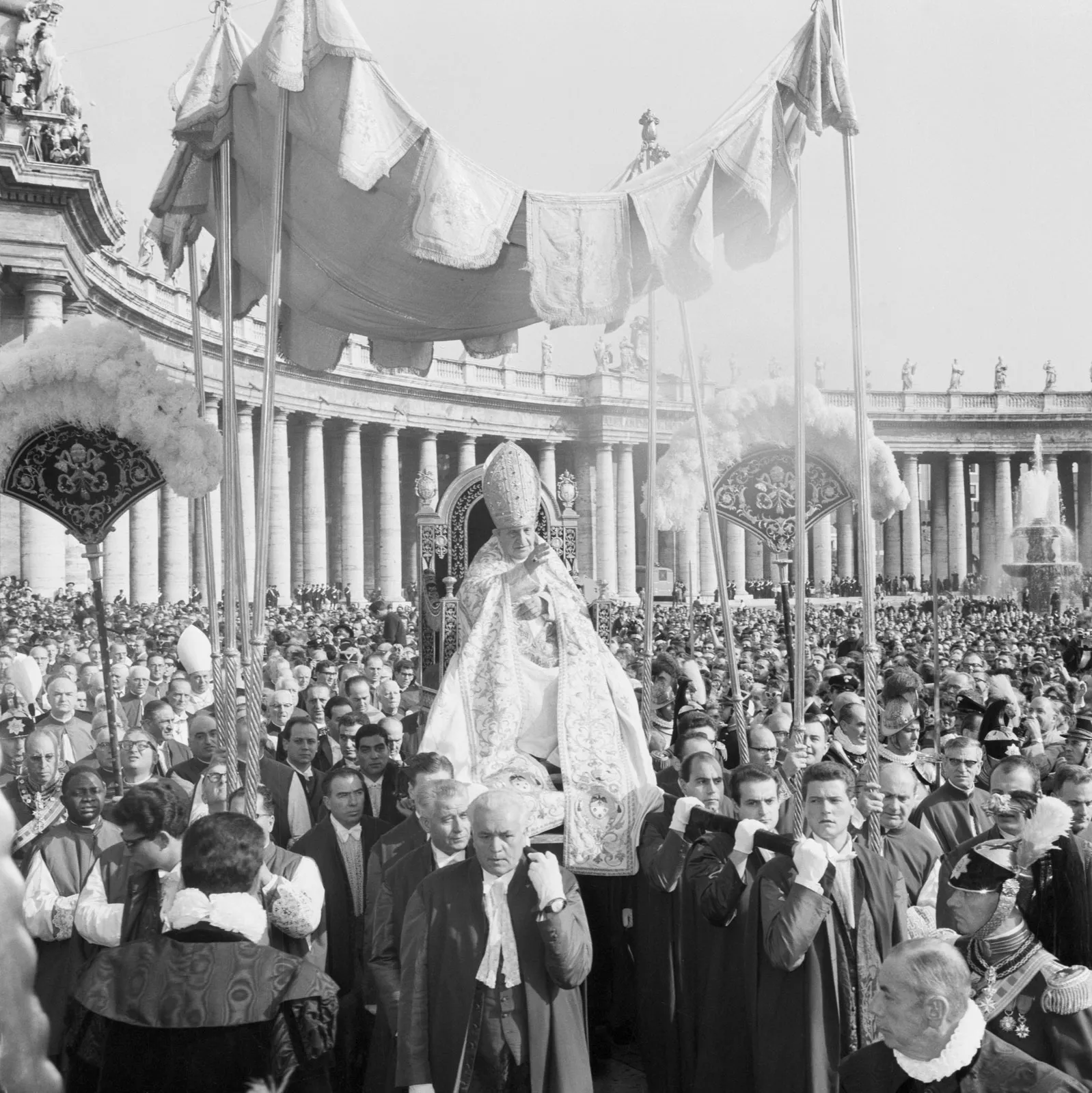
God had said to Ezekiel: “Son of man, seest thou what they do? even the great abominations that the house of Israel committeth here, that I should go far off from my sanctuary? But turn thee yet again, and thou shalt see greater abominations” (Ezek.8:6)
The pagans left God, but when those who claim to be His followers disobey Him and take His name upon pagan practices and bloodshed, God is the one to leave. Therefore, Rome is called the one who brings desolation: “they shall pollute the sanctuary of strength, and shall take away the daily, and they shall place the abomination that maketh desolate”. (Dan.11:35)
God would not stay in a sanctuary built to glorify His name when the people put His name together with falsehood. Would you have someone represent you who consistently lied about you? No one would, and neither does God. Although God has grace toward man’s ignorance and practices patience, there is a time when He has to act, or all will be lost. After centuries of Israel and Judah being two-faced, God refused to be with them when their worship and celebrations were mingled with cruelty. Their condition was not just shown in what they declared to believe, but seen in the state of their weak and poor among them and in the rulings of their courts. A just people would not act unjustly.
Neither would he stay in a church that did the same. He would not care about feasts and events to His glory if done in defiance or together with abusive behavior towards others. Every time His name is systematically abused in a religious setting, it causes desolation for those who do it. Meaning God withdraws from them.
He did it at Mount Sinai, and moved His tent outside their camp. He moved from His tabernacle in Shiloh, from His temple in Jerusalem, and even Jesus is seen outside the seventh church in Revelation, knocking. He had to leave but is willing to come back if the truth is revived.
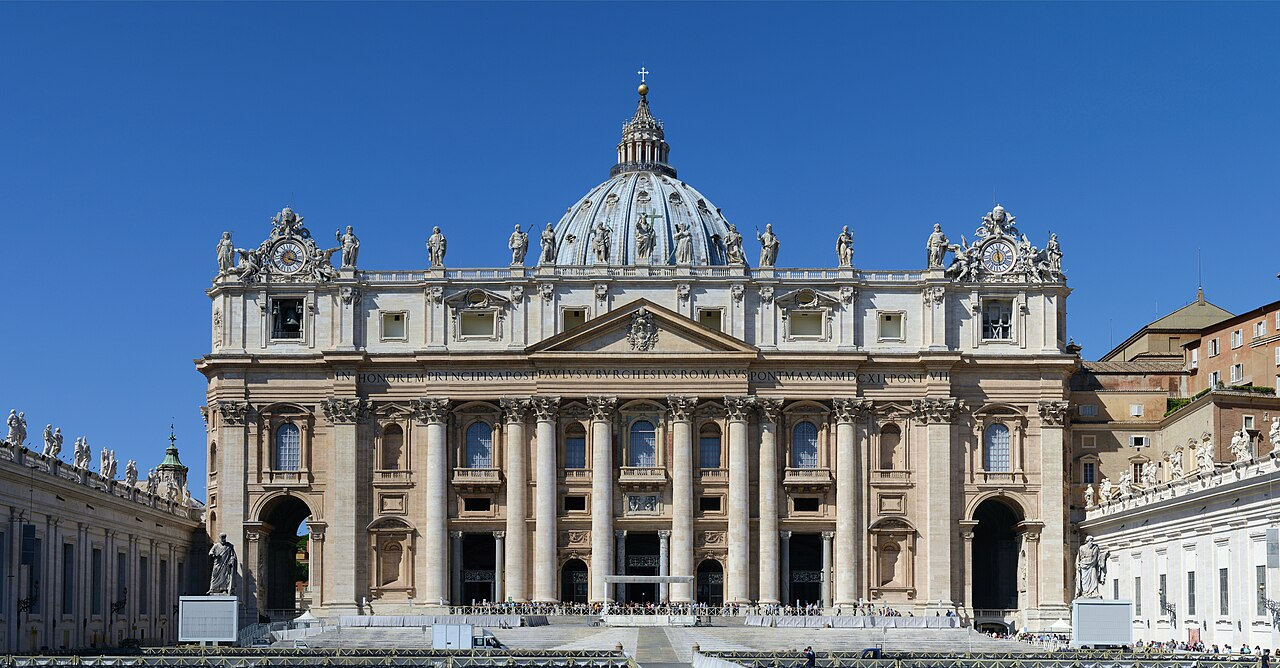
God had been with the church before it united with Roman politics, religions, and governments, and He had to withdraw once it became a kingdom within that system. Rather than repenting and letting Christ back in the church, they went even more astray and elected a pope.
And so the Papal church was never God’s church, and the Papal head was never God’s elected. And the Roman emperor who set up the papacy to rule had in fact set up this abomination that left the people desolate of God’s presence in their religious observance and celebrations.
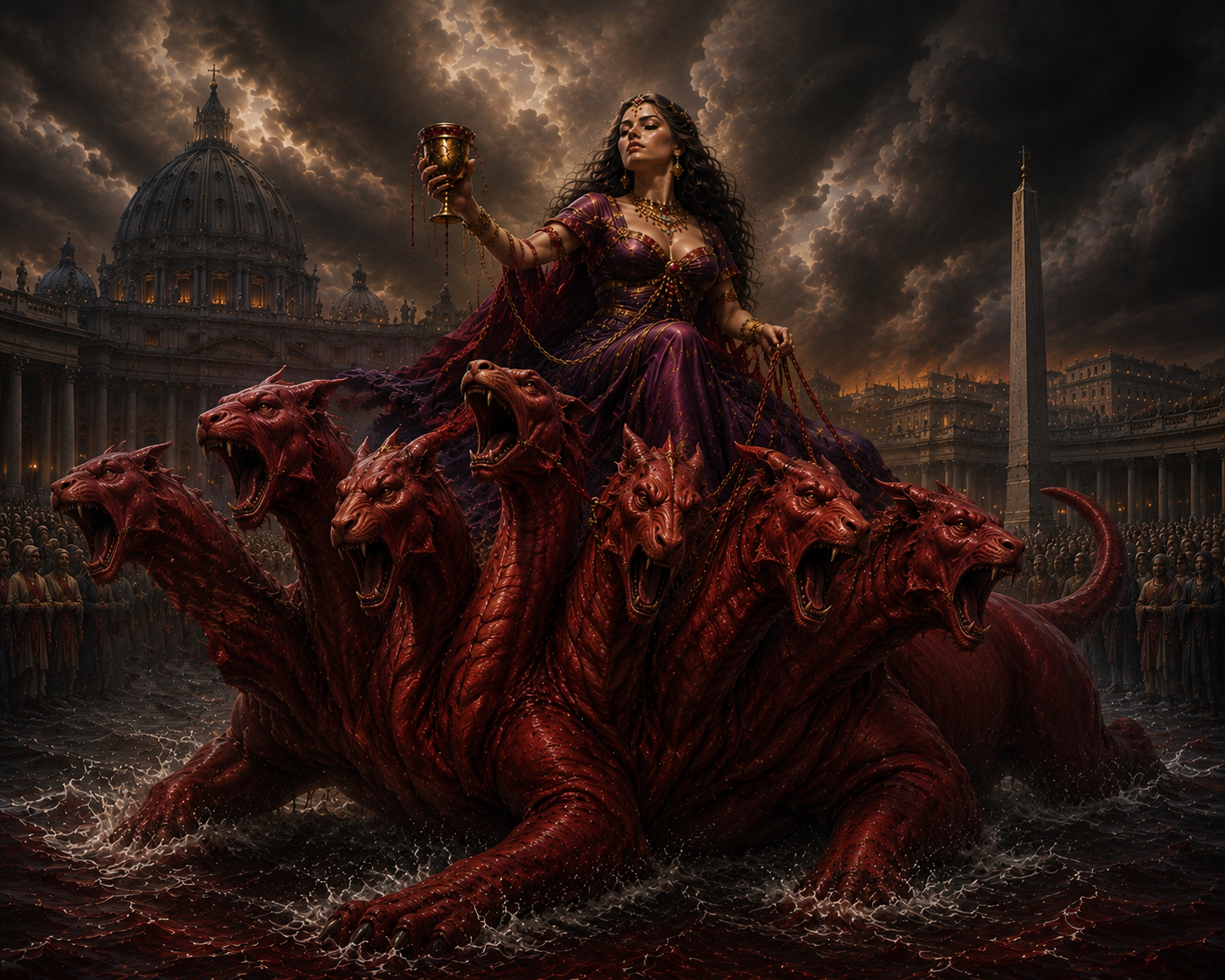
The political church is an abomination.
Jesus gave the following warning regarding Rome: “But when ye shall see the abomination of desolation, spoken of by Daniel the prophet, standing where it ought not, (let him that readeth understand,) then let them that be in Judaea flee to the mountains” (Mar 13:14) . Speaking of Rome destroying Jerusalem, but also Rome destroying the church. For as Jesus said these words, Rome was already in Jerusalem, Rome already governed the city, and so it had been throughout Christ’s life. However, the people of Jerusalem remained in authority over their religious worship. What shifted when Rome destroyed the temple was that Jerusalem became under the Roman civic religion instead. God had already left the temple because of the Jews’ rejection of Christ; it was not left desolate by God during Rome’s conquest. Their time was up. The conquest happened because God had already abandoned His temple and leadership there. It was the Jews’ sins that left them desolate. Which might be why Jesus said, “Let him that readeth understand.”
It would be too late for anyone to flee once the Roman army reached the Temple Mount. There had already become a bloodbath in the city. The Christians who understood Christ’s warning fled a few years before it was destroyed. According to early Christian writers such as Eusebius of Caesarea, the Jerusalem Christians left the city before the final Roman siege and fled to Pella, east of the Jordan. He then continues by saying that after they had left, the war came upon the Jews and Jerusalem was destroyed. The war began in 66 AD, an internal Jewish war that weakened them and made them easier prey to the Romans. But one event happened right before this war. Cestius Gallus surrounded Jerusalem in AD 66 but unexpectedly withdrew after a short siege. The Jews pursued the retreating Romans and inflicted a major defeat at Beth Horon. This time period was when most christian-jews fled the city. Meaning the sign was never them entering the temple grounds, but standing on the grounds where Christ was crucified outside the city. The holy site for the Christians at the time was there, not where the sheep were slaughtered. The Roman general’s army approached from the north, capturing the northern suburb of Jerusalem. According to Josephus, he even began undermining or attacking the city walls. This means that the place Christ was crucified, and where the Ark lay underneath, was stepped upon by the Roman general and his soldiers. This is the place the Roman army “ought not stand”. And it is where they later stood, when they stepped into Christ church—making it a perfect double prophecy and stepping on the physical temple as well as the spiritual one later on.
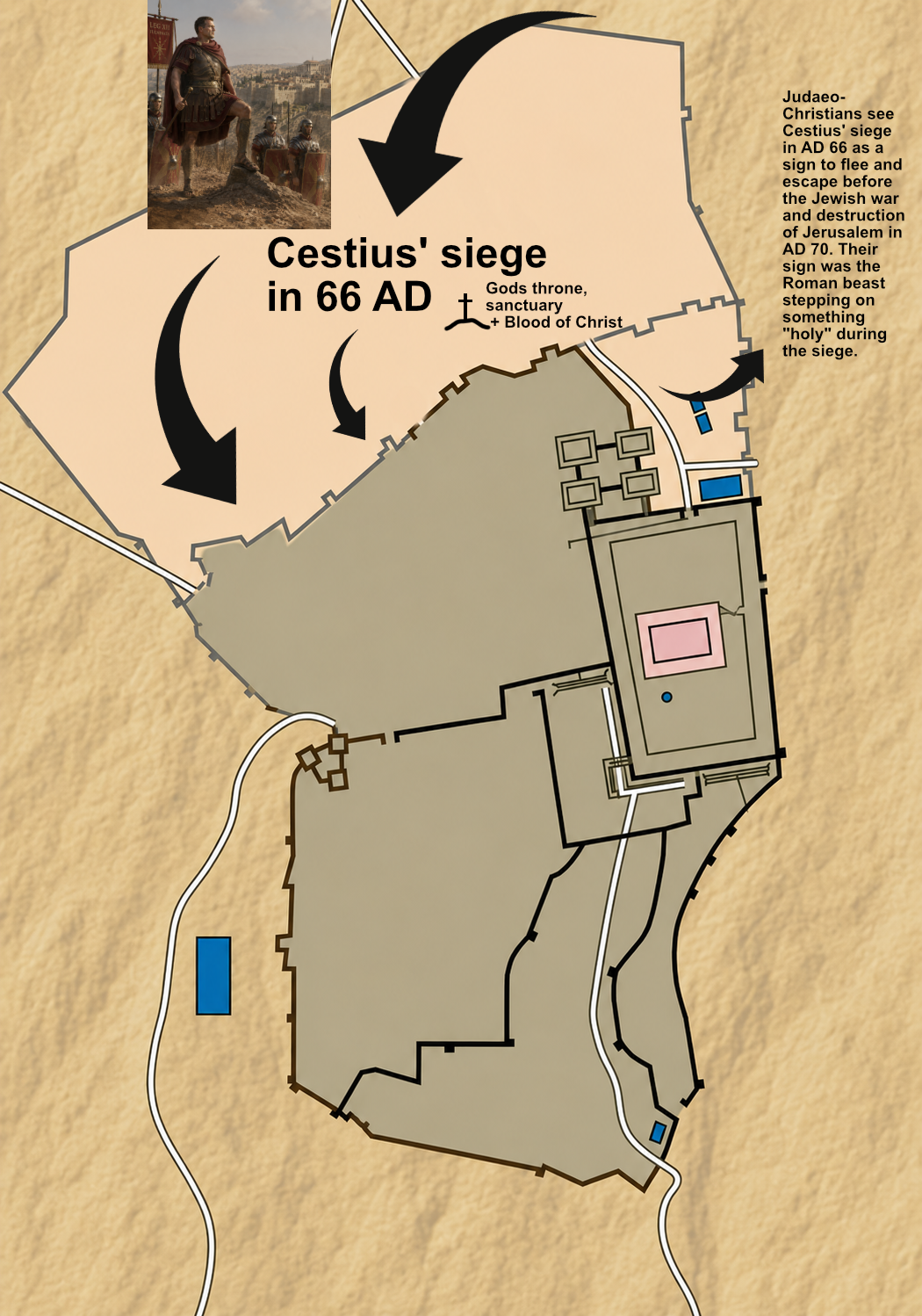
When Hadrian refounded Jerusalem as Aelia Capitolina, Jews were largely forbidden to enter the city or continue their sacrificial system. This ban also applied to Jewish Christians, since the Romans saw them as Jews. As a result, the original Jewish-Christian leadership in Jerusalem ended. Jerusalem’s church gradually became mostly Gentile within a Roman city. Much more changed than just the destruction of the temple. When Jesus warned of “the abomination of desolation, standing where it ought not,” he referred to Rome’s presence and interference in all things belonging to God—especially authority over God’s people, places, or worship.
Christ’s warning was a call to Christians to flee Jerusalem as Rome stepped on the grounds where Christ was crucified and where His blood was shed for humanity. By quoting Daniel, Jesus also reveals that Rome is the power warned against in that book. It was also a sign to Christians to flee when Roman leaders sat as a god in God’s earthly temple, trading with Christ’s blood; it was a call to His people to withdraw from the Roman political church to secluded areas (1.Cor.3:17). And so many did. Those who fled Jerusalem were saved from destruction. Those who fled the political church were saved from false teachings, apostasy, and eternal damnation. Those who stayed in both Jerusalem and the church were destroyed or left desolate.
Christ warns the churches.
In Christ’s message to the churches in the book of Revelation, He is clear that He follows truth and is not obligated to continue with an unfaithful church. There is no order of Peter where “keys” are handed from one ruler to another. The keys follow truth, for the keys are the truth. In no way does Chris stay in an unfaithful church that refuses to repent after receiving such a calling. This principle is seen in Christ’s message to the seven churches. To the church in Ephesus He says: “Remember therefore from whence thou art fallen, and repent, and do the first works; or else I will come unto thee quickly, and will remove thy candlestick out of his place, except thou repent” (Rev 2:5). The candlestick was a symbol of God’s spirit poured upon the church. The candlestick is the symbol of the church itself, and the oil a symbol of the Spirit. The priest places the oil, a symbol of Christ as High Priest ministering to the church. Despite the church being credited with “and hast patience, and for my name’s sake hast labored”, this labor for Christ’s name will not save them from being left by God’s Spirit and for God to reject them as His church. Removing the candlestick is literally a symbol of them losing their election as His church and of being represented by Christ’s ministry.
Jesus had forewarned against the belief that good deeds in His name would acquit them for having false doctrines. “Many will say to me in that day, Lord, Lord, have we not prophesied in thy name? and in thy name have cast out devils? and in thy name done many wonderful works?
And then will I profess unto them, I never knew you: depart from me, ye that work iniquity” (Matt.7:22-23)
Works in His name could not purchase the right to violate His laws, which is what the word translated as iniquity is. The Greek word is anomia, which literally means “law -less”. The idea that anyone can worship and serve Him while setting aside God’s law is disputed by Christ. His accusation against this first church was: “I have somewhat against thee, because thou hast left thy first love” (Rev.2:4). Paul explains that losing the love for the truth makes way for the “man of sin” to rule instead (2 Thess.2:9). Three things protect a church from deceptions. Love for the truth, love for Christ shown in obedience to Him, and love for others (1 John 2:4-5; 3:10)
And to the church of Pergamon Jesus warns: “I have a few things against thee, because thou hast there them that hold the doctrine of Balaam …So hast thou also them that hold the doctrine of the Nicolaitans.. Repent; or else I will come unto thee quickly, and will fight against them with the sword of my mouth” (Rev.2:14-16). Here God does not just say He will move His spirit and reject this church; He says He will even fight them as if they were His enemies.
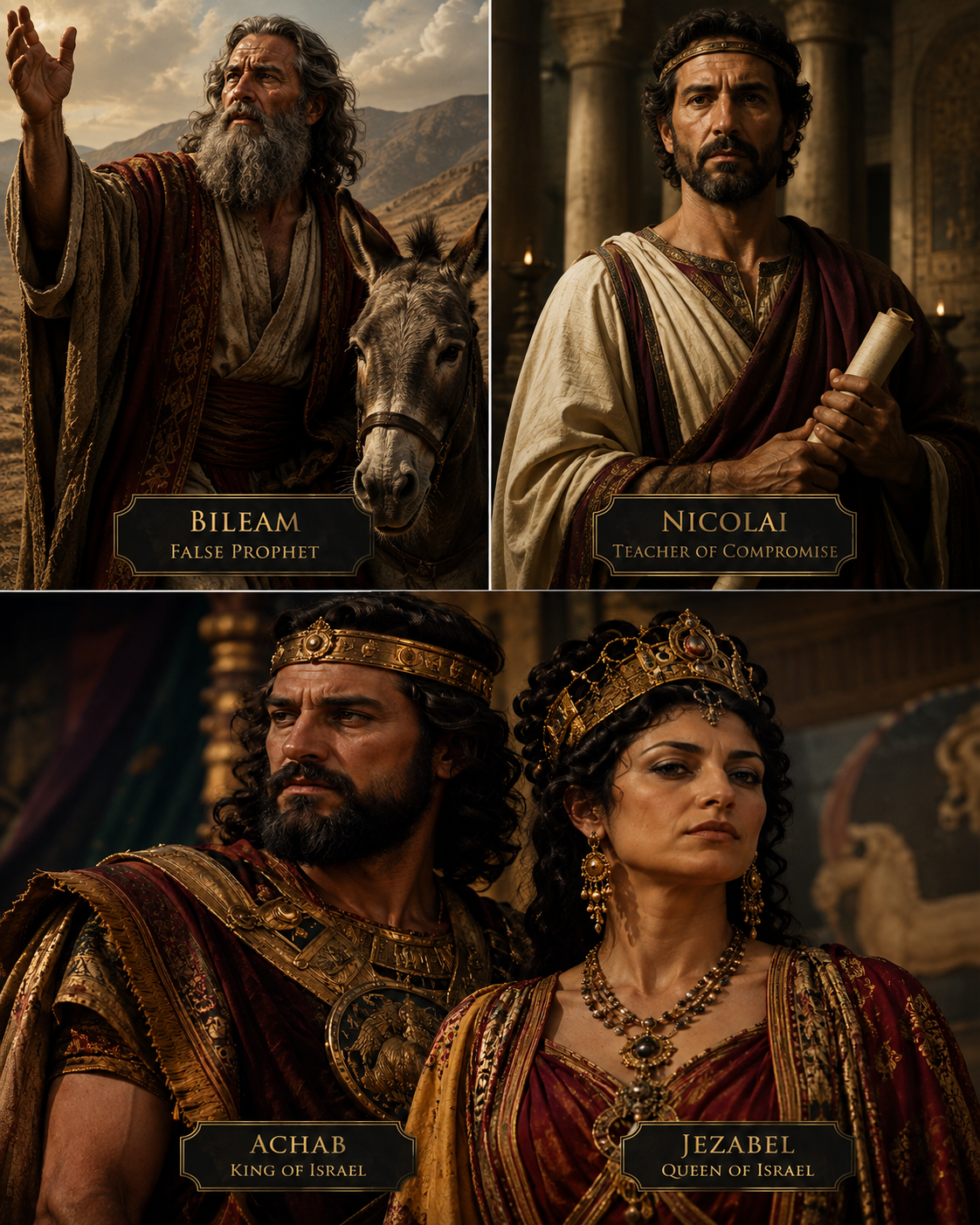
Here God warns clearly about God’s people mingling truth with error, and from rulers among them who lead them astray.
And to the church of Thyatira He warns: “I have a few things against thee, because thou sufferest that woman Jezebel, which calleth herself a prophetess, to teach and to seduce my servants to commit fornication … And I gave her space to repent of her fornication; and she repented not.
Behold, I will cast her into a bed, and them that commit adultery with her into great tribulation, except they repent of their deeds.
And I will kill her children with death” (Rev.2:20-23)
Jesus is leaving no one to doubt if He would follow and protect a church and its members, if they do the heinous crimes that made him leave Israel in their day. The apostle Paul writes this to the church in Rome, saying: “Thou wilt say then, The branches were broken off, that I might be graffed in.
Well; because of unbelief they were broken off, and thou standest by faith. Be not highminded, but fear:
For if God spared not the natural branches, take heed lest he also spare not thee” (Rom 11:19-21).
The Christian church would not be acquitted if committing the same acts that caused Israel to be rejected.
Jezebel was a pagan queen who married a king of Israel. God declares that any of His church who would make alliances with pagan governments and practices, even choose them as leaders, would be led into a great tribulation and even the “death” of the church’s children. Meaning the church’s followers and descendants would perish.
Christ does not stay with an unfaithful people, despite them calling themselves a church and His spokespeople. Hanging up crosses and images of Jesus, or reciting the Lord’s Prayer, can not change anything. Jesus does not live in a statue, a cross, or a building where He can be visited or even controlled. He is not a prisoner in any church. He is where he is worshiped in truth and spirit. And He withdraws where He is not.
And so it was with the Roman Church. Their departure from truth, their union with Roman leaders, and pagan practices caused their desolation. In no way would Jesus have anyone believe that He had to be in a church called by His name. That He could be conjured like a spirit, forced to come when summoned. There is even such a story to reproach in the book of Acts. Where some men tried to use Christ’s name in that way: “Then certain of the vagabond Jews, exorcists, took upon them to call over them which had evil spirits the name of the Lord Jesus, saying, We adjure you by Jesus whom Paul preacheth. .. ” And the evil spirit answered and said, Jesus I know, and Paul I know; but who are ye?
“And the man in whom the evil spirit was leaped on them, and overcame them, and prevailed against them, so that they fled out of that house naked and wounded.” (Acts 19:13-16)
Christ’s name had no power in the mouth of unconverted, power-hungry men.
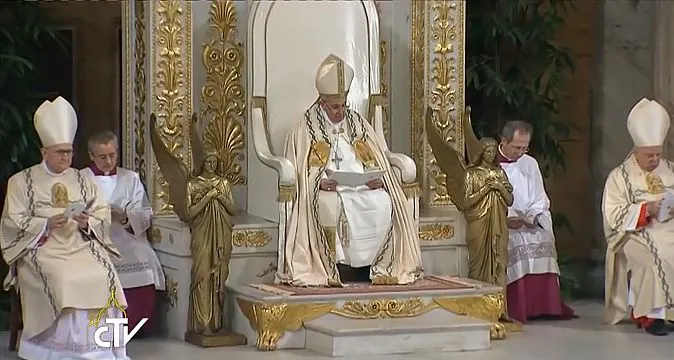
The Pope spoke great things, claiming to have been given a godlike position in the church. That Christ was the ruler on earth through His rule. And that no one could be saved but through His institution and doctrines. Making himself a grandiose deceiver, and his followers greatly deceived. Even dressing in white, demanding others who approach him to wear black, to bow before him, to crown him and build him a throne surrounded by cherubs. Acting out Christ’s role in His temple in their temple. The Pope walking among the candlesticks, as Jesus does in His temple.
Thinking doing all these things in Christ’s name ensured them a place in heaven, while Christ would one day say to them: “I never knew you: depart from me, ye that work iniquity” (Matt.7:22)
John had warned about the idea that you can know Christ or be known by Christ simply by using His name.
“And hereby we do know that we know him, if we keep his commandments.
He that saith, I know him, and keepeth not his commandments, is a liar, and the truth is not in him. (1Jn 2:3-4)
John, by this, prophesied the future Pope, bishops, and priests to be liars. Even their followers. The Pope did not just reject God’s law as valid; he changed it, and both influenced and forced others to break it. John’s point was that your Lord is manifested through whom you obey. And if it is not Christ but one who has taken Christ’s position, that man is your Lord and king, not Christ.
In this way the Pope, in the eyes of heaven, is not only playing God in his temple, but is an antichrist. The Pope’s rule among the Christians was lawless and written as a rebellion, even the sin of witchcraft, in the books of heaven. “For rebellion is as the sin of witchcraft, and stubbornness is as iniquity and idolatry” (1 Sam.15:23). Claiming that your law is over God’s law is “a mouth speaking great things”. Claiming you decided who will be saved and who is not is “a mouth speaking great things”. One who claims to have the right to trade with Christ’s blood is “a mouth speaking great things”. One who claims to have the power to forgive outside of God’s juridical system is playing God. One who changes God’s times to his own is playing God.
Yet the Bible tells us this same power would proceed to succeed in afflicting God’s people: “And he shall speak great words against the most High, and shall wear out the saints of the most High ..and they shall be given into his hand until a time and times and the dividing of time” (Dan 7:25)
Placing himself as a mediator of God’s salvation and confusing.
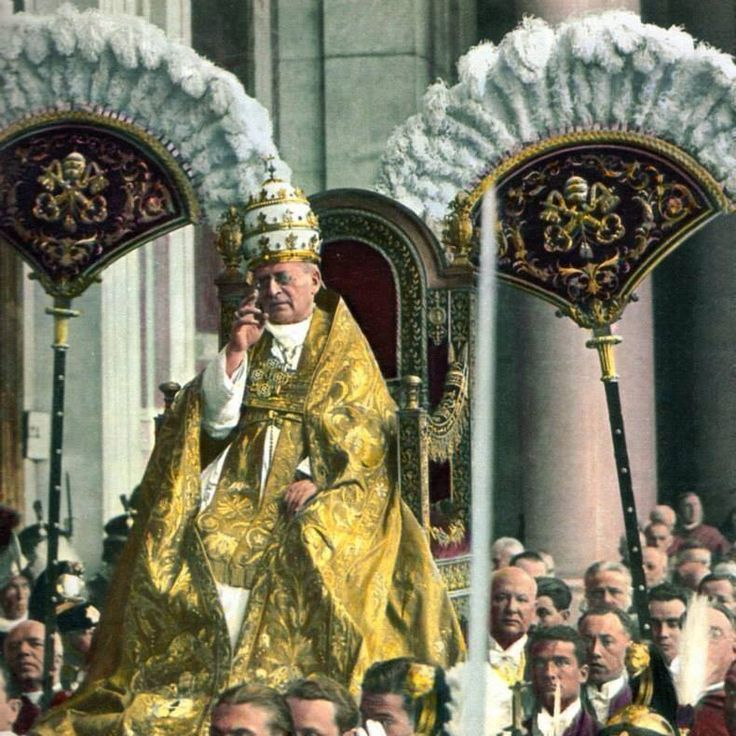
God’s focus is on this horn of Rome because of its devastating influence and long-lasting legacy. You could say God could have overthrown Papal Rome as he had with all the other nations who defiled him like he did to the Babylonian king. But the problem with Papal Rome, what even made Rome different from the other beasts, was its deceptive nature. The Babylonian king openly mocked God. But Papal Rome claimed to love God and to be loved by God. Just as God had allowed Satan to live and continue his works, God also had to let the Papacy live on. For only time would reveal its true nature, he had to let the beast expose itself. God had to patiently allow people to be enlightened so they could distinguish rightly.
Satan’s rebellion in heaven had been so convincing that one third of God’s angels had believed Satan, and many others were uncertain if Satan’s accusation was in their best interest or not. Had God destroyed Satan right away, angels would have continued to question if he had been right and if God was in the wrong. Causing constant fear and doubt and removing peace and joy.
The Papacy was not just blasphemous; it was also pious and charitable. Helping the poor with one hand, persecuting with the other, and praising God on one side, and cursing His faithful on the other side, and protecting them from other hostile nations on one side, while suppressing them with their own doctrines on the other. Papal Rome has left people confused even in our own time. Despite all their now known evil works, people still can’t believe God would see them as anything but Christian, considering all its charity and good works. For all they have converted to Christ around the world, for the faithful service of priests and the moral standards of its members. How bad can it be? Many good people were convinced God worked through the church. This was the Papacy’s strength, but also why God allowed it to continue.
Rome would destroy Jerusalem and scatter its people. From then on, no nation remained representing the Biblical God. That is, until Rome converted. Because the papacy was claimed to be the new nation under God on earth, it became the focus point of the prophecies. Here is one who claims to be God’s nation, God’s king, and who accused God’s faithful to be heretics, making the main battles from then on centered on the conflict between God’s people and Papal Rome—the conflict of who represents God and who are the real priests of the new covenant.
The bible later relates prophetically that many of God’s own people are intertwined with this political church and are deceived to do its sins. God’s churches were hit with confusion, and God was dealing with many sins committed in ignorance. The Bible was, for a long time, inaccessible to most people. Christ’s commented on such a situation:
“Another parable put he forth unto them, saying, The kingdom of heaven is likened unto a man which sowed good seed in his field:
But while men slept, his enemy came and sowed tares among the wheat, and went his way.
But when the blade was sprung up, and brought forth fruit, then appeared the tares also.
So the servants of the householder came and said unto him, Sir, didst not thou sow good seed in thy field? from whence then hath it tares? He said unto them, An enemy hath done this. The servants said unto him, Wilt thou then that we go and gather them up? But he said, Nay; lest while ye gather up the tares, ye root up also the wheat with them. Let both grow together until the harvest: and in the time of harvest I will say to the reapers, Gather ye together first the tares, and bind them in bundles to burn them: but gather the wheat into my barn” (Mat 13:24-30)
Papal Rome usurped power over the Christians, and had their traditional thinking, practices, and doctrine continue later on among the Protestants and evangelicals. The roots of God’s people had long been intermingled with the roots of the tares, so that to the human eye it was almost impossible to tell them apart. And even when you could, they were entangled. The most dangerous lies are those that are close to the truth. When Satan deceived Eve, he did not deny God’s supremacy or role; he did not say God was not the lawmaker; he just misquoted him, exaggerated His law, and made Eve see God differently.
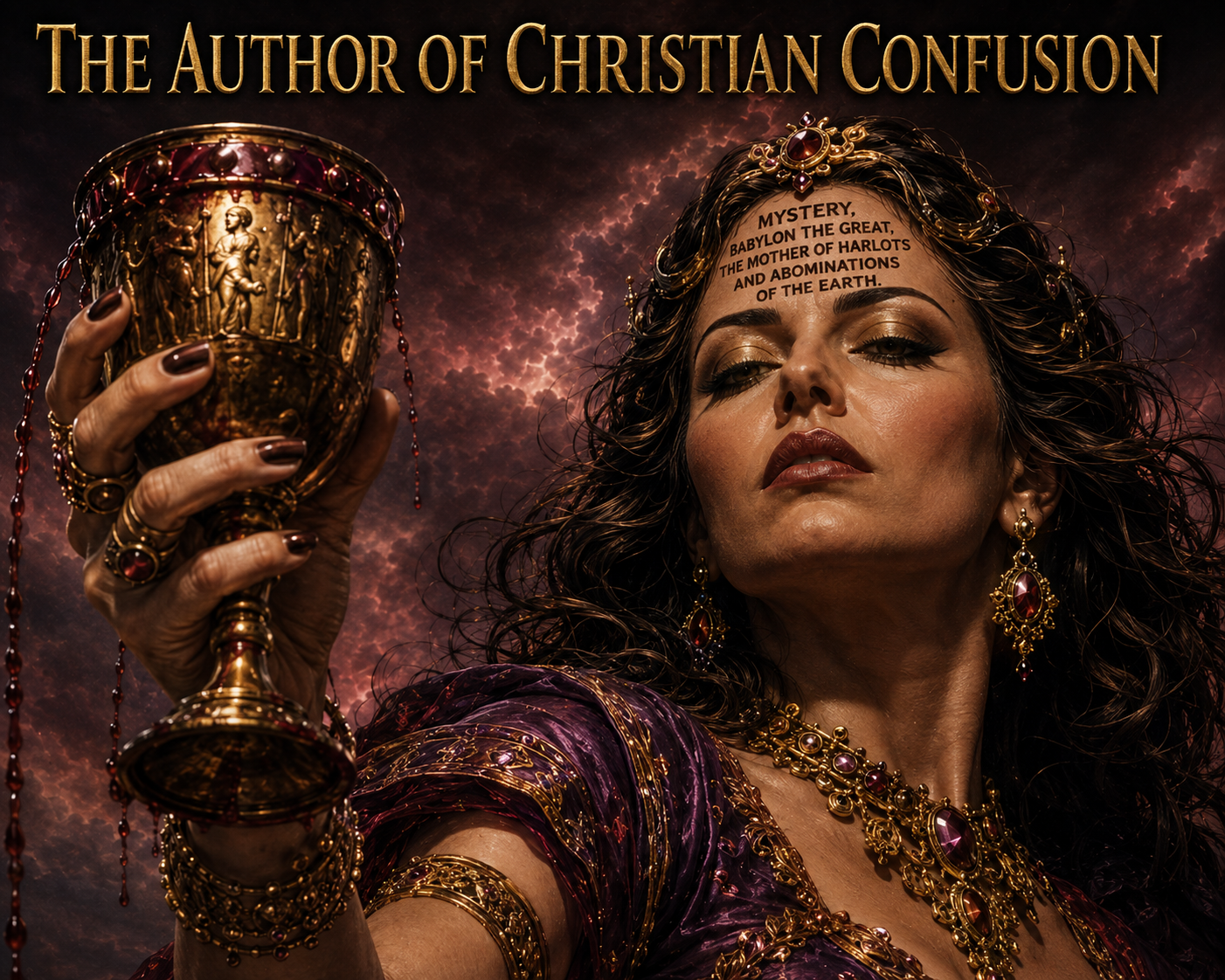
Even today, there appear to be both good and bad Christians in every church. Every church seemed to have something wrong with it and something right about it. In that way, many excuse the mistakes of the Papal church. All churches struggle with power structure and manipulation. Even the protestant churches had persecuted other believers once they gained power in their respective nations. Many Catholics had been victims too. And no church seems completely good, nor completely evil. They are using the same words from scripture, even quoting the same verse, yet understand it differently. Greatly different dogmas are all claimed to stem from the same Bible, chapter and verses.
People who followed the papal lead were not all bad; some were ignorant and confused, thinking they were following God. The alternatives were not looking so good either. Truth has become a matter of opinion. And some even believe this confusing state of the Christian Church stems from leaving the Papal leadership rather than from the Papal leadership itself. But the real cause of the confusion in the church is the loss of its original foundation. And the culprit is the one who replaced that foundation with their own. Christ warned against this, saying that if the foundation is moved, it is like a house built on sand. The structure will collapse in storms (Matt.7:24-27). And this is the reason behind the fall of the Christian churches into confusion.
Those whom Rome deceived would not always understand until they were enlightened, and once they knew, they had to choose between traditions and being at peace with their family and community or becoming an outcast following God. All this confusion, lasting so long, had its origin in what Rome had done.
The sins of “the horn” were too great to escape punishment, but because of the confusion, God had to take special care and deal with the conflict in stages. This made “the horn’s” specially dominating rule last for many more years than it ought to have.
Papal Rome became a great enemy of God; at the same time, God had to take into account that so many people believed they were obeying and honoring him through this institution and the institutions that arose from it.
“a time and times and the dividing of time”
“ they shall be given into his hand until a time and times and the dividing of time”. Here we are given a prophetic time period that helps show both the long duration of the horns and part of the last phase of the image in Daniel 2.
In the Bible, “a time” is the same as “a year”; “times” are two years, and “the dividing of time” is half a year, making the total time period 3.5 years. However, when God’s people are punished for unfaithfulness elsewhere, God says he gives them one year for one day. A biblical year in prophecy is usually 360 days. The ancient Hebrew calendar was lunar, consisting of 12 months of 30 days each.
360 + 360 x 2 + 180 = 1260 years
This time period comes back in the book of Revelation to help tie one of the knots between Daniel and Revelation and show the same power is mentioned both places.
The angel here tells Daniel that for 1260 years this religious-political figure that suppresses them will be especially powerful. During this period, the Pope was crowning kings and dictating religious observance in Europe. He ruthlessly persecuted Christians who refused to submit to his authority.
His time period goes from when the Ostrogoths were driven out of Rome in 538 AD, and the Pope could take his seat as a religious head and judge from that very city. Counting 1260 years from 538 AD leads us to 1798, when Napoleon’s general went to Rome and humiliated the Pope, took him captive, and declared a Roman Republic. This gave Papal Rome a wound that almost caused its end, and it was never able to exercise political power in the same way as before. An authoritative spell was broken.
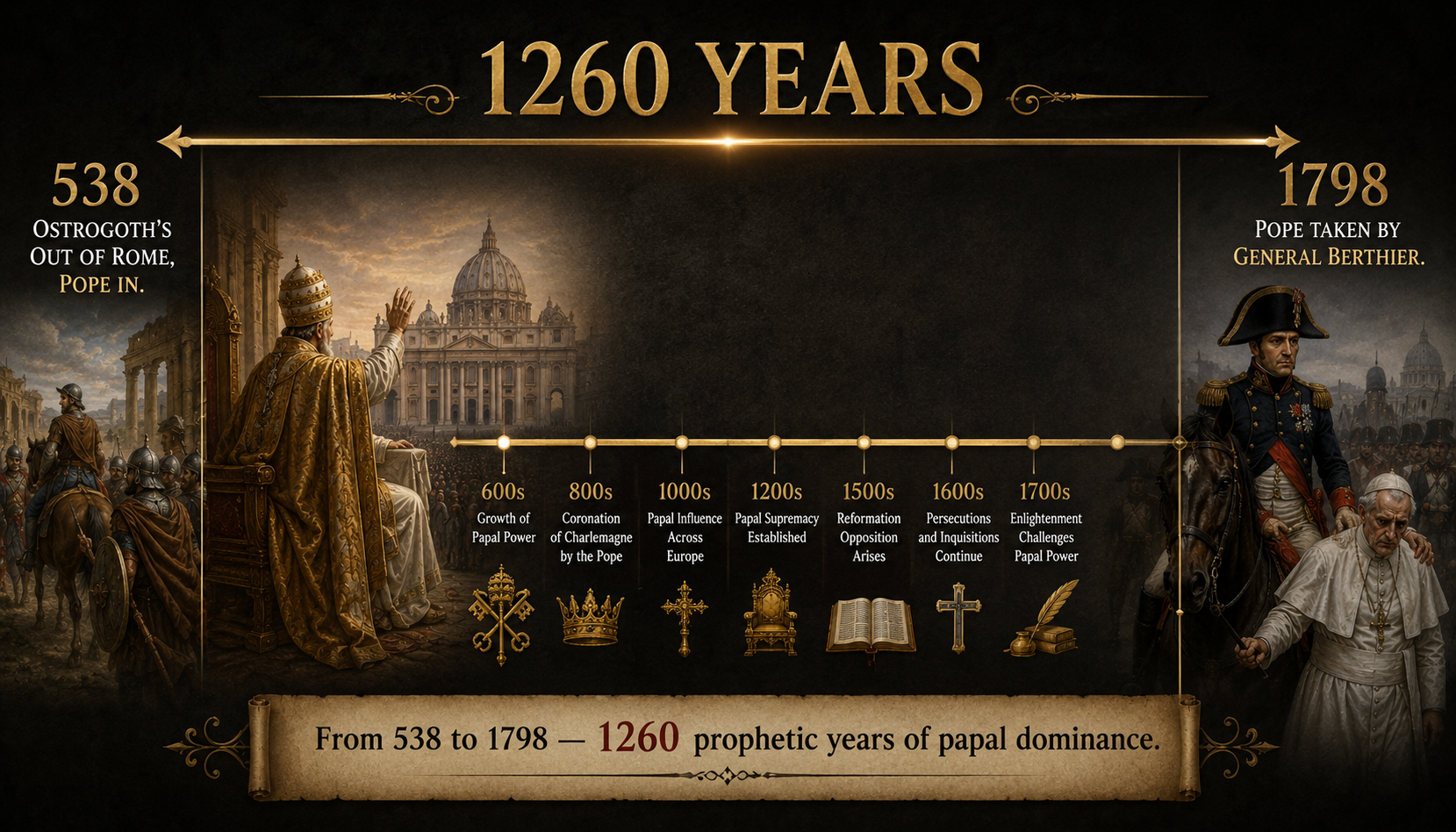
After France challenged the authority of the Papacy, it continued to struggle to regain its strength and needed to get on France’s good side. Northern Europe had long resisted him after the spreading of printed Bibles in their native languages, which led to the Reformation. Before, priests had to preach in Latin, leaving many clueless about biblical teaching, and most people’s expression of religion was in traditions and superstition; as knowledge increased, the Pope and his priests were exposed by it. Many countries that previously had done the Pope’s bidding had now made their own governed churches. Then France declared it would reject Christianity altogether, and attacked both church and priests in France before taking the Pope prisoner in 1798.
After conflicting with the Pope back and forth, and wanting to control the church, Napoleon took the Papal States and placed them under the French Empire in 1809. General Berthier took the Pope to France, where he remained under guard until 1814. After Napoleon’s defeat, the Congress of Vienna restored the Papal States to the Pope, but nothing became as it had been. The Pope had lost its grip over much of Europe. In 1848 and 1849, European revolutions happened, and the Pope fled Rome to Gaeta. A Roman republic was once again proclaimed before France helped restore papal rule, and the Pope returned to Rome. During Italian unification, most of the Papal States were taken by the Kingdom of Sardinia. The Pope was left with only Rome and the area around it. In 1870, Italian troops entered Rome and captured it. The Popes are completely defeated but refuse to recognize the Kingdom of Italy’s authority over Rome, calling themselves the prisoners of the Vatican.
Despite their downfall and loss of political power, they came to an agreement with Italy through what is known as the Lateran Treaty, where they get independence of the Vatican City and payment for the loss of their other territory states in Italy. This made the Pope once again a political-religious figure, but with vastly less territory, becoming even the smallest country in the world. But with even more religious impact. The papacy has, since the world wars, been winning influence by portraying itself as pious but without changing its claims of being Christ’s representative and the mediator of God’s mercy. They still advocate their changes to God’s law and their paganist Christianity as the one and true church. They have placed themselves as the counselor of leaders and often invite religious leaders to the Vatican. The Papacy has positioned itself as an institution for peace, but a change of power does not change who they are or who they would be if again given the same power. It is the mentality, ideology, and intent that determine character, not whether they can do what they desire. If not so, then prisoners would all be incarcerated saints. We keep criminals in prison because of what they have done and what they are capable of doing if let out, not for what they do while in prison. Knowing what the Papacy did do before should have been enough to strip them of all power. Instead, they remain the most influential religious authority in the world.
God singled out the time period of 1260 years as the years when Papal Rome was, in particular, suppressing God’s people by sitting in a position to judge them as heretics from Rome. History confirms how they treated the Waldensians, the Cathars, Lollards, Hussites, jews and even other smaller groups of Christians who would not accept Papal authority.
To be judged
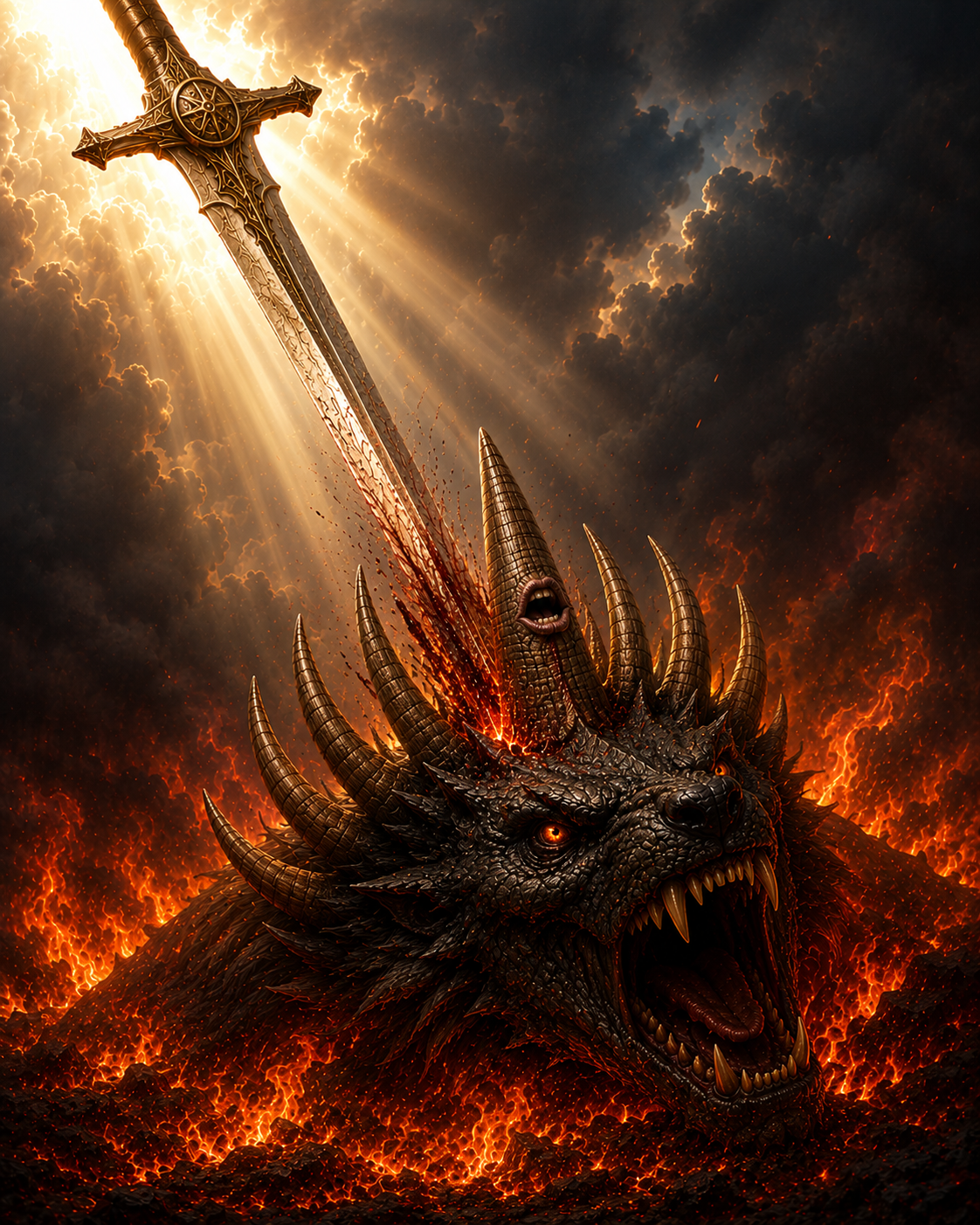
“But the judgment shall sit, and they shall take away his dominion, to consume and to destroy it unto the end” (Dan 7:25-26)
The last part explains how this power, although it is only in a position to afflict His people for 1260 years especially, will continue to exist until Christ Himself takes control, and that it is one of the main antagonists whom Christ will judge with the plagues and finally bring to a destruction of its institution.
The judgments upon the Roman beast are described in more full detail in the book of Revelation to the apostle John.
The judgment of the “little horn” coming out of Rome begins even before Christ returns, and heaven urges His people to be “enlightened” and not do any of their sins, or they will perish alongside them when he punishes them. Christians must separate from the apostate churches in the end times before the plagues begin, and separate from the blasphemous leaders and their influence, or they will perish with their decivers (Revelation 18). Under no circumstances ought God’s people to commit the sins that brought forth the Papacy, to seek help from governmental powers, and use that power to punish those who do not do their bidding or to force Christ’s kingdom upon others. Nor are they allowed to dictate or enforce religious laws on God’s behalf.
Why Papal Rome?
Although there are many atheist and pagan kingdoms and rulers in the world, God points the finger especially to the Roman Pontiff because he is the greatest threat to His people. But also because his claims place him at the forefront of the war against God. An imposter who ran off with the majority of God’s children. Even 99.5 % of all Christians today still follow his law and traditions over the Bible. 99.5% of Christians follow his changed times and law. That is no small number, and no small matter for God. In addition, billions of Christians over many centuries will be lost because of this one institution’s influence. Wars are still fought, bombs are still dropping, because of the religious confusion this institution has brought upon the world.
The Papal church survived for centuries by intermingling its roots with honest believers, making it difficult to separate the two. Unless this entanglement is undone, Christ will have to reject them at His coming.
Papal Rome’s rise was just like Babylon, directly a result of a falling away in the church. Just like Rome became a curse on Israel, papal Rome became a curse to God’s people.
Paul prophecies about the roman pontiff: “Let no man deceive you by any means: for that day shall not come, except there come a falling away first, and that man of sin be revealed, the son of perdition; Who opposeth and exalteth himself above all that is called God, or that is worshipped; so that he as God sitteth in the temple of God, shewing himself that he is God. ” (1.Thess.2:3-4)
He explains that the leader positioning himself as a God among God’s people, who are God’s earthly temple, happened as a result of the Christians falling away from truth. It did not begin with the leader; it began with them loving lies over the truth.
“For the mystery of lawlessness doth already work: only he who now letteth will let, until he be taken out of the way.
And then shall that Wicked be revealed, whom the Lord shall consume with the spirit of his mouth, and shall destroy with the brightness of his coming:
Even him, whose coming is after the working of Satan with all power and signs and lying wonders,
And with all deceivableness of unrighteousness in them that perish; because they received not the love of the truth, that they might be saved.
And for this cause God shall send them strong delusion, that they should believe a lie:
That they all might be damned who believed not the truth, but had pleasure in unrighteousness” (2Th 2:7-12).
Here Paul explains the same power and same destruction that is said to happen to the little horn growing out of the Roman beast in Daniel 7—the focus of God’s wrath. But we also learn that the reason he even came about was that a large part of the Christians sought it, wanted it, and even desired it to be true. They chose this mediator and leader.
The same dance twice
Rome and God’s people have done the same dance more than once.
It all comes back to their first interaction with each other. First, the Jews misunderstood the prophecies and sought to create a pact with Rome to gain influence. Then they asked Rome to judge in their affairs, of who should be their leader, leading them to become a client kingdom under Rome. Rome then chose their kings. Then further internal strife and asking for Rome to act once again led them to end up under Rome’s administration. Then they chose a murderer and Cecear over their own king to maintain their own influence over the people. Before realizing they were now trapped by the same power they had asked for help, they began to fight it, only to lose, and their temple was taken down and a pagan god placed there instead.
The Christian church followed a similar pattern. After facing persecution, Christians sought help from Roman authorities, hoping to win them to their side. This led Rome to take a leading position in the church—a role that was even initially welcomed. As divisions arose among Christians, some appealed to Rome for support in theological disputes and for their leaders, and Rome responded by appointing their leader: the Pope.
The majority of Christians then chose to follow the Roman pontiff over Christ to gain political and religious power. When left with the choice to follow Christ and suffer persecution, they chose a murderer and a Roman pontiff. They left truth to serve a lie. Then they became trapped under a series of Popes, for better and worse, with no escape. Rebelling meant being ostracized, fought, exhausted, and destroyed.
But it was the Christians’ falling away and their flirtation with Roman leaders that led to this doctrinal disaster. Yet they chose compromise over purity of faith.
The jews had rejected Christ in the hope of a leader who would give them political power and independence instead. To that Christ said: “Your house is left unto you desolate”. (Matt.23:38)
When the Christian church rejected the teachings of Christ to become a political church, it followed in Judah’s footsteps. They chose a political messiah over a messiah who called them sinners in need of repentance. They had rejected Christ’s spiritual kingdom for an earthly physical kingdom. And the result was “the abomination that leads to desolation”.
When Judah tried to force Jesus to proclaim Himself as king, they lost sight of Him: “When Jesus therefore perceived that they would come and take him by force, to make him a king, he departed again into a mountain himself alone” (Joh 6:15)
The reason is that Christ has said when his coming will be. Not among rebellious jews who had misunderstood His mission. Not among the horns of Rome, not as a horn coming out of the beast of Rome. Christ rejected his crowning because they wanted to use him to advance their agenda. Christ could not go with them there. It was they who had to convert to him and patiently wait for his time, when their hearts were cleansed, and they understood and knew what it truly means to be part of a kingdom of God.
Even the disciples were told by Christ that how and when His physical coming is manifest is none of their business or task. “When they therefore were come together, they asked of him, saying, Lord, wilt thou at this time restore again the kingdom to Israel?
And he said unto them, It is not for you to know the times or the seasons, which the Father hath put in his own power” (Acts 1:6-7).
This ideology did not sit well with the Jews at that time. The Jews gaining power over Rome in their current state would not have made them better; it would have made them ruthless. While the Jews were unsuccessful in making Jesus overthrow the Romans, the Christians later forced it under the banner of His name. In Christ’s name they united church and the Roman state.
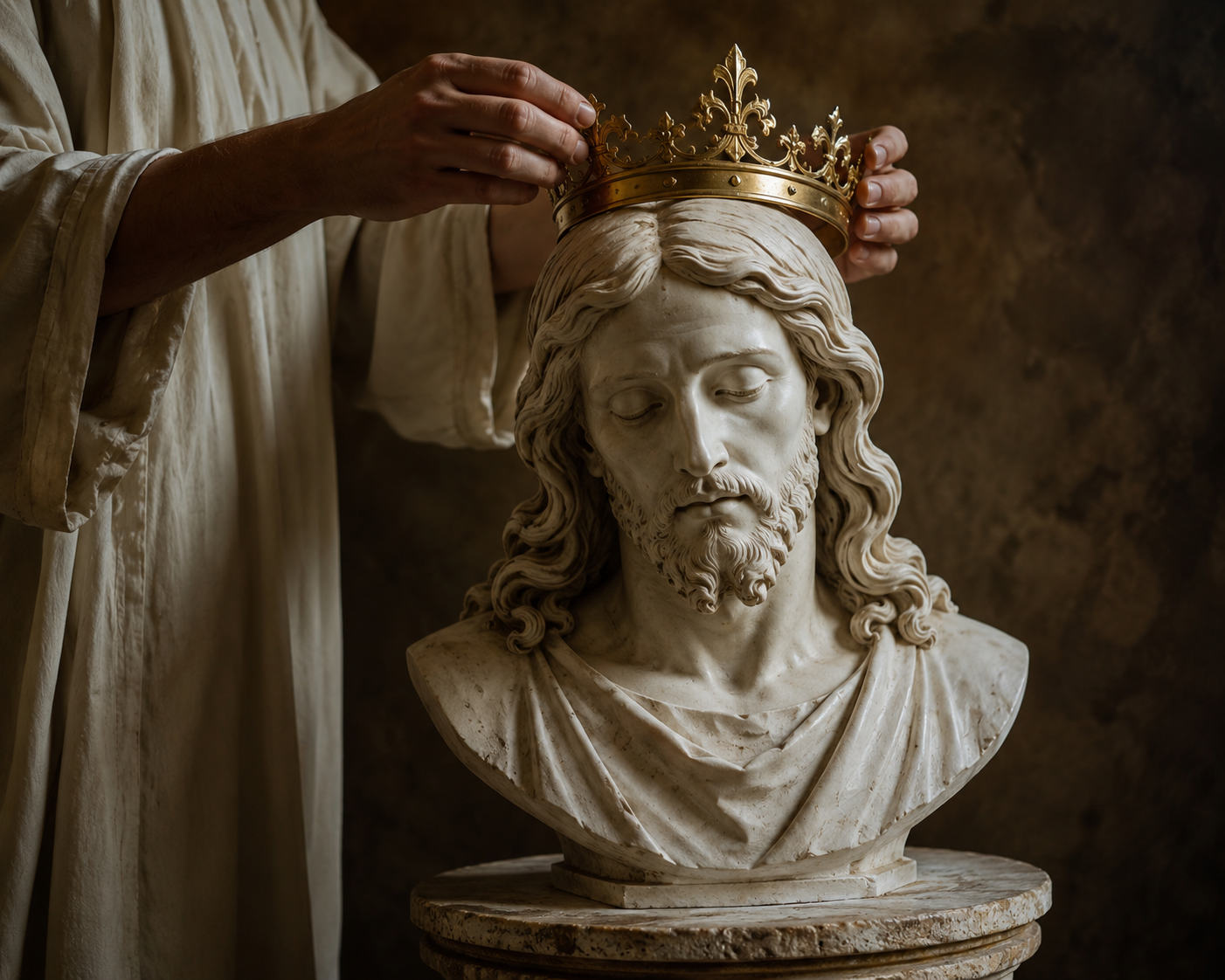
It was falling away from the principles and truth that Christ had proclaimed that led to the rise of Papal Rome. And Christ was not there with them; rather, He had departed the political church and was with those who were considered the outcasts and the problem. Christ, with His faithful, was led outside the gates once again. The principles of Christ were crucified for the sake of power and security.
Those who remained faithful also had to endure these harsh conditions. Just as Daniel, Hananiah, Mishael, Azariah, and Ezekiel were taken captive because of their people’s sins, faithful Christians found themselves trapped in lands ruled by a corrupt state-church, struggling to remain loyal to God. Both groups saw God’s temple desecrated—physically and spiritually. The faithful in Babylon and Medo-Persia faced ovens and lions’ dens, not for their own sins but because of the sins of their nation. Similarly, during Papal Rome, faithful Christians were burned at the stake or tortured—not for their own wrongdoing, but because of the church’s union with state power, leaving them in a world they could not escape.
The focus on Rome until the end of time is similar to how God chose to center the Bible on the conflicts His people faced in the past. These struggles are meant to serve as examples for anyone seeking to follow Him. In the same way, the conflict between God’s faithful and Papal Rome is both an example and a lesson for all Christians. Understanding this conflict remains relevant everywhere, since even the Papal version of Christianity has spread worldwide. Rome and Europe have become the center stage of the conflict. God instructs His people to pay attention to how the focus shifts from the Roman beast to the blasphemous horn that grows out of it, and to all its dealings with God’s people. The warning is to keep watching until it receives its judgment (Dan. 7:11). We were never to take our eyes away from Rome as the enemy of God.
Vision from Judah to the churches
Although the first four beasts are all connected to the Jewish nation, the change from who God’s people are is explained elsewhere in the book of Daniel.
When Jerusalem was destroyed the first time, the focus in the bible shifts to where God’s people are and their challenges there: Babylon and Medo-Persia.
When Jerusalem is reinstated, the focus goes back to Jerusalem. When Rome destroys Jerusalem, the focus goes to where God’s people now are. The focus shifts to the Judean-Christians, as the vision follows the faithful and not the Jews who rejected Christ.
During the end phase of the image in Daniel 2, the feet part clay and part iron; Jerusalem is no longer the center of attention, for God’s people are at this time scattered and in large numbers elsewhere. And so Jesus explains that when He returns, He will gather His people from all ends of the earth, showing they remain scattered until the end.
Many call the idea that God’s focus goes from the Jewish people to the Christians as displacement theory. However, the New Testament is clear that the remnant of Israel is the faithful Christian church. Many forget that it was founded upon Jewish converts, and so the church was to be a continuation of Israel, not another people. It’s theologians that have separated the two. Simply, God continued with the jews who were faithful, and the pagan converts added to them through conversion, forming them as one body, making up the remnant of Israel. And so there is no replacement in the true church, only God following the faithful among them rather than the unfaithful. This is the case throughout the Bible whenever a remnant is mentioned. God does not choose all of Abraham’s children; He chose Isaac. And from Isaac, only one brother, the faithful one, while the other is rejected. So it continues when God, after the Babylonian captivity, chose a remnant among Judah and a few from the other tribes and let all the others go. Then, as Christ comes, God continues with the faithful jews and rejects the others. This is even prophesied in Daniel 9, where Daniel learns that not just his people, but Jerusalem, is on probation and will be rejected, if not converted, after the Messiah comes. Meaning Jerusalem itself is rejected as the center of worship and thereby also the center of attention.
Replacement theory would be to say God chose the unfaithful, which would, if true, also change the past. If heritage was more important than principle, then he chose Ishmael over Isaac, Esau over Jacob, Ephraim over Judah, and the Pharisees over the Jewish followers of Christ. But this is not how God works. Did the converts from paganism make the Christian movement less Israel? The Bible also rejects this idea. Converts were allowed to become part of Israel in the past as well. And even in King David and Christ’s family tree, we find what was likely a Canaanite convert, Tamar. A convert from Jericho, Rahab, and a Moabite convert in Ruth. They all became part of Israel’s royal line upon their union; their children were no less of Israel. So was the case with the faithful converts to the Judean-Christian congregation; they became fully part of God’s Israel and part of the remnant God continued with.
As Paul argues and explains in all his letters. So, God follows the suppressors of his people, not the suppressors of the people who have rejected him. And in the beginning of the image shown, that suppressor is Babylon, then it is Medo-Persia, then it is Greece and its divisions, then it is Rome, and then it is Papal Rome and Europe.
And this is why the Papal horn of Rome is the center of the conflict from its uprising till Christ fights and destroys him.
Jesus had said beforetime: “ Woman, believe me, the hour cometh, when ye shall neither in this mountain, nor yet at Jerusalem, worship the Father. Ye worship ye know not what: we know what we worship: for salvation is of the Jews. But the hour cometh, and now is, when the true worshippers shall worship the Father in spirit and in truth: for the Father seeketh such to worship him. (Joh 4:21-23)
Jesus made it clear that Jerusalem would not be the center of worship in the future, but truth and spirit would be.
NEXT CHAPTER COMING SOON