

The time
The prophet Daniel is first presented with Rome as God reveals to him the coming empires and later also the time for both Christ’s first and second coming. From Daniel’s time, they would have to endure other empires that would have a great impact on them before Rome came on the scene. By telling about these empires in advance, God allowed His people to see that He knew world events, knew everything that would happen to them, and that they should not be afraid. He had seen the world’s history before it had even happened, all the way up to that final day.
The first vision of the coming empires is given to the Babylonian leader himself. He had subdued Jerusalem; many had been taken captive. Among the first captives was Daniel, Hananiah, Mishael, and Azariah.
To understand his vision, he had to have it explained by a royal descendant from Jerusalem. In this way, God humbled the Babylonian king’s triumph.
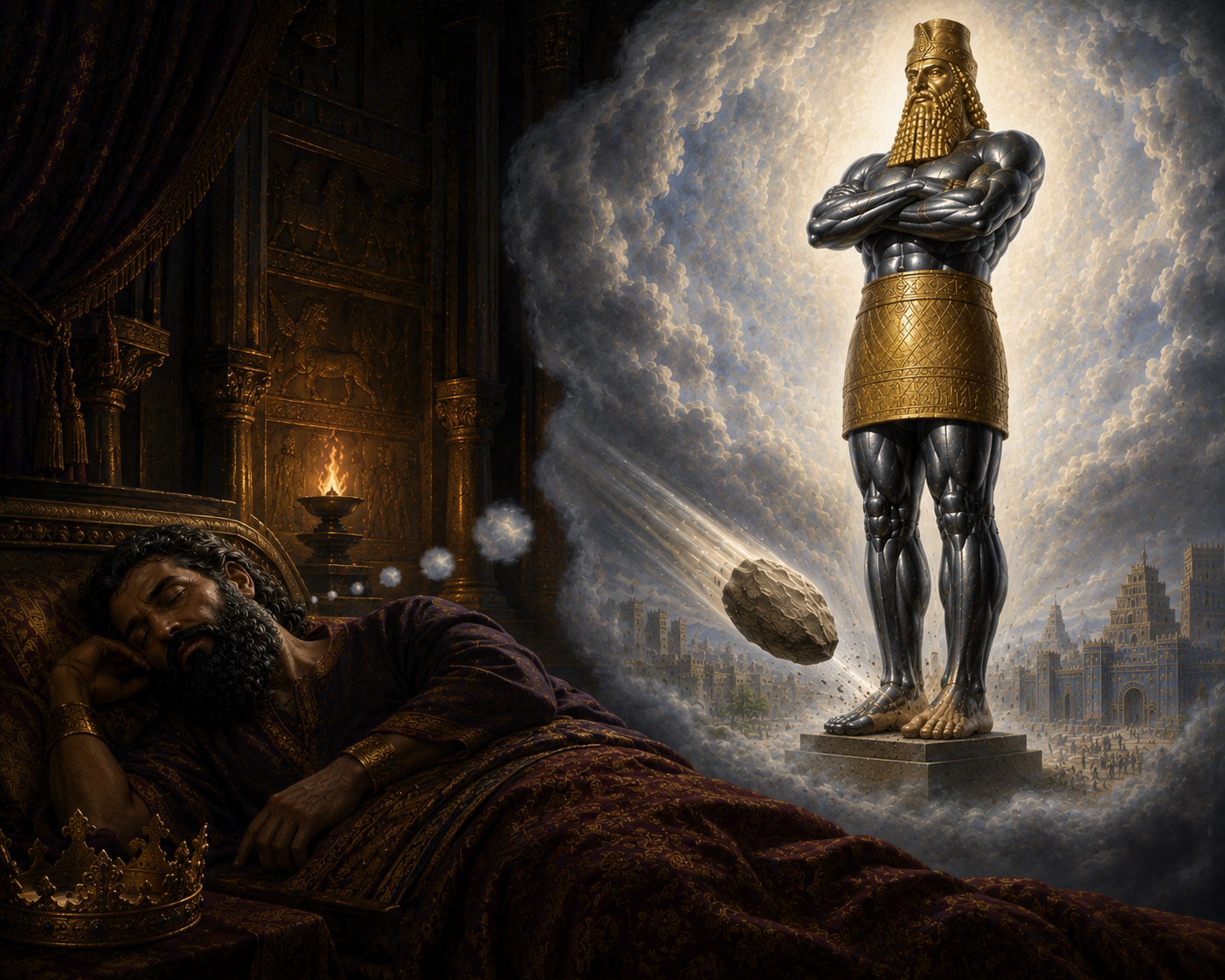
His dream contained an image and was a message to both the pagan leader and God’s people. When Jerusalem was subdued Babylon, a great change was taking place on the world stage. God would no longer rule among men through an earthly kingdom. His throne—the Ark of the Covenant—was to be removed and never returned to the people after their return. No Shekinah glory came to dwell in the second temple once it was built. The Jewish people would not remain independent, and God’s people would no longer be a military power. God’s people would be suppressed under dominant world powers until the end of time—a direct consequence of Israel’s unfaithfulness. Many had been faithful, but even their destiny in the world was negatively affected because of the unfaithful among them. Sin affects not only those who commit it; it also impacts both the good and the bad. They had “killed the prophets, and stoned them which are sent” to them, making it impossible for God to lead them as a people (Matt. 23:37). Daniel, Hananiah, Mishael, and Azariah themselves suffered for the decisions of their people. However, they are also examples of how God cares for His faithful even under worldly and pagan oppression. So, while showing the long period during which God would not have an earthly kingdom, these men testified that God was still willing to move on kings for their sake. These rulers could only go so far before God would bring them down for His people’s sake. They were never abandoned, even though they would live as strangers in many lands under many rulers. In part, this is what Daniel’s vision shows: that God knows who will put pressure on them and how God and His people can stay closely connected through these world events.
The Image
God explained the change of scene with an image of a man composed of different metals, each considered valuable in man’s eyes. In the Bible, an image made of metal that people adored and obeyed was an idol. In those days, pagans and even Israel worshiped gods through images and statues. It was forbidden by God’s law, and especially the second commandment. Showing a metallic human image to represent the different empires was perhaps God’s way of telling them that they had chosen to idolize man over God. The religion of men over the truth. Just as Eve had been deceived by the statement that “ye shall be as gods” to defy God’s law, so will men who reject God’s authority wish to rule as gods themselves. They trust their own understanding of “good and evil” over God’s word (Gen.3:5). Human religious authority that is not in union with God will always be idol worship- even witchcraft: “For rebellion is as the sin of witchcraft, and stubbornness is as iniquity and idolatry” (1 Sam.15:23)
God had criticized Israel and Judah for seeking support and alliance with the pagan nations, even calling it harlotry. Now pagan powers whom they had trusted before their very own God would rule over them.
The statue shown to Nebuchadnezzar was an idol-image of human empires. Powers playing God. Powers dictating people’s conscience and religion. But also powers who manage law and order. Powers that need to be respected and tolerated, yet not in religious matters.
The vision of the present and future is first given to the Babylonian king, him being the head of the idol. God lets him know that what he has begun others will continue, but that they do not defeat him. He rules from heaven and is over any earthly ruler (Dan.4:32). God’s kingdom will rise again, and the image Nebuchadnezzar has set up will one day fall.
Nebuchadnezzar had destroyed the temple and suppressed the people, but he or God’s people was not allowed to think he had won the greater battle. God was not defeated or suppressed. And in His own time, He would restore His kingdom.
Nebuchadnezzar was unable to interpret his dream but understood it was a divine revelation, leaving him with a heavy sense of doom. This was intended by God, so that one of His people could reveal that the vision was from God and not from Babylon’s own gods. If any of the king’s own wise men had been able to explain the dream, the interpretation would have been corrupted, and God’s people would not have received it. By placing King Nebuchadnezzar in a position where he had to hear the interpretation from a prince of Jerusalem, God made it clear which God would one day destroy the human empire.
God was humbling the king of Babylon but also comforting His people, assuring them that the oppression that had begun would one day be destroyed. However, the timeline was much longer than any of them could have guessed or imagined.
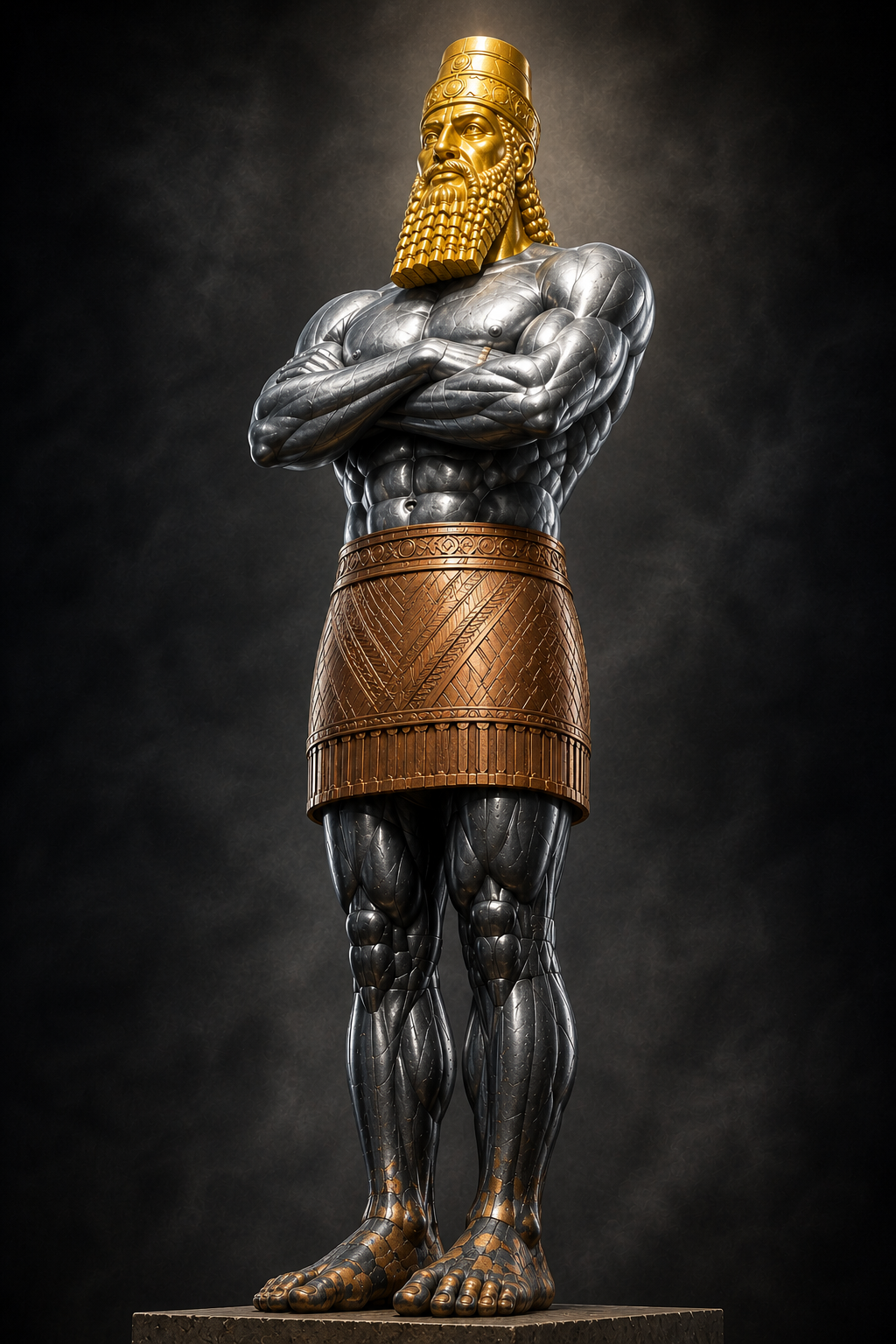
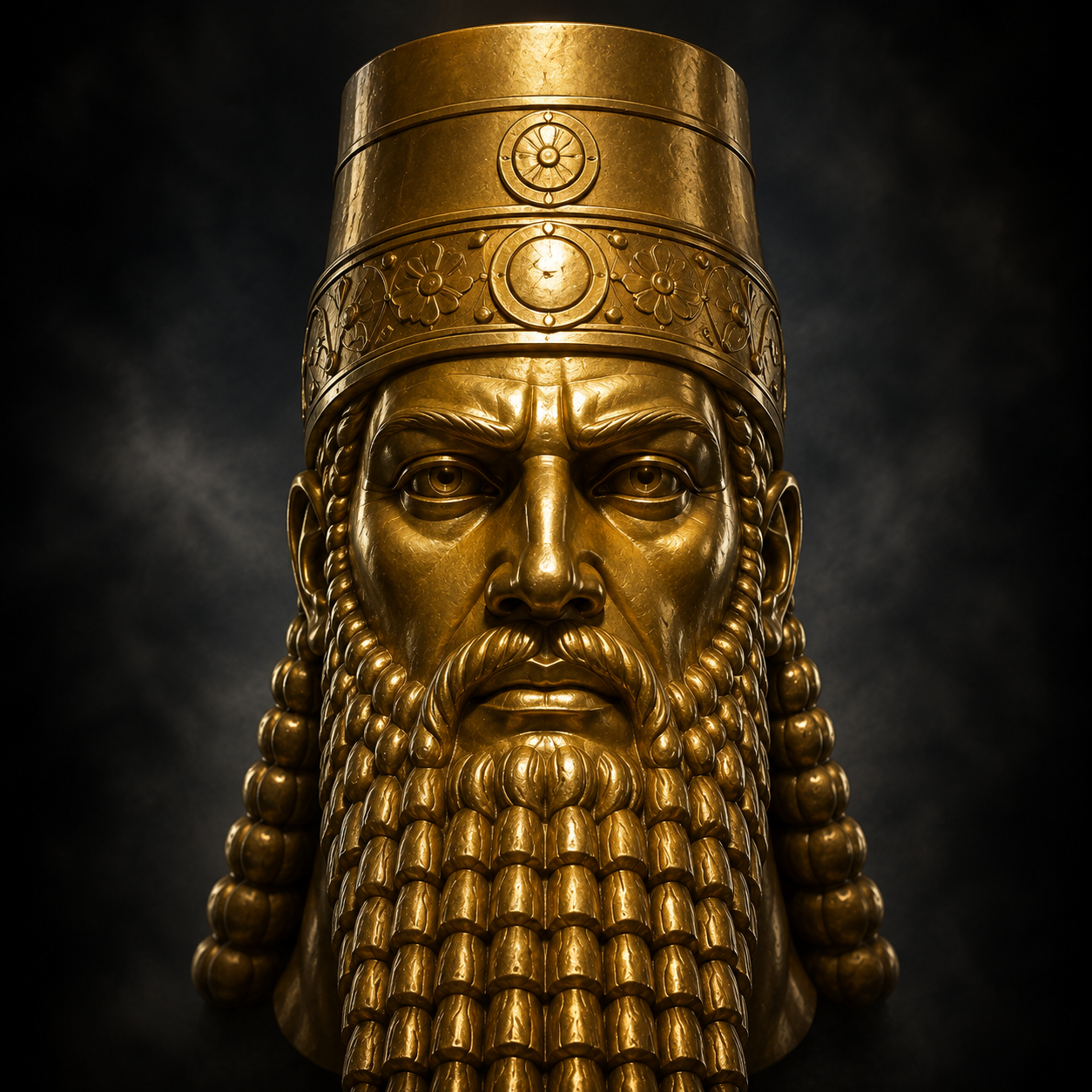
According to the interpretation given to Daniel in a vision, the head represented the Babylonian Empire.
The chest is of silver and represents the Medo-Persian Empire that would bring the Babylonian Empire down.
The bronze skirt represents the Greek Empire, which would defeat the Persian Empire.
The iron legs represent the Roman Empire, which would take down the Greek Empire bit by bit until it stood as the greatest of them all.
The feet, part iron and part clay, represent the Roman Empire divided. These are the European tribal kingdoms that were once a part of Rome.
And as it is explained, in the days of their rule, God will destroy them and establish his own.
This is shown when a rock, “a stone cut out without hands,” hits the feet, causing the whole statue to collapse. The head or the chest does not collapse before the feet are stricken, showing that a suppression begun by Babylon is not fully ended until that day. The statue represents a clean timeline leading up to Christ’s second coming. The stone becoming a mountain is the Kingdom of Christ.
“Was terrible”
The image representing these kingdoms of men “whose brightness was excellent, stood before thee; and the form thereof was terrible” shows how man rules by inducing both people’s admiration and fear. It also depicts an image that imitates God’s glory and power. However, in comparison, God’s power also lies in His great love and mercy. Man has little mercy to offer. God can follow up on His promises, restore, and even recreate, deserving people’s admiration and fear, while human governments act terrifyingly to ensure their own survival.
When David had sinned against God and the nation and understood God would punish him, upon choosing his punishment, “David said unto Gad, I am in a great strait: let me fall now into the hand of the LORD; for very great are his mercies: but let me not fall into the hand of man” (1.Ch.21:13)
God then sent a plague upon the land, but just as David had predicted, God cut it short in mercy.
When the plague was still heavy on the people, and David saw the destroying angel standing over the city, he pleaded with God, and God told him to build an altar in the “threshingfloor of Ornan the Jebusite” (1.Ch.21:18)
“And David built there an altar unto the LORD, and offered burnt offerings and peace offerings, and called upon the LORD; and he answered him from heaven by fire upon the altar of burnt offering.
And the LORD commanded the angel; and he put up his sword again into the sheath thereof” (1Ch 21:26-27)
This was the very place the temple of God was later constructed. When David had said it would be better to fall in God’s hands because of His mercy, it was fulfilled as his faith was. The punishment weighed heavily, but God’s mercy indeed mitigated it. The sacrifice was a symbol of Christ’s death for humanity, and how He could bring about peace between the sinner and God.
Nebuchadnezzar sees the image in his dream as “dreadful”, yet God would, in the middle of these kingdoms, send Christ to redeem His people. Had they received him, their sins would have been blotted out and the falling into “the hand of man” would be shortened by the sacrifice of God. But as God’s people continued the rebellion, the vision was certain and would not change; God’s people would remain suppressed by earthly governments until Christ’s second coming.
The rule of man playing God will, in part, show strategic mercy from time to time, but in the end, as the book of Revelation shows us, they will show no mercy at all upon God’s people in the end. Even hindering them from buying and selling, even killing them, if they do not obey the government in religious matters. And God will meet their privation of mercy towards His people with the removal of His mercy from them.
“He removeth kings”
When God had revealed the same dream Nebkadnezzar had to Daniel in a vision, he exclaimed: “Blessed be the name of God for ever and ever: for wisdom and might are his: And he changeth the times and the seasons: he removeth kings, and setteth up kings…” (Dan 2:20-21)
Although God allows man to subdue his people, He does not abandon them. God has a time limit for each ruler. By replacing the kings, God also changes the climate of these worldly empires. By giving the empires their natural enemies, the pressure is taken off God’s people when it is too great for them to bear. He would also ensure they were always able to
Babylon would not let Israel go to rebuild the city or temple. In the midst of their suppression, God allows another empire to grow strong, challenge Babylon, conquer it, and cause Israel to return to the land.
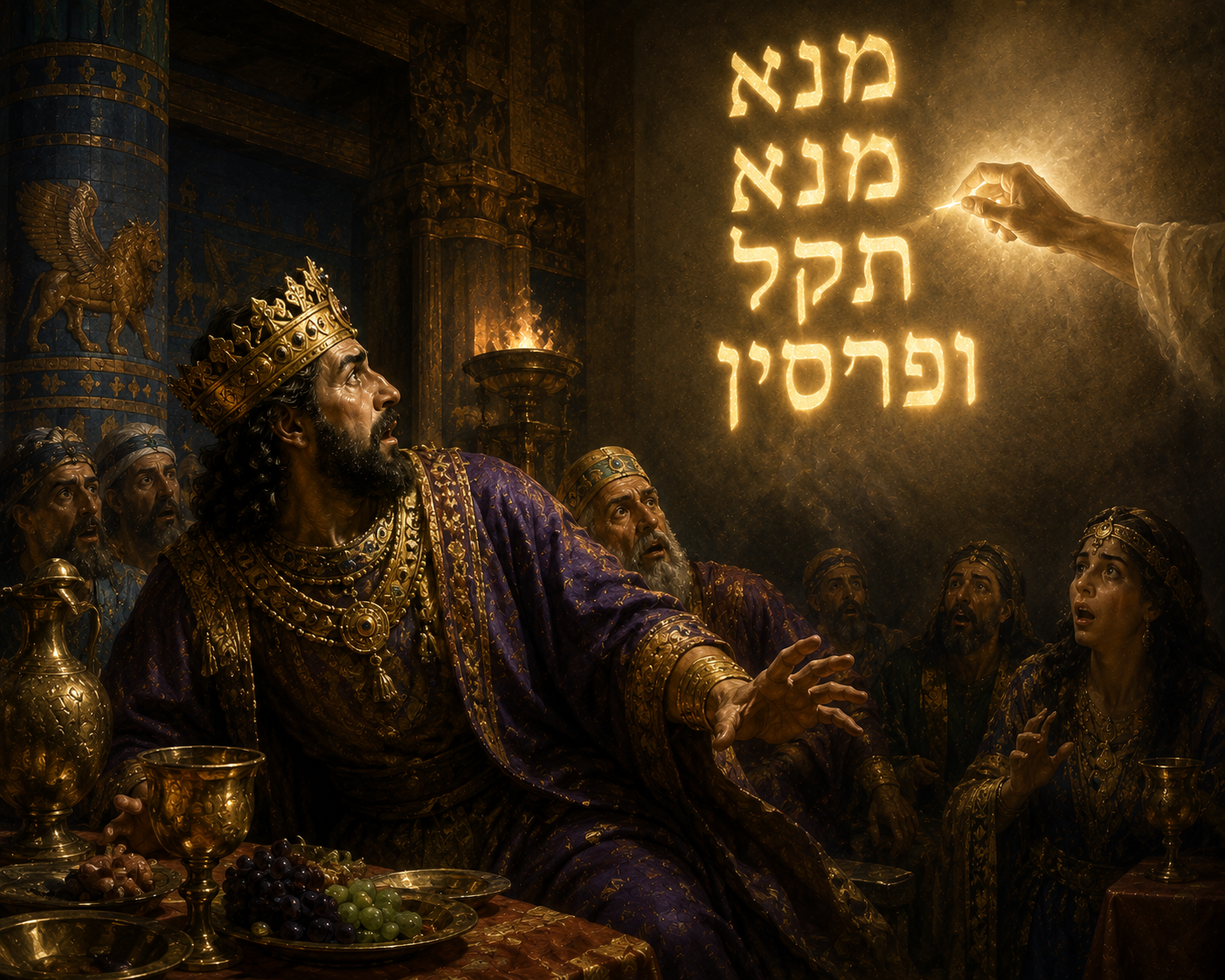
Although not granted independence and remaining under the Medo-Persian ruler, they had room to breathe. Medo-Persia allowed them to return and rebuild the temple and the walls. This gave them a feeling of independence and hope under the suppression.
Then God allowed the Greeks to bring down the Persian Empire. However, Jerusalem continued to struggle under the Greek empires around them. The Seleucid king would come and desecrate their temple and humiliate them. The conflicts between the southern and northern Greek empires exhausted God’s people.
Then God allowed Rome to bring these kingdoms down. Jerusalem was first a Roman province but later ended in war with God’s people. When Rome began heavily suppressing God’s people, God made sure Rome fell as well.
The final stage of the image suppressing God’s people was the feet, representing a divided Rome—its strength broken and mixed with clay. Although this did not end the suppression, it would at times bring temporary relief to God’s people and provide places for them to worship in peace.
“And as the toes of the feet were part of iron, and part of clay, so the kingdom shall be partly strong, and partly broken” (Dan 2:42)
With the message, God tells Daniel that the kings of the world are not all-powerful; God will interfere when necessary. He has taken away his earthly kingdom, but would continue to work from His throne in heaven to protect and help His people during their suppression and until He would free them. His people were not defenseless, and they could pray for deliverance.
The Image as a test
Nebuchadnezzar, although intimidated by his own dream and its interpretation, defied God by making a large physical image, the whole image clothed with gold. In the dream, only the head was of gold, but now, to show his kingdom as invincible and eternal, Nebuchadnezzar made a golden image into a test of loyalty to the empire and to himself. The image, if using the Neo-Babylonian cubit, would be 30 meters high (60 cubits) and 3 meters wide (6 cubits).
“Then the princes, the governors, and captains, the judges, the treasurers, the counsellors, the sheriffs, and all the rulers of the provinces, were gathered together unto the dedication of the image that Nebuchadnezzar the king had set up; and they stood before the image that Nebuchadnezzar had set up.
Then an herald cried aloud, To you it is commanded, O people, nations, and languages…whoso falleth not down and worshippeth shall the same hour be cast into the midst of a burning fiery furnace” (Dan.3:2-4 & 6)
Nebukadnezzar had not been told which kingdom would be next; to be sure, he called everyone to bow to an image representing Babylonian authority and to show allegiance to its continued and eternal existence. Perhaps he had hoped to single out a potential uprising. But instead, three Jewish men, his own elected leaders, were those who refused to bow down. They were “set over the affairs of the province of Babylon, Shadrach, Meshach, and Abednego” (Dan.3:12)
Nebukadnezzar immediately called for them and said: “Do not ye serve my gods, nor worship the golden image which I have set up?” (Dan.3:14) He then gives them one more chance to comply, but they refuse his offer and remain faithful to the very God that had told Nebukadnezzar his kingdom would one day fall.
The king got very angry and had them thrown into the furnace, where God delivered them, showing a powerful move unlike any other. The Son of God walked with them, and none of the men were hurt or even burnt while in the furnace. This reminds the Babylonian king of the same God who would one day rule.
The story is a mirror of the end-time conflict, in which an image is set up by “a beast,” which also demands loyalty to a governmental religious decree. At that time Jesus will come to deliver His faithful once again.
The conflict in the end times and the setting up of Nebuchadnezzar’s image mirror each other. They both demand loyalty to an earthly kingdom that defies the kingdom of God and puts the world to a test of loyalty. The image was, then and in Revelation, a combination of state power and religion. Through this image, the only way to show loyalty to the state was to also “serve the gods” of it. But also to give a religious veneration to a symbol of state power.
The measurement for Nekukandezzar was also a defiance of the God who had given him the vision. In Babylonian culture, the number 60 was the sacred number of the sky god Anu. He was considered the one from whom all the other Babylonian gods came. In good Neo-Babylonian style, likely all the Babylonian gods were represented upon the image.
The four beasts of the image
Later, Daniel sees these empires shown in the great image once more, now as individual beasts, with more detail about their identities, times, and destinies. He receives this follow-up vision during the last king of Babylon’s rule. God’s people were at that time eagerly and desperately longing for the end of their captivity. But they were not to expect complete freedom.
The Great Sea
“Daniel spake and said, I saw in my vision by night, and, behold, the four winds of the heaven strove upon the great sea” (Dan 7:2)
Here we see a geographic point of the coming empires to the great sea, with God’s land in the center, being the Mediterranean Sea. Although not all the empires lie by the sea, they all conquer God’s land to claim the power of this sea. The Mediterranean is not the largest ocean, but it was the most influential, as all the great early civilizations used it. It was the border sea of the three tribes of Noah. But also the east coast, the border of the land of God’s people. In Revelation, the sea is a metaphor for the center of world authority: “And he saith unto me, The waters which thou sawest, where the whore sitteth, are peoples, and multitudes, and nations, and tongues” (Rev 17:15).
Wind in the bible is a symbol for conflict and strife (Rev.7:1).

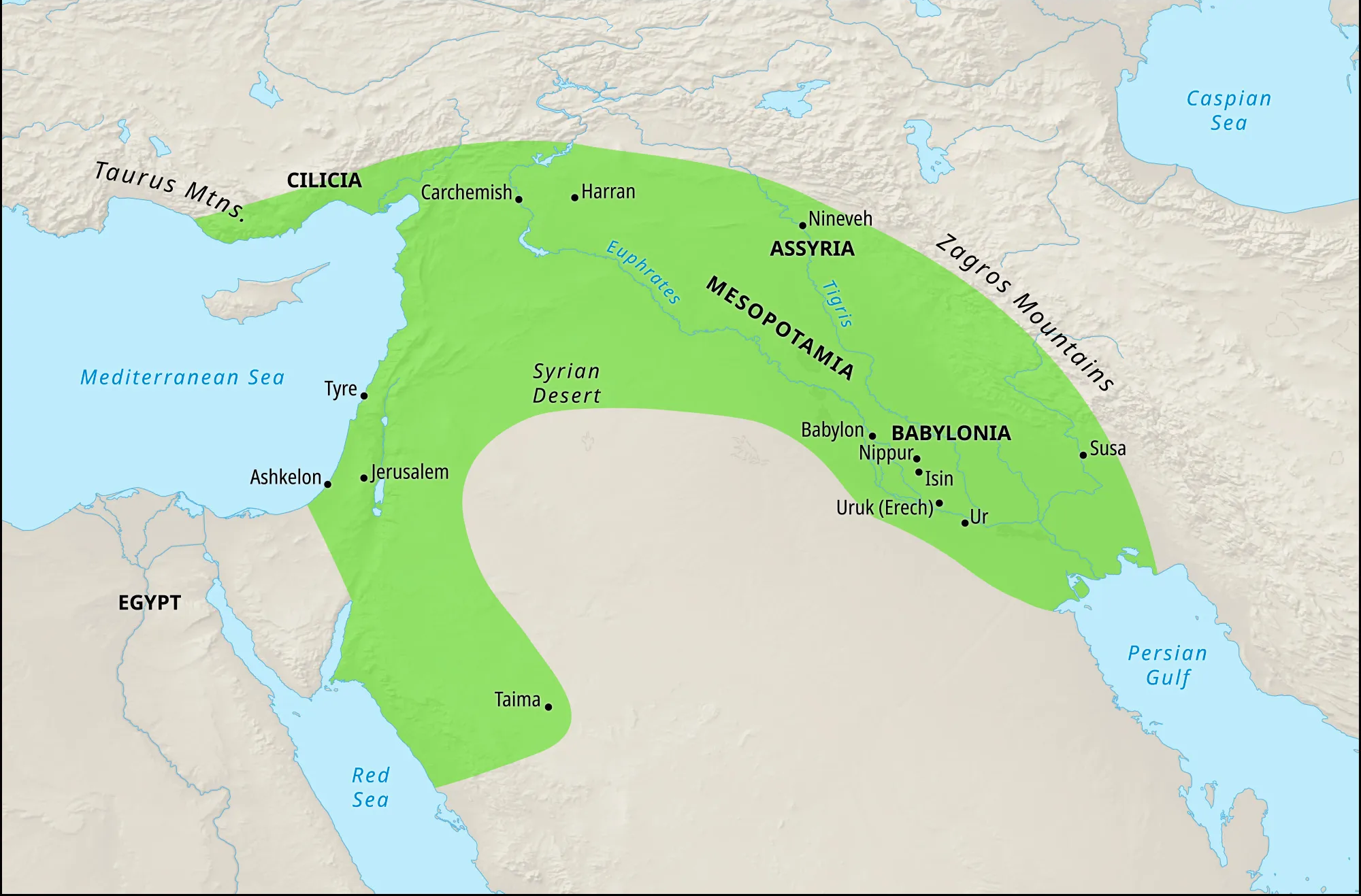
For Babylon, taking the cities of the Levant meant controlling lucrative maritime trade. Being a city between two rivers, extending their empire to the sea was important to become great. And not until they did could they be the powerful empire they became. The cities and kingdoms there were often a good source of tax and tribute. Controlling Syria and the Levant created a buffer against Egypt, Babylon’s great rival. And it provided them with security and important trade routes.
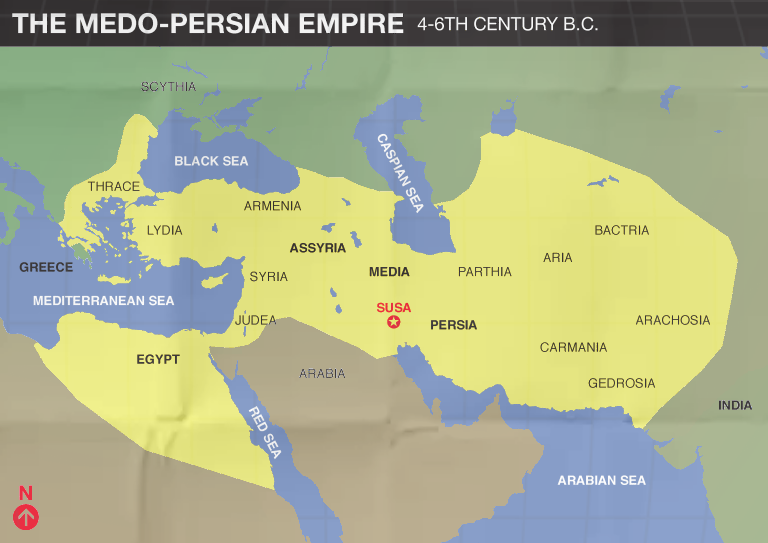
For Medo-Persia, another nation that did not initially lie at the Mediterranean, taking the territory at its coast connected Persia to the richest trade networks of the ancient world. Control of ports meant access to taxes and commerce. By controlling Phoenicia, Palestine, Egypt, and Asia Minor, they could prevent enemies from using the coast to attack the empire. The empires they then feared could challenge them were all to the west of them. Not being a naval power itself, it relied on connecting to those who were.
Holding the Mediterranean coast gave Persia bases and fleets to invade Greece under kings like Darius I and Xerxes I.
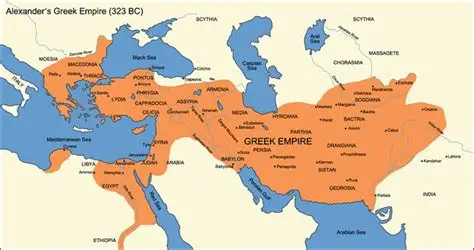
For Greece and Alexander the Great, the Mediterranean was their home. Before invading the Persian heartland, he secured the eastern Mediterranean coast, depriving the Persian navy of its bases by taking cities such as Tyre, Sidon, and Gaza. Holding the Levant also protected his route to Egypt and prevented Persian counterattacks. The Mediterranean coast became the western backbone of an empire stretching from Greece to India. A famous example is the siege of Tyre (332 BC). Alexander spent months capturing the island city because, as long as Tyre remained in Persian hands, it was a major naval base threatening his campaign. So, like Babylon and Persia, Alexander valued the Mediterranean for trade, wealth, and security.
When the Greek Empire divided, the two strongest remaining empires constantly struggled for power along the coast. The southern Ptolemaic Kingdom sought to protect Egypt, dominate trade, and hold Cyprus, Phoenician ports, and, frequently, Coele-Syria, and maintained a strong navy.
The north-eastern Seleucid Empire secured the Mediterranean coast for trade, taxation, and access to the sea from Mesopotamia.
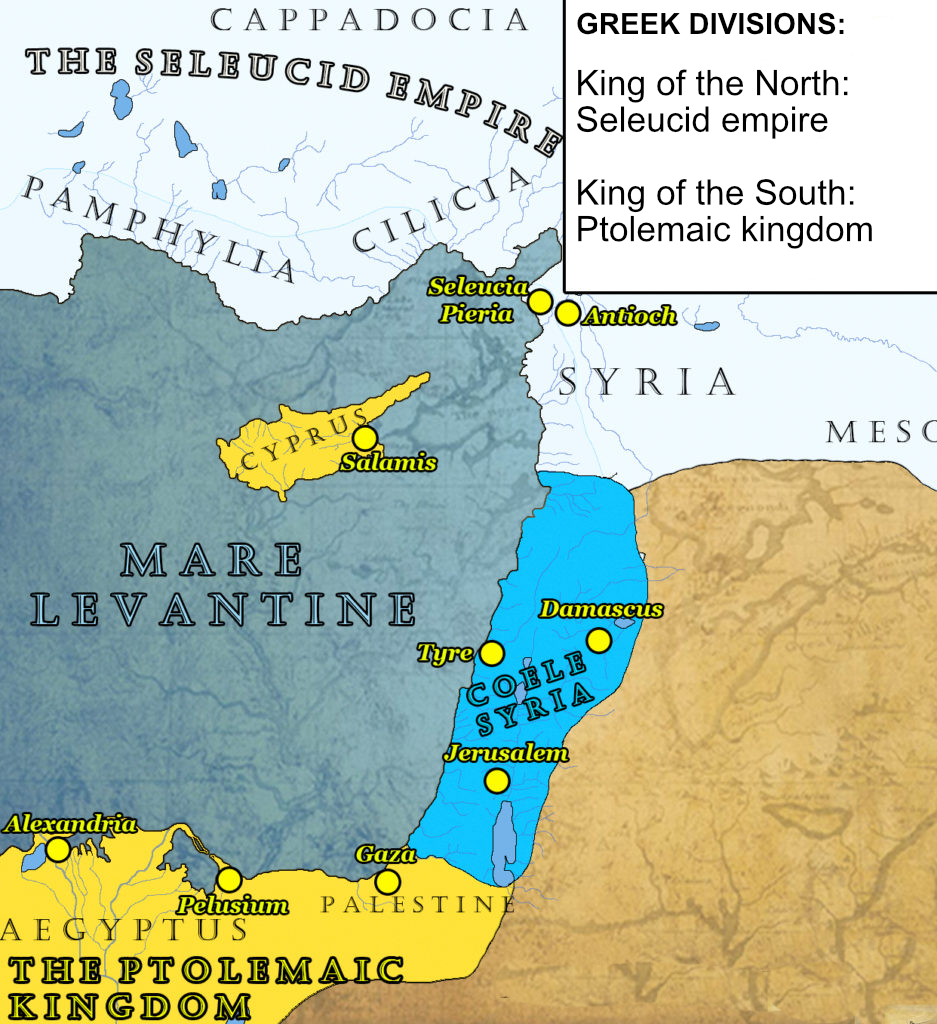
Their greatest rivalry was over Coele-Syria (roughly modern Israel, Lebanon, and southern Syria), because it connected Egypt to Asia, had wealthy cities and ports, controlled the main trade and military routes, and served as a buffer against invasion. This rivalry led to the Syrian Wars (six major wars, c. 274–168 BC). Or, as the Bible calls it later in Daniel chapter 11, the conflicts between the King of the South and the King of the North, leaving God’s people in the middle of this conflict.
For Rome, the Mediterranean became the center of its entire empire. At first, Rome was simply one city in central Italy, but as it expanded, controlling the Mediterranean became essential for its survival and prosperity. Although Rome was small and weak at the beginning, as it began expanding its territory, the turning point came with the Punic Wars against Carthage. Rome realized that whoever controlled the Mediterranean controlled everything. By defeating Carthage and later the Hellenistic kingdoms, Rome became the dominant Mediterranean power. It expanded eastward into Asia Minor, Syria, and Egypt. The Mediterranean became the empire’s highway. Sea transport was far faster and cheaper than roads. Once Rome had brought down the Ptolemaic Kingdom in Egypt, it became the main source of grain to the Roman cities and even the capital. The Romans called the sea: Mare Nostrum — “Our Sea.”
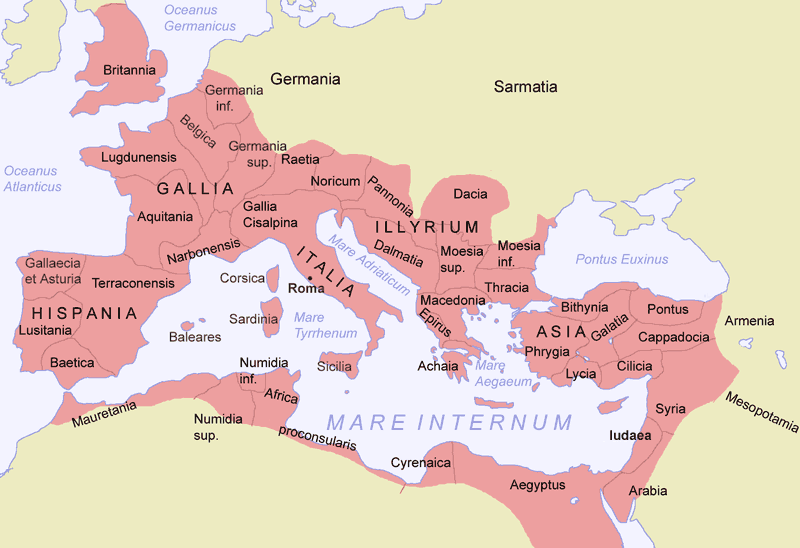
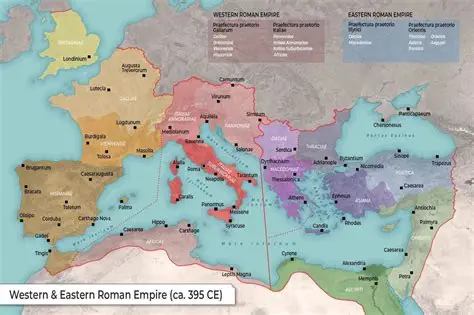
- Babylon wanted access to the Mediterranean, which is why they secured Judea and Jerusalem.
- Persia wanted to control its eastern coast, which is also why they took God’s land.
- Alexander conquered it to destroy Persia and unite his empire, which is why he took God’s land.
- The Ptolemies and Seleucids fought over its eastern gateway, both wanting God’s land because of its placement.
- Rome eventually enclosed the entire Mediterranean, making it the economic, military, and administrative heart of the empire. This made it impossible for God’s land to escape its future as a Roman province.
When Rome was divided, so was the power over the sea. However, the divided empire would continue to strive for the territories east of the Mediterranean in pursuit of trade superiority, access to Asia, and control over religious sites, which had also become matters of trade and power. It remained the center desired up until our own time, where the divided kingdoms still roam this very sea and whose access remains the cause of wars. When control of the eastern Mediterranean shifted to the Ottomans, it prompted Western European powers to look to the Atlantic and expand there. But the desire was constantly to bring the Ottoman Empire down and reclaim the territories. A part of history the Bible deals with, and what happens when they succeed, as we will see when we look into every detail of the prophecies.
It’s important to note that the center of the coming kingdoms in Daniel 7 is not the geographical point of Babylon in Iraq, but the sea and its relevance to God’s people and their suppressors until the very end of time.
The verse says, “and, behold, the four winds of the heaven strove upon the great sea,” explaining that the strife does not come from simply one geographical point but from several: east, north, south, and west, which is consistent with what we do see. Babylon and Medo-Persia came from the east to strive for the sea; Greece came from the west; its divided kingdom came from all directions, north, west, south, and east. And Rome came from the west. The focus point is they “strove upon the great sea”. The double meaning being wars between “peoples, and multitudes, and nations, and tongues” and the geographic center of the conflict itself.
A theme the Bible brings us full circle to in the book of Revelation, where the fall of Babylon is said to be the fall of the trading network on the sea. Being that Babylon became ruins many tens of centuries before, it is, of course, speaking of the end of the feet of the image, of which Babylon was said to have been the head.
“And the kings of the earth, who have committed fornication and lived deliciously with her, shall bewail her, and lament for her, when they shall see the smoke of her burning…Standing afar off for the fear of her torment … And the merchants of the earth shall weep and mourn over her; for no man buyeth their merchandise any more … For in one hour so great riches is come to nought. And every shipmaster, and all the company in ships, and sailors, and as many as trade by sea, stood afar off …And they cast dust on their heads, and cried, weeping and wailing, saying, Alas, alas, that great city, wherein were made rich all that had ships in the sea by reason of her costliness! for in one hour is she made desolate” (Rev.18:9-18)
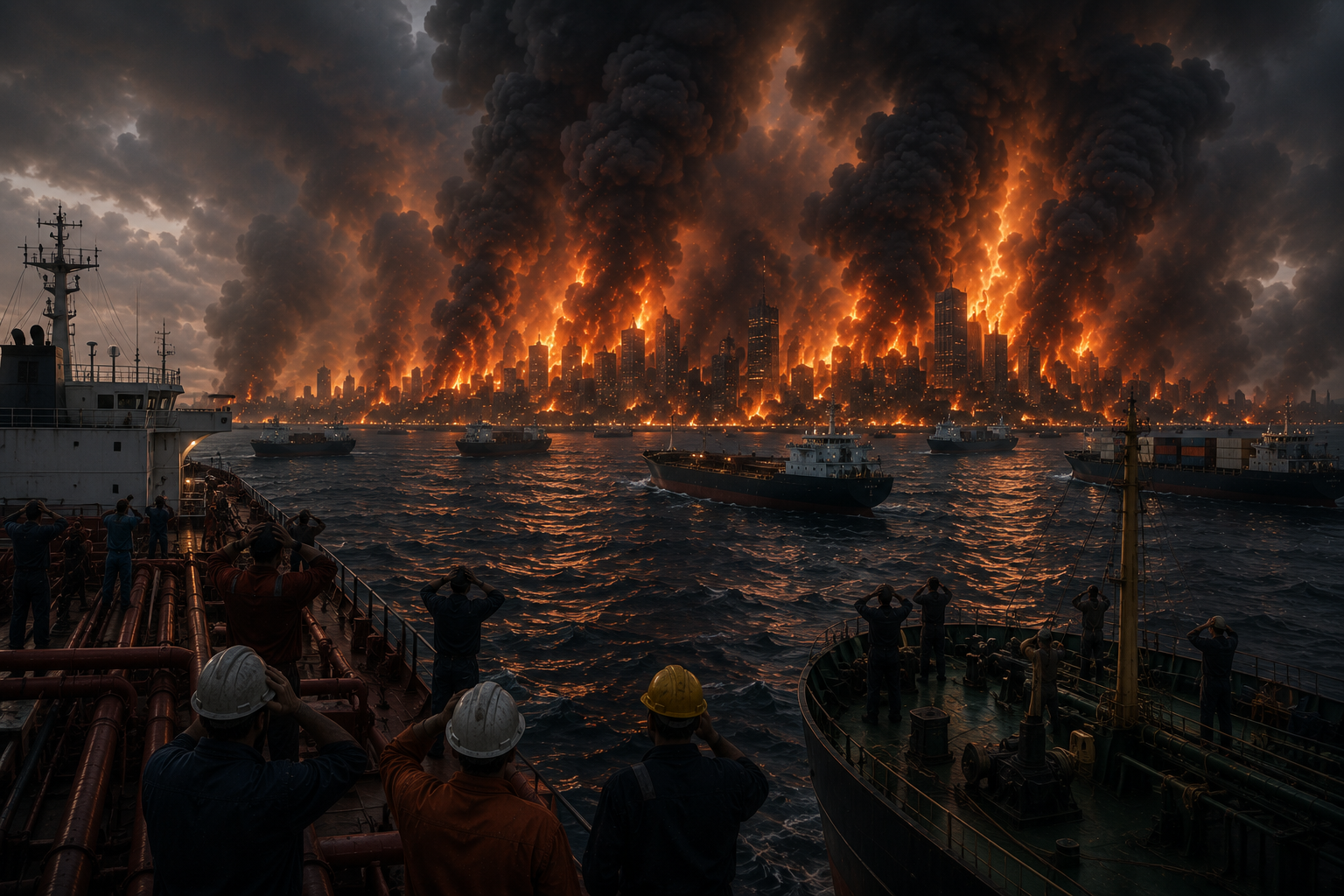
Giving us a hint that the source of its power is in trade, in controlling trade, and its collapse losing that power. Although in the end times “Babylon” is on all seas, it points back to the time when the place to be was around the Mediterranean.
FOUR BEASTS:
“And four great beasts came up from the sea…” (Dan 7:3)
God does not give us room to misunderstand the meaning of the beasts. The angel gives us the interpretation: “These great beasts, which are four, are four kings, which shall arise out of the earth” (Dan.7:17) And: “The fourth beast shall be the fourth kingdom” (Dan.7:23) And about the end of the beast’s rule: “the saints of the most High shall take the kingdom…” (Dan.7:18) making no mistake that a beast is a metaphor for a kingdom, a territorial dominion or as we also call it today, a government.
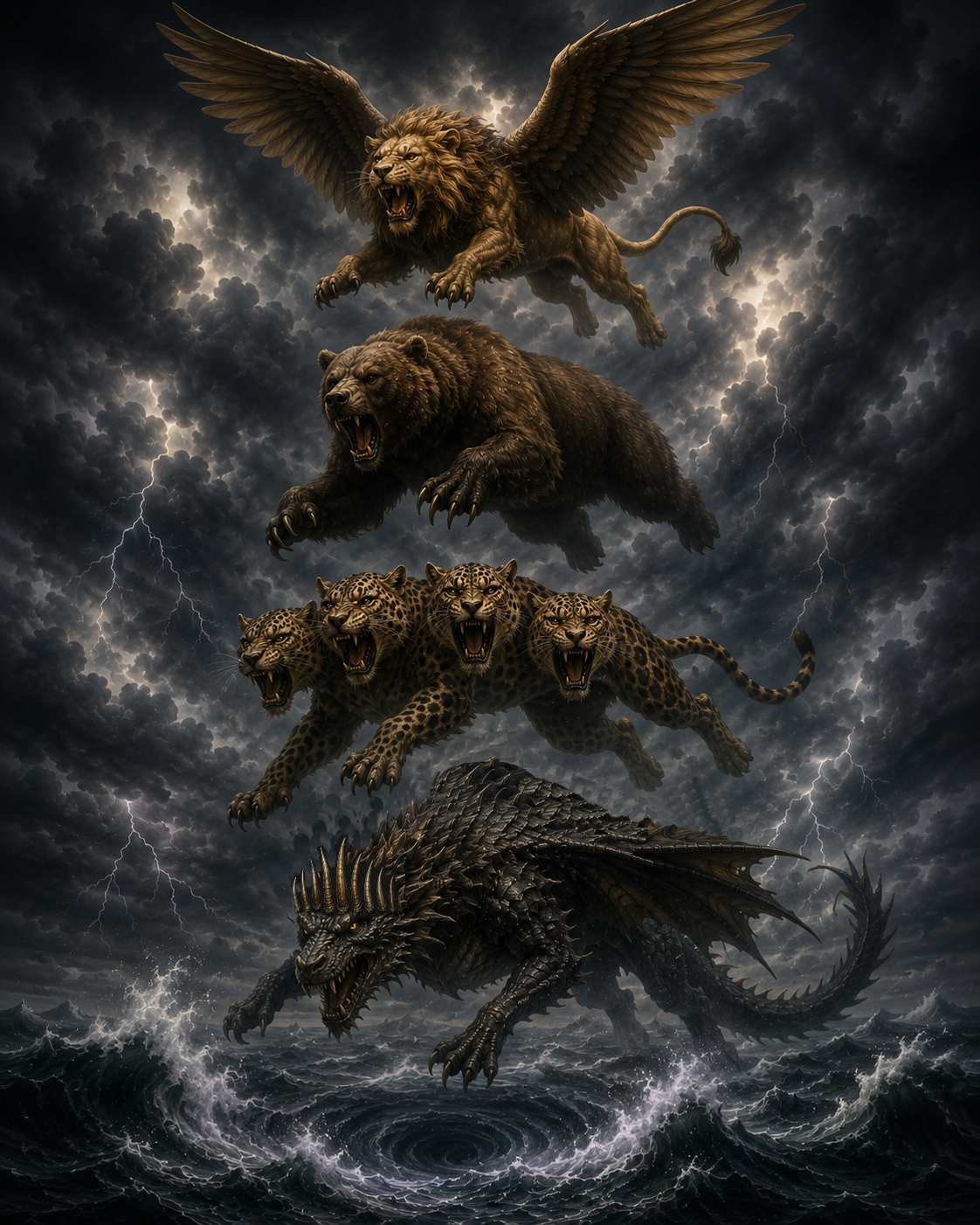
In the first vision, the same empires are body parts of an image of a man, pointing to idol worship and to how it is manifested through their governments. In the past, the leaders all claimed to either represent a god or to be a god on earth. That is consistently what all of the empires God shows did. They make their government into an idol.
In the next vision, God reveals the kingdoms as beasts. God does not call humans animals, but he likens their governmental institution to beasts.
God may do this for several reasons. It shows how the specific human behavior through these empires is seen from heaven. Just like worshiping God makes you adopt His values, so is the case with pagan gods.
All the beasts God compares the earthly empires to are territorial and carnivorous. They are dominant in their territories; they act on impulse and instinct for their own survival – they don’t show pity or mercy if they are under threat. When a beast feels fear, it attacks; it attacks in anticipation or out of worry, without being attacked first. A carnivore is selfish in nature.
Man was created in the image of God. Still, when rejecting God’s rule and trying to be gods themselves by creating their own laws, judging by them, and demanding worship, they began to exhibit the behavior of lower creatures. Many went from being in the likeness of God in character and purpose to becoming in the likeness of a beast’s character.
Man was called to rule over the beasts, but here we are presented with beasts ruling over man (Gen 1:28; 9:2).
In the portrayal of the suppressing powers as beasts, God gives us an insight into His heart for His people and their situation. Everything He had wanted to do for and with them was ruined by their distrust and desire to resemble other nations. And so, ruled by other nations is what they ended up with instead. His desire to restore and save them all lies in Him comparing these empires with beasts.
Humans do not always know their own good, and we often make decisions we think will give us good things and help us prosper, only to end up stuck in a spiral of negative fallout and suppression. In a moment of anger, jealousy, and a desire to be something great in the world, the leaders of Judah said to Pilate:
not Jesus “but Barabbas” and “We have no king but Caesar” (Mat 27:21, Mark 15:11, John 19:15). Choosing a murderer and even a pagan king over their creator. The man who had healed their illnesses and brought them dignity as human beings was rejected because they desired worldly glory. Often we cheaply sell what is of true value for materials that perish, like gold, silver, bronze, iron, and even clay. This degrades us and God’s purpose for us. Giving in to passion or ruling over our passions determines our destiny. Either we become like beasts, or we are restored to the image of God.
Territorial beasts exhibit behavior guaranteed to lead to constant strife. By rejecting God, God’s people would be suppressed by such beasts. God consistently uses beast imagery to depict governmental superpowers in the New Testament book of Revelation. This brings them to that great final conflict, with man having to choose between the name and seal of God or “the mark of the Beast” and “the image of the beast”. As the world is coming to its end, God extends His arms one last time for humanity to choose Him as their King before all the earthly kingdoms perish. But the Bible tells us even then, people, by their great desire for prosperity and the things of this world, out of fear of standing out, will close their eyes to their own danger and their own end and optimistically seek salvation through deprived leaders of a deprived government.
Who are the four beasts?
“And four great beasts came up from the sea, diverse one from another” (Dan 7:3). Although the first vision given to Daniel was an image of a man and all the empires shown as body parts from head to toe, in the second vision Daniel sees them as diverse from one another. Although they all similarly represent the kingdom of man and continue Babylon’s behavior and conduct, they are not the same power, culture, or religion. They are “diverse one from another”. Even though Greece and Rome shared similar cultures and religions, they differed in what they did and who they were. The Babylonian religion, although different, shared the same foundational beliefs. The elements of nature represent or are the gods. No power of the four was the same. However, their desires for world superiority were driven by the same passions. Just as a lion, bear, and leopard are very different, they all share the same main behavioral traits.
The first three beasts are identified by name in other chapters in Daniel. Jesus identifies the final beast as Rome by referring to the book of Daniel, giving us a biblical interpretation of the identity of all four kingdoms.
The first three beasts are given equal time and amount of description, while the fourth beast is explained in much more detail. This matches the length of their rule: the fourth beast would dominate for longer than all the other three combined. Its crimes would be greater and more severe, and it would interfere with God’s people for a much longer time. The reason the divided kingdom of the fourth beast takes so long to fall is a fascinating subject we will explore in another chapter.
When Daniel received the vision of the four beasts, the Babylonian empire was in its final stage and not much of a future threat in the world scene; the two next empires, the Medo-Persian and Greek, would be more dominant in the future, but on the bigger time scale, their time too was small compared to the coming fourth.
The Neo-Babylonian Empire lasted almost 90 years (626–539 BC)
The Medo-Persian Empire lasted over two hundred years (550–330 BC)
Alexander’s united empire lasted only a little over a decade (336–323 BC), but the Greek divisions continued for even longer than the Medo-Persian ones.
With a focus on the two strongest Greek kingdoms that lasted the longest, the Seleucid Empire lasted 249 years (312–63 BC), and the Ptolemaic Kingdom lasted 275 years (305–30 BC).
In comparison, the Roman Empire itself lasted over 500 years (27 BC – AD 476) and, if counting from when Rome began suppressing God’s people, as the Bible does, in 63 BC, even longer. Its divided remnant kingdoms (horns) are still among the greatest powers then and till today. Which then makes the Roman beast span in relevance for well over 2000 years. Making it, therefore, the main focus of the vision of the fourth beast and its horns. And mostly the only focus of Revelation, a book written during the Roman Empire’s peak. As this beast would affect more of God’s people for the longest time.
- Neo-Babylonian Empire: 87 years
- Medo-Persian (Achaemenid) Empire: 220 years
- Alexander’s Empire: 13 years
- Seleucid Empire: 249 years
- Ptolemaic Kingdom: 275 years
- Roman Empire (West): 503 years; From Rome took Jerusalem: 538 years.
THE LION: BABYLON
Dan 7:4 The first was like a lion, and had eagle’s wings: I beheld till the wings thereof were plucked, and it was lifted up from the earth, and made stand upon the feet as a man, and a man’s heart was given to it.
The first beast, Babylon, is the lion, the king of beasts, strong and dominant. In the vision, it has eagle’s wings, making it even a greater threat, showing superior strength and speed. The lion is a superior carnivore on the ground, but the eagle is a superior carnivore of the air. Combining the two makes a superior beast.
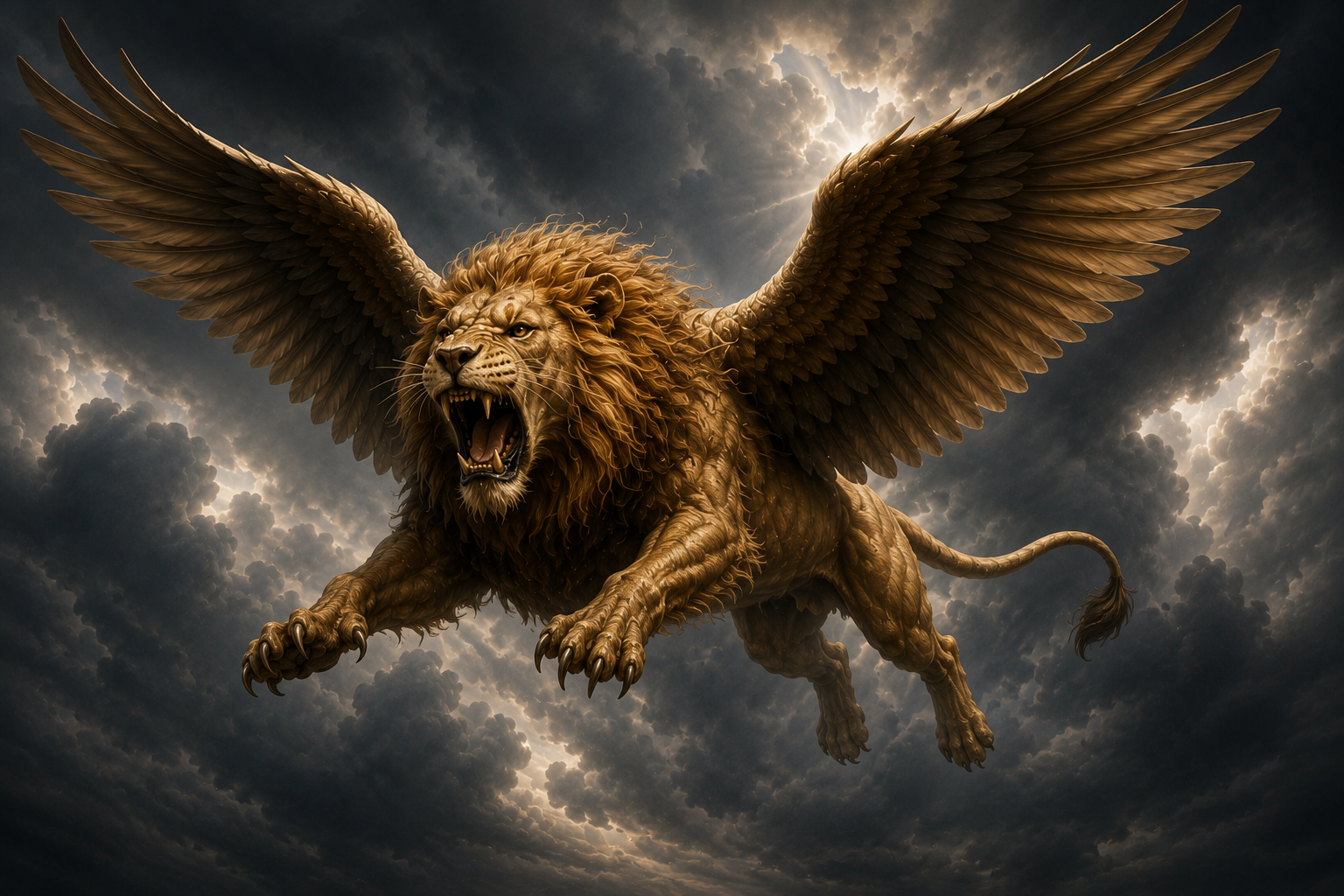
By choosing the symbol of a lion, God was not trying to keep a secret who this beast was. The lion was an adored Babylonian symbol and was depicted all along the processional street leading to the city gate. They greatly admired the animal. Babylon itself loved using winged animals as protective or divine creatures. Their divine protector, Lamassu, a continuation of the ancient Sumerian goddess, was sometimes a winged bull and other times a winged lion.
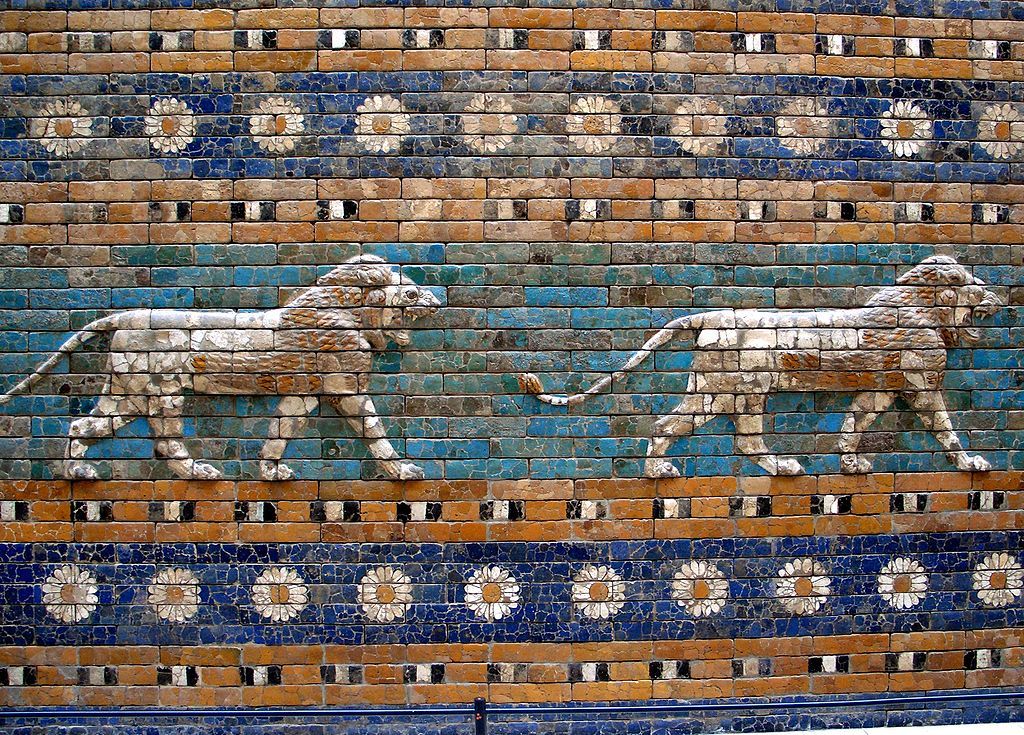
Their main goddess, Ishtar, was associated with the lion. Ishtar’s cult was central to the Babylonians. She was worshiped as the Mistress of Heaven, protector of the city, and a goddess whose favor was sought for both fertility and military success.
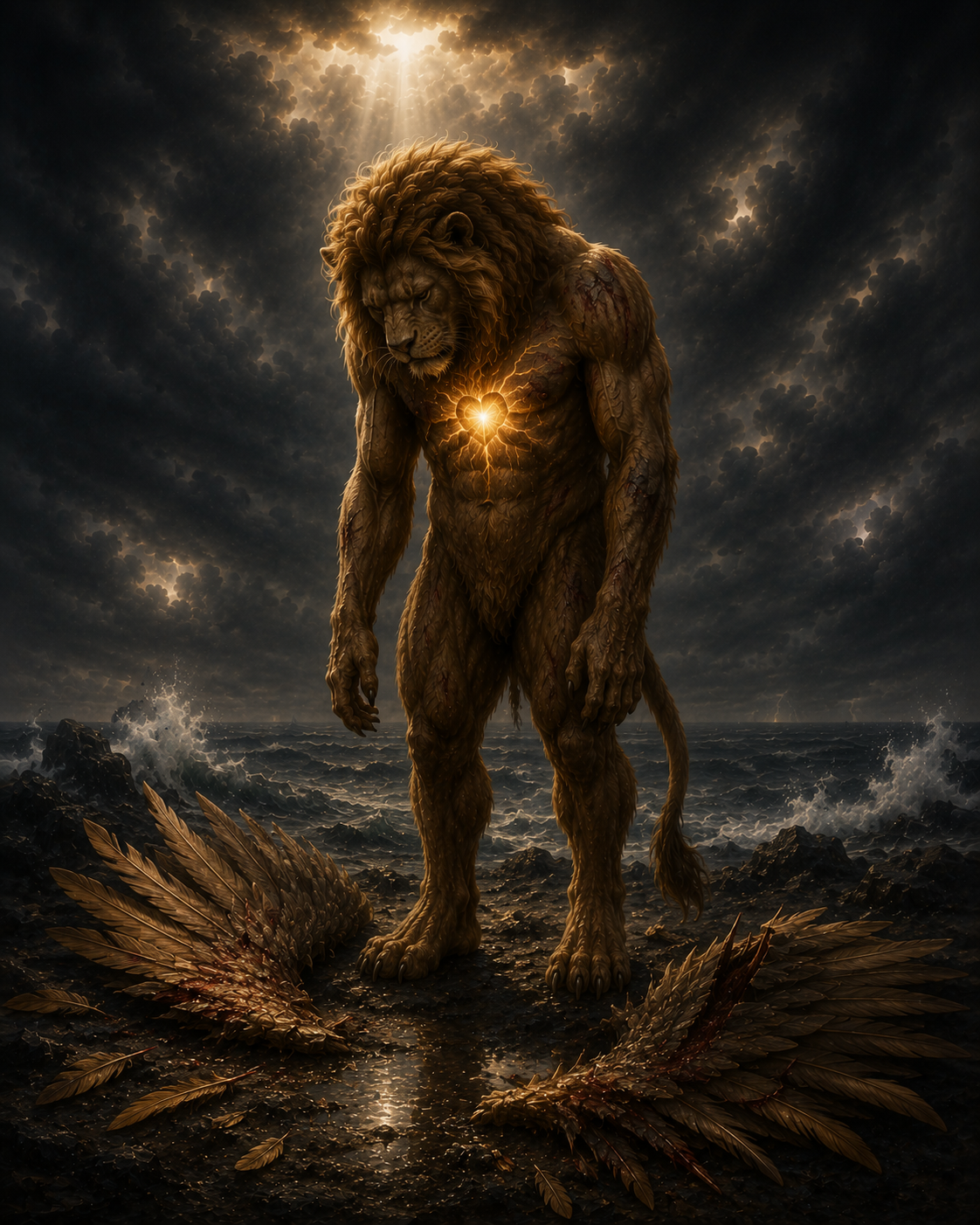
In the vision given to Daniel, he sees this powerful creature change to a less frightening being. The lion ends up standing upright like a human, showing that Babylon’s decline and fall occurred in its weakest state. Anatomically, a lion becomes less stable and less powerful overall when it stands. A “man’s heart” shows a shift of the kingdom’s driving force, from an unpredictable territorial beast to a man following his heart’s pursuits.
As the Bible explains the downfall of Babylon in chapter five, we see its king living in luxury, feasting and drinking while praising his wealth and the conquests of the former king, and carelessly mocking God, unaware that the Medo-Persian alliance was right outside the walls of the city, ready to bring it down. A lion would never sleep under threat. Humans fully do. And so Babylon, by God’s design, was brought down while it was at its most careless pleasure-seeking state. Their fall was not tied to being overpowered and exhausted by countless wars, as with other empires. Rather, their instability stemmed from internal conflicts over politics, festivals, and religion. Then, in one night, the city fell prey to another empire.
Babylon would later be destroyed and, by God’s prophecy, would never be an inhabited city again; the Babylon mentioned in Revelation refers to the new Babylon, the final beast and its horns. And in the days of these kingdoms Christ would return, and Christ explains the human condition at that time fairly similar to that of Babylon’s final days. “And as it was in the days of Noe, so shall it be also in the days of the Son of man. They did eat, they drank, they married wives, they were given in marriage, until the day that Noe entered into the ark, and the flood came, and destroyed them all. Luk 17:26-27)
Even God’s own fallen-away people will behave similarly unprepared for the event: “But and if that evil servant shall say in his heart, My lord delayeth his coming;
And shall begin to smite his fellowservants, and to eat and drink with the drunken;
The lord of that servant shall come in a day when he looketh not for him, and in an hour that he is not aware of…” (Mat 24:48-50)
The Babylon of the end times is described to have caused their allies to be: “waxed rich through the abundance of her delicacies” (Rev.18:3)
The night of Babylon’s fall and the fall of the last “Babylon” in Revelation are strongly connected and are images of each other.
For all the deaths Babylon was responsible for, for all the bloodshed and wars. For the destruction of God’s temple and city – God decided that Babylon had to be punished.
About Babylon He said: “I was wroth with my people… I gave them into thine hand: thou didst shew them no mercy; upon the ancient hast thou very heavily laid thy yoke.” (Isaiah 47:6)
God had used Babylon to discipline Judah, but Babylon exceeded its commission by showing no mercy.
“And I will render unto Babylon… all their evil that they have done in Zion in your sight, saith the LORD.” (Jeremiah 51:24)
The two main reasons God brought Babylon down were to punish them for their war crimes, but also because they, instead of allowing the captives of Judah and Israel to return to their land and rebuild the temple, desecrated the temple items instead. To bring His people back to the land, He had to raise a ruler that could be worked on. That ruler was Cyrus.
THE BEAR
Dan 7:5 And behold another beast, a second, like to a bear, and it raised up itself on one side, and it had three ribs in the mouth of it between the teeth of it: and they said thus unto it, Arise, devour much flesh.
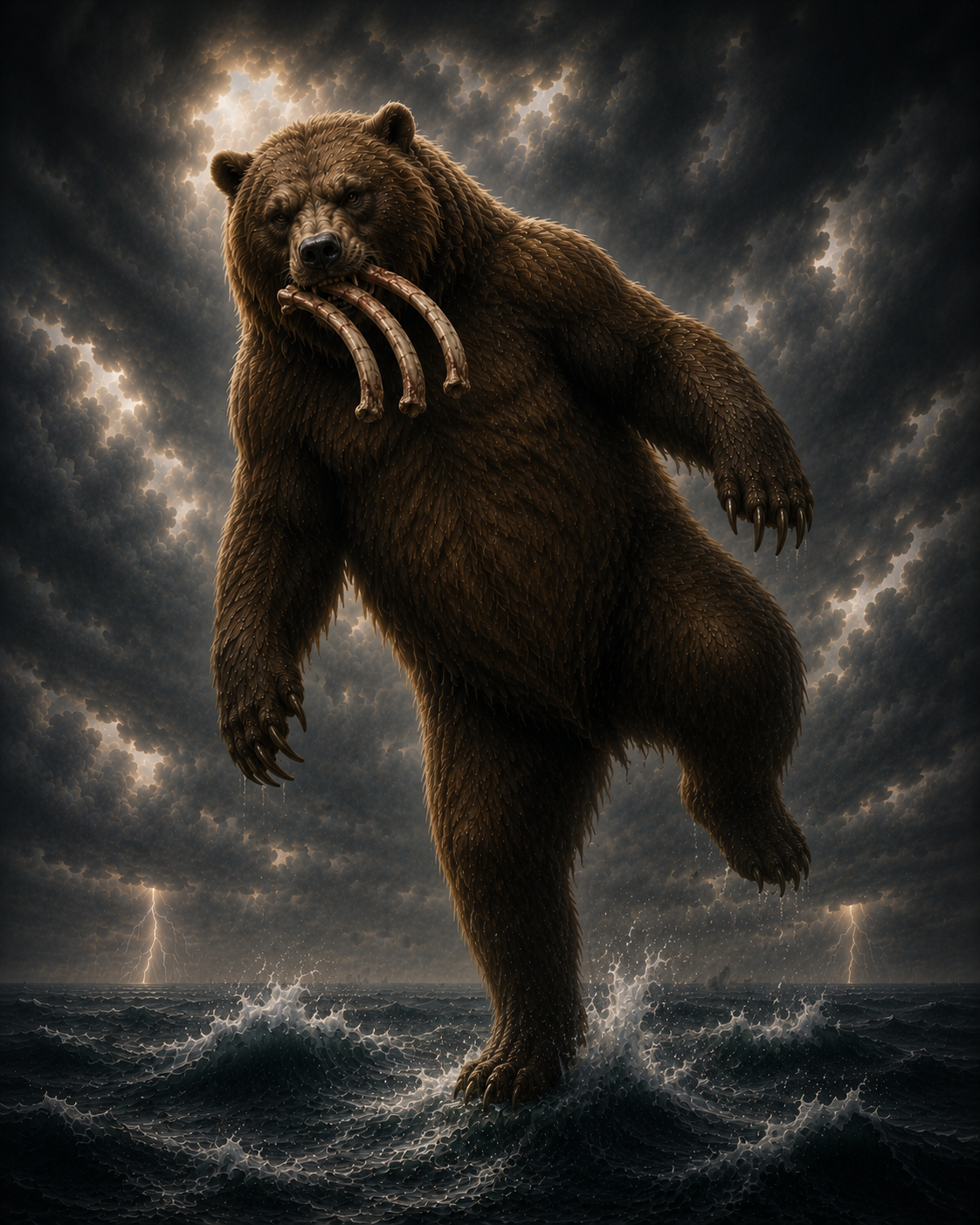
A bear, with its stable feet and gait, is unlike the lion and even more fearful when it stands on its feet.
The Cyrus Cylinder is an ancient artifact containing an inscription detailing the policies of Cyrus the Great following his conquest of Babylon in 539 BCE. From this seal we learn some of his strategies. As any great leader before and after, the Medo-Persian leader Cyrus saw himself, or at least presented himself, as a helper during his conquest. Cyrus presented himself as chosen by the Babylonian god Marduk to bring relief to the Babylonian people.
After taking Babylon, Cyrus claimed that: “Marduk searched through all the lands… He took Cyrus… He ordered him to go to Babylon… The people of Babylon rejoiced at his kingship.” (Cyrus Cylinder) It is claimed that some of the religious strife that had weakened the people’s trust in their leader was the Babylonian king’s adoration of the moon god and his failure to attend the new year festivals for the god Marduk and the other gods. In the Cyrus Cylinder, the Median king criticizes Nabonidus for interfering with the worship of Marduk and presents himself as a defender of the Babylonian god. About the Babylonian king, Cyrus says: “he continually did evil against Marduk’s city.” You could say it was very clever. It was not his religion, but he presented himself as the protector of their religion all the same to win over the people. Cyrus was not out to go on a killing spree; rather, he wanted a kingdom of peace. The seal says:
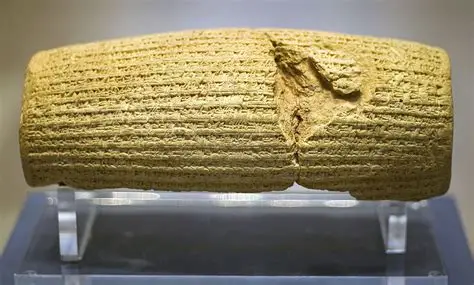
“My vast army marched into Babylon in peace; I did not permit anyone to frighten the people of Sumer and Akkad.”
The cylinder presents Cyrus as a benevolent ruler who respects the traditions of the conquered but also the one whose coming was desired:
“He made him enter his city Babylon without fighting or battle; he saved Babylon from hardship. He delivered Nabonidus, the king who did not revere him, into his hands.
[18] All the people of Babylon, all the land of Sumer and Akkad, princes and governors, bowed to him and kissed his feet. They rejoiced at his kingship and their faces shone”. (Cyrus Cylinder)
Bear in mind, these are the words of the ruler coming to conquest. This is propaganda aimed at gaining his people’s support. God, on the other side, presents this new empire as merely a continuation of the one before, just another beast on the scene. Whether people are manipulated, seduced, or violently suppressed, the main goal and nature of the beast remains the same. The Nabonidus Chronicle says: “The people of Akkad revolted, but he (Cyrus) massacred the inhabitants.” Perhaps there were more versions of the events than the one Cyrus presented.
The bear is not just a carnivore; it eats anything. Also called an omnivore, one who eats both plants and animals. Its main diet is berries, grass, nuts, and roots. But when hungry, it also takes small mammals and even deer and moose calves. You could say it has an opportunistic diet. The bear is very protective and aggressive when it has had cubs.
Not to be mistaken for a peaceful bear, it is described in the book of Daniel as one who “devour much flesh”.
Most certainly, many of the Medo-Persian wars left a trail of blood behind them. The Behistun Inscription lists multiple rebellions. Darius says, “Many were slain.” According to the Greek historian Herodotus, Cyrus’ campaign against the Massagetae was his bloodiest war. The whole kingdom of Lydia was also destroyed by Cyrus the Great.
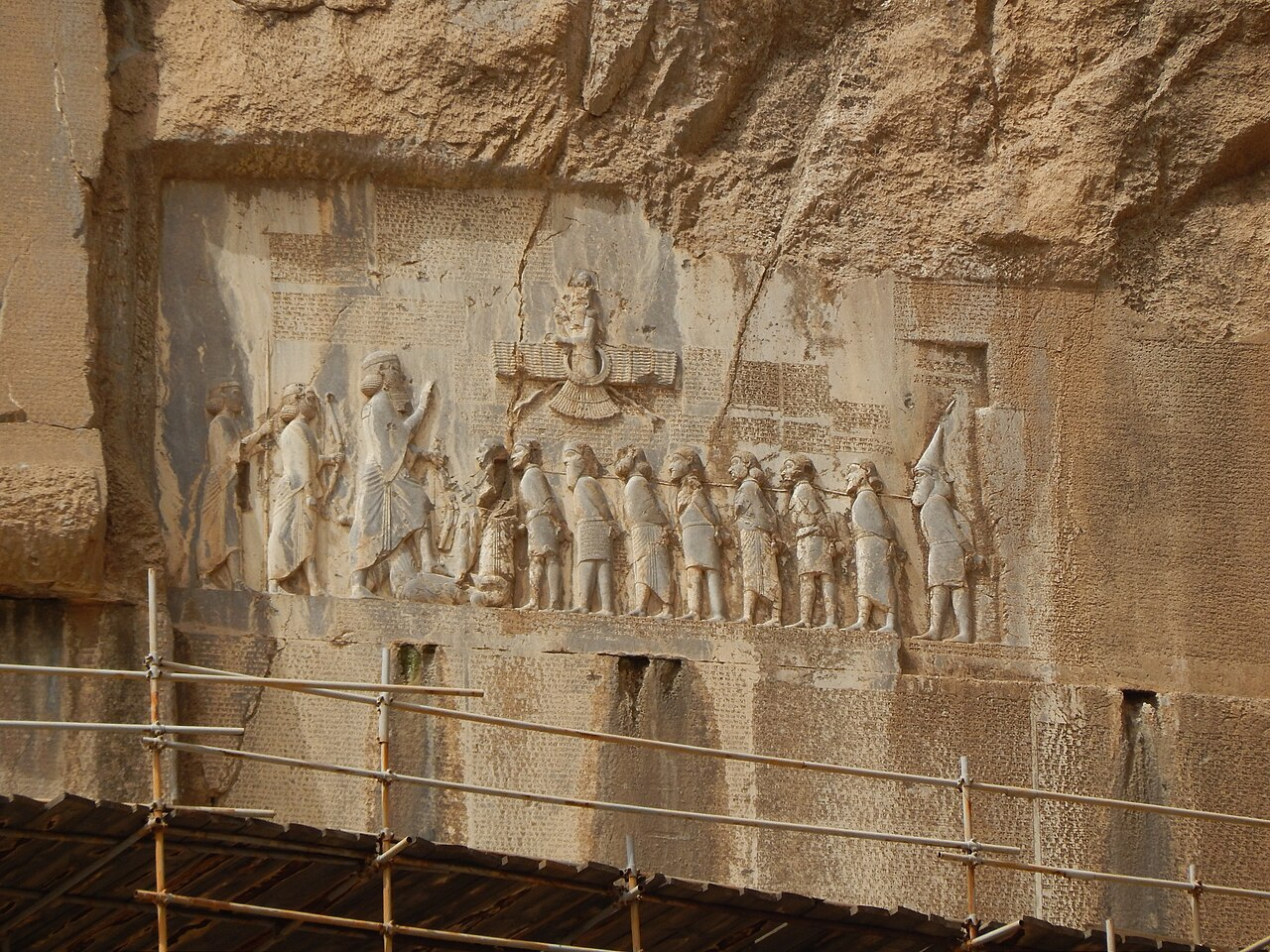
The Bible does not detail all the workings of the Medo-Persian empire, but, as it does with all these empires, focuses on its relationship to God’s people.
This is God’s main concern and relevance. God is not giving glory to empires, their wealth, art, or science. Daniel’s prophecy warns and prepares God’s people for their main antagonists throughout time. God explains in part why he allowed their existence, but also their crimes and their final punishment. The beasts are man’s creation, but God will continuously interfere in the ways of man, for the sake of His people.
With the Median King desiring, if possible, to be accepted rather than opposed, God could use that desire to prompt the king to act in a way that the king hoped would bring him support and glory—by allowing the Jews to return to their land.
Through the prophet Isaiah, God says he will help Cyrus gain his position to use him to help His own people: “Thus saith the LORD to his anointed, to Cyrus, whose right hand I have holden, to subdue nations before him; and I will loose the loins of kings, to open before him the two leaved gates; and the gates shall not be shut;
“I will go before thee, and make the crooked places straight: I will break in pieces the gates of brass, and cut in sunder the bars of iron” (Isa 45:1-2)
“That saith of Cyrus, He is my shepherd, and shall perform all my pleasure: even saying to Jerusalem, Thou shalt be built; and to the temple, Thy foundation shall be laid” (Isa 44:28)
These verses were written before even Cyrus was born, predicting his existence, but also flattering Cyrus by presenting the God of Israel as on his side.
In this way God worked on Cyrus. As God has said: “So shall my word be that goeth forth out of my mouth: it shall not return unto me void, but it shall accomplish that which I please” (Isa.55:10)
As God had said it, so it happened. Cyrus allowed the Jews to return and rebuild the Temple (Ezra 1:1–4). Although God was able to bring the people back during the king’s reign, he did not compel the king to give up the territory. Judah would remain a nation under Medo-Persian rule, with the complications that followed. Even God had to battle hard to impress the rulers. King Darius confirmed Cyrus’ decree and supported the rebuilding (Ezra 6:1-2). However, Persian officials attempted to stop the rebuilding of Jerusalem before Darius reversed the decision (Ezra 4:4-24). The people of Jerusalem had to deal with many challenges, as is written in the books of Ezra, Nehemiah, Zechariah, and Haggai. The prospect of rebuilding a city and a temple in a province of a pagan nation was discouraging to many and slowed down the process. God had to encourage them by telling them about the temple’s future glory and the coming of the Messiah. This gave them hope and purpose.
King Artaxerxes authorized Ezra to teach God’s law (Ezra 7:11-26). Another Persian king was so careless with jews that he issued a decree that would permit everyone to kill them. However, by God’s interference and deliverance, the decree was reversed. Still it showed how the Jews had many enemies in Persian provinces.
To Daniel, who was constantly praying for God to deliver his people, the angel Gabriel told him:
“But the prince of the kingdom of Persia withstood me one and twenty days: but, lo, Michael, one of the chief princes, came to help me; and I remained there with the kings of Persia” (Dan 10:13).
God was working powerfully for his people despite their suppression, and the Medo-Persian rulers would often strive against God, just as Nebuchadnezzar and the Babylonian kings did. As experienced by Daniel, Ezekiel, Esther, Ezra and Nehemiah, it’s not easy being a people under a foreign nation. The Medo-Persian kings were ambivalent, granting and withdrawing permissions. It was obvious they could no longer act as a free nation as they had desired.
“Raised itself on one side”
In Daniel’s vision, the power is depicted as a bear that rises on one side. The kingdom was composed of two nationalities, the Medes and the Persians. The Persian division of the kingdom fulfilled this; it attained the higher eminence, becoming a dominant influence in the nation.
Cyrus was Persian by his father’s line and half Median on his mother’s. He founded the Achaemenid Persian Empire. After defeating his grandfather, Astyages, around 550 BC, he united the Medes and Persians. But the ruling dynasty was Persian.
- Persian supremacy: 550–330 BC (220 years)
And so the bear leaned on the Persian side with the Persians as the dominant power for well over 200 years, from Cyrus the Great until Alexander the Great conquered the Achaemenid Empire in 330 BC.
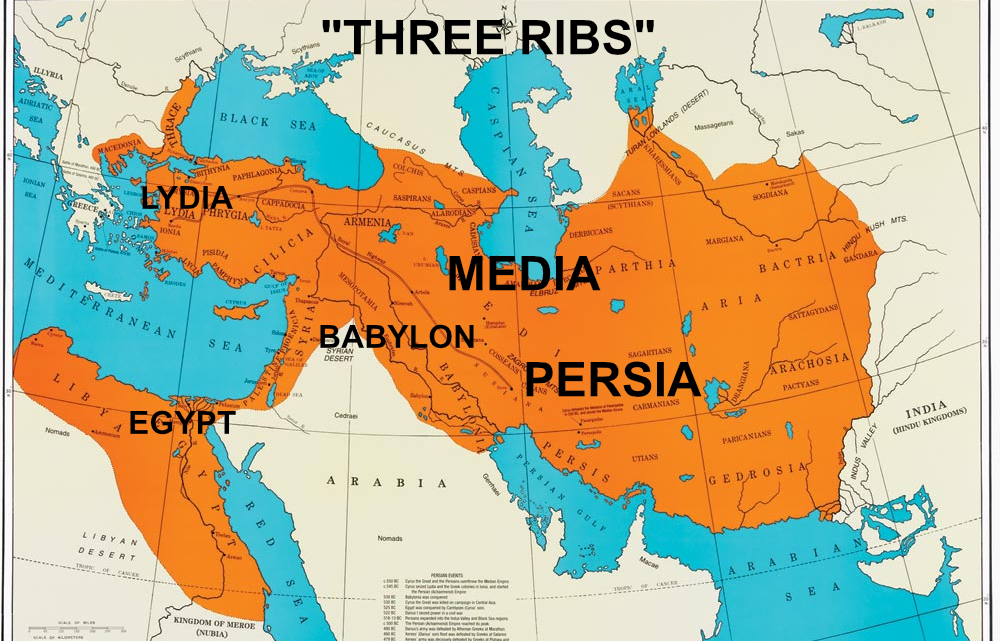
“It had three ribs in the mouth”
The bear is described as having three ribs in his mouth. The ribs are, of course, bones of another creature that the bear has eaten. The three ribs most likely are referencing the three great provinces of Babylon, Lydia, and Egypt, which Medo-Persia especially oppressed. They were strong kingdoms in their day and the most well-known to have fallen prey to “the bear”.
God predicted and prophesied the end of the long-running Persian Empire. As ever is with the downfall of any empire, or as Jesus said: “a house divided against itself cannot stand,” has proved true throughout time. Internal conflict and bloodshed weakened the royal palace. Their armies were weakened. And in addition, they decided to provoke the Greeks by invading them, setting Greek temples on fire, and interfering in Greek politics.
Darius III was the final ruler of the Achaemenid Persian Empire. In 330 BCE, while fleeing toward Bactria, Darius was killed by his own followers, effectively bringing the Achaemenid Empire to an end.
THE LEOPARD: THE GREEK EMPIRES
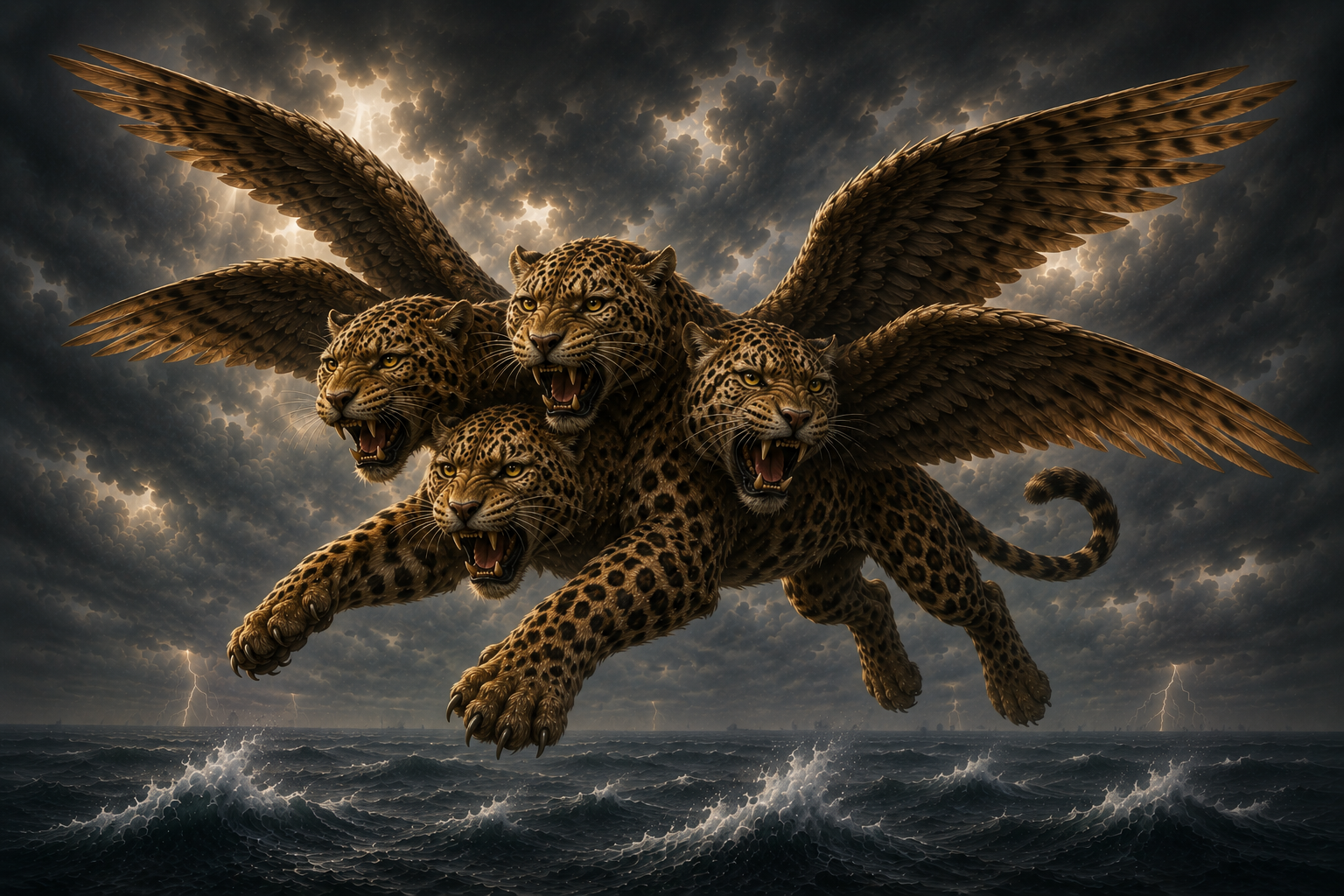
Dan 7:6 After this I beheld, and lo another, like a leopard, which had upon the back of it four wings of a fowl; the beast had also four heads; and dominion was given to it.
The next beast shown to Daniel is a leopard with four heads and four wings, illustrating the Greek empire which would defeat the Persian empire and take over much of its territories. Because the next chapter in Daniel identifies it as the Greek empire, there is no doubt who God is speaking of.
Just like the Babylonian lion, this beast has wings that signify its speed of conquest, which is very fitting for the incredibly short time it took Alexander the Great to take over the then-known world. People today are still baffled by his great accomplishments done in a short period of time. Alexander the Great died fairly young but left an impact on the whole region for hundreds of years. Even after Rome took over territories, Greek culture remained rooted in many of the societies.
Four heads
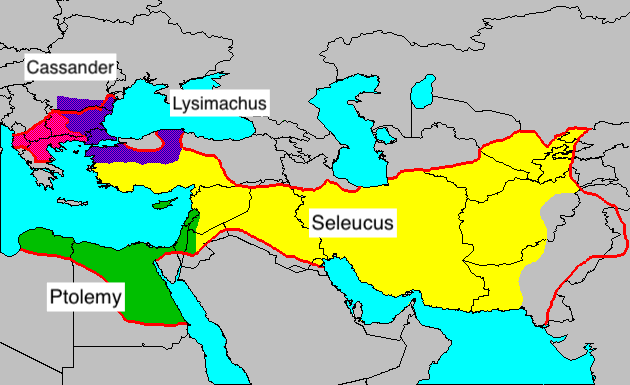
Alexander the Great made the grounds, and his conquest and empire were divided into four kingdoms, given to Alexander’s four leading generals. And so, as the Bible accurately predicted, Greece became a four-kingdom empire. General Cassander had Macedonia and Greece in the west; General Lysimachus had Thrace and the parts of Asia on the Hellespont and the Bosphorus in the north; General Ptolemy received Egypt, Lydia, Arabia, Palestine, and Coele-Syria in the south; and General Seleucus had Syria and all the rest of Alexander’s dominions in the east. By 301 BC, Alexander’s conquest, divided into four parts, was complete. As is the case with the other empires, the God of the Bible does not give praise to Greek culture or accomplishments in the arts and crafts. He does not tell his people to learn from the learned Greek men. Their mention is only in relation to God’s people. The Greeks had great kingdoms and territories, wise men, philosophers, and poets, and a sought-after and celebrated culture long before they conquered the Persian Empire. Yet, their relevance and entry onto the prophetic scene are when they take the land of God’s people.
Life under the Greek empires would prove to be, at times, good and, at other times, very bad. However, because of Daniel’s prophecies, they already knew the Persian Empire would fall, and another empire would take over; they saw the Greek Empire coming and did not fight them. But accepted their fate.
In another vision given in Daniel 11, God shows how slowly the Greek empires take to fall, how they fall, but, first, how they end up even warring against each other.
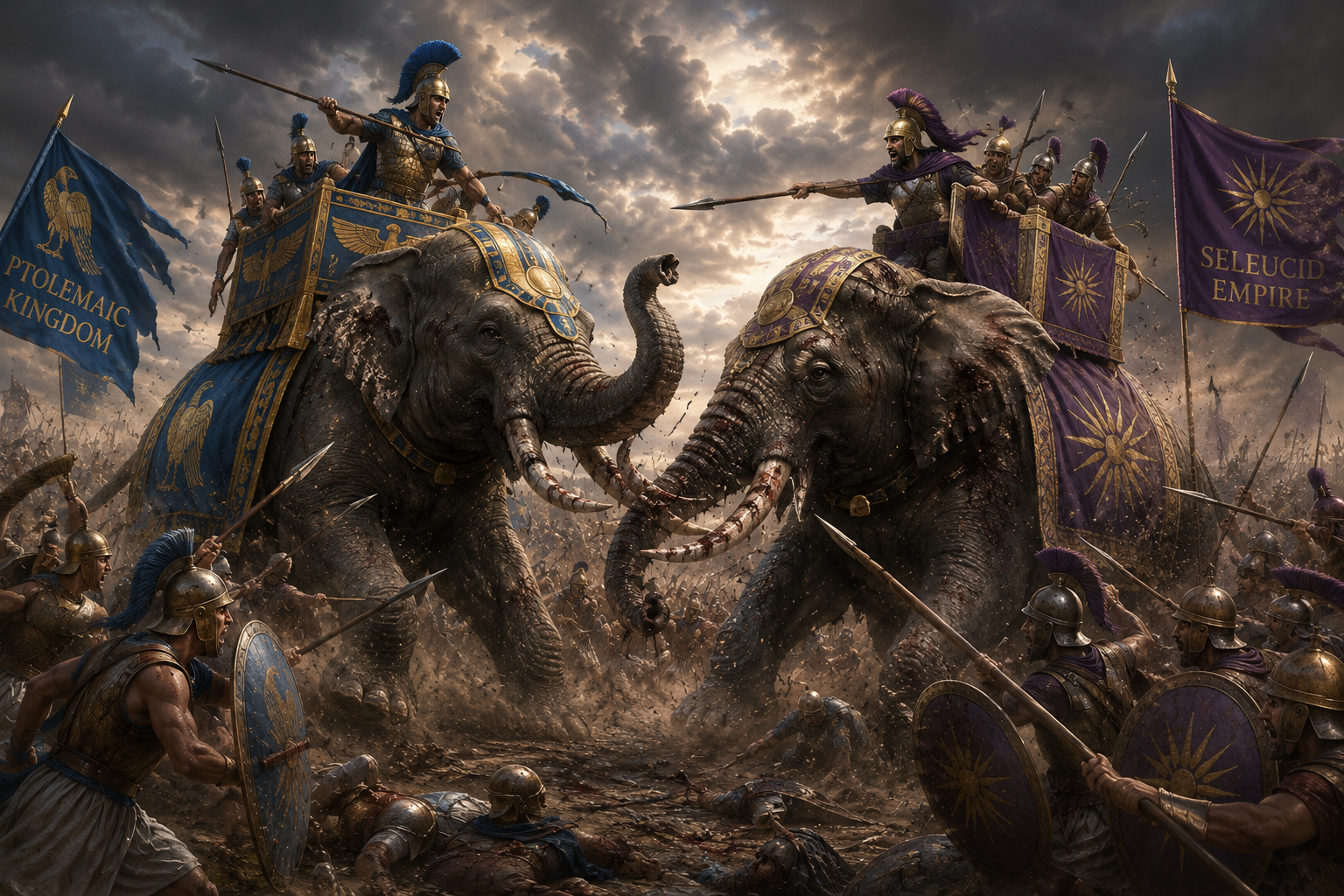
The four kingdoms became two: the Ptolemaic Empire in Egypt (King of the South) and the Seleucid Empire in Syria (King of the North). Both became a pain to Judah in their turn, mostly because of conflicts between the Greek empires.
Meanwhile, the Greek empires were weakening; another was growing strong in the west, but it would take some time before it reached the land of Judah and became relevant to them.
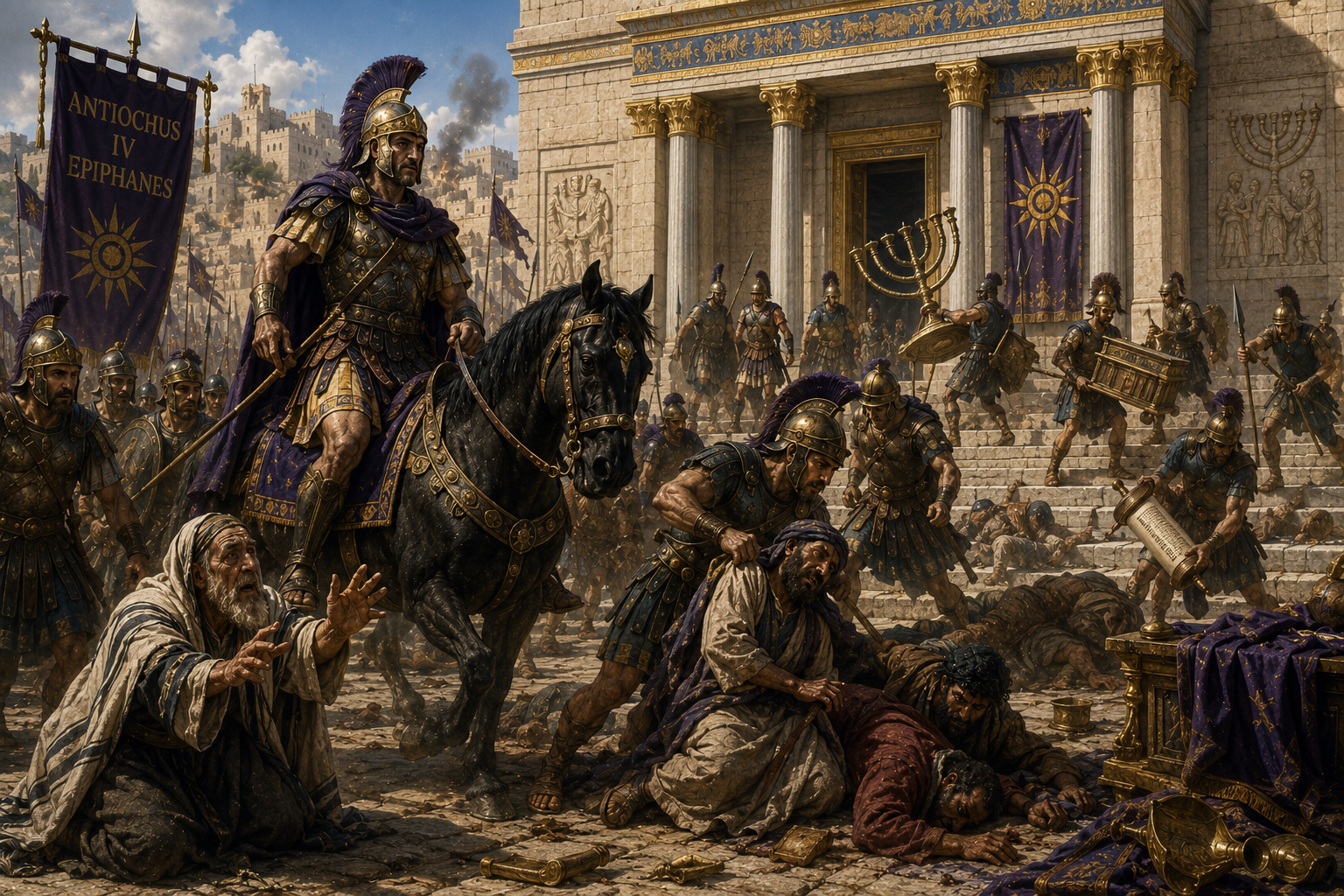
After the Seleucid king Antiochus IV Epiphanes banned Jewish practices and desecrated the Temple, the Judean people revolted in 167 BC. They even won several times against the Seleucids, but knew they could not remain strong unless they formed a powerful alliance. In 161 BC, Judas Maccabeus, the greatest warrior for the Jews, sent envoys to Rome to seek an alliance.
They traveled to Rome and addressed the Senate on behalf of Judas, saying:
“Judas, called Maccabeus, and his brothers, with the Jewish people, have sent us to you to establish an alliance and peace with you…”
The agreement with Rome is recorded in 1 Maccabees 8 and formally stated in 1 Maccabees 8:22–32. It was essentially a treaty of friendship, mutual support against enemies, and the recognition of the Jewish leadership by Rome. Rome and the Seleucid Empire had already been through several armed conflicts. The Roman-Seleucid war between 192-188 BC and the later treaty of Apamea, which forced the Seleucids to surrender territory, provide hostages, and greatly reduce their military. This was also part of why the Jews were able to win battles against them; before Rome had weakened them, they would have been too strong for Rome to handle. Rome, therefore, seemed like an answer to prayer. Rome and the Seleucids were not in an active, full-scale war in 161 BC when Judah made its treaty with Rome. Still, Rome held the upper hand politically and militarily, and the Seleucids wanted to avoid conflict with them as much as possible. And their recognition of it as a Jewish state put pressure on the Seleucids to back off.
By aligning with the Seleucid enemies, the Jews hoped to gain control. However, this alliance was in direct conflict with God’s advice. And in the past, such an act was also called harlotry by God.
“Cursed be the man that trusteth in man, and maketh flesh his arm, and whose heart departeth from the LORD.” (Jeremiah 17:5) God had criticized them and warned them in the past for seeking alliances with Egypt and Assyria rather than seeking God. (Isa.30:1-7, 31:1, Hos.5:13; 7:11; 8:9; 12:1, Jer.2:18,36, 2.Chron.16:7-9, 2.Kings 16:7-9, 18:21, Isaiah 36:6)
Thinking the Seleucids were their greatest enemy, they repeated their past mistakes and went straight into the arms of the fourth beast.
Nevertheless, after constant conflict, in 142 BC, under Simon Thassi, the Seleucids recognized Judea’s independence, marking the beginning of the Hasmonean state’s independence. The Seleucids might also have seen it as a strategy. So for a while Judah managed to take temporary control of their own land, but even then their independence was mainly an illusion, a parenthesis in the timeline.
Fleeing from the power that had desecrated their temple to the power that would destroy it proved to be merely a temporary relief. And as they ought to have been forewarned, the next beast after the Greek four-headed carnivore would be worse than all the others. And in the end, the remainder of the Seleucid kingdom and Jerusalem fell into the hands of Rome the same year.
Quick timeline of the Leopard with four heads and four wings:
- 332–323 BC: Alexander the Great ruled Judea.
323–301 BC: His successors fought over the region. - 301–200 BC: Ruled by the Ptolemies (Egypt/King of the South).
- 200–167 BC: Ruled by the Seleucids (Syria/King of the North).
- 167–160 BC: The Maccabean Revolt began.
- c. 142 BC: Under Simon Thassi, Judea achieved independence from the Seleucid Empire.
- 140–63 BC: The Hasmonean dynasty ruled an independent Jewish state (77 years).
- 63 BC: Pompey the Great conquered Jerusalem, and Judea came under Roman control.