

The city of Rome and its people were initially small and had little power compared to the Greek Empire. But slowly and steadily, Rome became stronger and stronger. Although it took a while for Rome to become the powerful capital it later became, it quickly became a refuge not just for Japhaite elsewhere, but also for escapees from other nations. The constant conflicts in the Middle East led many refugees to seek shelter in the West, which was, at the time, a more peaceful region.
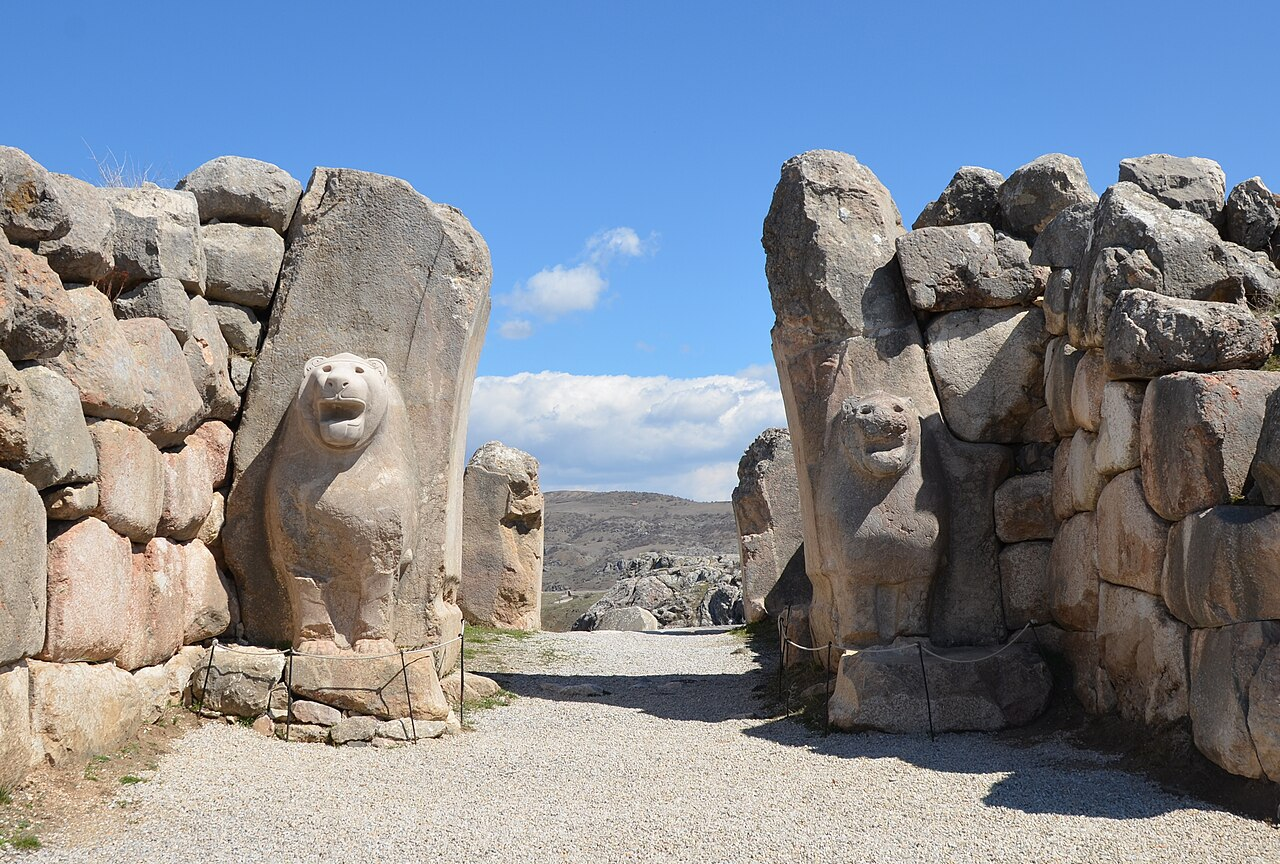
The Roman religion was just a Latin version of the Greek religion: the same gods and stories, with different names, myths, and legends. If the religion was imported with them from Troy, the culture would have been influenced by neighboring Anatolian kingdoms such as the Hittite Empire. Archaeological evidence suggests the Trojans probably worshipped Anatolian deities alongside deities later identified by the Greeks with Zeus, Apollo, and Athena. Most of the Anatolian gods had a greek/roman equivalent. The Hittites of Anatolia, the allies of Troy, did first what the Romans did later. The Hittites called it the “Thousand Gods of Hatti,” because they readily adopted local gods from the regions they ruled during their prime.
As Rome began to acquire territory, it followed the same strategy. Usually, people and nations with different gods would not accept a foreign nation with other gods coming to suppress them.
Rome’s policy toward religion was often pragmatic rather than ideological. Instead of trying to eliminate local religions, Roman leaders usually found it more useful to incorporate them into the empire. This made conquered peoples less likely to rebel.
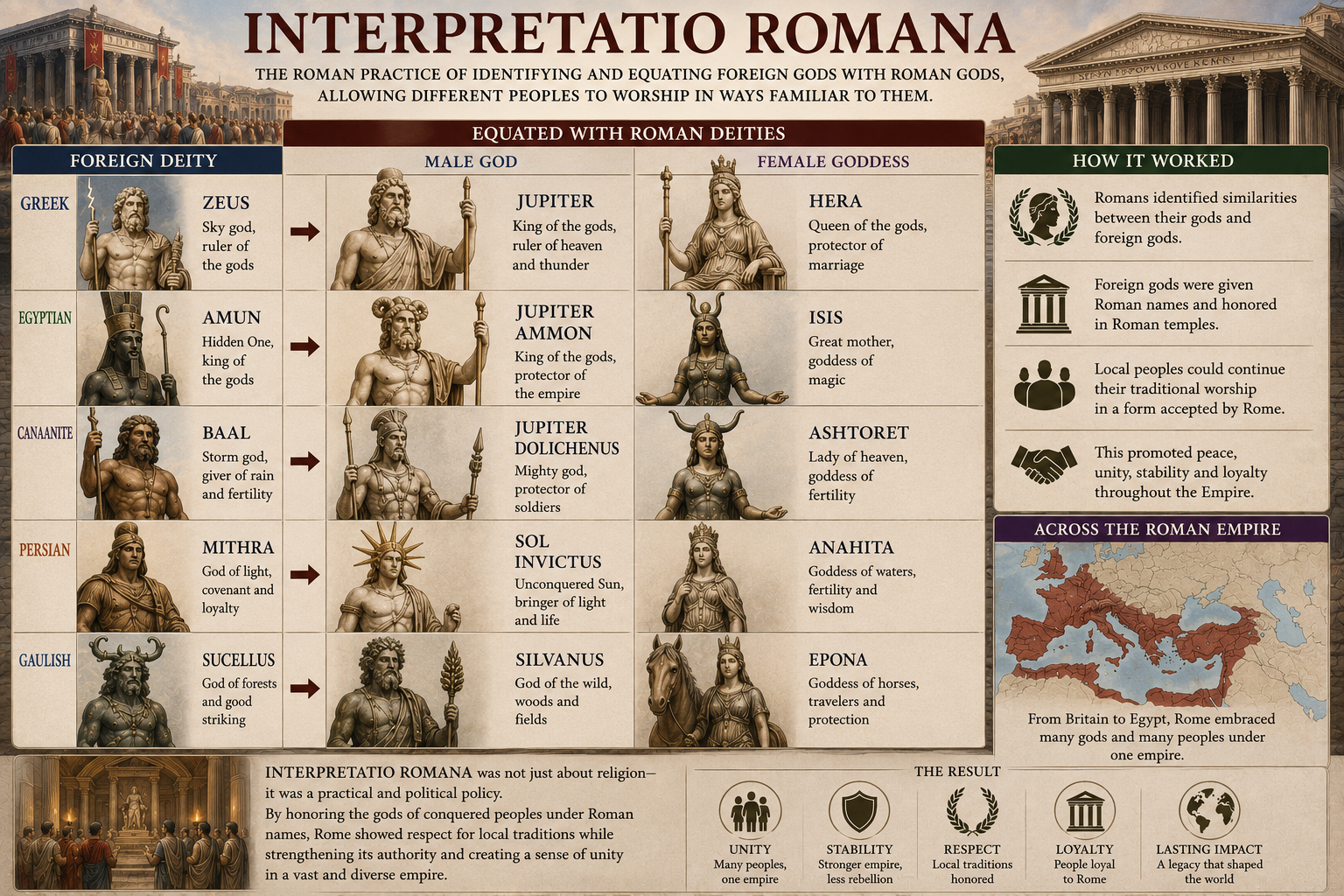
They allowed local gods to continue being worshipped. If a city surrendered peacefully and paid taxes, Rome left its temples and priesthoods intact. They identified foreign gods with Roman ones through a practice historians call interpretatio Romana. For example, a local thunder god might be identified with the Roman Jupiter, or a war god with Mars. This helped make foreign religions seem compatible with Roman religion. They sometimes adopted foreign gods in Rome itself if they had a large enough fan base. Temples were built in Rome for deities believed to benefit the empire. Good examples of this were the goddess Cybele from Phrygia, the goddess Isis from Egypt, and the Persian-associated god Mithras.
Rome also respected ancient and prestigious religious traditions. Egyptian temples, Greek sanctuaries, and many local priesthoods were preserved because cooperation was more profitable than destruction.
There was, however, one important expectation that came with their pagan ecumenical approach: religion should not threaten Roman authority. People were expected to show loyalty to the state with an almost religious devotion, often by making sacrifices for the emperor’s welfare. Groups that refused this or were perceived as politically disruptive could face persecution. This was in part why Roman and Jews conflicted, and later also early Christians and Rome, and was directly why many of them received the death penalty.
While Rome was the religious center at its time. Christians and Jews faithful to the Biblical God were viewed as a constant threat to the Roman idea of Utopia. Because they would not bow to the Roman Beast, the Roman government, with adoration and devotion, their religion was seen as a threat.
In the era before Christian persecutions and the Jewish revolt, Rome seemed to have considerable control over both state and religion for a while through its shrewd, ecumenical approach to other gods.
Even after Rome adopted Christianity, it continued these strategic approaches, albeit in somewhat different ways. Rather than accepting the pagan gods, they baptized them into the Christian mythology. The pagan gods became saints, whom they could still pray to and burn incense to as mediators between God and man. It was a bold compromise which made way for idol worship inside the church under the cloak of Christian mythology.
In the era before Christian persecutions and the Jewish revolt, Rome seemed to have considerable control over both state and religion for a while through its shrewd, ecumenical approach to other gods.
Even after Rome adopted Christianity, it continued these strategic approaches, albeit in somewhat different ways. Rather than accepting the pagan gods, they baptized them into the Christian mythology. The pagan gods became saints, whom they could still pray to and burn incense to as mediators between God and man. It was a bold compromise which made way for idol worship inside the church under the cloak of Christian mythology.
Why Governments want to be treated as gods
Throughout time, humans who have desired power have had to contend with religious superstition and religious conviction. This has also been an everlasting conflict between the governments of this world and God’s people. People’s hearts are often divided and conflicted when a leader or government asks one thing and your religious conscience says otherwise. The conscience is not controlled by human force or persuasion, although it can be misguided. If someone’s conscience is subdued for a while, it will still, at some uncertain point, lead to some sort of rebellion. Humans have treated their conscience as a superior authority to any governmental authority and always have. It has never been tamed.
When the two conflict, it always leads to conflict and loss of power for earthly governments. This is why throughout time it was important for governmental leaders to appear one with the gods. If they managed to convince people that they represented their gods and that their words and legislation were those of their gods, they could manipulate people’s consciences to align with their objectives, allowing them to do what they wanted.
When the two conflict, it always leads to conflict and loss of power for earthly governments. This is why throughout time it was important for governmental leaders to appear one with the gods. If they managed to convince people that they represented their gods and that their words and legislation were those of their gods, they could manipulate people’s consciences to align with their objectives, allowing them to do what they wanted.
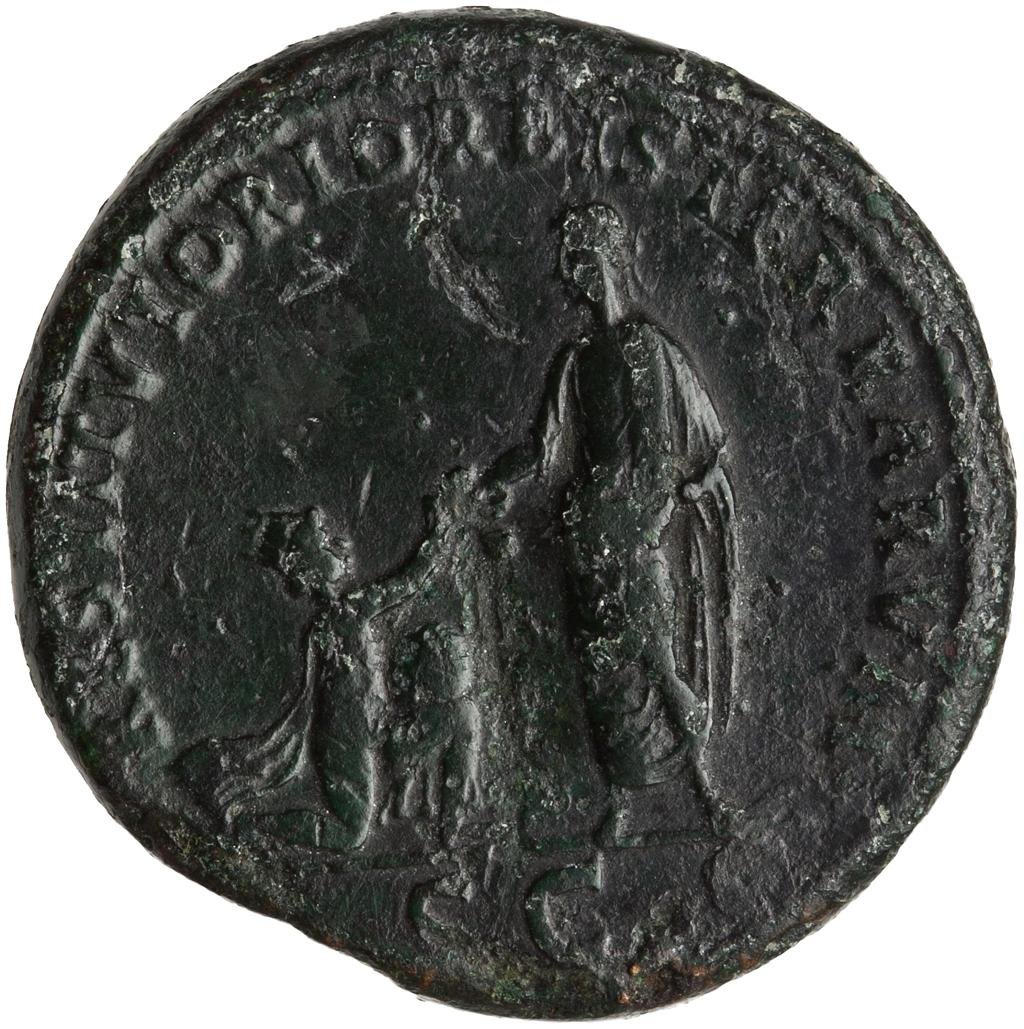
The reverse coin shows Emperor Hadrian extending his hand to raise a kneeling woman representing the Orbis Terrarum (“the inhabited world”). She kneels before him holding a globe.
That is why Pharaoh claimed to be chosen by the gods, even to be a god on earth. That is why Nebudkadnezzar wanted everyone to worship his set-up image in Babylon. It’s why the King of Media willingly signed a document stating that all who would not pray to him as a king during a certain period would be thrown into the lions’ den. It’s why Alexander the Great claimed to be the son of the gods. The Greeks honored Alexander the Great with divine honors. After his assassination, Julius Caesar was officially deified.
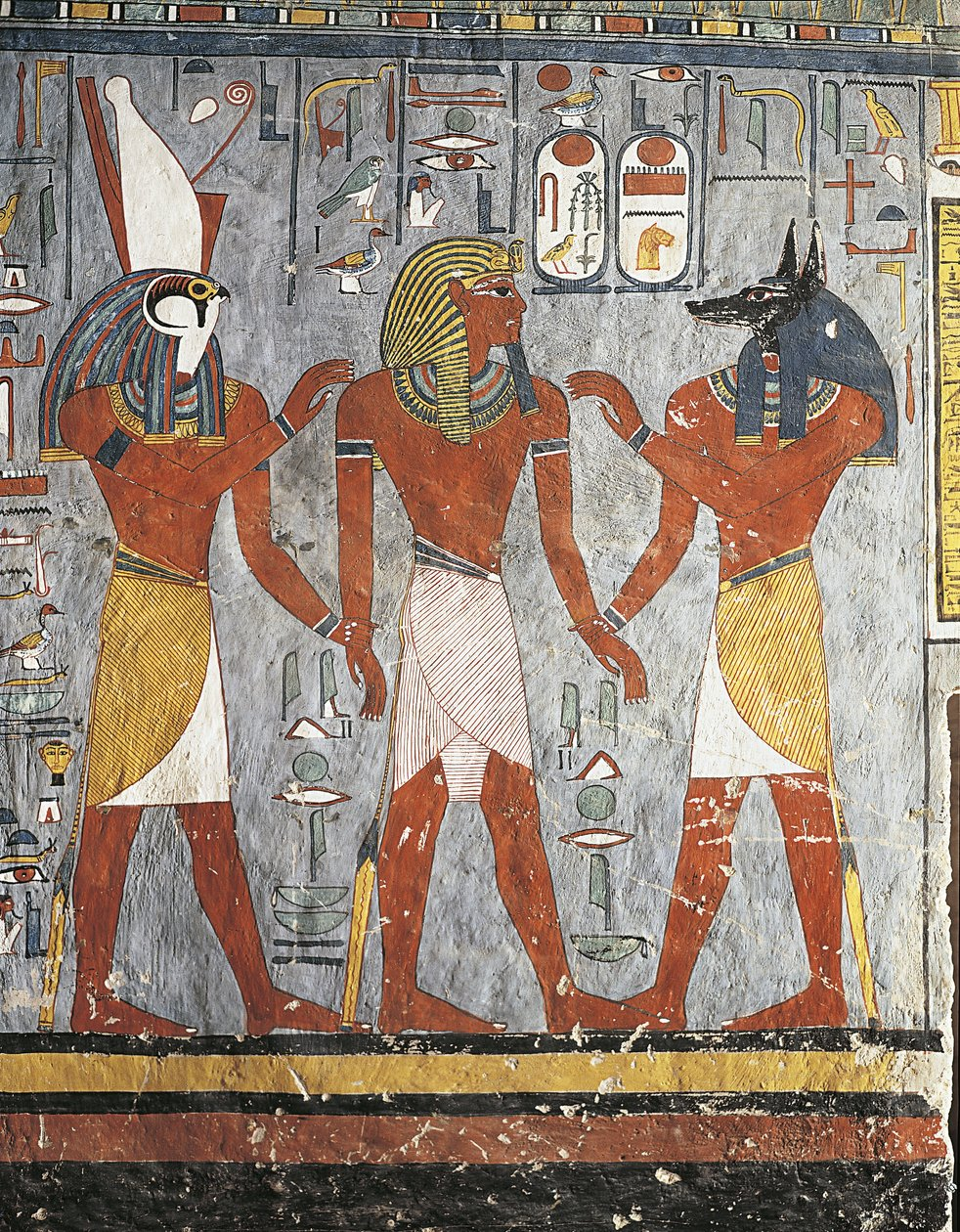
The Bible has always fought these ideas through the prophets. They claim only God ought to be worshipped, and Him obeyed before any earthly government. Then government should be respected second.
Pagan nations made the state the representation of the gods, with power in human hands, claiming to be led by the gods. In that way, they could appeal to people’s conscience that if they did not do what the government wanted, the gods would fight them and they would burn or be cast into a pagan version of hell. Those who believed they could escape punishment by defying the gods—even to the point of death—would still be tortured by the gods in the afterlife. Or even their crops would fail, or the rain would not fall because the gods were so displeased with them for not accepting their earthly leader.
Pagan nations made the state the representation of the gods, with power in human hands, claiming to be led by the gods. In that way, they could appeal to people’s conscience that if they did not do what the government wanted, the gods would fight them and they would burn or be cast into a pagan version of hell. Those who believed they could escape punishment by defying the gods—even to the point of death—would still be tortured by the gods in the afterlife. Or even their crops would fail, or the rain would not fall because the gods were so displeased with them for not accepting their earthly leader.
Even though Rome was tolerant and inclusive of various gods, it insisted on just one condition: that if the two conflicted, its own authority be acknowledged as superior to that of any deity for the sake of peace and order.
Tactfully, by making other gods their own, they avoided the controversy that arose from having to choose between their gods and the Romans.
Tactfully, by making other gods their own, they avoided the controversy that arose from having to choose between their gods and the Romans.
This turned religion into a demonstration of political loyalty. Offering incense or sacrifices to the emperor was less about believing he was equal to Jupiter and more about publicly acknowledging Roman rule. Refusing could be interpreted as a refusal of allegiance to the empire. So when the Christians faced this situation, they were willing to respect Roman rule, but not in a way that would lead them to break God’s law. And so they were caught in this dilemma and chose not to perform homage rituals, which caught the pagans’ attention and was seen as a disturbance of the peace. Which is what led to their persecution. Although Rome later adopted Christianity and claimed to represent Christ as His voice on earth, it did not alter its fundamental political approach to religion. To this day, the Roman Papal leaders are adored, and dead popes are even prayed to. What Christians refused when Rome was pagan, they later allowed when Rome was Christian. Although the principles of pagan authority had not changed: Making the state and God one and the same voice. But as Christians became the leading group in the Roman Empire, conversion was the only way to remain in control. Or so it seemed.
But even before Rome became Christian, Rome’s early approach to other gods, as a center of authority and worship, made it a new center of confusion, a capital of religious and superstitious ideas blended together under one government. Like Nimrod, Rome portrayed itself as a benefactor and peacemaker, chosen by the gods.
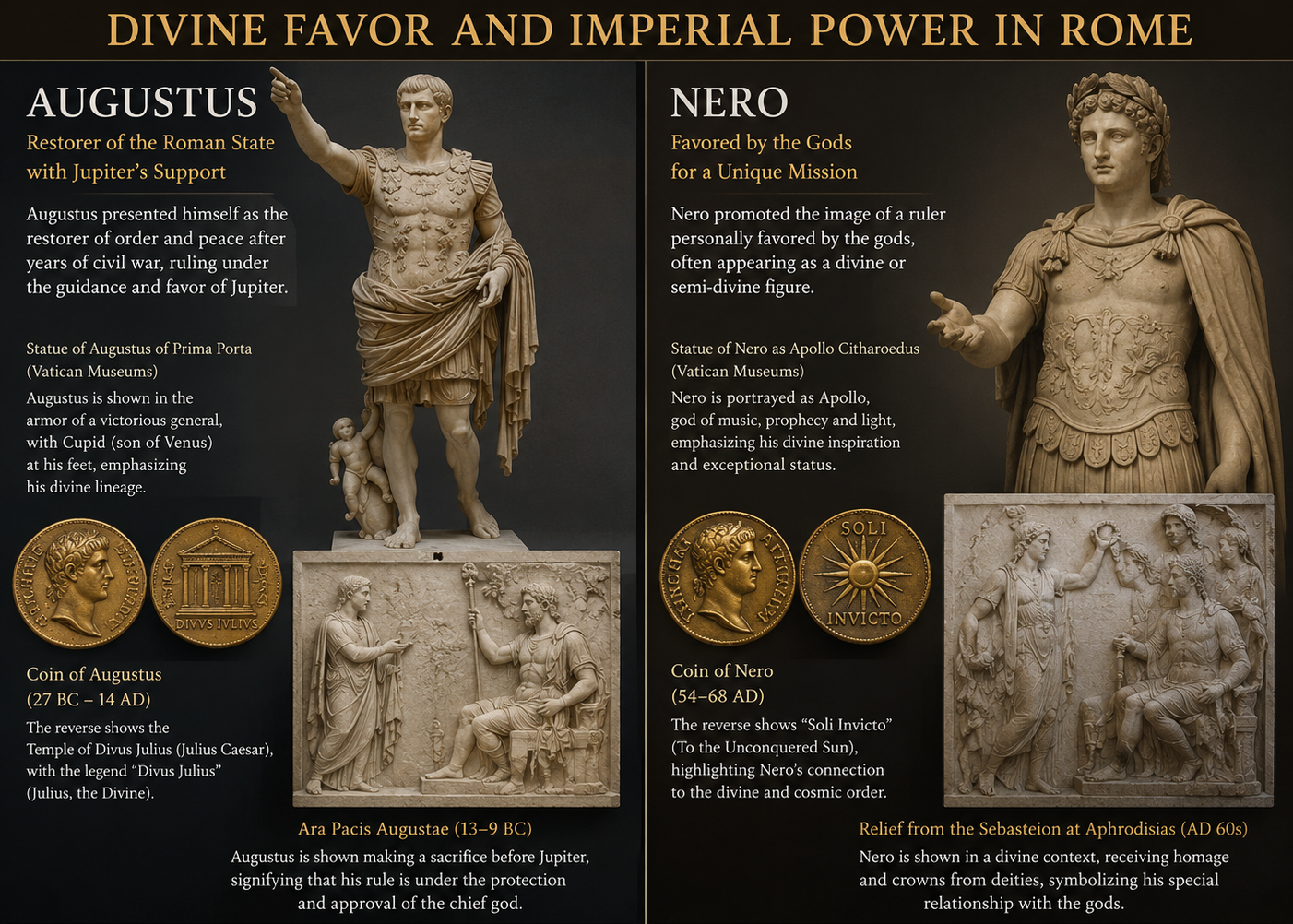
The pagan mentality and leadership style were found in all cultures, but they had their origin. People do not follow ruthless leaders; they follow leaders they believe are saving them from danger. And power-hungry people know that.
We can see the mentality of Babel in the earliest cultures of the region Babel was once part of. Here, there are plenty of archaeological remains that give us a good idea of how to make state and god one voice.
Hammurabi was the sixth Amorite king of Babylon, reigning from c. 1792 to c. 1750 BC. A relief discovered called the Code of Hammurabi shows the king receiving authority from the sun-god Shamash. In the inscription, Hammurabi presents himself as the king who brought justice, protected widows and orphans, and cared for his people. In this way, the Babylonian king is shown using a four-point method:
Hammurabi was the sixth Amorite king of Babylon, reigning from c. 1792 to c. 1750 BC. A relief discovered called the Code of Hammurabi shows the king receiving authority from the sun-god Shamash. In the inscription, Hammurabi presents himself as the king who brought justice, protected widows and orphans, and cared for his people. In this way, the Babylonian king is shown using a four-point method:
- THE LAW: If you claim your law is given to you by the gods, the people defy the gods when defying your law.
- THE LEADER: If your god trusts and has chosen your leader, you rebel against the god if you defy your leader.
- YOU NEED THEM TO THRIVE: You are dependent upon your state to provide blessings and save you from war and conflict.
- FEAR: This way they set people up against others. If the king or state is perceived as the manifestation of divine order, resistance represents chaos. And people will permit “enemies of the state” to be defeated.
Showing themselves as charitable was therefore a consistent strategy. How can you rebel against the hand that feeds you?
Kings such as Nebuchadnezzar II often described themselves in inscriptions as the restorers of temples, builders of cities, and providers for the gods and the people. Their role was primarily that of a pious builder appointed by the gods.
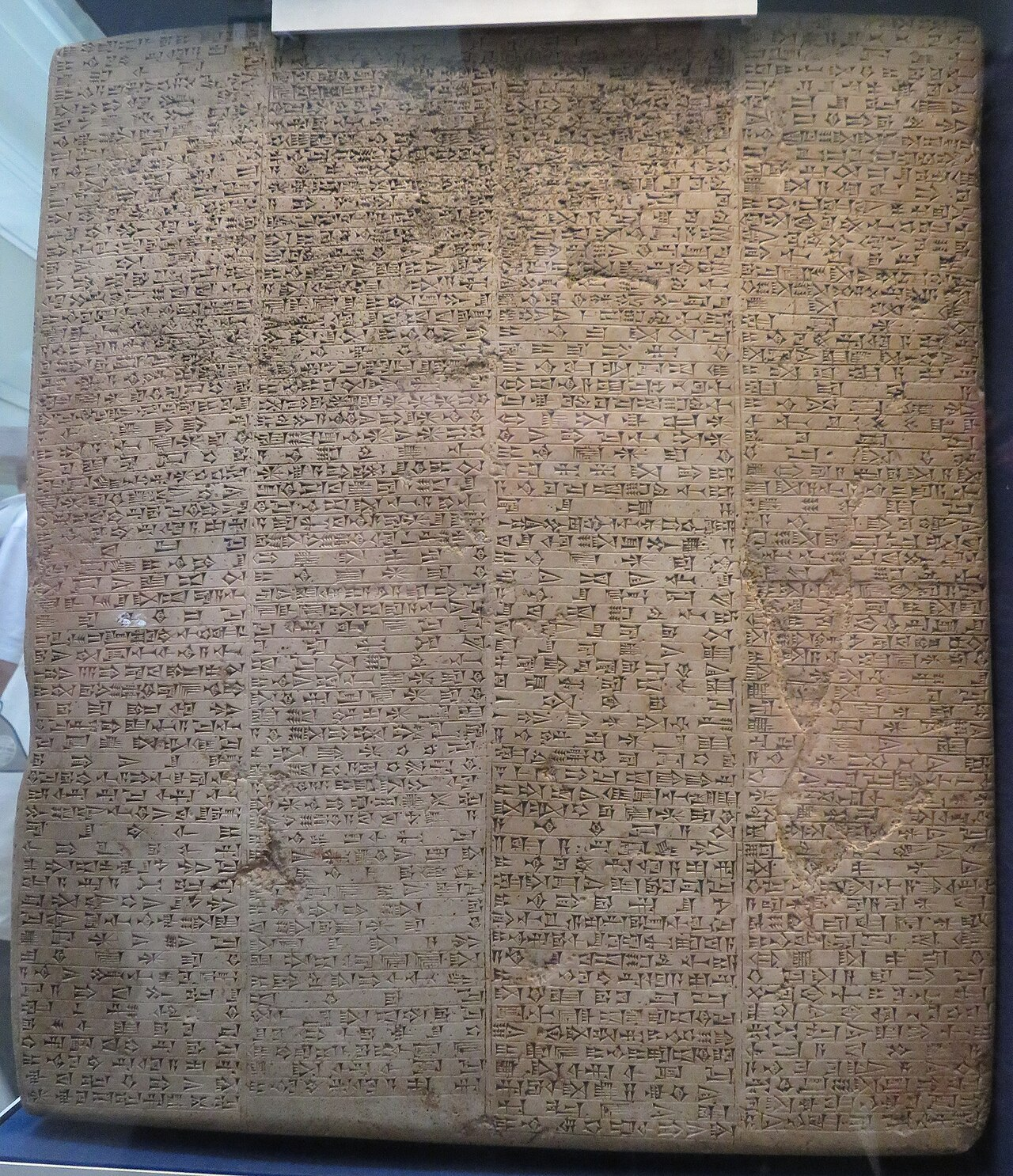
“I am Nebuchadnezzar, king of Babylon, the exalted prince, the favourite of the god Marduk, the beloved of the god Nabu, the arbiter, the possessor of wisdom, who reverences their lordship, the untiring governor who is constantly anxious for the maintenance of the shrines of Babylonia and Borsippa, the wise, the pious, the son of Nabopolasser, king of Babylon; To Marduk, my lord I make supplication; Oh eternal prince, lord of all being, guide in a straight path the king whom thou lovest and whose name thou hast proclaimed as was pleasing to thee. I am the prince, the favourite, the creature of thy hand. Thou hast created me and entrusted me with dominion over all people. According to thy favour lord, which thou dost bestow on all people, cause me to love thy exalted lordship.
The Median Darius presents himself as the rightful king chosen by Ahura Mazda, the Zoroastrian supreme deity, who restored order after rebels caused chaos. In Persepolis, the reliefs depict delegates from many nations peacefully bringing tribute to the king, portraying him as the ruler who maintains harmony across the empire. In The Cyrus Cylinder, Cyrus describes himself as restoring temples, returning displaced peoples, and bringing peace to conquered lands.
Ptolemy III Euergetes, ruler of the Greek Ptolemaic kingdom, formally incorporated the title “Euergetes” (meaning “the Benefactor”) into his royal name.
Many Hellenistic cities passed honorary decrees calling kings εὐεργέτης (euergetēs, benefactor) because they funded temples, theaters, walls, grain supplies, tax relief, or other public works.
Alexander the Great’s own propaganda emphasized that he was bringing order to Asia under his rule after defeating the Persian king. His successors likewise claimed to restore stability after wars, although they spent much of the 3rd century BC fighting one another. Not unlike the United States of our own day, they were able to sell their wars as peace work.
The Roman emperors likewise portrayed themselves as benefactors whose generosity (liberalitas) was publicized through coins, reliefs, inscriptions, and ceremonies.
Alexander the Great’s own propaganda emphasized that he was bringing order to Asia under his rule after defeating the Persian king. His successors likewise claimed to restore stability after wars, although they spent much of the 3rd century BC fighting one another. Not unlike the United States of our own day, they were able to sell their wars as peace work.
The Roman emperors likewise portrayed themselves as benefactors whose generosity (liberalitas) was publicized through coins, reliefs, inscriptions, and ceremonies.
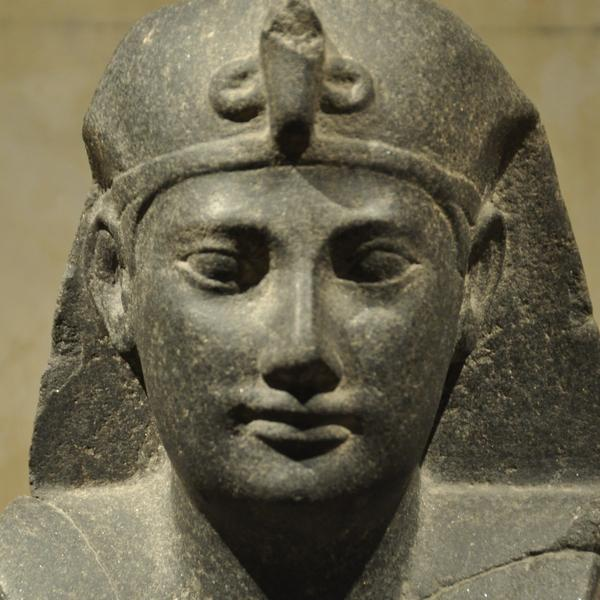
This is because propaganda works on people. You only need to have cards in your hands to control people. One is to make them feel dependent on you; the other is to make them afraid of what will happen without you. And so all leaders who play both these cards back and forth can, for a while, keep people in check.
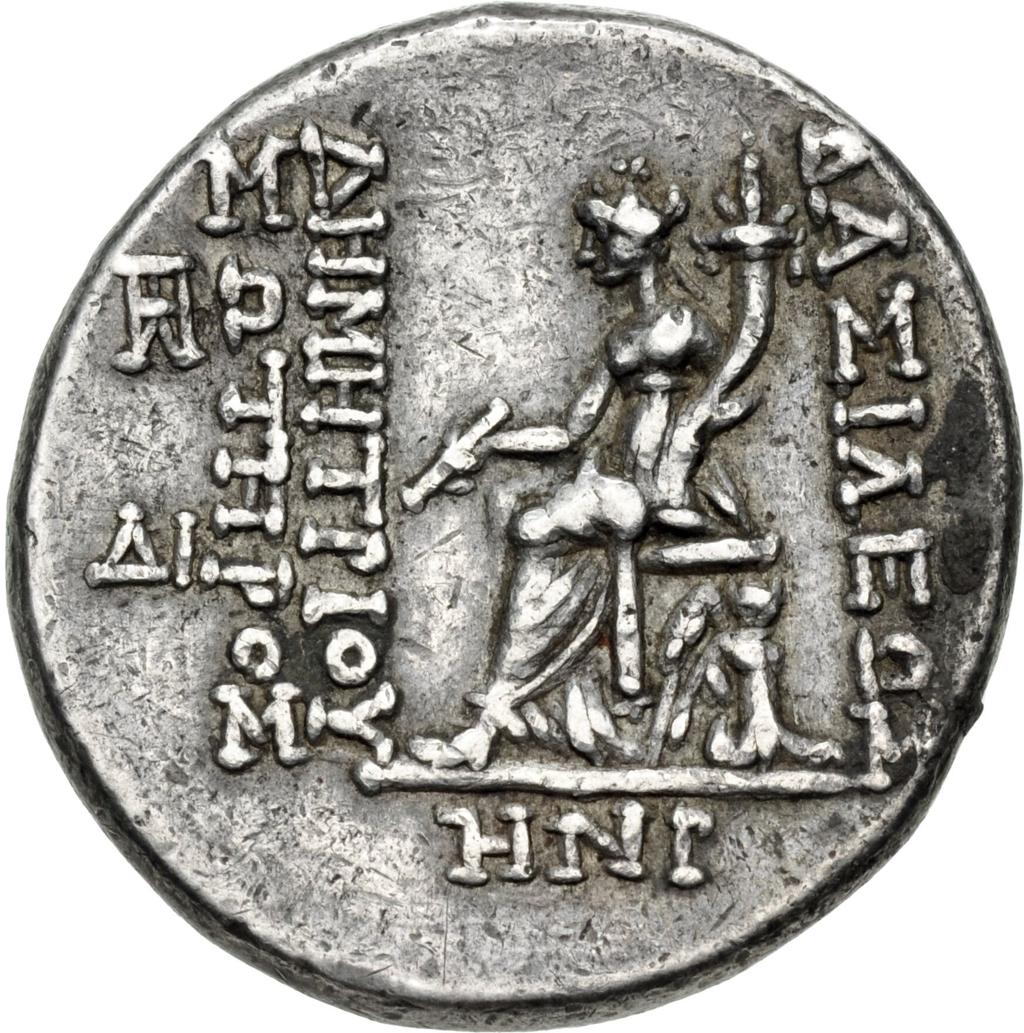
Which translates to: “Of King Demetrius the Savior.”
One modern example of how powerful a state becomes when they are the benefactor can be seen in socialist countries. These two tactics are the foundation and principle of socialist rule. Even democratic socialist
Both Norway and Denmark are social democracies with a strong welfare state. In Norway, especially from the late 1800s through the 1900s, many responsibilities that had traditionally been carried out by the church gradually became the responsibility of the state or municipalities. As the modern Norwegian welfare state expanded after World War II, people increasingly looked to the state rather than the church for social support. Many historians and sociologists argue that this contributed to the decline in church involvement. Many of the world’s least religious countries—especially Norway, Sweden, Denmark, Finland, France and parts of Western Europe—also have extensive welfare states in which government provides healthcare, education, pensions and support that churches once partly supplied.
Circus and Bread
And although this appears good, it’s also made people dependent on the state, increasing state power. It has also made them feel they don’t need God.
Circus and Bread
Other pagan nations and Rome understood the psychology long before it was practiced in modern times. Rome provided several forms of public assistance to gain the devotion of its people. Hundreds of thousands of citizens in Rome received free or subsidized grain (annona). Emperors periodically distributed money to the people (congiaria). Public entertainment – Gladiatorial games, chariot races, and festivals were funded by the state or the emperor. Public works – Aqueducts, baths, roads, fountains, and sewers were built and maintained for public benefit. Under Trajan, the Alimenta program provided support for poor children in parts of Italy.
The Roman poet Juvenal, in his Satire 10, written around AD 100, said the famous line: …duas tantum res anxius optat, panem et circenses. Meaning: “… the people now care only for two things: bread and public spectacles.” Juvenal addressed how people were easily satisfied by free or subsidized grain and entertainment, and that once they had these two things, they stopped caring about political freedom, public responsibility, and good government.
In one way, it appears good and does good, but there is a hidden danger in this system of governance. And it will play a large part in the conflict right before Christ comes.
Paul said: “For when they shall say, Peace and safety; then sudden destruction cometh upon them, as travail upon a woman with child; and they shall not escape.” (1 Thess 5:3)
The Roman poet Juvenal, in his Satire 10, written around AD 100, said the famous line: …duas tantum res anxius optat, panem et circenses. Meaning: “… the people now care only for two things: bread and public spectacles.” Juvenal addressed how people were easily satisfied by free or subsidized grain and entertainment, and that once they had these two things, they stopped caring about political freedom, public responsibility, and good government.
In one way, it appears good and does good, but there is a hidden danger in this system of governance. And it will play a large part in the conflict right before Christ comes.
Paul said: “For when they shall say, Peace and safety; then sudden destruction cometh upon them, as travail upon a woman with child; and they shall not escape.” (1 Thess 5:3)
About Sodom before their destruction, it was said they had: “fulness of bread, and abundance of idleness” (Eze.16:49). Idleness is a word that also means peace or rest.
About the people that died in the flood, Jesus remarked: “They did eat, they drank, they married wives, they were given in marriage, until the day that Noe entered into the ark, and the flood came, and destroyed them all” (Luk.17:27)
About the people that died in the flood, Jesus remarked: “They did eat, they drank, they married wives, they were given in marriage, until the day that Noe entered into the ark, and the flood came, and destroyed them all” (Luk.17:27)
God is not against people eating or having food. He himself blesses man with food and “daily bread”. It was that they were satisfied with the terrible status quo as long as they had what they desired. It was their willingness to close their eyes to injustice as long as they were being fed. It describes a careless state amid societal turmoil. God is not against peace or peacemakers. Jesus said: “Blessed are the peacemakers: for they shall be called the children of God” (Mat.5:9)
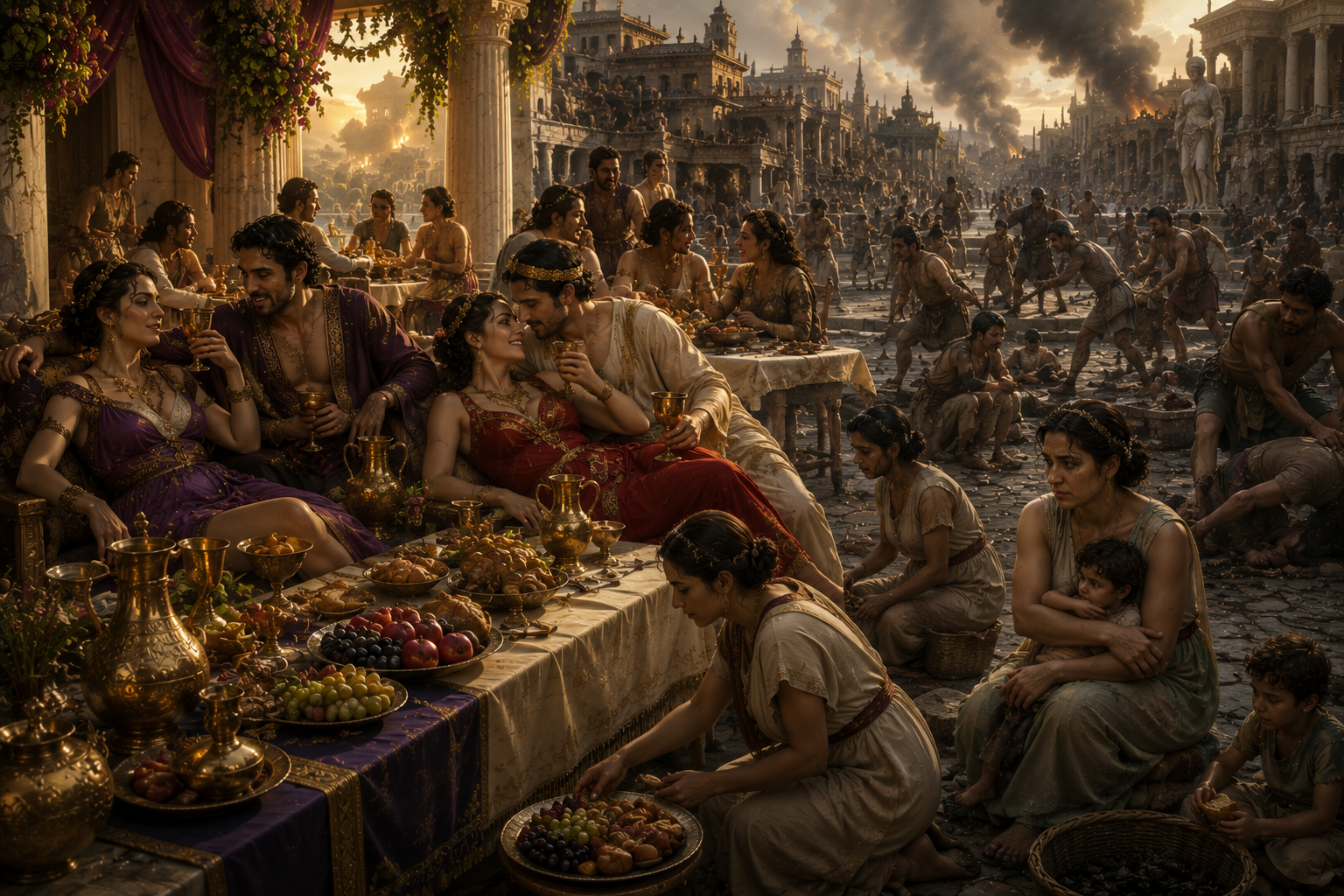
The problem lies in the illusion of peace when there is no true lasting peace. Man can not replace God; He is not just the creator but sustainer of everything. He can do for man what no man can do. So when food and security are given instead of the true God or to replace God, it’s usually suppression, lies, and even theft behind the prosperity. Such was the case in the pre-flood era. They enjoyed their food and romance, but at the same time “wickedness of man was great in the earth, and that every imagination of the thoughts of his heart was only evil continually” and “the earth was filled with violence” (Gen. 6 5 & 11)
Such was the case in Rome. They enjoyed the benefits of its greatness and abundance, but closed their eyes to the suffering they caused, or that existed among them. Having bread does not make someone’s heart pure and good.
So it was with Egypt at its greatest peak as a nation. The most wealthy nation on earth, yet built upon the backs of slaves and suffering. They would not address it, for it would cost them their benefits.
Another good example is the USA. While claiming to be a nation under God, the land of the free and brave, and blessed, it has been the biggest exporter of immorality, violence, war, and strife in our day. In addition, exploitation of workers in other lands has greatly contributed to their prosperity.
Such was the case in Rome. They enjoyed the benefits of its greatness and abundance, but closed their eyes to the suffering they caused, or that existed among them. Having bread does not make someone’s heart pure and good.
So it was with Egypt at its greatest peak as a nation. The most wealthy nation on earth, yet built upon the backs of slaves and suffering. They would not address it, for it would cost them their benefits.
Another good example is the USA. While claiming to be a nation under God, the land of the free and brave, and blessed, it has been the biggest exporter of immorality, violence, war, and strife in our day. In addition, exploitation of workers in other lands has greatly contributed to their prosperity.
Right before the Babylonians destroyed Jerusalem and its people, the leaders portrayed themselves as the proclaimers of peace:
“They have healed also the hurt of the daughter of my people slightly, saying, Peace, peace; when there is no peace.” (Jeremiah 6:14)
By giving people a false security, they prevented them from preparing and saving themselves from the coming doom. They seemed like peacemakers for declaring peace, but although it made them liked, it did not make the lie a truth.
God is saying we need to be good and do good, not just imagine we are good.
Both God and his enemy Satan know how easily people are manipulated if they have their immediate needs covered, and Satan uses it to his advantage to the fullest. No deceivers come to anyone’s door without gifts and promises.
God is saying we need to be good and do good, not just imagine we are good.
Both God and his enemy Satan know how easily people are manipulated if they have their immediate needs covered, and Satan uses it to his advantage to the fullest. No deceivers come to anyone’s door without gifts and promises.
A government in the best interests of people does not need to replace God or manipulate man’s conscience. Men of authority are needed to ensure equal rights and justice, but they were never needed to play gods. It is because man is afraid of losing control and hungry to be like gods that they have demanded to rule as gods. They feel if they are not admired in a highly esteemed way, someone will easily take their place. If you want someone to obey you, you have to convince them in one way or another. In the case of pagan rulers, their tactic was to unite the gods and the king into a single voice so that people would feel compelled to comply.
Pergamon.
“I know thy works, and where thou dwellest, even where Satan’s seat is…” were Christ’s words to the church in Pergamon. (Rev 2:13) Before Christ’s time, and any church established there, Pergamon paid great homage to the Roman government.
It was the first city in the Roman province of Asia to receive an official provincial temple dedicated to the imperial cult.
It was the first city in the Roman province of Asia to receive an official provincial temple dedicated to the imperial cult.
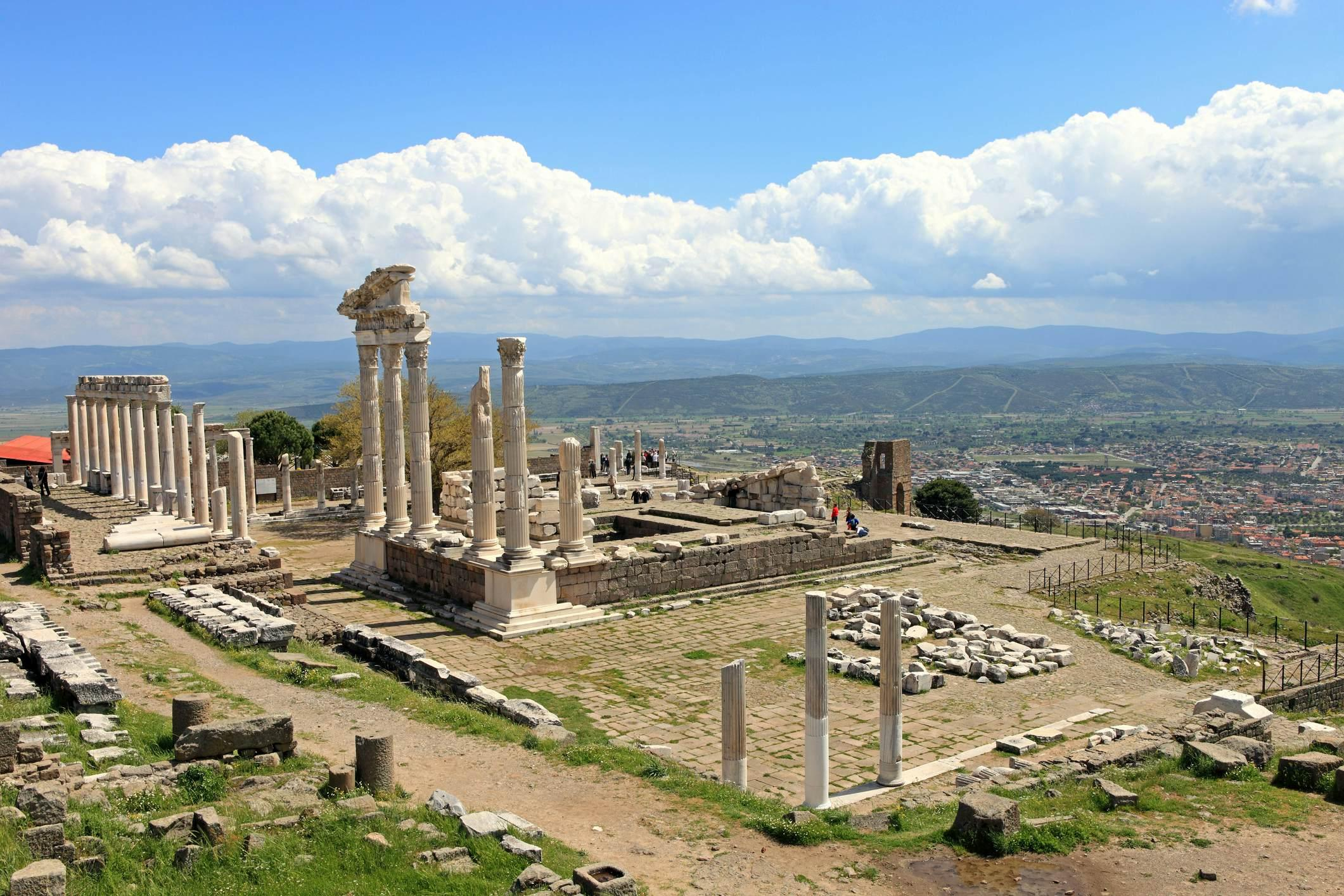
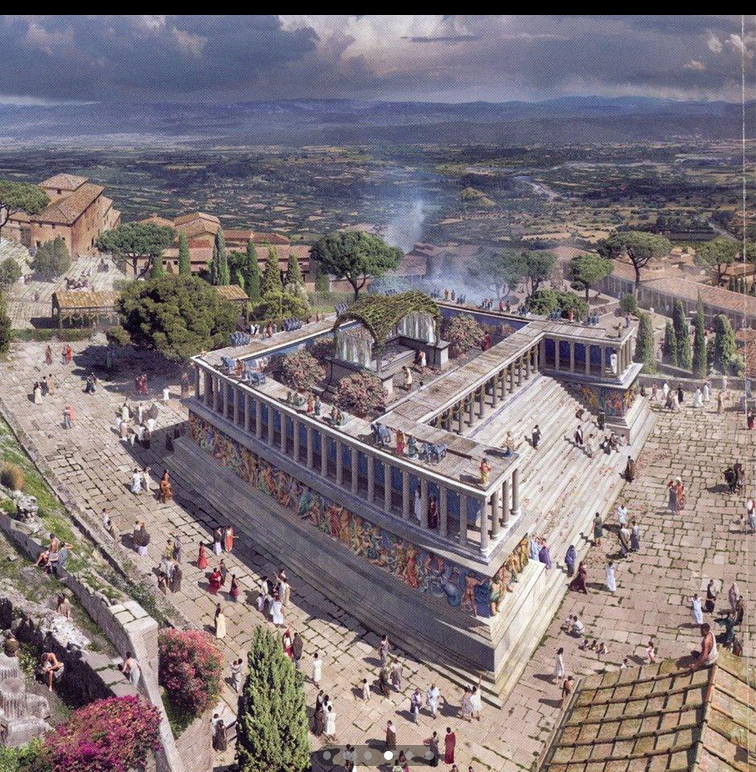
In 29 BC, Augustus authorized the province of Asia to build a temple at Pergamon dedicated to Roma (the goddess personifying Rome) and Augustus. This became the first official provincial temple of the imperial cult in Asia Minor and made Pergamon the provincial center for emperor worship. This arrangement distinguished provincial worship from the city of Rome itself, where living emperors could not ordinarily be worshipped as gods. Cities competed fiercely for the honor of building such temples because it brought prestige and imperial favor. Some historians think its prominence as the center of the imperial cult helps explain why it is described as the place “where Satan’s throne is” (Revelation 2:13), meaning this ideology is the foundation of Satan’s rule among men. Not being an earthly government himself, he has to work through an earthly government. If Satan wants to make laws for mankind, he has to do it through an earthly government or leader. The words he said to Eve which brought the earth under his domain were: “in the day ye eat thereof, then your eyes shall be opened, and ye shall be as gods, knowing good and evil” (Gen.3:5). God wanted man not just to desire to have God’s position but to elevate their own judgment of good and evil above God’s judgment.
In the message to the Pergamum church, God recognizes that they are in the middle of the conflict. Standing up, or simply refusing to take part in the adoration of the Roman leaders at their regional center, would mean death.
Many have argued that it is claimed to be Satan’s throne in Asia because of the great altar of Zeus. But Satan does not rule through mythology; he rules through human governments. Having the Roman leaders accepted as men of the gods is how Satan gained control in the Near East and was able to put strain on the later Christian church if they did not pay such homage. The letter to the Pergamon church continues: “even in those days wherein Antipas was my faithful martyr, who was slain among you, where Satan dwelleth”
In the message to the Pergamum church, God recognizes that they are in the middle of the conflict. Standing up, or simply refusing to take part in the adoration of the Roman leaders at their regional center, would mean death.
Many have argued that it is claimed to be Satan’s throne in Asia because of the great altar of Zeus. But Satan does not rule through mythology; he rules through human governments. Having the Roman leaders accepted as men of the gods is how Satan gained control in the Near East and was able to put strain on the later Christian church if they did not pay such homage. The letter to the Pergamon church continues: “even in those days wherein Antipas was my faithful martyr, who was slain among you, where Satan dwelleth”
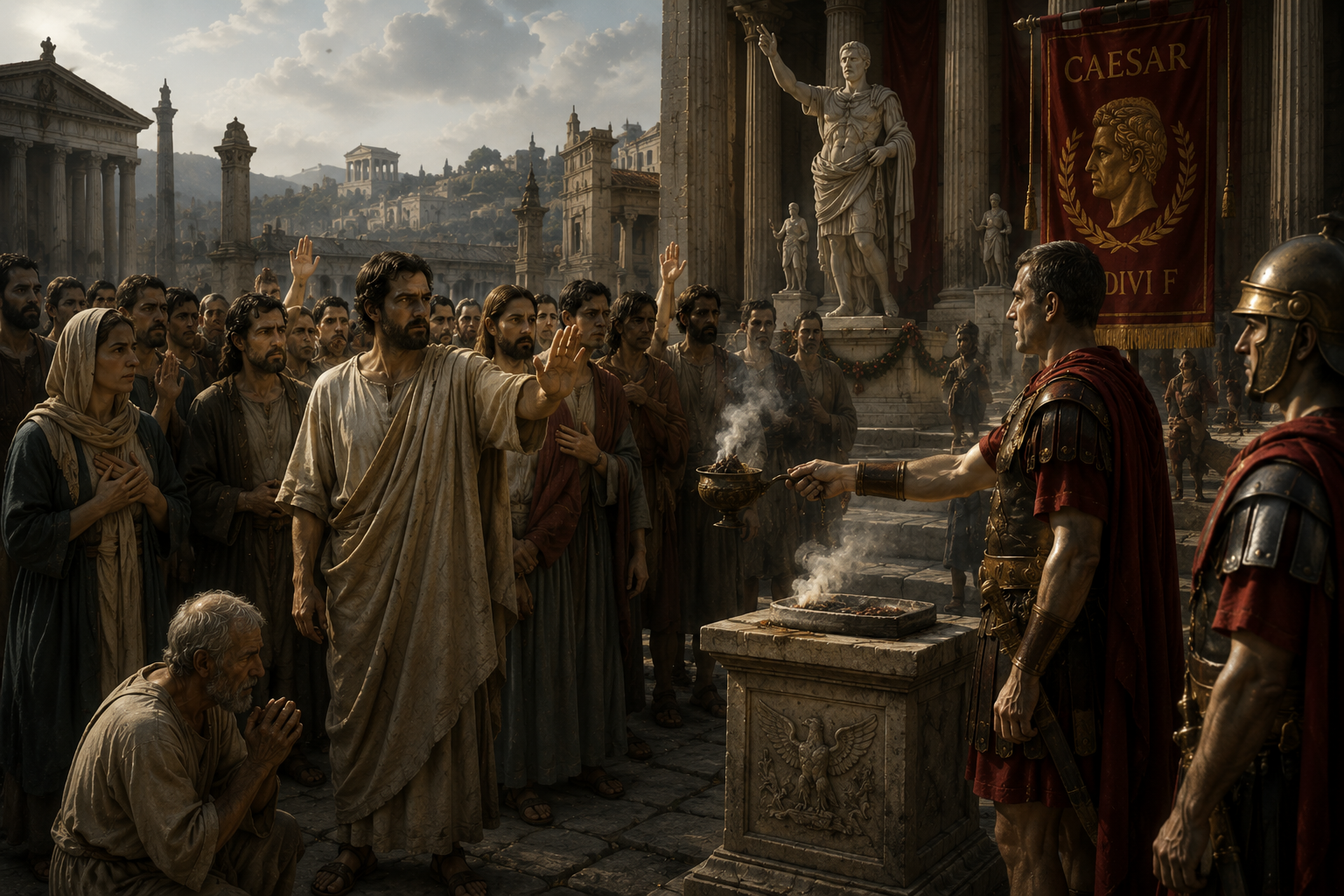
The cult that had first been centered here was the same cult that caused Christian persecution in Asia. It was for the very reason that they would not pay homage to the Roman leadership as divine that they were martyred within the Roman Empire. But it is also the same that led those who did not pay homage to the Pope, who continued to demand to be treated as the voice of god on earth, to be martyred by Christian Rome. The Greek word “Antipas” is derived from two words: “anti,” meaning opposite or instead of, and “Pas,” from pater, which is Father. Meaning someone against “Father” was martyred at Pergamon.
Many great Roman leaders were called fathers, “Pater Patriae,” meaning “Father of the Fatherland” or “Father of the Country”. Those who had these titles include Marcus Tullius Cicero (63 BC), Julius Caesar, Augustus, and many others. They also had the title of High Priest; the Roman leader was also the highest religious authority. The title Pontifex Maximus was their formal title.
While Rome was pagan, Jesus said: “And he said unto them, The kings of the Gentiles exercise lordship over them; and they that exercise authority upon them are called benefactors” (Luk 22:25).
Many great Roman leaders were called fathers, “Pater Patriae,” meaning “Father of the Fatherland” or “Father of the Country”. Those who had these titles include Marcus Tullius Cicero (63 BC), Julius Caesar, Augustus, and many others. They also had the title of High Priest; the Roman leader was also the highest religious authority. The title Pontifex Maximus was their formal title.
While Rome was pagan, Jesus said: “And he said unto them, The kings of the Gentiles exercise lordship over them; and they that exercise authority upon them are called benefactors” (Luk 22:25).
And he instructed His followers: “But be not ye called Rabbi: for one is your Master, even Christ; and all ye are brethren. And call no man your father upon the earth: for one is your Father, which is in heaven. Neither be ye called masters: for one is your Master, even Christ” (Mat 23:8-10).
Despite Christ’s clear warning, when Rome became Christian, it appointed a High Priest to be Master over the Christian church. And he was, and still is, called “Father” by billions of Christians and throughout time. The word “Pope” is not originally Latin but Greek. It comes from the word πάππας (pappas), meaning father. In this way, the Pope’s authority actually runs counter to Jesus’ authority. He commanded His followers not to follow in Rome’s footsteps.
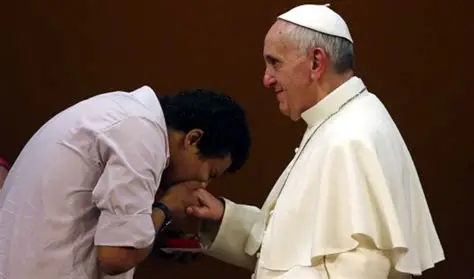
And the idea of a church Pope is derived from and a continuation of the adoration of Roman leaders.
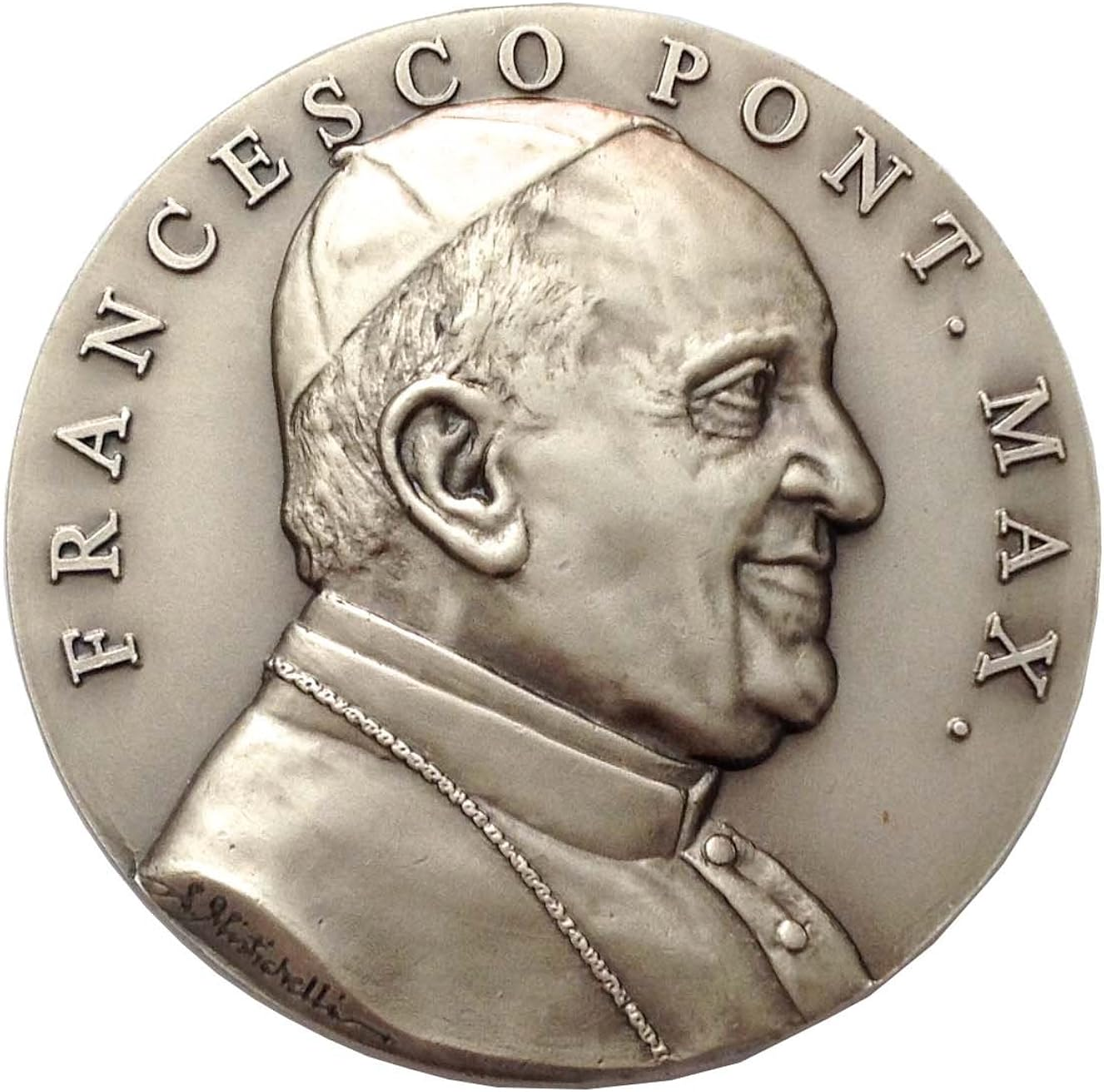
The Pope even inherited all of the Roman ‘leaders’ titles, such as Pontifex Maximus and High Priest.
This title contrasts with Christ’s claim to be the High Priest and to forbid His followers from being called “rabbi” or “master.” The Hebrew word literally means “my master” or “my teacher”. It comes from the Hebrew root “rav,” meaning “great” or “great one.” The ending is the first-person singular possessive suffix, meaning “my.” So Jesus warned against his followers calling any earthly person their great teacher or master.
The Pope’s position violates all of Christ’s laws regarding His church.
This mentality of accepting a “Pas” is also what led Christians to persecute Christians who were “Anti -Pas”.
The Pope even inherited all of the Roman ‘leaders’ titles, such as Pontifex Maximus and High Priest.
This title contrasts with Christ’s claim to be the High Priest and to forbid His followers from being called “rabbi” or “master.” The Hebrew word literally means “my master” or “my teacher”. It comes from the Hebrew root “rav,” meaning “great” or “great one.” The ending is the first-person singular possessive suffix, meaning “my.” So Jesus warned against his followers calling any earthly person their great teacher or master.
The Pope’s position violates all of Christ’s laws regarding His church.
This mentality of accepting a “Pas” is also what led Christians to persecute Christians who were “Anti -Pas”.
By adding all of this information in the message to the church of Pergamon, God cleverly ties both Christian persecution to the Roman state and to Papal Rome as its continuation. No one should adore a leader in that way. Declaring the “anti-pas” as His “faithful martyr” and by it showing that His faithful followers do not follow an earthly father and master like done at Pergamon. And refusing to do so is credited by God as “holdest fast my name”. God’s names are really titles. His titles are Elohim, the mighty one. El Shaddai, God Almighty. These are important claims, for it shows that no man has authority over God and His law. God’s name is the seal in His law. He is called Adonai, which means Master. Elyon, which means Most High. He is called YHWH Yireh – The Lord will provide. YHWH Shalom, The Lord is peace. Any leader placing themselves up against God is anti-God. Any peace not of God is a false peace. Any man claiming to be the provider is a false god. Showing homage to anyone claiming God’s titles is worshipping a false god.

The Romans and the Chaldeans (Babylonians)
The great religion of ancient Babylon may seem to have vanished, but in reality, its doctrines and many of its practices were adopted by nearby cultures that were incorporated into Rome. But even before that, they were great teachers to the Greeks, who in turn inspired the Roman religion.
As Babylon was destroyed, the Caldeans were also scattered around. And the wise among them often gained positions in other territories. They preserved astronomical and mathematical knowledge; many surviving cuneiform tablets from the Hellenistic period were written by Babylonian temple scholars. Greek astrology, especially after Alexander the Great, was heavily influenced by Babylonian astrology. Astrology and religious mythology were often connected. There are many similarities between Greek and Mesopotamian myths, like the flood stories, divine councils, hero journeys, and underworld traditions. They reflect shared ancient Near Eastern traditions and cultural exchange.
No longer having a distinct land, the Chaldeans came to be known in Rome as astrologers and diviners, showing the origins of much of Rome’s inspiration in these areas.
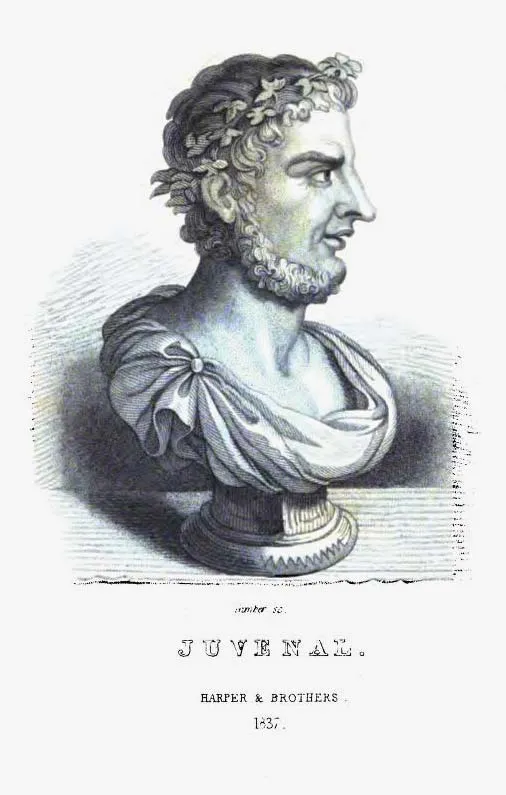
“the crowd (or tribe) of Chaldean astrologers.” mocking Romans who constantly seek horoscopes from “Chaldeans” The art is still popular today. The standard Latin dictionary defines Chaldaei as: “the Chaldaeans… distinguished for astronomy and astrology.”
Although they did not become a large group in Rome, their teachings were widely accepted, and many did move there as Rome became a great nation.
Just as when the USA became a great nation, immigrants flooded the land in search of opportunity, so it was with Rome in its day. Once Rome became powerful and advanced, it was the place to be. This made Rome, although ethnically and religiously Western European, also the international city of its day.
In the time of the disciples, the city was referred to as the new Babylon. The old Babylon was destroyed and ruined, but its reputation remained and was compared to Rome.
Even in the book of Peter and in the book of Revelation, Babylon is used as a code word for Rome. Several early Christian writers, such as Irenaeus (2nd century), Tertullian (2nd-3rd century), and Jerome (4th century), who translated the Bible into Latin, say Babylon refers to Rome. In addition, some Jewish texts say that Babylon destroyed the temple and Jerusalem the first time, and that Rome did so as well, destroying it the second time and therefore being a second Babylon.
In the time of the disciples, the city was referred to as the new Babylon. The old Babylon was destroyed and ruined, but its reputation remained and was compared to Rome.
Even in the book of Peter and in the book of Revelation, Babylon is used as a code word for Rome. Several early Christian writers, such as Irenaeus (2nd century), Tertullian (2nd-3rd century), and Jerome (4th century), who translated the Bible into Latin, say Babylon refers to Rome. In addition, some Jewish texts say that Babylon destroyed the temple and Jerusalem the first time, and that Rome did so as well, destroying it the second time and therefore being a second Babylon.
Greek and Roman religion, although distinct, is of the same nature as Babylonian religion. Even of most pagan religions. It centered around the sun god, the weather gods, and the fertility goddesses. They were calendar gods, worshipped at their appointed times. They were simply the same religion expressed differently with different mythological stories. The principles remained largely the same. The governmental structure as well, where these gods and government were intertwined, and the leader was the voice of god on earth. In the Bible, God does not differentiate the religion of the pagans from each other but often just refers to them as the “other gods” of the “goy” (nations).
Rome’s connection with Babylon is also shown in the visions given to the prophet Daniel, which indicate that the empires mentioned to him continue something Babylon started. In Daniel 2, Rome and Babylon are seen as different body parts of the same body. Babylon is the head, Pagan Rome the legs, and Rome divided between the tribes, the feet Jesus will crush at his coming.
And although the state represents different groups of people suppressing God’s people, they are united in a body as their purpose and behavior are seen as blasphemers and warriors against God. They consistently not only suppress God’s people but demand from them that they regard their governmental body as a higher authority than God Himself.
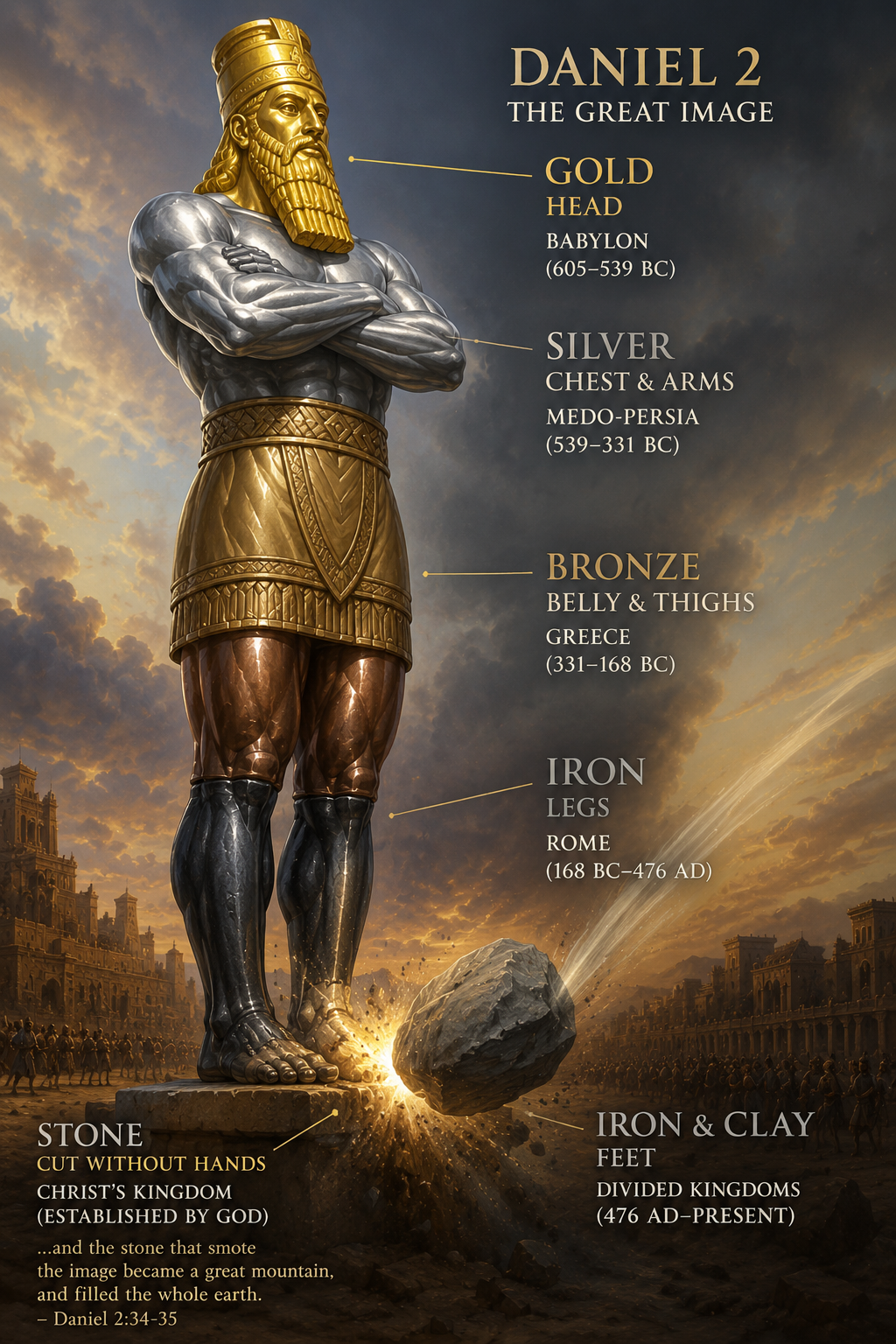
And so Rome became the new Babel. The very empire God wanted to protect His people from if they had been faithful. Whose birth was the direct result of Israel’s falling away. And which birth as a Christian power was a direct result of the followers of Christ falling away.
And it is in the Roman beast’s honor that a new superpower of the ten tribes, a territory they colonize, will, in the final days of earth’s history, repeat the beast’s behavior. And demand a loyalty to the government, a sign of loyalty which, if taken, will place God’s people in violation of God’s law.
And we are talking, of course, of the second beast of Revelation 13 and the mark of the beast. Being the last beast of them all to continue the beastly behavior before Christ says enough forever. One final test will come upon God’s people. Will they bow to religious ordinances of a state, or will they choose loyalty to God as the highest religious authority and be denied the right to buy or sell? (Revelation 13:11-18) It is this final test that is right now coming upon us. And God has made it clear, by saying the mark of the beast is in homage to the Roman beast, that this is a Christian aggression, not a pagan like the former pagan beasts. It mirrors Christian Rome. The Mark of the Beast law is therefore likely to claim loyalty to Christ in its laws. To make decition og Christ behalf. To make laws on Christ’s behalf. Making the final conflict Christian brother against Christian brother. Not unlike the foundation of Rome, where one brother killed the other to create and protect a form of government and the idea of peace created on bloodshed.
As God said through the prophet Habakkuk : “Woe to him that buildeth a town with blood, and stablisheth a city by iniquity!” — Habakkuk 2:12
And it is in the Roman beast’s honor that a new superpower of the ten tribes, a territory they colonize, will, in the final days of earth’s history, repeat the beast’s behavior. And demand a loyalty to the government, a sign of loyalty which, if taken, will place God’s people in violation of God’s law.
And we are talking, of course, of the second beast of Revelation 13 and the mark of the beast. Being the last beast of them all to continue the beastly behavior before Christ says enough forever. One final test will come upon God’s people. Will they bow to religious ordinances of a state, or will they choose loyalty to God as the highest religious authority and be denied the right to buy or sell? (Revelation 13:11-18) It is this final test that is right now coming upon us. And God has made it clear, by saying the mark of the beast is in homage to the Roman beast, that this is a Christian aggression, not a pagan like the former pagan beasts. It mirrors Christian Rome. The Mark of the Beast law is therefore likely to claim loyalty to Christ in its laws. To make decition og Christ behalf. To make laws on Christ’s behalf. Making the final conflict Christian brother against Christian brother. Not unlike the foundation of Rome, where one brother killed the other to create and protect a form of government and the idea of peace created on bloodshed.
As God said through the prophet Habakkuk : “Woe to him that buildeth a town with blood, and stablisheth a city by iniquity!” — Habakkuk 2:12