




The trumpets in Revelation have long been the subject of speculation. Many interpret them as plagues that will come upon the earth’s population in the end times.
In the Bible, trumpets were used to call people to assemblies and feasts, and to warn of danger or an approaching army.
In the book of Daniel, we learn how judgment came upon Babylon through the Medo-Persian Empire, how Alexander the Great conquered that empire, and how conflict arose between the kings of the North and the South, who ruled the two remaining Greek kingdoms. Daniel also shows how these events affected God’s people.
Rome gained influence differently: through peace treaties, agreements, and other diplomatic means. Although Rome’s expansion and takeover were, in part, more diplomatic, they were just as certain.
When it was time for the iron kingdom, Rome, to fall, God devoted time to describing its downfall, just as He had in the book of Daniel. Since God took time to show Daniel the fall of earlier empires, it should not surprise us that He would also explain Rome’s downfall.
However, Rome was not defeated in a day. It was powerful, and its ability to reinvent itself prolonged its existence; several powers had to strike it before it fell.
In total, seven wars each played a role in bringing down the iron kingdom. Another conflict that brought Rome down is not described as a trumpet, but as occurring between the sixth and seventh trumpets.
Each trumpet describes one of these seven attacks on Rome. We should consider why God spends time describing these political changes between empires. The reason is that God loves people and especially desires to care for His children. He includes accounts of political turmoil when it affects His people, for several reasons.
First, these accounts help them feel secure in the Lord while the storm of conflict is raging. Second, they give them hope: when they see a prophecy fulfilled, they know God is in control and working for their good. Third, they help them understand the times they live in and what God expects of them.
To be specially protected during times of strife, God’s people need a Mediator pleading on their behalf. Only those covered by Christ’s blood can be spared when judgment falls upon God’s enemies. This is why God tells His people to separate from spiritual Babylon before the plagues of judgment come upon her. This separation was also relevant during each trumpet judgment against Rome.
The seven trumpets can be compared to Israel’s fall of Jericho. The Israelites marched around the city once a day for six days, blowing their trumpets, and seven times on the seventh day. At the final turn, the city’s walls fell by the word of God.
We see a similar pattern in the fall of Rome. The first six circuits, one each day, are directed at the Roman beast; on the seventh day, seven more circuits are made. This parallels the seven plagues, described here as God’s final act against the last head of the Roman beast and her allies.
Because of the terrible storm approaching Rome, the vision pauses to show God’s care for His people. The first verse of Revelation 8 belongs with the seals in the preceding chapter, which has caused some confusion. After the vision of the seals ends, a new scene begins: in verse 2, seven angels receive seven trumpets. Before they sound them, however, the scene pauses and shifts to the altar of incense in heaven’s sanctuary:
“And I saw the seven angels which stood before God; and to them were given seven trumpets. And another angel came and stood at the altar, having a golden censer; and there was given unto him much incense, that he should offer it with the prayers of all saints upon the golden altar which was before the throne. And the smoke of the incense, which came with the prayers of the saints, ascended before God from the angel’s hand. And the angel took the censer, and filled it with fire of the altar, and cast it into the earth: and there were voices, and thunderings, and lightnings, and an earthquake” (Rev 8:2-5).
Because of His grace toward His people and the trials they will face, God presents the vision of the altar of incense, which represents their prayers. This refers to the sanctuary service in which, as the book of Hebrews says, Christ ministers. The priest sprinkled blood on the altar of incense to signify that God hears His people’s prayers and protects them, not because of their own righteousness but through the atoning blood. In this way, God reminds us that we are not abandoned in times of conflict: through Christ, He hears our prayers.
We should not despair, but trust in the blood of the atonement. The prophecy had already shown that God’s people would be scattered throughout the Roman Empire and its divisions, placing them in the eye of the storm. This helps explain why the vision of the altar, where their prayers were presented, was so important as the trumpets sounded.
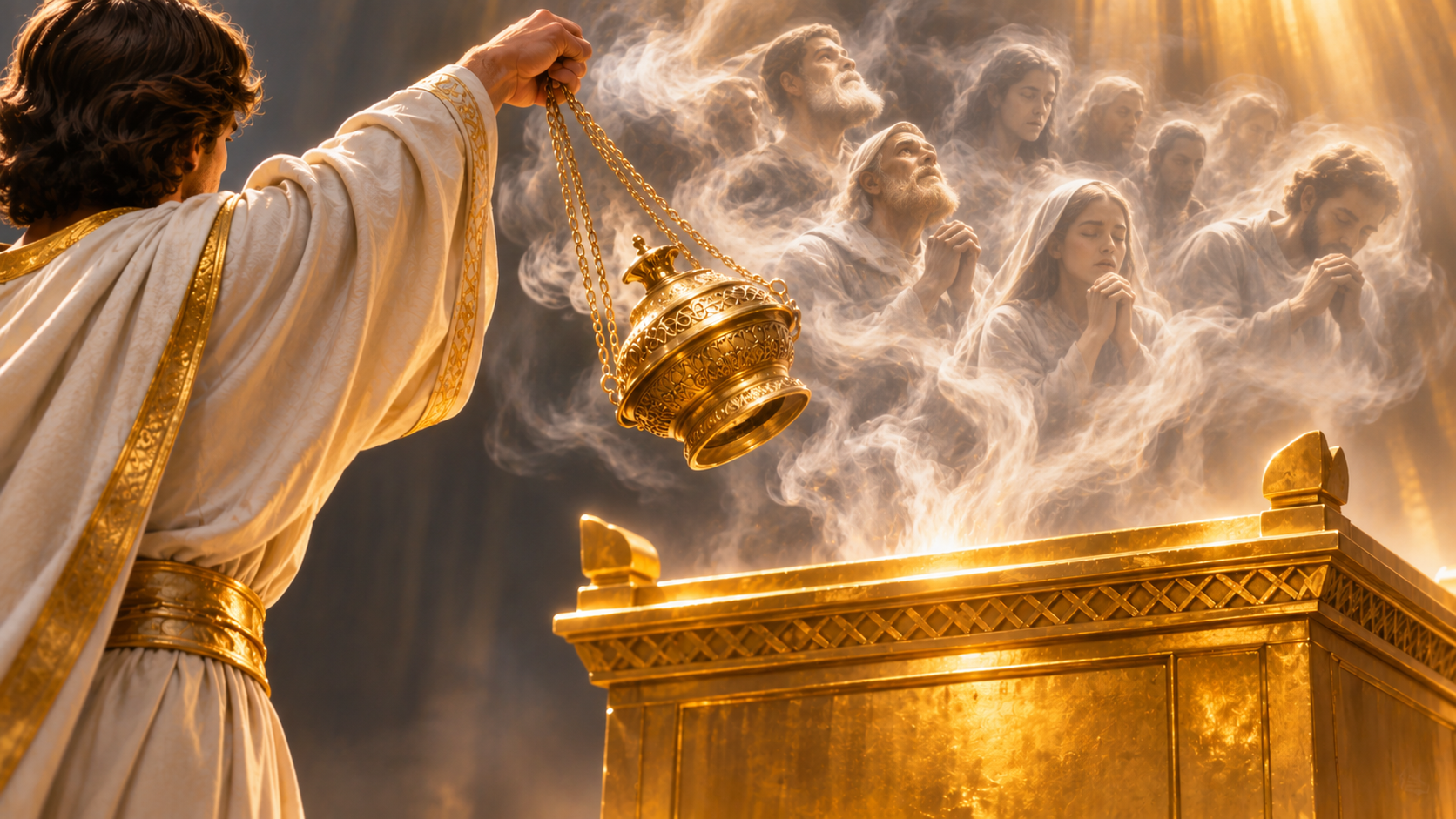
The mingling of fire from the altar with the prayers, and the casting of that fire upon the earth, are also part of what causes the trumpets to sound. A popular belief is that this refers to the end times, when the door of probation closes. But throughout biblical history, many probations have ended. This happened in the time of the Flood, in Egypt and Babylon, and among many nations, including Assyria and Moab. It also happened at the end of the Jewish nation’s 70 prophetic weeks. In the Bible, an “end time” marks the end of an era: judgment is first announced, then executed.
In part, the trumpets are caused by Rome’s devastating acts against God’s people and because of their prayers in despair, their pleas for justice. Their prayers are, in part, why God is punishing Rome by allowing these wars. Mingled with the fire from Christ’s sacrifice, their prayers are cast upon the earth, especially upon Rome. The wars weaken God’s greatest enemy by fragmenting its power and influence while God’s people patiently wait for God’s kingdom to come.
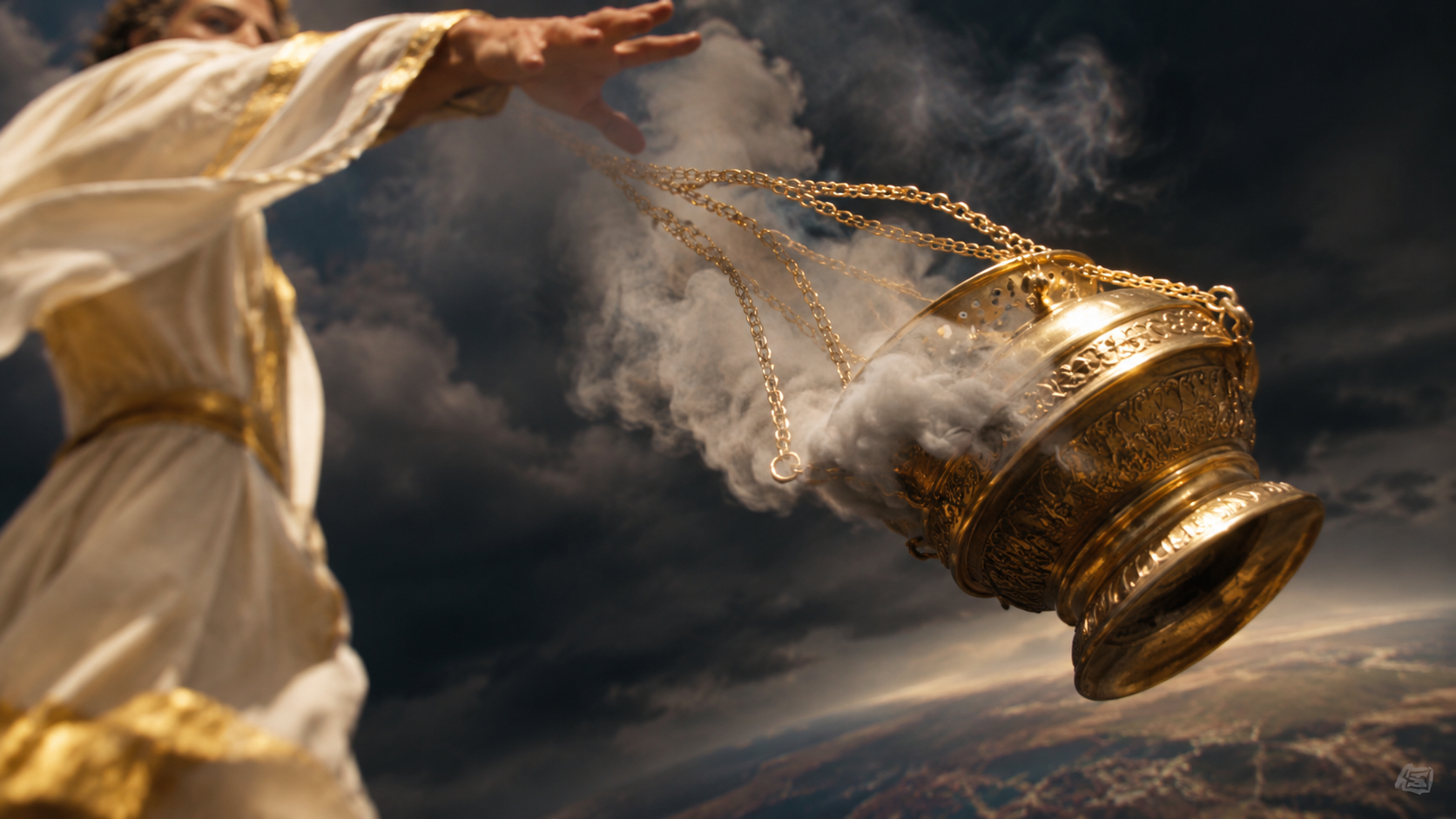
At the height of its power, Rome seemed undefeatable, but its sins were immense. It had the blood of Christ, the apostles, Jews, and many Christians on its hands. God would not ignore what Rome had done or the suffering it continued to cause. Its cup of sin became full when it presumed to speak and act on God’s behalf. But because Pagan Rome’s and Papal Rome’s sins differed in expression and nature, God would deal with them in turns.
The difference between this scene and the closing of final probation is that, when final probation closes, Christ leaves the sanctuary. He is the High Priest. Here, an angel casts the golden censer onto the earth, and the trumpets begin to sound. The passage does not mention Christ moving within the sanctuary. In fact, the Most Holy Place and a final judgment are seen when the seventh trumpet sounds. Although the angel’s scene may foreshadow the results of all the trumpets, its placement in the text suggests that it has further meaning.
Afflicting One third
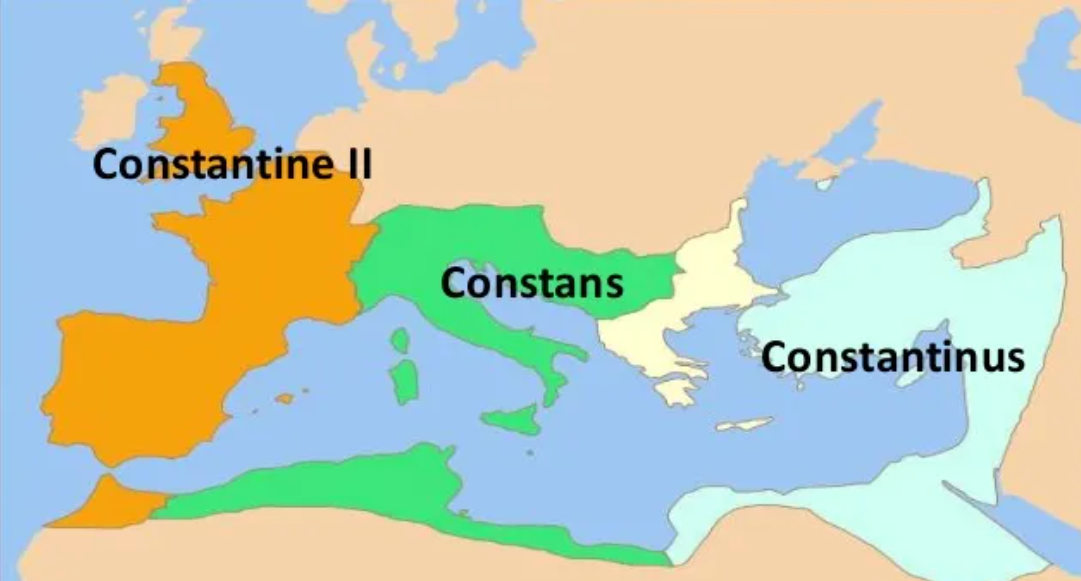
Constantine divided the empire among his three sons. This division helps explain the repeated references to calamity striking one third of the people. The first attacks that weakened the Western Roman Empire affected only one third of the empire.
The first trumpet: War from the North
“The first angel sounded, and there followed hail and fire mingled with blood, and they were cast upon the earth: and the third part of trees was burnt up, and all green grass was burnt up” (Rev 8:7).
This is symbolic language, as Revelation is written in symbols. Each symbol relates to the identity and characteristics of the approaching army.
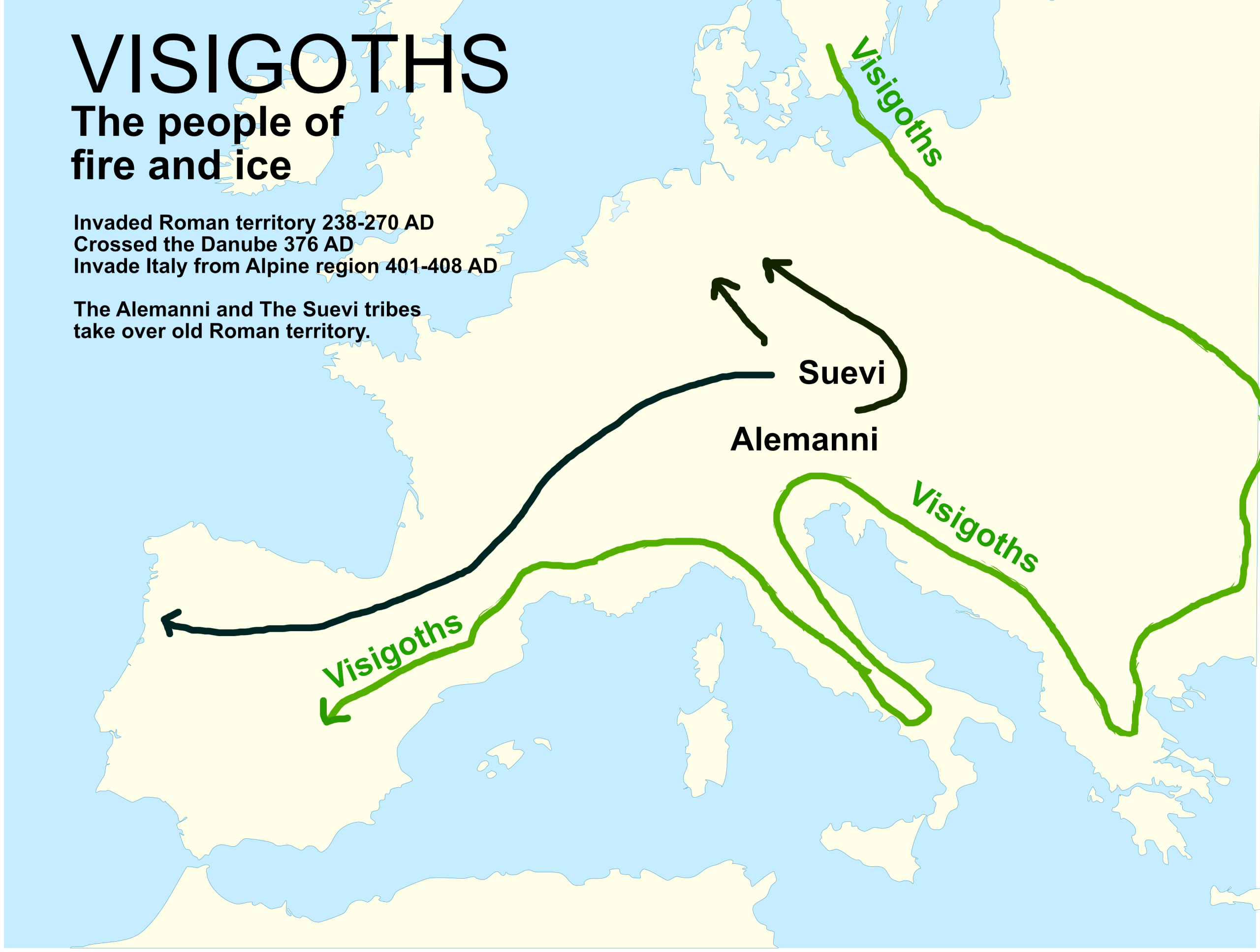
The first great blow to Rome came from the Goths, a Germanic people from the north. Between 238 and 270 AD, Goths repeatedly invaded Roman territory. In 376 AD, they crossed the Danube in large numbers. From 401 to 408 AD, the Visigoths invaded Italy from the Alpine region. Their presence was a plague, robbing the Romans of peace.
The Goths came from the lands of ice and cold to settle in mid-Europe. When pushing towards Rome, they came in winter, even pulling their wagons across the frozen river, and during heat waves. Nothing could stop them. As they advanced, they spread terror, killing men and driving people from their settlements. They were a people of fire and ice, leaving a trail of blood. As one account describes it: “In a season of such extreme heat that the beds of the rivers were dry, Alaric invaded the dominion of the West. A secluded ‘old man of Verona’ [the poet Claudian], pathetically lamented the fate of his contemporary trees, which must blaze in the conflagration of the whole country; and the emperor of the Romans fled before the king of the Goths.” (Daniel and Revelation, p. 189, quoting Alexander Keith on Gibbon’s History of the Decline and Fall of the Roman Empire.) The Gothic leader Alaric rampaged across Italy and controlled it for a time. Rome’s streets were filled with the dead. The Goths’ presence caused fear and dismay, but God’s people had been forewarned and prepared. God was protecting His faithful people.
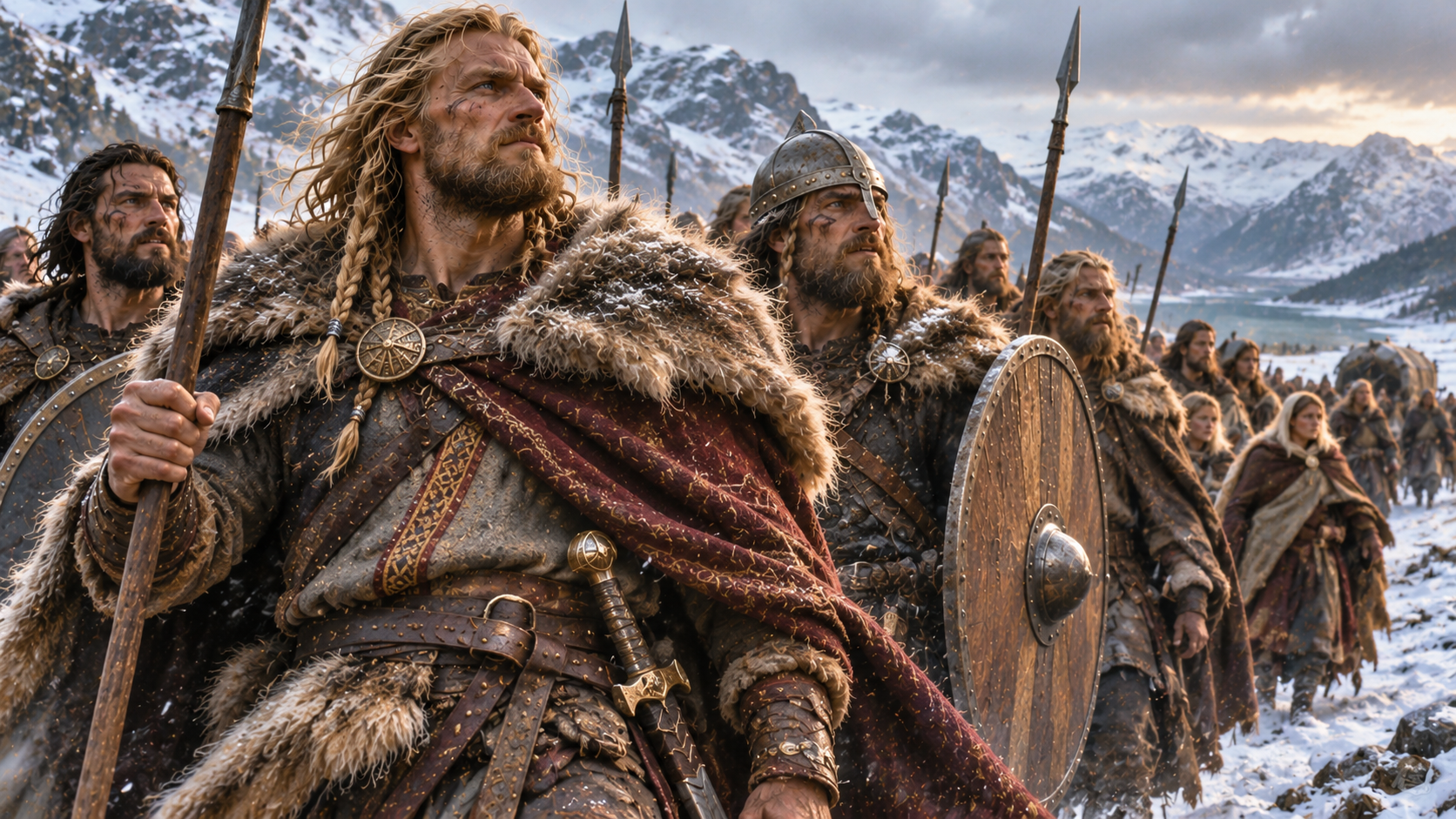
Rome gained control of the Upper Danube region in the first century, giving it a strong natural northern frontier. The region also connected Rome’s western provinces with the Balkans and served as an important base for expansion into central Europe. The Goths’ presence and the havoc they caused undermined this northern defense, disrupted trade and tax collection, and dealt Rome a major setback.
This was just the beginning of Rome’s loss of territory and influence.
The Upper Danube eventually fell mainly to other Germanic groups such as the Alemanni, Suevi, and later Bavarians.
The Goths did not succeed in bringing Rome down. Rome remained powerful, particularly because it had the largest navy in the Mediterranean. That, however, was about to change.
The second trumpet: The Sea War
Verse 8-9: And the second angel sounded, and as it were a great mountain burning with fire was cast into the sea: and the third part of the sea became blood; and the third part of the creatures which were in the sea, and had life, died; and the third part of the ships were destroyed.
Again, the phrase “the third part” indicates that the Western Roman Empire is under attack in this trumpet. Rome’s victory in the Punic Wars (149–146 BC) had helped make it a great power. It became the dominant power in the western Mediterranean, gaining control of valuable North African land and agricultural resources. The wars also removed Rome’s greatest rival in the region and greatly increased its wealth, trade, and military strength. Holding on to these gains was therefore essential to Rome’s future.
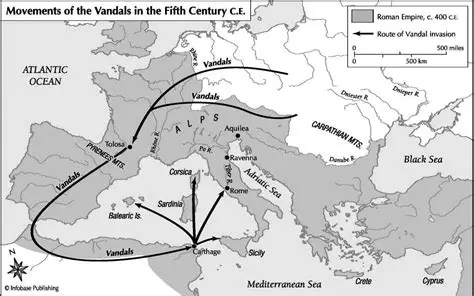
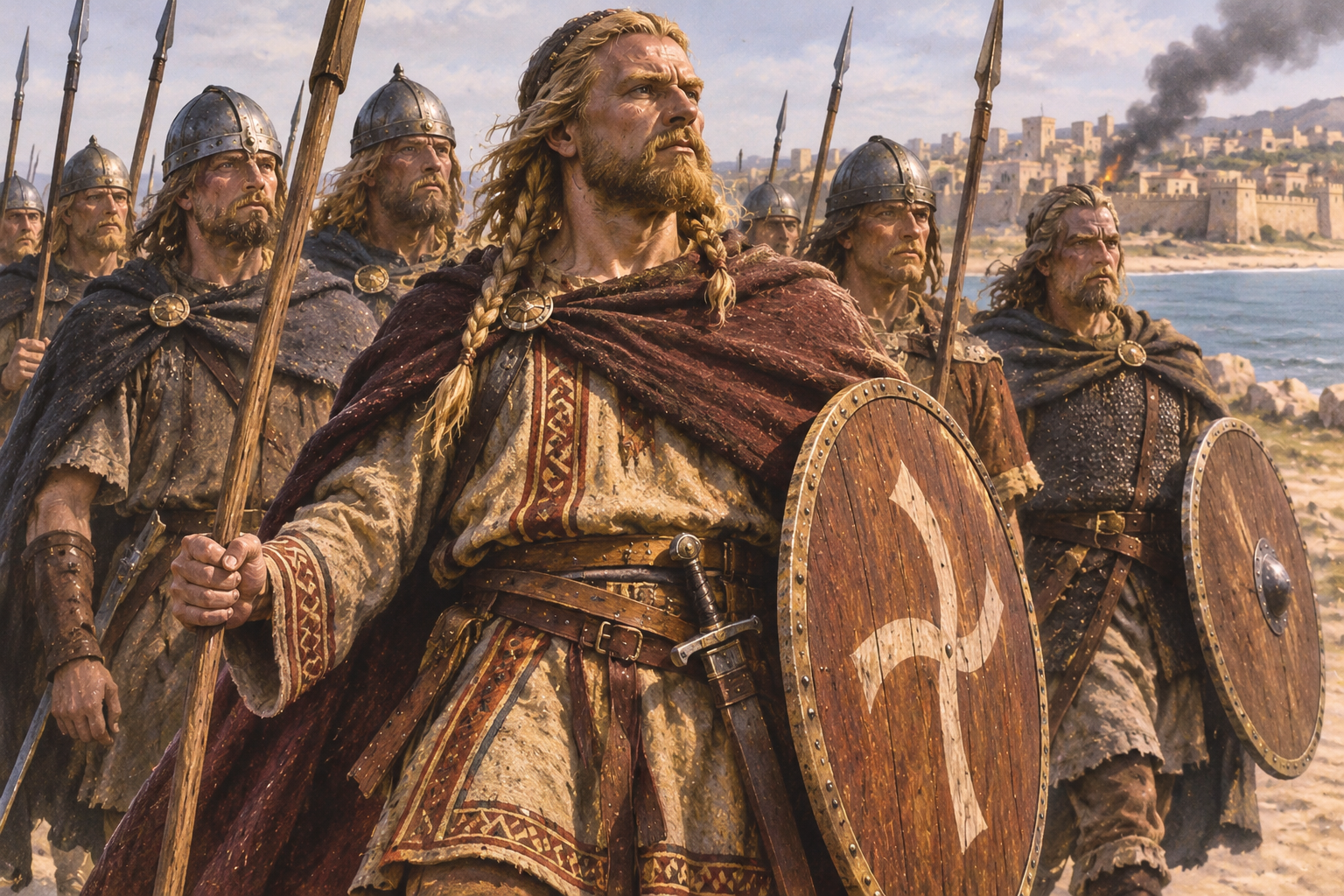
After being weakened from the north, Rome now faced a storm from the south. The next conflict the trumpet described was led by another Germanic people: the Vandals. Their king, Gaiseric (also known as Genseric), conquered parts of North Africa, including the remains of Carthage, Rome’s ancient rival. He ruled from AD 428 to 468. The Vandals’ raids and conflicts with Rome were so disruptive that the word “vandal” is still used for someone who deliberately destroys property.
The Vandals entered Rome in June 455 AD, looted the city for about 14 days, and then left.
The Vandals operated across the western Mediterranean, reaching Spain, Liguria, Tuscany, Campania, Lucania, Bruttium, Apulia, Calabria, Venetia, Dalmatia, Epirus, Greece, and Sicily.
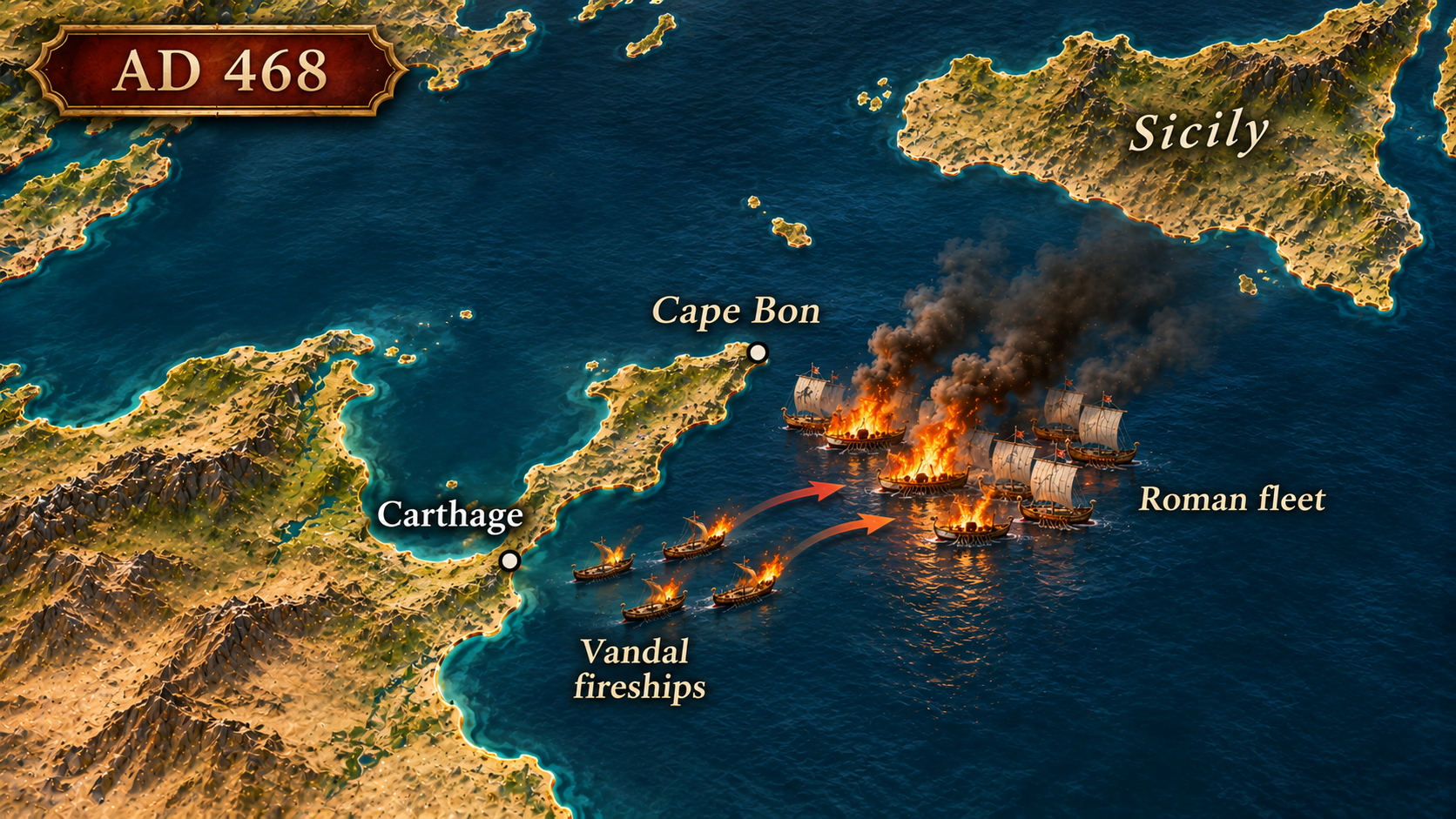
In 468 AD, Eastern Emperor Leo I sent a large Roman fleet against the Vandals. According to the ancient historian Priscus, 1,100 ships and thousands of soldiers were sent against Genseric. The Roman fleet suffered a devastating loss near Carthage, where victory had seemed certain. Genseric requested several days to negotiate while secretly planning a counterattack. At night, he sent fireships into the densely packed Roman fleet near Cape Bon. Many Roman ships burned, collided, or were captured, turning the expedition into a disastrous defeat. After this victory, the Vandals became, in effect, masters of the sea. Rome suffered another major defeat from which it could not recover.
“A great mountain burning with fire was cast into the sea.” In the Bible, a mountain can symbolize a kingdom or a leader, while fire represents destruction that cannot be undone.
The third trumpet: The Fountains of the Waters
Verse 10-11: And the third angel sounded, and there fell a great star from heaven, burning as it were a lamp, and it fell upon the third part of the rivers, and upon the fountains of waters; and the name of the star is called Wormwood: and the third part of the waters became wormwood; and many men died of the waters, because they were made bitter.
The source of Rome’s waters was in the north, among the Alps. This suggests that, once again, the war against Rome came from the north.
Again, the calamity affects a third part, referring to the territory of the Western Roman Empire. In the Bible, a star can also symbolize a leader, especially when the prophecy focuses on a person rather than a nation. A mountain, by contrast, can represent both a king and a kingdom.
The next major attack that exhausted the Western Roman Empire came from Attila the Hun. Attila ruled a multiethnic Hunnic empire or confederation, rather than a single nation. His forces also included Ostrogoths, Gepids, Alans, and other Germanic peoples.
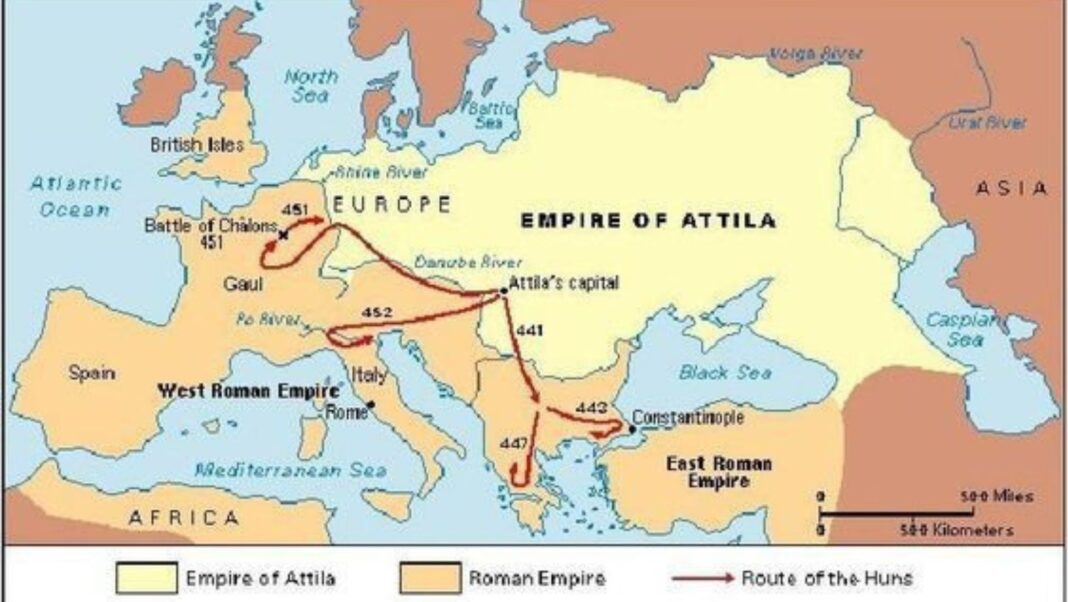
In 451 CE, Attila invaded and devastated parts of Gaul, today’s France. Roman forces and their allies stopped his advance, forcing him to withdraw, although Rome’s control of Gaul was already breaking apart. The following year, in 452 CE, Attila attacked northern Italy, causing widespread destruction. He entered Italy from the north, near what the text calls Italy’s “fountain of waters,” and destroyed cities such as Aquileia before withdrawing. These invasions damaged Roman infrastructure, agriculture, and tax revenues, draining the Western Empire’s money and manpower and dealing a major blow to an already fragile empire. Gaul was particularly important to Rome’s well-being. The territory now called France was, so to speak, a backbone of both Pagan and Papal Rome. Although Rome retained some authority in Gaul, its power there continued to decline.
But Roman control was badly weakened, and within about 25 years, most of Gaul had passed to Franks, Visigoths, and Burgundians. By 476 AD, Roman imperial rule there was essentially finished.
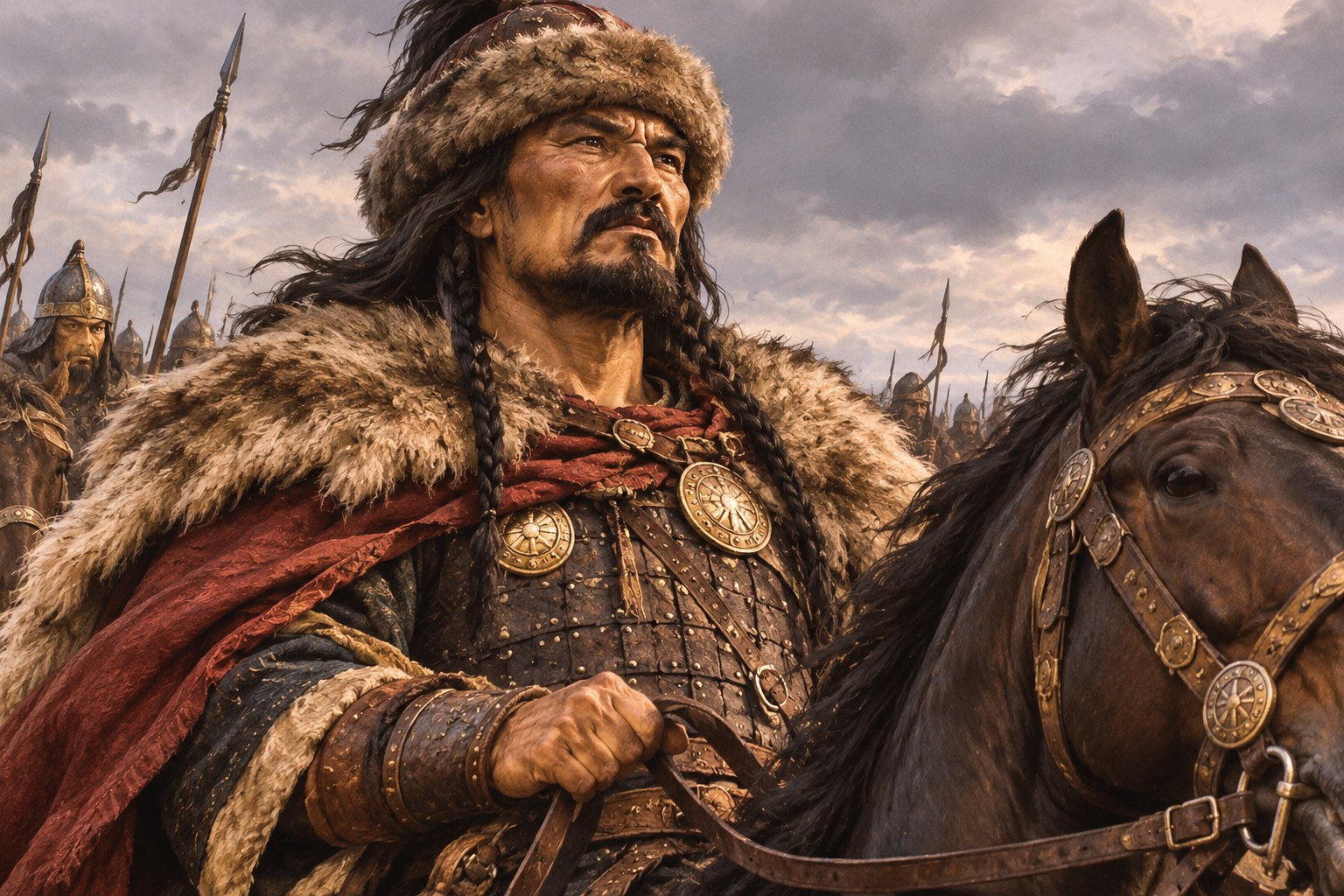
Attila was a temporary, flickering star, and his rampage largely ended with his death. Comparing him to a star rather than a mountain was therefore fitting.
“It was the boast of Attila that the grass never grew on the spot which his horse had trod. ‘The scourge of God’ was a name that he appropriated to himself, and inserted among his royal titles. He was ‘the scourge of his enemies, and the terror of the world.’ The Western emperor with the senate and people of Rome, humbly and fearfully deprecated the wrath of Attila. And the concluding paragraph of the chapters which record his history, is entitled, ‘Symptoms of the Decay and Ruin of the Roman Government.’ The name of the star is called wormwood.” (*Daniel and Revelation*, p. 192)
Under God’s law, a wife suspected of adultery was made to drink the “bitter water that causeth the curse.” Here, the people under Roman rule are described as drinking bitter water. By the time of Attila’s invasions in AD 451–452, the Roman Empire had been officially Christian for decades.
Nicene Christianity had become the empire’s official religion under Theodosius I in AD 380.
Attila attacked strongly Christian cities such as Metz, Reims, and Aquileia, targeting churches, clergy, and Christian populations. The wording of this curse also warned the true faithful church to remain faithful and not follow Rome’s hijacking of Christianity. If they committed Rome’s sins, they would share in her plagues.
The fourth trumpet: The Fall of Western Rome
Verse 12: And the fourth angel sounded, and the third part of the sun was smitten, and the third part of the moon, and the third part of the stars; so as the third part of them was darkened, and the day shone not for a third part of it, and the night likewise.
A clear example of the sun, moon, and stars symbolizing leaders appears in Genesis 37:9–10. Joseph dreams that the sun, moon, and eleven stars bow to him. Jacob interprets them as his own father and mother, and Joseph’s brothers. Joseph’s brothers became the fathers of eleven tribes, while Jacob became the father of all twelve tribes.
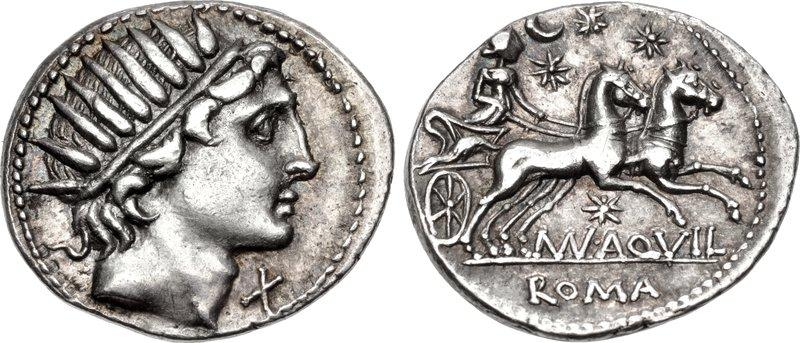
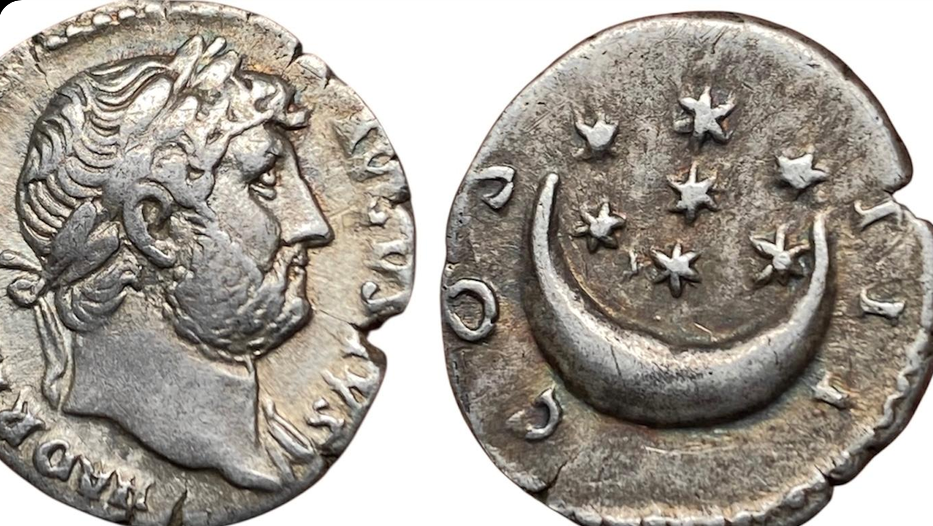
Prophetic passages use the darkening or falling of heavenly bodies as imagery for the fall or judgment of kingdoms and rulers. Examples include Isaiah 13:10, concerning Babylon, and Ezekiel 32:7–8, concerning Egypt. The fourth trumpet uses similar language to describe the fall of the Western Roman Empire, as in the accounts of Pharaoh and Babylon.
The earlier judgments make clear that this imagery is symbolic. Pagan leaders saw themselves as representatives of the sun, moon, and stars, with a mandate to rule their people. Rome, however, was not a monarchy like Egypt and Babylon. Its great luminaries were the emperors, senators, and consuls, representing the sun, moon, and stars of the Roman Empire. Western Rome fell in AD 476, and its last emperor was Romulus. Rome then came under the Exarch of Ravenna, who served the Eastern Roman emperor; “the other third” of the empire remained standing.
Western Rome was already weakened when Theodoric, an Ostrogoth, conquered Italy and established his rule there in AD 493. The Eastern emperor did not initially resist and accepted the change in power. Theodoric ruled Italy while allowing the consulship and the Senate in Rome to continue.
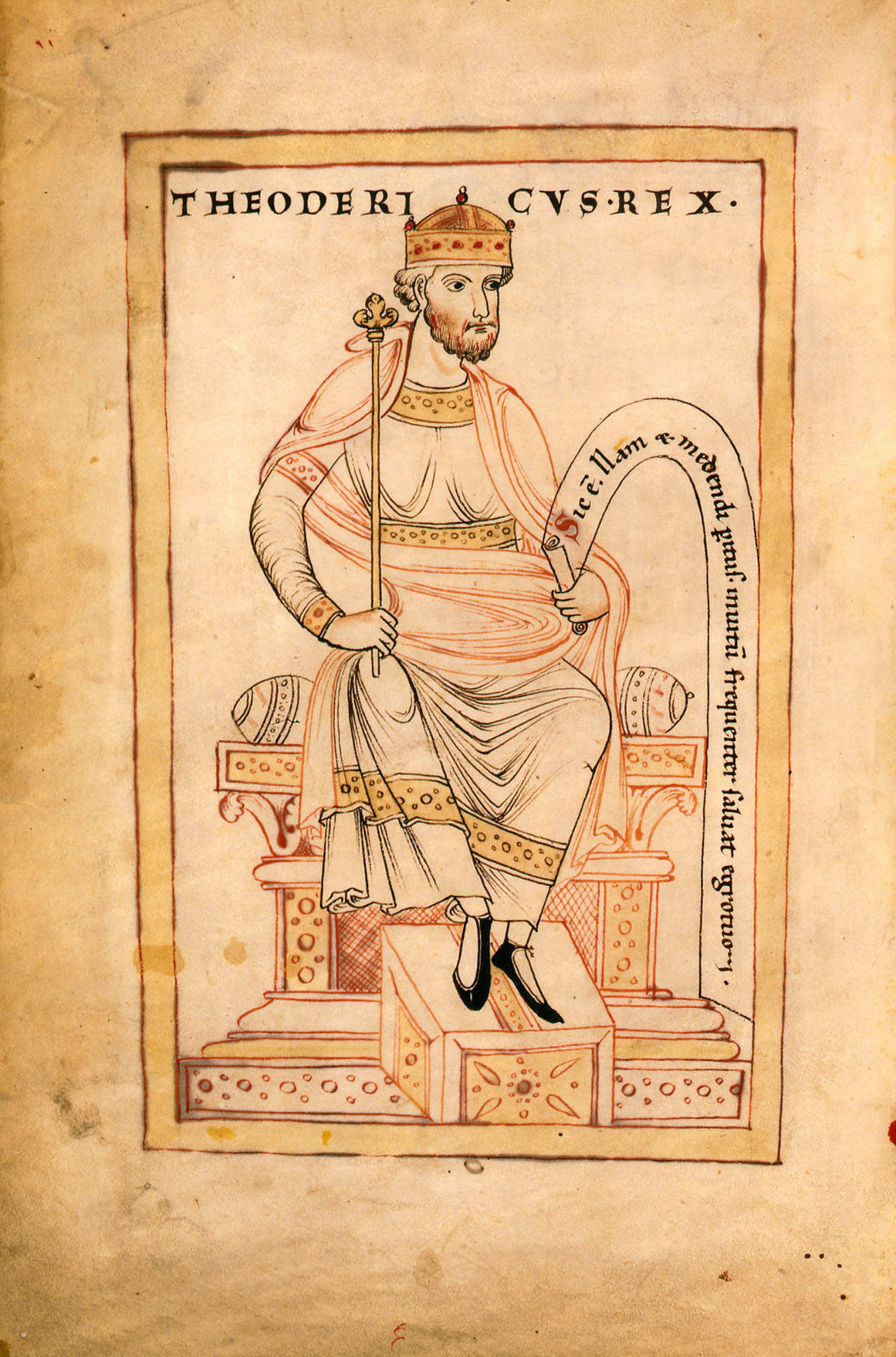
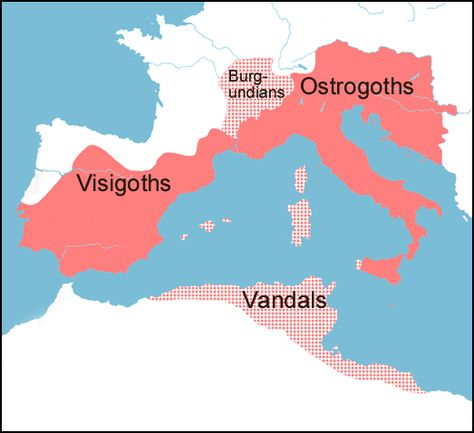
The Eastern emperor Justinian I, through his generals Belisarius and later Narses, defeated the Ostrogoths during the Gothic War (AD 535–554). Belisarius took Rome from them in AD 536, but the conflict continued. The Ostrogoths besieged the city again from March AD 537 to March AD 538, leaving its fate uncertain until they finally withdrew. Ironically, the Ostrogoths had kept the consuls in office, but the Eastern emperor eventually brought the consulship to an end. Justinian ended the ordinary Roman consulship in AD 541, while the Gothic War was still ongoing. He also continued his effort to centralize authority under the imperial system.
The Ostrogoths were largely Arian Christians, while the Papacy and the church Justinian had established as the head of the churches followed Nicene Christianity, later called Catholic and Papal Christianity. As long as Rome remained under Ostrogothic rule, it could not serve as the capital of Catholic Papal Christianity. The Ostrogoths’ removal from Rome was therefore significant not only for civil governance but also for religious governance. Most Roman Christians followed Nicene Christianity, which created tensions with the Goths. You could say they chose what they got.
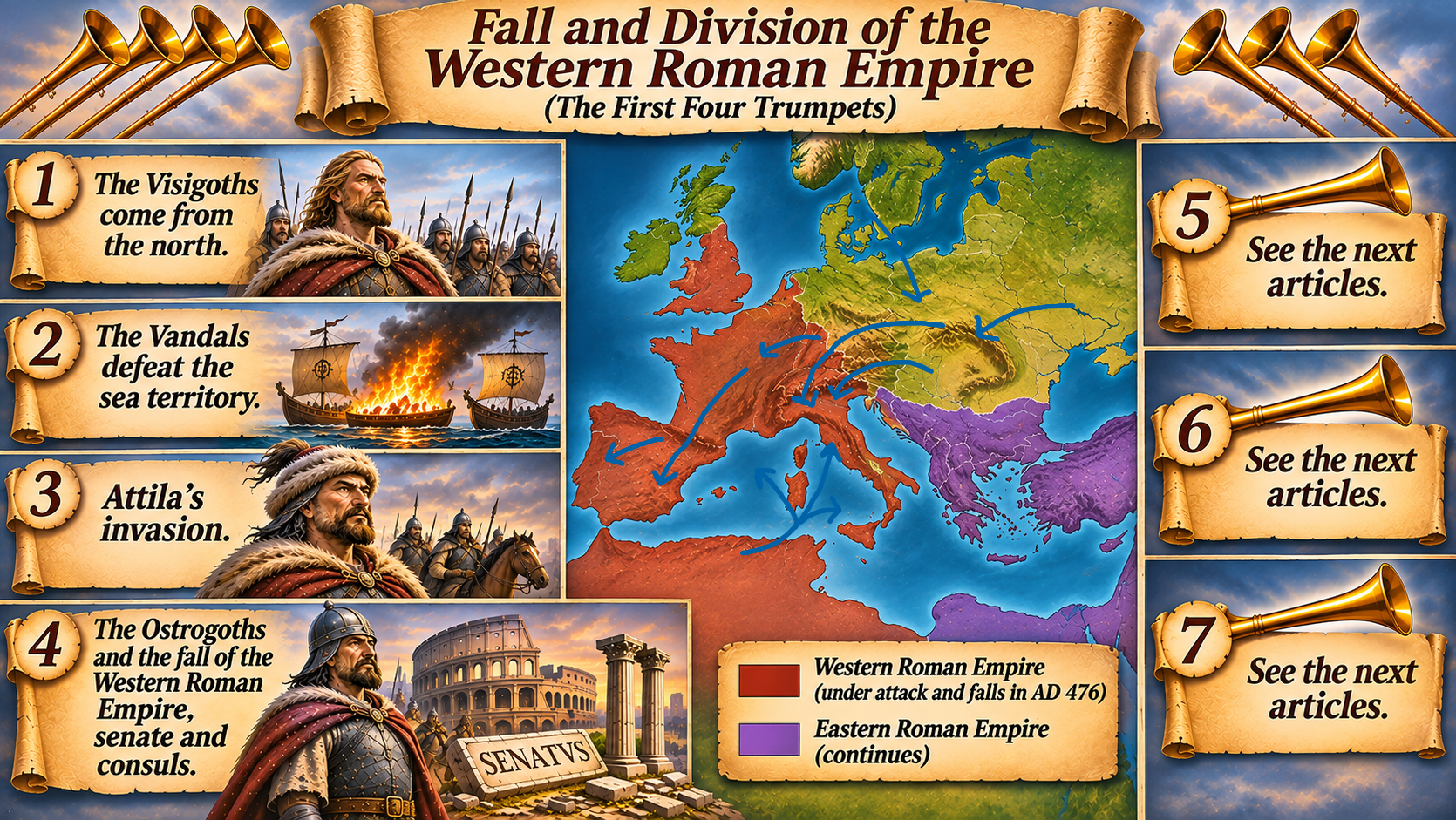
Four Trumpets: Political and Religious Conflict
In the end, religion played a significant role in the fall of the Western Roman Empire and the rise of Papal Rome. The Visigoths of the first trumpet, the Vandals of the second trumpet, many members of the Hunnic army, and the Ostrogoths were largely opposed to the form of Christianity promoted by Rome. This does not mean these invading powers were good people; indeed, they caused a great deal of bloodshed and misery. Much of the history that survives was written by those who endured their invasions, namely, Nicene and Catholic Christians. The Huns associated with the third trumpet were mostly pagan, but that does not mean they had no impact upon Papal Rome. The people in the areas they attacked in what is now France, then Roman Gaul, were Roman Christians. These attacks intensified Christian conflict, since part of the Hunnic army was Arian Christian.
Most surviving detailed accounts of Arian–Nicene conflicts were written by Nicene or Catholic authors, such as Victor of Vita, who wrote about the Vandals. Comparatively little literature survives from the perspective of Arian Germanic peoples. Because most surviving accounts were written by Catholic authors, they often emphasize the suffering of Nicene and Catholic Christians under Arian rule. However, the wars these peoples fought with Rome were not primarily caused by their Arian Christianity.
The Vandals, Visigoths, and Ostrogoths fought Rome mainly over land, political control, security, and independence. Religious differences sometimes intensified hostilities, especially when Arian rulers governed Nicene Roman populations.
All the same, the conflict represented by the four trumpets came upon Rome because of Rome’s sins. This does not mean that God was behind the bloodshed. God opposed the brutal force of the Assyrians and Babylonians. Still, the conflicts between them and Israel and Judah were said to result from Israel and Judah’s own folly, unfaithfulness, and behavior, which caused God to withdraw his protection.
Rome had to fall; the iron kingdom was to be replaced by “feet partly of iron and partly of clay,” marking its final phase.
In part, the alliance between the Roman Church, Nicene Christianity, and Roman governance contributed to many of the conflicts that beset Rome and eventually brought down the Western Empire. The Church riding the Roman beast was harmed by these attacks on Western Rome and by God’s withdrawal of protection, which came largely because of its behavior. The Bible clearly states that the unfaithful woman riding the beast is drunk with the blood of the saints; from a biblical perspective, she is among the great villains. This does not excuse the behavior of Arian Christians, who were ultimately defeated.
Justinian’s forces defeated the Vandals in 534 AD, and they were then dispersed and absorbed into other populations. Justinian likewise defeated the Ostrogothic Kingdom, and its remaining people spread among European populations. The Visigoths who lived in Gaul were initially Arian Christians. After they established themselves mainly in Spain, their king, Reccared I, converted to Nicene Christianity in 587; the conversion was formally proclaimed at the Third Council of Toledo in 589. A major factor was that the Roman population they ruled was already predominantly Nicene, so conversion reduced religious divisions between rulers and subjects.
It is interesting to note that the conversion of both the Roman beast and its horns to Christianity did not prevent judgments from falling upon the iron kingdom. In fact, all the trumpets sound after its conversion. Its mixture of truth and falsehood thus became its greatest sin, just as Babylon fell on the night when the king took cups from God’s temple and drank wine from them in an act of idolatry. On the wall, the king saw God write with his own hand: “Mene, Mene, Tekel, Upharsin.” “Mene” means, “God has numbered your kingdom and brought it to an end.” “Tekel” means, “You have been weighed in the balances and found wanting.” “Peres” means, “Your kingdom is divided.” Nebuchadnezzar’s conversion did not save Babylon.
So it was with Rome: the Western kingdom was divided among ten tribes. God had numbered it and brought it to an end.
Then you might wonder why the Pope survived and continued to rule from Rome. God punishes wrongdoing in order. Rome’s crimes had continued for several centuries, and its latest crime was to empower Papal Rome. Yet Rome had to fall for all its sins combined.
Once the Papacy began its suppression of Christians in Rome in 538 AD, a new era of crimes began under a new Rome. Its punishment would come later, after its cup was full and God poured out his cup of wrath upon it.
While Rome had been both a political and a religious power, Papal Rome was based on worship. Its authority rested largely on religious beliefs and on claims that Christ spoke through its institution. Its grip on Europe depended heavily on pacts with European kings and queens. Like the Visigothic leader who converted, these rulers feared opposition from the religious populations of their kingdoms. This allowed the Pope to crown them and dictate how they ruled their lands. The Pope maintained this dominance among the ten tribes for the full 1,260 years, until Napoleon took the crown and crowned himself. Before then, resistance movements against Papal Rome had emerged, though most were defeated. England and Scandinavia were among the first to break with papal allegiance: Sweden in 1527, Denmark-Norway in 1536–37, England in 1534, Scotland in 1560, Iceland beginning in 1550, and the Netherlands in 1648. However, most of these lands, apart from England, were not initially Roman territory; rather, they came within Papal Rome’s sphere of influence through religious and political agreements.
Although the Western Roman Empire fell in the 5th century, the Eastern Roman emperor continued to reign from Constantinople for many centuries. It is important to distinguish the Eastern Empire from Papal Rome, which gained independence and continued to rule from Rome as one of Rome’s “mountains” or “heads.” The Eastern Roman Empire remained an imperial monarchy until the fifth and sixth trumpets brought it down, this time not through invasions by Germanic tribes or other Christian or pagan forces. By then, a new religion had emerged.