





Article series: INTRODUCTION – WHO IS JEHOVAH? – WHO IS THE REAL ISRAEL – THE SCATTERING – THE GATHERING: ONE-FOLD – ONE ISRAEL : THE MODERN STATE OF ISRAEL NOT CHOSEN – DANIEL 9 AND THE PRE-TRIBULATION DECEPTION – JUDAISM ACE IS NOT A GODLY REPRESENTATION OF OT – THE BIRTH OF THE MODERN STATE OF ISRAEL – THE DIFFERENCE (between Biblical Israel taking of Canaan and modern Israel taking of Palestine) – What side should we take in the Palestinian and Israeli conflict?
First, the Jewish nation rejected their God and King, then they drove out from Jerusalem those who were faithful, and then they sought counsel from false teachers, false prophets, and even a false messiah. This ended in conflict with Rome. They thought God would save them, but He did not. Rome took the city, destroyed the temple, expelled them from the land, and scattered them. Rome named the land after their enemies, the Philistines, and the Temple Mount has been lost to Judaism ever since. Jesus had prophesied this when he said: «O Jerusalem, Jerusalem, thou that killest the prophets, and stonest them which are sent unto thee, how often would I have gathered thy children together, even as a hen gathereth her chickens under her wings, and ye would not! Behold, your house is left unto you desolate. For I say unto you, Ye shall not see me henceforth, till ye shall say, Blessed is he that cometh in the name of the Lord. And Jesus went out, and departed from the temple: and his disciples came to him for to shew him the buildings of the temple. And Jesus said unto them, See ye not all these things? verily I say unto you, There shall not be left here one stone upon another, that shall not be thrown down” (Mat 23:37-39 & 24:1-2).
Here, we learn of several events. One was that Jesus would have:
1. Gathered them
2. Protected them
IF they had received him
This echoes many Old Testament scriptures, which say God would gather and save them if they turned to Him. But Jesus says this plan became impossible because they would not let Him do it the right way.
He then tells them that the city will be destroyed once again, along with its temple.
Here we learn the outcome prophesied in the Book of Deuteronomy, the blessing and the curse. If they received God’s counsel, they would remain in the land and be protected; if they went their own way, they would be scattered from the land.
The first time they were scattered from the land, they were given the promise of a return and a new time of probation. A second chance.
Not all of Israel received this second chance; only a remnant did. The reason God gave the remnant a second chance and not all the tribes was that only the remnant was repentant, showing a genuine willingness to listen to God this time around. And they made an honest attempt.
But according to the vision given to Daniel, although they were allowed to rebuild the temple and the city, they would remain, in part, under pagan rule. And for 70 prophetic weeks, which is 490 years, this probation would last, until Christ the Messiah would come, who would lead them to salvation.
But when Christ came, He had no immediate inclination to free them from Roman oppression. Instead, He told them they needed to change their hearts and receive His sacrifice first.
This was not what they wanted, and they ultimately failed to meet the conditions for going from an oppressed nation to a free one. Jesus did not flatter them; He explained how they were misinterpreting God and His law, and how to do it rightly. He was «Shiloh» that was prophesied: «The sceptre shall not depart from Judah, nor a lawgiver from between his feet, until Shiloh come; and unto him shall the gathering of the people be.” (Gen 49:10) The word for gather here is placed in the setting of obeying; it is a gathering in obedience.
Moses warned them against rejecting Him: «I will raise them up a Prophet from among their brethren, like unto thee, and will put my words in his mouth; and he shall speak unto them all that I shall command him. And it shall come to pass, that whosoever will not hearken unto my words which he shall speak in my name, I will require it of him.” (Deu 18:18-19)
When Adam and Eve received the promise of a deliverer, they were glad and would probably have been shocked to learn that the long-desired Savior would be rejected by their descendants. Adam and Eve were also driven from their land, the Garden of Eden, because of disobedience, and could only hope to return if they received God’s atonement and became obedient.
Jesus said: «He that is not with me is against me: and he that gathereth not with me scattereth.” (Luk 11:23)
For many years, the scattered Jews who rejected Christ were mistreated in the lands they inhabited. Still, they managed to play their part in distancing the truth from God’s faithful by claiming that God’s culture and law were exclusively theirs and that Christians had no part in it. They have held this view to this very day.
The land, then called Palestine, was first under the Byzantine Empire, then under various Islamic nations, then under the Crusaders, and finally returned to Islam. The Ottoman Empire rebuilt the walls around Jerusalem, the same walls that can be seen today. A minority of Jews lived in the land under the various groups who controlled it, but they never regained their former power or were able to establish a lasting Jewish rule.
Christians themselves had become apostates and had repeated all the mistakes ancient Israel made in their time. Just as the Jews had persecuted and killed the prophets sent to them, Christians had done the same to their own brethren. Just as Israel had been given a period of probation to reform, the Christians had begun their own reformation. Typically, it stagnated, and only remnants continued the reform back to the faith taught by Christ and the disciples.
The Jews had often not been treated well in the countries where they were scattered. In many Christian countries, they were denied the right to buy land and were refused the same rights as everyone else. This is a well-established historical fact.
Still, they did not repent or receive Christ, and the mistreatment they suffered at the hands of Christians did not help the matter. Christianity had become so apostate that it was difficult to see its Jewish roots anymore, and its pagan practices would have alarmed any Jew with respect for his own faith.
The Jews and the Christians had, in their own way, sabotaged their salvation.
The Jews rejected Christ and drove the believing Jews from the land. The result was that Christianity became paganized, which caused the Jews to view the very outcome they had helped bring about as evidence that Christ was a false messiah.
The Christians sabotaged their hope of salvation by persecuting those who could have helped them return to the foundation of Christianity. For the most part, they ruined it for each other. Roman Catholicism also launched several deeply un-Christian crusades, pressuring Jews to either convert or face severe punishment. All of this pushed them even further away.
The Jews, who did not believe they had been cut off from the Temple Mount because of their rejection of Christ and the scattering of God’s faithful, continued to desire Jerusalem and the Mount as central to their salvation. God used Islam to prevent them from getting their way.
There was only one way left, and it required Christians to help the Jews act against Christ.
The help came from Rome, which was fighting the Protestants. Papal Rome had long desired Jerusalem for itself, but God had kept them away as well, allowing the Muslims to stand as a guard against them.
Most Protestants, at one point, agreed that the institution of the papacy was the Antichrist, and the Jesuit redirection of that understanding accomplished two things. The first was to pave the way for Protestants to stop opposing the Papacy, and the second was to help Jews return to Palestine. The latter was achieved by dividing the 70-week prophecy and claiming the “last week” belonged to the end times.
Some Jews have always wanted the land back, but a large faction believed the Messiah had to come first and gather them.
Napoleon
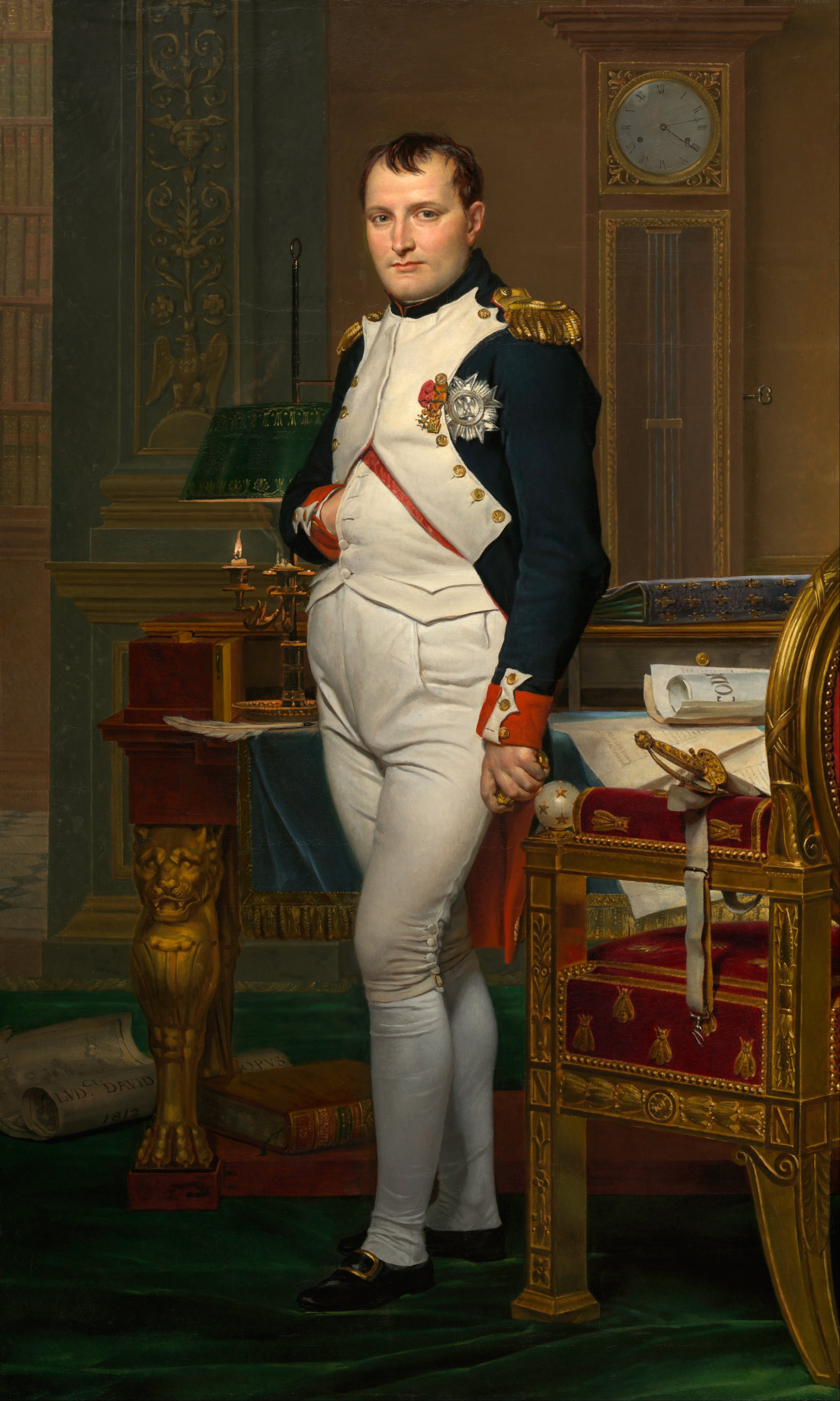
Napoleon emerged from the French Revolution, which produced the first European state to denounce the existence of God and become atheistic. It is therefore a wonder to many that he tried to give Jerusalem back to the Jews. He had also been advocating for Jews in France by granting them rights they had long been denied. This was entirely right of him. I do not believe God approves of the discrimination and ill-treatment Jews had received in Europe. However, when Napoleon plotted to give the Jews Jerusalem, he was acting contrary to God’s will. One of his proclamations read:
“Bonaparte has published a proclamation in which he invites all the Jews of Asia and Africa to gather under his flag in order to re-establish the ancient Jerusalem. He has already given arms to a great number, and their battalions threaten Aleppo.” ( Weider, Ben (1997). “Napoléon et les Juifs” (PDF). Congrès de la Société Internationale Napoléonienne, Alexandrie, Italie; 21-26 Juin 1997 (in French). Napoleonic Society. Retrieved 23 January 2011. Bonaparte, Commandant en chef des Armées de la République Française en Afrique et en Asie, aux héritiers légitimes de la Palestine)
Napoleon had no respect for the conditions God set forth in the law for them to have the land, or for God at all. When the French troops were in Palestine and besieging the city of Acre, Napoleon had already prepared a Proclamation making Palestine an independent Jewish state. He felt confident that he could occupy Acre and in the following days he would enter Jerusalem and from Jerusalem, he would issue his proclamation: «The young army with which Providence has sent me hither, let by justice and accompanied by victory, has made Jerusalem my headquarters and will, within a few days, transfer them to Damascus, a proximity which is no longer terrifying to David’s city. Rightful heirs of Palestine! The great nation which does not trade in men and countries as did those which sold your ancestors unto all people (Joel,4,6) herewith calls on you not indeed to conquer your patrimony; nay, only to take over that which has been conquered and, with that nation’s warranty and support, to remain master of it to maintain it against all comers. Arise! Show that the former overwhelming might of your oppressors has but repressed the courage of the descendants of those heroes whose alliance of brothers would have done honor even to Sparta and Rome (Maccabees 12, 15) but that the two thousand years of treatment as slaves have not succeeded in stifling it. Hasten!, Now is the moment, which may not return for thousands of years, to claim the restoration of civic rights among the 262 The Mount Of Assembly population of the universe which had been shamefully withheld from you for thousands of years, your political existence as a nation among the nations, and the unlimited natural right to worship Jehovah in accordance with your faith, publicly and most probably forever (Joel 4,20).» (Letter to the Jewish Nation from the French Commander-in-Chief Buonaparte (translated from the Original, 1799) General Headquarters, Jerusalem 1st Floreal, April 20th, 1799, in the year of 7 of the French Republic)
However, Napoleon never got to take Jerusalem or deliver his prepared proclamation for the Jews. The Ottoman Empire arrived with great force and drove them away, emerging fully victorious and strengthening its hold on Jerusalem and the Temple Mount.
Islam prevailed once again, as it had in the past. The plan to reinstate the Jews in Jerusalem had failed. Meanwhile, more and more evangelicals and Protestants came to see the establishment of a Jewish state as essential to Christ’s return.
The mid-1800s saw several Protestants advocating for the return of Jews, among them Samuel Roffey Maitland, Edward Irving, and John Nelson Darby, as mentioned in a previous chapter on the Daniel 9 prophecy. The British Literalists continued to influence British policy, leading to the construction of a British consulate in Jerusalem in 1838.
Great Zionist movements began emerging within Jewish communities in Central and Eastern Europe. Zionism was not merely a religious idea but also a political and cultural one. Regardless of what kind of Judaism one practiced, it claimed to offer a solution through the reclaiming of Palestine. This led to Jewish migration into Ottoman territory. Between 1897 and the establishment of the state of Israel, the Zionist movements tried everything in their power to get the land back.
Theodor Herzl is recognized as the founder of this new movement. He was an Austro-Hungarian journalist, lawyer, and political activist who believed that sustained immigration would help establish a Jewish presence in the land and prevent a possible Arab takeover.
In 1895, he wrote a book called Der Judenstaat (The State of the Jews), arguing that Jewish people should leave Europe for Palestine. He also pursued negotiations with the Ottomans and was active on several fronts to realize his goal. He helped organize the first Zionist Congress, held in Switzerland, to unite the movement and launch diplomatic initiatives aimed at returning Palestine to the Jews.
Much could be written about the growing number of Christians and Jews who worked to influence the establishment of a Jewish state, efforts that resulted in many Jews immigrating to the land.
Conquering by numbers
In 1800, there were only 7,000 Jews, compared to 246,000 Muslims and 22,000 Christians. Over the years, a dominant technique was used to gain control of the land. (https://www.jpr.org.uk/insights/tenfold-how-israel-became-jewish-state-numbers)
Before 1882, there were no Jewish agricultural villages in Palestine. Only about 24,000 Jews lived in the land, while the rest of the population was Arabs (now called Palestinians) and Christians. As a result of Christian support and Jewish determination, numerous Eastern European Jews immigrated, and by 1904 the Jewish population had grown to 50,000. (The Beginnings of Modern Jewish Agriculture in Palestine: “Indigenous” versus “Imported” Ran Aaronsohn Agricultural History Vol. 69, No. 3 (Summer, 1995), pp. 438-453 (16 pages) Published By: Duke University Press
Baron Rothschild supported Eastern European Jews in establishing several agricultural settlements, purchasing land, and cultivating it. Among these settlements were Metulla, Rosh Pina, Zichron Ya’acov, Mazkeret Batya, Rishon Lezion, and others. The Rothschild family, through their influence and wealth, not only helped facilitate Jewish settlement in the land before the world wars but also played a significant role in the establishment of the State itself. (Agricultural Settlements in Palestine, 1882-1914, Yossi Katz, Jewish Social Studies, Vol. 50, No. 1/2 (Winter, 1988 – Spring, 1992), pp. 63-82 (20 pages) Published By: Indiana University Press, & https://www.jpost.com/jerusalem-report/the-truth-about-the-rothschild-foundation-670622)
Sultan Abdülhamid II and the Zionists
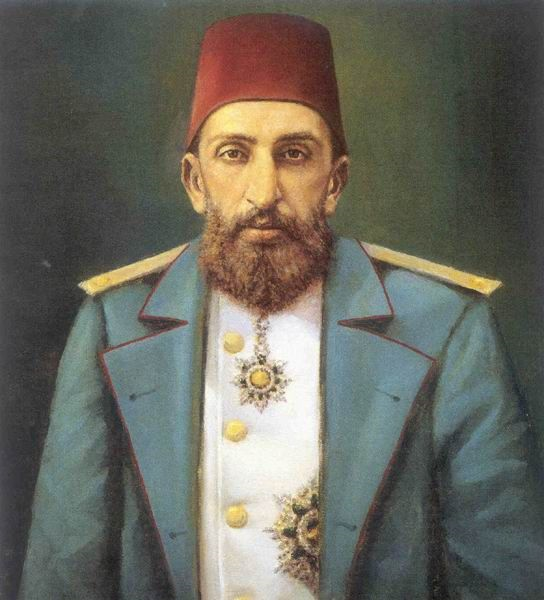
The main obstacle for Jewish Zionists was the Ottoman Empire and the Arabs. In 1871, the Ottomans declared 80 percent of Palestine state property and constantly fought against Jewish immigration and the establishment of a Jewish state. Abdülhamid II was one of the last Ottoman sultans and was responsible for what are now called the Hamidian massacres directed at Armenians. He was therefore extremely unpopular among European nations. He was also unpopular in Arab nations, as they sought independence from Ottoman rule.
Theodor Herzl, the leader of the Zionist movement, saw an opportunity in this situation. He believed the sultan was desperate to gain support and restore his reputation. Herzl asked for an audience but was rejected. He then sent an offer to Abdülhamid II through his close friend, the Polish diplomat Phillip Newlinsky, in May 1901. This exchange reveals the extent of the Jewish people’s wealth and influence in the years leading up to the world wars. Herzl offered to pay all of the Ottomans’ foreign debts and to help restore the sultan’s image in Europe in exchange for allowing Jewish settlements in Palestine. The sultan’s answer most likely contributed to the fall of the Ottoman Empire.
His answer to Herzl was the following: “I won’t sell anything, not even an inch of this territory, because this country does not belong to me but to all Ottomans. My people won these lands with their blood. We give what we have the way we got it in the first place.”
The Young Turks were a powerful and diverse group, with members including Albanians, Arabs, Armenians, Circassians, Greeks, Kurds, and Jews. They managed to dethrone Abdülhamid II and exiled him to Thessaloniki, to the home of a Jewish banker. The Young Turks subsequently allowed Jews to settle in Palestine, most likely in part because Jews had helped them seize power. On September 22, 1913, Sultan Abdülhamid wrote in a letter to Shadhili Sheikh Abu’Shamat Mahmud: “I quit being caliph because of the oppression and threats by the Young Turks. This group insisted that I approve the establishment of a Jewish state in Palestine. I rejected this proposition. They finally offered 150 million British gold pieces. I rejected this as well, and I told them: ‘I would never agree with you even if you offer not 150 million British gold but all the gold in the entire world. I served the Muslim community for more than 30 years. I did not let my forefathers down. Following my final response, they agreed on my dethronement and sent me to Thessaloniki. I pray to Allah, I did not agree to establish a new state on Palestinian lands on the Ottoman State and the Islamic community.” It is said that Jewish groups then set their sights on Britain, and the result can be seen in the Balfour Declaration. The most striking takeaway, if Sultan Abdülhamid spoke truthfully, is that the Jews had 150 million British gold pieces to spend on their cause. And if he did not receive it, who did? Adolf Hitler and his party claimed that some of the money went to England, though there is no proof of any such transactions. Still, it reveals a clear willingness to buy their way forward. Also worth noting is that Herzl’s offer implies they must have had alliances in high places, given their ability to promise to help restore the Sultan’s relations with Europe. (https://www.dailysabah.com/feature/2017/03/10/the-palestine-issue-that-cost-sultan-abdulhamid-ii-the-ottoman-throne)
World War 1
The Ottoman Empire, once grand and powerful enough to bring down the Byzantine Empire, had weakened significantly over the years.
«In the war against France in 1798-1801, England and Russia assisted the sultan. During the war between Turkey and Egypt in 1838-1840, England, Russia, Austria, and Prussia intervened on Turkey’s side. During the Crimean War (1853-1856), England, France, and Sardinia supported the Turks. And during the late Russo-Turkish War, the great powers of Europe intervened to halt Russia’s advance. And without the help received in all these instances, Turkey would probably have failed to maintain her position».
«August 1840, the sultan would voluntarily surrender his independence into the hands of the Christian powers, just as he had, three hundred and ninety-one years and fifteen days before, received it from the hands of the Christian emperor, Constantine XIII” (U.Smith, Daniel, and Revelation -book available here)
On May 19, 1916, representatives of Great Britain and France secretly reached an accord known as the Sykes-Picot Agreement, by which most of the Arab lands under Ottoman rule were to be divided into British and French spheres of influence upon the conclusion of World War I.
As with everyone else relying on political alliances to survive, the Ottomans eventually fell. When the Ottomans allied with Germany during World War 1, the victorious powers decided to divide Ottoman territory among themselves. The agreement allocated to Britain control of areas between the Mediterranean Sea and the River Jordan, as well as Jordan and southern Iraq. France received control of southeastern Turkey, northern Iraq, Syria, and Lebanon.
Finally, Britain took control of Jerusalem. The end of the Ottomans led to the rise of the Turkish nation, which fought back to retain what is today known as Turkey. After a time, France and England began withdrawing from all territories, returning control to Muslims over their respective areas as separate states, except for Palestine and Jerusalem. This exception may well reveal the primary objective.
The moment England declared war on the Ottomans in 1914, they began planning for the future of Palestine. Britain was heavily influenced by both Christian and Jewish Zionists. A Zionist member named Herbert Samuel addressed the War Cabinet, suggesting that a deal could be struck whereby Britain would gain the support of Jews in exchange for favoring the Zionist cause. The first known negotiations between the British and the Zionists took place at a conference on February 7th, 1917. These led up to the well-known Balfour Declaration. The British government wrote a letter to Lord Rothschild, the immensely wealthy Jewish banker, expressing their support for a Jewish state: “His Majesty’s Government view with favor the establishment in Palestine of a national home for the Jewish people, and will use their best endeavours to facilitate the achievement of this object, it being clearly understood that nothing shall be done which may prejudice the civil and religious rights of existing non-Jewish communities in Palestine, or the rights and political status enjoyed by Jews in any other country”
A short time later, on December 11th, 1917, British General Edmund Allenby took Jerusalem from the Ottomans.
World War 2
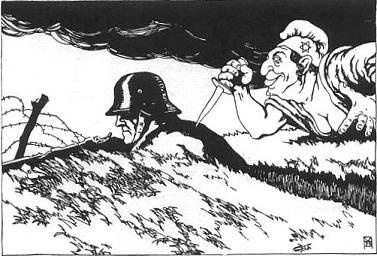
Germany was well aware of the agreements between Zionists and the British. Having lost World War 1, Germany was looking for a scapegoat, and the Jews became just that. In no other European country had Jews had the opportunity to flourish financially and in influence as they had in Germany. It had long been a favorable place for them, where they enjoyed liberties denied to them elsewhere. As a result, the German Jewish population was larger compared to other central and western European countries, though the largest Jewish population was in Eastern Europe. The rights of Jews began to change in the years leading up to the world wars. Hitler and his party openly claimed that the reason Germany had lost and was now suffering was that Jews in Germany had supported and allied with their enemies, both east and west. It was claimed that this had caused Germany’s defeat and its current dire economic situation.
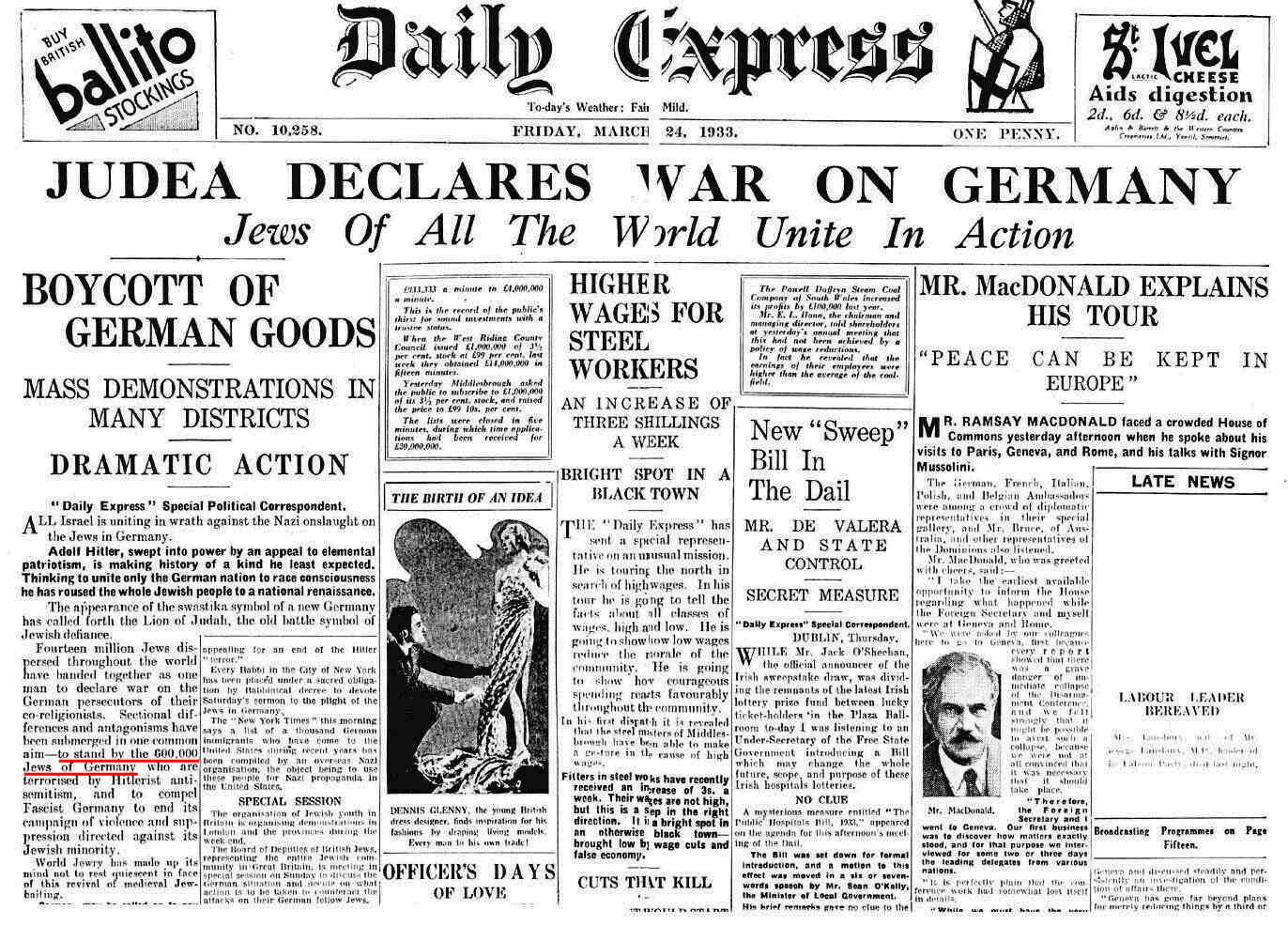
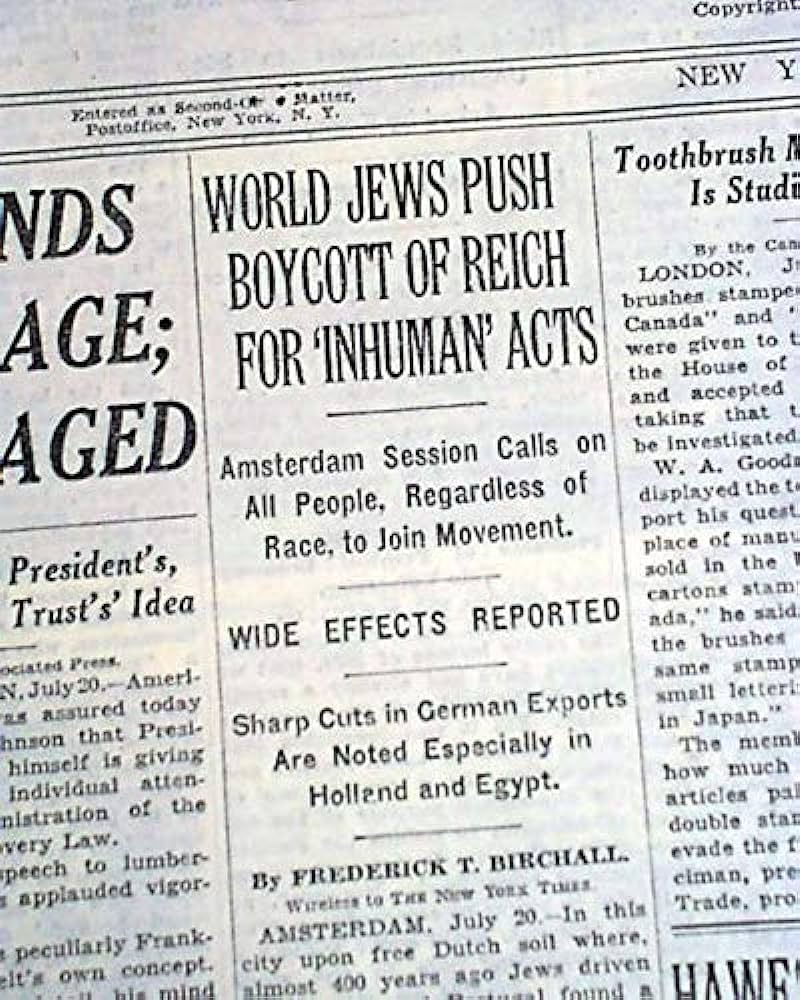
Jews were now viewed as traitors of the German state, and hatred toward them grew as the country was about to enter yet another world war.
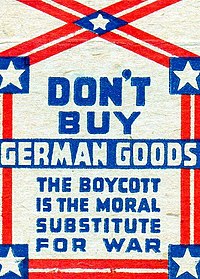
Hatred toward Jews was constantly growing as rumors, claims, and conspiracy theories flourished, and they came under increasing pressure. The situation reached a peak when, in 1933, Jews launched an international boycott of trade to and from Germany and a boycott of German products. The country was already struggling to heal itself after the First World War, and economic depression was part of daily life, making the boycott yet another betrayal in the eyes of many and further evidence of where Jewish loyalties lay. It also affected ordinary German citizens, and some claim it even caused many to starve. Since many Jews were wealthy and were said to control much of the trade in and out of Germany, the boycott was seen as a declaration of internal war. Joseph Goebbels launched a counter-boycott of Jewish businesses in April 1933, and from that point on, many Jewish establishments were vandalized and terrorized.
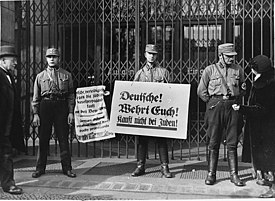
German Jews and Germans alike continued with their respective boycotts, and the propaganda against alleged Jewish treason intensified, until it finally culminated in the Night of Broken Glass, a wave of intense persecution that set the stage for the Holocaust.
Jews were still considered traitors of the German people, and Hitler convinced the population that Jews should be deported from their neighborhoods and ultimately from their land. In reality, they were sent to concentration camps, where many were murdered upon arrival.
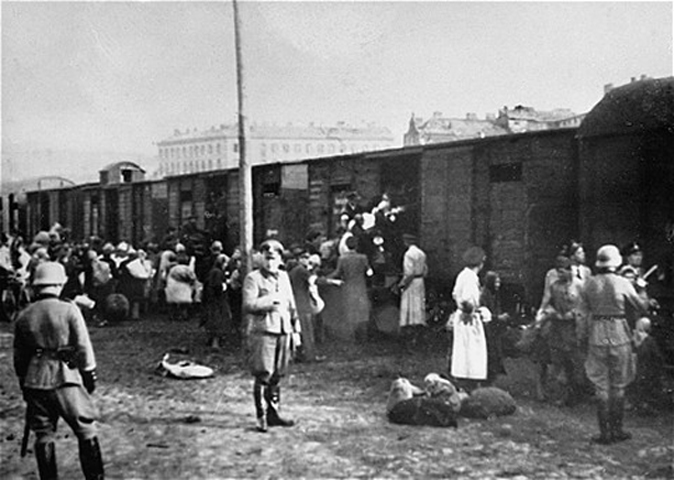
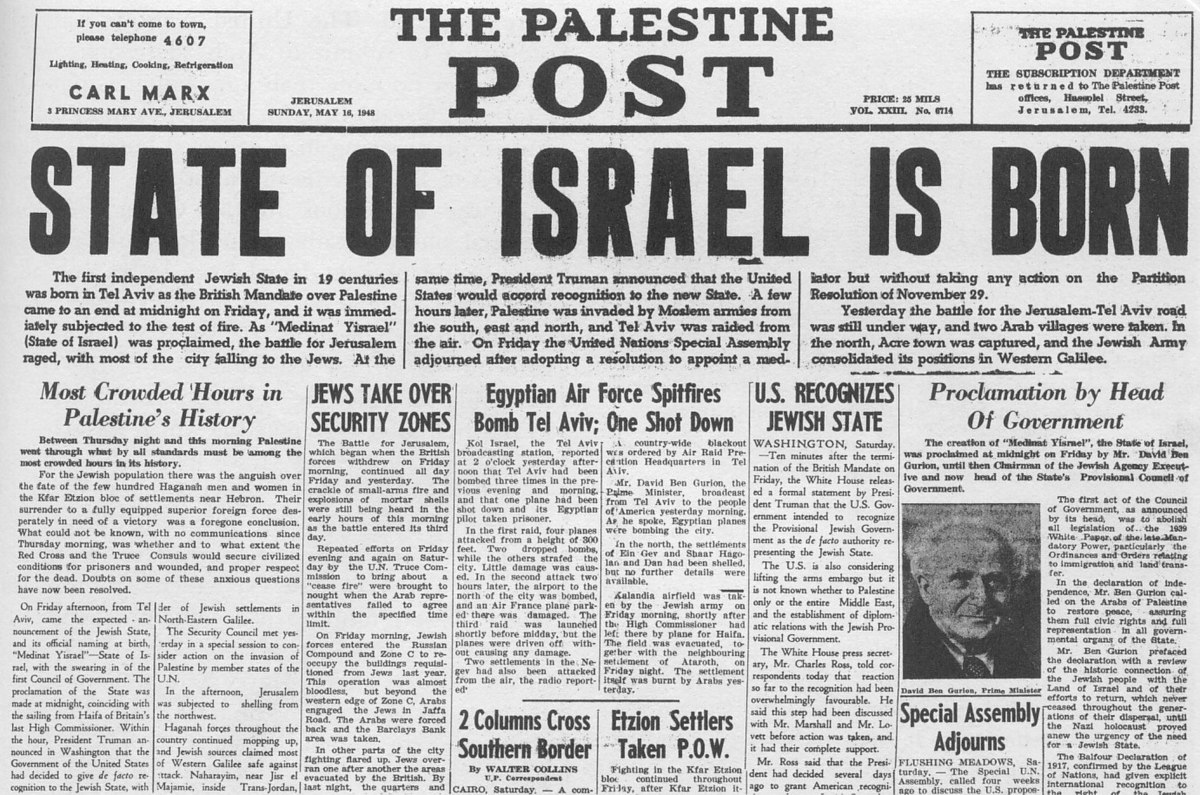
The world was engulfed in battle as nations chose their sides in World War 2 and blood was spilled from east to west. The Jewish death toll rose to 6 million. Feeling unsafe in Europe after the war ended, mass migration to what would become the State of Israel accelerated. The groundwork for Jewish immigration had already been laid by Jewish settlers long before; it had been planned and executed well in advance. The Jews did not obtain the land because of the Holocaust, but the Holocaust helped convince the wider world that they needed a state of their own.
Although the Holocaust was terrible and many Jews were innocent victims of the war, the death toll was staggering across many countries. Overall, 75 million people died during the war. It has been estimated that approximately 20 million military personnel and 40 million civilians perished. The causes of death included genocide, massacres, mass bombings, disease, and starvation. In British India, the disruption of food distribution as a result of the war caused the deaths of approximately 3 million people. The Chinese and Russian death tolls were extraordinarily high compared to those of other nations. Innocent Japanese civilians were killed by the USA in an effort to force their government to surrender. Innocents were killed in vast numbers on all sides, all considered casualties of war. Yet the greatest attention, still discussed repeatedly in media and film, is given to the targeting of Jews, while little attention is paid to the rest of the victims. Jews were unique in the sense that they were targeted solely because of their race, and this shocked the world. For the Jews, it became important to educate people about what happened and to draw attention to the Holocaust in order to protect Jewish interests worldwide. However, in more recent times and conflicts, the past is frequently invoked as a justification for present behavior, and their historical trauma is raised whenever they are questioned.
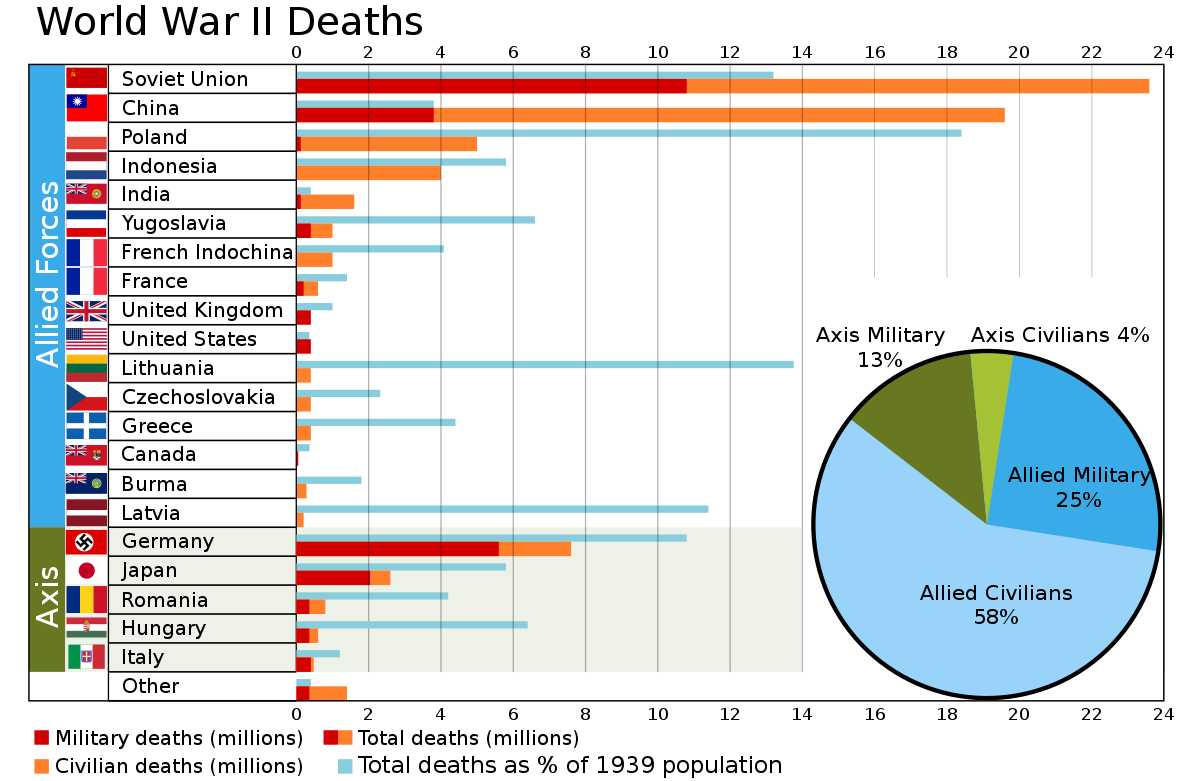
During World War 2, many suffered, and many innocents were targeted, yet the deaths of Jews under Germany received the greatest attention. The families of the other 69 million who died are largely forgotten. Everyone else had to pick themselves up and keep moving forward. The surviving relatives of the 34 million civilians killed were expected to accept their losses as the inevitable consequences of war. Many became trapped within nations that continued to abuse and persecute them for years to come. One example was religious people living under communist regimes.
Zionists used the Holocaust as a means of advancing their agenda. Did they deserve Palestine after what they had been through? Most thought they did, and understandably so. But few stopped to consider whether this was truly God’s will. Could the effort have been better directed toward securing fairer treatment for Jews in the countries where they already lived?
The earlier Jewish return to the land of Judea after the Babylonian exile was quite different from the return around the time of the World Wars. The first time, it came through a peace agreement, and only a spiritually minded remnant returned. The Jews returning to Israel in the 19th century were communists, socialists, and atheists as well as religious. Jews who had converted to Christianity were not welcome. They had not changed their objectives, their beliefs, or their resistance to Christ. Yet Christians were led to believe their return was a miracle from God, “a sign and a wonder”. However, the notion of God allowing the killing of over six million Jews in order to bring them back to the land is hardly a divine method of saving anyone. No Jews were massacred in Media-Persia for them to return the first time. That earlier return had been foretold by a time prophecy, which God then fulfilled. After 70 years, they were to return, and so it happened. This time, there was no such prophecy. What many believed to be a miracle was in fact the result of bloodshed, religious superstition, Freemasonry, and human theological ideas.
Jewish terror attacks between 1939 and 1947, preceding the State of Israel
Because of the great tension with the surrounding Islamic countries, Britain did not immediately hand the Jews full control of Palestine. They were still trying to find a solution that would not draw them into a war with the Arab world. The Jews then decided to take matters into their own hands and pressure Britain into assigning the land to them.
This was achieved through terrorist acts directed at the British. The two groups responsible were Irgun Zvai Leumi and the Lohamei Herut Israel, also known as Irgun and Lehi. Their resistance stemmed in large part from the growing conflicts between Arabs and Jews living in the land, and from the belief that the British were failing to ensure the safety of the Jewish population.
Arabs had repeatedly targeted Jewish farming settlers, feeling that Jews were buying up their land with an unfair economic advantage. In response, Jews saw the need to create their own armed forces. In 1929, a major Arab riot left over a hundred Jews dead and several hundred wounded, with almost as many Arabs killed in the violence. The Jews insisted on having a defense force, but the British argued that this would provoke even more Arab violence, leaving the Jews feeling they had no choice but to take matters into their own hands, outside of British rule.
During the 1930s, Jewish immigration increased significantly. In 1933, 30,000 Jews immigrated; in 1934, 42,000; and in 1935, 62,000.
The Jewish population almost doubled between 1932 and 1936, naturally leading to growing tension with the Arab population. The Arabs wanted Palestine to be independent and were becoming increasingly anti-Zionist. Another Arab rebellion emerged in April 1936, and several Jews were killed. Arab riots continued over several years and eventually escalated into a guerrilla war across the country, making it increasingly difficult for Jews to live in peace.
From early on, it was clear that once the British took control of Palestine, a war between Arabs and Jews would continue until one side gained complete dominance. For Jews, this meant the only path to victory was to greatly increase their population.
The Jews initially told the British that their groups would only use force in self-defense.
In July 1937, the Royal Commission proposed dividing the land into two separate states for Arabs and Jews, a solution that both sides rejected. The Jews wanted more than 20% of the land, while the Arabs demanded a halt to Jewish immigration and land purchases. Arab violence continued as part of their broader struggle to control the land. After 1937, the Jewish group Irgun decided to retaliate for Jewish deaths, launching a counter-attack known as “Black Sunday” that targeted Arabs.
The British did not permit Irgun’s operations, and Irgun was even condemned by fellow Jews, which led them to operate in secret.
Attacks between Arab and Jewish groups continued. Irgun bombed an Arab market in Haifa, operating on the principle that Arab terrorism should be met with terrorism in kind. This was the first recorded instance of Irgun targeting random civilians. Irgun continued with similar attacks, detonating a bomb in the Arab market in Jerusalem and then striking the Haifa market again, leaving many dead and wounded. Jews were deeply divided over this approach.
British involvement in all the conflicts was limited, owing to their own struggles following World War 1 and the mounting tensions leading toward World War 2. They may have leaned somewhat toward the Arab position, having long had dominion over these territories before the fall of the Ottoman Empire, and given the risks posed by the many Muslim nations surrounding Palestine. They foresaw a larger and potentially endless conflict if they sided with the Jews, which is precisely what occurred at the formation of a Jewish state, suggesting that Britain’s concerns were not entirely unfounded.
Numerous meetings were held to ease the conflict and find a solution. One proposed solution was to appease the Arabs by limiting Jewish immigration to 10,000 per year and restricting Jewish land purchases. The Arabs demanded a complete halt to both immigration and land sales, and so they rejected the proposal. It had been evident since the mass immigration began that no Arab community could compete by birth rate alone if Jews were allowed to immigrate by the tens of thousands. Any conflict over land is largely determined by population, a battle the Arabs were on the verge of losing entirely in the aftermath of World War 2.
Jews were equally unhappy with the British proposal and held large demonstrations against the Crown.
In a response letter, they wrote: “In the darkest hour of Jewish history that the British government proposes to deprive the Jews of their doubly cruel because it comes from the government of a great nation which has extended a helping hand to the Jews, and whose position must rest on foundations of moral authority and international good faith….The Jews will never accept the closing to them of the gates of Palestine nor let their national home be converted into a ghetto” (——-)
A campaign of civil disobedience against Britain ensued. Irgun now launched a series of attacks against both the British and the Arabs, targeting telephone booths, Arab markets, coffee houses, public transportation, villages, and crowded places, leaving 40 Arabs dead and 98 wounded.
Irgun was now fighting for independence from Britain and working to form a Jewish sovereign state, considering themselves the military arm of that state. They claimed it was a God-given right for Jews to return to the land. In 1939, Irgun killed a British official, Ralph Cairns, the head of the police force’s criminal investigation department, in retaliation for a raid in which several Irgun leaders had been captured.
Shortly after, England went to war with Germany, and the conflicts in what was then Palestine took a temporary turn. The Jews in the land sympathized with Britain and therefore suspended their attacks. The campaign of terrorism against British rule in Palestine resumed between 1944 and 1947.
In 1944, Irgun attacked four British police stations and two days later assassinated a senior British police officer of the Criminal Intelligence Department. Other acts of terror included the bombing of locomotives, the killing of police officers, the destruction of 14 airplanes, and the bombing of the King David Hotel, which at the time served as British headquarters. The hotel attack killed not only British personnel but also Jews and people of other nationalities. Another bomb attack targeted the British embassy in Rome. Attacks on British officers and police continued through gunfire, booby traps, and bombs.
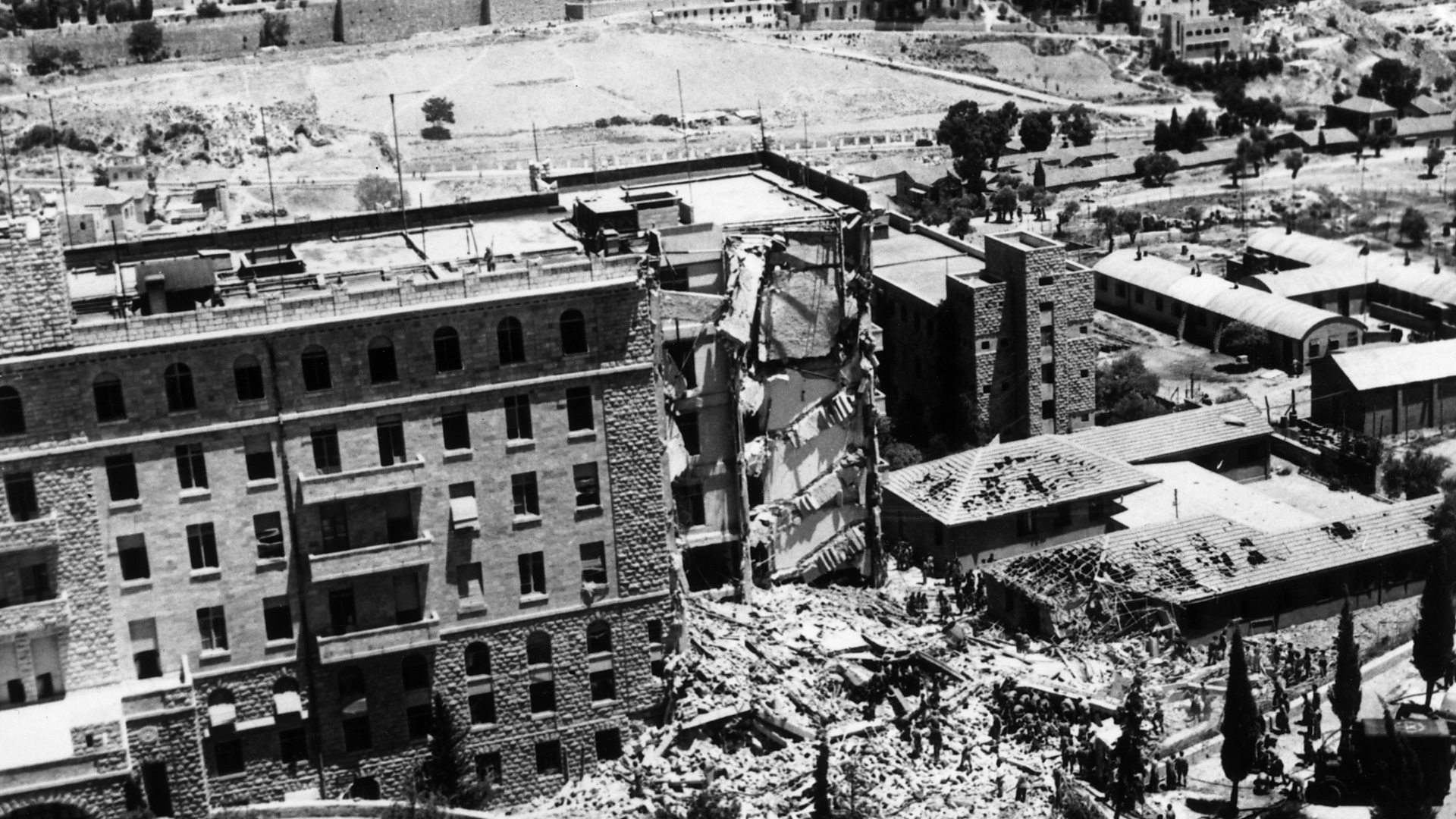
On one occasion, they kidnapped and hanged British sergeants. They also planted a time bomb in a suitcase in Vienna, again targeting the British.
Another significant attack involved the killing of British policemen, Arab policemen, and an Arab couple by placing explosives in a barrel outside the Haifa police headquarters.
In what is now called the Civil War between 1947 and 1948, the attacks continued.
Irgun fighters entered an Arab village, killing two women and two children and seriously wounding seven others, shooting guns, dynamiting houses, and throwing grenades.
Other attacks included the bombing of the Noga cinema in Jaffa. Irgun threw a bomb from a taxi, killing British officers and wounding several Arab men.
Methods included opening fire on Arabs sitting at a café and carrying out repeated bomb attacks.
If this sounds familiar, it is because these are the very same methods Palestinians later used to terrorize the state of Israel. Few, however, are aware that these same methods were first used by Jews to pressure the British into giving them full control of the land.
The attacks often struck innocent civilians among them. In one instance, seven Arabs selling livestock were killed. People out shopping for food were killed. Twenty Britons were killed in a club bombing.
Around 120 Arabs were killed during an assault on the village of Deir Yassin near Jerusalem. The attacks also continued against British soldiers.
Irgun performed Operation Hametz, in which they captured several villages around Jaffa.
The British were now exhausted by the situation in Palestine and asked the newly formed United Nations to help resolve the conflict.
The UN was formed on April 25, 1945, with founding members from over 50 countries. The formation of the State of Israel was never a peaceful miracle.
America’s contribution to the establishment of the modern state of Israel
Although Franklin D. Roosevelt assured the Arabs in 1945 that the US would not intervene without consulting both Arabs and Jews, it soon became clear that America was not impartial.
Shortly after Truman became president, he took an interest in the Palestinian issue and entered into negotiations with a British committee to discuss its future. In May 1946, he approved further Jewish immigration to what was then Palestine and, in October of that year, publicly declared his support for the establishment of a Jewish state. In 1947, the UN proposed dividing the land between a Jewish and an Arab state, known as the Partition Resolution. This was to take effect in May 1948, removing the land from British hands, and the State of Israel was born. The US was hesitant at first, needing to preserve trade relations with Arab nations and to make the transition as smooth as possible, yet it recognized the State of Israel that same year.
The Arab nations had warned of war, and they followed through. After the declaration, five Arab countries attacked: Egypt, Iraq, Jordan, Lebanon, and Syria. However, Israel won, a victory they could never have achieved without the massive immigration and financial support built up over the previous 20 years.
After the war, Israel controlled not only what had been allocated to them by the UN, but also 60% of what had been proposed for the Arabs. Over the years, through ongoing conflicts with Arabs, soon also called Palestinians, Jews were able to acquire more and more land through war, settlements, and immigration, rapidly becoming the dominant power in the Middle East, stronger than any of the neighboring Arab countries.
A newly founded state fighting off five established countries has been considered by Christians and Jews alike as a divine intervention, a miracle demonstrating that God is blessing the state. But where did the money come from? It is clear that the resources needed to win this battle and the subsequent battles involved substantial financial and military support.
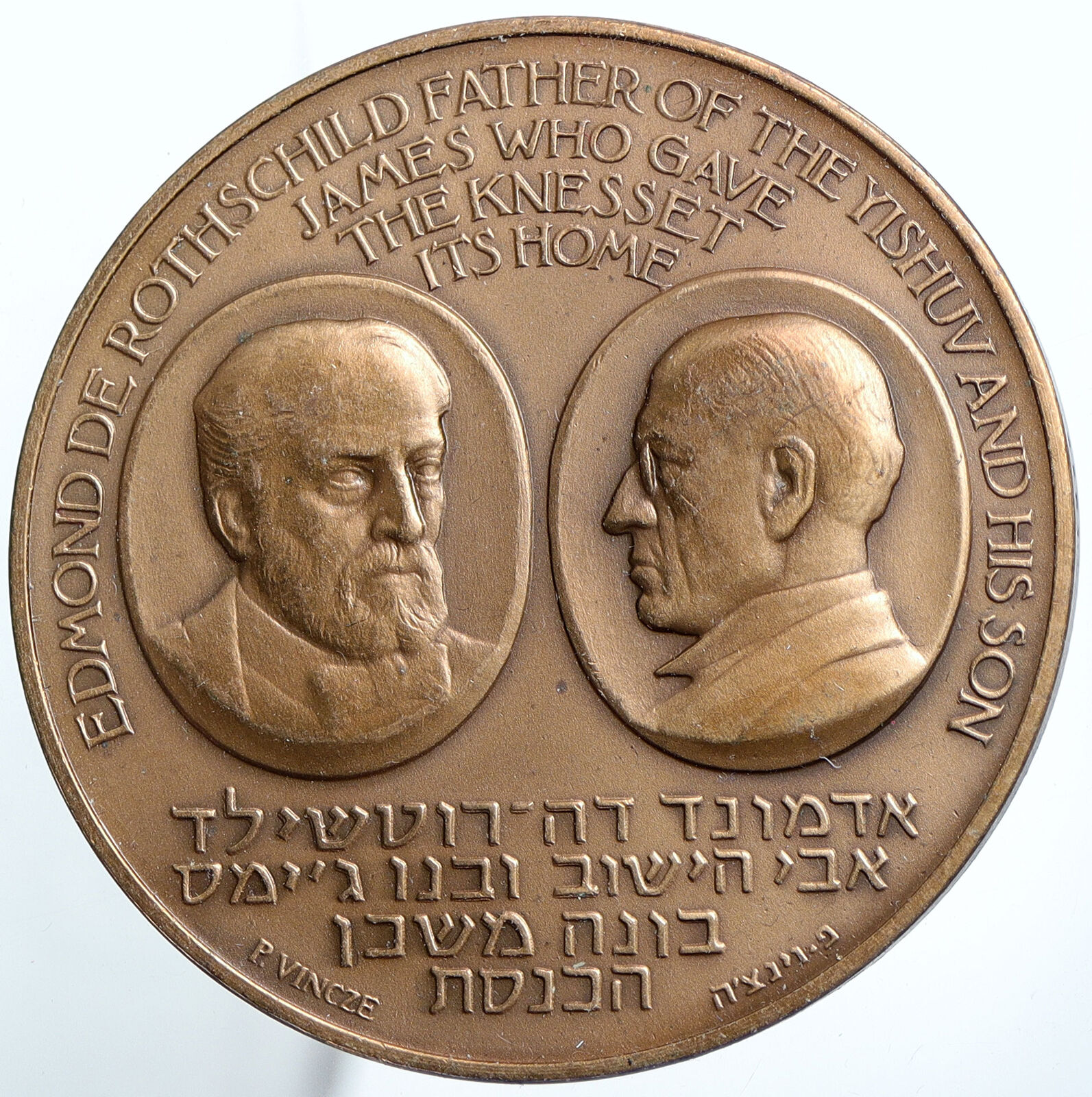
James Rothschild informed Israel’s first prime minister, David Ben-Gurion, of his desire to fund the construction of the Knesset, Israel’s legislative building, with 6 million pounds. The building was completed in 1966.
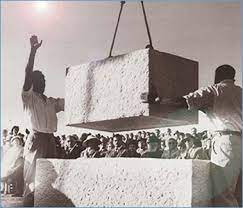
Perhaps as yet another symbol of their rejection of Christ, the cornerstone they had refused, a ceremony was held to lay the foundation stone of the Knesset, attended by then-President Itzhak Ben Zvi, Premier David Ben Gurion, and members of the Rothschild family from England and France. This new cornerstone symbolized the success of banking and Freemasonry behind the establishment of the state of Israel. Rather than turning to Christ to be reinstated, they had turned to Mammon.
During a speech later that day, Ben-Gurion spoke warmly of James’s father, Rothschild, nicknamed “Hanadiv Hayeduah” or “The Noble Donor,” revealing the depth of support from wealthy Jewish bankers in the formation of the Jewish state. It is noted that in 1924, he established the Palestine Jewish Colonization Association (PICA), which acquired more than 125,000 acres of land and set up various business ventures. (https://en.wikipedia.org/wiki/Edmond_James_de_Rothschild)
During his speech at the gala dinner, Ben-Gurion acknowledged the elder Rothschild’s support of the Jewish agricultural community as a foundation that helped bring the State of Israel into being.
His son’s funding of the Knesset construction also points to their involvement in Freemasonry, whose symbols appear in several places on and around the building.
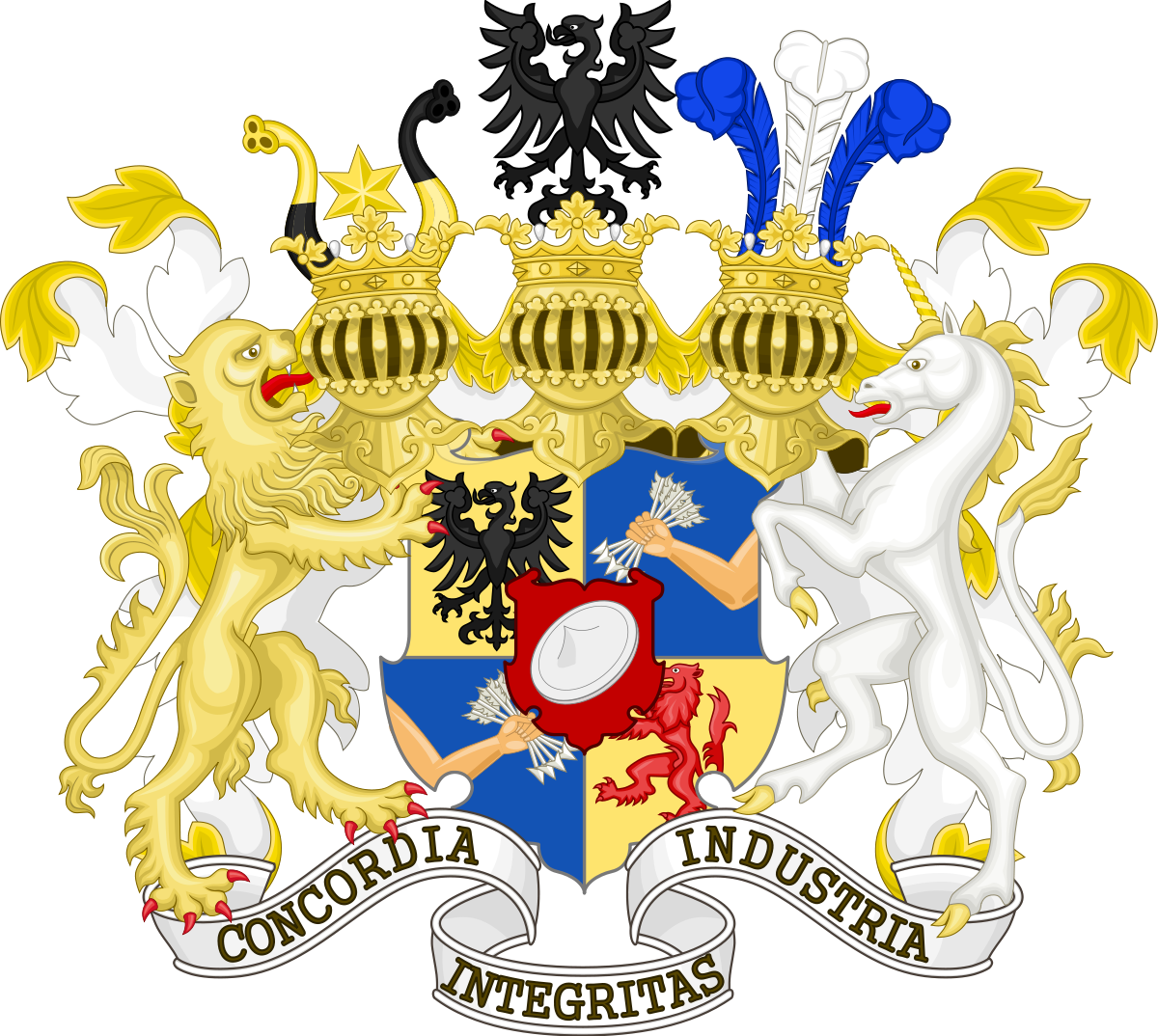
The Israeli flag, coincidentally, shares two elements with the Rothschild family crest: the blue and white stripes and the star.
What we know for certain is that the largest source of financial support for Israel’s military strength and supremacy is the United States of America. From 1951 to 2022, US aid to Israel totaled $317.9 billion. Any newly established state receiving such support will inevitably rise. In addition, vast sums have come from extremely wealthy Jews and from millions of Christians who believe they are doing God’s work.
All of this should be considered before claiming that modern Israel’s success is a miracle from God. The fact is that the establishment of the state of Israel came about after a series of terror attacks targeting both officials and civilians. Was God behind these terror attacks? Behind the Holocaust? Behind the Rothschild wealth? Of course not.
The book of Habakkuk says: “Woe to him that coveteth an evil covetousness to his house, that he may set his nest on high, that he may be delivered from the power of evil! Thou hast consulted shame to thy house by cutting off many people, and hast sinned against thy soul. For the stone shall cry out of the wall, and the beam out of the timber shall answer it. Woe to him that buildeth a town with blood, and stablisheth a city by iniquity! Behold, is it not of the LORD of hosts that the people shall labour in the very fire, and the people shall weary themselves for very vanity? For the earth shall be filled with the knowledge of the glory of the LORD, as the waters cover the sea. Woe unto him that giveth his neighbour drink, that puttest thy bottle to him, and makest him drunken also, that thou mayest look on their nakedness!” (2:9-15)
Still, many choose to ignore this, reasoning that when ancient Israel conquered the land, God went with them to war and helped them take the territory through bloodshed. But is there a difference? Why would God declare one standard and then act differently at another time?