





Article series: INTRODUCTION – WHO IS JEHOVAH? – WHO IS THE REAL ISRAEL – THE SCATTERING – THE GATHERING: ONE-FOLD – ONE ISRAEL : THE MODERN STATE OF ISRAEL NOT CHOSEN – DANIEL 9 AND THE PRE-TRIBULATION DECEPTION – JUDAISM ACE IS NOT A GODLY REPRESENTATION OF OT – THE BIRTH OF THE MODERN STATE OF ISRAEL – THE DIFFERENCE (between Biblical Israel taking of Canaan and modern Israel taking of Palestine) – What side should we take in the Palestinian and Israeli conflict?
I was once at a meeting in a synagogue where Christians and Jews gathered to hear a speaker from Israel defending the country’s right to defend itself against the Palestinians. During the talk, the question about Jesus came up, and he answered, to the amusement of everyone there: “When our Messiah comes, we will ask him: Have you been here before? And if he says ‘yes’, we will believe him.” Everyone laughed.
For a long time, many evangelicals have believed in a pre-tribulation rapture in which Christians are brought to heaven while a Jewish kingdom simultaneously begins here on earth. The Jews are given another chance to choose Christ. The promises of a great kingdom, not fulfilled at Christ’s first coming, would be realized then.
Unfortunately, if this interpretation is false, it means that both the evangelical and the Jew are in for a great end-time surprise, finding themselves unprepared for the deceptions of Satan. If the warnings in Revelation are directed at Christians, yet they believe those events will happen to the Jews after Christians have gone to heaven, they will miss out on a warning meant for them and on guidance on how to endure the trials.
For the Jew, it is dangerous to think he can wait to make up his mind about following Jesus until Jesus comes. By the time Jesus comes, it will be too late.
The pre-tribulation doctrine entered the evangelical churches and spread among the masses through Scofield’s Bible commentary. It was a successful Jesuit attack on the Protestant churches.
As the Reformation grew increasingly influential in the 16th century, the Papacy instituted a society whose primary task was to combat it by slowly altering Protestant doctrines and creating divisions among Protestants to weaken their progress.
No Protestant would listen to what the Catholic Church had to say anymore, because they believed the Pope was the Antichrist. One of the key goals was to propose an alternative identity for the Antichrist, shifting suspicion away from the Papacy and onto an unknown figure in the future. They had to create a new common enemy. Then they had to infiltrate this idea into Protestantism and make Protestants believe it was their own conclusion. Once accomplished, the gap between the two movements would be small enough to pull Protestants back toward submission to the Catholic Church. After all, if the Papacy was not the Antichrist, should they not cooperate against the real one?
The idea they presented was that the temple mentioned as the place where “the man of sin” would sit was not God’s congregation, nor was it the individual believer as Paul described (1Co. 3:16, 1Co. 6:19, 2Co. 6:16), but rather a physical building. Not just any physical building, but the Jewish Temple itself. The Antichrist, they claimed, would sit in this temple. Since there was no temple in Jerusalem anymore, this had to refer to some distant future.
In this way, they could slowly bring Protestantism back into their fold under the guise that all Christians share a common enemy: this mysterious future figure.
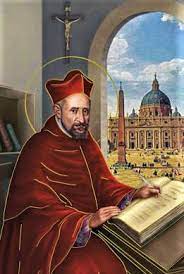
In 1585, Jesuits Francisco Ribera and Robert Bellarmine began writing down these ideas of a future Antichrist, arguing that the Papacy was not the one. Slowly, the ideas were planted among the Protestants, but they were not widely received. The understanding that the Papacy was the Antichrist and would lead people into false Christianity and damnation had deep roots.
The Jesuit ideas were spread slowly and quietly.
In 1744, Morgan Edwards shared similar thoughts with a Baptist college, generating further interest in the alternative theory of a future Antichrist.
In 1791, Manuel De Lacunza (1731–1801), a Jesuit from Chile, wrote a manuscript in Spanish under the pen name Juan Josafa [Rabbi] Ben-Ezra. Lacunza wrote under a Jewish name to conceal the fact that he was a Catholic, believing the Jewish name would give his book greater acceptance among Protestants, his intended audience. He also advanced this futuristic interpretation in his book.
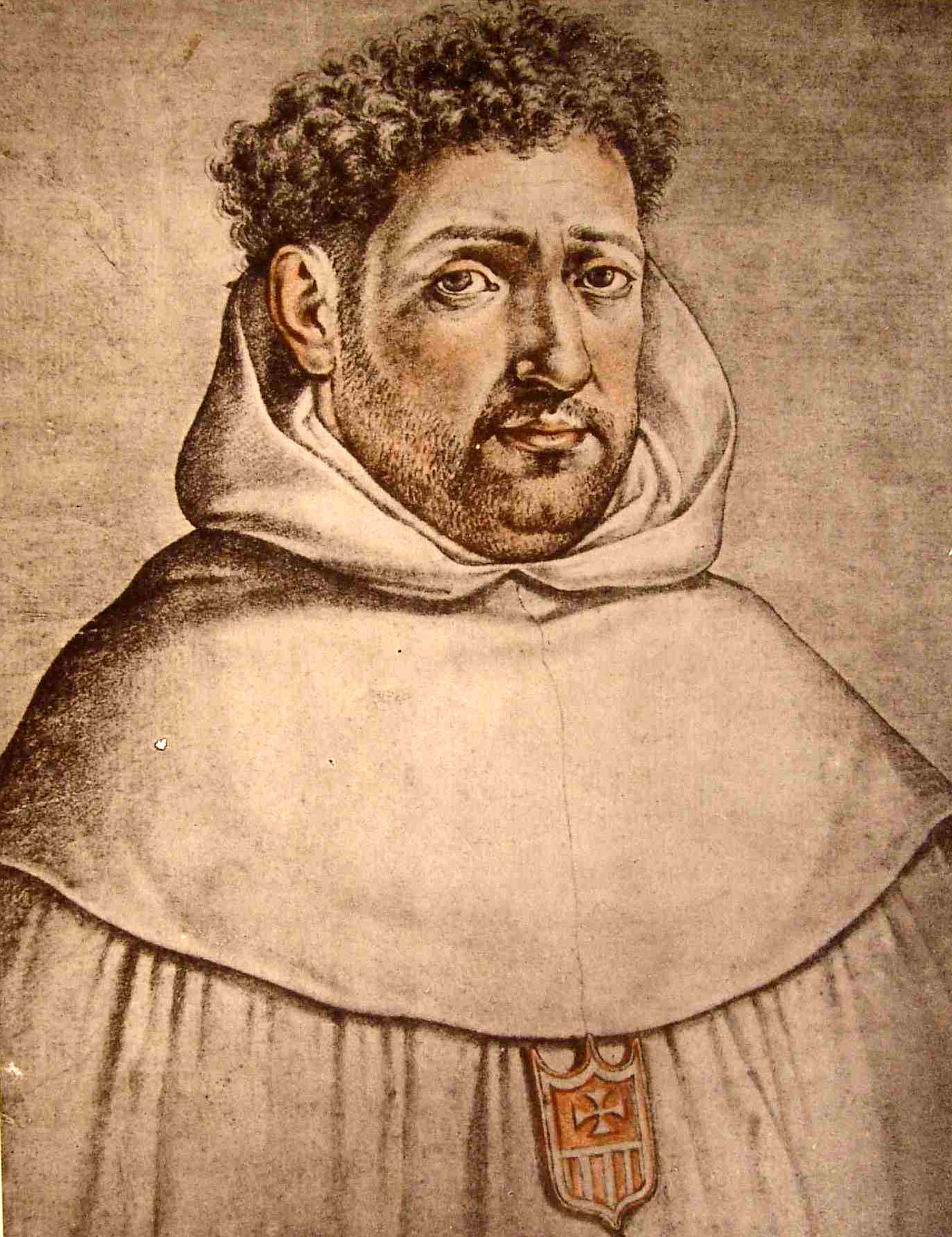
The idea gained increasing acceptance, but only among a smaller Protestant minority. However, there were some problems with this theory. There was no Jewish state and no Jewish temple for the Antichrist to sit in, which made the idea seem unlikely and distant. This was one of the biggest obstacles when introducing it. For an Antichrist to sit in a physical Jewish temple, the temple had to be rebuilt, and for the temple to be rebuilt, Jerusalem would have to become a Jewish state. The original aim had been to redirect suspicion of the Antichrist away from the Papacy and toward a future Jewish figure. If the Jews created a state in Jerusalem, Protestants would be convinced the doctrine was correct, completely abandon the Pope as the Antichrist, and look for this mysterious coming figure. But Jerusalem was protected by the Turks, whose mosques stood on the site of the temple. The Turks had to go.
In 1826, Samuel Roffey Maitland, the Archbishop of Canterbury, presented the futuristic idea, and it continued to spread.
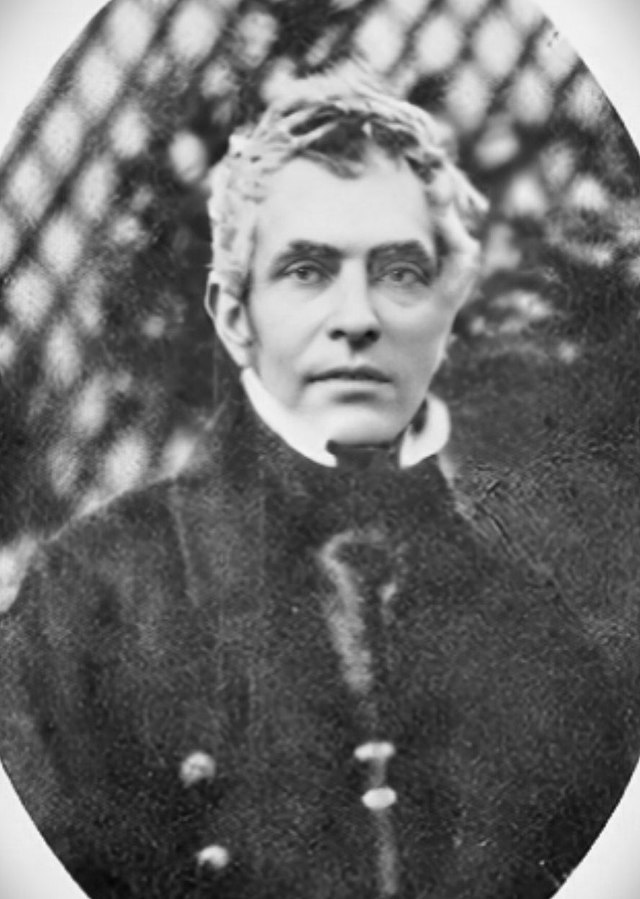
In 1827, Edward Irving, a Scottish Presbyterian and forerunner of the Pentecostal and Charismatic movements, translated Lacunza’s work from Spanish into English. Lacunza, it will be recalled, was the Jesuit who had written under a Jewish pen name.
In 1830, John Nelson Darby presented further speculation and theories on the same topic, reinforcing the views of the others.
For there to be an Antichrist in a Jewish temple, there first had to be a Jewish temple. To have a Jewish temple, there had to be a Jewish state in Jerusalem, and to have that, Jews had to return in large numbers to Israel. But the Jews had not turned away from their defiance or met God’s criteria for ruling their land as they once had. Jesus had said that their ability to live peacefully in their land depended on their acceptance of Him. (Luk. 19:41-44; Matt. 23:38-39; Joh. 4:23)
If the Jews were to come back without conversion, a theory had to emerge to make sense of it. The idea proposed was that there was one salvation for Jews and another for Christians. Before, there had only been one salvation and one destiny, regardless of who you were. (Col. 3:11; Gal. 3:28; Rom. 10:12)
Now, this view had changed. The idea that Jews would receive their messianic experience and a second chance was introduced alongside the rapture of Christians. With this theory, people would accept the Jews returning to the land even though they had not accepted Christ as the Messiah. This, as we saw in the previous chapter, is contrary to God’s Torah, in which God said a conversion must happen while they are scattered in foreign lands. This is God’s law and the order of things.
It was apparently not considered an insult to God to create a theory in which, if the Jews did not accept the humble, self-sacrificing Messiah, then it was the Messiah who had “come in the wrong way” and would have to change his approach, returning instead as the political hero they had always wanted.
To help unconverted Jews return to the land without conversion is a violation of God’s Torah. This did not stop Christians. They believed Jews would get the land back even though they had not accepted Christ, as their election was by heritage and not by faith. The idea was that God’s people were not those who did God’s will, but those who were born into it. The hypocrisy of the theory was evident, as many of Jewish descent were no longer practicing Jews, and numerous Muslims had at one time been Jews before converting. So in reality, it was not simply about being of Jewish descent; it was about being of Jewish descent and rejecting Christ, as no interest was shown in Jews of other ideologies. When you begin with a series of lies, it becomes a web of contradictions full of holes and inconsistencies.
Although the doctrine was becoming complicated, larger and more influential groups now believed it. Scriptures about the return of Israel from Babylon were now used to support a future gathering of Jews in Palestine, or they would use scriptures referring to Christ’s second coming and the gathering at that time. All the scriptures that spoke of Jews being God’s people were no longer tied to converted Jews but to the unconverted. In other words, to be accepted and blessed by God, one had to be a Jew who denied Christ as the Messiah. The ideas spread further and further, with Bible verses selected and combined with no regard for other scriptures that said something different, all arranged to make the whole thing appear Biblical.
The more widespread the idea became, the more its proponents realized that for Jesus to come back, there had to be a Jewish state. Jesus had said He would return when the gospel had been preached to the whole world: “And this gospel of the kingdom shall be preached in all the world for a witness unto all nations; and then shall the end come.” (Mat. 24:14) Yet now another stumbling block had been placed in the path of the evangelical understanding. A Jewish state had to be established so that the end-time events, as they envisioned them, could unfold and for Jesus to come. But nothing seemed to be happening to bring this about, and the larger body of Jews themselves appeared content to wait until their Messiah came to do it. Christians then took it upon themselves to fulfill what they believed was a prophecy. If God would not act, they would make it happen themselves. A smaller group of Jews had already started a Zionist movement to return to the land, believing it was still rightfully theirs, and they were further inspired by the evangelicals’ conviction of their right to it. Together, the evangelicals and Zionists would push for the creation of the new Jewish state.
The problem with Protestants actively wanting to fulfill their perception of the prophecy was glaring: they needed a Jewish state for the Antichrist to come and deceive the whole world. Why would Christians want to pave the way for what they themselves believed was the end-time deceiver? Were they now preparing the way for the Antichrist? New theories were added to justify it: Jesus was to rule in Jerusalem with the Jews, and Christians were to be raptured to heaven before the end-time troubles began. This reframed their efforts as a preparation for Christ rather than merely for the Antichrist, and the theory of the pre-tribulation rapture was used to make this complicated end-time understanding fit with the Bible. Either way, they needed a Jewish state, and so they were now gathering the Jews for Christ’s sake, so He could establish their kingdom with them. Their actions now seemed somewhat more legitimate. Yet another problem arose with this theory. Many evangelicals found themselves holding the very same mistaken belief that had once left the Jews unprepared for the first coming of the Messiah. Now they believed what the Jews had believed then and still believe today. The difference was that Christians needed the Antichrist to appear first, and so they could not wait for Jesus to establish the Jewish state. Meanwhile, the Jews were effectively being supported in the very belief that had caused them to reject Christ in the first place.
Many Christians were again doing what the Jews in the time of Christ had done: turning the matter from spiritual obedience to the pursuit of a physical kingdom.
Protestants and evangelicals began paying out of their own pockets to send Jews to what was then known as Palestine, the land that had once been the Jewish state in Biblical times. Christian missionaries went to Palestine, often risking their lives trying to convert Jews or to help them understand “their role” in the end times. All of this was done with few realizing that they were fulfilling ideas planted in their churches by the Jesuit organization, whose ultimate goal was to bring Protestants back to accepting the Pope as the leader of Christendom.
The British Literalists–strong among the Anglican Evangelicals and in various Nonconformist churches–were not about to abandon their hopes of converting Jews and sending them to Palestine to meet their Messiah, especially not around 1840, when the current British policy of offering protection to Jews living in Palestine raised great expectations among the pre-millennialists. Indeed, Literalist influence was unofficially shaping that policy. An ardent Literalist, Lord Ashley (later the Earl of Shaftesbury), was stepson-in-law and confidant of Lord Palmerston, the British foreign secretary. Ashley had private hopes of bringing about, through British action, the restoration of Israel to Palestine in preparation for the Second Advent. In 1840, he prodded Palmerston, by adducing political reasons, into seeking international backing for Jewish migration to Palestine, while he confided to his diary his own very different motives, which were distinctly religious:
“Dined with Palmerston. After dinner left alone with him. Propounded my scheme, which seemed to strike his fancy . . . . Palmerston has already been chosen by God to be an instrument of good to His ancient people; to do homage, as it were, to their inheritance, and to recognize their rights without believing their destiny . . . . I am forced to argue politically, financially, commercially; these considerations strike him home; he weeps not like his Master over Jerusalem, nor prays that now, at last, she may put on her beautiful garments. (Anthony Ashley, Earl of Shaftesbury, Diary entries, quoted in Edwin Hodder, The Life and Work of the Seventh Earl of Shaftesbury, vol. 1, pp. 310, 311. Ashley was the one referred to, but not named (in London Times, Aug. 17, 1840, p. 3, col. 5), As the promoter of Western-sponsored Jewish migration to Palestine
Ashley’s influence was likewise behind the establishment of a consulate in Jerusalem in 1838, the creation of an Anglican bishopric there in 1841, and the appointment of a Jewish Christian bishop to it. On October 16, 1841, he wrote in his diary: “Where would the Sultan’s permission [to build the bishop’s church] has been without Palmerston’s vigour in consequence of my repeated and earnest representations. (Hodder, op. cit., vol. 1, p. 377 (cf. pp. 370, 374). See also Harold Temperley, England and the Near East: The Crimea (1936), p. 443, note 275; Barbara W. Tuchman, Bible and Sword (1956, 1968), chap. 10.)
But Ashley’s dream of a British-sponsored and treaty-protected Jewish migration to Palestine did not materialize. The Four-Power Treaty of 1840 ignored the matter. Even the Jews themselves showed little interest; more than half a century passed before Zionism among the Jews arose.
Still, a large portion of the Protestant movement continued to hold fast to the belief that the Antichrist was none other than the institution of the Papacy, which claimed to be God’s throne on earth. All the great Christian leaders in the United States still upheld this belief and were struggling to resist the Jesuits’ infiltration of their institutions.
In 1909, something began that would permanently shape the evangelical view of the end times and pull it away from its original belief. Cyrus I. Scofield compiled all of these views and presented them in the Scofield Reference Bible. It was largely through the influence of Scofield’s notes that dispensationalism grew among fundamentalist Christians in the United States. Scofield’s notes on the Book of Revelation became a major source for the various timetables, judgments, and plagues elaborated on by popular religious writers such as Hal Lindsey, Edgar C. Whisenant, and Tim LaHaye, whose writings inspired popular films such as Left Behind. With this ideology firmly established, the Christian churches had a new common enemy.
Someone once said, “Nothing unites humans like a common enemy.”
The Pope was no longer seen as a threat, and slowly, the hands of Protestant groups and the Papacy could meet. They were now Christian brothers, a Christian family.
The ideas invented and planted by Jesuits were accepted as end-time facts, and many have been taught this understanding from an early age.
The Papacy had successfully undermined the Protestant movement enough that it was no longer threatened by it. Slowly but surely, every denomination that had thought the Pope to be antichrist began rejecting that belief.
The fight for a Jewish state and to bring Jews to Palestine continued. If this did not happen, the theory would eventually be rejected. But if it did happen, they would all see it as evidence that their interpretation was true, and even more would come to believe it. It would be a sign and a wonder not easily argued against. Perhaps even God’s faithful, commandment-keeping Christians would give up and follow.
The Ottoman stronghold had been weakened, and Jerusalem was now under the control of the British Mandate, a Christian Protestant nation.
It was not until after the Second World War and the intense persecution of Jews by Nazi Germany that a larger portion of the remaining Jews was motivated to move to Palestine. The sympathy generated in the aftermath also led to widespread acceptance and support.
Under the German Socialist Party and Hitler, millions of Jews were treated like animals, starved, tortured, experimented on, and ultimately killed. When the truth came out, the world was horrified. Even among the worst Jew-haters, heads were bowed in shame. It did not take long before the United Nations was founded, and it was decided to give a portion of Palestine to the Jews. Although the threat against them had been removed and the need to move was not pressing if they could be restored and honored in their European countries, it was decided they would be given Palestine instead. After the traumatic experience of World War II, many Jews were glad to move, trying to build a life for themselves away from the cruel hatred they had suffered. Many were running as fast as they could. After all, what had happened in Europe could happen again. The Jews had a common potential enemy: everyone else. Now they would build their fortress in the land from which they had once been driven.
However, they were not given Jerusalem. What the Jews did not know was that they had just walked into another trap.
The Jews were now attacked by Islamic countries that had long controlled the Temple Mount in Jerusalem, where the Jewish temple once stood. God had allowed the Islamic people to protect the mount from the construction of a new temple. Although God allowed the Jews to fight off their enemies, He did not allow them to take over the Temple Mount. Though they reached the mount during the war, they were quickly told by their own leaders to leave it as a Muslim religious site. Many were distressed and did not understand the order, but it was given all the same. God allowed their decision to become their rescue. Had they tried to rebuild the temple, God would have had to stop them.
The lie behind the doctrine
A large part of the reason the Jewish nation rejected Christ as their Messiah was that they had a hope, stirred by scripture, of becoming a great nation in the world. The Messiah would come, deliver them, and rule from Jerusalem. They would become the chosen people before all the earth and be granted positions of honor.
When Jesus came, He showed no intention of fighting the Roman Empire or taking control of the political world. This did not seem consistent with the prophecy about the Messiah, and so they refused to accept Him as their long-awaited Messiah and rejected Him.
For them, the Messiah is a religious-political figure.
God, however, had repeatedly tried to explain to them that He cannot establish an earthly kingdom unless it is built on His terms and principles.
When they rejected Him in the past, God withdrew, and they were subdued by their enemies. When they cried out to God for help, He sent judges, kings, and leaders to help them regain their independence. In the end, they were taken to Babylon. God’s throne and the Ark were hidden, and the temple was destroyed. Not because God was not stronger than Babylon, but because God would not be king in their midst if they did not represent Him rightly. How can He be king if they won’t obey His leadership?
Around the time a more faithful remnant was to return to Jerusalem after the Babylonian captivity, God gave Daniel an important message “to his people” concerning them and the future of Jerusalem, “thy holy city.”
God said He would give them, as a people and as a city, 70 prophetic weeks, which translates to 490 years, to do one important thing to ensure their future in the land.
“Seventy weeks are determined upon thy people and upon thy holy city, to finish the transgression, and to make an end of sins, and to make reconciliation for iniquity, and to bring in everlasting righteousness, and to seal up the vision and prophecy, and to anoint the most Holy” (Dan.9:24)
Further, the angel explains that the Messiah would come during the last seven years, be killed in the middle of those seven years, and that their probation time would end approximately 3.5 years after this. The time period can be easily counted down to Christ’s first coming.
This period reflected the message Jesus gave to the Jews during the first 3.5 years of His ministry. Jesus would not first take the land, drive out Rome, and then try to convert them.
Instead, Christ told them they needed to stop the rebellion, to become a better representation, to allow themselves to be instructed and corrected, to end their sins, and receive the atonement that He would give them.
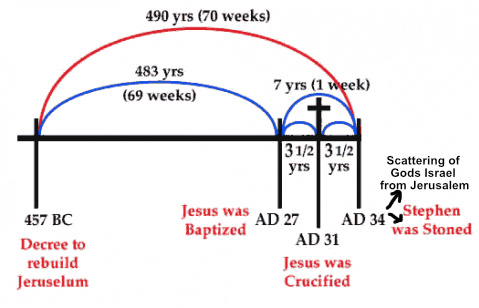
Had they fulfilled the conditions within the time granted them, their nation would most likely have been restored. But because Christ would not rule among them unless they changed their ways, He had to call on them to change first.
The lie told to Jews then, and told to Jews now, is that the kingdom of the Messiah begins politically and that conversion follows. This has never been God’s way. He would not even let them enter the Promised Land until they first made a covenant with Him. When they broke this covenant, He refused to let them enter until all the rebels among them had passed away. Only when the new generation chose Him were they allowed to enter the land. Even Moses was denied entry when he sinned. God’s conditions are ever the same. This is why Jerusalem could only remain and be saved if it first accepted Christ. God’s kingdom among men never starts politically; it always starts spiritually.
Jesus said: “And when he was demanded of the Pharisees, when the kingdom of God should come, he answered them and said, The kingdom of God cometh not with observation:
Neither shall they say, Lo here! or, lo there! for, behold, the kingdom of God is within you” ( Luk 17:20-21)
That was not the answer they wanted, because they believed they were already righteous. However, the constant debate between Christ and the leaders showed that they did not correctly represent the law of God. They were not consecrated to the truth they proclaimed.
“Woe unto you, scribes and Pharisees, hypocrites! for ye make clean the outside of the cup and of the platter, but within they are full of extortion and excess.
Thou blind Pharisee, cleanse first that which is within the cup and platter, that the outside of them may be clean also.
Even so, ye also outwardly appear righteous unto men, but within ye are full of hypocrisy and iniquity” (Mat 23:25-28).
God will not build a kingdom based on force or with a mob of hypocrites. That is why Jesus had to WIN THEM OVER, WIN THEIR HEARTS, in order to establish a kingdom among them. When they rejected this, they also rejected the kingdom promised to them. The Kingdom starts within and then manifests outwardly, while the Jewish nation saw no problem within themselves and wanted a kingdom to begin outwardly and then compel inner change. “Woe unto you, scribes and Pharisees, hypocrites! for ye are as graves which appear not, and the men that walk over them are not aware of them.” “Saying, The scribes and the Pharisees sit in Moses’ seat: All therefore whatsoever they bid you observe, that observe and do; but do not ye after their works: for they say, and do not” (Luk 11:44 & Matt.23:2-3)
Christ warned against the danger of a hypocritical religion and how the spirit and goodness of God’s standard were destroyed in their representation of it.
Christ had to reach their hearts to reinstate Jerusalem as the capital of God. But they refused Christ’s righteousness, cast away His teachings, and killed their King.
As Pilate wrote above the cross of Christ, it was: “And Pilate wrote a title, and put it on the cross. And the writing was, JESUS OF NAZARETH THE KING OF THE JEWS. This title then read many of the Jews: for the place where Jesus was crucified was nigh to the city: and it was written in Hebrew, and Greek, and Latin. Then said the chief priests of the Jews to Pilate, Write not, The King of the Jews; but that he said, I am King of the Jews. Pilate answered, What I have written I have written” (Joh 19:19-22).
How, then, could God reinstate Jerusalem as a great nation and grant them independence when they refused to be led by Him and had cast Him away as they did?
When forced to choose between the only one who could give them true independence and continued suppression, they chose to be ruled by the Roman leader rather than live in a kingdom governed by Christ: “But they cried out, Away with him, away with him, crucify him. Pilate saith unto them, Shall I crucify your King? The chief priests answered, We have no king but Caesar.” (Joh. 19:15)
There, they sealed their destiny. They had left “their house desolate,” and God could no longer establish a kingdom with them. They did not want to, they did not receive Him, and they would not agree to God’s terms. The 70 prophetic weeks finally ended, not with Christ’s death, but when they began the “scattering” of God’s faithful people and prevented “the holy city” from being a city proclaiming the truth. They did it to themselves; they chose this. Christ was killed in the middle of the last prophetic week of the 70 weeks, and the end of it came with the stoning of Stephen and the scattering of Christ’s followers from Jerusalem (Acts 8:1).
The lie today is that the prophecy of the Messiah’s kingdom among the Jews is yet to be fulfilled in the end times. The very same doctrine that bewildered them in the past has resurfaced. The Jews are still waiting for their Messiah, a political figure, to give them power. They still will not receive Christ’s righteousness or accept that they need it to be part of such a kingdom.
Because of the unfaithfulness of Judah, Christ had to change plans. Instead of Jerusalem being the center of His reign on earth, Christ had to give it up: “Jesus answered, My kingdom is not of this world: if my kingdom were of this world, then would my servants fight, that I should not be delivered to the Jews: but now is my kingdom not from hence. Pilate therefore said unto him, Art thou a king then? Jesus answered, Thou sayest that I am a king. To this end was I born, and for this cause came I into the world, that I should bear witness unto the truth. Every one that is of the truth heareth my voice” ( Joh 18:36-37).
There was a time when a group of Jews wanted to crown Him king. After He had fed the 5,000, they wanted to make Him king and thereby launch a political rebellion against Herod and the Roman Empire:
“When Jesus therefore perceived that they would come and take him by force, to make him a king, he departed again into a mountain himself alone” (Joh 6:15)
Jesus refused because He could not, and would not, start a political armed revolt at that time. Just as the Lord could not in the past give His unfaithful people victory in war, neither could He now. They had to receive His righteousness. Had He allowed them to crown Him, they would have repeated the history of when they brought the Ark of the Covenant into battle against the Philistines, thinking they could force God’s hand to guarantee victory. It would have been to use Christ as a tool for their own agenda.
The very day after their attempt to crown Him king, they went looking for Him again, and He tried to speak to them about what was truly important for their restoration.
“Jesus answered them and said, Verily, verily, I say unto you, Ye seek me, not because ye saw the miracles, but because ye did eat of the loaves, and were filled”.
He then went on to explain that they had to “eat his flesh and drink his blood,” a symbol of letting Him change them, take away their sins, and atone for them. They needed to learn from Him and His example. (Joh. 6:26; Joh. 6:41)
The Jews then murmured at Him because He said, “I am the bread which came down from heaven.”
They did not want Jesus speaking about their spiritual needs when they wanted their physical and political needs addressed. “Many therefore of his disciples, when they had heard this, said, This is an hard saying; who can hear it?” “From that time many of his disciples went back, and walked no more with him.” (Joh. 6:60 & 66)
This situation clearly illustrates that those who wanted to make Christ a king did not truly respect Him if He did not do what they wanted Him to do.
They did not want a spiritual transformation. This made it impossible for God to restore His King in the land after the 70 weeks.
Right before Christ spoke the words “your house is left unto you desolate,” He told a parable about a powerful man who invited specially chosen people to his wedding feast. But the invited guests declined the great offer, and he had to call upon those who were not originally invited instead:
“And sent forth his servants to call them that were bidden to the wedding: and they would not come. But they made light of it, and went their ways, one to his farm, another to his merchandise: And the remnant took his servants, and entreated them spitefully, and slew them. Then saith he to his servants, The wedding is ready, but they who were bidden were not worthy. Go ye therefore into the highways, and as many as ye shall find, bid to the marriage” (Mat 22:3-9).
The evangelical lie
Because the prophecy of Daniel 9 clearly shows that the probation of the Jews as God’s people centered in Jerusalem is over, and they did not meet the required conditions, certain teachers decided that this prophecy had to be divided. The last week, the final 7 years, would be “cut off” from the 70 weeks and placed in the end times. In this way, they create a “gap” between the 69th and 70th weeks. Within this gap, the Jews are scattered, and in the final week, they are given the opportunity to fulfill the requirements and succeed after all. In effect, they move the last prophetic week of the Jews’ probation in Jerusalem to the very end of history.
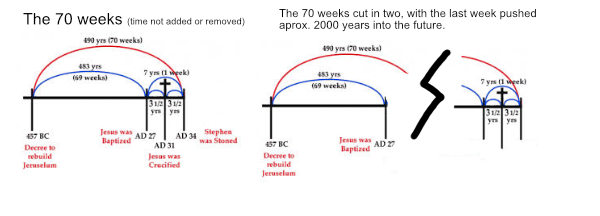
There is nothing in the time prophecy that indicates in any way that the 70 weeks can be separated by a two-thousand-year gap. Rather, it is presented in the Bible as one continuous prophecy with different waymarks.
By dividing the prophecy and moving the last week (7 years) to the end, they can claim that the final verses speak of an Antichrist and thus fit with their previous teaching.
This is all an error and a belief that was strengthened when Jews made their return to the land.
The expectation for these 7 years is higher than ever, and the Jewish return is seen as confirmation that this theory is true.
Unfortunately, it has also led to the belief that Christians will be spared from the great end-time conflicts. Most of the book of Revelation is dismissed as having nothing to do with Christians; instead, they claim it speaks of what the Jews will have to endure. The mark of the beast, the plagues, and the woman riding the beast are all assigned to the trials the Jewish nation will face. Many Christians are left unprepared, failing to see that this is a warning directed at them specifically, and that it even speaks of false Christian movements among them. This leaves them vulnerable to the end-time deceptions of the “beast and the false prophets,” not realizing the warning is about their own leaders deceiving them. Even worse, by dismissing the book of Revelation as irrelevant to themselves, they have fulfilled the very prophecy of the false prophet mentioned there.
The book of Revelation is “The Revelation of Jesus Christ, which God gave unto him, to shew unto his servants things which must shortly come to pass.” (Rev. 1:1) It was given as a warning to Christ’s followers to help them understand events connected to them: “to testify unto you these things in the churches” (Rev.22:16)
The important thing to realize is that Christ’s principles have not changed. He will not lead a Jewish nation that rejects His character and teaching. It will not happen. Christ’s righteousness is testified to in scripture, a book that most Jewish scholars still reject. The conditions remain the same. They were given a time, and that time is long over. Because they rejected their Messiah, His kingdom is not of this world. The New Jerusalem is being built in heaven, not on earth, for His faithful, and will be placed on earth only after all have been judged. There are no new opportunities to establish an earthly kingdom of God before the judgment. The Jewish desire for such a kingdom will not come to pass.
Taking the land by force.
Once before, Israel tried to take the Promised Land by force against God’s command. This happened while they were camped at Kadesh, after twelve men had spied out the land and ten had refused to believe in God’s power to save them, stirring up a riot among the people against God and His leadership. They chose defiance.
When God responded by saying they were destined to die in the wilderness, they decided to take the Promised Land anyway and force God’s promise to be fulfilled, despite God saying He would not support them.
So they went to war and lost in great numbers.
This mirrors the situation today. The state of Israel has been forcing itself into the land despite God saying it is not of Him.
Today, Israel’s nuclear facility stands in the area where they fought for the land against God’s will, and they rely on their own atomic arsenal to defend their presence there, showing once again their dependence on themselves for salvation.
Yet there is no blessing in going against God’s order, and it will not save them. Instead of standing as a monument to their supremacy, it remains a memorial to their defiance against God.