





1. Introduction 2. The World Is A Battlefield 3. The Church: A Feast for Oppressors? 4. The Many Faces of Childhood Trauma 5. How do victims communicate? 6. Being a victim of an offense and victimhood 7. Learned Helplessness 8. Victim-blaming 9. God’s solution to sin 10. How Satan uses the Bible to force us to submit to him 11. The Good Shepherd 12. Victimhood as a weapon 13. The Victorious Christian 14. Practical exercise towards freedom. 15. Restore your trust in God. 16. Why God allows difficulties. 17. Church Tribulations 18. Final Victory 19. Afterword
The Many Faces of Childhood Trauma
Sexual abuse is often the most media-addressed form of childhood trauma. In this book, the mental health issues addressed are not limited to victims of sexual abuse or incest. Even so, it is worth noting the large number of people who have suffered various sexually motivated assaults.
Childhood trauma and mental handicaps are caused by many situations: a violent household, poverty, stress, broken families, immature parents, overprotective parents, narcissistic parents, dividing children into roles, favoritism, emotionally unavailable parents, abandonment by a caregiver, bullying at school or at home, siblings harming other siblings, neglect, drugs, alcohol, war, and disease. It is usually the combination of several problems that builds up and breaks someone down. It can be one big event, or many minor issues that, together, become too much to handle. Often, we try to find the reason for the harm in a single event to have something specific to point to, but the overall stressful daily situation, which many cannot explain properly, can cause the same amount of damage. Therefore, the mental damage someone suffers is the evidence, even if there appears not to be a specific, great, visible event to point to. Often, shame causes people to focus on smaller issues and hide the bigger ones. Many test the waters, so to speak, to see if someone can be trusted with more serious matters. This testing is common with people who have suffered narcissistic abuse and have systematically experienced how sensitive information is either used against them or used to change the narrative. Many are scared to open up because of past abuse. Another reason is that often when the abused expresses need or hurt, they get the worst response from their abuser, and so this has taught them to fear expressing hurt, being open, or asking for help. In such cases, it takes time and a lot of work to tell the full story. If they are dismissed early because what they said they experienced did not seem like a big deal compared to others’, then the people who are afraid to open up will never get the help they need. This is why it is so important to show care to people, not based on what you know about them, but based on the need you see. The important thing is not to compare or measure one who struggles with another. If they struggle, they struggle. Help is needed even if we do not understand why they have issues, or if we do not understand our own. If the leaves are blowing, there is a wind, even if we cannot see it. If there is smoke, we know there has been or is a fire.
When Children Cannot Speak Up

If we are clearly struggling, there is a reason, even if it is not understood. No child or teenager has a degree in psychology or can fully understand damaging behavior. They adjust to their surroundings and come to believe that the toxic behavior they experience daily is how things are supposed to be. It can take many years before they understand they have been harmed for life. Children and teenagers will, without understanding, act out their anger, anxiety, and frustration when something is wrong. Asking them what the problem is can sometimes be like asking them to have deep psychological insight, which they do not have. You will not get them to open up. Asking them if they need help or if you can be of help can also fail, because they do not know what help they need and therefore cannot tell you. Thus, they will not receive help because the wrong questions were asked. Then they give up on them because “you tried,” but the child or teen made it impossible by not cooperating. Even many adults do not understand how you can help them or where the issue really lies.
Gaslighting and the Blame Shift
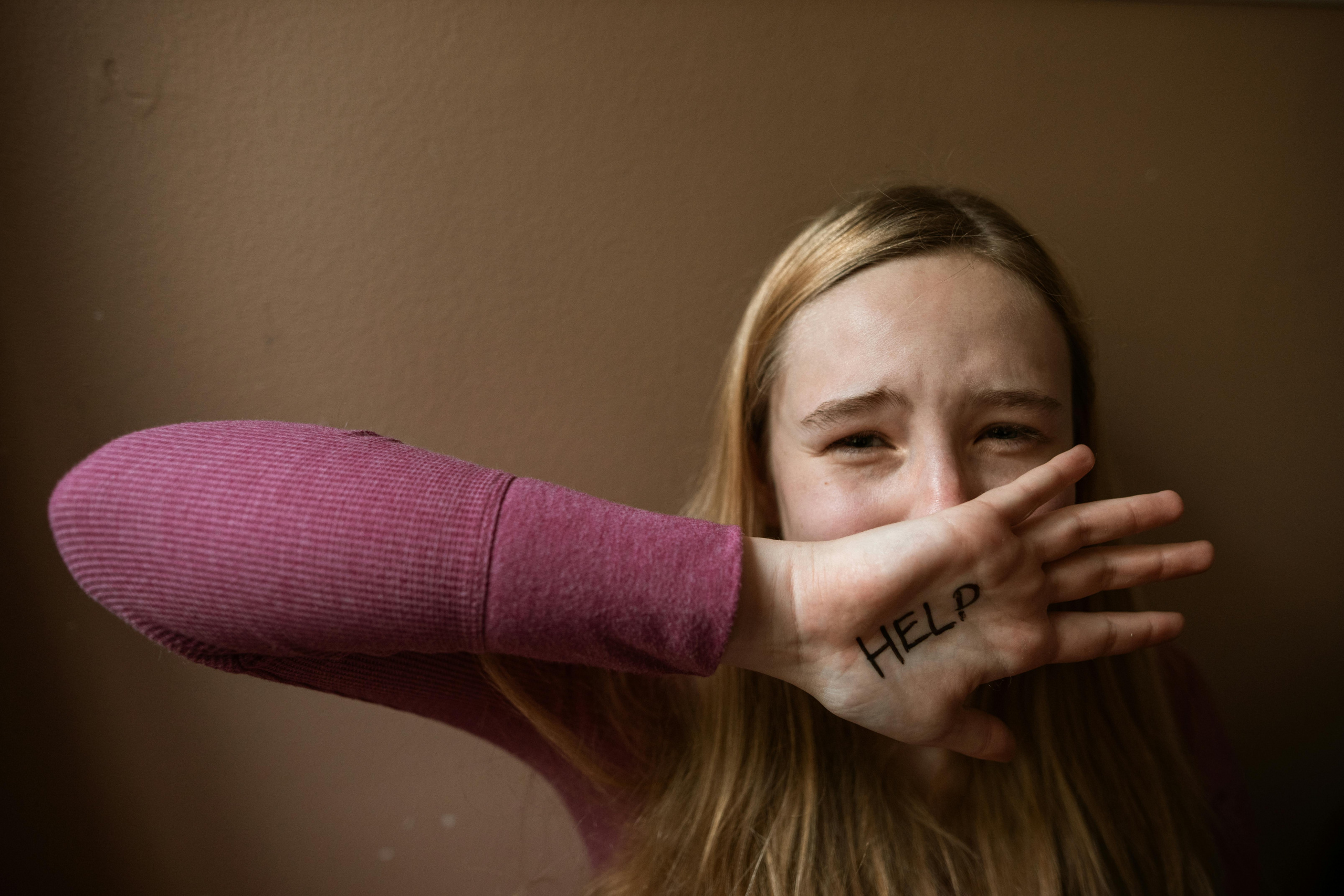
Most abusers do what is popularly called “gaslighting.” Their victims feel the effects of abuse, but they are also brainwashed into thinking nothing is wrong with their abuser or the situation. They are coached to believe that they are struggling because there is “something wrong with them personally,” and that the problem lies in their response to the abuse rather than in the abuse itself.
Someone who gaslights will often harm and then say to their victim, “What is wrong with you?” and “You need help!”
The waiting room at psychologists’ offices is full of people who have been told they are the problem and that they “need help,” while the real problem is sitting at home, feeling good about themselves. A victim first needs help understanding what is harming them, to be free of its harmful influence, and then assistance to heal and rebuild their lives.
The point is that no matter how or why, we cannot ignore our own or others’ damage simply because it suits us. It must be addressed. If there is damage, a disturbance, or a mental health issue, there is a reason behind it. We do not need to know someone’s reason to help them or to have compassion. The damage we see should be enough to induce compassion. People are not self-destructive without a reason. In the biblical story of the merciful Samaritan, we see someone who did not stop to determine whether the man lying on the side of the road was guilty of his calamity before helping, or whether he perhaps deserved his assault. Rather, the Samaritan saw an immediate need and acted to fulfill it. (Luke 10:25-37)
Help Based on Behavior, Not History
Many victims take decades to understand what went wrong, or even to remember what they have suppressed, and because they were not taken seriously based on their early behavioral response to the harm, they lose years of their lives struggling with mental health problems that could have been addressed early on. If someone is hanging from a cliff, they need to be pulled up, regardless of whether they tried to jump, tripped and fell, or were pushed. Those who are self-destructive and struggling need help, regardless of how or why they are struggling. Many who have been victims of incest are not open about it until they have had children and are adults. But the damage would have been noticeable many years before that. This is why it is important to offer help based on behavior and not just publicly known history.
In short, it is important not to ignore symptoms of harm. The symptoms are almost always self-destructive behaviors. Self-sabotage and self-harm are signs that there “is a fire somewhere,” even if the person does not speak up about it. Speaking up and opening up can be one of the hardest things for a victim to do because they are confused and scared. Many are coached or threatened into silence. Some have learned that speaking up only makes things worse. As mentioned, there can be trauma behind choosing silence. No one should demand that someone tell their secrets for you to be willing to help. If you see someone struggling, being there for them and earning their trust is essential to helping them. Do not expect someone to open up to you right away. Do what you can to make their world a better place without expecting anything in return. Be an example of goodness, so they can, from your kindness, learn to distinguish and understand what they have experienced as wrong. Other victims open up and talk over and over again about what has happened to them. This is also part of the healing process, allowing for repetition until they feel they are truly heard and seen. It can also be a symptom of constantly questioning their emotions and perceptions and, therefore, needing to talk and hear again that what happened was wrong. This is because some were manipulated to question their perception and even trained to question it by the abusive person. This confusion can last a lifetime. Whenever the memory comes up, a victim might still go back and forth between the abuser’s narrative about them and what happened and their own. So often, they need repetitive reassurance, almost like a training exercise, to stay healthy. Words like “You already said this; now you have to move on” can be retraumatizing for a victim. Make sure you are ready to hear the same story several times. If you are the victim, be prepared to go down the same road several times. If the abuse was repetitive over time, the healing from it might also require repetitive exercise over time.
The Complexity of Telling the Truth
There is also another aspect to the retelling of trauma. The first time someone tells their story, it might not be the full story because they fear how it will be received. Each time they tell their story, a new detail might be shared, and some details might even be removed, especially those added to seek affirmation or adjusted based on how they fear their story will be received. Many who have been abused and gaslighted have learned to lie to escape being emotionally or physically violated. Their lies might not be malicious; they are in self-defense. It was how they survived. Be aware of this. If they are scared, their stories might not be told accurately at first. It is not unusual for victims to lie; unfortunately and naturally, it causes them to be rejected when they do tell the truth. Sometimes, the truth is scarier than a lie. Having been coached to lie to protect their abuser, they might later be trapped by this web of lies when they finally open up. Another reason some victims lie at first is that abuse in their home is so normalized and difficult to express and explain that they feel they will not get help unless they say something concrete and accepted as wrong in their greater society. Toxic homes create toxic victims. Families that scapegoat can create victims that scapegoat. This does not make it right in any way, but if the goal is to help someone who is destructive heal, we have to consider that sometimes the victim is toxic or does not act as we wish them to. In such cases, when the victim lies and scapegoats, they need help to address the real issue. Attacking them for their lies first can make it hard to get them to open up about what is really going on. A good way to help is to ignore possible lies (unless they are criminal or directly harming others) and give them space to open up about deeper issues. As they now open up and receive help for the real problem, when they are heard and seen for the real issue, they will let go of the need for the lie.
If you understand why they lie, it might be easier to forgive them and continue helping. So, allow and tolerate repetition if someone is ready to open up. Expect there to be both underplaying and exaggerations, scapegoating, and any toxic ways to get attention. No case or situation is the same. No one’s story or circumstance is the same.

How Trauma Affects the Developing Brain
The more troubles some have been through, the greater the stress, the greater the harm, and the greater the aftereffects. What most childhood trauma has in common is an unsafe environment for the child, and this results in the child having to deal with these issues and survive them rather than having a healthy, normal development. During childhood, the brain is constantly developing. Long-term stress disrupts this development, as the stress hormone cortisol is elevated; if sustained, it can physically harm the brain’s growth and hormonal balance. This creates a mental handicap and developmental delay; sometimes it is irreversible, yet it does not show on the child’s outer body. The child is damaged, but the damage is not visibly apparent. As a result, the child is often blamed rather than helped, which only adds to the stress and further damage.
Modern society demands that everyone receive the same education; they must take the same tests and undergo the same physical training. All students are treated equally, and their accomplishments are measured by comparing them to one another and to a predetermined standard.
This seems fair outwardly. While those with a medical diagnosis might receive extra help, those struggling with a toxic family situation do not. Initially, the harm from abuse is not seen or recognized, and so victims do not get any help or support. The majority of the time, a child will protect their abusers and keep quiet, and so they will rarely get help in time to develop healthily. An emotionally damaged child will often be given additional stress, as they do not have the same ability to meet the standards that were created for healthy children’s development. What is fun and challenging for one child becomes stressful for another. All this pressure on the brain from home and society forces an automatic bodily reaction that is not activated in other children. This bodily reaction is both a defense mechanism and a coping mechanism. These coping mechanisms lower the child’s elevated stress levels by releasing hormones that reduce stress. Among the body’s natural coping hormones to relieve stress are oxytocin, dopamine, serotonin, and adrenaline.
The Body Under Chronic Stress
The stressed child’s body will start to crave these hormones, and many will seek to behave in ways that produce them, often becoming addicted to doing so. If this is not obtained, the brain’s coping mechanism might result in dissociative states instead. We take it for granted that when we fall and hurt our knee, the body heals the wound and, before we know it, we are fine again. If we keep falling and hurting the same knee over and over, a weakness is created, and permanent scars are more easily obtained. We can only take so much before the body gives in. Just as the body heals physical wounds, it also has an inner defense mechanism that regulates and responds to emotional threats. However, our bodies were not created to handle chronic stress and threats, and thus, weaknesses arise from it.
Let us look at one example of how the body is confused by trauma.
The “fight or flight” response helps us escape or handle an immediate threat without harming us. The body is designed smartly. When in a threatening situation, the cortisol released temporarily halts regular bodily functions and slows our metabolism, giving us extra strength to handle the threat. It is a brilliant design. When the body is constantly stuck in stress mode, it starts fighting itself at our expense. It identifies the biggest threat and fights it, and one of the body’s biggest perceived threats is chronic stress itself, which can cause various types of damage.
This is why it is so common for children who suffer long-term emotional and physical threats to develop obesity problems either as teens or adults. Stress makes them crave dopamine, and food is an easily accessible way to get dopamine in the West. This means they do not just eat for nutrition; they eat to boost hormones and reduce their stress. At the same time, stress hormones sabotage metabolism and stimulate glucose production, further increasing blood sugar levels. Thus, the body refuses to burn the stored fat and demands new food for energy instead. Dopamine is obtained, and the immediate stress is reduced, but the fat is stored and layered.

A child who is constantly stressed might then struggle with being overweight in their teens or adulthood as a result. To diet, they must force the body to burn stored fat by cutting back on sugar, the very foods that give them a dopamine rush. While trying this, dopamine levels drop, stress rises, and the body demands you do something to reduce it again. If the habit has been to eat the stress down, the body will crave food as the solution. Thus, the remedy is the problem, and the problem is the remedy. Most people have no idea what is going on inside their bodies and simply do what the body urges them to do, getting stuck in a damaging spiral that leads to the diseases that follow. One of which, in this example, is diabetes and heart problems.
Let us explore this example further. Some will suggest training as a way to boost hormone levels and relieve stress. However, for some, training causes an elevation of stress hormones and makes them feel worse without being able to explain why. They go to the doctor, who tells them they are fine, but they do not feel fine. Endurance training, where you exercise for multiple hours consecutively, can raise someone’s cortisol for several days. If it is already high and the body desperately tries to lower it, it will shut down. The right training is therefore essential. The lack of understanding of how trauma affects people can lead some to give advice that can even harm or worsen someone’s situation. The same advice cannot always be given to the same people. Neither are people equally fit to do the same things.
Stress and the Physical Body
Stress has a powerful impact on our bodies. It can even reduce blood oxygen levels, which is why many people feel short of breath when stressed or anxious. When someone grieves hard, they can start coughing. Even someone guilty of lying in an interrogation room will feel dryness in their mouth and cough because of the stress.
Let us say a child has just experienced a form of abuse in the home and goes to school and gym class. They might perform poorly. Many stressed children struggle in gym class for these reasons. Another example is an adult living under great stress who tries to exercise but gives up because they struggle with what appears to be a bad condition. It is easy to assume that the woman who comes to Zumba class breathing heavily has “let herself go.” Some people who are living under chronic stress are exhausted from the moment they get out of bed. It is so easy to blame the person who struggles and give them “good advice” for everyday life, but few understand the story behind how people appear. This is just one example of an issue a trauma survivor can have, along with the problems and prejudice they face from people giving seemingly constructive advice. Binge-eating food is not everyone’s coping mechanism, but other coping mechanisms can have their own related problems. Like anorexia, finding satisfaction in denying yourself food instead. Some male teens seek dopamine and adrenaline from hard metal music, porn, and violent games. It is bad for them, but if they do not get help for the stress that drives them to seek these stress-relievers, they cannot be helped to make better choices. Yelling at them about their stress relievers causes more guilt, shame, and stress, which pushes them further down the rabbit hole. What you try to steer them away from will only make them do it even more. That is why, when helping someone who is self-destructive, we need to have the ability to not just judge and scratch the surface, but to look behind it to find the real cause that is destroying this person Christ died for.
Christ dislikes it when we judge others without knowledge or understanding. He said, “Do not judge others, and you will not be judged” (Matt. 7:1). This may also refer to our tendency to judge others for handling things differently from how we do. We have a strong desire to believe that everything we succeed at makes us better than others, and so we blame those who do not achieve what we do. Unfortunately, those who struggle with mental health also struggle with physical health, and they are taught to blame themselves. In a way, we are all responsible for our health, but the right education and assistance are needed for someone to understand how they are handling their situation destructively.
Another known stress reaction is problems with memory, concentration, and focus. A child who comes to school to take a test after finding his mother lying drunk on the kitchen floor, and then being left to help his siblings get to school, can be just as intelligent as any other child. But once he starts the test, the stress disrupts his memory and concentration, and he does not do well. Over time, this kid will naturally struggle with his grades, which will lower his chances of attending a good school. Again, this is an example of how long-term stress reduces someone’s opportunity to do as well as others. Many who have suffered trauma have to fight harder than the next person to achieve the same results, even with a reduced mental and physical capacity. Some make it; others give up.
Trauma Responses in Everyday Life
We see trauma responses manifested in all parts of our daily lives all the time. A man becomes very emotional because someone cut in line at the grocery store. Others might get annoyed, but this man has a full tantrum. People get scared, and others mock his lack of self-control. Today, such people are filmed and mocked by millions online, and some have taken their own lives, as it was the last straw for them.
Many adults have reduced emotional capacity and respond emotionally like a child. A myriad of different mental disorders follow trauma. These include anxiety, paranoia, and depression. Our bodies were not created for a world of sin. Just like a fall off a building may leave you paralyzed for the rest of your life, trauma does irreversible damage, too. The brain is affected. Research has shown that children suffering long-term trauma experience disturbances in their brain development that lead to emotional problems later on. It can affect cognitive abilities such as learning and processing new information. These include problems with memory, emotional regulation, and behavioral control, none of which can be solved by telling a child or adult to simply “snap out of it.” Those who easily “snap out of it” get narcissistic and psychopathic traits instead. Our bodies are not fooled; they will strike back at any unnatural way of dealing with sin and harm.
The damage to the brain of someone who has suffered long-term trauma as a child can even be seen on brain scans, but people who walk past these same people on the street cannot see it. Everything we do, including our emotions, memory, and perception, depends on our brain functioning well. Some people who have suffered damage are more likely to have an emotional, childlike response to certain situations. They are not bad people, but they can be easily perceived as unstable. Most people can handle a child expressing their emotions, but they get scared when grown-ups do the same. We expect more, unaware that many lack the same inner tools to handle emotions. They have a handicap that does not show. Brain development damage is just one aspect of long-term trauma.
“Looking within those areas, the researchers saw that in volunteers who had depression and also reported childhood trauma, the anterior hippocampus (part of the hippocampus that plays a role in making decisions during conflicts) and right amygdala (linked to fear and sadness) were smaller. There also seemed to be changes in an area called the basolateral amygdala, involved in responding to danger. Fewer brain cells may mean that those areas are less effective at processing conflict, fear, and sadness.” (Psychology Today, June 2021)
Another situation is someone who self-harms by cutting themselves. This is another way for the body to relieve excessive stress. The release of endorphins lowers stress and immediate anxiety. It gives a false sense of control. Just as overeating to relieve stress is addictive, self-harm is addictive for the same reason. You give your body an easy fix by giving it the hormones it wants to reduce stress. Those who deprive the body of food are basically doing the same as those who eat too much or very unhealthily; both create addictions to lower their inner stress.
There are healthy ways to reduce stress, but society is structured in a way that exacerbates stress for those who are already stressed, at a time in their lives when they have neither the knowledge nor the ability to seek a healthy way to address their issues. And so they reach out to whatever is closest to them and easily available as a remedy. For someone in a sports community, that could mean sports that have a healthier impact. Depending on whether the stress is affecting their physical condition, many people in difficult life situations will have problems with sports. But there are those who are not affected as much physically, and they might find relief in adrenaline-pumping sports. For others, a quick remedy is drugs and self-abuse.
Some become overly sexually active, which is another act that produces the stress-relieving hormone oxytocin. Pornography can also activate this hormone.
Addiction, Stress Relief, and the Cycle of Harm
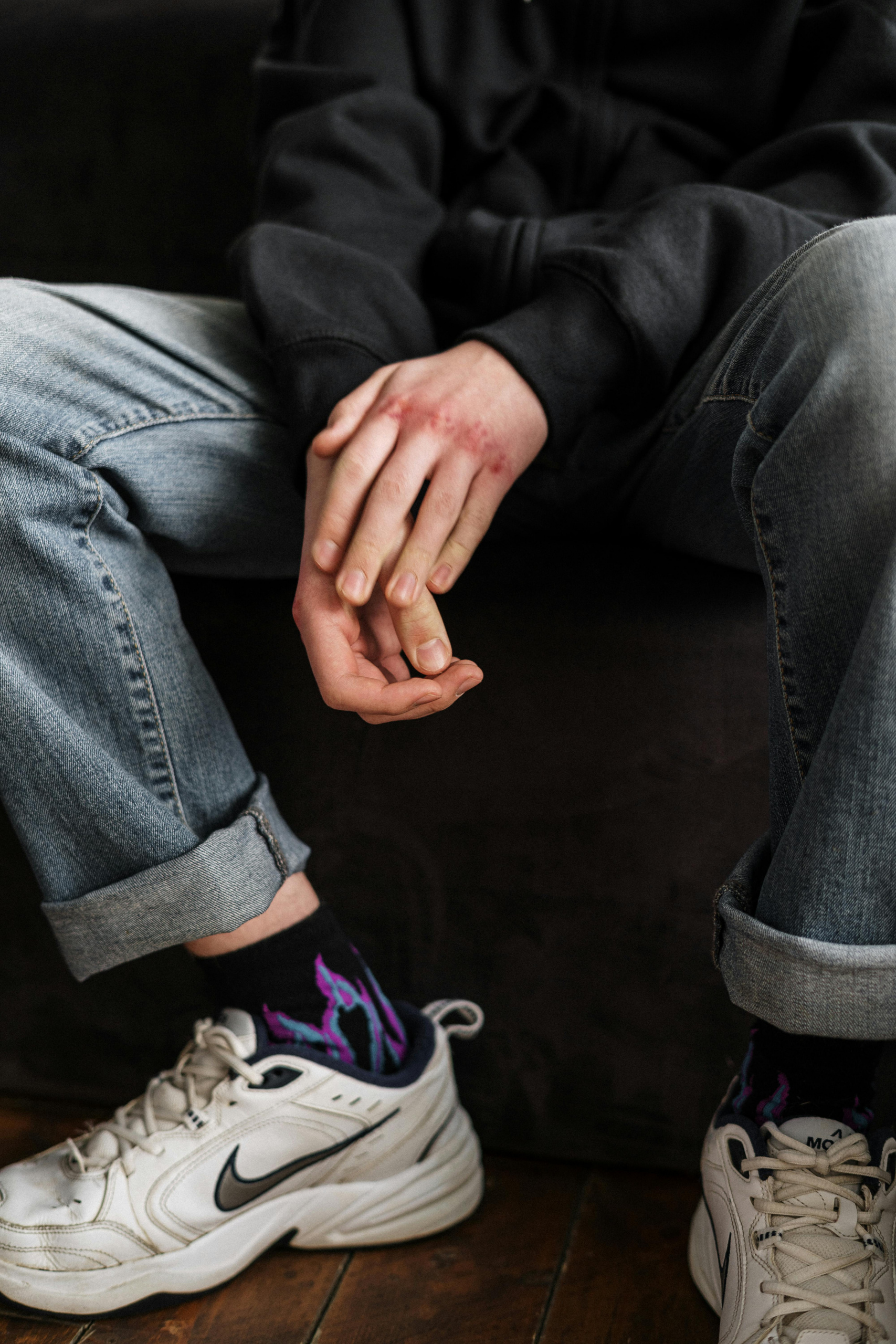
Most addictions, when out of control, activate stress-relieving hormones but also harm and suppress us, which again causes stress and the need to reduce it, trapping someone in a never-ending cycle. Some people replace an unhealthy addiction with a healthy one, but they are still dependent on and slaves to it to cope.
Ironically, this means that someone addicted to working out might be driven by the same desire for the same hormones and mental results that someone who binge eats is. They are both acting to relieve inner stress and chasing after hormones to achieve it. Yet, those addicted to training see themselves as in control, while the other is perceived as out of control. However, if you take the training from the one using it as stress relief, they are just as in turmoil and anxiety as the one trying to diet. The difference is that one addiction has a healthier effect, whereas the other does not.
God sees how people judge each other while being guilty of the same things, only manifested differently.
The Physical Cost of a Sinful World
The world we live in addresses the symptoms of stress, but God wants to deal with the cause. When the constant elevation of stress and stress-related hormones is at work during long-term trauma and abuse, it damages the body in more ways than just mental. It leads to elevated blood pressure and elevated glucose levels, which can lead to type 2 diabetes. Stress disrupts the immune and inflammatory systems. Stress is known to cause obesity, depression, infection, multiple sclerosis, and lupus. As a child, it can affect the nervous system, brain function, and other organs, and can reduce important neural connections during brain development. “Stress affects all systems of the body, including the musculoskeletal, respiratory, cardiovascular, endocrine, gastrointestinal, nervous, and reproductive systems.” Trauma is also tied to atrophy of the spleen, lymph nodes, telomere shortening, and increased stress hormones, which impair immunity and increase inflammation. Impaired immunity and inflammation increase the risk of cancer, cardiovascular disease, diabetes, anxiety, depression, viral infections, autoimmune diseases, allergies, and asthma. (Salud América; APA)
Often, the long-term effects of stress are seen later in life, and little importance is given to those struggling early on. Many trauma survivors come to their doctor’s office with complaints of shortness of breath, pain, or digestive problems, only to be told that they are fine and do not fit into any of the standard categories. They are not seen, heard, or believed; instead, they are humiliated. While the symptoms are real and not imaginary, they are also lethal in the long term. Any doctor worthy of their profession should be concerned for anyone living with chronic stress and presenting strong symptoms, just as they would with any other illness.
The Bible talks about sin destroying us and the world, and sin is why stress is constantly activated. Stress is destroying us; it is killing us. Sin and stress are related in the sense that sin is the action, and stress is the response to it. Sin is the choice; stress is the consequence. It does not have to be your sin that causes the stress, but all sin will cause stress somewhere and with someone. Even for those who do not admit their sin, their bodies will still have a stressful reaction to it.
The body is confused and feels threatened, but it does not understand the threat. God did not design our bodies for sin, yet we are now living in a world of sin as sinners. Thus, the body is constantly fighting to survive. Often, we do not understand who is at fault, why we are stressed, where the anxiety comes from, or why those responsible tell us they have done nothing wrong. The world’s “experts” might even tell us that our sin is healthy, and that what God calls healthy is the very sin causing the stress. They call good evil, and evil good, as stated in Isaiah: “Woe unto them that call evil good, and good evil; that put darkness for light, and light for darkness; that put bitter for sweet, and sweet for bitter!” (Isa. 5:20)
Sin is not natural in God’s world.
This is confusing because our body was initially designed to meet God’s standard. The confusion makes addressing the cause of our stress sometimes almost impossible, and many must invent or imagine the threat to find some peace in addressing it. This is a form of dissociative victimhood in which blame is placed on the wrong people and situations. An example could be sexual abuse or emotional abuse in the home. Because victims have been taught by their abusers that the abuse is not wrong, the resulting powerlessness can cause them to create a scapegoat or villain to cope and vent their anger on the wrong person.
Scapegoating: Placing Blame on the Wrong Person
It can be compared to a recurring situation in which people are so desperate for justice that, when a crime is committed, the police feel rushed to arrest

someone to satisfy public wrath and calm the storm. It has led to countless innocents being wrongly convicted. In the USA, the organization called the Innocence Project works tirelessly to free the wrongly incarcerated. It has also made way for what is today called cancel culture. When there is distress, society looks for someone to blame to create temporary relief, and one person is chosen to take the blame for a larger societal issue.
The author Luke Burgis explained it well, saying: “A scapegoat is someone or some group that is used to achieve a very specific purpose. People make scapegoats when there is a fundamental truth they do not want to acknowledge, so they can transfer the blame to them, expel or eliminate them, and imagine that the cause of all their problems is gone. People do it because it produces a sense of catharsis, relief, or healing. Scapegoating feels good because it is a way of protecting ourselves from having to suffer. Somebody else has to pay the price of our sins and our weaknesses. Scapegoating also forms group identity. Throughout history, when there is absolute social disorder, it is the time when there is most likely to be a scapegoat. And the scapegoat brings a moment of peace and relief” (Luke Burgis, “The Ugly Psychology Behind Scapegoating,” YouTube https://www.youtube.com/watch?v=cLa0zqShCcw)

The Family Scapegoat
In every dysfunctional family, the tendency to single out and blame one family member arises. Even in a dysfunctional family, an order of dysfunction is created, creating an illusion of normality in the abnormality. The member of the family who addresses “the emperor has no clothes” and exposes the toxicity, usually because they are victims speaking out, disrupts the other family members’ facade and coping mechanisms. Thus, the one who speaks up and does not go along with the family group dynamic automatically becomes the “scapegoat,” is given the blame, and is told they are the disruptive and toxic ones.
As I will address in a later chapter, the term scapegoating is taken from the Bible and used in modern psychology in its own context. However, scapegoating can be used in good and bad ways. If the blame is put where the fault is, the peace created is good. In a sinful world, this is disrupted, and the scapegoat is often the innocent or the one who wants to change a toxic situation. This is because man loves sin and continues to sin; thus, the good guy is considered destructive, and an illusion is created that everything that goes wrong or feels wrong is not because of sinful actions and choices but because of the one pointing them out. Depending on a group’s or an individual’s motives and desires, the good guy or even the victim can be perceived as a dangerous threat. This might also lead the victim to scapegoat an innocent person, as the guilty refuse to take responsibility for their actions. Not understanding themselves, they are looking for someone to blame for how they feel, finding something or someone that stands out. This is how many deal with sin: they create an alternative suppressor or look or even provoke someone to suppress so that they can claim victimhood and get the sympathy they were denied for the real harm they experienced. A family that refuses to acknowledge their crimes towards their children and even portrays the child as a liar might induce the child to, as a teen and adult, seek victimhood somewhere else, where they can receive the justice and sympathy denied to them as children. And thus, a victim can easily claim to be a victim of something else. Many male serial killers have been found to punish other women for something another female has done to them in the past. This is another way to dissociate from the issue and divert blame. Even a cold-blooded murderer cannot sometimes face their transgressor out of fear and attack someone who resembles them instead. This is an extreme example, but the principle behind it happens in ordinary families as well. If trapped in a situation or dependent upon someone abusive, whom they are too scared to confront, it is easy to take it out on a stranger who said something that triggered them instead.
For example, someone might suffer degrading treatment at home without retaliating, but when a stranger makes a comment that can be interpreted as degrading, the person overreacts and snaps at that stranger. Life is full of people walking around as undetonated bombs, and usually, innocent people are made to pay.
When the Victim Becomes Their Own Abuser
Many find satisfaction in making themselves the threat and then punishing themselves to feel relief. They become both abusers and victims, taking control of both roles to silence the need for justice. Some people’s stress causes apathy; the body becomes depressed and shuts down, stripping away meaning and purpose, so that they become less stressed and emotional about what happens. Usually, if you tell yourself the situation you are in is impossible and that there is no solution, you perhaps unintentionally cause your body to go into a depressed mode to help you cope. Our bodies do what we tell them to, even if we do not mean for them to respond in that way. The human hurt is so complex, with so many sides and pits. But although the consequence of sin manifests in thousands of ways, it all has the same beginning.
Science has not even begun to see or understand half of how sin causes harm. By refusing to acknowledge God’s definition of sin, they are unable to stop the consequences of sin and the suffering it causes. The more a society deviates from God’s standard, the more pain and suffering will ensue, because sin causes stress and dissociation, whether they believe in God and His standard or not. God’s science is real science, while those who choose to justify sin have the science of wishful thinking, and society remains the same or worsens.
God’s remedy
All the problems we face in the world today are the result of mankind battling their hormones, their pain, deflecting blame, and feeding their addictions.
God knows how our bodies work and how we got into our mess. He understands how we choose destructive ways to combat evil with evil, sometimes unknowingly and unwillingly. He has the solution and the way out of the cycle of pain and self-defense. We simply have to listen to Him and stop thinking we know what is best for ourselves. “There is a way that appears to be right, but in the end, it leads to death.” (Prov. 14:12) Because we are controlled by impulse and emotions when we make our decisions, God needs us to stop and listen to Him to find our freedom and to regulate and regain control over our overwhelmed emotions.
God has good news; He has the remedy.
When Paul was scapegoating the followers of Christ, thinking it would solve the societal problems of the time, Jesus met him on the road and said: “Saul, Saul, why persecutest thou me? It is hard for thee to kick against the pricks.” (Acts 9:4-5) Paul thought he restored order and peace to Jewish society by eliminating the followers of Christ, but he was mistaken. It was true that Christ’s followers were disruptive to the Jewish state, to families, and even to their way of thinking. Still, Jesus claimed targeting them would be hard in the long term, because what they considered the problem was actually the solution, and the known order was problematic. Paul then joined the other side and was considered a disruption and a problem for the other Jews, who now wanted to kill him. Paul’s life did not become easier, far from it, but his soul was at peace. Christ let Paul know that persecuting or wrongly placing blame would not make the problems go away, and that he would eventually be hurt by diverting blame to the wrong group. The Jewish nation was a dysfunctional family that needed to be broken up before it harmed the truth and their people even more. Living in lies and diverting blame only brings temporary relief, but it rarely resolves the problem or brings the needed change.
Jesus tells everyone the same. He does not promise that life will be easy, only that our wounded souls will find emotional rest in the truth and in living it. It does not help if anyone becomes powerful and can eliminate all their enemies if their insides are full of anxiety and despair. Jesus said, “Come to Me, all who are weary and heavy-laden, and I will give you rest. Take My yoke upon you and learn from Me, for I am gentle and humble in heart, and you will find rest for your souls. For My yoke is easy and My burden is light.” (Matt. 11:28-30)
“Wherefore do ye spend money for that which is not bread? And your labour for that which satisfieth not? Hearken diligently unto me, and eat ye that which is good, and let your soul delight itself in fatness. Incline your ear, and come unto me: hear, and your soul shall live; and I will make an everlasting covenant with you, even the sure mercies of David.” (Isa. 55:2-3)