





THE MISUNDERSTANDING OF PAUL
The Bible is the most widely read book in the world, and as a result, it is also the most misunderstood. While the Old Testament, the gospels, and the letters of the apostles are generally straightforward, it is Paul’s letters that remain at the center of Christian confusion.
This confusion is so significant that one Bible author actually predicted it: another biblical writer warned that Paul’s letters could be misunderstood—not just in an innocent way, but in a manner that could lead people to perdition. In other words, misunderstanding Paul is not simply a minor disagreement; it can have consequences for one’s salvation.
Peter, Christ’s apostle, praises Paul and calls him beloved, recognizing him as a fellow worker for the gospel. However, Peter also warns against reading Paul’s letters without proper understanding or knowledge (2 Peter 3:15-16).
Rather than blaming Paul, Peter holds his readers responsible for willfully or ignorantly twisting Paul’s words.
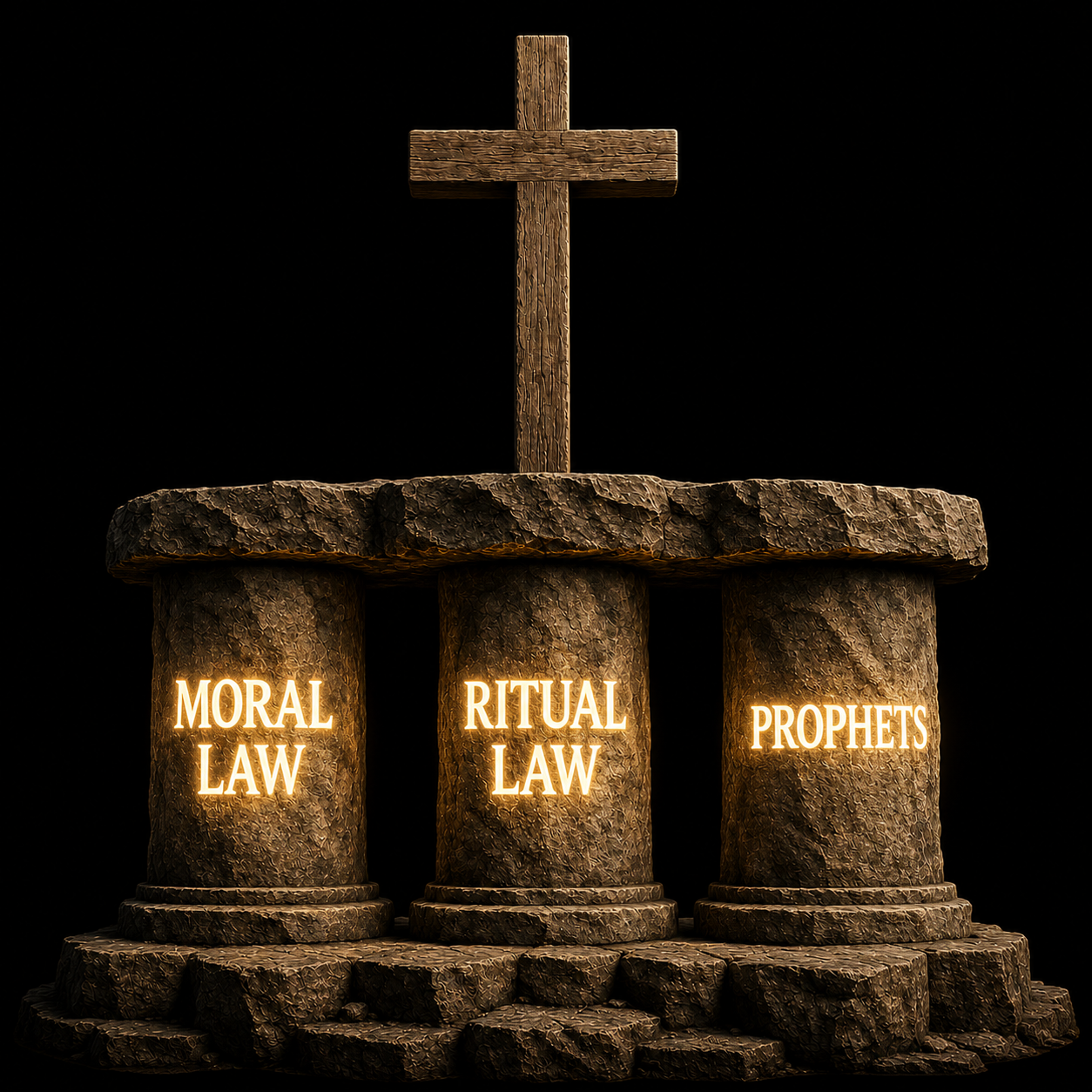
If the law and the prophets were the foundation Christ used to explain and guide His purpose and work, Paul’s words would not be misunderstood. Christ called this the “rock” on which the gospel stands. When this foundation was removed, Christian churches descended into confusion, division, and even suppression.
Perhaps the calling of Paul shows why Christ originally chose ordinary men—fishermen, tax collectors, and others—rather than the learned scribes and Pharisees to lay the foundation of the church. Education can sometimes lead people to speak in ways that are not easily understood by everyone, making simple topics seem complicated. Paul was highly educated, having studied under the leader of the Sanhedrin (Acts 26:5, Acts 22:3). He was a Pharisee.
His letters are the hardest to understand because he was not a fisherman or a tax collector, but a scholar who communicated using the educated standards of his time, even employing argumentative methods.
Some say he used the Socratic method, which was common among learned men of his day.
The Socratic method, named after the classical Greek philosopher Socrates, is a form of inquiry and debate between individuals with opposing viewpoints. It involves asking and answering questions to encourage critical thinking and clarify ideas. Often, this method uses oppositional discussion to lead someone to see contradictions in their own arguments, thereby highlighting the main point.
Now imagine someone in a later time and culture reading something that was already hard to understand in the first century. It’s almost certain there will be confusion about the intent and meaning. While the Holy Spirit inspired Paul as he wrote, it’s important to remember that the Spirit works through people as they are, using their language and personality. God uses imperfect humans as his messengers, allowing each person’s unique experience and voice to reach different groups of people.
To the Corinthians, Paul wrote: “And unto the Jews I became as a Jew, that I might gain the Jews” (1 Corinthians 9:20). This may seem strange since Paul was already a practicing Jew, so why would he say he became as a Jew? Paul means that he adapted his words and actions depending on his audience. Not to deceive, but because everyone must consider who they are speaking to when making their case.
Paul’s letters to the churches are often raw and passionate, sometimes resembling an argumentative train of thought, while the book of Hebrews is more like a formal sermon. It’s said that Hebrews contains about 150 words not found elsewhere in the New Testament. The author of Hebrews exclusively quotes from the Septuagint (the Greek Old Testament), likely addressing diaspora Jews who used that version. The key point is that Paul adapts his message to his audience. Failing to consider the times, the people, and the conflicts of the first-century church can make Paul especially difficult to understand. If we ever feel compelled to set aside Christ’s direct words because of something in Paul’s letters, it’s a sign we need to reconsider our interpretation.
Even modern Christian writers are influenced by their education in how they express themselves and whom they address. Someone with a university degree speaks one way to a colleague but would use different language when talking to someone less experienced. Similarly, a mathematician who wants to be understood by a non-mathematician must find simpler ways to explain his points.
This is as it should be, because if we don’t speak in a way that is understood by people in our own time and culture, our message may not be heard or accepted.
We see Paul using traditional argumentative methods throughout his letters. For example, in Romans he appears to suggest that God’s law is the problem, or that trying to obey it leads to failure—only to conclude suddenly:
“Wherefore the law is holy, and the commandment holy, and just, and good” (Rom 7:12)
This raises the question: If the law is just and good, why does Paul say it made him a sinner? Why does he sometimes present the law as if it contrasts with or even competes against faith? Paul often describes the struggle or the problem in one chapter, then explains the right approach or solution in the next. Many modern readers make the mistake of treating every verse as a direct command or absolute truth. Some even teach that trying to obey God displeases Him, which makes no sense. This confusion leads to endless debates about what Paul truly means.
In the same chapter, Paul writes: “But now we are delivered from the law, that being dead wherein we were held; that we should serve in newness of spirit, and not in the oldness of the letter” (Rom 7:6). This leads many to think Paul is saying the law is the problem, and that it is now abolished. Yet just a few verses later, he calls the law holy and still in force, meaning its requirements remain in effect. So what does Paul truly mean? The best way to avoid misunderstanding him is to look not only at his arguments, but also at his conclusions.
We see Paul’s argumentative style even more clearly in other passages, such as when he first says:
“But every woman that prayeth or prophesieth with her head uncovered dishonoureth her head: for that is even all one as if she were shaven” (1Co 11:5)
Only to proceed and say:
“But if a woman have long hair, it is a glory to her: for her hair is given her for a covering” (1Co 11:15).
Here, Paul presents both sides of the argument before reaching his conclusion, but later readers are often left confused about his actual meaning. Does a woman need to wear a covering, or is her hair sufficient as a covering? As a result, some Christians wear head coverings while others do not. Treating every statement Paul makes as a command can lead to confusion.
This is similar to quoting from the book of Job, which is also part of holy scripture. In the end, God criticizes three of the speakers in Job: “ye have not spoken of me the thing that is right, as my servant Job hath” (Job 42:7). This means we cannot treat everything in Job as definitive truth, even if God’s name is mentioned. The book’s conclusion reveals the truth. While the Bible is holy, the words of Eliphaz, Bildad, and Zophar are not necessarily so. These men show how God’s truth can be mingled with human error. God does not want us to adopt their religious practices or quote them as law without careful examination.
The same caution applies to Paul, who often argues both sides of an issue before giving his conclusion. If we are not careful, we might follow the beliefs of those he is arguing against, rather than Paul’s intended message. Sometimes, as in Romans, Paul clearly presents an opposing idea and then rejects it with “God forbid!”—showing the idea is someone else’s misunderstanding, not his own teaching.
Paul often uses a Hellenistic debating style, adopting the voice of a critic, posing questions on their behalf, and then refuting those points.
First-century writers also used persuasive techniques to win over skeptical audiences, often by establishing common ground before making a controversial claim. These methods evolved into specific structures and logical devices that remain foundational to persuasive writing and legal arguments today.
The Romans used dispositio—the sequential arrangement of a speech or essay. This blueprint required the speaker to present multiple layers of argument before concluding. It consisted of three main parts: confirmatio (presenting key arguments and evidence), refutatio (systematically dismantling counterarguments), and peroratio (stating the conclusion and emotional appeal).
The point is that Paul’s writing is uniquely different from all other books in the Bible, which is why he is misunderstood more than any other author. While the rest of the Bible uses structured narratives, formal poetry, and straightforward sermons, Paul writes with a raw urgency. In addition, his grammar often breaks mid-sentence as he pursues new theological ideas.
Some Bible readers who do not understand this may feel compelled to accept both the arguments Paul presents and his answers as equally God-given truth, leading to spiritual ambiguity. This confusion has contributed to the falling away seen in the churches. Satan does not need us to be ignorant of God’s word—just confused about it. In the Garden of Eden, Satan did not question God’s existence; he misquoted God and twisted His intentions to create confusion, then suggested disobedience as the solution. He used a similar strategy with Jesus in the wilderness, quoting Scripture but twisting its meaning to create uncertainty and tempt Jesus to break God’s law. But Jesus recognized the strategy and exposed it.
If we use God’s law as our foundation, we know that Paul cannot make new laws that define sin. God’s law forbids adding to or removing from His commandments. Only a law created by God, if broken, defines sin—“Sin is the breaking of the law” (1 John 3:4). The sin Christ redeemed us from was transgression against God’s law, not human laws. He redeemed us from our violations of God’s law so we could be restored to good standing with God. This is the core message that has been confused. Instead of removing His law, God took the penalty on Himself, upholding the law while saving the sinner. Yet, some teachers today use Paul’s letters to claim that Jesus died to remove the law that condemned us, creating a false gospel—that instead of carrying our sins to the cross, He carried God’s law, and that instead of being freed from sin, we are now freed from God’s law.
A serious problem arises when a Christian is willing to abandon the foundation laid by all other Bible writers to follow a new foundation based on something Paul might or might not have meant.
This idea also contradicts the message of the other Bible writers, who make it clear that only God can make or abolish religious laws and that God’s law remains unchanged. No human is given the right to create laws regarding worship or obedience to God, or to abolish God’s commandments. Even Christ said He would not do so. So whatever Paul is saying, it cannot be that. If Paul really claimed God’s law is no longer valid for Christians, then he would be the kind of preacher the Bible warns against:
“For the priest’s lips should keep knowledge, and they should seek the law at his mouth: for he is the messenger of the LORD of hosts” (Mal 2:7)
And from Christ’s own warning: “For verily I say unto you, Till heaven and earth pass, one jot or one tittle shall in no wise pass from the law, till all be fulfilled. Whosoever therefore shall break one of these least commandments, and shall teach men so, he shall be called the least in the kingdom of heaven” (Mat 5:18-19)
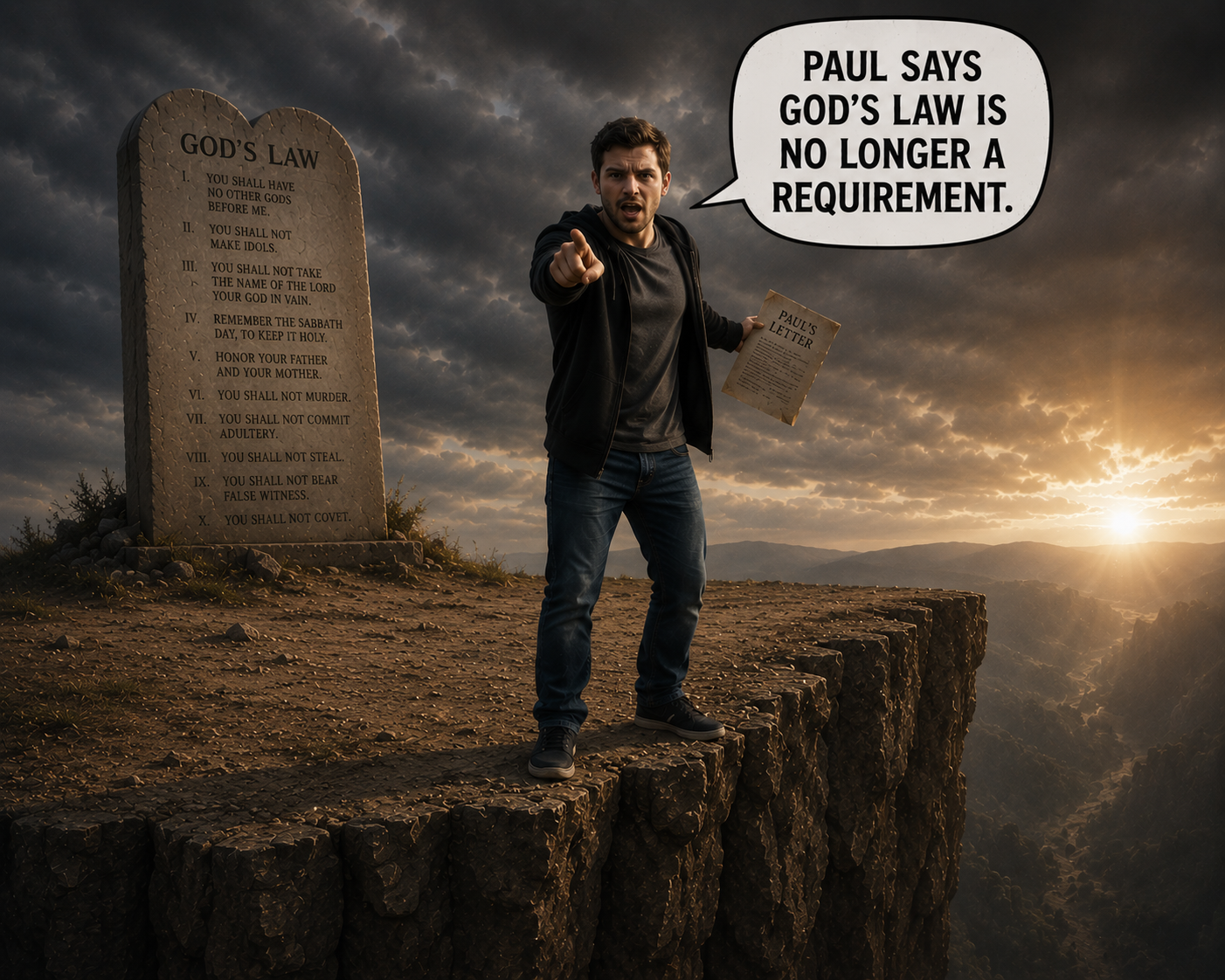
The apparent contradiction between the themes of the rest of the Bible and gospels on one side, and Paul on the other, is sometimes so striking that some claim only Paul’s words count—even above Christ’s own words. Others argue that Christ’s teachings were only for Jews, while Paul’s are for Christians.
Others deal with the controversy by claiming that Paul’s letters do not belong in Scripture. Both should be considered wrong. For as Peter said, Paul would be misunderstood; he also said his letters contained the gospel, written “according to the wisdom given unto him” (2 Pet. 3:15). Peter also says people tend to twist other scriptures, too.
So the question we should ask is: what is being misunderstood, and why can misunderstanding both Paul and the rest of Scripture lead to “their own destruction”? (2 Peter 3:16) The truth is that many who call themselves Christians will be lost. Even Jesus said that people who do many things in His name and proclaim His name will perish on judgment day if they have lived a Christian life without God’s law (Matt. 7:21-23).
If Paul never claimed that God’s law is abolished, what is it that he is trying to say that sounds like it is? For this is the core of the change in the Christian platform, which made way for Papal Rome.
Without wrestling with Paul’s writing, you don’t have a papal church, a new religious culture, holy days, or even a new Sabbath. Christianity as we know it today will fall apart, for it is built upon the understanding that Paul tells us God’s law is no longer binding for the church. It is largely built on the idea that God has rejected His own law and allowed men to set church laws in their place. And this drives evangelicals, Catholics, Orthodox, Protestants, and other Christian denominations like Mormons and Jehovah’s Witnesses. They cannot argue for their change of biblical culture to a new one without quoting Paul. They can not quote any other Bible writer to support their belief. His letters are their only defense for violating and changing God’s law.
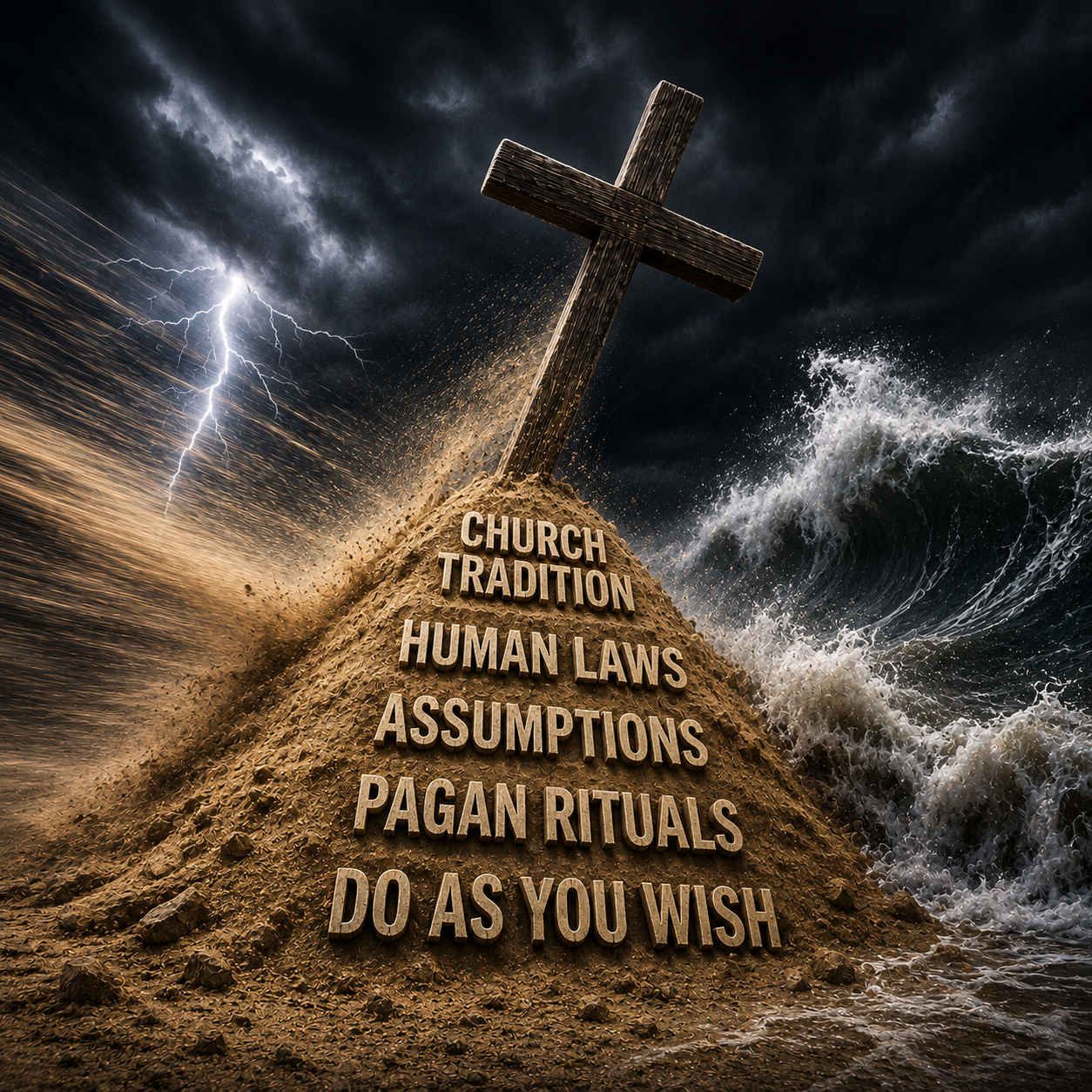
The idea that God’s law has been replaced is what allows for many church traditions. To defend this belief, the only scriptural support comes from Paul’s writings. But if Paul is misunderstood on this point, and the original foundation still stands, then the majority of the Christian world is standing on a crumbling platform—a house built on sand that cannot endure the storm of God’s coming judgment.
God says that many of His own people are in Babylonian confusion, but He also warns that He cannot save them unless they “come out of her, my people, that ye be not partakers of her sins, and that ye receive not of her plagues” (Rev. 18:4).
THE THREE CONFLICTS
When looking at all of Paul’s letters, three conflicts from his time still exist today. Paul addresses each of these, but over time, they have been blended to create the idea that God’s law is no longer binding.
1. Not if, but how. Why do so many apparently law-abiding Jews hate the law in flesh, Jesus? Why did Jesus call them lawbreakers when they had God’s law with them? What is the difference between legalistic religious practice and a spiritual approach to the law?
2. The Gentiles: Should they be circumcised and fully convert to Judaism with all its rituals before coming to Christ to be part of God’s congregation and Israel?
3. Does Jewish worship change? Should Jews continue sacrificing and performing temple rites after Christ has offered Himself and established a new temple? Do the shadow system and the fulfillment continue together, or can both save you?
All three topics are fairly clear if you have the right foundation for understanding the debate—one built on the law and the prophets. But if you mix these conflicts into a new truth and practice, you end up repeating the very mistakes Paul warned against, even creating a new religion and platform. This is exactly what both Catholics, Protestants, and evangelicals have done.
1. Not if, but how.
Does God expect you to keep the law? Is it even possible, or is Paul arguing about how it should be done? In this case, the law and the prophets, as well as Jesus and His apostles, all affirmed the need to respect God’s law. In fact, that is what everything is about.
Would God require obedience throughout the Bible if it were impossible for people to obey? God is not unreasonable; He is fair. Understanding this helps us see that Paul is taking the discussion to a higher level: How can we keep the law when our bodies struggle against our minds? When our desires overpower our will, is there a solution? Is God condemning us through the law for something we cannot do, or has He made a way for us to come into harmony with His principles?
Much of Paul’s argument is rooted in its context. He not only discusses how to keep the law, but also addresses religious hypocrisy and its dangers. He speaks about the failure that comes from seeking the law legalistically rather than spiritually—a topic Jesus addressed as well. Jesus claimed that the legalistic Pharisees were lawbreakers because they missed the law’s true purpose. While claiming to be righteous, they were planning His murder, not seeing their own double standard. They also added many human rules and regulations to God’s law, twisting His intent and making it seem like people were sinners for simply breaking their own traditions. Their strict interpretation of the Sabbath led them to see Jesus as a Sabbath breaker.
They imagined themselves righteous, yet were not in harmony with the law at all. Jesus taught that righteousness is not just about avoiding outward sins, but about true inner change. For example, He said: “whosoever looketh on a woman to lust after her hath committed adultery with her already in his heart” (Matt. 5:28). Jesus, who perfectly fulfilled God’s law, was the living example of what it looks like when the law is truly practiced—and they hated Him even as they claimed to love the law.
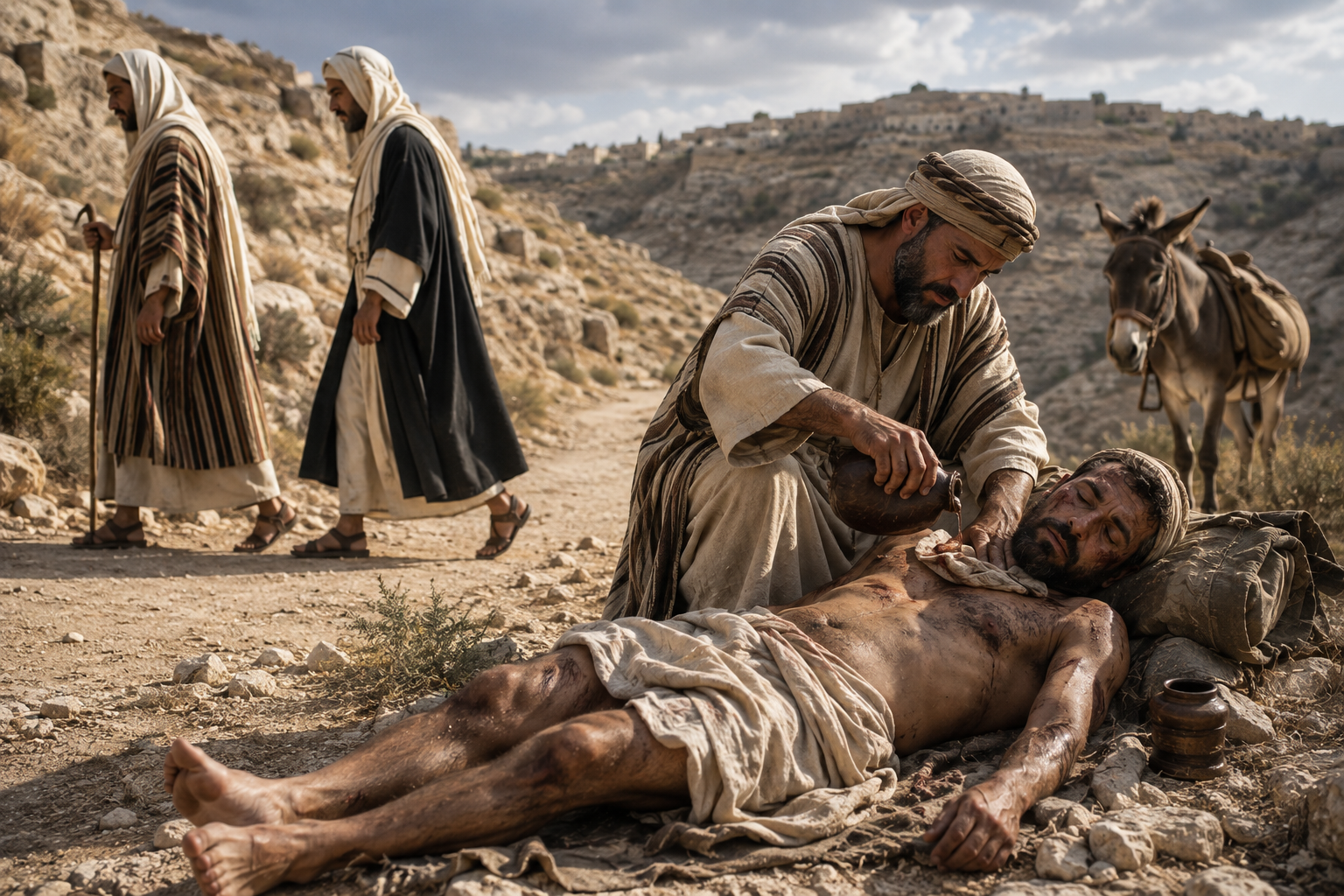
This remains a problem for many Christians today, making this topic very relevant. Do we seek God through rituals, church attendance, and good deeds, while ignoring the principles of the law? Many Christians do good deeds to excuse the wrong they do elsewhere. Paul and Jesus both argued that a true Jew is one inwardly (Rom. 2:29). True Christianity must come from the heart. Rituals cannot replace or conceal the heart’s true condition or intent.
Jesus said: “Woe unto you, scribes and Pharisees, hypocrites! for ye pay tithe of mint and anise and cummin, and have omitted the weightier matters of the law, judgment, mercy, and faith: these ought ye to have done, and not to leave the other undone” (Mat 23:23). Their balance was off.
This conflict appears throughout the Bible, addressed in many books—especially Isaiah, Jeremiah, and Ezekiel—but usually without Paul’s complex argumentative style. In those prophetic books, the issue was urgent because the double standard was so widespread.
This was at the heart of Christ’s teachings. He had to teach true religion in the midst of religious superstition, which put Him in conflict with the leaders and teachers of His own people. When Jesus taught the same principles Paul later emphasized, He could not be removed from the platform of the law. Jesus claimed to keep the law, encouraged others to keep it, and was the law made manifest. He was not contradicting Himself. We must recognize that Christ was not promoting spiritual lawlessness, but warning against practicing the law without understanding its spirit and purpose. Jesus was not saying the problem was with God or His law, but with how they were being practiced. Jesus said:
“The scribes and the Pharisees sit in Moses’ seat: All therefore whatsoever they bid you observe, that observe and do; but do not ye after their works: for they say, and do not” (Mat 23:2-3).
The fight of who actually respected God’s law continued between the apostles and the Jewish leaders even after Jesus had ascended to heaven.
They: “set up false witnesses, which said, This man ceaseth not to speak blasphemous words against this holy place, and the law” (Acts 6:13)
While the apostles said about them: “Who have received the law by the disposition of angels, and have not kept it” (Acts 7:53)
They argued who actually respected the law of the two. Paul, having been among the leadership in Judah, taught all the rules of Phariseeism, was very well aware of the dangers of approaching God’s law the wrong way. He was an example of it. He persecuted his own people, thinking he was doing God’s service.
It’s always easier to instruct others than to examine and change yourself. Likewise, performing a ritual is simpler than truly changing your heart or habits.
Christ’s conversation with Nicodemus puts the conflict on display as Jesus says to him after telling him the importance of spiritual rebirth to be right with God: “Art thou a master of Israel, and knowest not these things?” (Joh.3:10)
If we don’t believe the heart can change and be “reborn,” then we will lose faith not only in ourselves but also in others. Preventing us from showing mercy and forgiving, and at the same time not admitting wrong.
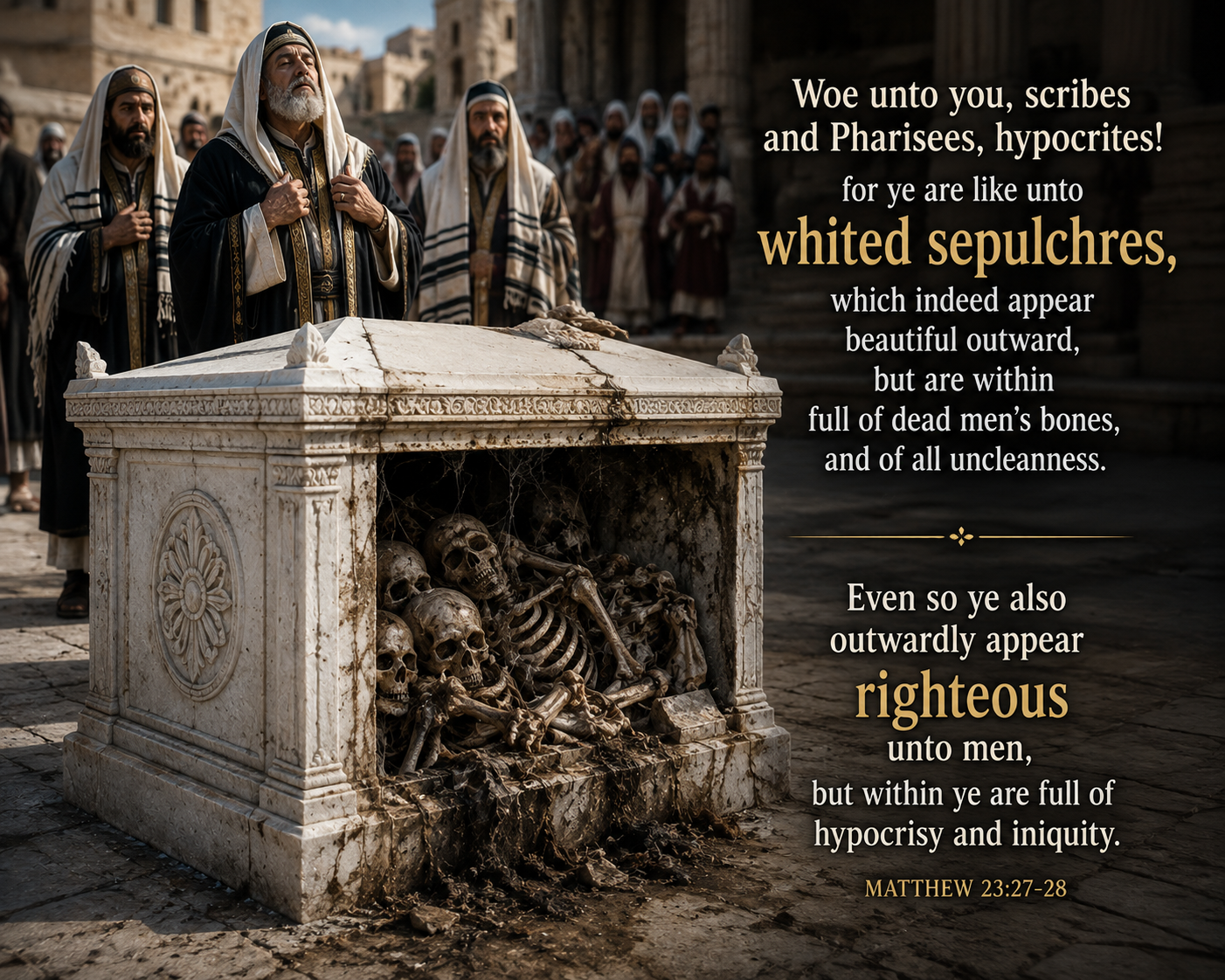
Jesus questioned Nicodemus, being a teacher and a leader, yet was unable to understand how a transformation could take place. This exposed the religious climate in which Nicodemus lived. They condemned the sinners, but could not offer them rehabilitation and mercy. Rather than actually being righteous, they imagined themselves righteous. Jesus agreed their show worked; they appeared good to most: “Woe unto you, scribes and Pharisees, hypocrites! for ye are like unto whited sepulchres, which indeed appear beautiful outward, but are within full of dead men’s bones, and of all uncleanness.
Even so ye also outwardly appear righteous unto men, but within ye are full of hypocrisy and iniquity.” (Mat 23:27 -28)
He confronted them with washing their outside, which made them appear clean, but spiritual uncleanness came from the heart: “Whatsoever thing from without entereth into the man, it cannot defile him;
Because it entereth not into his heart, but into the belly, and goeth out into the draught, purging all meats?
And he said, That which cometh out of the man, that defileth the man.” (Mar 7:18-20)
If we keep the platform God established—that His law is holy—then we can understand Paul’s message in line with Jesus’. Paul, like Jesus, warns that hypocrisy and legalism are both dangerous and destructive.
But if the right platform is removed, Paul appears to permit “giving up,” or to suggest that God has changed his expectations and requirements. That God has repented of His law and has been born again, rather than us repenting for breaking it and being born again. Although it is not said that way, this is what it means when Christians hold on to such an interpretation. If Paul is misunderstood, then those who keep the law will appear to be the ones God is in conflict with, whilst those who do not are credited as good Christians. And if that were the case, it would conflict with everything God has ever said and done, both before Paul and after, to John. For God has always said those who kept His word were His Own, and those who violated His law were the ones in conflict and the ones who were causing all the problems both within his congregation as well as outside it. Never in the history of the Bible were those who kept God’s law faithfully said to be the problem.
Paul’s intent is seen in the conclusions he makes, trying to prevent the church from going in the footsteps of his own people, even himself, when it came to religious hypocrisy. He was not abolishing God’s law.
A Christian should be born again with a cleansed heart, not create new systems or religious practices that merely disguise a rebellious heart with rituals.
Because Paul is misunderstood on these matters, Christians have often followed the same legalistic path as the Jews. Instead of temple rituals and cleansing laws, they have created their own church rituals. Now, a Christian might seek salvation by attending Mass, going on pilgrimages, confessing to a priest, honoring church-appointed holy times, and performing rituals like giving alms, reciting prayers, or burning incense and candles. Yet none of these practices reveal the true condition of the heart. One can do all of these things and still have a greedy, lustful, boastful, or unmerciful heart.
The conflict remains.
God Himself instituted the temple ritual laws for their time, but the rituals alone did not save; it was the attitude and understanding with which they were practiced that mattered. In Christ’s time, the Jews misunderstood the purpose of these rituals. Later, Christian churches added practices that God never instituted, making it even more difficult to separate truth from error.
You can recite the Lord’s Prayer a hundred times a day without its words being true in your life.
People often prefer rituals to genuine conversion because it feels easier to earn salvation through acts—simple or complex—than actually to change.
This is why the Bible spends so much time explaining how God’s law should—and should not—be approached. Most religious teachers have their students receive God’s law through fear of punishment. This approach leads to rebellion, opposition, suppression, and hypocrisy.
Paul understood all this. The moral law cannot be kept through ritual alone. It must be approached with faith, trust in God, and love that comes from God’s love for us. It is meant to be naturally in our hearts, but because of sin and its effect on our character, we are too weak to keep its principles on our own.
This is where God’s Spirit enters—to make up for our weakness, to renew our hearts, and to give us the desire and strength to follow Christ’s example. When a person realizes God loves them, they open their heart, and through trust and admiration for God, a faithful heart is born. We conquer sin through the Spirit and our faith, not through a legalistic approach.
This was Paul’s point: “But Israel, which followed after the law of righteousness, hath not attained to the law of righteousness.
Wherefore? Because they sought it not by faith, but as it were by the works of the law. For they stumbled at that stumblingstone (Rom 9:31-32)
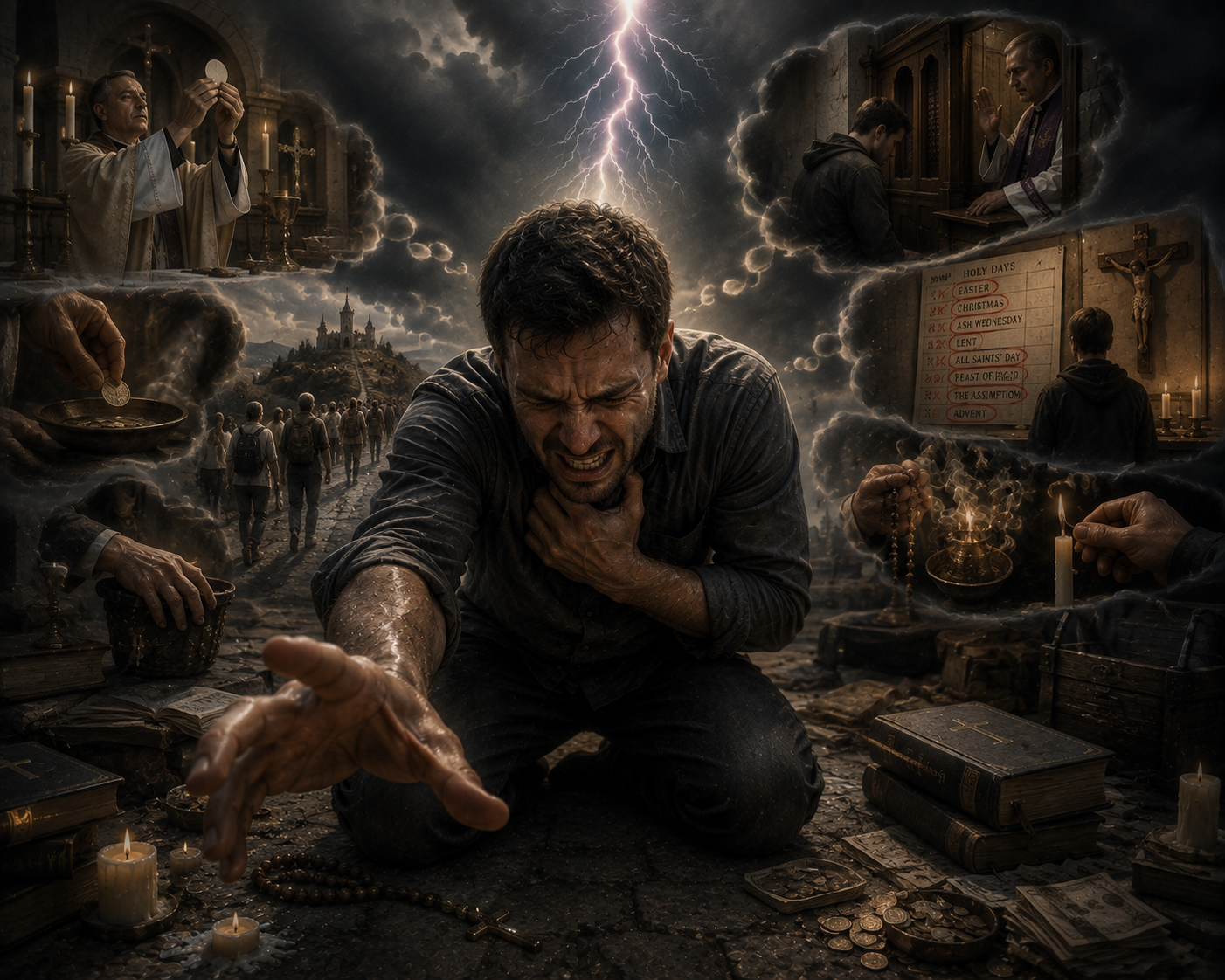
For example, reciting the Lord’s Prayer as a ritual has no meaning if it is not done with faith. But one heartfelt Lord’s Prayer, spoken with faith and love, unites the words with the heart and transforms the person praying.
God-given Christian rituals like baptism and the Lord’s Supper can be practiced without true conversion. The same was true in Christ’s time with the jews and the first converts, which Paul addressed. Attending church every week will not guarantee salvation. Even though these actions do not save us, God still wants us to be baptized, take the Lord’s Supper, and go to church. The problem is not with baptism itself, but with how we approach it and whether it leads to real change. The same principle applies to God’s law—the law was never the problem; the issue was always how people approached it.
Paul was a learned man, both in the world of his time and in Jewish doctrine. The teacher considered most conservative in his day is now seen as one of the most liberal among the Bible writers. Paul admitted he was once very strict: “Which knew me from the beginning, if they would testify, that after the most straitest sect of our religion I lived a Pharisee” (Acts 26:5).
This pattern is seen throughout history: people who are deeply committed to one side often focus on their own past mistakes and swing to the opposite extreme, hoping to help others avoid the same errors. This was true for Martin Luther, the great reformer. He mistreated himself in an effort to earn God’s favor, even as the average Catholic gave little thought to such matters. Luther’s intense efforts and focus on God’s vengeance led to a major change when he finally understood God’s mercy and the gift of salvation. This new understanding became his passion and set him on the right path. However, those who never experienced his struggle sometimes misused his teachings as an excuse not to make any effort at all—an abuse of Luther’s meaning.
Paul had been a strict Pharisee, so zealous that he was blinded to who God really was. After his conversion, he used the same passion to help others avoid his past mistakes. He wanted people to understand that true change comes through God’s love and mercy—not through religious fanaticism or bigotry.
Paul’s zeal and passion are an important influence in the Bible when rightly understood. His writings encourage sinners to form a genuine bond with God and avoid the hardening of their hearts. Paul’s message stands against religious fanaticism, which can lead people to become, as he once was, a self-righteous man persecuting Christians, thinking he was serving God. He believed he was right because he performed religious rituals. Yet, he misunderstood and failed to live out their true meaning—only to realize later that he had completely misunderstood and dishonored God.
The Levites carried the Ark of the Covenant and all the sanctuary items through the wilderness for forty years. They carried God’s name and law from place to place, yet it never entered their hearts. It is possible to outwardly profess faith and doctrinal beliefs while being at odds with them inwardly. This disconnect is what confuses believers.
Such has been the case with both Jews and Christians throughout history. In Christ’s time, those who thought themselves God’s chosen people killed their own Messiah—and not just Him, but also the prophets God sent. This is the ultimate confusion. That’s why swearing by doctrines does not make someone a follower of Christ, nor does performing rituals make you a good person. Repeating God’s name over and over does not change the darkness in your heart. Paul’s passion was to explain how God’s culture and Christ’s righteousness must become part of the heart, and he explained it as best he could.
In Revelation, when describing the final conflict that brings about Christ’s second coming, God’s people are described as “they that keep the commandments of God, and the faith of Jesus” (Rev.14:12)
Not just faith in Jesus—though that is important—but the faith of Jesus. This means keeping God’s law through the same spirit and faith that Christ had when He obeyed. That is the only way to respect God’s law truly.
Paul passionately debates these issues, though often in a less straightforward manner than other biblical writers.
2. The gentile-Jewish conflict.
The second major topic appears especially in letters written to communities made up of both Gentile converts and Jewish believers. The first-century church faced challenges never experienced before.
Before this, Gentiles who converted became Jews: they were circumcised and practiced Judaism according to both the Torah and traditional laws. From the first century onward, converts also had to accept the teachings of Jewish rabbis and oral law to be considered true converts. When they did, they became part of Jewish worship and religious life, often moving to live among the Jews. An example is Nicolas, a proselyte of Antioch, who was elected as a leader of the first Jewish-Christian assembly in Jerusalem, causing no conflict or distrust among the other Jews there because he was fully converted to Judaism and circumcised (Acts 6:5).
But following the spread of the gospel, it became different for three reasons:
1. The Jews did not want Christ-followers to convert to Judaism, nor did they want them among them.
2. The change of covenants now meant that believers were to follow Christ instead of the earthly temple and its services.
3. The converts remained living among their fellow Gentiles, scattered throughout many lands.
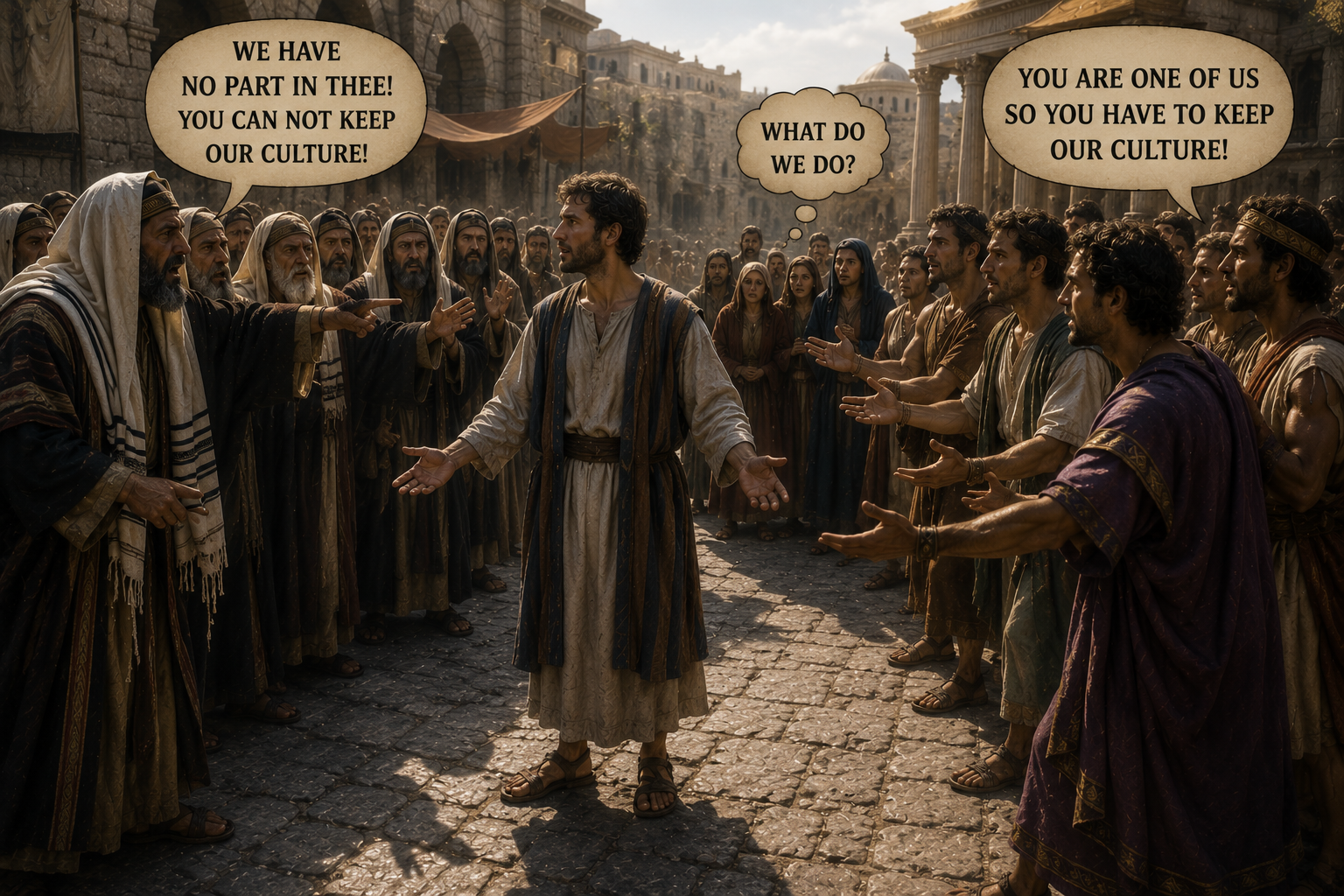
This made the conversion of Gentiles complicated and unique for its time, leading to great confusion. The Jews who rejected Christ refused to accept Gentile converts. Even Jews who had become Christians were wary and fearful of worshiping with converted Gentiles, seeing them as “unclean,” and some even as an abomination.
Even the Jewish apostles and followers of Jesus were rejected by their own people; they could not bring Gentile converts to the synagogue or temple without causing great conflict among the Jews. When Paul attempted this, it led to repeated disputes, as seen throughout the book of Acts. Although the apostles desired that Gentile converts be considered part of Israel, in practice Jewish believers continued to attend the synagogue, while Gentile converts often remained separate.
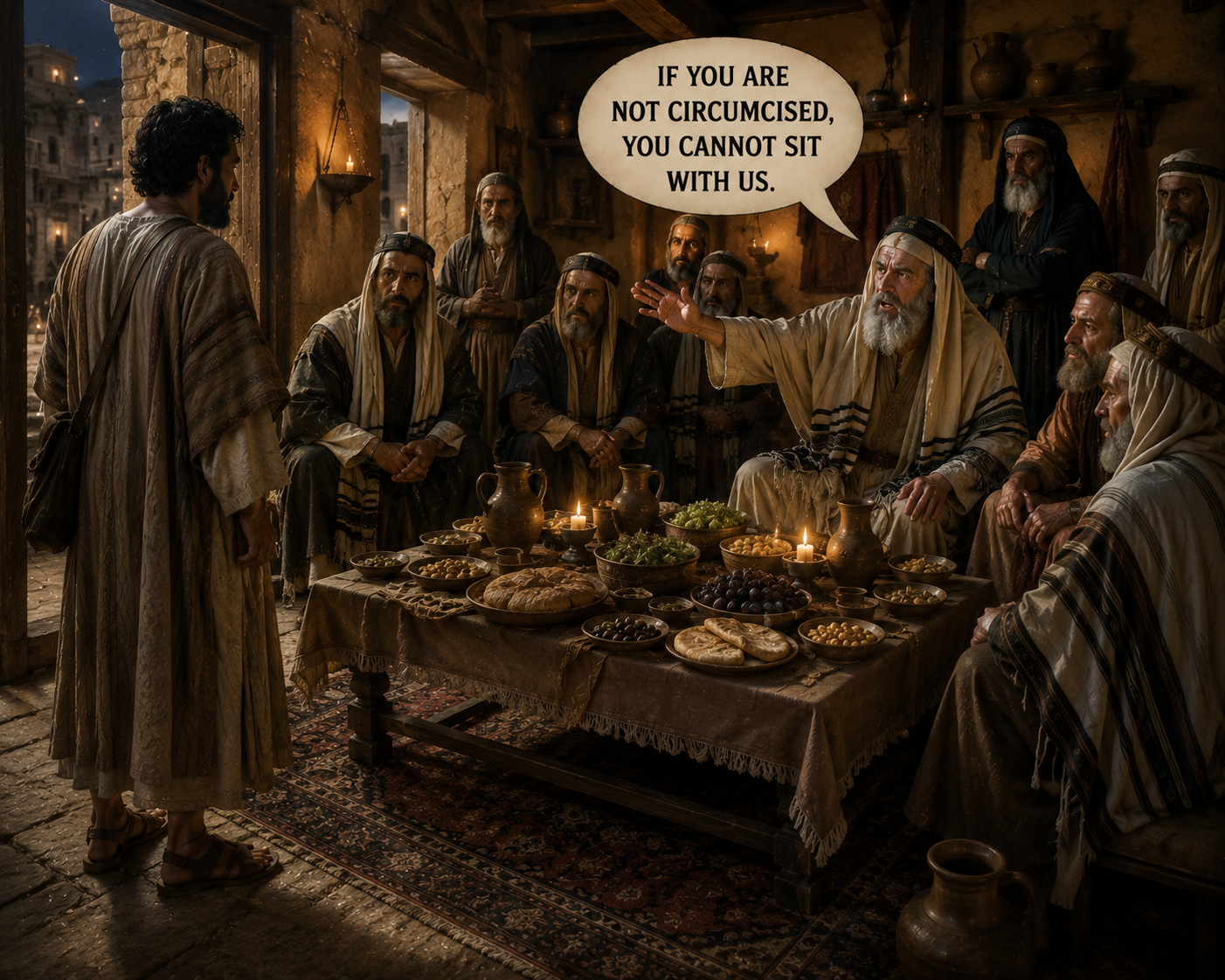
The Jews would only accept converts who embraced all Jewish rituals and were not converted because of Christ. Foremost among these rituals was circumcision, which Paul mentions 28 times in his letters.
Knowing that Gentile converts would not be accepted by the wider Jewish community, the apostles needed to find a way for them to embrace both the law and the gospel, even as they were excluded.
It was this very conflict that led to many of Paul’s statements about the law being misunderstood or misused—even at the first apostolic council in Jerusalem.
Some Jews insisted that pagans who followed Jesus were not allowed to keep the Sabbath—claiming it belonged only to the Jews—or to keep the feasts or even study the law and the prophets, unless they were circumcised. Many Jews who followed Jesus were also confused, considering Gentile believers unclean even after conversion. This led to a schism between Jewish Christians and Gentile Christians, which Paul argued was never God’s intention. They were meant to be one people, together forming God’s Israel.
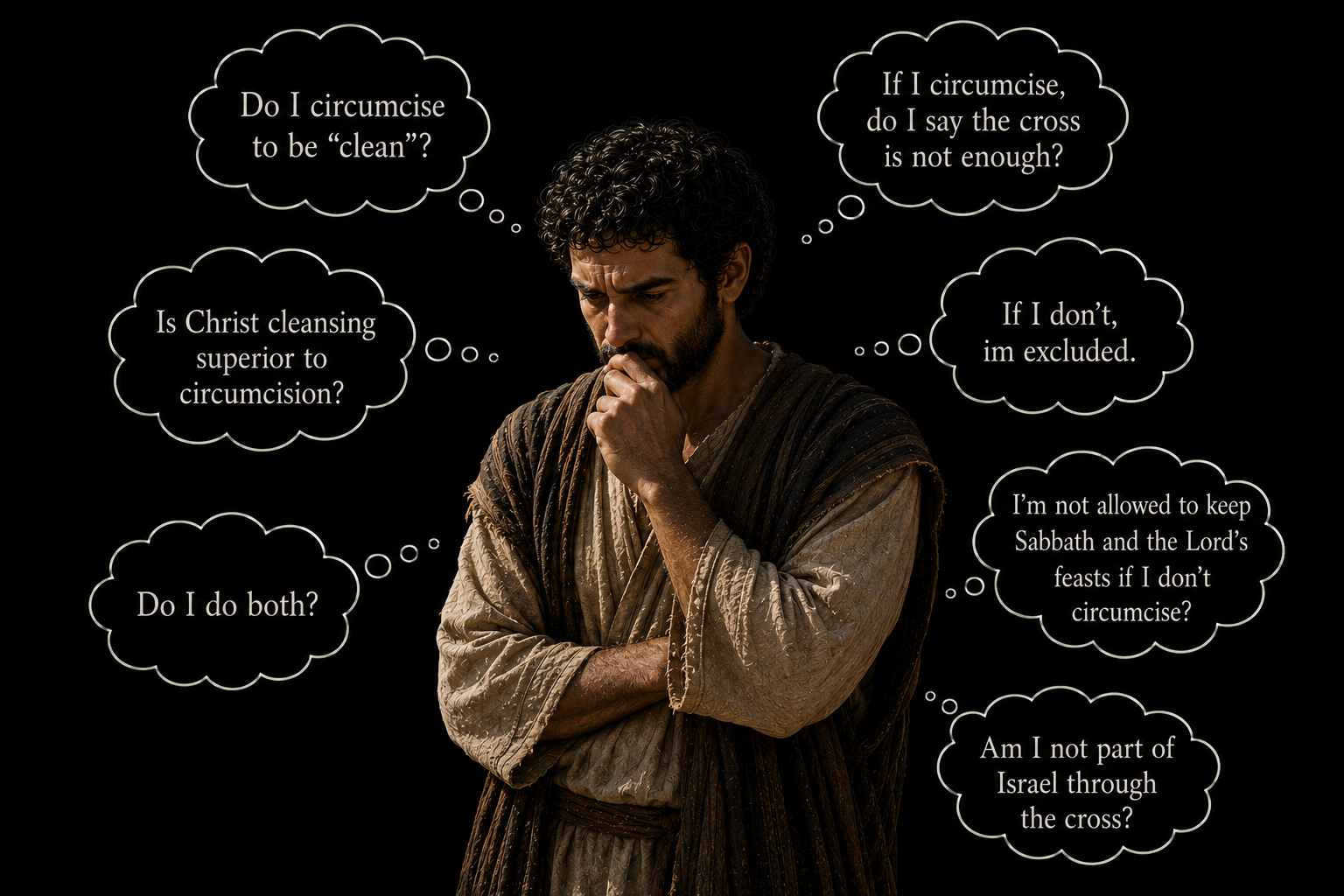
By allowing and teaching separation, some were reverting to the old covenant system—something Paul argued against.
The Old Covenant system demanded separation because Israel was chosen to be the royal priesthood at Mount Sinai.
It’s a common misconception that God’s law was created at Sinai. In reality, it was Israel’s election as the representative of God’s law that was ratified as a covenant—not the law’s origin. God expected them to keep His law even before Sinai, showing that it was already in effect.
It was their selection as a people—set apart to represent God’s law—that was ratified at Sinai. We see this in God’s word, where He says: “Now therefore, if ye will obey my voice indeed, and keep my covenant, then ye shall be a peculiar treasure unto me above all people: for all the earth is mine:
And ye shall be unto me a kingdom of priests, and an holy nation.” (Exodus 19:5–6) It was an agreement upon their relationship that was ratified. But God’s law existed long before.
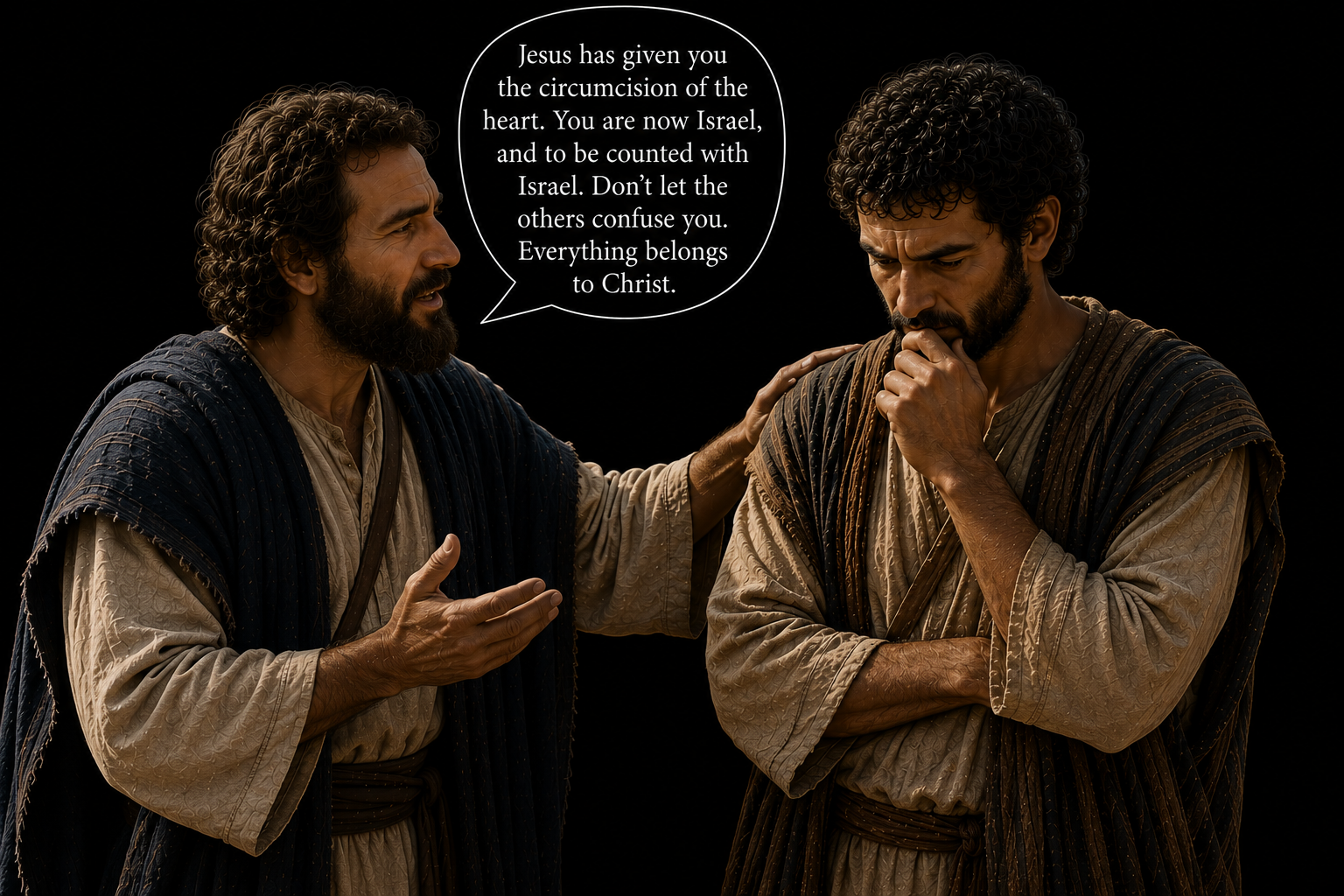
This separation between Jew and Gentile was to be removed in the new covenant, as the focus shifted from genetics and the Sinai agreement to following Christ’s lead. Because Christ took over the priestly titles and temple service, the old temple system was no longer in effect. God did not abolish the system; He transferred it to Himself and a temple in heaven. The Jews would not accept this and insisted they were still God’s priests and that their temple was the only valid one. Even Christian Jews were confused about how to continue their traditions and the law in this new context. In the midst of this conflict were the Gentile converts. They were told either that they were unclean and unwelcome to participate in God’s culture, or that they had to be circumcised and perform cleansing rituals—essentially becoming full ritualistic Jews—to worship with other Jews. As a result, some Gentiles did just that, replacing the new covenant with the old covenant system. By turning to ritual Judaism for salvation, as Paul argued, they made Christ’s sacrifice of no effect. After all, if Christ’s sacrifice was not enough for God’s pardon, and one had to rely on the ritual system, what was the point of Christ’s sacrifice in the first place? If Christ’s blood could not cleanse, and only circumcision could, then what power did the cross really have? Wasn’t Christ’s sacrifice superior for cleansing? Insisting on circumcision for cleansing and worthiness was actually an act of unbelief in the power of the cross to justify. In this way, the circumcision God instituted as a symbol of faith became a symbol of unbelief, losing its purpose. Paul debated these things consistently. The conflict might be easier to understand with a modern example: if Christ were to come and baptize with the Holy Spirit and declare us clean, but other Christians insisted that only water baptism could save, then clearly one baptism is superior to the other—though God instituted both. One can be baptized by water and still be unconverted; the act itself does not make you clean. It is faith, connected to the act, that brings you into covenant with God. Baptism is not a magic ritual that makes you sinless, and anything Christ does—like baptizing with the Spirit or declaring you clean—is superior to the ritual. This was the conflict over circumcision among the first Christians. It arose as resistance to what God provided, turning a symbolic act into a rival to true purification. Paul was considered radical when he said to the Philippians: “Beware of dogs, beware of evil workers, beware of the concision.
For we are the circumcision, which worship God in the spirit, and rejoice in Christ Jesus, and have no confidence in the flesh” (Php 3:2-3). Not only did he claim they were cleansed through a superior means, but he took the Jewish symbol and applied it to the Gentiles, asserting that they were justified—even to a greater extent than circumcised Jews who did not have Christ.
Paul also argued against the idea that one must serve both the rituals of the earthly tabernacle and accept Christ’s new temple—offering both animal sacrifices and Christ’s sacrifice. Paul often exposed the illogical and destructive mindset of those who clung to the symbols for salvation out of fear and disbelief, rather than simply believing in the sufficiency of Christ’s sacrifice. Paul was trying to explain the same truth as Christ had: “Think not that I am come to destroy the law, or the prophets: I am not come to destroy, but to fulfil” (Mat 5:17).
When Christ said: “Think not,” it was because he knew many would not just think that, but accuse Him of doing that. Christ was not instead of the law; He was the law; He was the fulfillment of all the ritual laws. They all pointed to Him. In contrast, those who refused Him saw Him as someone who was destroying their customs, as they preferred to worship the symbols rather than what they symbolized. They accused Jesus of trying to destroy the temple, yet the temple was just a story written in imagery of His mission. The ritual law was not the problem; it was God-given. It was how they interpreted what God had given that became their stumbling block. It’s the same with pagan religions. God has gifted the earth the sun. But they worshiped the sun over its creator, crediting the sun with being the creator and lawmaker. God does not blame the sun’s existence; He blames those who worship it as a god.
Circumcision and the Sabbaths
Paul also argued that the Sabbaths and new moon days now belong to Christ. They prophesied of Him, and anyone condemning Gentile believers for partaking in the Lord’s feasts—deeming them unclean—was mistaken. To the Colossians, Paul explained that they were clean, circumcised in Christ by a superior circumcision, and that anything separating them from God’s congregation was nailed to the cross. Gentile believers were as clean as any Jew—cleaner, even, than a Jew who had not accepted Christ. There was no reason for them to be denied participation in God’s culture and law, whether because of their genetics or lack of circumcision. Paul explains:
“In whom also ye are circumcised with the circumcision made without hands, in putting off the body of the sins of the flesh by the circumcision of Christ:
Buried with him in baptism, wherein also ye are risen with him through the faith of the operation of God, who hath raised him from the dead.
And you, being dead in your sins and the uncircumcision of your flesh, hath he quickened together with him, having forgiven you all trespasses;
Blotting out the handwriting of ordinances that was against us, which was contrary to us, and took it out of the way, nailing it to his cross…. (Col 2:11-14)
So arguing that they are fit through this Christ circumcision of the heart, he says:
“Let no man therefore judge you in meat, or in drink, or in respect of an holyday, or of the new moon, or of the sabbath days: Which are a shadow of things to come; but the body is of Christ. Col 2:16-17
Meaning, they were not to be excluded from the Lord’s assembly for being “unclean”. Those judgments were wrong, and they were not to let anyone judge them for being unclean or unfit, or for being wrong to dine at Christ’s table and feasts.
Today, however, Paul is often misunderstood as saying the opposite of what he meant, largely because people fail to grasp the first-century Jewish-Christian conflict. Some preachers claim these passages mean that, because of the cross, Christians are no longer obligated to follow God’s moral law or observe His appointed times. They teach that no one should judge them for breaking these commands, yet harshly judge Christians who do keep them. They also claim that these things belong only to Jews who rejected Christ, separating Christ’s own Sabbath and feasts from Him and giving them to those who reject Him. In doing so, they uphold the very separation Paul was trying to break down, thinking they are doing Jesus a favor.
Paul’s true message was to oppose the separation between Jews and Gentiles, declaring that all are now equal and belong to God’s culture through Christ. No one is cleaner or superior to another; salvation comes not through genetics or rituals, but through Christ.
The Jews had held similar beliefs in the past, which God addressed as well. Strangers who converted and wanted to worship God at the temple were denied access—denied the Passover, denied the Sabbath—under the claim that these belonged only to the Jews. In this conflict, God spoke through Isaiah:
“For thus saith the LORD unto the eunuchs that keep my sabbaths, and choose the things that please me, and take hold of my covenant; Even unto them will I give in mine house and within my walls a place and a name better than of sons and of daughters: I will give them an everlasting name, that shall not be cut off.
Also the sons of the stranger, that join themselves to the LORD, to serve him, and to love the name of the LORD, to be his servants, every one that keepeth the sabbath from polluting it, and taketh hold of my covenant;
Even them will I bring to my holy mountain, and make them joyful in my house of prayer: their burnt offerings and their sacrifices shall be accepted upon mine altar; for mine house shall be called an house of prayer for all people” (Isa 56:4) Although the Jews ideas were based of God’s law, they were a misunderstanding of both who and why and practiced it the wrong way (Deut.23:1-2)
It was not because they were clean and the others unclean by external things.
It was never God’s intention that strangers or pagans who wished to follow Him should be dismissed or told to stay away from the Sabbath or the temple simply because of their genetics, if they had chosen to follow God with all their heart. It was those who demanded right without conversion that were to be excluded.
Jesus wanted to gather them all into one fold. But among the Jews, the belief in their own superiority led to the mistaken notion that what God had given them was for them alone.
What Paul fought against and warned about is now often used to support separation instead. The idea that Christians and Jews should find salvation through different means is false and based on “the commandments and doctrines of men” (Col. 2:22). The claims that there are separate Sabbaths, holy days, or laws for Jews and Christians are deceptions—not the gospel or the truth. Paul was not telling pagans they could remain pagan; he told them not to let anyone judge them for considering themselves part of God’s Israel. It wasn’t the pagans that demanded circumcision to be accepted; it was the Jews, and therefore we know it is this conflict Paul is addressing.
Paul wrote that Gentile believers are circumcised and purified through Christ. What once separated them from participation has now been removed. They are now to be welcomed into God’s culture, because everything belongs to Christ—and they, too, belong to Him.
The Passover was not merely a Jewish holiday; it was a prophecy and celebration of Christ. Therefore, Gentile believers were not to be judged for participating in it. The same applies to the Sabbath—they were now grafted into Israel and became part of Israel through Christ, called to share in its culture (Romans 11:17–24). The Feast of Tabernacles was not merely a Jewish feast; it foreshadows Christ’s second coming, just as Passover foreshadowed His first.
“But now in Christ Jesus ye who sometimes were far off are made nigh by the blood of Christ… For he is our peace, who hath made both one… Now therefore ye are no more strangers and foreigners, but fellowcitizens with the saints, and of the household of God.” (Ephesians 2:11–19)
“There is neither Jew nor Greek… for ye are all one in Christ Jesus. And if ye be Christ’s, then are ye Abraham’s seed, and heirs according to the promise.” Galatians 3:26–29
“That the Gentiles should be fellowheirs, and of the same body, and partakers of his promise in Christ by the gospel.” Ephesians 3:6
A sentiment also expressed by Peter: “Which in time past were not a people, but are now the people of God.” 1 Peter 2:9–10
And Jesus explaining that they were to be united to the Jewish-Christian fold, not remain a separate fold: “Other sheep I have, which are not of this fold… there shall be one fold, and one shepherd.” John 10:16
Now everyone—Jews and Gentiles alike—were to be united as one, purified by Christ and participating together in Him. They were to represent the fullness of Israel as one people. Pagans were no longer strangers. For Israel to be saved, the fullness of the Gentiles had to come in, so Christ could gather them as one fold when He comes. This was a secret few Jews had understood before, as they pictured the separation lasting and themselves as the ruler of the pagans. That the pagans were to inherit together with them did not sit well with many, and is a notion rejected by Jews even up until our own time.
The Jews who refused Jesus rejected this doctrine and fought it with all their might. And they found an ally once again in Rome.
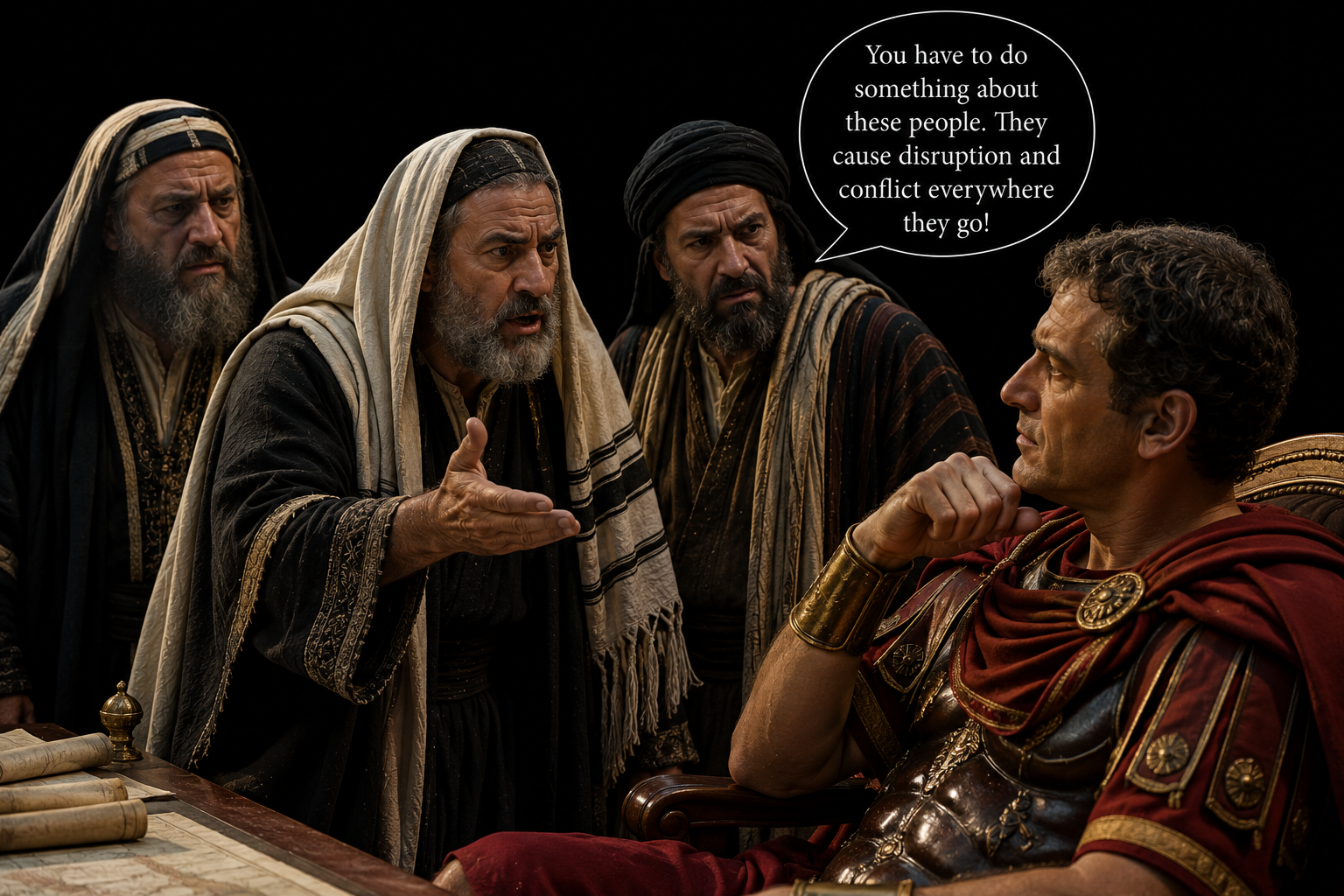
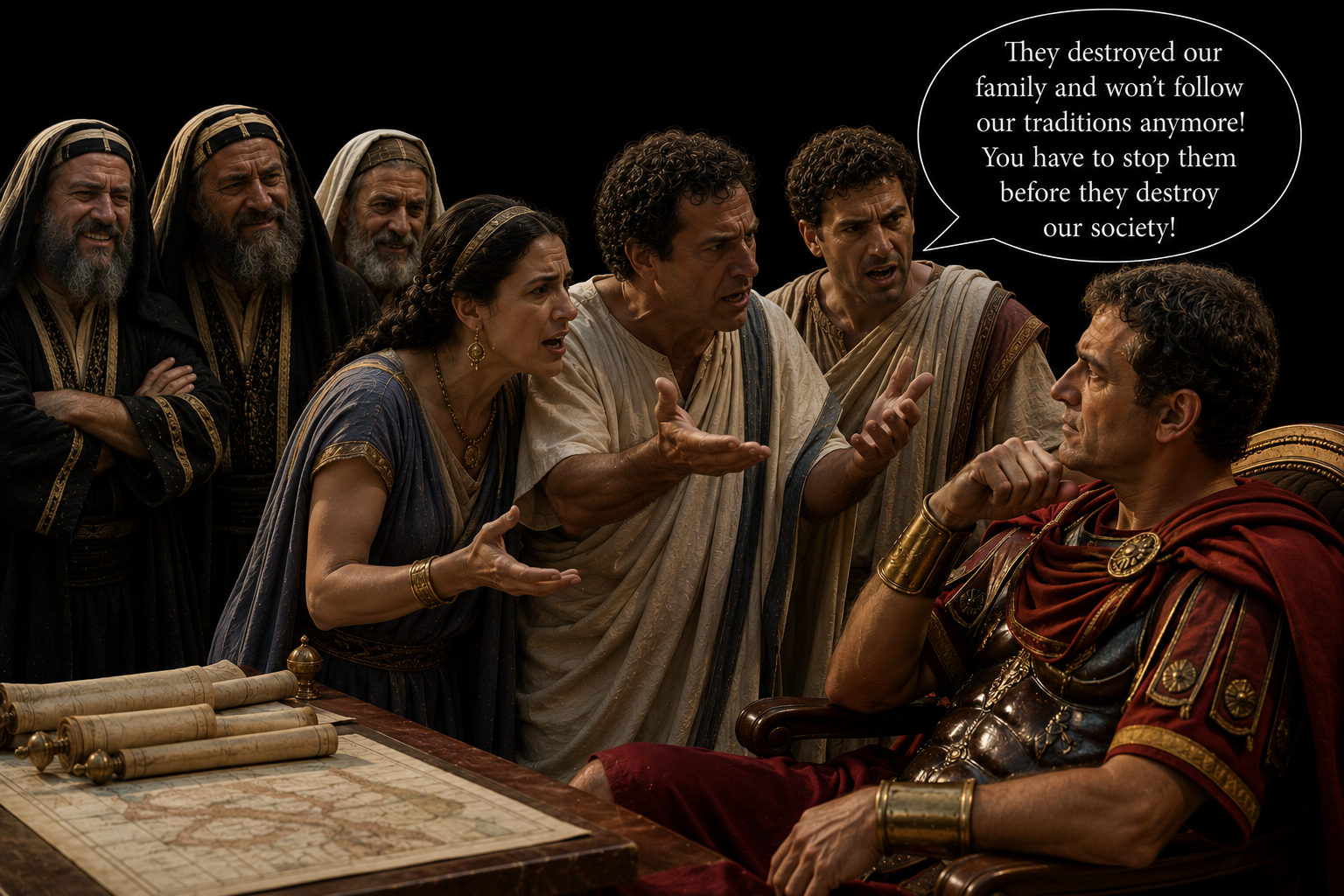
The Jews sold their conviction that their culture, sabbath and feasts, had nothing to do with Christ at all. And that it was even an abomination to mix the two. They felt jealous and angered that pagans should keep the traditions that God had said made them a special people. And so pagans who tried to take part with their Jewish believers were heavily judged and seen as disruptive all over the empire.
Even the pagan families were upset that their family members turning to Christ would change their culture: “These men are Jews, and they are disturbing our city. They advocate customs that are not lawful for us as Romans to accept or practice.” (Acts 16:20–21) And so a pagan convert faced harsh judgment from Jews as well as their own people for changing customs, and it’s this pressure that would change Christianity later on, inducing them to create a new platform.
Jewish Christians often believed the way to make peace with their own people was to avoid being seen as removing this separation. They worried that offending their Jewish brethren would only harden their hearts. By showing themselves as strict observers of Jewish laws, they hoped to prove that following Jesus did not mean disrespecting the law. This led to hypocrisy among many Jewish Christians—an issue Paul addressed directly:
“But when Peter was come to Antioch, I withstood him to the face, because he was to be blamed.
For before that certain came from James, he did eat with the Gentiles: but when they were come, he withdrew and separated himself, fearing them which were of the circumcision.
And the other Jews dissembled likewise with him; insomuch that Barnabas also was carried away with their dissimulation.
But when I saw that they walked not uprightly according to the truth of the gospel, I said unto Peter before them all, If thou, being a Jew, livest after the manner of Gentiles, and not as do the Jews, why compellest thou the Gentiles to live as do the Jews? (Gal 2:11-14)
This passage is often misunderstood if we don’t grasp the prejudice Paul was addressing. As a Jew, Peter was not supposed to eat or worship with Gentiles, but he did so—except when other Jews were present, out of fear. Paul explains that the “ways of the Gentiles” he refers to are those of Christian Gentiles, who are saved through faith, not ritualism. When Jewish believers arrived, Peter reverted to strict ritualism, which Paul called not walking “uprightly according to the truth of the gospel.” Peter practiced separation and ritualism with Jews, but unity of faith with Gentiles—adding to confusion. If Gentiles weren’t good enough unless they underwent Jewish rituals, why did Peter live with them when Jews weren’t around? What message did this send to both Gentile and Jewish believers? Was he suggesting Gentiles were still not good enough or were still unclean?
Because Jews strongly objected to Gentile Christians practicing Jewish traditions and moral laws without a proper Jewish conversion, they convinced Rome that Christians were a dangerous sect causing offense and provoking conflict. Christians were accused of not being culturally proper and, therefore, a social problem. This led to Roman persecution of Christians. Roman authorities wanted to appease both Jews and pagans, and considered it worthwhile to sacrifice the group causing the unrest for the sake of peace.
Jews fight hard still to this day to keep this separation by the introduction of Noahite laws, and saying that Christians are not allowed to keep the Sabbath or celebrate their feasts, which they claim do not belong to Jesus. But they can keep some laws that they have set for the gentiles which they call the Noahite laws. This idea is in sharp contrast to God’s and Christ’s own words of making Israel one body – under one law.
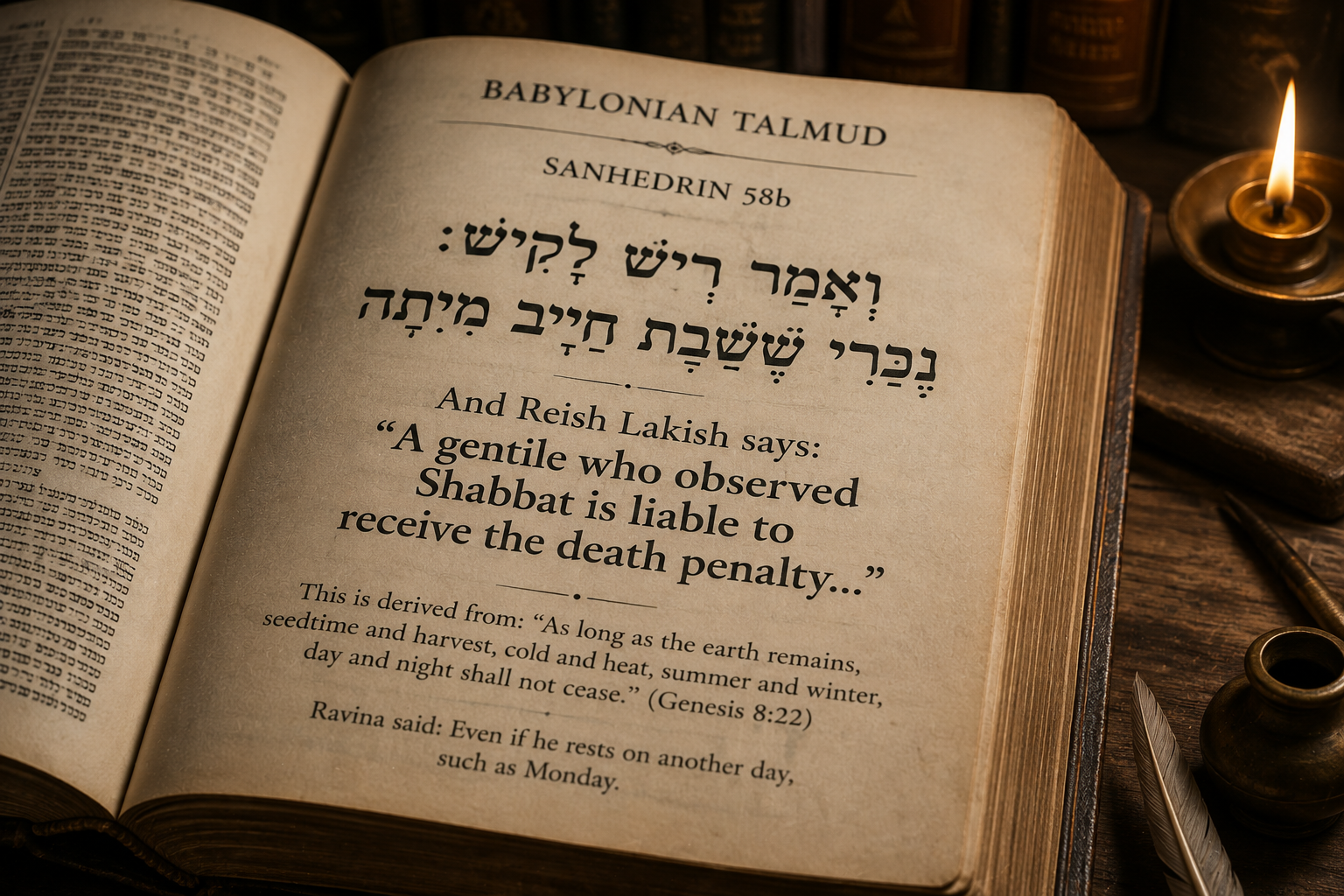
Some rabbis have even pronounced death sentences on any Gentile who keeps the Sabbath, God’s feasts, or studies the Torah. These are among the harshest judgments, yet they are based on the commandments of men, not of God.
Anger toward Christians remains, as does the condemnation and irritation over their adoption of the biblical God alongside Christ. Many Jews believe this union is improper and defiles their religion. They see Jesus as the antichrist or as Baal. And Christians practicing their customs as Jezebels amidst them, bringing upon them God’s judgments. Some even call a jew converted to Christ a dead Jew, or the worst kind of Jew: a traitor.
It is to this conflict that Paul speaks, telling the Gentiles not to be troubled or frightened. He assures them that all of the law belongs to Christ, and they should not let anyone judge them for seeking God’s word or being part of God’s Israel and congregation.
The promises and the culture of God belong to Gentile believers just as much as to natural-born Jews. Jesus disregards claims that the biblical feasts and Sabbath belong only to Jews who reject Him and not to His followers. He told His followers to pray their flight would not be on the Sabbath, showing it remained holy for them. Jesus died on the “Jewish” feast of Passover, rose on the feast of First Fruits, and poured out the Holy Spirit on the feast of Pentecost—because these were never just “Jewish” feasts, but Christ’s all along. Without Christ, they have no true meaning. These feasts and holy days are now rightly represented by Christ’s followers, not those who reject Him. If Gentile converts or even Jewish Christians agreed that these belonged only to the Jews, they would be giving away what rightfully belongs to Christ. Therefore, it was important not to be intimidated by either the Jews or the prophesied power that would “think to change times and laws.”
By misunderstanding the debate, Christians have gone in the opposite direction. They uphold the separation, establish their own culture, and even claim that those who follow God’s original culture are cursed. Many Christians now celebrate Jews as saved through heritage and tradition—the opposite of Paul’s teaching. That they who have the circumcision by flesh have the real circumcision, some claim Jews are still the chosen priesthood after Sinai, thereby nullifying Christ’s new priesthood. But you cannot have two tabernacles, two sanctuaries, or two high priests. You cannot have both the lamb and Christ; salvation is found only in the tabernacle raised at the cross. Yet the majority of Christians have given Christ’s holy days to the Jews alone.
Which brings us to the final conflict Paul addresses, a topic especially to the Jews.
3. Should Jews continue sacrificing and do the temple rites, after Christ sacrificed himself and set up a new temple?
This topic is addressed primarily in the letter to the Hebrews and in letters to mixed Jewish-Gentile congregations facing similar conflicts.
Paul is clear that Christ’s sanctuary replaces the old. The priesthood, the furniture, the sacrifice, and the mediator are all transferred to Christ. There is now a temple in heaven, which is the original (Heb. 8). This is why Christ said the time would come when people would not gather at a physical mountain, but instead worship in spirit and truth—the only way to access the heavenly temple while on earth.
The Sabbath, the feasts, and all the assemblies belong to Christ and are connected to the temple in heaven. In the book of Hebrews, Paul explains to the Jews that what they considered to be God’s temple was only a copy of the true temple in heaven. Even the priests were acting out a representation of Christ’s salvation. The entire sanctuary service was a prophecy of Christ’s mission to save humanity. Every item told a story of Christ’s relationship with His people and His plan to restore them.
The sacrifice showed how He would take our sins upon Himself and die for us. The law revealed our sin, and His blood would cover it, making peace between us and the law.
The feasts illustrated the stages and sequence of the plan of salvation, and the Sabbath revealed Christ’s true identity in relation to us.
By seeing Jesus as an enemy and clinging to shadowy symbols, they lost both salvation and an understanding of their own role in God’s plan.
Paul urged them to let go of the old system and look up to the sanctuary in heaven. The book of Hebrews was a daring and bold sermon, especially since the temple likely still stood in Jerusalem when it was written.
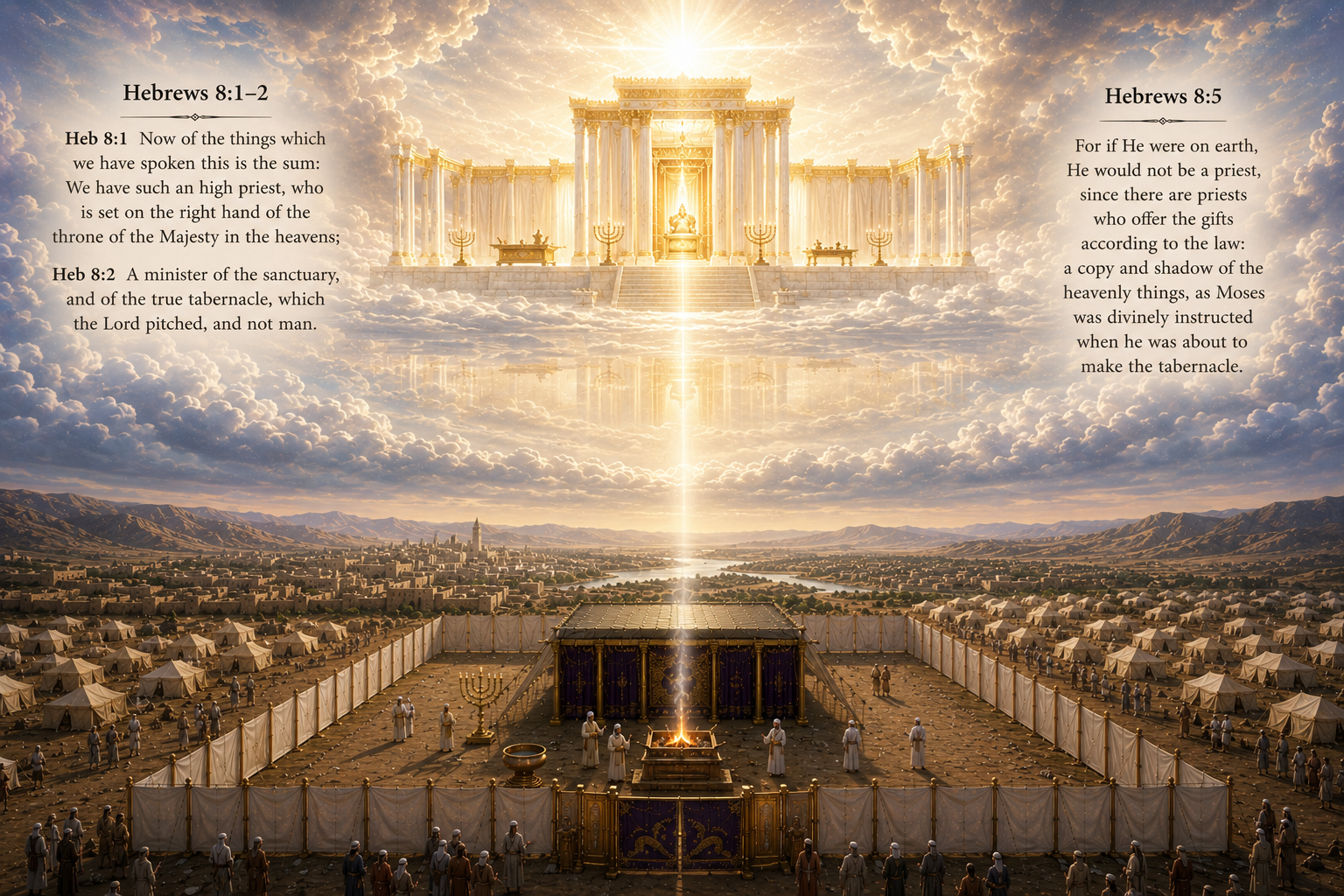
Could they truly let go of the physical lamb they were about to sacrifice and replace it with faith in Christ’s sacrifice?
For many, the rituals had become superstition; they believed disaster would befall them if they did not perform them. Now, they were being asked to replace these rituals with faith in Christ in a heavenly tabernacle they could not see. Many could not make that shift. Paul therefore explains that Abraham, to whom the promises were given, never worshiped at a temple, yet he received atonement and grace through faith. Paul argues that if the sanctuary, established over 400 years after Abraham, were the only way to salvation, then even Abraham and those before him would be excluded. He explains that they are saved through faith in Christ’s sacrifice, not through rituals—just as Abraham was.
In Acts, we see even Christian Jews persuading Paul to participate in a ritual sacrifice at the temple. Early Jewish Christians struggled to let go of the old system; they did not fully understand the change at first.
Many tried to be saved through both the earthly ritual system and the heavenly at the same time, not realizing that doing so minimized the power of Christ’s sacrifice and priestly service. Some even encouraged Gentiles to do likewise, which demanded they be circumcised and converted through rabbis. However, the two systems cancel each other out: if you seek salvation through the earthly rites, you act as if you do not need Christ’s ministry in heaven; if you trust in Christ as the sacrifice and priest in heaven, you do not need the earthly system for salvation.
The cross was sufficient. If both systems were needed for salvation, the meaning and power of the cross would be lost. Paul made it clear that ritual laws had no place once the true tabernacle was established. When the reality arrives, the symbol is no longer needed. It’s like sending someone to speak for you until you arrive; once you are there, the attention should shift to you. If people ignore you and continue focusing on your representative, it becomes disrespectful. In the same way, continuing with ritual symbols after Christ’s arrival was no longer appropriate.
In this way, something that once demonstrated obedience and respect can become rebellion if the circumstances change. This was true of the old tabernacle system: following it was obedience until Christ came, but after He came, it was rebellion.
The Bible shows us Christ in the heavenly sanctuary. John saw Him there, walking among the candlesticks, and saw the altar of incense, the Lamb of God, and the Ark of the Covenant in heaven. Sinful men served the earthly sanctuary, but the heavenly by the Son of God.
Paul was urging both Jews to let go of the shadowy symbols and Gentiles who were pressured to become ritualistic converts that this was not God’s will.
What was brought to an end at the cross?
Some Christians have twisted even this, claiming that Paul is speaking about God’s ten commandments and feasts. That it is God’s moral law and the times of gathering that compete with Christ’s sacrifice and must be done away with. But it was the sacrifice system that competed with the cross.
Another verse Rome has attempted to reinterpret tells us clearly what would end when Jesus died:
“And he shall confirm the covenant with many for one week: and in the midst of the week he shall cause the sacrifice and the oblation to cease” (Dan 9:27)
This refers to the ritual sacrifices. They were the only things the cross was meant to bring to an end—by fulfillment, through the ultimate sacrifice.
The prophecy also confirms that the Jewish tabernacle system would not go on beyond the “70 weeks,” which points to Christ’s first coming:
“Seventy weeks are determined upon thy people and upon thy holy city, to finish the transgression, and to make an end of sins, and to make reconciliation for iniquity, and to bring in everlasting righteousness, and to seal up the vision and prophecy, and to anoint the most Holy” (Dan 9:24)
To seal up meant to bring its final fulfillment. There was no continuation of salvation through these things after. It was the rituals of the earthly temple that ended at the cross. Once Christ’s blood reached the Mercy Seat, there was no need for animal blood to be taken there. The service ended because the blood brought was sufficient and would continue to leave an impact for as long as needed.
Thinking that the end of the ritual sacrifices meant the end of God’s moral law and culture has caused many Christians to lose their foundation.
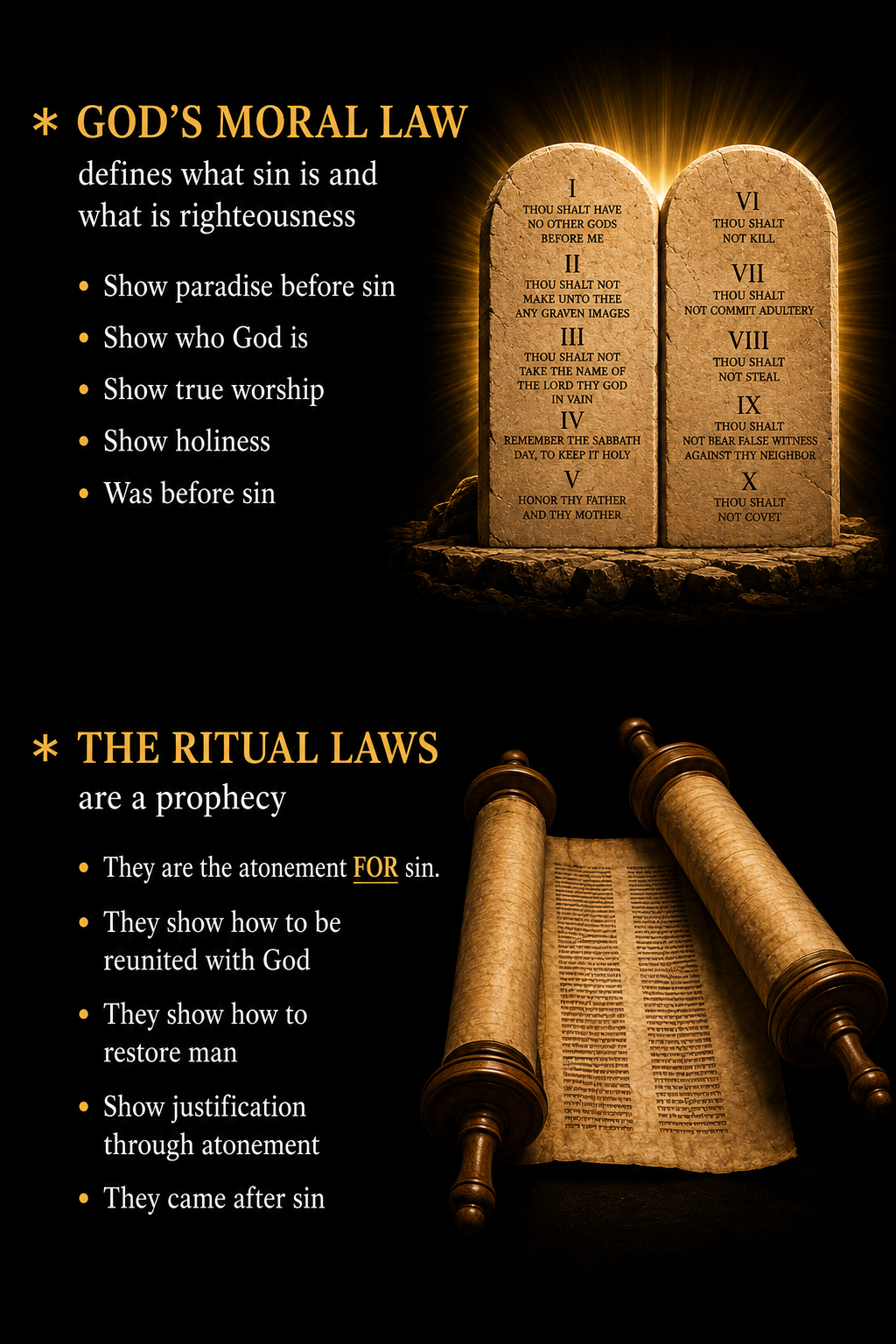
God’s moral law defines sin and righteousness; the ritual laws are a prophecy of the atonement of sin. Therefore, the two have two completely different roles and purposes. One is made effective because of our transgression: the ritual law. Only the ritual laws came because of our sins. The law is not sin, and was not born from sin. Even God’s holy times and laws were set at creation, before sin, and were not given because of sin.
Therefore, when people mix the two and claim the moral law and God’s times came because of sin, they confuse the matter and make God’s law appear as a curse to plague them rather than the moral standard of a perfect world.
However, if you understand the law and the prophets, you will also understand what Paul is talking about and why it matters.
Christians today who continue to separate Jews and Christians, support the establishment of a Jewish state, or advocate for rebuilding a new temple are defying God’s intent. They are doing exactly what Paul warned against—upholding the separation within God’s true Israel. They promise salvation through things that cannot save, to both Jew and Gentile. To the Jew, this means encouraging trust in their own flesh and empty rituals, supporting the idea of rebuilding the temple and resuming sacrifices—an act that is counted as witchcraft and idolatry in heaven (1 Samuel 15:23).
To the Gentile, it means making them believe they have no part in what God gave at creation to all humanity and later to Israel, leading them to create their own foundation, law, and order.
In this way, many have used Paul’s writings to support exactly what he warned against—believing they are serving God.
The result of this great falling away.
The drift from God’s original platform—His culture, Sabbath, and law—resulted in sin. The churches began to drift spiritually, both in doctrine and practice. Jesus was no longer seen as the priest within the God-given Jewish system, but as a detached religious figure without a “temple” or “home.” This led to the falling away and created a need for a new spiritual leader, which was found in the Papacy. When Christ’s culture and words had to be dismissed as “Jewish”—even the “faith of Jesus” and “the commandments of God”—the church sought a new leader to establish their own culture and law. The Jews did not accept them as Jews, and the pagans did not accept them as part of their religion, so they tried to establish a new religion. No one can move forward without purpose and structure, and Papal Rome provided both.
The conflicts between Jews who resisted Gentile converts, Gentile persecution, and the position of Judean Christians in between led to the loss and replacement of the original Christian foundation. With both sides pulling in opposite directions, Christians felt compelled to form their own religion. Rather than remain a hated Jewish sect, they sought to become a powerful faith in their own right. To distance themselves from their Jewish roots, they gave up the foundation of their faith—even though Jesus Himself was a Jewish king.
When a platform is removed, something else must take its place. That is how Jesus became a Greek or Roman icon—a Latin figure with Latin practices and laws. The Jews took what was meant to be attached to Christ and turned it into a symbol of rejecting Him, while Romans and Greeks adopted Christ’s name and the story of redemption, but without its true meaning or its connection to God’s temple.
Christians began seeking salvation through their own rituals. And if God-given rituals could not save a Jew, the self-invented rituals of the church could not save Christians either.
Paul stands as an important voice against the very things he is now used to defend. Because of Paul’s writing style and the widespread misunderstanding of the first-century conflict between Jews and converts, his words were taken out of context and used to build a new platform that the Papacy could exploit—a foundation that Protestants and evangelicals later continued to build on. Had Paul been understood correctly, this shift could not have happened. The Bible as a whole speaks against changing God’s times and laws or offering one salvation for Jews and another for Gentiles—yet only Paul’s letters are used to justify these changes. Even to the Samaritan woman, Jesus was clear: there was not one salvation for Samaritans and another for Jews. He said: “Ye worship ye know not what: we know what we worship: for salvation is of the Jews” (John 4:22).
Why did he not say salvation came from him? Why the Jews? Jesus is explaining to her that having the right foundation for being saved through Him is essential. She could not add Him to her Samaritan ideology and be saved through that. She had to understand His salvation through the Jewish system.
The same warning would apply to all who try to understand the cross and its meaning through a corrupted system. The Samaritans were not purely pagan; they saw themselves as Israel, believing in Moses and the prophets just as the Jews did. But they had, through interaction with Gentiles, been mixing in a wrong understanding. And so Jesus told her that the Jews had the right one, and that His salvation came through what they had been given.
Christians today have likewise blended truth and error, paganism and Christ, but only by restoring Christ’s salvation through the Jewish platform can they make sure they worship in “truth and spirit”.
Removing God’s law created a need for a human lawgiver. Without God’s law, the church became lawless, leading to destruction and confusion. Rejecting God’s law created a hunger for another authority, allowing Papal power to fill the void.
Keep in mind, the Catholic Church’s laws throughout history far exceed God’s laws in number.
The Code of Canon Law (Codex Iuris Canonici) is a separate book from the Catechism and contains exactly 1,752 distinct laws. For comparison, the Torah (books of Moses) has only 613 laws, most of them ritualistic and fulfilled through Christ’s ministry. Half of these laws can only be observed if there is an earthly temple. 55 to 65 of these laws require a sovereign state or government to perform, as they relate to judgment in a state institution.
This leaves us with very few laws: mainly moral laws (the Ten Commandments), God’s assembly feasts, and dietary instructions. Christ, as High Priest, is in charge of the rest, being the priest and kingly government. This means only Christ can perform the judgments as the higher government. So Christians are told not to execute judgment, and that Christ will do this when He comes.
Ironically, by dismissing God’s law, many Christians have ended up with far more laws imposed by their churches. In addition, societal and “jungle” laws, and to add to all that, all the laws of their government in whatever land they live in. The number of laws existing in a Christian’s life is greater than that of the Old Covenant in the era of Judges in the Bible.
While saying Christians are free to violate God’s feasts, the papacy demands celebration of their own feasts, even attendance at their Easter.
There is no such thing as a church or a Christian group living without law. In reality, it’s simply a matter of exchanging one set of laws for another.
While claiming that the Sabbath is legalism and has been abolished, they demand that Sunday be sacred by law. It was never truly about freedom from God’s law or the good news of its abolition; it was always about replacing God’s law with their own.
No one practices the idea of faith without law; it is used only to argue against obeying God’s law.
No one cites Paul to accuse others of legalism for attending church on Sunday or going to Mass at Easter. Paul’s words are only used this way when someone tries to follow God’s appointed times and laws—and then they are condemned for it.
Yet Paul’s words remain relevant: “Let no man therefore judge you in meat, or in drink, or in respect of an holyday, or of the new moon, or of the sabbath days” (Col 2:16).
As recorded, as it continued to happen:
“And brought them to the magistrates, saying, These men, being Jews, do exceedingly trouble our city, And teach customs, which are not lawful for us to receive, neither to observe, being Romans. And the multitude rose up together against them: and the magistrates rent off their clothes, and commanded to beat them” (Acts 16:20-22)
To this day, the Roman Papal church forbids Christians from following customs rooted in God’s law, making the conflicts of the first-century church still relevant in our own time.