


Article series: INTRODUCTION – WHO IS JEHOVAH? – WHO IS THE REAL ISRAEL – THE SCATTERING – THE GATHERING: ONE-FOLD – ONE ISRAELTHE MODERN STATE OF ISRAEL NOT CHOSEN – DANIEL 9 AND THE PRE-TRIBULATION DECEPTION – JUDAISM ACE IS NOT A GODLY REPRESENTATION OF OT – THE BIRTH OF THE MODERN STATE OF ISRAEL – THE DIFFERENCE (between Biblical Israel taking of Canaan and modern Israel taking of Palestine) – What side should we take in the Palestinian and Israeli conflict?
PART 1: Does Modern Israel have a God?
To understand the current state of the Jewish synagogue, we must first clarify who Jehovah is and examine how belief or rejection of Jehovah shapes the definition of the real Israel.
Understanding Jehovah’s connection with Jesus is essential to knowing who the real Israel is. YHWH is the God of Israel. If you do not worship the God of Israel, you are not Israel. If you do not respect and love the God of Israel, you break God’s law, for the law’s greatest command is to love Jehovah. Therefore, no one can represent God’s law or culture, or serve as its gatekeeper, if they do not worship Him. This is also why not all of Abraham’s descendants were chosen; only the line that continued to honor Jehovah was.
If Jehovah and Jesus are the same person, it exposes post-Jesus Judaism as apostate, even bordering on pagan, for it means they rejected their God in favor of one born of their own imagination.
There have been countless debates between Trinitarians and anti-Trinitarians throughout the history of the Christian movement. Both may be partly wrong and partly right. To claim that a man can fully know and understand the secrets of God’s nature is, at best, self-deception, and a great measure of humility is needed. Such reflection should lead us to conclude that we cannot fully understand these things, and I will not claim to explain them perfectly here either.
Understanding who God is will remain complicated for humanity because God is unlike us, and His kingdom is unlike any earthly kingdom. Humans can only understand and compare things we already know and have seen. As Paul wrote of God’s kingdom: “But as it is written, what no eye has seen, no ear has heard, and no human heart has conceived” (1 Cor. 2:9).
If we traveled back in time to people living three thousand years ago and had to explain modern inventions they had never seen, we would be forced to explain them in a way they could relate to, from their own perspective, using the familiar to illuminate the unknown. If we were to describe an airplane and how it worked, we would have to point to birds and metal and try to make them picture a metal bird. Even then, the mechanism would remain beyond their grasp. Consider the word “horsepower,” still used today to describe the power an engine produces. There are no horses in an engine, nor is the energy involved anything like that produced by a horse. It simply conveys the same result: movement and power. You can explain speed. You can describe to ancient people a hollow metal cylinder in which hundreds of people could sit, powered by something far stronger than any horse or bird, kept running by a combination of liquid and oil, and capable of carrying people around the world through the air. Yet when you leave that person with all of this information, the likelihood of them building an airplane from your description is close to none. There are details they would need to understand first, and inventions that would need to be made along the way. Understanding comes in stages. At best, the person is left to fill in the gaps with assumptions, which will be deeply flawed. Now, try to explain a cellphone to that same person. You speak into a small object, press some numbers, and someone on the other side of the world can hear you instantly. They would think you were a sorcerer in league with evil spirits. To understand it properly, they would first need to learn about radio waves and grow familiar with them. There are steps that must be taken before the final invention can be understood.
In a way, this is how God must often speak to mankind. Because His kingdom is more advanced, possesses greater knowledge, and operates on a higher level than we do, He must use things we can see and observe to explain the things we cannot.
When it comes to who God is, He withholds some of the insight because we are not served by comparing Him to what we can see. Such comparisons would degrade who God is and what He can do for us. There is something about the nature of God that cannot be understood through earthly comparisons. He asks us to accept that He is a higher being and that there are things we cannot grasp with our present knowledge or imagination. Instead, He reveals who He is by letting us come to know His character. To Him, knowing who He is matters more than understanding what He is made of.
Once, it seemed unthinkable that any being could be everywhere at once, seeing and knowing everything. Now that we have the internet, through which intelligence agencies can access virtually any room and listen in, it is tempting to compare this to what God does, as if He were a machine that records everything we do and builds a profile of our personality based on what we watch, listen to, buy, and click on.
But we are still using things we see to explain something far beyond our understanding. God is not a machine, nor is He the internet.
These things are important for us to understand, both for our salvation and for our relationship with God, as God explains in the Bible. None of it is hidden.
We are told there is a Creator, a heavenly court that judges mankind, that man’s deeds are recorded, and that there is a way for us to be redeemed. God does not explain the Holy Spirit in detail; He simply tells us it exists and works to bring us to God and to sanity. Jesus compared it to the wind because the wind is invisible, yet its effects are visible. Still, the Holy Spirit is far more than the wind. Jesus called Himself the good shepherd, a door, a lamb, a vine, a farmer, a way, bread, and His blood wine, among other things. He was using familiar images to help us understand who He is and what His mission is. But these are merely illustrations, not the reality itself. It is the character of these things that can be compared to Him. We are not literally sheep and He a shepherd; rather, the relationship between sheep and shepherd is the point.
Jesus explained that He has a Father. Both Judaism and Islam claim to be monotheistic religions, so there is no room in their theology for a divine son, and believing in two Gods is considered apostasy. Having more than one god is seen as pagan, and it is partly for this reason that Jews rejected Christ, both in His time on earth and to this day.
Let’s look at some of these passages:
The Jews answered him, “It is not for a good work that we are going to stone you, but for blasphemy, because you, being a man, make yourself God.” (John 10:33)
“When Jesus saw their faith, he said to the paralyzed man, ‘Son, your sins are forgiven.” Now some teachers of the law were sitting there, thinking to themselves, “Why does this fellow talk like that? He’s blaspheming! Who can forgive sins but God alone?” (Mark 2:5-6)
“Very truly I tell you,” Jesus answered, “before Abraham was born, I am!” At this, they picked up stones to stone him, but Jesus hid himself, slipping away from the temple grounds” (John 8:58)
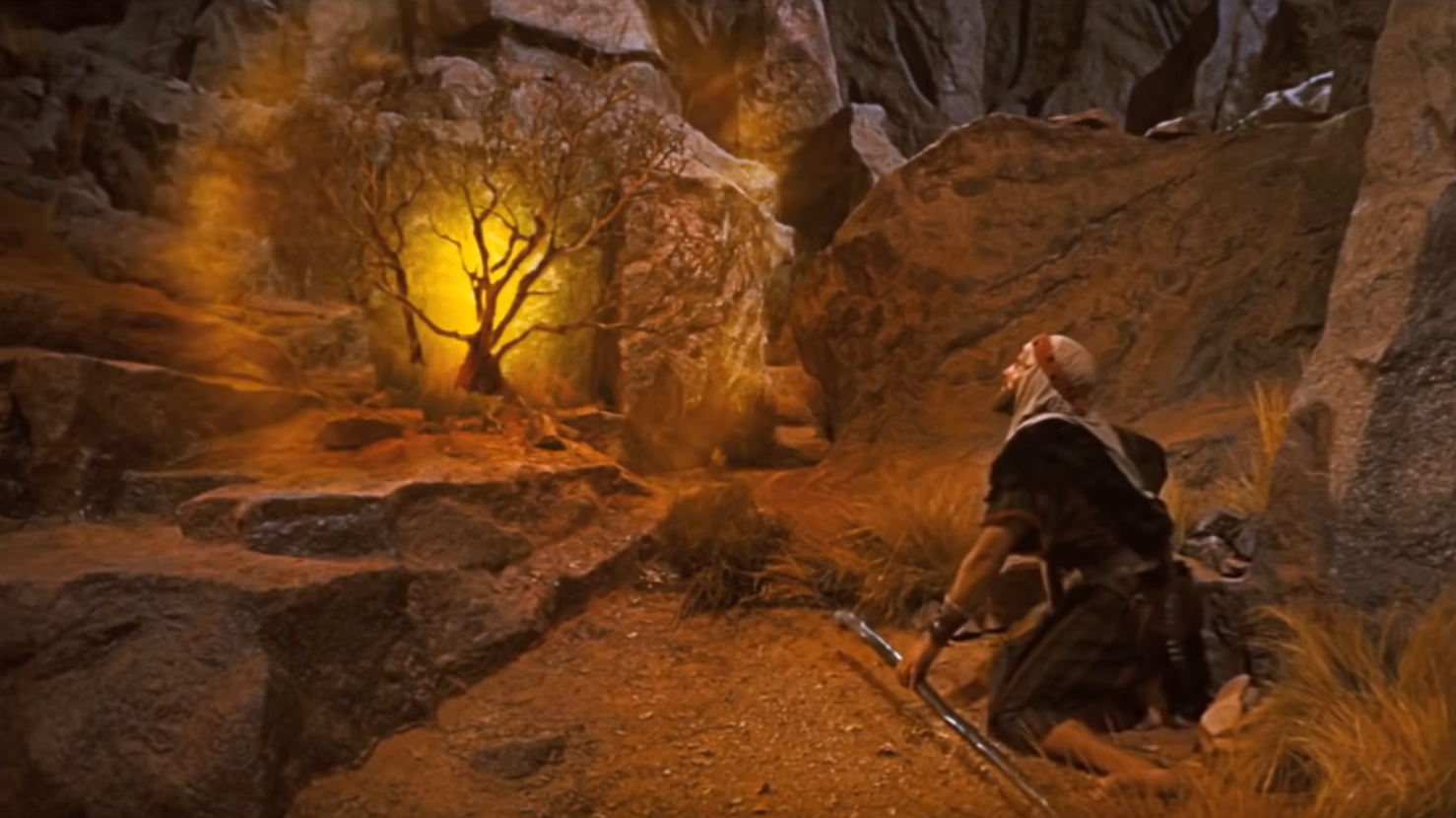
Something is lost in translation here, but Jesus is claiming to be the great I AM, the God of Israel, who was revealed to Moses at the burning bush, and who led Israel as a pillar of fire by night and a pillar of cloud by day. He is the one whose earthly throne was the Ark of the Covenant. That is why they tried to stone Him. Jesus was revealing to them that He was Jehovah, the very one they claimed to worship. But if Jesus was Jehovah, who was the God whom Jehovah called His Father? And did this not contradict the monotheistic Jewish belief that “God is one”?
Could God have come as a human and walked among them?
After calling Jesus a blasphemer, they encountered a man who had been blind from birth. Jesus silently took some dirt, shaped it, spat on it, and placed it on the man’s eyes, and the man received his sight. In doing so, Jesus reflected His former self. In the beginning, He had created the first man from dirt, shaped him, and with His breath gave man life:
“And the LORD God formed man of the dust of the ground, and breathed into his nostrils the breath of life; and man became a living soul” (Gen. 2:7)
It is impossible to overlook Christ demonstrating His power over creation: raising the dead, controlling natural elements such as water, wind, storm, and fire, turning water into wine, and directing animals into the fishermen’s nets. Over and over again, Jesus demonstrated that He was above everything created. Even His enemies could not resist what He commanded; when He ordered demons to leave the possessed, they had to obey. When He came to His temple, His human enemies fled at the sound of His voice. Yet He did not abuse His power. He came to invite men to follow Him willingly and said He would respect their choice if they rejected Him, though they would have to answer to a heavenly court for their own sins if He were not permitted to atone for them.
So if Christ was the creator, the Jehovah, the God of Israel, who is the One He called His father and God?
I do not wish to explain what God has chosen not to reveal, but we can discuss what He did reveal.
Jews still reject Christ because they cannot accept a second God. Muslims reject Jesus as God’s son because they cannot conceive of a God with a son without also imagining a wife, and the idea of God having a wife is considered blasphemy. Therefore, they accept Jesus only as a prophet.
The Catholic Church introduced the term “the Trinity,” which is not found in the Bible. It was an attempt to explain how God can be one while Christ and the Holy Spirit also exist. The effort to define this was declared sacred, and in their presumption, they even elevated the doctrine to the level of a salvational teaching.
Anti-Trinitarians have opposed this dogma and insist there is only one God, the Father, and that Jesus, while a son of some kind, is not God. Some hold that God created Him as well, while others believe He only became a son at the moment of His incarnation as a human.
The truth may lie somewhere within or beyond all of this. The pagans, who stood in great opposition to the truth and the one true God, worshiped many gods with divine sons and wives, gods who fornicated with humans and with each other, and who warred among themselves. It was, in short, one great mess. One could pray to multiple gods and choose whichever suited their trade or circumstance. What many forget is that the origins of what eventually became paganism trace back to Noah and his three sons, who were true worshipers. Paganism is the belief in a Creator taken in a deeply erroneous direction. God asked for animal sacrifices; they sacrificed humans. God controlled the elements; they worshiped the elements as gods. The list goes on.
We cannot determine truth simply by doing the opposite of what pagans believed and practiced. Even the Babylonian Code of Hammurabi contained several of God’s Ten Commandments, yet their religion was a lie because they mixed truth with falsehood, making even their truths corrupt. Biblical truth, therefore, is not the opposite of pagan mythology by default. Truth cannot be measured that way.
So how can we understand how God is one, yet potentially be another God at the same time?
In the beginning, in Genesis, at creation, we see more than one involved.
“And God said, Let us make man in our image, after our likeness: and let them have dominion over the fish of the sea, and over the fowl of the air, and over the cattle, and over all the earth, and over every creeping thing that creepeth upon the earth.
So God created man in his own image, in the image of God created he him; male and female created he them.“
Here we see that the word for God, Elohim, is a plural word, identifying Him as a supreme judge. But it also suggests that there is more than one behind the creation, behind creating man “in his image.” (Gen. 1:26-27)
It is clear that God is not alone. Part of what makes God the God of this world is being its Creator. It is therefore significant that creation was not the act of just one Person.
In the creation of Adam, we are presented with the name Jehovah: “And the YEHOVAH ELOHIM formed man of the dust of the ground, and breathed into his nostrils the breath of life; and man became a living soul” (Gen. 2:7). This indicates to many that Jehovah and Elohim are one single person. First, only Elohim, in plural, is used. Then another name is introduced and used with Elohim. This could distinguish the two, Jehovah being Jesus, and Elohim His togetherness with His Father.
“And ELOHIM spake all these words, saying, I am YEHOVAH thy ELOHIM, which have brought thee out of the land of Egypt, out of the house of bondage. Thou shalt have no other ELOHIM before me” (Exo. 20:1-3).
Here, Jehovah says He brought them out of Egypt and is to be addressed as their Elohim.
So how can two talk as if they are one?
A verse Jews cling to is this: “Hear, O Israel! The Lord is our God, the Lord is one! And thou shalt love the LORD thy God with all thine heart, and with all thy soul, and with all thy might” (Deuteronomy 6:4– 5).
Let us do this verse again: “Hear, O Israel! YEHOVAH ELOHIM, the YEHOVAH is one! And thou shalt love YEHOVAH ELOHIM with all thine heart, and with all thy soul, and with all thy might.”
Rather than clinging to this as evidence that there is only ONE God, perhaps what God intended them to understand was that there was no God for them outside Jehovah, because they are in oneness. Rather than comparing God’s “one” with the many gods of the pagans, it was never meant to be explained as a contrast to their religion. It is not really that complicated. When a government makes a judgment, it does so as one institution. When it makes a law, it does so as one institution. If it creates something, it is created as an institution. God, however, has what He would refer to as a kingdom, and He is a king. Even when a royal house makes a decision, it does so as one. The oneness shows there is no dispute, no rift, no competition. Their goal and purpose are one and the same. The word used for “one” is the same as when God ordained Adam and Eve to be “one.” If you tear them apart, you sin. If you set them against each other, the house will not stand. The house is built upon unity of purpose, though they do not necessarily do the same work. A man and a woman are meant to complement each other; the differences between them create a perfect oneness.
God is not a marriage. Their oneness refers to something we cannot fully understand. They are one in nature, thought, and action; they cannot be separated or set against one another.
Toward the human family, they present themselves as one. You cannot set one against the other. Jesus explained that the relationship can be described as that of a Father and a Son, though they cannot be Father and Son in exactly the same way humans are, for God is not human.
Whether God gave birth, cloned Himself, took a part of His own nature as building material, divided Himself in two like a cell, or whether God and His Son share a Spirit and are therefore the same in spirit while manifesting as two distinct beings, all of this is human imagination attempting to grasp what we do not understand using only what we can see in our own world. We do God a disservice, and even lie, when we treat our assumptions as facts. God has chosen not to reveal how there are two, or why He says “we” when speaking of creation. What the New Testament does tell us is that the best way to describe the relationship is that of a Father and a son. A father and son, in the human sense, share the same genetics; they are the same “house.” While a human son inherits upon the father’s death, God never dies, which makes the Son co-regent with His Father. They therefore rule as a united “we,” as one entity. By speaking as an entity, it is clear that the two share the same agenda. Their unity and oneness are expressed by making all proclamations as one.
God was not created from dirt; by analogy, a father and a son share the same Y-DNA. DNA is a coded language that reveals a coder and demonstrates that humans are created. God is not created, and so His nature is fundamentally different. Human terms are therefore inadequate for describing these things. Jehovah and the Father have existed throughout what we call eternity and share power and a throne. It is presumptuous and disrespectful for anyone to attempt to explain that which God has chosen not to reveal, given our feeble understanding. We cannot do Him justice regardless of what conclusion we reach. The nature of God is, in the end, not ours to define, but how to worship Him is.
Israel was told that Jehovah was to be their God and Judge. Jehovah was the representation and likeness of His Father; when He spoke, They spoke. To worship one was to worship the other, for they are one. They are both the origin of human life, though it was Jehovah alone who formed man with His hands and breathed life into his nostrils. Jehovah is therefore the origin of life for man and is man’s God. To man, He is the Alpha and the Omega. He holds the key to their life and the key to their death. He is not Alpha in the sense that He existed before the God of the universe, but in relation to man, He is our beginning.
The apostle John describes the divinity in this way: “In the beginning was the Word, and the Word was with God, and the Word was God. The same was in the beginning with God. All things were made by him; and without him was not any thing made that was made. In him was life; and the life was the light of men.” (John 1:1-4) Jehovah is man’s life-giver, as these things speak of the things of our world and not the entire universe, of which we know little.
What John explains, then, is that Jesus was one with God, that He created the world together with God, and that He gave life to man.
Jesus said: “Philip saith unto him, Lord, shew us the Father, and it sufficeth us. Jesus saith unto him, Have I been so long time with you, and yet hast thou not known me, Philip? he that hath seen me hath seen the Father; and how sayest thou then, Shew us the Father?” When Christ had risen, He did not object when Thomas declared: “My Lord and my God. Jesus saith unto him, Thomas, because thou hast seen me, thou hast believed…” Jesus did not deny being God, nor deny being Thomas’s God (John 14:8-9; 20:28-29).
Jesus acknowledged Thomas’s proclamation of Him as God as an act of true faith.
Seeing Jesus was like seeing the Father, or the “God of Israel.” The one their forefathers had loved, and that had been with them, was actually Him.
Throughout the Bible, Jehovah Elohim is described as an entity or as the God of this world. One of the most complicated verses for non-trinitarians is this:
“Ye are my witnesses, saith YEHOVAH, and my servant whom I have chosen: that ye may know and believe me, and understand that I am he: before me there was no EL formed, neither shall there be after me.
I, even I, am YEHOVAH; and beside me there is no saviour (YASHA).
I have declared, and have saved, and I have shewed, when there was no strange god among you: therefore ye are my witnesses, saith YEHOVAH, that I am EL.” (Isa. 43:10-12)
Faced with such a scripture, one can do as the Jews did and eliminate Christ altogether. If Jehovah is the Father, He cannot have a divine son, and He, the Father, is the YASHA (Yeshua), not an impostor later called Yeshua. The God speaking here seems to eliminate the possibility of a Jesus, unless the passage is spoken in unity or it is Jesus Himself speaking. If it is Jesus who speaks, He appears to say there is no other God before Him. Here, the word EL is used rather than Elohim, which is plural, suggesting that only one is speaking.
And continuing: “Behold, God (EL) is my salvation (YEHUSHUA); I will trust, and not be afraid: for the LORD (YAH) JEHOVAH (YEHOVAH) is my strength and my song; he also is become my salvation (YEHUSHUA)” (Isa. 12:2).
Jesus is the Latin form of YEHUSHUA, which was His real name, the same name the angel Gabriel told Mary to give her son, and the same one who saved mankind by dying on the cross. The God speaking to Isaiah declares that YEHOVAH, YAHVE, is this same YEHUSHUA.
This is why, for Jews, Yeshua or Jesus cannot be who He claims to be. How could He leave heaven and come to earth as a man, while another God still remained in heaven?
These verses seem to indicate there can be no one before or after, and there is no room for another Yeshua taking God’s place.
Although these verses have become difficult to understand, the truth may be simpler than many think. Yehovah is not before or after; He is one with what He calls the Father. They are one entity, and both have existed throughout all of time. They represent the same reality. Jesus can speak as God because He is God, and consequently, He is this planet’s only savior and hope. He is the voice of God. Throughout the Old Testament, from the moment Yehovah first gave man life with His own breath, He has been the true God of this world. There was no one before Him here on earth, for He created everything in unity with His Father. And there is no one after Him; He will always be the ultimate ruler, EL, of this world. He is the only one who can save, YESHUAH; without Him, man is judged to death without the offer of pardon.
For if we believe in Jesus, it is Jesus speaking here and not the Father, declaring that He is man’s only God, life-giver, savior, and hope. Jesus is the one who had a throne on this earth in the form of the Ark of the Covenant. The law contained within it speaks of Him.
God, Jehovah, did not take over someone else’s rule or territory, and no one will take it from Him afterward. Nothing Jehovah does is by His own will alone, apart from the God of the Universe, but always in unity with Him. Only with this understanding does what God says in Isaiah make sense. If Yeshua was sent by God, then He is this same Jehovah who said there is no other Yeshua than Him. Why does all of this matter? Because the Jews and the anti-Trinitarians teach that the God of the Old Testament is the Father: Jews believe there can be no son, while the anti-Trinitarians believe there is a son but that He is not God. However, if the one Jews think of as God has really been Jesus all along, they have no God if they reject Jesus. He was their Alpha. This is what we will examine further.
Rejecting Christ as God is like a child rejecting their own biological parent. If Christ formed us and breathed the breath of life into us, we cannot say He is not the origin of our existence. And if He is the origin of our breathing and existence, He is our God. He is our beginning.
The Bible reveals a great change in the oneness of God. Throughout the Old Testament, Jehovah speaks as one God, in unity, togetherness, and shared nature. “Let us make humans in our likeness…” They were always one. Yet when man sinned, Jehovah was the one constantly present, representing Himself as our God. When someone had to save mankind, bear their penalty, and represent them in the courts of heaven, it “broke” something in the nature of God, severing the more physical bond of the Godhead. How this occurred, we cannot fathom with our current understanding. All we can see is the effect and change recorded in the Bible.
If one were to defend the universe against sin while another had to save and represent sinners, they had to part ways physically. For there to be a mediator between the God of the universe and mankind, one had to step down from the throne and place Himself below the one He had been equal with. In the Old Testament, we were introduced to only one entity: a perfect God, a oneness. In the New Testament, one is in heaven, and the other is in human flesh. This completely changed the setting and situation of the Godhead. How God was presented in the past and how He is presented in the New Testament is therefore shaped by this great change. Jehovah coming as a human, even as a small baby, meant that He could no longer function as God. He gave this up and placed everything in His Father’s hands. From being equal, He became subordinate. By taking on human nature, He had to relinquish His divine nature, which had made Him one with the Father. From that moment on, they were no longer one in nature or position, only in purpose and character. Although no longer holding the position of God in heaven, He was still man’s creator and therefore god in the ethical sense. Whatever authority He was to have now had to be given to Him from God in heaven.
Jehovah’s identity, a mystery we will not fully understand with our limited minds, was translated into human genetics, and He was born as a human. As prophesied: “Behold, the virgin shall be with child, and shall bring forth a son, and they shall call his name Immanuel; which is, being interpreted, God with us.” (Matt. 1:23)
As a human, living under human conditions, Jesus had left behind the glory He once had. He who had been God was now a man.
“Who, being in the form of God, thought it not robbery to be equal with God: But made himself of no reputation, and took upon him the form of a servant, and was made in the likeness of men:
And being found in fashion as a man, he humbled himself, and became obedient unto death, even the death of the cross.
Wherefore God also hath highly exalted him, and given him a name which is above every name:
That at the name of Jesus every knee should bow, of things in heaven, and things in earth, and things under the earth;
And that every tongue should confess that Jesus Christ is Lord, to the glory of God the Father” (Phil. 2:6-11)
Jesus is “KURIOS”, in Greek, which is what the Old Testament would have translated as “ELOHIM”, meaning God. That every tongue should confess that Jesus Christ is ELOHIM, God.
Jehovah separated from God to become a man and is now unified with God again. To be reinstated to the position He once held, He first had to lose it or give it up. This is why in the New Testament we see Jesus addressing God, with whom He was once one, from a position of submission, with respect and obedience. From being the one who commands, Jesus learned to be the one who receives commands.
“Even though Jesus was God’s Son, he learned obedience from the things he suffered” (Heb. 5:8). He did not have to learn obedience because He was not disobedient; He was always obedient to His principles. But He learned it from a different perspective, a human one. And yet, He remained obedient to the very principles He had established.
This is a strange sequence of events that we cannot fully understand or explain. I certainly cannot explain it perfectly and do God justice. Yet this is what the Bible tells us. From the moment Jesus was born, God and Jehovah no longer spoke as one. Instead, we have God and a mediator, one who humbled Himself to save the human species by becoming a human, living in obedience, and thereby inheriting everything once entrusted to mankind. The promises of God to His people could not be fulfilled while they were in rebellion and under judgment. As a human, Christ could inherit all these promises on our behalf and save the human species by dying for man and being given the power to atone, forgive, and restore. But Jehovah lost something along the way. He is no longer of the same nature as God, only in Spirit. He is now forever of the same nature as mankind, having surrendered His equality with God to save us. After taking on this risk and this loss, there is only one being in the universe who retains the nature of God. God the Father had equally lost the one who was one with Himself, and now His Son shares in nature with the very people who had rebelled against Him. Jesus said: “For God so loved the world, that he gave his only begotten Son, that whosoever believeth in him should not perish, but have everlasting life. For God sent not his Son into the world to condemn the world; but that the world through him might be saved.” (John 3:16-17)
Although Christ was raised and restored to God’s throne with His Father, He remains a human. He will forever hold a position subordinate to His Father. They are no longer equals in nature, and this is part of the great sacrifice of Christ’s coming to earth as a man.
“To him that overcometh will I grant to sit with me in my throne, even as I also overcame, and am set down with my Father in his throne” (Rev. 3:21).
Something is lost forever. This loss becomes evident in the transition from the Old to the New Testament. This is most likely why God is described as one in the Old Testament, yet when Christ is born, He is considered the human manifestation of God, while another God is in heaven.
When the Jews rejected Christ, they lost the understanding of what had truly happened and how great a sacrifice God had made to restore man. The one standing before them was the one they had always known as their Creator, Lawgiver, and God: Jehovah. The one they claimed to honor and follow was the very one they were ridiculing. The one they accused of blasphemy turned out to be the target of their own. Jesus was the God of Israel.
Jews have maintained this belief to this day: that the oneness described in scripture is simply a human counting system rather than an expression of the mysterious nature of divinity explained in human language.
The God who led them out of Egypt, who spoke to Moses from Mount Sinai, who told them to have no other God but Him, was Jesus. When they rejected Him, Christ said: “Behold, your house is left unto you desolate” (Matt. 23:38). Because Christ is Jehovah, rejecting Christ meant there was no other God to sit in their temple. It was He who had dwelt there. Without Him, their house was desolate, without a God. It is Jehovah or nothing. There is no other God to connect with them, for Jesus was that God, their connection. Rejecting Him meant leaving their house empty. There is not one Jehovah Elohim and one Jesus, such that rejecting Jesus still leaves Jehovah. There is only Jehovah, only one salvation, only one God for them, and if He is cast away, there is no God left offered them.
There was no God in relationship with mankind before Christ, for Christ is man’s life-giver. He is the one who gave them life; there is no one before or after Him in that role. They cannot choose the Old Testament God and reject Christ, because He is one and the same. He is the only one they ever had. This is most likely the meaning of the words Jehovah spoke in the book of Isaiah.
This is also why it was so crucial for the Jewish nation to receive Christ as their Lord. Without Him, they had no Jehovah Elohim, no God to return to, and no God to come. They cannot set Him aside and choose the Father, for the Father was manifested through and together with Jehovah to mankind throughout time. Just as Jehovah formed man from the very beginning, He will execute judgment on the final day. He is the Alpha and Omega of Earth and mankind. Jehovah is all they have. Man is nothing and has nothing without Jehovah. That is what the Bible tells us.
Compare the Old Testament prophecy and the New Testament, again speaking about the same person:
“In his days Judah shall be saved, and Israel shall dwell safely: and this is his name whereby he shall be called, THE LORD OUR RIGHTEOUSNESS” (Jer. 23:6)
As written, so it happened. Jehovah came as a man to bring His righteousness to man:
“But by His doing you are in Christ Jesus, who became to us wisdom from God, and righteousness and sanctification, and redemption” (1 Corinthians 1:30)
Jehovah is the only righteousness offered to man and Jew alike, and this righteousness is Jesus’ own. Christ is first our life-giver, “the breath of life,” then our atonement, and then our righteousness.
The angel Gabriel told Daniel that his people and Jerusalem would be given 490 years, or 70 prophetic weeks, to receive Jehovah’s atonement and righteousness.
“Seventy weeks are determined upon thy people and upon thy holy city, to finish the transgression, and to make an end of sins, and to make reconciliation for iniquity, and to bring in everlasting righteousness, and to seal up the vision and prophecy, and to anoint the most Holy” (Dan. 9:24)
If they reject their God and leader, there is nothing God can do for them. This will end with them becoming disconnected from God and ceasing to be His people and His representation on earth.
The Jewish leadership rejected their Savior, their Jehovah Elohim, whom they had claimed to worship. The one who had once been present inside a pillar of fire by night and a pillar of cloud by day, who had rested above the Ark of the Covenant and led their way, was now crucified and hung above the very resting place of that Ark, with the sign above His head reading “King of the Jews,” for He was that same one. They rejected His blood, His sacrifice, His righteousness, and His salvation.
Therefore, we know this is Christ speaking:
“Ye are my witnesses, saith YEHOVAH, and my servant whom I have chosen: that ye may know and believe me, and understand that I am he: before me there was no EL formed, neither shall there be after me.
I, even I, am YEHOVAH; and beside me there is no saviour (YASHA).
I have declared, and have saved, and I have shewed, when there was no strange god among you: therefore ye are my witnesses, saith YEHOVAH, that I am EL.” (Isa. 43:10-12)
This verse does not eliminate Christ; it is Christ speaking. He is all they have if they wish to be saved.
They rejected JEHOVAH but kept His name as if they were still His people. This act is a breaking of the third commandment and a great blasphemy: “Thou shalt not take the name of YEHOVAH thy ELOHEEM in vain; for YEHOVAH will not hold him guiltless that taketh his name in vain” (Exo. 20:7). The word translated as “vain” can also carry the meaning of “lie.”
To claim to represent Jehovah after having Him killed is blasphemy and a defaming of His name. Consider what it would mean if someone who had persecuted and rejected you then claimed to be your faithful spokesperson. That is what Jesus has had to endure. Many believe Jews are guardians of God’s law, but as we have seen, this is a lie. Jews still maintain that Christ is a deception and actively oppose anyone who attempts to convert a Jew to Christ, thereby upholding the resistance of their forefathers and joining them in blasphemy. Many orthodox Jews still claim that Christ is an antichrist. In reality, He is Jehovah, the one the law speaks of, the one you must love in order to keep the law.
God’s name is violated across the earth in every language. Christians claim to follow Jesus yet do not do what Jesus did or believe as He believed. God is misrepresented constantly by those who claim to follow Him.
Yet, the Jewish nation took it further; they wanted to keep the name of Jehovah Elohim and cast out the one whose name it is because they did not like Him, or His way of salvation. Nor did they want His righteousness. They “killed Him” and stole His name.
This left them with an empty shell, a spiritless ritualism that God was not part of and did not wish to be part of. Their religion became a mockery. What was once entrusted to them had become a theft of the truth.
Jesus drew another parallel to His pre-existence as the God of Israel. When God was rejected before the Babylonians destroyed the temple in Jerusalem, Ezekiel was shown how the presence of God, Jehovah, moved out of the temple to its entrance. Then He moved to the Mount of Olives, where He departed with the promise that He would return and seek to place His law in their hearts. Now, rejected once more, He ascends from the Mount of Olives. Jesus points to this as referring to Himself when He makes His triumphant entry into Jerusalem, descending from the Mount of Olives as His great return to the city. Not in mystic glory, but as God in flesh. Only to be rejected and crucified that same week, killed above His throne. He then resurrects and returns to the Mount of Olives, the very place He had departed from in glory, and once again ascends from there back to heaven. It is a complete repetition of the last time, only now clothed as a man rather than as a glory no one could behold. God has truly tried everything. Yet this last time, as He leaves from the Mount of Olives once again, He is followed by a remnant of Israel who did receive Him. He promises them that He will be with them through His Spirit, sending them out to share the truth with others, and that He will dwell in their hearts, as He had promised.
Jesus tries to tell them who He is in many ways, yet it is hard for them to comprehend, and often the revelation induces fear or anger in the listener.
Once, Jehovah had spoken from Mount Sinai in unity with His Father. The “Word in the flesh” had written the law with His finger upon the tables of stone; it was placed in the Ark, and He rested above it in the wilderness and later in Solomon’s temple. It represented the foundation of His kingdom and His law. It was the law that had been broken, and which He had to come as a man to take the penalty for, to restore both law and man.
Once, Moses had stood trembling on the mountain, begging to catch a glimpse of Jehovah’s glory. Now, Moses came to meet Jesus.
“And after six days Jesus taketh Peter, James, and John his brother, and bringeth them up into an high mountain apart, And was transfigured before them: and his face did shine as the sun, and his raiment was white as the light.
And, behold, there appeared unto them Moses and Elias talking with him” (Matt. 17:1-3)
What an astonishing reversal, and what a testament to how far Jehovah had humbled Himself. Moses did not come to teach Jesus; he came to comfort Him, knowing that mankind depended on it. Yet what a strange occurrence: the one who once came down to meet Moses at the mountain, whose glory was so great that He had to shield Moses’ eyes as He passed, was now a human, and it was Moses who came down from heaven to speak with Him.
It might never be fully understood how much Jesus risked and how much He lost to do what He did.
The one who created man from the dirt became part of His own creation, and not even in the likeness of the first humans in their perfect state, but after four thousand years of degenerating descendants of that first man. Yet He still retained His identity. The human woman whom many now worship as a goddess was not a goddess. She was an ordinary woman. She was not Christ’s creator; Christ was hers. Christ’s identity was already pre-existent, and so she did not create God when she gave birth to Jesus. She is not the mother of God in the sense of being the origin of His existence; she was a vessel for God’s incarnation into human form. He already had His identity. She was a surrogate for Christ’s entry from the divine into the human. The incarnation was not to transform Mary into something divine; rather, it made Christ a human. She was not being incarnated into His nature; He was incarnated into hers, and into the genetics of all those before her: the family of David, Judah, Jacob, Isaac, Abraham, and Adam. How God accomplished this is a mystery to both humans and angels. After His incarnation, He had to live as men do, relying on God for the strength to survive on a sinful planet. His means of speaking with God were the same as ours. To receive strength and help, He had to ask for it. In enemy territory and in constant danger, He relied on God’s protection. And so we see Jesus doing all that we must do to connect with God: praying, praising, studying, and using faith and hope to strengthen Himself. He could not leave the earth to see God in heaven whenever He wished. He had to seek Him in faith, unable to see His Father with human eyes. He had to speak to Him through prayer, without beholding Him, as all humans must.
Yet, despite being born as a man in fully human flesh, Jesus’ identity did not change; His spirit remained His spirit. He was still one with God, unified in spirit, yet now not in nature but by submission. He humbled Himself so He could work as a mediator between God and man, so that He, as a human being, could enter the courts of heaven on mankind’s behalf. He gave up His position at one with God on His throne for a lower position. Before this, Jehovah had represented God to man; He was Jehovah Elohim. Now He was representing man to God. Yet God chose to allow this sacrifice, to permit Jehovah, a part of Himself and the only one like Him, to go and accomplish it.
Jesus made sure to let us know that, in His now humiliated form, He was not to work against God in any way. All He did was as planned, in harmony and oneness with God. Jesus gave them this answer: “Very truly I tell you, the Son can do nothing by himself; he can do only what he sees his Father doing, because whatever the Father does the Son also does.” (John 5:19)
Does this mean Jesus had no will of His own? If He did not, He could not have sinned or even been tempted. But scripture says: “He was tempted in every way that we are, but he did not sin. Let us, then, feel very sure that we can come before God’s throne where there is grace.” (Heb. 4:15-16)
If Jesus could be tempted and even risk sinning, He has a will He can use. So why did He say He can do nothing by himself? Jesus is clearly speaking of His will being united with the Father as it ever was. That even if His appearance and nature had changed, their oneness in spirit and purpose remained. He will not do anything after His own will. Their purpose, plan, and representation to man are still one. Thus, Jesus could say to Phillip that even though Jesus was clothed in human flesh, seeing him and the Father was the same thing. For Jesus was still the God of Israel, although, in human form, He was still in oneness, just no longer in nature and position. There is no conflict or difference. Humans desire signs and wonders, but they can be deceived. Hearing God’s voice on Mount Sinai did not make Israel more obedient to that same voice. Seeing the pillar close by them did not necessarily bring them closer to God.
Man has encountered God in many shapes and forms, yet whether God veils Himself in a pillar of fire or comes as a human, it cannot change man’s heart on its own. Man must desire change in order to change. Fear cannot produce love or perfect obedience, nor is tolerance the same as repentance. Being united with God’s Spirit and law comes through understanding Him correctly and receiving His love. Yet even then, we may still not want His righteousness.
Jesus prayed: “And now I am no more in the world, but these are in the world, and I come to thee. Holy Father, keep through thine own name those whom thou hast given me, that they may be one, as we are.
While I was with them in the world, I kept them in thy name: those that thou gavest me I have kept, and none of them is lost, but the son of perdition; that the scripture might be fulfilled” (John 17:11-12)
This prayer was answered when we later read on the day of Shavuot: “And when the day of Pentecost was fully come, they were all with one accord in one place.”
It meant that they were unified in purpose, in love, in assignment, in hope, and even in material things. It says: “And the multitude of them that believed were of one heart and of one soul: neither said any of them that ought of the things which he possessed was his own; but they had all things common.” (Acts 2:1 and Acts 4:32)
This was the answer to Christ’s prayer; this was the oneness that resembled the one He had with His Father, even as a human here on earth. The bond of love.
Now, the details of how are not given to us, most likely because nothing we see here on earth can perfectly explain the Godhead. Sometimes the Spirit is called God’s Spirit, and at other times Jesus says it is His Spirit. Do they share a Spirit? Is it separate? We do not know how they are one, either before the incarnation or after, although we are given much more insight when they are separated, one in flesh and one in heaven. However, this does not fully explain how they spoke as one before the incarnation. I cannot explain all of this, nor can any other human.
Those who think they have it all figured out are most likely fooling themselves and others. The important thing in this study is to understand that Jehovah, the God of Israel, is Jesus. Rejecting Jesus is rejecting the God of Israel and being left with no God at all, only a name stolen from its holder, which itself is a violation of God’s law. They will not receive another God in His place, just as there was no God before Him to man. YHWH is a name said to imitate man’s breathing: YH breathing in, and VH breathing out. It refers to God as the life-giver, the breath-giver, pointing back to YEHOVAH breathing into the first man, making him a living soul. Thus, the first breath to give life was from Christ; He is the first, and He is YEHOVAH, and every breath since then, and until the very last, is still from Him.
Yet when Christ died on the cross, humans took away that breath of life from the human incarnation of Jehovah. There is poetry in how God deals with mankind and gives the message that if you attack your life-giver, you destroy your life at the same time.
Mankind cannot live without Jehovah, and only because He was raised and breathed again can man continue to live. We are connected to our creator in many ways we do not comprehend.
When the Bible says there is no other YESHUA than Jehovah, we should also notice another verse: “I am the LORD (YEHOVAH). That is my name. I will not give my glory to another; I will not let idols take the praise that should be mine” (Isa. 42:8-10)
Any statues and images of Jesus used religiously or ritualistically are not of Him at all. The commandment against making idols for worship includes idols of Jesus. Thus, the Catholic and Orthodox churches likewise blaspheme God when they claim to represent Him. Their worship is an act of rebellion and is registered as such in the courts of heaven.
When Jesus took on humanity, everything He did for man had to be done through His Father. He no longer had the same power as before, limited by the human flesh He had taken on. He had to receive in order to give. Before His incarnation, He could give by His own authority, for He was in the nature of God. Now, He did nothing except through the Father.
By taking the role of a mediator, as the one who ministers on behalf of man before God in heaven, He is required to let God make decisions He can no longer be fully part of as before. As the human representative, and since humans are under judgment, He has a biased role. We see this shift in Jehovah’s position more clearly in the book of Revelation, and also in Christ’s statement: “But of that day and that hour knoweth no man, no, not the angels which are in heaven, neither the Son, but the Father. Take ye heed, watch and pray: for ye know not when the time is” (Mark 13:32-33)
Although God and Jesus are one, because Jesus is in a reduced position, having taken on human nature and being biased toward man’s salvation, the day and hour of judgment are not revealed to Him. God has to make this ultimate decision without Him.
In Revelation, we see judgment in the temple and at Christ’s second coming. He has to wait for permission from the temple in heaven before He can gather the people He has won and saved. We read: “And another angel came out of the temple, crying with a loud voice to him that sat on the cloud, Thrust in thy sickle, and reap: for the time is come for thee to reap; for the harvest of the earth is ripe. And he that sat on the cloud thrust in his sickle on the earth; and the earth was reaped.”
The angel says, “The time is come,” and this angel is from the temple, where God most likely sits. And so Jesus has to wait for the last moment, the proclamation of the time, from the Father, to take His people with Him. Then we read: “And another angel came out of the temple which is in heaven, he also having a sharp sickle” (Rev. 14:15-17)
This angel is to complete the judgment and punishment over those who are not saved. Again, the word commanding the work is coming from a messenger from the temple. Not Jesus, who is right there.
Jesus says that the whole judgment is given to Him, the key to life and death. Yet He has to follow the rules given to Him in how He upholds this power. And God now has the final say on the times.
If Jesus is the Jehovah of the Old Testament, why do so many think that the God of the Old Testament and Jesus in the New Testament are so different? “For I am the LORD, I change not…” (Mal. 3:6)
“Jesus Christ is the same yesterday, today, and forever.” (Hebrews 13:8)
Both the Old and the New Testaments speak of a merciful God and a God who judges. The same is seen with Jesus in the New Testament. Nowhere does He claim He does not operate by a law, or that mercy is granted regardless of what people do. Judgment remains; it is simply reserved for later. Jesus said: “And fear not them which kill the body, but are not able to kill the soul: but rather fear him which is able to destroy both soul and body in hell” (Matt. 10:28).
We know Christ speaks of Himself in union with the Father because later He reveals to John that He, who died and resurrected, “have the keys of hell and of death” (Rev. 1:18). Jesus will execute judgment: “And out of his mouth goeth a sharp sword, that with it he should smite the nations: and he shall rule them with a rod of iron: and he treadeth the winepress of the fierceness and wrath of Almighty God. And he hath on his vesture and on his thigh a name written, KING OF KINGS, AND LORD OF LORDS” (Rev. 19:15-16). Jesus being King of Kings does not mean there is no Father or God, or that He is above God the Father; rather, as in the Old Testament, we see Christ represented alongside God the Father. This term includes His Father; they are one Kingdom.
Jesus said: “And thou, Capernaum, which art exalted unto heaven, shalt be brought down to hell: for if the mighty works, which have been done in thee, had been done in Sodom, it would have remained until this day” (Matt. 11:23).
In a parable about Himself, He said: “And he saith unto him, Out of thine own mouth will I judge thee, thou wicked servant. Thou knewest that I was an austere man, taking up that I laid not down, and reaping that I did not sow:
Wherefore then gavest not thou my money into the bank, that at my coming I might have required mine own with usury?” (The whole parable is in Luke 19:11-27)
And on judgment day, Jesus says He will separate the sheep from the goats. (Matt. 25)
Jehovah judges as much in the Old as in the New; He shows mercy as much in the Old as in the New. Still, Jesus coming as a man rather than remaining hidden in His glory makes Him feel more approachable to the sinner. Watching Him holding God’s values and law in human settings as a Man gives man hope. Seeing His compassion in these examples makes us desire and hope for the same compassion. By coming as a man, a veil was removed, making it easier to see Jesus as He was and making Him seem less threatening to most people. Back then, they would not have dared to try to kill Jehovah when He was inside the Shekinah glory, or even approach it. But Jesus, they tried to stone and kill several times. The different way of viewing Jehovah in the Old and in the New Testament is how a man feels more emboldened when viewing God in a seemingly more pathetic state. This also exposes our hearts in another way than before. Just because He feels more “safe” to approach does not mean the conditions for our salvation have changed.
The animal sacrifices given to a veiled God awaken fear. Christ’s death in love for man awakens love.
The truth is the same, Jehovah is the same; it is how we view Him that often differs. The God of the Old Testament had to judge to preserve life; He had to go to war against His enemies so that those who wanted to follow Him could survive. To prevent the world from collapsing before its time in wars and wickedness. The very same thing Jesus will do in the end. The book of Revelation speaks of Christ’s judgment and the removal of those who cause great harm to His people.
Even in the judgment over what is called Babylon, He says: “Rejoice over her, thou heaven, and ye holy apostles and prophets; for God hath avenged you on her” (Rev. 18:20)
Just as God fought the enemies of Israel in the Old Testament, we see Christ eliminating His enemies in the New Testament, from one end to the other. Judgment is no less severe in the New Testament. It is because we view Jesus in human form, and because He explains God in a more practical way than the scribes and Pharisees did, that He is viewed differently. Misunderstanding God’s judgments and actions in the Old Testament is partly because man has misrepresented Him and failed to explain these events properly.
The Jewish nation long believed there was something superior about them, or that God preferred them because they were a better species, more intelligent, or more virtuous, and they expected to rule the world with Him (Deut. 9:4-7). But they misunderstood their mission, God’s law, and the purpose of their rituals, and their witness to the world made God appear angry, unreasonable, and unfair. Jesus took away this misconception, but many Jews uphold it to this day. Jesus said to them: “Did not Moses give you the law, and yet none of you keepeth the law? Why go ye about to kill me?” (John 7:19)
It was not against the law to execute a lawbreaker. It was illegal to execute someone who was righteous. By this word, Jesus explains to them that their understanding of righteousness is wrong. It means they did not understand the law.
“Do not think that I will accuse you to the Father: there is one that accuseth you, even Moses, in whom ye trust. For had ye believed Moses, ye would have believed me: for he wrote of me. But if ye believe not his writings, how shall ye believe my words?” (John 5:45-47)
The Ten Commandments, which command loving Jehovah Elohim with all their hearts, require them to love Jesus. Even the Sabbath commandment, which they claimed Jesus broke, bears witness to and celebrates Jesus. He is the Creator who formed everything and rested on the seventh day. He is to be honored as their Creator. Through the Sabbath, Christ, as a high priest, blesses and sanctifies His people, much as we see priests and rabbis bless their congregations. The Sabbath is God’s house of worship, not a building, and the blessing is from Jesus. But Christ cannot sanctify someone on the Sabbath who does not want His blessing. Thus, keeping the Sabbath without Jehovah, without Christ, is a Sabbath house left desolate, a Sabbath without a sanctifying blessing. It is also a violation of the Sabbath law:
“But the seventh day is the sabbath of YEHOVAH ELOHIM: in it thou shalt not do any work, thou, nor thy son, nor thy daughter, thy manservant, nor thy maidservant, nor thy cattle, nor thy stranger that is within thy gates: For in six days the YEHOVAH made heaven and earth, the sea, and all that in them is, and rested the seventh day: wherefore the YEHOVAH blessed the sabbath day, and hallowed it.” (Exo. 20:10-11)
It is Christ’s Sabbath in memorial that He is our life-giver and our Alpha and Omega God. The Ten Commandments are about Jesus as the God of man.
Everything Israel has been given, feasts, holy days, rituals, God’s name, is left desolate without Jehovah. It becomes like idols of wood and stone, a representation of someone who is no longer present.
God had already warned the Jewish nation that there is no blessing in keeping His feasts if He is not part of it: “When ye come to appear before me, who hath required this at your hand, to tread my courts? Bring no more vain oblations; incense is an abomination unto me; the new moons and sabbaths, the calling of assemblies, I cannot away with; it is iniquity, even the solemn meeting. Your new moons and your appointed feasts my soul hateth: they are a trouble unto me; I am weary to bear them. And when ye spread forth your hands, I will hide mine eyes from you: yea, when ye make many prayers, I will not hear: your hands are full of blood” (Isa. 1:12-15)
He says it is in vain: “Except the Lord build the house, they labour in vain that build it: except the Lord keep the city, the watchman waketh but in vain” (Ps. 127:1)
Remember, Jesus said: “Behold, your house is left unto you desolate” (Matt. 23:38), and that is precisely what it means. The discovery of an ancient Hebrew book of Matthew reveals that it reads: “Therefore you will leave your houses desolate.” By not accepting Jesus, they are left without Jehovah. They are lawbreakers because they no longer honor and respect the God of Israel.
The Jewish synagogue, the Jewish nation rejecting Christ, is a house left desolate. Jehovah is not there to sanctify them on the Sabbath, not there on their feasts, not there to receive their plea for atonement. Not until they receive Jesus will Jehovah be there: “For I say unto you, Ye shall not see me henceforth, till ye shall say, Blessed is he that cometh in the name of the Lord.” (Matt. 23:39)
In the name of “KURIOS” again, the word Lord, which in the Old Testament would have been the word Elohim, Adonai, or Jehovah. They have to receive Christ as Jehovah, for Jehovah to return to their house, their hearts, their feasts, and their sabbaths. They have to receive Christ as the God of Israel. The Hebrew Matthew says they have to receive Him as Yeshua, which also links to the Old Testament, where He says He is the only Yeshua.
The Jewish religion after Christ is based upon a lie, a terrible lie. The modern state of “Israel” is not led by Jehovah and does not worship Jehovah, the God of their forefathers, even if they claim otherwise.
Would Jehovah give them the land back while they rejected Him? In the story of Moses, there is a prophecy that might reveal God’s mind here.
Moses was instructed to give the people water through a miracle. Instead of speaking to the rock as commanded, he struck it:
“Take the rod, and gather thou the assembly together, thou, and Aaron thy brother, and speak ye unto the rock before their eyes; and it shall give forth his water, and thou shalt bring forth to them water out of the rock: so thou shalt give the congregation and their beasts drink.
And Moses and Aaron gathered the congregation together before the rock, and he said unto them, Hear now, ye rebels; must we fetch you water out of this rock?
And Moses lifted up his hand, and with his rod he smote the rock twice: and the water came out abundantly, and the congregation drank, and their beasts also.
And the LORD spake unto Moses and Aaron, Because ye believed me not, to sanctify me in the eyes of the children of Israel, therefore ye shall not bring this congregation into the land which I have given them.
This is the water of Meribah; because the children of Israel strove with the LORD, and he was sanctified in them” (Num. 20:8-13)
The rock symbolizes Christ. He even compared Himself to the foundation stone that was rejected. Paul writes: “And did all drink the same spiritual drink: for they drank of that spiritual Rock that followed them: and that Rock was Christ” (1 Cor. 10:4)
Jesus said He would give them “the living water,” which was a symbol of life, truth, and real joy: “In the last day, that great day of the feast, Jesus stood and cried, saying, If any man thirst, let him come unto me, and drink.
He that believeth on me, as the scripture hath said, out of his belly shall flow rivers of living water” (John 7:37-38)
As the rock symbolized, Moses speaking to it symbolized bringing forth water from Christ. But instead, He struck it twice, prophetically pointing to how Jehovah was rejected, so He had to leave the temple, and how, again, as Yeshua, He had to leave them once more. Twice, Yehovah Yeshua was rejected and ascended from the Mount of Olives. The first time the Jews lost their political independence and were suppressed by different heathen nations. The second, they lost their God.
Because of what Moses did, striking the rock twice, he was no longer permitted to enter the promised land. Moses was forgiven and restored, and even brought to heaven. Being denied entry into the promised land was most likely a testimony against Israel, a witness against their rebellion, more than it was a punishment for Moses.
Shall they again be given the promised land after striking Jehovah twice and leaving their house desolate twice? If the example of Moses is anything to go by, the answer is telling. God has not gathered modern Jews back to the land. And if God did not do it, who did? This is what we will examine in these articles.
Many modern Jews have yet to recognize and receive Jehovah, Yeshua, in their house. They have yet to link Jehovah with Yeshua and see that their religious observance is desolate without Him.
Sanctify the LORD of hosts (Yehovah tsebâ’âh) himself; and let him be your fear, and let him be your dread.
And he shall be for a sanctuary; but for a stone of stumbling and for a rock of offense to both the houses of Israel, for a gin and for a snare to the inhabitants of Jerusalem.
And many among them shall stumble, and fall, and be broken, and be snared, and be taken” (Isa. 8:13-15).
Here, Jehovah Himself is said to be the stumbling stone, the rock of offense, as confirmed by Peter, who says the same is Jesus. (1. Pet. 2:6-9)
Unfortunately, messianic movements, along with other Christian groups, have moved toward harmonizing with rabbinical teachings, recasting Jehovah as God the Father and refusing to recognize Jesus. This has upheld the illusion that modern Jews are still God’s people, still representing God’s law, worshiping God, and upholding the truth. Many Christians are now taught to aid this narrative by learning their religion from Jewish scholars. Some mix their Christian faith with rabbinical Judaism. This teaching makes no room for Yeshua, as He in the New Testament is set against Himself in the Old Testament, leaving no room for the other, when they are in fact the same God.
Some even abandon Christ altogether or have become convinced that worshiping Christ as Jehovah breaks the Ten Commandments. They deny that Jesus is God. The consequence of these teachings is that modern Judaism is now considered the teacher of the Christian faith, in stark contrast to the first-century Jews who started the Christian movement after being taught by Christ. The errors Christ tried to combat in His debates with the Jewish scholars of His day are now held by both messianic Jews and many Christians, and are considered correct teachings after all. Because modern Judaism is based on the very rabbinical teachings and interpretations that Jesus debated and called out as violations of His law, those errors are now being taught by many Christians as truth.
The idea that the modern Jews’ house is not desolate but that they are the mediators of Jehovah’s will has opened the door to many Zionist ideas that are part of the end-time deception concocted by God’s enemy. This is also the reason for the warnings in these articles about where the Christian-Israel hype has already led and where it is heading.