


1. Introduction 2. The World Is A Battlefield 3. The Church: A Feast for Oppressors? 4. The Many Faces of Childhood Trauma. 5. How do victims communicate? 6. Being a victim of an offense and victimhood 7. Learned Helplessness 8. Victim-blaming 9. God’s solution to sin 10. How Satan uses the Bible to force us to submit to him 11. The Good Shepherd 12. Victimhood as a weapon 13. The Victorious Christian 14. Practical exercise towards freedom. 15. Restore your trust in God. 16. Why God allows difficulties. 17. Church Tribulations 18. Final Victory 19. Afterword
In the Bible, we see God fight for His nation, Israel, against their enemies. Yet during the Christian era, God allowed them to suffer tribulation and even lose the battle against their adversaries. It might seem like a contradiction at first glance. Does God want His people to suffer, or does He want to help them win their battles? Christian persecution has led many Christians to think God desires His people to remain subdued so that they can be good Christians. Martyrs are admired, so churches make many of them saints to be prayed to, and their images are hung up like icons.
The reason God has permitted Christian persecution is not that He sanctifies victimhood or because being a victim automatically makes you good. Again, the reason is tied to the testimony against sin. When Israel was a state following God’s law, God could fight on their behalf because they were under His authority. When Israel left God and followed pagan laws, God allowed them to be conquered and scattered.
If both Israel and its pagan enemies followed the same idol practices and injustices, the same unfair laws, how could God side with one against the other?
Therefore, God urged them to turn from their ways so that He could defend and save them. Some kings understood this and sought reform for the country while under threat. King Hezekiah saw how town after town in Israel was captured by the king of Assyria, and they had no chance. Hezekiah threw away the idols, reinstated God’s laws, and urged the people to be faithful to the laws of heaven. When he did, and the Assyrian army came and laid siege around Jerusalem like they had all the other Judean and Israeli cities they had conquered, God finally saved them. In one night, God sent his angels to defeat the great Assyrian army. By making God their king and following His laws and standards, God could defend them as a king defends his kingdom. Later, the town fell into transgression again, and Jerusalem’s future was sealed. They followed pagan morals and laws. God could not and would not save them; instead, he allowed the kingdom whose customs they followed to take control of the city. Some forty years before that, King Josiah cried before the Lord, tried to turn the people around, and reinstated God’s laws and even the sanctuary system. As a response, God said He would not let Jerusalem be destroyed while Josiah was king. His sons did not follow their father’s path. We see here what makes the difference.
Jerusalem had become an idolatrous city. How could God favor and save them without being unfair? God said about Jerusalem: “And she hath changed my judgments into wickedness more than the nations, and my statutes more than the countries that are round about her” (Eze 5:6)
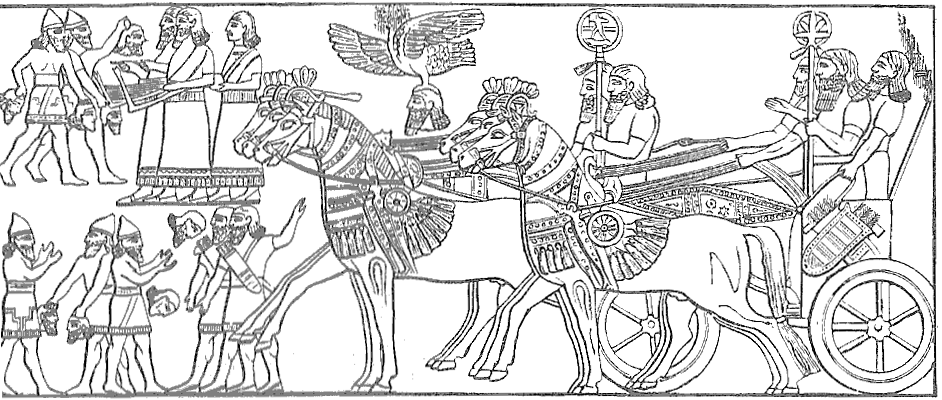
They were more evil than the other pagan nations.
“Moreover Manasseh shed innocent blood very much, till he had filled Jerusalem from one end to another; beside his sin wherewith he made Judah to sin, in doing that which was evil in the sight of the LORD” (2 Kings 21:16)
Even the prophet Isaiah had been sawn in two during the reign of King Manasseh. Their hands were full of blood when they demanded that God save them from their enemies. They refused to change their ways. God allowed the temple built in His honor to be destroyed. He did not want His temple to stand in the middle of cruelty. However, when they turned from their ways and asked for mercy, God let them rebuild His temple among them once more.
When Christ came during the Second Temple period, everything had once again become bad. Only this time they had become extreme in other ways, but the result was the same: cruelty and the shedding of innocent blood. No matter how sin manifests itself, it results in the same thing. Jesus said to them: “O Jerusalem, Jerusalem, thou that killest the prophets, and stonest them which are sent unto thee, how often would I have gathered thy children together, even as a hen gathereth her chickens under her wings, and ye would not!” (Matt.23:37-38)
As Christ said, it happened, and the second temple was destroyed as well and was never rebuilt. When they repented and asked God for mercy after the destruction of the First Temple, God granted them 490 years to turn from their ways and do better. This was around the same length of time as the mercy God had offered those in the land before them, the Canaanites, when they were wicked (Gen 15:30). God was being fair. It is also part of God’s long suffering. However, they did not change their ways. They still treated each other badly, suppressed others, misrepresented God while claiming to represent Him, killed God’s servants, and even killed God’s son, who was without sin. God would not continue to pardon them, for they would become worse, and it would cause even more suffering than that which they already had. Throughout the Old Testament, we see how God protects them when they are faithful, or at least trying to be, and allows their enemies to harm them when they refuse to be educated in that which is good and are rebellious. God even told them, ahead of time, the conditions for His protection through Moses (Deut. 28). This is not about making mistakes or errors, either as a people or as a leader. God had already provided atonement for cases of disobedience through the sanctuary. It is not about God leaving them because they made mistakes. It is about the people and leaders rejecting God’s standard and being judged by it.
When they reject God as their authority, they place themselves outside of His protection. Israel and Judah provoked their enemies’ anger through their own actions. God cannot favor one bad person over another, unless one is much worse than the other, of course. God’s enemies, seeing God’s people without full protection, target them first and foremost as a strategy, because those who have had the truth are closer to rediscovering it. Through their history, they have gained knowledge that can help them convert again. It follows, then, that if left partly unprotected, Satan will try to destroy them to erase the truth of God if possible.
Thus, God’s people who turn their backs on God are more vulnerable than those who have rejected God all along. Satan’s anger towards God’s backslidden people will manifest in a greater way. This fact is lamented over in the Bible when God’s people felt especially targeted compared to the ungodly.
It is not uncommon, when suffering, to question why one’s own punishment seems so much more severe than that of others who are just as bad or even worse. What it can mean is that Satan sees you still have a seed in you and that you are likely to listen to the Spirit and turn, and so he targets you harder. As a Christian, it can almost be considered a compliment. If Satan is against you even when you have backslidden, it means he thinks you still have the potential to return to God.
Solomon wrote: “All things have I seen in the days of my vanity: there is a just man that perisheth in his righteousness, and there is a wicked man that prolongeth his life in his wickedness”. (Ecc.7:15) Or, like Job said, “Why does the wicked prosper?”
Earth is a spiritual battle. Satan does not always attack his workers; instead, he gives them money and peace, while focusing more on targeting those “sheep” that run out of Christ’s fold. Thus, a backsliding Christian is under great attack, while someone who has been on Satan’s side the whole time can live in luxury and selfishness unharmed. When Satan was tempting Christ in the wilderness, he offered Him what was valuable in the world. Christ declined, choosing instead to suffer for His people’s salvation (Luke 4:5-7).
On the other side, we can also see in the Bible that good people are attacked and suffer persecution even though they have been faithful. The prophet Isaiah was not sawn in two because he was unfaithful to God, but rather because he was faithful. Even the first Christian movements suffered harsh persecution. Several of the good apostles were martyred.
God warned the Christians of what was coming: “I know thy works, and tribulation, and poverty, (but thou art rich), and I know the blasphemy of them which say they are Jews, and are not, but are the synagogue of Satan.
Fear none of those things which thou shalt suffer: behold, the devil shall cast some of you into prison, that ye may be tried; and ye shall have tribulation ten days: be thou faithful unto death, and I will give thee a crown of life” (Rev.2:9-10)
Here, the wording can make a great difference. Did God allow it to test them, or was God trying to tell them that what was going to happen would be hard on their faith, and urging them to stay strong despite the circumstances? Most likely the latter, as God did not inspire the sinner to sin against them. God is not behind their trials; evil men are. God is encouraging them to keep their faith through their difficulties, because that is when it is easiest to give up in bitterness.
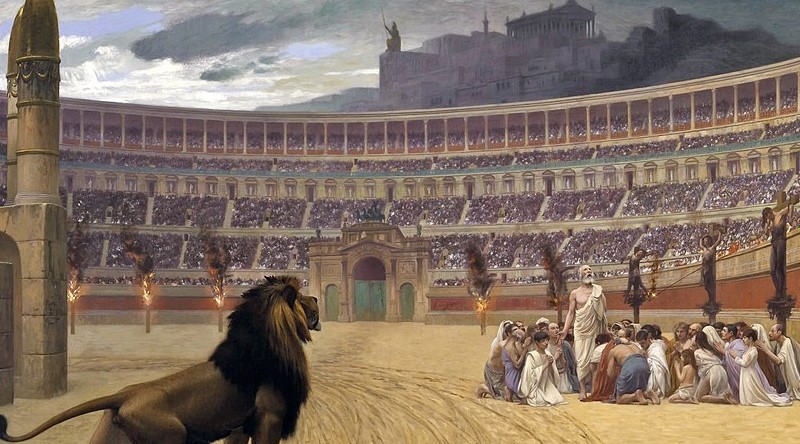
Being victimized was so common for Christians in the first centuries that the mentality of victimhood is still part of Christianity to this day. The idea that God is glorified by our suffering is not one that feels sane to a trauma victim. Many survivors feel unsafe in an environment where it is claimed God holds the hand of the one harming them to “test our allegiance” to Him. God cannot trust someone who has been threatened and tortured to prove themselves faithful any more than anyone else can. Anyone declaring devotion while pressed up against a wall, or between a rock and a hard place, might be deceiving both themselves and others. Nor is God such a fool. The Bible is clear that it is His love for us that converts us. The apostle John stated: “We love him, because he first loved us” (1. John 4:19). Only love can inspire love.
Christians are not saved by allowing themselves to be victimized; they are saved by Christ’s death for our sake alone. What happened to the first Christians was a consequence of their bravery, as we will investigate.
Another thing that can make many feel unsafe is the idea that if you make a mistake, God withdraws from you. It might be tempting to compare Israel’s history and faults to your own relationship with God. After all, it is written as a warning and example to us (Heb.4:11). This can become an irrational fear for a long-term trauma survivor.
God did not leave His people when they strayed; He stayed and tried everything He possibly could to save them. And even when He would not protect them as a governmental institution, He still had mercy on the individuals within it. The first temple was destroyed, but people like Jeremiah, Baruch, Ebedmelech, Daniel, Ezekiel, Hananiah, Mishael, and Azariah are men God protected, saved, and helped. All because, in the middle of the chaos, they turned to God.
God does not need you to be perfect for Him to help or care for you; He just needs you to be willing. Using the stories in the Bible where God had to remove His protection as a way to scare yourself or others into thinking that God has abandoned you or them is not a good way to be a Christian.
It will strain you and cause you to create a relationship where you need to protect yourself from God’s punishments rather than finding shelter under His wings (Psa.36:7). This is a temptation that those with childhood trauma can fall into, and it leaves a lasting strain on their relationship with heaven.
In these instances, it is helpful to better understand why God allowed them to be punished and to place it in the context of what was actually happening.
One of the reasons for the downfall of Israel was not just their great crimes against each other and God, but that when God tried to reason with them, they would not listen. God sent them messengers to talk sense to them, to persuade them to change their conduct, and to nearly beg them to let God save them. Instead of listening, they killed the ones God sent. (Heb 11:36-37)
Jesus was upset about how those who came to plead with them were treated: “Therefore also said the wisdom of God, I will send them prophets and apostles, and some of them they shall slay and persecute: That the blood of all the prophets, which was shed from the foundation of the world, may be required of this generation; From the blood of Abel unto the blood of Zacharias, which perished between the altar and the temple: verily I say unto you, It shall be required of this generation. Woe unto you, lawyers! for ye have taken away the key of knowledge: ye entered not in yourselves, and them that were entering in ye hindered” (Luk 11:49-52).
On judgment day, those who rejected God’s plea might try to make their case that they were ignorant and “meant well” when they rebelled against God’s rule. How those sent to them were treated will serve as evidence against their claims and ensure they are judged and not permitted within the gates of the New Jerusalem. Had they not shown the extent of their violent rejection, there might have been doubt on judgment day. Now there is none. Even among the violent, there will be men saved because they finally saw reason. One of them is Paul.
When we compare our own personal pilgrimage to the story of the nations of Israel and Judah, we should remember that they were not rejected because of their sin, but because they refused to accept the remedy. They would not let God save them. In this way, they lost His help and everything that help would have brought them: protection and deliverance.
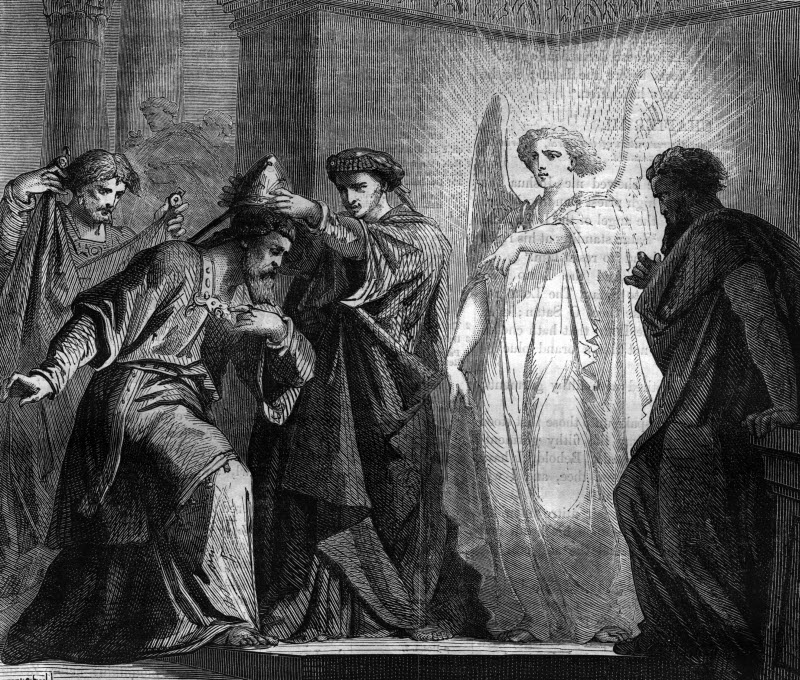
At one point, the remnant of Judah and Israel sought to listen to God and to receive His help. A sinful priest was all they had to plead their case at the time. But this priest was willing. This was all God needed: “Now Joshua was clothed with filthy garments, and stood before the angel. And he answered and spake unto those that stood before him, saying, Take away the filthy garments from him. And unto him he said, Behold, I have caused thine iniquity to pass from thee, and I will clothe thee with change of raiment. And I said, Let them set a fair mitre upon his head. So they set a fair mitre upon his head, and clothed him with garments. And the angel of the LORD stood by. And the angel of the LORD protested unto Joshua, saying, Thus saith the LORD of hosts; If thou wilt walk in my ways, and if thou wilt keep my charge, then thou shalt also judge my house, and shalt also keep my courts, and I will give thee places to walk among these that stand by” (Zec.3:3-7)
When Isaiah was called to be a prophet, he did not feel he got the job because he was without sin. Rather, he said after getting the commission: “Then said I, Woe is me! for I am undone; because I am a man of unclean lips, and I dwell in the midst of a people of unclean lips: for mine eyes have seen the King, the LORD of hosts. Then flew one of the seraphims unto me, having a live coal in his hand, which he had taken with the tongs from off the altar: And he laid it upon my mouth, and said, Lo, this hath touched thy lips; and thine iniquity is taken away, and thy sin purged” (Isa 6:5-7).
We see this repeatedly. Few have committed a crime as King David did. But he repented greatly and begged God to restore his heart. “Purge me with hyssop, and I shall be clean: wash me, and I shall be whiter than snow” (Psa 51:7)
Later, when his son rebelled against him, partly because of David’s sins, God still saved and restored him. Not from all the consequences of his actions, but He still helped him through the injustice he was experiencing.
God could not save the former King Saul because he did not trust God or want God to help him change his ways. The Bible shows us that God is not dependent on our past being without blemish, but that we are willing to receive His help.
Even an earthly governmental prison system is built upon similar principles. A convict can be released on trial if they show an understanding of their crime, regret, and a willingness to accept help in changing. If they do not show these three characteristics, they are not given an early release. God’s mercy is even greater than this. God offers to not even remember our past mistakes: “I, even I, am he that blotteth out thy transgressions for mine own sake, and will not remember thy sins” (Isa.43:25)
In Revelation, in a message to the last church, we see that God is upset about their sins and coldness. Yet He says if they are willing to seek His help, they will be granted the privilege of sitting on Christ’s holy throne next to Him. What incredible mercy for people who have opposed the principles of His kingdom to be allowed to sit there with Him! God does not hold grudges.
God’s mercy is extreme and ridiculous and is not deserving of the accusations and suspicion Satan plants in the minds of people, especially childhood trauma victims.
The story of Israel losing its protection does not reflect God’s attitude toward His children, who made a few errors. His love is not that weak and short-lived.
If we refuse to receive His help, if we refuse to apologize for our wrongdoings to others, if we refuse His mercy, then we will be judged by the heavenly laws. God has no other choice because those we have hurt, and the spectators, have made a complaint against us. We are all on trial for the chain reactions we took part in, for the chain reactions we created, and for every selfish and damaging act we have done towards others. Sins that God has offered to remove. If we do not want His salvation or help, He cannot give us His protection. The two go together.
Christian persecution
It was God’s original plan for the kingdom of God to be established here on earth among mankind. This is what He tried to accomplish through the nation of Israel. A haven for all who wish to follow the moral principles of His rule. A place where God could protect them.
When Israel did not cooperate, this kingdom was lost to man. “Jesus answered, My kingdom is not of this world: if my kingdom were of this world, then would my servants fight, that I should not be delivered to the Jews: but now is my kingdom not from hence” (John 18:36)
The disciples were ready to fight, as seen when Peter drew his sword to try to save Jesus (Matt. 26:51). This is clearly not what Christ meant, for He asked Peter not to fight. If the disciples alone had started a physical fight with the Jewish authorities, they would have started a rebellion within the nation. Jesus wanted His people, as a whole nation, to defend Him and stand by Him. When the Jewish authorities did not do so, it became apparent that He could not create a temporal kingdom on earth as He had first intended, as seen in Israel’s history. This resulted in God’s people being scattered and even persecuted by both the Jewish and Roman authorities.
This was not God’s design; He did not want His people to be hunted prey. He had created the states of Israel and Judah to protect His people. But no government would represent Him and let Him lead. This ultimately meant there would be no country or nation that would act as a shield from the pagan and ungodly. God’s people would be forced to live under pagan governmental rule and face the conflict of interests that naturally would arise when one ideology clashed with another. Whenever a pagan governmental law clashed with God’s laws, the believer was and is forced to choose and suffer persecution.
It was because the Jews rejected God’s leadership and Christ as their king that the Christians ended up being persecuted for decades. God’s first plan was for His people to be faithful, for the kingdom of Judah to remain, to receive the teachings of Christ, and to protect His people.
When they did not, it happened, as is common in this world: the innocent must suffer because of the majority’s unfaithfulness.
Such was the case even when Babylon took Jerusalem. The Bible speaks of Daniel, Hananiah, Mishael, and Azariah, who were faithful to God, yet they lost their homeland as well. They were forced to leave their homes and be taken to Babylon, and they were even forced to help Babylon flourish instead of their own country.
Judah’s unfaithfulness harmed not only them but also Christ’s believers. The sanctuary of God’s people on earth was destroyed, and everyone had to find a way to survive as believers among hostile nonbelievers.
The Christian persecution is a cause-and-effect witness against Israel’s unfaithfulness.
You can compare it to a child suffering because of their parents’ sins. They have still not sinned themselves, yet they are still punished for their parents’ decisions. The only way for God to save them from their parents’ mistakes is if He takes the children away from them at birth and gives them to someone else. It goes back to whether God should punish people before they commit a crime or after. If He punishes before, then people will feel scared and suppressed and doubt that God is fair. If He punishes after, people will understand, but damage has already happened. God can foretell the future, but the thousands upon thousands of witnesses in the courts of heaven and on earth cannot. (Isa.46:10; Dan.7:10)
Should God have let Judah keep their kingdom, despite their infidelity, to protect those faithful among them? They hunted down their own people who received Christ and had them killed.
Judah also set the Roman leaders up against the Christians. Israel was not a sanctuary for God’s people, nor did they represent God right, so God allowed them to show their true face, and their punishment was that God withdrew His protection from them, which allowed the stronger Roman army to defeat and scatter them.
Jesus’ words that His “kingdom is not of this world” reveal that He wanted to establish a safe country for His people, but was constantly opposed.
God did not desire that His people be persecuted or harshly treated. It is not God’s will for His people to be harmed. Given the damage that being victimized causes to someone’s character, and that victimhood itself does not purify or sanctify anyone, God did not need it to happen. Nor is He asking His people to play victims today.
Christians being victimized because of their faith is not God’s doing; rather, it is the wrath of God’s enemies manifesting, and God is not happy about it.
Revelation 12:17 says: “And the dragon was wroth with the woman, and went to make war with the remnant of her seed, which keep the commandments of God, and have the testimony of Jesus Christ.”
Many believe God desires His people to be persecuted and to suffer so He can purify them through it. If that were so, demons and evil people would be doing the Lord’s work. The damaging purgatory theology presented by the Catholic Church has kept this idea alive and caused many Christians to think they are more right with God when they suffer than when they are happy and thriving. This is especially damaging to long-term victims, as they will find these ideas consistent with their self-abuse and will easily slip into that role.
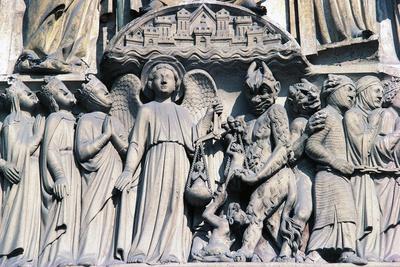
The Catholic Church followed ancient Roman traditions regarding the underworld. They make it seem like Satan works for God in punishing people. The picture shows relief from Notre Dame in Paris, where Satan is bringing a group of people to the underworld.
God has not hired Satan or demons to abuse His people. They work against God and not for God. God is not a sadist.
The purifying fire God speaks of is to allow His people’s love, sincerity, and patience to be tested and tried. He wants His people to battle the sin in their lives and to make the hard decisions that will develop their character. To say no to something wrong when others say yes.
Jesus said that impurity comes from our hearts. “There is nothing from without a man, that entering into him can defile him: but the things which come out of him, those are they that defile the man”. (Mark 7:15) If the only thing that defiles a man and needs cleansing is in the heart, then everything God says about purification is about purifying our hearts. Our hearts represent our will to do either good or evil. You cannot force the heart to be good; it has to be inspired to be good. God repeatedly says that it is the heart He wants to purify. (Ezek.11:19, Heb.8:10)
Sometimes tribulation can influence the heart, since humans tend to learn compassion the hard way. Mankind has an instinct to blame others, and some do not learn to be compassionate until they have personally experienced unfair hardships. God allows it because of the hardness of our hearts, not because He wishes ill on anyone.
Christ declared, “Blessed are the merciful: for they shall obtain mercy. Blessed are the pure in heart: for they shall see God. Blessed are the peacemakers: for they shall be called the children of God” (Mat 5:7-9). God has compassion for those who show compassion to others. We learn to correct ourselves and our hearts through what we experience, and so God sometimes allows us to have those experiences. Not evil or cruelty; that is never God’s will.
God does not purify His people by having others harm them. The following is said in the Bible to purify:
Blood “the blood of Jesus Christ his Son cleanseth us from all sin” (1.John 1:7)
Water is used as a symbol of purification. However, physical water cannot remove anyone’s uncleanness, only what the water symbolizes, which is Christ’s righteousness imputed to the believer after He has removed their sins. (Exo.29:4; Num.8:6-7; Heb.10:11; Ezek.36:25, John 3, John 13:8)
Hyssop/Herbs “Purge me with hyssop, and I shall be clean: wash me, and I shall be whiter than snow” (Psalm 51:7). Again, this is a symbol of Christ’s righteousness given to the repentant sinner.
Fire, Gold, and silver (Mal. 3:3, Psalm 12:6). God compares his people to gold and silver that need purification. Just as we are gold and silver, the fire is symbolic as well. Fire is even a symbol of the work of the Holy Spirit, who came to convince us of our sin (Mat.3:11-12; Acts 2:3). Being confronted with a wrong can be a hard process, and dealing with it rightly goes against our natural inclination to defend ourselves and our perception of being the good guy. With the realization and confrontation comes shame and pride that need to be dealt with.
God is compared to a fire several times, suggesting that the purifying fire is also in His presence. About Christ, it is said three times in Revelation: “His eyes were as a flame of fire” (Rev.19:12)
Faith is said to have a transforming ability that cleanses: “And God, which knoweth the hearts, bare them witness, giving them the Holy Ghost, even as he did unto us; And put no difference between us and them, purifying their hearts by faith” (Acts.15:8-9)
Obedience to the truth. James writes: “Submit yourselves therefore to God. Resist the devil, and he will flee from you. Draw nigh to God, and he will draw nigh to you. Cleanse your hands, ye sinners; and purify your hearts, ye double-minded” (James 4:7-8)
Hope in Christ: “And every man that hath this hope in him purified himself, even as he is pure” (1.John 3:3).
The angel Gabriel says to the prophet Daniel about the end times: “Many shall be purified, and made white, and tried; but the wicked shall do wickedly: and none of the wicked shall understand; but the wise shall understand” (Dan.12:10)
Notice again that being purified and doing wickedly are opposites. Showing that purification is talking about changing a man’s heart to do good.
Contrary to popular Christian belief, nowhere in the Bible does it say that God will have evil men torture His people to make them good. Nor should we think it will happen and permit it to be done to others or ourselves.
There will be many people in heaven who died young and inexperienced. Ultimately, we are saved through Christ’s merits, not our own. Tribulations cannot save anyone; they even make some people worse. That is why there is so much violence and crime in poor neighborhoods. Struggle inspires violence and crime, not holiness. However, sometimes God will allow circumstances to be like a cleansing fire if He says it will help wake that person up to their current condition and seek a change.
God would rather punish us than give up on us, and so few will be lost whom God did not first try to warn in different ways.
Even parents are forced to punish their children when their behavior goes too far, in the hope that the correction will change the path they’re on. Parents raise their voices when needed. Children who never receive any consequences or guidance often get out of control and become a menace to society.
“For whom the LORD loveth he correcteth; even as a father the son in whom he delighteth” (Pro 3:12)
“My son, despise not thou the chastening of the Lord, nor faint when thou art rebuked of him: For whom the Lord loveth he chasteneth, and scourgeth every son whom he receiveth.
If ye endure chastening, God dealeth with you as with sons; for what son is he whom the father chasteneth not?
But if ye be without chastisement, whereof all are partakers, then are ye bastards, and not sons.
Furthermore we have had fathers of our flesh which corrected us, and we gave them reverence: shall we not much rather be in subjection unto the Father of spirits, and live?” (Heb.12:5-9)
This is not about sadistic suppression. It is about God holding us accountable, telling us to make up for a wrong and to do better next time, just like an earthly parent would.
What an earthly parent would not do is hand their child over to someone who does not love them, to torture and abuse them under some strange notion that this will make the child healthy, strong, and devoted to them. Neither does God. So God correcting His people is not to be confused with the persecution of Christians.
Purification through fire.
Christ has an issue with His last church, mentioned in the book of Revelation. They think they are right with God, but they are not.
He says to them: “Because thou sayest, I am rich, and increased with goods, and have need of nothing; and knowest not that thou art wretched, and miserable, and poor, and blind, and naked:I counsel thee to buy of me gold tried in the fire, that thou mayest be rich; and white raiment, that thou mayest be clothed, and that the shame of thy nakedness do not appear; and anoint thine eyes with eyesalve, that thou mayest see” (Rev 3:17-18).
Several times in the Bible, God’s purifying process is compared to the purification of fine metal. The first thing we notice is how God compares His children to costly, valuable metal even before it is purified. He calls us valuable. Purifying gold and silver is meant only to enhance the value and beauty that are already there. A silversmith knows his job is done when he sees his reflection in the metal. In the same way, Christ desires to see His image, His values, and His principles in us. They will make us happy and do good for others.
When purifying gold in Biblical times, they used fire to make it easier to remove impurities, which would rise to the surface, leaving them with only the gold.
It is the same with us: by using this metaphor, God is telling us that we are valuable to Him, but there are aspects of us that are not good and are destroying us and others. And He wishes to remove it from us so we can be our best.

How does this practically work? Not with real fire, but by God confronting us with the things we need to change. The Holy Spirit has been given such a job: “And when he is come, he will reprove the world of sin, and of righteousness, and of judgment” (Joh.16:8)
We can’t be Christians and go around destroying others. God wants us to let Him help us remove these character traits that cause so much misery.
Putting gold in fire is actually a safe procedure because gold is not destroyed by fire. Gold can take the heat just fine; only the impurities stuck to it cannot withstand the fire in the purification process.
God does not want to destroy us while purifying us. Gold handles fire. He wants us to let go of the things that harm us and others.
If we do not, we put God in a situation where He is forced to judge us to secure peace. “There hath no temptation taken you but such as is common to man: but God is faithful, who will not suffer you to be tempted above that ye are able; but will with the temptation also make a way to escape, that ye may be able to bear it” (1. Cor. 10:13)

In a world of sin, God is left with only two choices. Either He forcefully stops everyone from sinning and gets a fearful, rebellious response, and perhaps loses everyone, or He has to allow us to learn from experience that sin is bad, so He can at least save a part of the world.
God allows us to suffer consequences so we can learn, adjust, and reason. God wants man to be free, and so He tells us right from wrong and the consequences, then lets us make the decision. If He then removes the consequence, He makes Himself a liar, and the next time He warns, we will not heed it.
God speaks to our hearts. If we have no compassion, is it right for God to show us compassion and spare us from all situations while we judge others? So, our actions often force God to take a step back and allow us to experience things that will teach us and shape us into better people.
It was not God’s initial intent for man to learn this way. There was no symbolic furnace for Adam and Eve before they sinned, so that they could learn to be good. There was no need; sin had not formed inside their hearts. There was nothing to purify, no hard lessons to learn.
God allows hardships to awaken us to our faults and bad personality traits so that, when they come to the surface like impurities stuck to the gold, we can choose to do something about them. We cannot get our remedy if we do not understand that we are sick.
In Revelation 3, in His message to His church, Christ has the medicine ready. He is ready to heal and protect us. But He cannot give us this help before we ask for it. He says the problem is that we do not see our needs: “Because thou sayest, I am rich, and increased with goods, and have need of nothing; and knowest not that thou art wretched, and miserable, and poor, and blind, and naked” (Rev.3:17)
He also says: “As many as I love, I rebuke and chasten: be zealous therefore, and repent.
Behold, I stand at the door, and knock: if any man hear my voice, and open the door, I will come in to him, and will sup with him, and he with me” (Rev.3:19-20).
Christ does not force Himself on anyone. That is not how anyone is purified. Because it is a matter of the heart, He speaks to our hearts. Despite how crucial the warning is, Christ is placing Himself “outside the door knocking,” and we have to choose to open up.
The only way is to see our needs and realize we are not right with Him. Then, as we “open the door” and grant Him permission to work with us, He says He will help us make the changes we need, but we need to ask Him. (Rev.3:18)
Christ has the white raiment ready to clothe us with His righteousness, meaning we give up our righteousness for His.
He has eye salve, so we can see things clearly and healthily.
Although tribulations can result from our own actions, and God cannot always intervene without harming us further or others, He does not desire our harm.
Christian persecution
Some trials Christians go through are undeserved and come from pure hate from those who hate Christ and the Bible. At first glance, there seems to be no reason for God to allow this. But as we addressed, cause and effect have a bigger picture than just us in a certain situation. If you are laid off from your job because of your faith, the issue is far greater than just you not being in the wrong and the employer being mean. It is a societal problem. It is a heavenly human rights court issue.
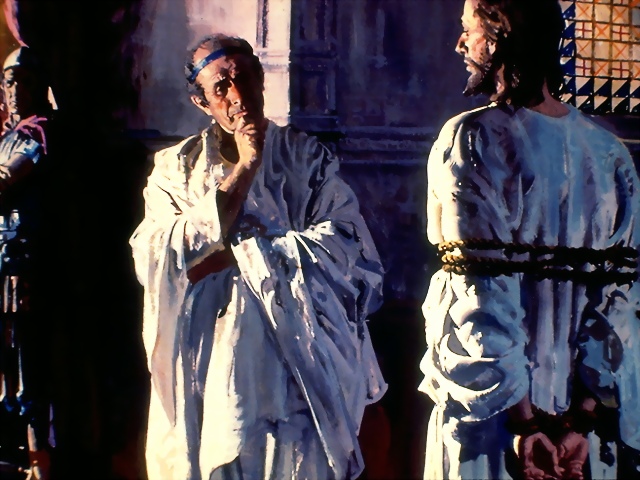
As a witness against sin, God allowed societies to be affected by their choices, and He has allowed persecution because it witnessed the rotten structure of other religions and even corrupt Christianity. Can you create a peaceful society based on pagan morals and ideals? Stopping the persecution immediately would be like covering up the sins in other people’s hearts. It would also cover how a society that rejects God behaves and why God must one day end it.
We see how tribulation exposes a society in several examples. In the Bosnian War, Christians and Muslims who had previously lived in harmony started turning on each other. In Rwanda, the same happened when the Hutus got control and started targeting the Tutsis. All over the world, we have seen groups being targeted by others. Marxist-inspired countries are against all religions. In Myanmar, Buddhists targeted Muslims. In India, Hindus have been burning Christian churches. Another place we see Muslims targeting Jews and Christians. In Christ’s time, Jews persecuted Christians, and later, during the Middle Ages, Christians persecuted the Jews.
So how can you tell who the good guys are and who is not? If overturning a government causes the new group to behave in the same way, do you even know who someone truly is if the tables are never turned? It is clear throughout history that everyone thinks they are “the good guys” fighting “the bad guys”. It is often thought that the minority or victims in such a cultural war are the good ones. It is normal to sympathize with those who are suffering at the hands of others. In the courts of heaven, they do not just go through the cause and effect of an individual but also of society. In Revelation and the Book of Daniel, we see God judging “beasts,” which are governments. Christ was persecuted by His own people, and He warned His followers that they too would be persecuted by their own. Good and bad are not always seen in what religion or anti-religion someone professes. There are good and bad in all societies.
Usually, the strongest and the majority decide the direction a society takes. And God has allowed this cause-and-effect to be seen by everyone. Every nation’s and people’s decisions are reflected in everything from their economy to their behavior with each other and in their conflicts.
Some countries have been rife with conflict and internal turmoil, a result of leaders’ and people’s immoral behavior. And in all these different cultures, some wish to do good, to be good, and live in peace, but are targeted and unfairly persecuted. Some minorities are rightly persecuted. Like ISIS and terror groups within countries trying to take over territories against the people’s will. Look at Italy and Mexico, where the mafia and cartels are controlling several areas. They may be fewer, but they are not victims of the government. They are rightfully targeted. Sometimes minorities are unfairly targeted. Laws often reflect people’s morals. The different laws in different countries reflect that. For many in the West, it is inconceivable that incest is not forbidden in some other countries but is legal. Some places allow drugs, in other places, there are big prison sentences for having them. Leadership in a country often reflects the group mentality of its people, though not always. But no leader can have power without support.

Everything that is happening in the world, all the different ways to rule a land, all the different laws, is evidence against sin in the courts of heaven. God commanded in His law that there be only one God and one worship. The myriad of beliefs in the world is the main reason for all the world’s conflicts. Everyone thinks they can do a better job at ruling, and so the world goes in circles. The West has praised democracy as the ultimate and best form of leadership. Yet, what happens when the majority is wrong? Or when the people are split evenly, and the leaders therefore only represent half? Even in Western democracies, the need to create other institutions like NATO, the EU, the WHO, and the UN exists, where none of the people in power making laws have been elected democratically. Even democratic countries are cheating and creating only an illusion of democracy. Because it is difficult to move forward if the majority does not understand or want what the rulers want. So, they created institutions that could make laws and decisions outside people’s control. Democracy can just as easily become a suppressor as a monarchy or another system of rule.
It is human to have compassion and view people targeted by a majority or by a nation as innocent victims, even when they are not. Victimhood manipulates. Thus, God does not judge by who is victimized but by their hearts. Countless experiments on human nature have shown that when roles are reversed, those who consider themselves fair and good end up suppressing others. If the minority is in the majority, would they treat the minority as they were treated? If Islam took over Myanmar and had the Buddhists and Marxists outnumbered, would they treat them well? Let us hope they would, but there is no certainty that if the roles were reversed, it would be different. This is because people will always feel threatened by those who think and act differently, and with feeling threatened comes fear and violence.
In the Western world, those who had morals that went against the Bible felt suppressed when the West was mostly Christian. Now that the West is overturned and the agnostics, atheists, and differently sexually oriented are celebrated, the same demand for freedom and equality is taking away the rights of Christians. Many gays have felt suppressed by Christians, forced to “live in a closet,” and denied speaking openly. Yet in Northern Europe, Christians are now placed in “closets” and hated if they speak openly about their faith. Most people would like to think they are different when in a better position, but that is not always the case.
Thus, the idea that God purifies His people only by allowing them hardships should consider that God knows many people reveal their true selves only when in power, while appearing pious when humiliated.
God, therefore, cannot produce “saints” just by having His people suppressed.
The persecution of Christians is the result of generational sins. The Jews’ sins prevented God from protecting Christians in the land of Israel. The sins of the pagans, who wanted to force Christians to partake in Roman traditions thinking it was best for society, and of Roman Catholicism, which, when in power in Europe, persecuted Christians who wanted to follow the Bible over church speculation and tradition, are further examples. They, too, thought they were doing God a service by ruling with an iron hand.
All of it is written down in the books of heaven to judge man and expose the nature of sin.
In a world of sin, there will always be uprisings. There will always be someone wanting more, or wanting things differently, with new ideas. There will always be discontent where there is jealousy. Where there is no belief in God, there will always be a need to create godlike authority. There will always be a need to rule and to have laws to punish those who do not adjust to the order. Using authority is not bad; it is how it is used.
If God had reset every generation regarding the causes and effects of each ideology, it would not be exposed as destructive. To expose sin, God must let it manifest over time. Sin often goes by immediate need and relief, and can appear good at first. It can even appear to bring harmony and peace at first. Only by letting it continue can one see the long-term effects. Thus, God cannot remove the long-term effects if He wants to prove that the ideology of sinning is bad. People will not understand they are suppressed before they try to change how they live their lives from the social norm. They feel they live in a good and free country because they do not see the discrimination until they are discriminated against.
Many are kind until they are taken advantage of. Bad people force good people to change or add laws and rules.
If society is too chaotic, the majority will long for structure and limitations. If there is too much order and limitation, they long for freedom. When you remove an identity, the need for a new one will follow. You can change what you call things, but you cannot change what they are or how they affect others and yourself. The nature of sin is not fooled by calling it in different terms.
In society, good and bad cannot be interpreted by those who feel suppressed. Good does not follow the apparent victim any more than it follows whoever is in control.
Summary:
– God does not need His people to be persecuted to make them good or appear good. A Christian becomes good when he does good, not through suppression.
– God allows persecution to expose people and nations and the results of their ideology.
– He allows it to show both man and the universe how sinful authorities do not work either one way or another. All they do is walk in circles, back and forth.
How persecution kept the first church clean.
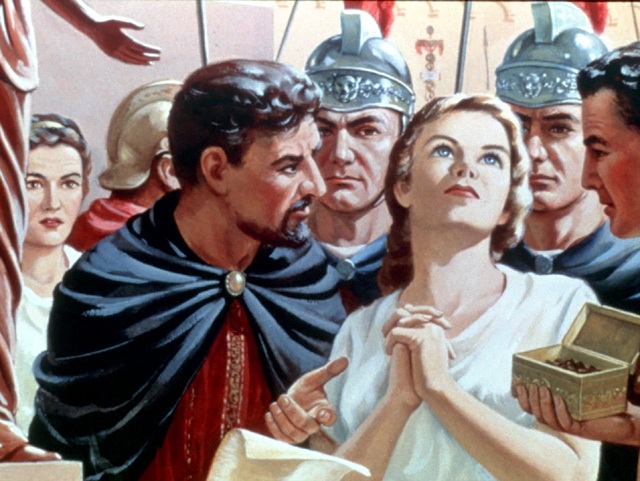
The reason the first Christian church remained, for the most part, pure in its practice was not that others’ evil purified them; rather, it was two other reasons. The first is that when we face hardships, the need to be close to God and communicate with Him becomes greater. They spent more time with God when they were facing hatred and when they were in need. When the persecution stopped, and they no longer felt the great need for God, many started spending less time with God and became occupied with pleasure and the pursuit of wealth.
The temptation then came to try to change who God is and stands for so they could feel good about ungodly choices, and as a result, the purity of the church was lost.
The other reason persecution kept the church innocent for a while was that it made it less attractive to be a part of the church. Those who were only partly converted or had alternative motives would avoid the hated group and seek recognition in the world instead. When being Christian was not as lucrative, fewer narcissists and people with double standards could be found there.
This does not mean God condones persecution; in everything that happens, God seeks to bring out the best in the situation. In the case of Christian persecution, the unpopularity of the church kept many bad people away from it.
When Christians started getting influence and power in the Roman Empire, the church was full of power-hungry men and women using the name of Christ for their own benefit. Naturally, doctrines changed or were tampered with. Christianity became something very different from what it had been. Now, a new group of Christians who wanted to keep the gospel undefiled ended up as a minority and were persecuted by the Christian majority. As a natural consequence, they remained purer and more biblically authentic during their trials.
God did not use evil men to educate and purify His people. He allowed tribulation to serve as a witness against the wicked and to reveal people’s true intentions. At first, this helped bystanders distinguish the truth.
They could have seemingly God-fearing and humble bishops parading, claiming to have the truth, but those they tortured and killed practiced Christ’s lessons to a greater degree. Persecution will not only serve as a witness in the trials in heaven. But it helped people living in those times wake up and see what was going on. Most people have a built-in hunger for justice and disdain for injustice.
Paul told the Christians to be patient during persecution because this is how they could win the battle (Rom.12:12). The attacks against them were showing the world they were not the rebels they were accused of being, and that the accusations against them were built upon lies and hate.
It is like exposing a narcissist. They are lovely to most people, outgoing, and nice. Then they are extremely cruel to a few. If you were to step up and accuse the narcissist, many with a positive experience would just think you were the problem. The only way to expose the narcissist is to let him play out his bad behavior and expose himself. If not, he will continue harming in the dark.
Likewise, it was for Christians. Those persecuting them seemed noble and appeared to be fighting a good cause. The Roman leaders did charity work and helped the poor and the weak. Who was really at fault? Who was causing the dissension? To begin with, it did seem like the Christians were the troublemakers and their accusers the victims. Only by allowing it to play out would people understand and see that the claimed victims and accusers of the Christians had other motives than ensuring security for the public. Only by seeing it played out would the people demand a change and make different decisions for their community.
God wants people to think, make decisions, learn, and grow.
Christians weren’t supposed to be pathetically suppressed; they were asked to speak up for the truth. To be warriors. And in any war, there are those who will die. The Christians who were often martyred were those who spoke up and were not afraid to show their beliefs. They were trying to change the world for the better, but were harmed in the process. The true Christians were victims, but they were not stuck in victimhood. They stood firm for their beliefs. They did not fight with swords, as they were neither a nation nor landowners. Rather, they fought with their mouths and how they lived their lives, trying to help people all over the world make a change.
Later, Christians thought that succumbing to their enemies was humble and pure. They silenced themselves and thought it wrong to speak freely, considering it unchristian to provoke others. Christians who are silenced do not resemble those who stood bravely for the truth and were martyred in the past.
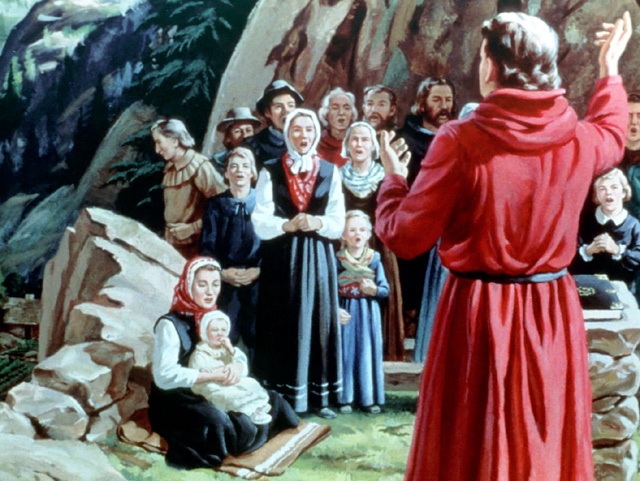
In the Bible, we see that the reason for Christian persecution was Christian bravery. The religious leaders said to them: “Saying, Did not we straitly command you that ye should not teach in this name? And, behold, ye have filled Jerusalem with your doctrine, and intend to bring this man’s blood upon us. Then Peter and the other apostles answered and said, We ought to obey God rather than men. …
…And to him they agreed: and when they had called the apostles, and beaten them, they commanded that they should not speak in the name of Jesus, and let them go.
And they departed from the presence of the council, rejoicing that they were counted worthy to suffer shame for his name” (Act 5:28-29 : 40-41).
All they had to do was be quiet about their faith. Christ asked for volunteers to speak up, share the gospel, and offer salvation, and they wanted to do it, knowing the risks that followed. Christ even told them about the risks and the consequences, so they could make an informed decision. (John 15:20-21) Again, they were not stuck in victimhood but were warriors for the faith. They knew what they were doing and chose to do it.
Ancient Roman writings also show clearly that severe Christian persecution happened to those who were brave and open about their faith. The following letter is between two Roman authority figures, Pliny the Younger, who asks Trajan how to solve the problems with the Christians, and writes:
“It is my custom, Sir, to refer to you in all cases where I do not feel sure, for who can better direct my doubts or inform my ignorance? I have never been present at any legal examination of the Christians, and I do not know, therefore, what are the usual penalties passed upon them, or the limits of those penalties, or how searching an inquiry should be made. I have hesitated a great deal in considering whether any distinctions should be drawn according to the ages of the accused; whether the weak should be punished as severely as the more robust; whether if they renounce their faith they should be pardoned, or whether the man who has once been a Christian should gain nothing by recanting; whether the name itself, even though otherwise innocent of crime, should be punished, or only the crimes that gather round it.
In the meantime, this is the plan which I have adopted in the case of those Christians who have been brought before me. I ask them whether they are Christians; if they say yes, then I repeat the question a second and a third time, warning them of the penalties it entails, and if they still persist, I order them to be taken away to prison”.
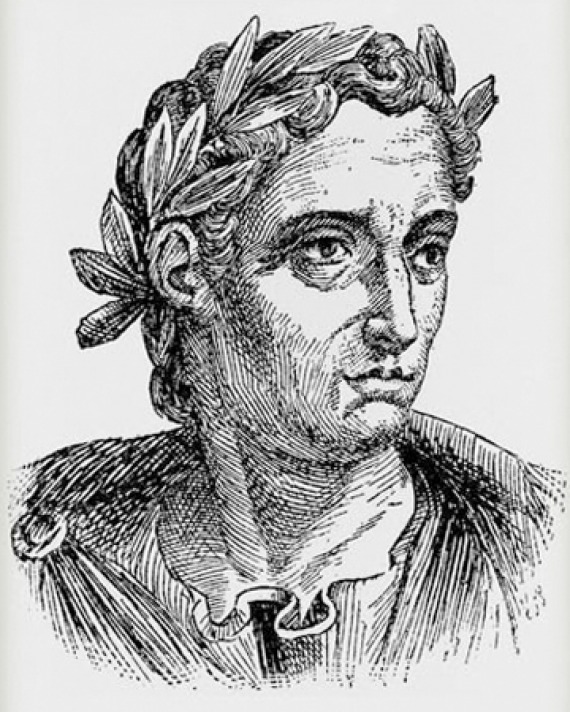
Trajan answers him:
“You have adopted the proper course, my dear Pliny, in examining into the cases of those who have been denounced to you as Christians, for no hard and fast rule can be laid down to meet a question of such wide extent. The Christians are not to be hunted out ; if they are brought before you and the offence is proved, they are to be punished, but with this reservation – that if anyone denies that he is a Christian and makes it clear that he is not, by offering prayers to our deities, then he is to be pardoned because of his recantation, however suspicious his past conduct may have been. * But pamphlets published anonymously must not carry any weight whatever, no matter what the charge may be, for they are not only a precedent of the very worst type, but they are not in consonance with the spirit of our age” (https://www.attalus.org/old/pliny10b.html)
Christ did not free the Jews from Roman oppressors; He did not physically change the current situation. The world began to slowly change after Christ set His foot on this planet, because He gave mankind hope, love, and a future. And this hope and meaning alone changed a large part of the world to become Christian and change their morals. Even the Roman leaders converted in their time. The strength and nobility, kindness, and bravery of the Christians were admired, which brought them the sympathy they needed to change people’s perceptions of both them and Christ.
Just as the American soldiers who arrived at the beaches of Normandy, France, to rescue Europe from Hitler during World War II took that risk to accomplish their mission, and many died, so did the first Christians willingly take the risk of sharing the gospel and changing people’s hearts at the cost of their own lives. Christians today who are silenced and dare not share their beliefs are the ones who are subdued and oppressed. They dare not be themselves or defend their beliefs. Such people live in chosen victimhood. They do not resemble the brave members of the first Christian churches.