


Important notice: Publishing this article series will take some time and is ongoing. The first four chapters were uploaded in August 2024, and the next chapters will most likely be up sometime during September.
Article series.
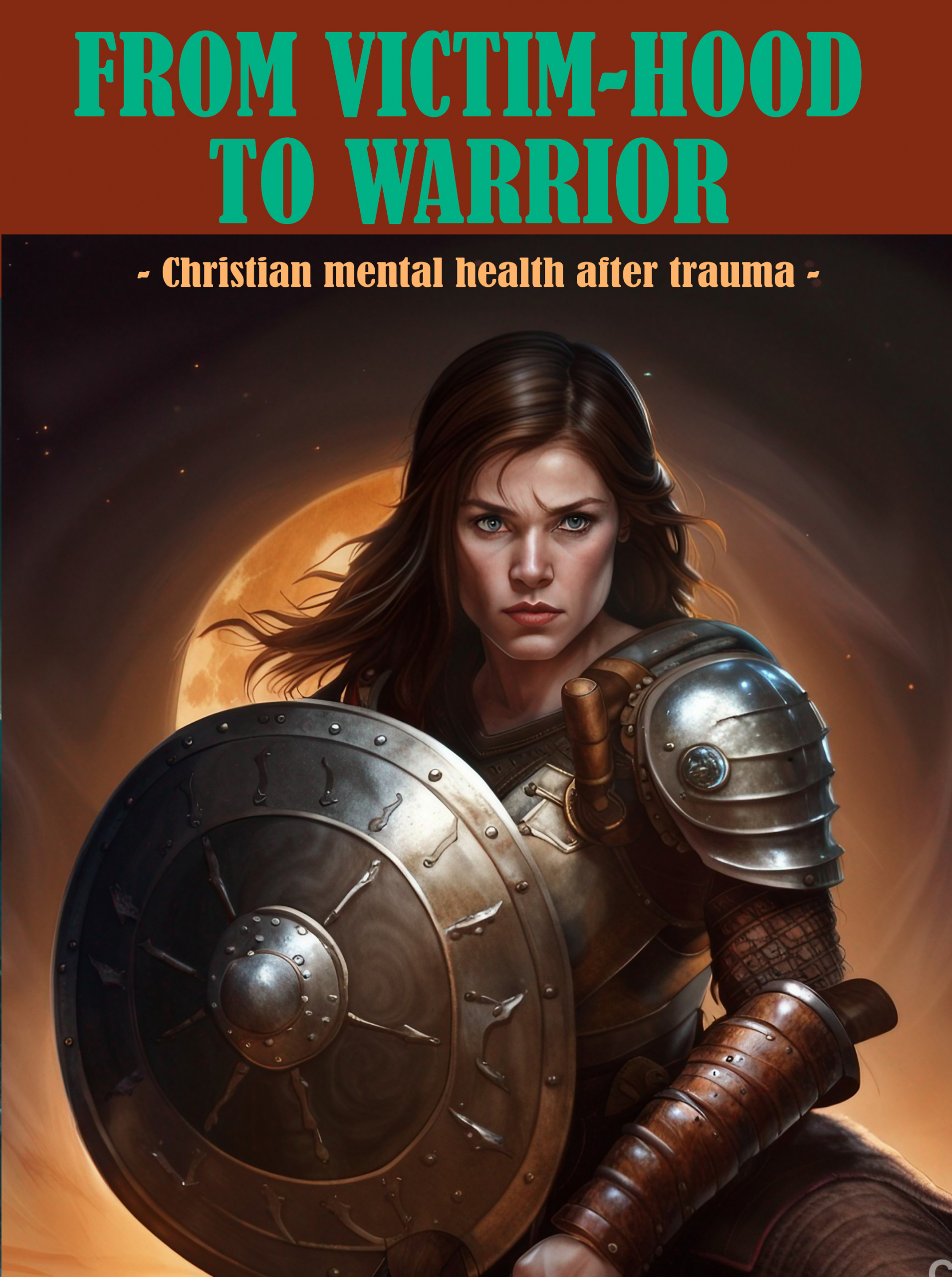
:
- Introduction
- The World Is A Battlefield
- The Church: A Feast for Oppressors?
- The Many Faces of Childhood Trauma.
- How do victims communicate?
- Being a victim of an offense and victimhood
- Learned Helplessness
- Victim-blaming
- God’s solution to sin
- How Satan uses the Bible to force us to submit to him
- The Good Shepherd
- Victimhood as a weapon
- The Victorious Christian
- Practical exercise towards freedom.
- Restore your trust in God.
- Why God allows difficulties.
- Church Tribulations
- Final Victory
- Afterword
Introduction:
Society loves to put people in boxes. Often, these “boxes” do not fit perfectly, or symptoms cross over between them, and so the number of new mental diagnoses is ever-growing. Society wants people to believe there is no norm or “right,” yet the many names for mental conditions suggest otherwise, implying that there is a standard. This reflects the idea that some behaviors are normal and others are considered abnormal. Strangely, it is like trying to accept something they do not actually accept. With physical cuts, you expect bleeding as a normal result. The body is designed to heal itself, but for a while, the wound will hurt and look less attractive; still, it is all “normal.” Sometimes we have to help the wound heal by cleansing it and closing it if it is too deep or wide. That is normal too. When it comes to mental health issues, this logic is, for the most part, rejected. Behavior that shows mental struggle is seen as random or abnormal, yet it is similar to the situation with a cut. Our brains and bodies react to trauma, neglect, violence, and manipulation in countless ways, and that is normal. The mind heals by respecting its natural healing processes, although it might still leave mental scars. Sometimes we have to help the mind heal because the emotional hurt is too complex. However, respecting the natural laws of the mind is not always how mental health is approached, either professionally or in broader society.
Rarely are they able to truly heal those who are struggling; most often, they can only alleviate the symptoms. Instead of challenging existing perspectives, they may label someone as incurable, suggesting the problems are beyond resolution. As a result, the only help offered is often medication to lessen symptoms.
Modern society pushes people to identify with their sins, their wounds, and their coping mechanisms during and after trauma. A mental diagnosis can give the illusion of peace by providing temporary relief when explaining one’s condition to others. The diagnosis can become an excuse for not fitting in and not mastering life as others do, feeling that their chaotic inner stress has a name and that they cannot help it. Accepting their fate and condition can help ease the struggle for acceptance. A diagnosis can therefore reduce some of the additional stress placed on those who struggle in society. Many in these situations accept medications to relieve excessive stress. A Christian who struggles with mental health issues can end up stuck between a rock and a hard place. Irreligious mental health workers often give advice that contradicts Biblical advice. The Bible speaks harsh judgment upon those who trade in “pharmacies” and drug medicines, and it urges us to stay away from stimulants that keep us from being sober and spiritually awake (Rev. 18:23; 1 Peter 5:8; 1 Thess. 5:6-8; Eph. 5:18; 1 Cor. 6:19-20; Gal. 5:20). Drugs can also affect the brain negatively, cause personality changes or misplaced indifference, and lead to addiction that is hard to escape.
Using drugs to treat mental health issues is, for many Christians, not an option. Alternative medicine is regularly rejected by mainstream society, and thus, it is hard for many Christians to know what to do. The Bible is very open and clear about human hurt, but it does not assign people specific mental diagnoses. Yet, many biblical characters suffer from what today would be called deep depression, anxiety, post-traumatic stress, and even madness. They suffered many types of abuse. Many had their freedom taken from them and were suppressed or oppressed. Many suffered great traumatic experiences, and part of the Bible’s narrative is how they dealt with them.
The Bible may appear simplistic in explaining mental health crises and their consequences, as it does not lock people into an incurable diagnosis. Instead, it teaches that even if someone has struggled from birth or believes they are “born this way,” they can be “born again,” figuratively speaking. Where there is life, there is hope (John 3:3).
God powerfully demonstrated this when Abraham’s wife, Sarah, was too old to bear children, and her womb could no longer produce life. God waited until it was considered impossible, and then He gave Sarah her son. The son was named Isaac, which means “laughter.” Sarah went from grief and stress to laughter because of the miracle God performed within her.
For someone who does not believe in God, the idea of a higher power with the ability to help humans is nonsensical, and they will treat it as such. Those who believe and have experienced God do not have to accept that their case is lost. Many mental health issues involve sin, and Christ claims He can deliver us from our sins—that He can set us free (John 8:34–36). The Bible says there is hope for everyone, and instead of telling people to identify with their issue, it explains that we are more than what happened to us. We are not what happened to us. We are more than the sins we have committed. We are not our sins, our coping mechanisms, or our defense mechanisms. Furthermore, we are something greater; we have potential that has yet to be unraveled, and our true identity is suppressed by sin and harm. God wants to free the real us from the cobweb we are stuck in. In God’s eyes, we are an undetonated bomb of potential. He knows what we can be and become if we are not held back.
Did God do something so extraordinary that He commissioned a woman who was said to have been possessed by demons to be the first to tell people the good news about His resurrection? (Luke 8:2; Mark 16:9; Matt. 28:7). He did. What a powerful move. She, like death itself, seemed impossible to turn around—yet Christ did both. Did Jesus assign a former madman to preach the gospel to his family and town? (Luke 8:39). The last person anyone would listen to, God sent to preach to the well-functioning others.
God is not afraid of those who suffer from mental health issues; He does not hide them or tell them to be quiet. Rather, He untangles them from their mental prison and gives them trust, love, and responsibilities. God believes in us, and He asks us to believe in Him and in each other.
This book is meant to show how the Bible addresses mental health, offers the biblical solution, and explains how to practically find healing through faith. To most people in the academic world, this is a dangerous approach, as the Bible is viewed as questionable and God as non-existent. But they are wrong. God is real. Yet, the intention behind this book is not to discourage people from seeking professional help; rather, it is to serve as a supplement to help Christians navigate the many emotions they experience after mental trauma. Many Christians struggle with mental health and with understanding why God allows it and how to view it. This book may help answer some of those questions.
• What does the Bible say the way out is? Is there one?
• Is it possible to be mentally ill and a true Christian at the same time?
• Why is there so much stigma among Christians regarding mental health?
• Why do many seem to get worse when seeking help from church members?
• Why do so many feel trapped and abused all over again after joining a church?
• What are the misunderstandings many Christians often have regarding mental health?
• Are there practical ways the Bible says can help us on the path to recovery? How can we help ourselves?
These are the topics we will investigate, and hopefully they will bring hope to the wounded or to those trying to help them. The book will not focus on diagnostic terminology but will concentrate on explaining human hurt and recovery within a biblical framework. It is primarily directed at Christians struggling with childhood trauma or long-term trauma as adults. This includes those who want to help someone stuck in victimhood, those struggling with mental health and their faith, or those who wish to understand and better support people who struggle. While this book does not address every issue and problem, it does present the biblical solution for people who are hurting, regardless of the reason.
Disclaimer:
This book is not meant to compete with treatments provided by professional health workers. It is written from a biblical perspective, not from the academic viewpoint of a mental health professional. If someone is unable to manage their mental health on their own, it is strongly advised to seek help.