


1. Introduction 2. The World Is A Battlefield 3. The Church: A Feast for Oppressors? 4. The Many Faces of Childhood Trauma. 5. How do victims communicate? 6. Being a victim of an offense and victimhood 7. Learned Helplessness 8. Victim-blaming 9. God’s solution to sin 10. How Satan uses the Bible to force us to submit to him 11. The Good Shepherd 12. Victimhood as a weapon 13. The Victorious Christian 14. Practical exercise towards freedom. 15. Restore your trust in God. 16. Why God allows difficulties. 17. Church Tribulations 18. Final Victory 19. Afterword
The strange phenomenon of victim-blaming has puzzled many. How can people so easily convince themselves that kicking someone who is already struggling is acceptable? Why do most people do it unintentionally? Often, when someone has been harmed, their family and community direct annoyance, blame, and sometimes even anger toward the victim. At first, this can seem merciless, since anyone who suffers harm would want compassion and kindness. So why do people not extend the same to others? When harm is done to others, they are blamed, whether to their faces or behind their backs.
Some think the need to “blame the victim” comes from superstition and a desperate desire to believe the world is good when it is not.
It is a way of feeling in control when we have none. The belief is that if we do everything right, nothing bad will happen. But bad things continue to happen to both good and bad people alike. The notion that someone’s son was killed in a car crash because of their parents’ parenting or the child’s recklessness gives us comfort. It helps us believe that our child will not suffer the same fate because we are different and do things better, or that God allowed their son to die because of some “secret sin” they had. In this way, we reassure ourselves that the bad things we see will not happen to us because we have done something to prevent them.
Victim-blaming is very common when sexual abuse has occurred within a family. The family itself is torn apart, with some sympathizing with the abuser and others with the victim. Rather than holding the abuser accountable for their sin, the victim is blamed for bringing pain to light. And especially if the victim speaks up, he or she will often be blamed for ruining the family rather than the abuser. In any dysfunctional family situation, whether one sibling has harmed another or in cases of selfish neglect, the victim who speaks up is rejected. Blaming a victim is a heartless act that prevents justice and the recovery of those harmed. The only ones served by victim-blaming are the perpetrator and evil itself. By blaming the victim, we are simultaneously saying that sin is somehow justified. This is perhaps an unintentional way of warring against God. The moment we defend a sin or make an excuse for it, we defy God and commit idolatry. As the prophet Samuel said to King Saul when he defended his sin: “For rebellion is as the sin of witchcraft, and stubbornness is as iniquity and idolatry.” (1 Sam. 15:23)
In the Bible, God never justifies sin. To make an excuse for sin is to defend both its existence and its continuation.
Jesus said, “If I had not come and spoken to them, they would not have been guilty of sin, but now they have no excuse for their sin” (John 15:22)
When Adam and Eve sinned, Eve blamed the serpent, and Adam blamed both Eve and God. The implications of justifying sin by excusing it are profound. If an abuser has an excuse for harming you, he is essentially saying you are worth less than he is, and that is precisely how it feels. By holding people accountable for their sins, God upholds their human worth. Sin always harms someone. For every sin God condemns, He is also affirming that those who were harmed deserved better treatment, and that the sinner is not worth more than their victim. Even when we sin against ourselves, God declares that we are worth more than the way we treat ourselves.
“For the wrath of God is revealed from heaven against all ungodliness and unrighteousness of men, who by their unrighteousness suppress the truth. For what can be known about God is plain to them, because God has shown it to them. His invisible attributes, namely, his eternal power and divine nature, have been clearly perceived, ever since the creation of the world, in the things that have been made. So they are without excuse.” (Rom. 1:18-20)
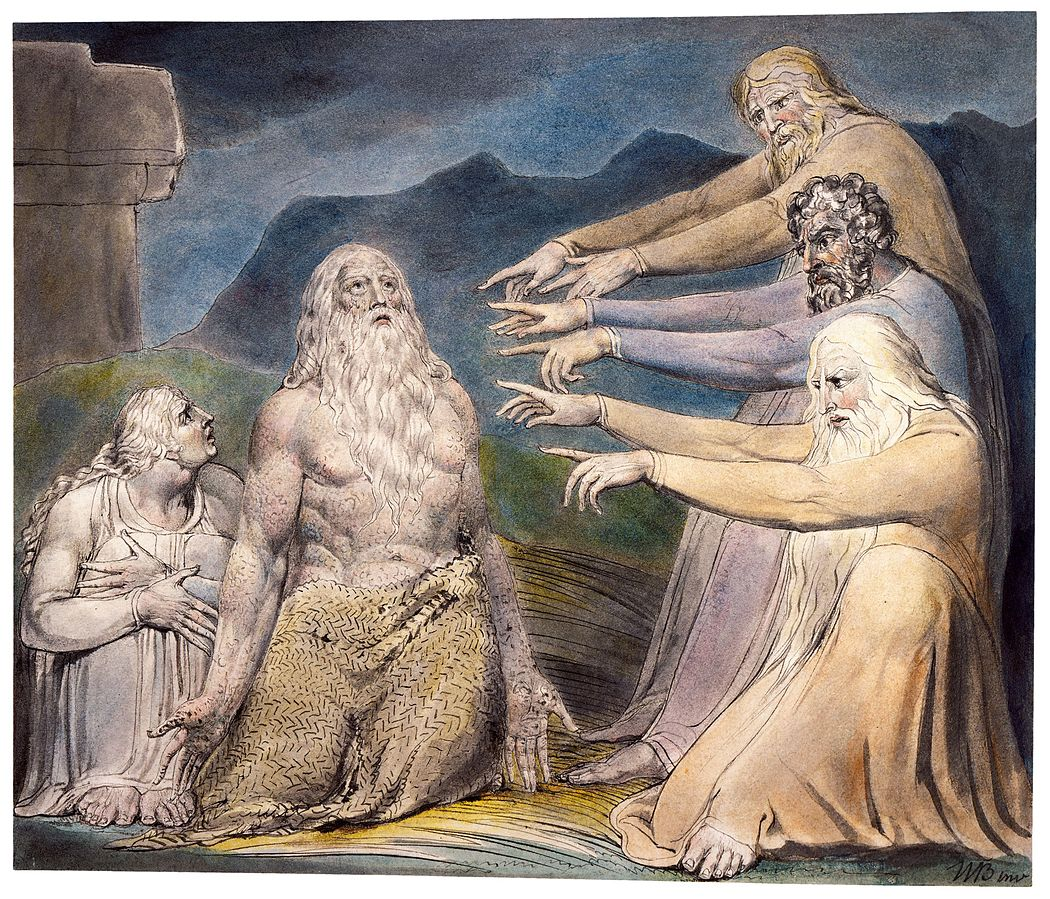
Job
In God’s Word, an entire book has been devoted to the subject of victim-blaming, a sign that God is deeply concerned about preventing His people from falling into this pattern. In that book, those who blame victims find themselves unintentionally carrying out Satan’s errand. The Book of Job tells the story of a righteous man who becomes the victim of a series of devastating events. His children die in a disaster, his wealth is stripped away, and even his health is taken from him. He loses everything.
The story perfectly portrays how victim-blaming unfolds, step by step. First, his three friends come to visit and grieve with him. They are in shock alongside him, but as time goes by, they feel the need to find a reason for everything that has happened. They search for an explanation to resolve their confusion and fears, and underlying that search is a desire to feel secure that the same fate will not befall them. “If Job had only done things right, he would not have suffered these painful experiences,” they reason. And so they begin blaming the victim. “Surely,” they say, “Job must have done something to deserve this?” “Surely he had some secret sin?” Or perhaps, they thought, he had been selfish in his life. Anything that could make sense of it. They tell Job that God must be angry with him and that he must repent. Job responds that he does not even know what sin they are referring to that could warrant such great calamity, and he defends himself. He does not believe he is a greater sinner than his friends, who remain unafflicted, and he argues accordingly. This only upsets them further, and they grow almost angry, trying to force Job to admit a guilt he does not carry.
Job is further afflicted by their words. He does not understand how his friends are now justifying all this evil happening to him. Completely grieved, Job says to them:
«I have heard many such things; Miserable comforters are you all! Shall words of wind have an end? Or what provokes you that you answer? I also could speak as you do, If your soul were in my soul’s place. I could heap up words against you, And shake my head at you; But I would strengthen you with my mouth, And the comfort of my lips would relieve your grief.» (Job 16:1-5)
The whole book is a dialogue between Job and his friends, who persistently insist that Job is to blame for everything that happened to him. Job becomes even more afflicted by their so-called “help” and no longer wishes to live. In the end, God Himself interferes and is rough with Job’s friends: “And so it was, after the Lord had spoken these words to Job, that the Lord said to Eliphaz the Temanite, ‘My wrath is aroused against you and your two friends, for you have not spoken of Me what is right, as My servant Job has. Now therefore, take for yourselves seven bulls and seven rams, go to My servant Job, and offer up for yourselves a burnt offering; and My servant Job shall pray for you. For I will accept him, lest I deal with you according to your folly; because you have not spoken of Me what is right, as My servant Job has.” (Psalm 42, 7-8)
The whole book demonstrates that bad things do happen to good people — people who are no worse than anyone else, and that God calls us to respond with compassion.
Many people are led by others to feel guilt over the harm done to them, and some even end their lives because of it. Victim-blaming is deeply harmful because the victim is then made to carry “sins” that are not theirs, sins they cannot atone for or apologize for. Instead, that misplaced guilt tears them apart from the inside. Placing guilt where it truly belongs is essential for helping people recover and find peace. Victim-blaming is an easy way to avoid showing compassion, but according to the Book of Job, God calls us to repentance, just as He did Job’s friends, if we treat the wounded in this way.
Jesus also addresses victim-blaming.
«There were present at that season some that told him of the Galilaeans, whose blood Pilate had mingled with their sacrifices. And Jesus answering said unto them, Suppose ye that these Galilaeans were sinners above all the Galileans because they suffered such things? I tell you, Nay: but, except ye repent, ye shall all likewise perish. Or those eighteen, upon whom the tower in Siloam fell, and slew them, think ye that they were sinners above all men that dwelt in Jerusalem? I tell you, Nay: but, except ye repent, ye shall all likewise perish» (Luke 13:1-5)
Here, Jesus does acknowledge that our actions can have consequences. He says that if they repent, they might avoid such a tragedy. However, He also rejects the idea that what happened to these people was because they were worse sinners than those who did not experience it. Jesus is saying the others are just as sinful, yet they were not afflicted. This confirms that suffering is not always the result of someone being a greater sinner.
Jesus does acknowledge that some have caused the harm they suffer. In the story of the paralyzed man at the pool of Bethesda, we see Christ warning him after healing him: «Afterward Jesus findeth him in the temple, and said unto him, Behold, thou art made whole: sin no more, lest a worse thing come unto thee» (John 5:14)
With the woman accused of breaking the marriage law, Jesus likewise confirmed she was in her situation because of what she had done. “She said, No man, Lord. And Jesus said unto her, Neither do I condemn thee: go, and sin no more” (John 8:11)
However, in both instances, Jesus partially mitigates the full consequences of their actions and sets them free. In doing so, He shows that punishment is not always the best approach. Showing mercy and helping those who have put themselves in a difficult situation is following Christ’s example. So even when some responsibility lies with the person, showing kindness and helping them out of their misery is often better than making accusations. “They did this to themselves; let them rot” is not the most Christian response.
God addresses all the standard ways people victim-blame.
The Book of Job is particularly powerful because Job is the perfect symbol of the common ways we victim-blame. He lost his family and faced marital strain; his wife opposed him and urged him to abandon his faith, yet there was no sin he had committed to deserve any of it. Job also lost his health, which is a common area where people are quick to blame others. Many religions view illness as a punishment from God for something a person has done. If a child is born sick, many assume the mother must have done something wrong during her pregnancy. And yes, sometimes people do suffer because of poor lifestyle choices; some mothers do use drugs or alcohol during pregnancy, which can cause harm to the child. But from the Bible, we learn that we cannot assume someone is to blame for what has happened to them and then attack the already wounded. Rather, we are called to help and to show compassion.
Another group of people who are often victim-blamed are the poor. Job also represented this group when he lost everything he had and was left with nothing.
Those who are financially stable often blame those who are not. Especially in the West, many assume their wealth is simply the result of hard work, eight hours a day, five days a week. But a man in another country can work in his shop seven days a week, twelve hours a day, and barely have enough to cover his family’s basic needs. Some work in clothing factories for slave wages, and yes, they work far harder than a woman in a high-end clothing store in London. Yet the factory worker does not even have enough to feed her children, while the store worker has a closet full of clothes she never wears. Even within a city like New York, one person can work harder and earn less than someone who works fewer hours and earns more. This is life.
The difference between the rich and the poor is not always a matter of who works hardest and who is lazy. It is often a larger societal problem, and only sometimes an individual one.
When someone is afflicted with illness, their whole family suffers alongside them.
Not everyone can study their way to top grades; some have too many burdens to carry, or face cognitive challenges. Those who suffer from long-term stress may struggle with memory problems due to the neurological effects of chronic stress. If you come from a poor but loving home, you may still find a way forward. But if you come from a home marked by poverty, illness, and dysfunction, school can be an enormous challenge.
We often do not understand why someone is struggling, and so we should not be quick to blame them. Not every rich person deserves their wealth, nor does every poor person deserve their poverty.
Thus, in the story of Job, we do not see a lazy man who brought poverty upon himself; we see a man whose circumstances were entirely outside his control. He worked hard and lost his wealth to “fire,” “wind from the wilderness,” war, and thieves, none of it self-inflicted. (Job, Chapter 1)
Then his ability to work was taken from him by a terrible disease, leaving him in constant pain and unable to function as before (Job, Chapter 2).
Then he is brought to the point of despair by his friends’ victim-blaming (beginning in Chapter 4).
Yet through all of this, we learn that Job was innocent of the tragedy that struck him. There was no “hidden sin” that caused it, and no divine punishment for being worse than everyone else. On the contrary, God declared him a righteous and good man; very few can claim to have received such praise from God. Yet all this still happened to him. (Job 1:8)
The prophet Isaiah says: “The righteous perish, and no one ponders it in his heart; devout men are taken away, and no one understands that the righteous are taken away to be spared from evil” (Isa. 57:1)
Job, in his misery, uttered: “Why do the wicked prosper, growing old and powerful? They live to see their children grow up and settle down, and they enjoy their grandchildren. Their homes are safe from every fear, and God does not punish them” (Job 21:7, see also verses 8-17).
Psalm says: “For I was envious of the arrogant As I saw the prosperity of the wicked.” (Psalm 73/3)
Jeremiah also noticed how he, God’s prophet, suffered, and those who rejected God sometimes prospered: “Righteous are You, O Lord, that I would plead my case with You; Indeed, I would discuss matters of justice with You: Why has the way of the wicked prospered? Why are all those who deal in treachery at ease?” (Jer. 12:1)
The Bible is clear: those who prosper are not necessarily good people, and those who struggle are not necessarily bad ones.
Many people suffer because of natural disasters, war, and the cruelty of others. Their struggles are the result of someone else’s sins, not their own. Yemen is a powerful modern example of how war has plunged a country into a hunger crisis. Its people did not end up there because they were lazy. War destroyed their livelihood. Conflict has created poverty and hunger in many places across the world. The elite who cause wars have plenty to eat, while those who simply want to live normal lives bear the consequences and starve.
The God of the Bible expects us to help those in need rather than dwell on why they are in need.
In God’s Torah, He made it a law for His faithful followers to care for the poor. God gave His people responsibility for those less fortunate because, whether someone’s reduced circumstances are due to their own choices or not, we are called to show mercy and help. If we refuse and instead insist on victim-blaming, we are simply making excuses for our selfishness.
Jesus spoke of His second coming and how, symbolically, He will separate men into two groups. He will ask one group why they did not help Him when they saw Him in need, and they will reply that they never saw Him in need. And then Jesus says: «Inasmuch as ye did it not to one of the least of these, ye did it not to me» (Matt. 25:45). Here we see those claiming to know Jesus and follow Him, even uplifting Him as king, more than willing to do something for Him. Yet those in reduced circumstances are looked down upon, and instead of helping them, they are judged as unworthy of compassion. Now that the situation is turned around, Christ identifies with the same people whom they would not help.
Christ was the ultimate example of how someone innocent can be made to pay for other people’s crimes. He was «despised and rejected of men; a man of sorrows, and acquainted with grief: and we hid as it were our faces from him; he was despised, and we esteemed him not». This did not happen because He was a greater sinner. He had not sinned. «Surely he hath borne our griefs, and carried our sorrows: yet we did esteem him stricken, smitten of God, and afflicted. But he was wounded for our transgressions, he was bruised for our iniquities: the chastisement of our peace was upon him; and with his stripes we are healed» (Isa.53:3-5)
Jesus was innocent, and we were guilty, yet He was struck and hung on that cross instead of us. Bad things happened to Jesus because of Satan’s sin and because of our sins. Satan would have us believe Christ deserved what came to Him because that would, in part, justify Satan for doing it. When Satan started his rebellion, many were afflicted as a result, not just himself.
Lazarus and the rich man
Jesus tells another story that challenges victim-blaming when He recounts the parable of a poor man named Lazarus, who goes to heaven, while a rich and well-regarded man goes to hell.
«And there was a certain beggar named Lazarus, who was laid at his gate, full of sores, and desiring to be fed with the crumbs which fell from the rich man’s table: moreover, the dogs came and licked his sores. And it came to pass, that the beggar died, and was carried by the angels into Abraham’s bosom: the rich man also died, and was buried; And in hell he lifts up his eyes, being in torments, and seeth Abraham afar off, and Lazarus in his bosom. And he cried and said, Father Abraham, have mercy on me, and send Lazarus, that he may dip the tip of his finger in water, and cool my tongue; for I am tormented in this flame. But Abraham said, Son, remember that thou in thy lifetime receivedst thy good things, and likewise Lazarus evil things: but now he is comforted, and thou art tormented.» (Luke 16:20-25)
Here we see Jesus pushing back against the idea that the poor, sick man is a sinner and that the rich man deserves his good fortune. In the parable, the rich man shows no compassion to the poor, and in the end, that same mercy is withheld from him. He receives what he himself withheld from others.
Victim-blaming is so deeply rooted in human nature that even in Christ’s day, these statements would have been considered radical, a complete turning of the tables.
The blind man
Another form of victim-blaming not directly addressed in Job’s story is the idea that if someone is in a pitiful state, God is punishing them for something their parents did. Jesus confronts this attitude when He and His disciples encounter a blind man outside Jerusalem.
«And as Jesus passed by, he saw a man who was blind from his birth. And his disciples asked him, saying, Master, who did sin, this man, or his parents, that he was born blind? Jesus answered, Neither hath this man sinned, nor his parents: but that the works of God should be made manifest in him» (John 9:1-3)
In no way were they to conclude that his condition made him or his family greater sinners than themselves. When the blind man, now able to see, was brought before the council to be questioned by the religious leaders, they were provoked by his faith in Christ and responded in anger: «They answered and said unto him, Thou wast altogether born in sins, and dost thou teach us? And they cast him out» (John 9:34). Whether they had specific knowledge of sin in the family or were simply assuming it, we cannot say. What is clear is that both the disciples and the Pharisees seem to have had some familiarity with this man’s background. But what we see here is Jesus dismantling this argument entirely. If the man was born blind because of sin, why was he now chosen by God to receive his sight? By their own logic, he must have done something good to deserve it, something the Pharisees were unwilling to admit. So instead, they concluded that Christ’s healing was not of God.
One of the arguments for judging in this manner is taken from the Ten Commandments, which say: “For I the LORD thy God am a jealous God, visiting the iniquity of the fathers upon the children unto the third and fourth generation of them that hate me and showing mercy unto thousands of them that love me, and keep my commandments» (Exod. 20:5-6)
The verse predicts that a society that abandons God and the principles of His law will experience more tragedy and misery than one that listens to Him. This is not so much a curse as a prophecy. Selfishness harms children, and those children are likely to suffer and perpetuate harm in turn. Our own bad actions curse both us and our offspring; they are the natural consequence of our choices. Children are not forced to continue abusive behavior, but they will be harmed by their parents’ decisions regardless of whether they repeat them. If parents abuse or neglect their children, the children’s mental and physical capacity can be diminished, leading to less opportunity, less innovation, and more poverty. It is difficult to undo such damage, and it can take generations to change course, if it happens at all. Yet there is mercy in God’s words about the third and fourth generation. It means God will do His utmost to intercede and give the descendants of those who hate Him the opportunity to be restored against all odds. God acknowledges that it can take several generations to undo the damage once a family has entrenched itself in evil. It takes time for a family to recognize the harm, break free from victimhood, and stop repeating destructive patterns. When a parent sins against a child, that child, when grown, often remains confused and unknowingly passes the damage on to their own offspring. The third generation begins to see the pattern more clearly, develops the desire and strength to change, and is more inclined to reject both the sins of their grandparents and the cycles of their parents. Thus, God’s word about sin’s consequences continuing to the third and fourth generation is an accurate description of the cause and effect of harm, and it still points toward a road to recovery. If healing comes by the third or fourth generation, it is because God has been working toward that healing all along; otherwise, restoration would not be possible. God is at work in every generation, even among those who hate Him, drawing them toward truth, teaching them right from wrong, and inspiring them to choose a better way than their forebears did. Yet this is not a painless process, which is why God acknowledges that the consequences of sin echo through the generations.